Choose the Best Marketing Campaign Types for 2026 Growth
Why knowing marketing campaign types matters now
It used to be simple to tell people about your business. You might put an ad in the newspaper or send out a letter. But in 2026, things are much different. There are so many ways to reach people, it can feel like a maze.

New ways to advertise pop up all the time. Think about all the different apps, websites, and even smart devices people use every day. Your customers are everywhere, and they pay attention to different things. It’s hard to know where to put your message so they actually see it. Plus, big changes are happening because of smart computer programs, what we call AI. These changes make picking the right marketing campaign types even trickier.
With all these choices, from simple on line advertising to clever creative outdoor advertising, you might wonder if your message is getting lost. How do you decide if direct marketing or direct response marketing is better for your goals? The way people act and what they like to see keeps changing fast. Marketers even talk about different kinds of media like "owned" media (your website), "earned" media (when others talk about you), "paid" media (ads you buy), and "shared" media (social media posts). Each one works differently, helping brands get known Owned, Earned, Paid & Shared Media Explained.
Staying on top of these AI-driven changes is key. If you want to understand how AI is changing media every day, then you’ll find The AI Newsletter Worth Reading really helpful.
That’s why understanding different marketing campaign types is super important right now. This guide will help you sort through all the options. We will give you a clear plan to understand different kinds of campaigns. You’ll learn how to choose the best channels for your message. Learning how to pick the right marketing campaign for real ROI is a big part of what we’ll cover. We will also show you how to check if your efforts are working well. Our goal is to make sure you pick the right marketing campaign for real results.
Knowing about different ways to reach people is like having a map. It helps you find the best path for your message. These different paths are often grouped into four main types of media: Paid, Owned, Earned, and Shared.
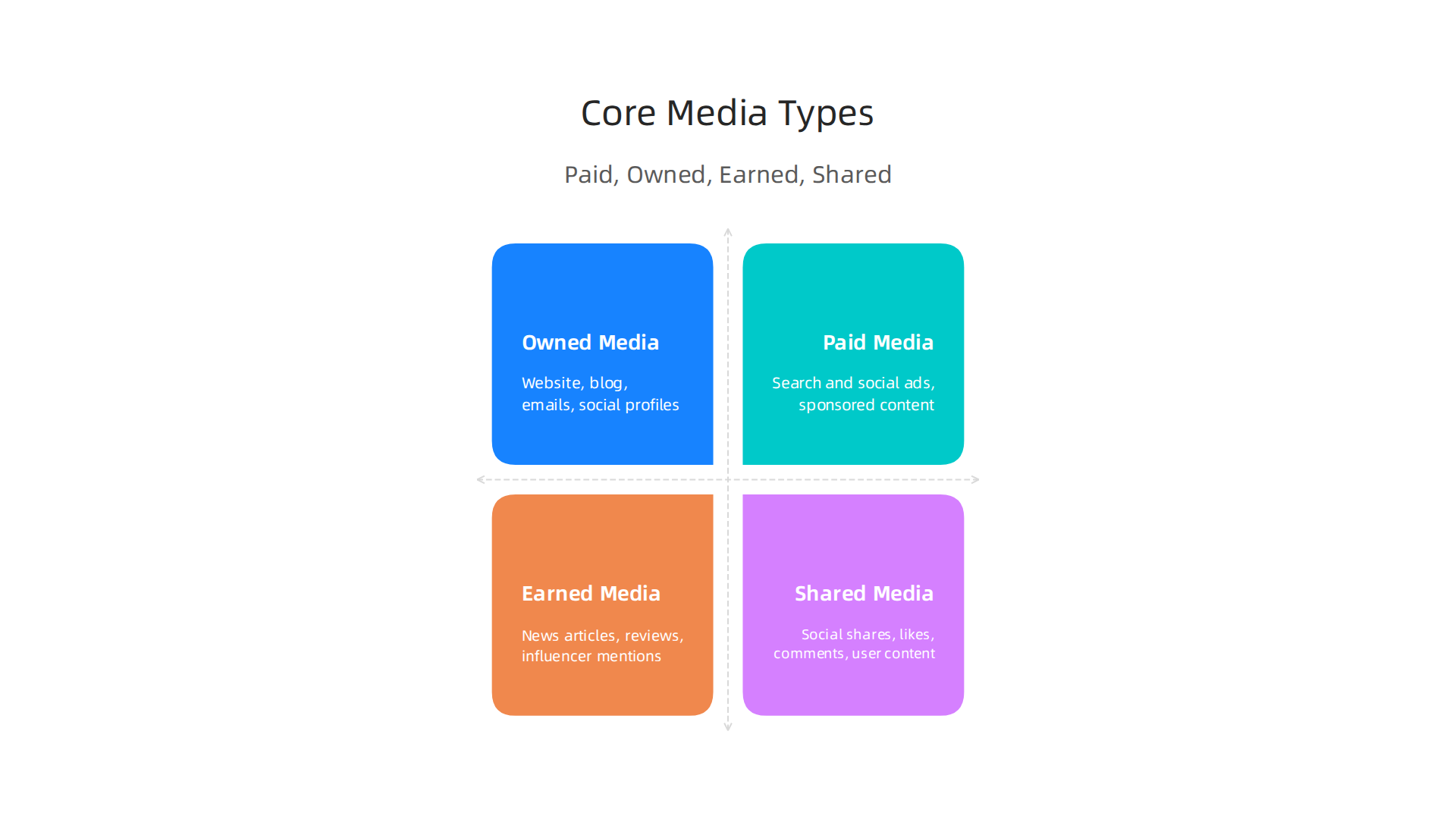
Understanding these core categories is super important for planning your marketing campaign types in 2026.
Let’s look at each one.
Owned Media
Owned media is all the stuff your business creates and fully controls. Think of it as your own house on the internet. You decide what goes in it and how it looks.
- Examples: Your business website, your blog, emails you send to customers, and your own social media profiles.
- What it’s good for: Building your brand’s home base. This is where you put all your important information, show off your products, and turn visitors into customers. It’s great for giving people lots of details and helping them trust you. For instance, your blog can be a powerful tool for sharing insights and helpful tips, becoming a key part of your owned media strategy.
Paid Media
Paid media is just what it sounds like: any advertising you pay money for. This is how you reach new people quickly.
- Examples: Ads you see on Google, social media ads (like on Facebook or TikTok), ads in apps, sponsored content, and even traditional ads like TV commercials or creative outdoor advertising (like billboards). If you pay to promote something, it’s paid media. This includes many forms of on line advertising.
- What it’s good for: Getting your message in front of a lot of new people fast. It helps you target specific groups and push your brand for quick results. It’s how you make sure people who don’t already know you can discover your business. You can learn more about how different types of ads compare in our guide on Paid Media vs. Earned Media 2026: Maximizing Your Digital Reach. This is often used to bring people to your owned media channels. Paid media means investing in promotional efforts like advertisements or sponsored content, according to experts The PESO Model® in PR: Paid, Earned, Shared & Owned ….
Earned Media
Earned media is when other people talk about your brand without you paying them. It’s like getting free publicity! It shows that others value what you do.
- Examples: News articles written about your business, reviews from customers, mentions from influencers, or people talking about you on their social media (if you didn’t pay them).
- What it’s good for: Building trust. When someone else says good things about you, people tend to believe it more than if you say it yourself. It helps build your reputation and makes your brand look more important. This kind of media is earned naturally through trust and what people believe about you The PESO Model for PR: Paid, Earned, Shared, Owned Media.
Shared Media
Shared media is all about social interactions. It’s where your brand’s message is passed around by people on social platforms.
- Examples: When people share your posts, like them, comment on them, or create their own content about your brand (called user-generated content). It’s also about what happens in online communities.
- What it’s good for: Growing your reach through word-of-mouth. When people share your content, it spreads to their friends and followers, bringing new eyes to your brand. It helps build a community around your business. You might use social media management tools to help keep track of this. Shared media includes all content about your brand posted on social media that wasn’t posted by you directly Owned, Earned, Paid & Shared Media Explained.
These marketing campaign types each play a special role in your overall plan.
- Awareness: Paid media is great for making new people aware of your brand. Shared media helps spread that awareness even further.
- Consideration: Owned media helps people learn more about your products and consider buying them. Earned media gives them a reason to trust you and consider you over others.
- Conversion: Owned media often acts as the main place where people make a purchase or sign up for a service. Direct marketing and direct response marketing often use owned channels to guide customers to a specific action.
By using all these types of media together, you can make a strong marketing plan that works well at every step of a customer’s journey.
When you plan your marketing campaign types, it’s really helpful to know about the different digital places where your ads can show up. These are called digital channels. In 2026, most of your advertising money will go to digital channels, with about 72% of all media spending worldwide going this way, making them truly dominant Online Advertising Statistics 2026. Each channel has its own strengths for reaching people, getting them interested, and making sales. Let’s look at the main ones: Search, Social, Display, and Video.
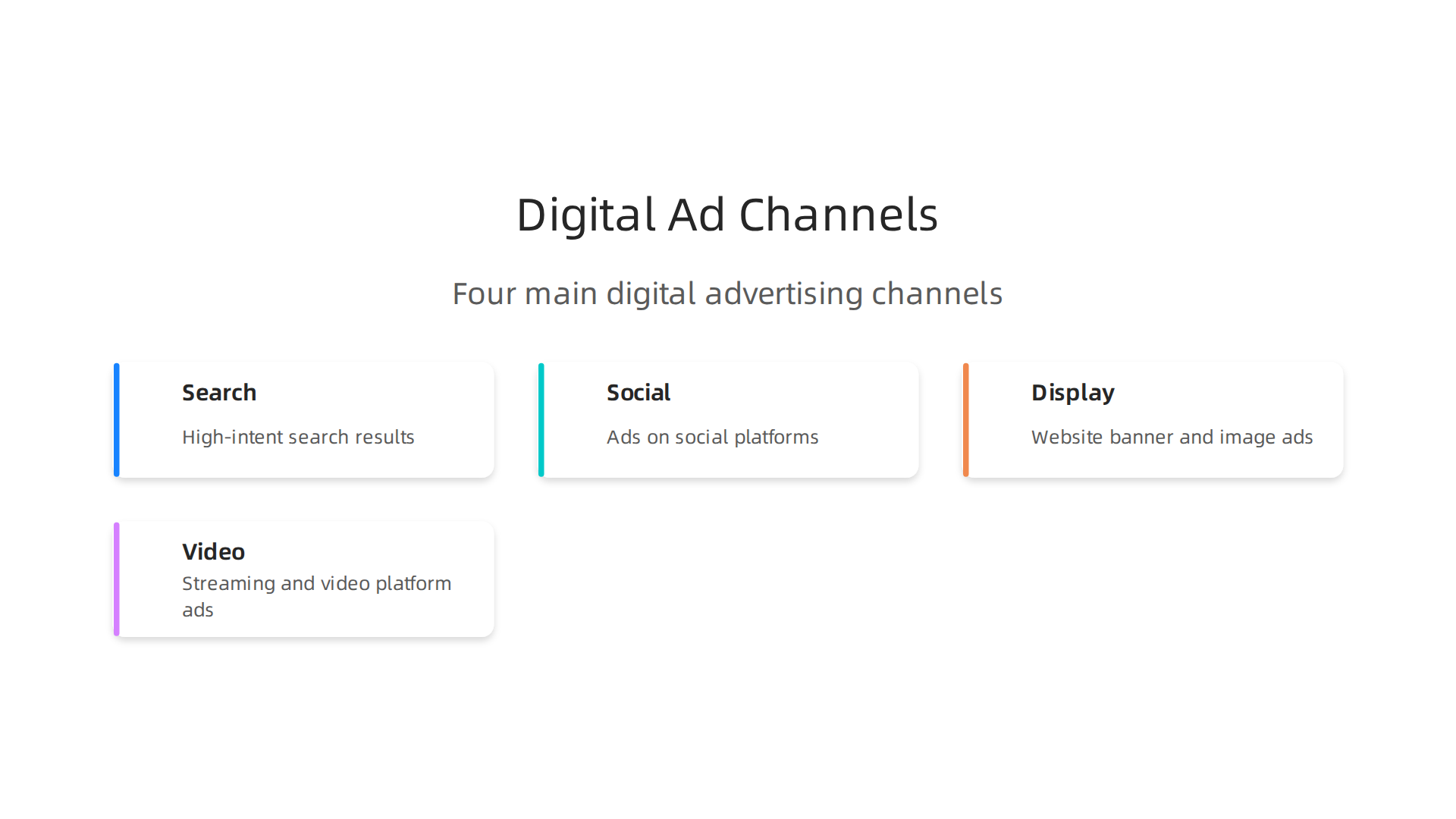
Search Advertising
Think of search advertising as showing up right when someone is looking for you. When people type something into Google or Bing, they often have a specific need or question. Search ads appear at the top of these results.
- How it works: You pay to have your ad show for certain keywords. For example, if someone searches for "best running shoes," your ad for running shoes might appear. This is a key part of on line advertising.
- Good for: Reaching people with high intent. They’re actively searching, so they’re often closer to buying. It’s great for direct response marketing campaigns. Search advertising continues to be a huge part of digital ad spending, expected to reach around $390.76 billion in 2026 Digital Advertising Statistics: 45+ Key Data Points for 2026.
- Things to know: It can be competitive because many businesses want to show up for popular keywords. You pay when someone clicks your ad. If you want to dive deeper into how to succeed with this, check out how to unlock 2026 Google Ads success.
Social Media Advertising
Social media ads are everywhere you scroll. These ads appear on platforms like Facebook, Instagram, TikTok, and LinkedIn. People aren’t usually looking to buy when they’re on social media; they’re there to connect with friends or see fun content.
- How it works: Businesses pay to show ads to very specific groups of people based on their age, interests, hobbies, or what groups they follow.
- Good for: Building brand awareness, showing off new products, and connecting with a specific audience. It’s a fantastic way to reach new people who might not know about you yet. In fact, 97% of consumers use social media monthly, with about 4.9 billion people on these platforms in 2026 Digital Marketing 2026 statistics: key figures to know – Incremys.
- Things to know: People might not be ready to buy right away, so your ads need to be engaging and stop them from scrolling. Many businesses work with an agency to handle Facebook Ads to make sure their marketing campaign types work well.
Display Advertising
Display ads are the banner ads you see on websites while you’re reading an article or browsing online. They’re often images or short animations.
- How it works: These ads show up on different websites that are part of an ad network. You can target people based on the type of website they’re on (like a sports news site) or by their interests, even if they’re not actively searching for your product. You often pay for how many times your ad is shown (Cost Per Mille, or CPM), which means you pay for every 1,000 views CPM vs CPC vs CPA vs CPL vs CPV vs CPI [2026].
- Good for: Boosting brand awareness and reminding people about your product or service (called retargeting). These visual ads can be very effective if designed well. Many brands create custom banner ad formats to catch the eye.
- Things to know: People can sometimes get "banner blindness" and ignore these ads. It’s about getting your message out there broadly rather than targeting high intent.
Video Advertising
Video advertising includes ads on platforms like YouTube, streaming services (like those on your smart TV, known as Connected TV or CTV), and short videos on social media. Video content makes up a massive 82% of all global internet traffic in 2026 Digital Marketing Statistics 2026: Big Insights.
- How it works: These ads play before, during, or after video content. With Connected TV, ads can be highly targeted to households and can even be interactive, letting viewers use QR codes or even buy things right from their screen.
- Good for: Telling a rich story, showing how a product works, and creating a strong emotional connection. Video ads are very impactful. AI is changing video advertising quickly in 2026, making it easier to personalize ads and target viewers more precisely, especially on CTV How AI is Transforming CTV Advertising in 2026.
- Things to know: Video ads can be more expensive to produce and run. Making them engaging is key so people don’t skip them. Crafting winning creative ads for video requires a lot of thought and planning.
Each of these digital channels offers unique ways to reach your audience and should be carefully considered when building your overall marketing campaign types.
Staying up-to-date with the latest in AI and tech is crucial for all these channels. For daily insights into how AI is shaping the media industry, consider subscribing to The AI Newsletter Worth Reading.
While digital channels now get most of the advertising money, older ways of advertising, called traditional channels, still matter a lot for certain marketing campaign types. These include TV, radio, print, and something called Out-of-Home (OOH) advertising. Even in 2026, they have special powers that digital ads sometimes don’t. The best campaigns often use both old and new methods together.
TV Advertising
Television ads are still powerful for reaching many people at once.
- How it works: Ads play during TV shows. They can tell a full story with sound and moving pictures, which helps people feel connected to a brand.
- Good for: Building a brand name that everyone knows. If you want a lot of people to hear about your product or service and remember it, TV can do that. It’s not usually for
direct response marketingright away, but it builds trust. - Things to know: TV ads can be quite expensive to make and show. Also, it’s harder to know exactly who is watching compared to
on line advertising.
Radio Advertising
Radio has been around for a long time, and it’s still useful.
- How it works: Ads play during radio programs. People listen in their cars, at work, or at home.
- Good for: Reaching local audiences. If your business serves a specific town or area, radio can be a cheaper way to get the word out than TV. It’s also good for ads that people can listen to in the background while doing other things.
- Things to know: You can’t show pictures, so your ad has to sound very interesting to catch attention. People might not remember the details easily.
Print Advertising
Print ads appear in newspapers and magazines.
- How it works: Businesses buy space in newspapers or magazines to show their ads.
- Good for: Reaching specific groups of people. For example, a sports magazine will have readers who like sports, so an ad for sports gear would fit well. Newspapers can be good for local news and deals. Print ads can also feel more trustworthy to some readers because they are physical.
- Things to know: Fewer people read newspapers and magazines these days. It can take a while to see if an ad works, and it’s not as quick as digital ads.
Out-of-Home (OOH) Advertising
OOH advertising is all about ads you see when you’re outside your home. Think billboards, ads on buses, bus stops, or even digital screens in public places. This is where creative outdoor advertising shines.
- How it works: These ads are placed where many people will see them throughout the day.
- Good for: Making a big visual impact and getting seen by lots of people in a specific area. A large billboard can really grab attention. It can be great for local
direct marketingefforts, like pointing people to a store nearby. You can learn more about how to make a big impact with this kind of ad by looking into mastering billboard advertising nyc. - Things to know: People see these ads very quickly, so the message needs to be short and clear. It’s hard to measure exactly how many people act on these ads directly.
Blending Traditional and Digital Channels
The real magic happens when traditional and digital marketing campaign types work together. This is called cross-channel or integrated marketing. For example, a TV ad might tell people to visit a website or scan a QR code on their screen. A billboard could have a website address or a special hashtag for social media. This way, the broad reach of traditional ads can lead people to the more measurable and interactive world of on line advertising. This teamwork helps you reach more people in different ways, making your message stronger and more memorable. Using an integrated marketing communications approach helps make sure all your messages are clear and work towards the same goal, no matter where they appear.
Understanding your full marketing mix strategy in 2026 means knowing when and how to use each type of channel for the best results.
Beyond traditional ways, much of on line advertising today uses something called programmatic buying. This is a smart way to buy and sell ad space using computers and special software. It helps businesses show their ads to the right people at the right time without a lot of human back-and-forth. This automated process is key for many modern marketing campaign types.
Programmatic Advertising and Buying Models Explained
Programmatic advertising makes buying ads faster and more focused. Instead of talking to many different publishers, businesses can use platforms that do the work for them. Here are the main ways ads are bought in this digital world:
Open Auction
Think of an open auction as a big public market. Many advertisers can bid on ad space from many different websites or apps all at once. The ad spot goes to the highest bidder in real-time, which means it happens in a flash. This is the most common way to buy ads programmatically and is often called real-time bidding, or RTB for short Programmatic Advertising Types: Open Auction to Guaranteed. It’s good for reaching a very wide audience quickly.
Private Marketplace (PMP)
A Private Marketplace, or PMP, is like a special, invite-only market. Here, a website owner (publisher) chooses which advertisers can bid on their ad spots. These spots are often seen as more valuable or "premium" PMP Programmatic: How Private Marketplaces Work in 2026. It gives advertisers a chance to show their ads on specific, high-quality websites that fit their brand, even if they pay a little more.
Programmatic Guaranteed
This is like making a direct deal but with a smart computer doing the paperwork. With programmatic guaranteed, a publisher and an advertiser agree ahead of time to sell a set number of ads at a fixed price. The ad spots are guaranteed, meaning the advertiser knows their ads will run. It’s often used for big marketing campaign types where an advertiser wants to be sure their message will be seen by a certain number of people Programmatic Guaranteed: How It Works and When to Use It. This deal combines the guarantee of a direct buy with the ease of programmatic tools. You can learn more about these methods by looking at a complete guide to programmatic deals.
Data and Targeting
One of the biggest advantages of programmatic advertising is how well it can target specific groups of people. This is done using different types of data:
- First-party data: This is information a business collects directly from its own customers. For example, if you buy something from a website, that website now has your purchase history. This data is very valuable for
direct marketing. - Second-party data: This is another company’s first-party data that they share with you. Imagine a car review site sharing its audience data with a car parts seller.
- Third-party data: This comes from big data companies that collect information from many different sources. It helps advertisers reach new people who might be interested in their products, even if they haven’t interacted with the brand before.
Using these kinds of data helps advertisers show ads to people who are most likely to care about them. This makes ad spending more effective and helps businesses reach their goals for different marketing campaign types. Understanding how AI and personalization are changing advertising, especially native ads, can further boost your campaign’s success. Learn more about this in native advertising 2026.
This focus on data and technology is a big part of why many businesses look for advanced insights.
If you want to keep up with how AI and technology are changing the media world and advertising, you’ll find helpful insights in:
The AI Newsletter Worth Reading
Get clear daily AI updates from The Deep View Newsletter.
After gaining insights from data and technology, the next big step is creating the actual advertisements and measuring how well they work. For any marketing campaign types, the way an ad looks and feels, along with how we track its success, are very important.
Creative formats, measurement, and KPIs by channel
When we talk about creative formats, we mean the different types of ads you can use to reach people. Each one works best in certain situations:
- Static Images: These are simple pictures or graphics. They are easy to make and very good for getting a clear message across quickly. Think of a sale announcement with a bold picture.
- Rich Media: These ads are more exciting. They might move, offer a small game, or expand when you touch them. Rich media ads grab more attention because they let people interact with them.
- Video Ads: Short videos that tell a story or show how a product works. These can play before, during, or after other video content on the internet. Video is a strong tool for many
on line advertisingcampaigns because it can share a lot of information in a fun way. - Native Ads: These ads are made to blend in with the website or app they appear on. For example, a sponsored article might look just like a regular article on a news site. This helps them feel less like an interruption.
- Audio Ads: These are ads you hear on podcasts or music streaming services. They are perfect for reaching people when their eyes are busy, like when they are driving or exercising.
Using the right creative format helps your marketing campaign types get noticed and encourages people to act. For example, making high-impact visuals for 2026 banner ads can greatly improve how well your static and rich media ads perform.
Once your ads are out there, you need to know if they are actually working. This is where measurement and Key Performance Indicators (KPIs) come in. KPIs are like a scoreboard for your marketing campaign types. They help you see what’s going well and what needs to change.
Here are some common KPIs and ways to measure them:
- Website Visits: How many people went to your website after seeing an ad? This shows if your ad made them curious.
- Clicks: How many times did people click on your ad? This is a basic sign of interest.
- Conversions: This is a very important KPI. Did people do what you wanted them to do? This could be buying something, signing up for an email list, or filling out a form. Conversions are key for
direct response marketing. - Return on Ad Spend (ROAS): This tells you how much money you made for every dollar you spent on ads. It helps you see if your ads are profitable.
- Brand Awareness: Sometimes, an ad’s goal isn’t to sell right away, but just to make more people know about your brand. You can measure this by looking at how often your brand is searched for or talked about online.
To get a full picture, many businesses use methods like Full Funnel Measurement. This means looking at every step a customer takes, from first seeing an ad to making a purchase. Another helpful tool is IAB/MRC Retail Media Measurement Guidelines which helps connect ad views to actual sales. These tools are especially useful for direct marketing efforts, making sure you know which ads lead to results.
Planning all these steps, from creative choices to tracking success, needs careful thought. That’s why understanding the strategic impact of a marketing project manager in modern media is so important for any business aiming for growth in 2026.
After figuring out how to make and track ads, it’s time to look at new places to show them. In 2026, there are exciting new ways for different marketing campaign types to reach people, especially with smart AI tools.
Emerging channels and AI-driven opportunities: CTV, audio, in-game, AR/VR
The world of on line advertising is always changing. New channels let businesses connect with people in fresh and powerful ways.
Connected TV (CTV)
Think of CTV as ads you see on streaming services like Netflix (with ads), Hulu, or YouTube on your smart TV. This is a big area for growth, and AI helps a lot. AI can make ads more personal by showing you things based on what you watch. This makes the ads feel more relevant to you and less like a random interruption. Many experts agree that CTV and audio are leading the way for ad growth this year, especially with AI making things smarter. You can learn more about this in the Comscore 2026 Report: CTV & Audio Drive Programmatic Growth.
Streaming Audio
These are ads you hear on podcasts, music apps like Spotify, or internet radio. They are great because they reach people when their eyes are busy, such as when they are driving or working out. Audio ads can be very good for direct response marketing, asking people to do something right away.
In-Game Advertising
Imagine seeing an ad inside a video game. This is in-game advertising. It can be a billboard in a virtual city or a special item in the game. AI is helping here too, by making game ads that change based on who is playing and what they are doing. This makes the ads feel like part of the game.
Augmented Reality (AR) and Virtual Reality (VR)
These are the most exciting new areas. AR ads add digital things to the real world using your phone, like trying on clothes virtually. VR ads put you inside a whole new world, offering a very deep experience. In 2026, VR marketing is moving towards ads that are easier to shop from and measure, making them useful for many marketing campaign types. You can dive deeper into this with a VR Marketing in 2026: A Field Guide. These new technologies open up unique ways to create [creative outdoor advertising] that truly captures attention.
AI Personalization Hooks
AI is not just for one channel. It’s the secret sauce that makes all these new ad types better. It lets businesses show ads that are perfect for each person, making them more likely to click or buy. AI helps tailor ad messages based on what people like, what they’ve seen before, and where they are. This is why How AI is Transforming CTV Advertising in 2026 is a must-read for anyone looking to stay ahead.
Testing and Scaling Emerging Channels
Trying out these new channels takes some thought. Start small, see what works, and then do more of it. It’s like planting a garden: you test different seeds to see which ones grow best before planting a whole field. For businesses looking to expand their reach, understanding these new advertising channels 2026 is key. You can also explore how native advertising 2026 uses AI for personalization in a similar way.
To truly keep up with all the fast changes in media and technology, especially with AI, it helps to have daily insights. Get clear daily AI updates from The Deep View Newsletter.
Now that we have explored the new places to show ads, the next big step is figuring out which ones are right for your business. In 2026, with so many options, choosing wisely is crucial. You need a good plan to pick the best channels for your marketing campaign types. This means looking at who you want to reach, what you want them to do, how much money you have, and how you will measure success.
How to Choose Channels: Budget, Audience, Funnel Stage, and KPIs
Picking the right advertising channels for your marketing campaign types is like planning a journey. You need to know your starting point, your destination, and how much you can spend.
1. Know Your Audience
First, think about who you want to talk to. Where do they spend their time? If your audience loves video games, then in-game ads might be a great choice. If they listen to podcasts all day, streaming audio ads could work well for your [direct marketing] efforts. Understanding your audience helps you go where they are.
2. Match Channels to Your Goal (Funnel Stage)
Not all ads do the same job. Think about the marketing funnel, which has different stages:
- Awareness: At this stage, you just want people to know about you. Channels that reach many people, like Connected TV (CTV) or even [creative outdoor advertising], can be good here.
- Consideration: Here, people know you but are learning more. Content marketing, social media, or YouTube can help show them why your product is special.
- Conversion: This is when you want people to buy or sign up. Channels for [direct response marketing], like search ads or certain [on line advertising] that ask people to click a button, are very effective. Many experts suggest mapping your channels to these stages for better results, as highlighted in a guide on Channel Prioritization: A Framework for Success.
3. Set Your Budget
How much money can you spend? This plays a big part in your choices. Many businesses use a "70/20/10 rule" for their marketing budget:
- 70% goes to channels that you know work well.
- 20% goes to new ideas that look promising.
- 10% is for trying out very new things, like AR/VR ads, to see if they might become big winners later.
This smart way to handle money helps you grow while still being safe. A guide to Marketing Budget Allocation Guide 2026: By Channel explains this further.
4. Pick Your KPIs (How You Measure Success)
Before you start, decide how you will know if your ads are working. These are called Key Performance Indicators, or KPIs.

- For awareness ads, you might look at how many people saw your ad.
- For conversion ads, you will want to see how many people bought something.
Choosing your KPIs helps you keep track and know when to change your plan. To really drive smarter campaigns and boost your return on investment, focusing on analytics is key. Find out more about how to use data in a guide on analytic marketing drive smarter campaigns and boost roi in 2026.
Checklist for Trying New Channels:
When you’re ready to try a new advertising channel, follow these steps to make sure it’s a good test:
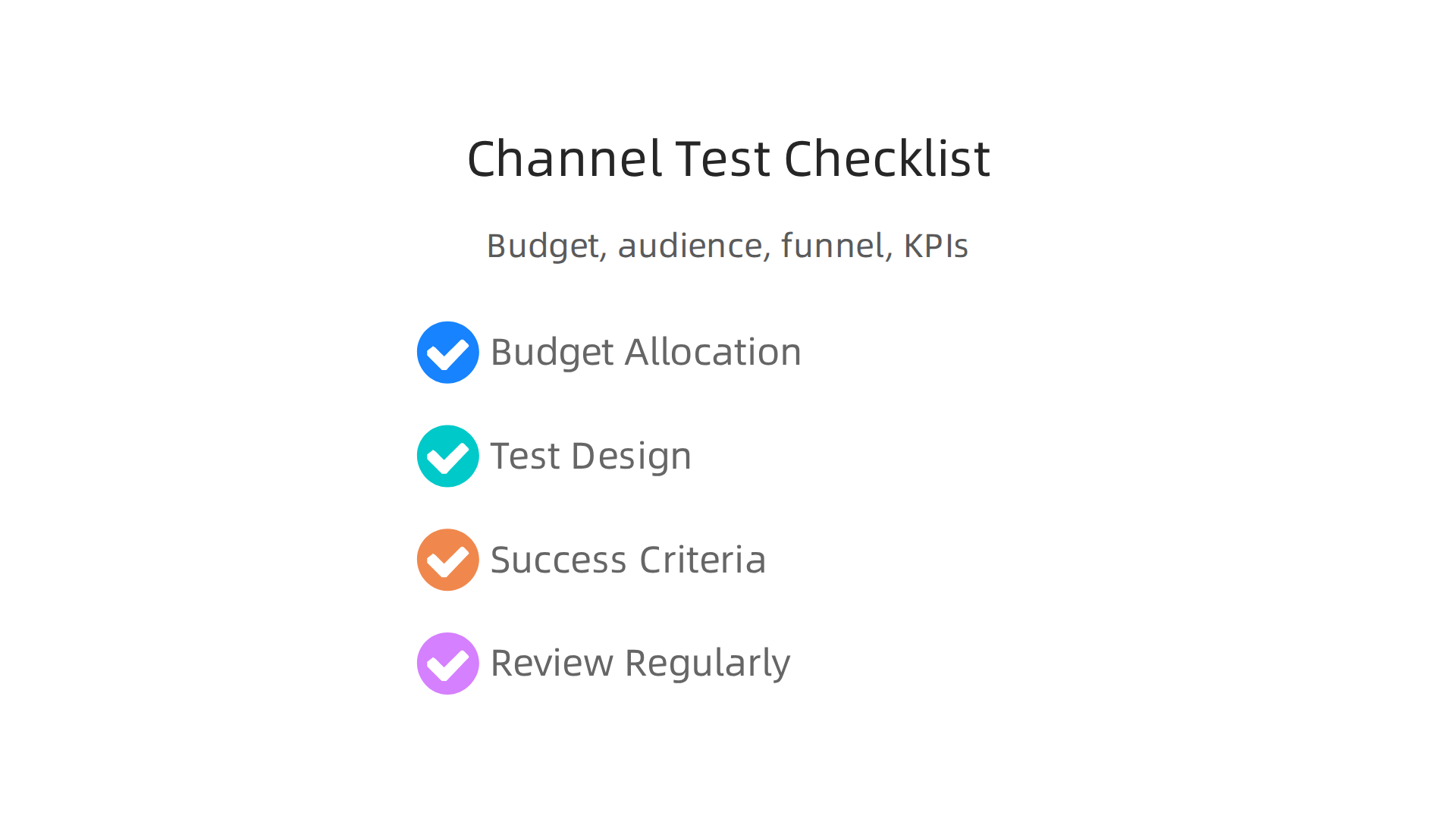
- Budget Allocation: Set aside a specific amount of money just for the test. Don’t go over it.
- Test Design: Clearly plan what you are testing. What kind of ad? Who will see it? For how long?
- Success Criteria: What will count as a win? A certain number of clicks? A certain amount of sales? Make sure you know what success looks like beforehand.
- Review Regularly: Check your results often. If something isn’t working, be ready to stop or change it quickly.
By thinking through these points, you can make smart choices about where to put your ads and make your [marketing campaign types] more successful in 2026.
Summary
This guide explains marketing campaign types and how to use them effectively in 2026, when AI and a crowded media landscape make channel choice critical. It walks through the four core media categories—paid, owned, earned, and shared—and breaks down the main digital channels (search, social, display, video) as well as traditional options like TV, radio, print and OOH. You’ll get clear definitions of programmatic buying models, practical creative formats (static, rich media, video, native, audio), and the KPIs to track across the funnel. The article shows how to match channels to goals, set budgets with a 70/20/10 approach, and test new AI-driven channels like CTV, in‑game and AR/VR. By reading it you’ll know how to build a balanced, measurable campaign mix and run small, data-driven tests to scale what works.