
Marketing Project Manager Strategic Impact in Modern Media
Why the marketing project manager role matters in modern media
In today’s fast-moving world of media, things change very quickly. New apps, new ways to share stories, and smart tools like Artificial Intelligence (AI) pop up all the time. For companies that create media, like news sites, video channels, or even people making content online, keeping up can be tough. This is where a marketing project manager becomes super important.
Think of the marketing project manager as the glue that holds everything together. They connect the big plans (strategy), the fun parts (making ads and creative content), and the tech tools that help everything run. They make sure everyone on the team knows what to do, when to do it, and how it all helps reach the main goal. This role is key in making sure marketing campaigns run smoothly and actually work, as they help to coordinate everything from start to finish, manage money, and track how well things are going Marketing Project Manager Key Skills & Responsibilities 2026.
Media leaders today face many challenges. Platforms like social media change their rules and tools often, making it hard to keep strategies current. Adding AI into marketing also means learning new ways to work and create content. Plus, there’s so much information and data available that it can feel overwhelming to sort through. Many teams also have limits on staff, time, and money. This means every project needs to be managed very well.
Having a good marketing project manager means these challenges can be handled better. They help teams build a strong strategic marketing plan for media creator growth in 2026. They ensure that even with the speed of new platforms and the big role of AI, projects stay on track. For anyone interested in the future of media and how AI shapes it, you can The AI Newsletter Worth Reading. This helps companies make smart choices about their digital marketing, from simple updates to big campaign launches. In short, the marketing project manager helps media companies not just survive but thrive in our complex digital world.
Core responsibilities of a marketing project manager in media
The role of a marketing project manager is quite busy, wearing many hats to make sure marketing efforts run smoothly. They act like the conductor of an orchestra, guiding different team members and tasks toward a single goal. Their main duties involve planning, working with many different teams, managing money and time, and even talking to outside companies.
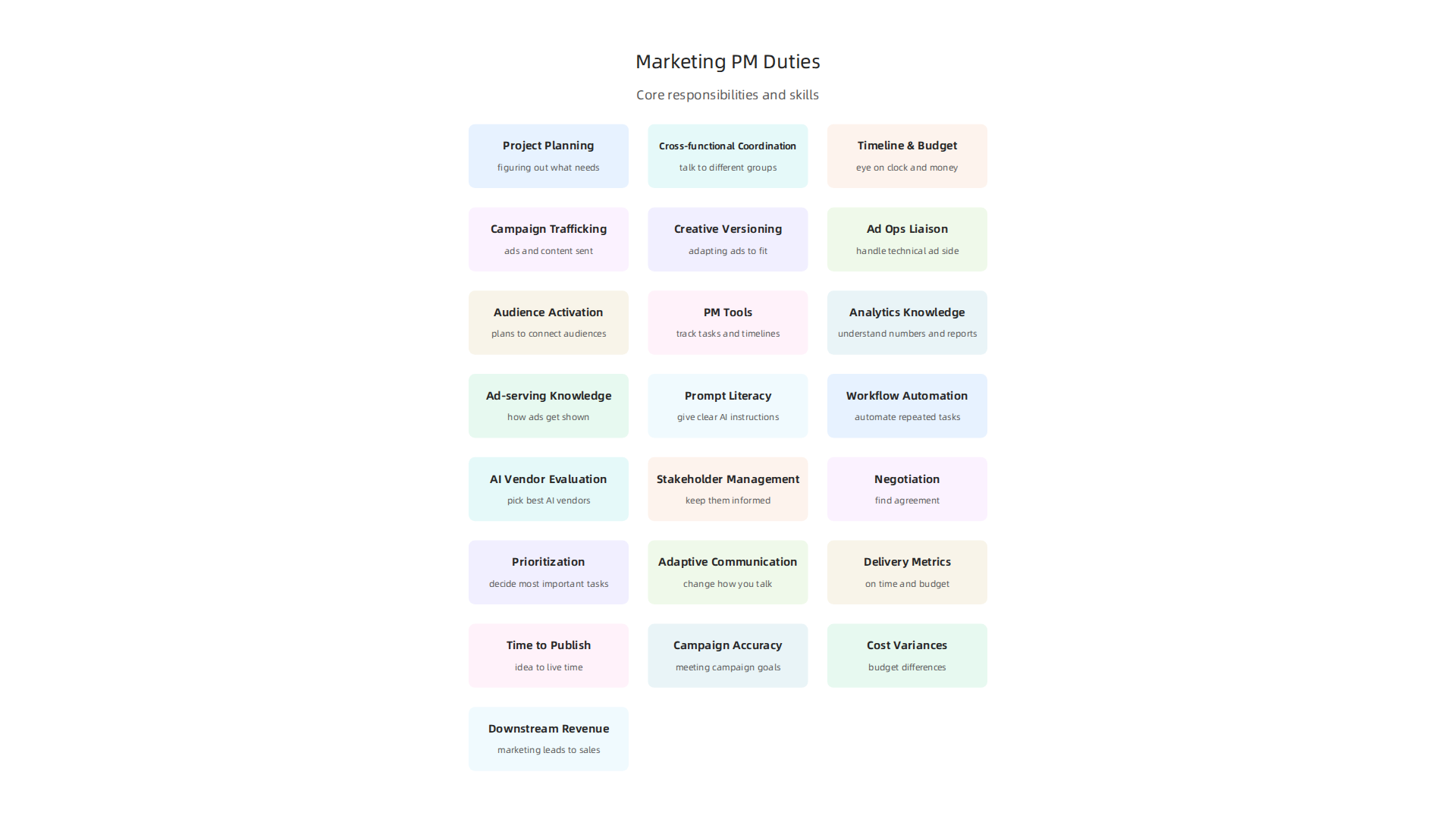
First, a big part of the job is project planning. This means figuring out what needs to be done, setting clear goals, and creating a step-by-step plan. They map out the timeline and set important dates so everyone knows when things are due. For example, a marketing project manager will help define the goals and steps for a new campaign Marketing Project Manager Job Description [Updated for 2026].
Next, they are great at cross-functional coordination. This means they talk to all the different groups involved in a project. They might work with the creative team making pictures and videos, the sales team, and the tech experts who handle websites and ads. They make sure everyone is on the same page and working together well.
Timeline and budget management are also super important. A marketing project manager keeps a close eye on the clock and the money. They make sure projects finish on time and don’t cost too much, which is vital for any company. They also handle working with outside vendors or partners, like agencies or freelancers, making sure their work fits into the main plan What Is a Marketing Project Manager?.
In the media world, some duties are extra special. A marketing project manager helps with campaign trafficking, which means making sure ads and content get sent to the right places, like social media sites or streaming platforms, at the right time. They also manage creative versioning for platforms, adapting ads to look perfect on different sites. This is important for creating winning creative ads digital campaign strategies that truly stand out.
They often work as an ad ops liaison, talking with the teams that handle the technical side of advertising to ensure ads run correctly. This includes tasks like understanding how to use mastering advertising ID for 2026 privacy and ad operations. Also, they build audience activation calendars, which are plans for when and how to connect with people using different media channels. This helps media companies reach their audience at just the right moment, turning plans into real results.
After looking at all the things a marketing project manager does, it’s clear they need to have some very specific skills. These are like tools in their toolbox that help them do their job well.
Essential Hard Skills and Technical Competencies
A good marketing project manager needs a mix of skills to get things done. These skills help them manage projects, understand data, and work with different advertising platforms.
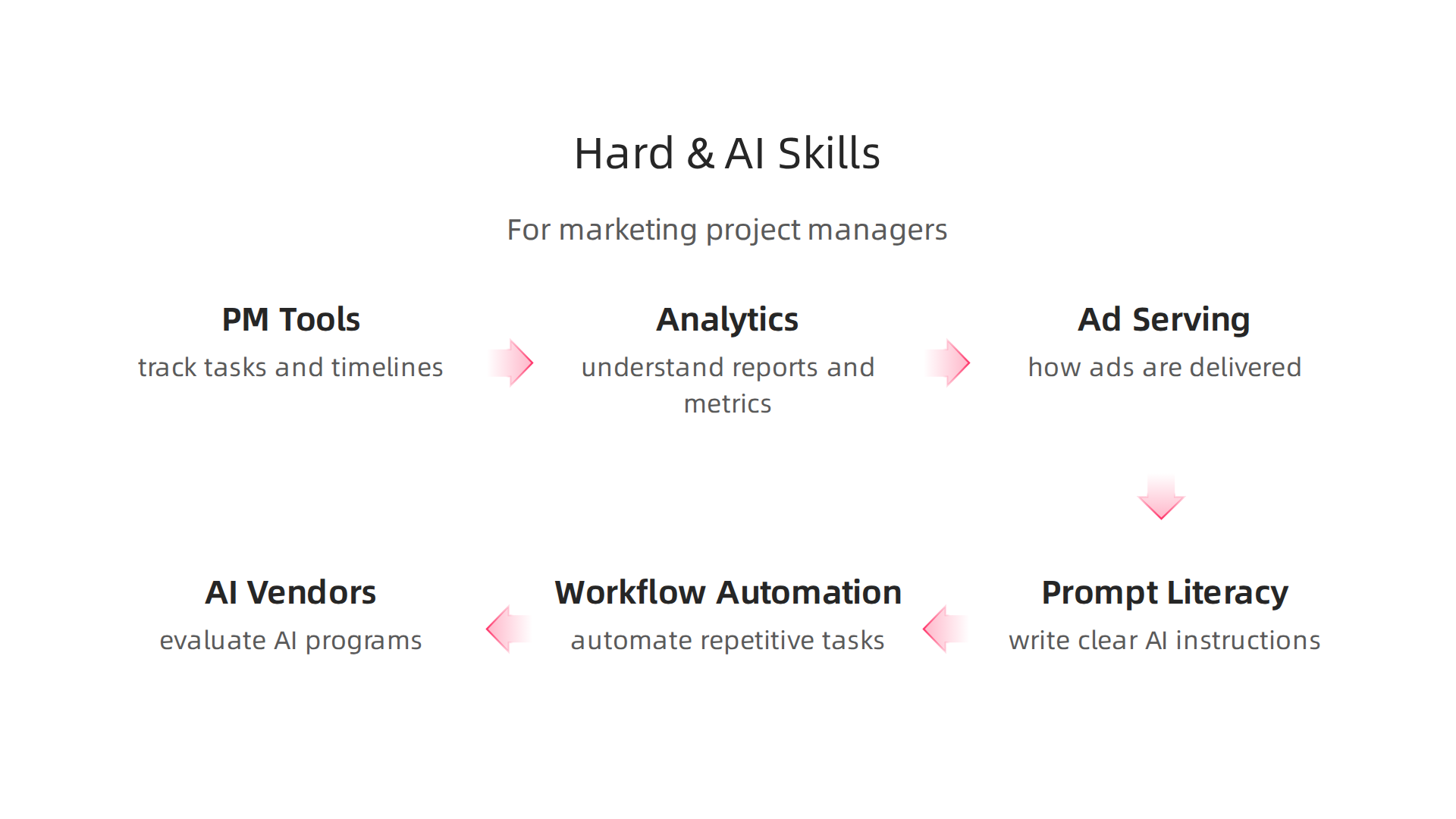
First, they must be good at using project management tools. These are computer programs that help keep track of tasks, timelines, and who is doing what. Popular tools include Asana, Wrike, and Monday.com, which help organize all the moving parts of a marketing campaign. Knowing how to use these tools helps them make sure projects stay on track and finish on time Marketing Project Management: Steps, Roles, and AI [2026].
Next, they need basic analytics knowledge. This means understanding numbers and reports to see how well a marketing effort is doing.

For example, they look at how many people saw an ad or clicked on a link. This helps them know what is working and what needs to change. Having good data literacy is one of the top skills needed for project managers in 2026.
They also need to know about ad-serving and platform knowledge. This means understanding how ads get shown on different websites, social media, and apps. They know the rules and best ways to put ads on places like Facebook, Instagram, or Google. This is very important for a digital marketing manager to make sure ads reach the right people in the right way. Many roles today, including digital marketing strategist jobs, require this kind of technical know-how.
Now, in 2026, there are also new skills needed because of AI and automation. A marketing project manager has to learn how to work with smart computer programs that can do tasks automatically.
- Prompt literacy is one such skill. This means knowing how to give clear instructions to AI tools so they can create content or analyze data correctly. It’s like knowing how to ask the right questions to get the best answers from a smart helper.
- Workflow automation is another key skill. This involves setting up tasks to happen by themselves, saving time and effort. For example, an AI tool might automatically send out emails after a certain event.
- Finally, they need to be good at vendor evaluation for AI tools. This means being able to pick the best AI programs and services from different companies. It’s about finding the right AI helpers that fit the team’s needs and budget.
These AI-related skills are becoming super important for anyone in marketing, from a project manager to someone learning through a social media marketing course. Many employers value candidates who have certifications in project management or related fields, showing they have these important skills Marketing Project Manager Career Path, Skills & Advice 2026. If you want to dive deeper into how AI is changing the media world every day, there’s a great resource that can help.
Get clear daily AI updates from The AI Newsletter Worth Reading.
After covering the technical tools and new AI skills that a marketing project manager needs, it’s time to talk about the "people skills." These are often called soft skills, and they are just as important as knowing how to use software or understand data. A marketing project manager spends a lot of time talking and working with different people, so these skills help them get things done smoothly.
Critical soft skills: stakeholder management, communication, and leadership
One very important soft skill is stakeholder management. Think of "stakeholders" as all the different groups or people who care about a project.
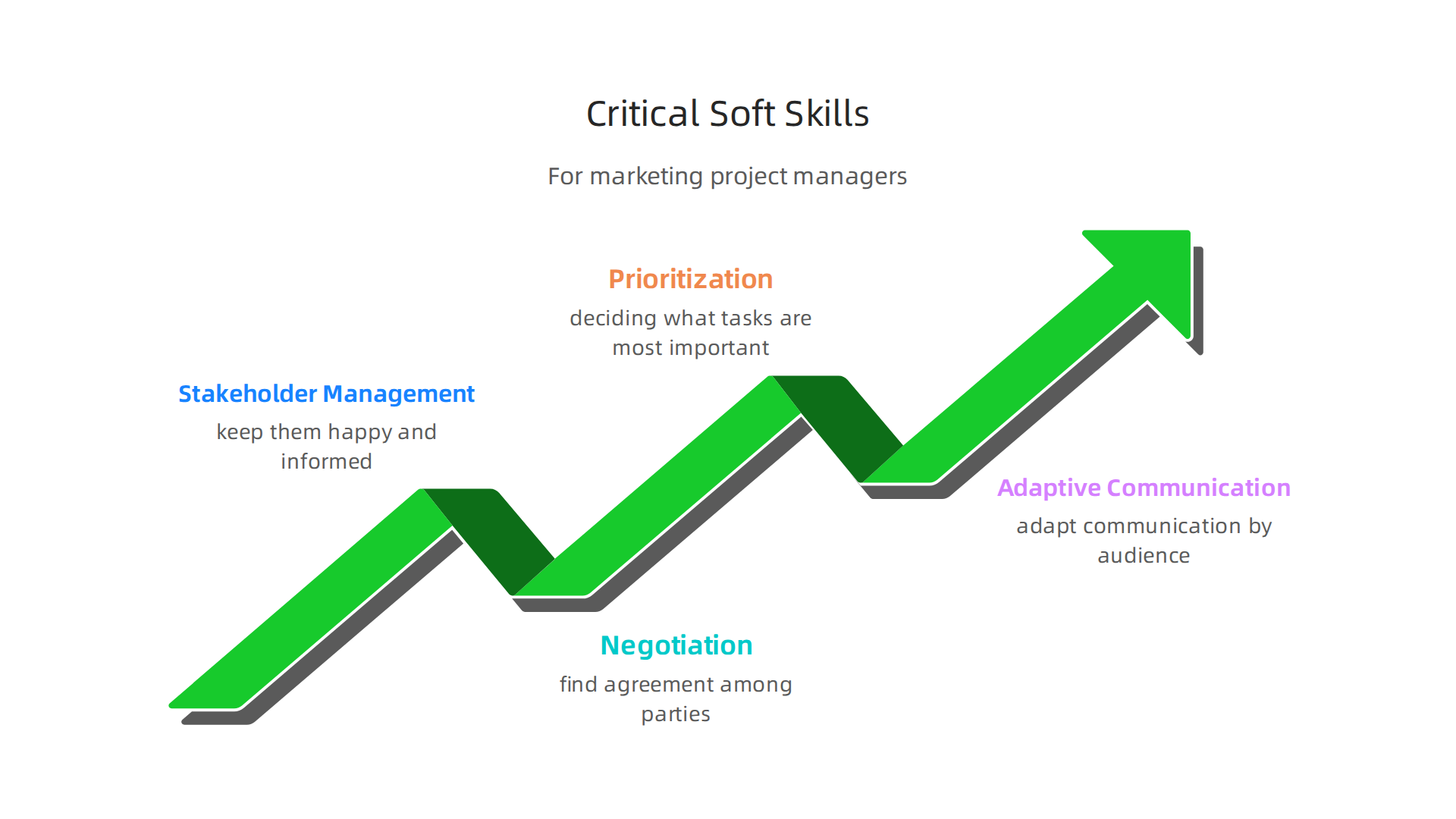
A marketing project manager needs to know who these people are, what they need, and how to keep them happy and informed. This means listening to their worries, sharing updates, and making sure everyone feels heard. Good communication is key here, helping to avoid misunderstandings and keep everyone working towards the same goal Marketing Project Manager Key Skills & Responsibilities 2026.
Next up are negotiation and prioritization.
- Negotiation is like finding a way for everyone to agree when they want different things. For example, the marketing team might want a big budget for ads, but the finance team wants to spend less. A good marketing project manager helps them find a middle ground.
- Prioritization means deciding what tasks are most important. With many things happening at once, a project manager has to figure out which tasks need to be done first to keep the project on track. This helps the whole team focus their energy wisely.
Then there’s adaptive communication. This means changing how you talk depending on who you are talking to. Some people like lots of details, while others just want the main points. A smart marketing project manager adjusts their style to fit the audience, making sure their message is clear and understood by everyone involved. Effective communication and problem-solving are skills often looked for when hiring a digital marketing manager or for digital marketing strategist jobs What Is a Marketing Project Manager? And How to Become ….
In a media company, a marketing project manager works with many types of stakeholders:
- Editorial teams: These are the people who create articles, videos, and other content. The project manager ensures marketing campaigns align with their content and brand voice.
- Ad sales teams: They sell ad space. The project manager makes sure marketing efforts support sales goals and provides data on how campaigns are doing.
- Product teams: They build the company’s products or services. The project manager gives them feedback from the market and ensures marketing plans fit with new product features.
- Creative agencies: These are outside companies that help design ads and campaigns. The project manager gives clear instructions and approves their work to create winning creative ads.
- Legal and compliance teams: These groups make sure everything follows the rules. The project manager checks that all marketing materials meet legal standards.
By being good at these soft skills, a marketing project manager can lead their team, build strong relationships, and effectively develop a strategic marketing plan for media creator growth in 2026. This ensures that projects are not just well-managed in terms of tasks, but also in terms of human connections and teamwork.
While knowing how to talk to people is super important, a marketing project manager also needs to be great with tools. In 2026, technology helps get things done faster and smarter. These tools are key to making sure projects stay on track and teams work well together.
Tools, workflows, and the growing role of AI in project workflows
A marketing project manager uses many different tools every day. Let’s look at some common ones:
- Project Management (PM) Software: These are like digital whiteboards and to-do lists all rolled into one. Tools such as Wrike or ClickUp help a marketing project manager track tasks, deadlines, and who is doing what for each project. They make it easy to see the big picture and keep everyone updated on what’s happening Best Marketing Project Management Software 2026.
- Digital Asset Management (DAM) Systems: These are special places where all the pictures, videos, brand logos, and other creative files live. A marketing project manager uses DAMs to make sure everyone uses the correct and approved creative materials for campaigns.
- Tracking and Reporting Tools: To see if marketing campaigns are working, a project manager uses tools that track how well things are doing and create easy-to-understand reports. These tools show important details like how many people saw an ad, clicked on a link, or bought something. Learning about different digital marketing platforms in 2026 is very helpful.
Actually, in 2026, a big game-changer for any marketing project manager is Artificial Intelligence, or AI. AI is not just a fancy word; it’s a helpful assistant changing how work gets done. Many marketing teams are now using AI-powered tools to handle the simpler, repeatable parts of their job, letting humans focus on big ideas and creative thinking. Experts say that by the first part of 2026, almost all marketing teams are using AI in some way AI Tools for Marketing Operations in 2026.
Here’s how AI helps make workflows better:
- Automating Status Updates: AI can help by automatically writing up quick status reports for teams. This means the marketing project manager doesn’t have to spend as much time on these tasks.
- Creative Versioning and Quality Checks: When creating ads or content, AI can help make different versions much faster. It can also check them for small mistakes, making sure everything looks good and meets rules before it goes live. This is very useful for campaign management and helps jobs like a digital marketing manager or those in digital marketing strategist jobs. AI also helps with social media management tools 2026 your guide to AI features and smart selection.
- Scheduling Optimizations: AI can look at all the tasks in a project and find the best way to schedule them. This helps make sure deadlines are met and everyone’s time is used well. In media companies, AI is already helping with automated quality assurance and making many campaigns at once The State of AI in Media Companies: What Our 2026 ….
By using these smart tools, a marketing project manager can lead projects more smoothly and focus on the important parts that truly need human thought.
To stay on top of how AI is changing marketing, you’ll need reliable information.
Get clear daily AI updates from The AI Newsletter Worth Reading.
By using these smart tools, a marketing project manager can lead projects more smoothly and focus on the important parts that truly need human thought. But where does this important role fit in a company? It is really about how teams are set up and who reports to whom.
Structuring teams and hiring: where marketing PMs fit in org charts
Every company is a bit different, but there are common ways a marketing project manager fits into the team. Knowing this helps you understand their work better.
- Reporting to Marketing: Often, a marketing project manager works right within the marketing department. This makes sense because they are focused on marketing tasks. They help plan and launch ad campaigns, social media efforts, and content creation. This setup helps them stay very close to marketing goals and brand messages. A good marketing team structure guide for 2026 can show how these teams grow.
- Reporting to Product: Sometimes, a marketing project manager might work with the product team. Their main job here is to make sure new products are launched successfully and that people know about them. They help market the product from beginning to end.
- Reporting to Operations: In some companies, project managers sit in an "operations" department. This means they focus a lot on how smooth the work process is. They make sure different teams work well together and that projects finish on time and within budget, no matter what department the project is for. This kind of role is becoming more in-demand across different fields in 2026, including marketing Project Management in 2026: Top Trends, High Demand.
Each way has its own good and bad points. When a marketing project manager reports to marketing, they are super connected to marketing goals. But they might not see the bigger picture of the whole company as easily. If they report to product or operations, they get a wider view, but might need to work harder to understand specific marketing details.
Bringing a Marketing PM onto your team
If you’re looking to hire a marketing project manager, it’s helpful to think about a few things:
- Seniority Levels: Just like other jobs, a marketing project manager can be junior, mid-level, or senior. A junior person might need more guidance, while a senior person can lead big projects and even guide a team of their own.
- Role Scoping: This means deciding exactly what the person will do. Will they manage all campaigns, or focus on a specific area like digital ads? Defining clear roles and responsibilities helps your team work better Build High-Performing Marketing Teams: 2026 Tactics. For example, a senior digital marketing manager might need to manage a portfolio of campaigns.
- Interview Focus Areas: When you talk to job candidates, look for people who are good at solving problems, talking to others clearly, and using project tools. It’s also good if they understand marketing deeply. Checking their knowledge about key performance indicators (KPIs) can also be useful, as these metrics are vital for tracking marketing success 170 Key Performance Indicator (KPI) Examples & Templates – Qlik.
Thinking carefully about where a marketing project manager fits and what they will do helps create a strong, effective team. It ensures you find the right person for your specific needs, whether that’s for digital marketing strategist jobs or another role in media. You can also explore specific job skills and career paths for a marketing specialist in 2026.
After a company finds the right fit for a new marketing project manager, the next step is to think about how that person can grow in their job. There are clear paths to move up, ways to learn new skills, and even special courses to help a marketing project manager shine.
Growing Your Career as a Marketing Project Manager
A career as a marketing project manager often starts with foundational roles. Many begin as a marketing coordinator or a junior project manager, helping with smaller tasks and learning the ropes. As they gain more experience, they can become a senior marketing project manager. In this role, they lead bigger projects and guide other team members.
From there, the path can split. Some marketing project managers move into roles like Director of Marketing Operations, focusing on how all marketing efforts run smoothly. Others might become a digital marketing manager or even take on digital marketing strategist jobs, where they focus more on big-picture planning for online campaigns. To learn more about how to grow in this field, check out this helpful guide on how to build a career as a marketing project manager. You can also explore roles, skills, and trends for a marketing manager in 2026.
Boosting Your Skills and Knowledge
To keep moving forward, a marketing project manager needs to keep learning new things. Here are a few ways to do that:
- Micro-credentials: These are short, focused training programs that teach specific skills, like how to manage certain tools or types of campaigns.
- On-the-job training: Taking on harder tasks or "stretch assignments" at work is a great way to learn new skills directly. This might involve leading a project you haven’t tackled before.
- Vendor training: Many companies that make marketing tools offer free or paid training. This can be very useful, especially for a
social media marketing courseor learning about specific ad platforms.
It’s important to build skills like strategic project planning, communication, and understanding data. In 2026, one of the most important skills for marketers is understanding how AI works, as highlighted in The 2026 AMA State of Marketing Careers Report. Keeping up with these changes can help you stay ahead.
Get clear daily AI updates from The AI Newsletter Worth Reading.
Getting Certified to Stand Out
Formal certifications can also give a marketing project manager a big boost. They show that you have a solid understanding of project management principles and marketing best practices.
- Project Management Certifications:
- Google Project Management: Professional Certificate: This is a great starting point for those new to project management, often taking about six months to complete part-time. You can learn more about the Google Project Management Professional Certificate.
- Certified Associate in Project Management (CAPM): This certificate is good for beginners and provides a strong foundation in project management concepts.
- Project Management Professional (PMP): This is a highly respected certification for those with more experience leading projects.
- You can find out more about the top 7 project management certifications in 2026.
- Marketing Certifications:
- The American Marketing Association (AMA) offers a Professional Certified Marketer (PCM) in Marketing Management. This course covers important topics like marketing strategy and customer behavior, as detailed in the State of Marketing Certification, 2026.
Investing in your skills and getting the right certifications can greatly help a marketing project manager achieve their career goals in 2026 and beyond. This kind of upskilling can even lead to better company results, like improved productivity, which can be seen in a 6-12% productivity boost from upskilling.
After learning new skills and getting important certifications, a marketing project manager must show how their work helps the company grow. It’s not enough to just finish projects. You need to prove that what you do brings real value. This means measuring impact, using clear numbers, and sharing results with everyone.
Measuring impact: KPIs, dashboards, and proving ROI
A big part of being a successful marketing project manager is showing how your projects lead to good business results. You do this by tracking Key Performance Indicators, or KPIs. These are like scores that tell you if your projects are working well.
Here are some important KPIs for a marketing project manager:
- Delivery Metrics: These check if projects are finished on time and within budget. For example, how many campaigns were launched on schedule? How much money was spent compared to what was planned?
- Time-to-Publish: How long does it take for content or ads to go from an idea to being live for people to see? Faster is often better for media companies.
- Campaign Accuracy: Did the campaign meet all its goals? Was the right message sent to the right people?
- Cost Variances: This looks at the difference between what a project was supposed to cost and what it actually cost.
- Downstream Revenue Signals: This is about how your marketing efforts lead to sales or new customers. For example, how many leads did a campaign create, and how many of those leads became paying customers? Good marketing helps grow sales, and you can find many examples of these types of marketing KPIs in this list of 170 Key Performance Indicator Examples & Templates.
In 2026, many teams use AI tools to help track these numbers and make sense of them faster. This means a digital marketing manager or someone in digital marketing strategist jobs can get insights quickly.
Designing Dashboards to Show Your Work
Once you have all these numbers, you need a good way to show them. That’s where dashboards come in. A dashboard is like a report card that clearly displays your KPIs.

When you design a dashboard, keep these things in mind:
- Keep it Simple: Only show the most important numbers. Too much information can be confusing.
- Easy to Understand: Use charts and graphs that are simple to read. Anyone should be able to look at it and understand the main points.
- Tell a Story: Your dashboard should explain the story of your project’s success or what needs to improve.
A marketing project manager needs to share these dashboards with different people. For example, editorial teams might care about how fast content gets published. Sales teams will want to see how many new leads were created. And company leaders, or executives, will focus on the big picture, like how marketing efforts affect money coming in. Showing clear, well-designed dashboards can help you get executive support and prove your value, as highlighted in guides on Marketing Dashboard Design: KPIs & Executive Buy-In 2026.
By effectively measuring impact and presenting your results, a marketing project manager clearly shows how their work helps the company reach its goals. This is key to proving your worth and moving forward in your career. To delve deeper into how data can transform your campaigns and boost financial returns, explore how to use Analytic Marketing to Drive Smarter Campaigns and Boost ROI in 2026.
Summary
This article explains why the marketing project manager role is essential in fast-changing media environments and what the job actually involves. It covers core responsibilities—from project planning and cross-functional coordination to campaign trafficking and ad operations—and lists the hard technical skills (project tools, analytics, ad platforms) as well as growing AI competencies like prompt literacy and workflow automation. The piece also highlights critical soft skills such as stakeholder management, negotiation, and adaptive communication, and explains where PMs commonly sit in org charts and how to hire and scope the role. Practical advice on tools (PM software, DAMs, reporting), KPIs and dashboard design shows how PMs prove ROI, while the career section covers training, micro-credentials and certifications to advance. Overall, readers will learn what to look for when hiring or becoming a marketing project manager and how the role drives measurable media growth in 2026.