
Social Media Management Tools 2026 Your Guide to AI Features and Smart Selection
Introduction
Managing social media used to mean posting a few updates and checking comments. Those days are long gone.

In 2026, you have to juggle multiple platforms, track AI-powered algorithm changes, and produce content that actually connects with real people. It is a lot.
If you work in media or advertising, you feel this pressure every day. You need tools that give you real return on investment. You need solutions that can grow with you without breaking your budget. And you need to stay ahead of what comes next.
Here is the thing. The numbers back up just how much this space is growing. The social media management software market was worth about $31 billion in 2024. Experts predict it could hit over $168 billion by 2035 according to the Social Media Management Software Market report. That is massive growth driven by businesses like yours needing better ways to plan, publish, and measure results.
But with so many options out there, how do you pick the right one? That is exactly why this article exists. We are going to look at the social media marketing tools landscape in 2026 with real data and expert insights. No fluff, just what works.
If you want to dig even deeper into how AI is reshaping this space daily, you should check out The AI Newsletter Worth Reading. It gives you clear, actionable AI updates that matter for media professionals.
Let us start with the top tools that are earning their keep this year. For a complete list of options, see our guide to the best social media management tools in 2026.
1. The State of Social Media Management in 2026
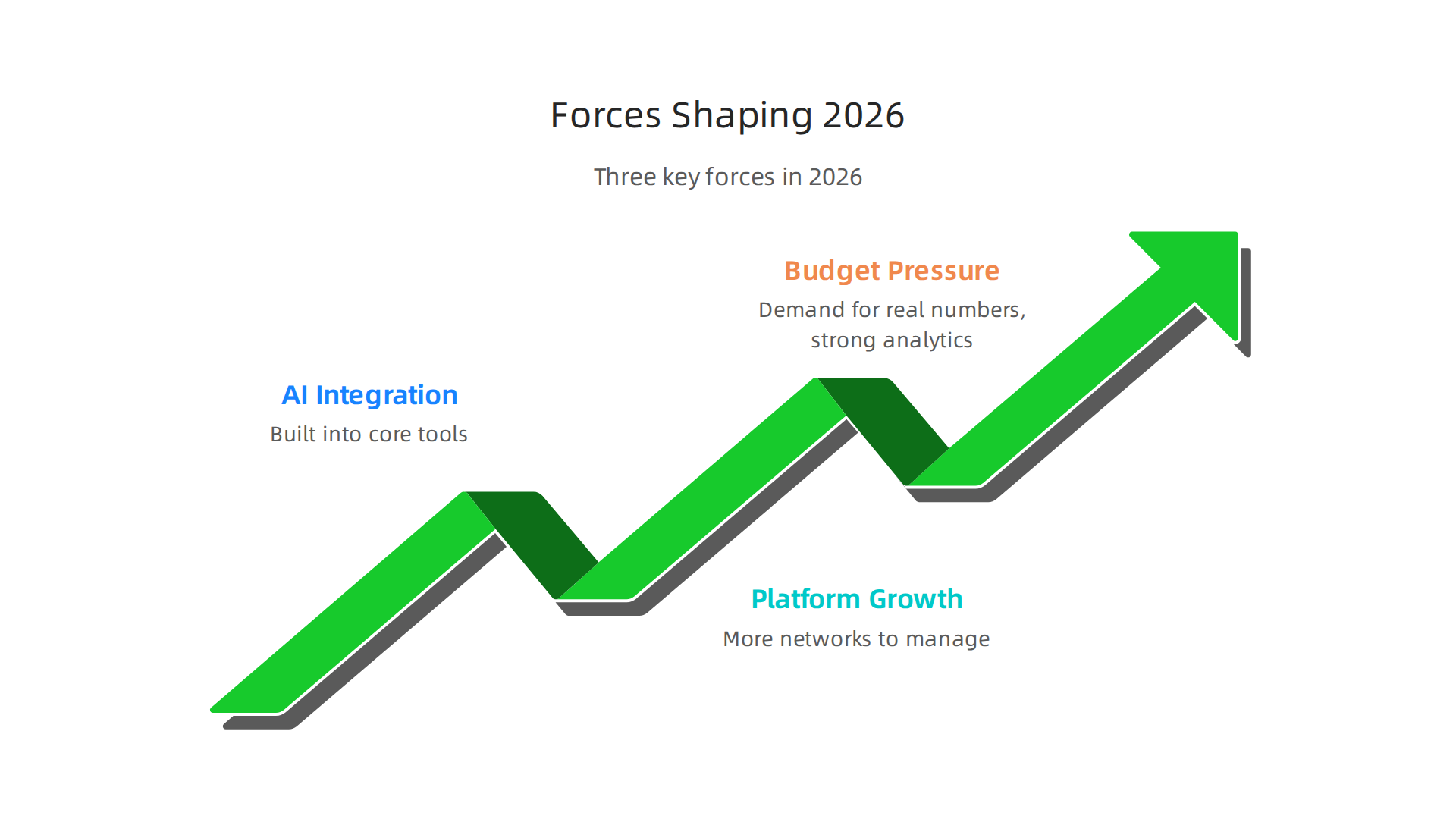
But before we get into the specific tools, let us look at the bigger picture. The state of social media management in 2026 is shaped by three major forces.
Here is what the data shows. The social media management market was valued at about $39.14 billion in 2026 according to the social media management market size in 2026. That is a huge jump from just a couple of years ago. And it is not slowing down.
AI is now part of everything. Artificial intelligence is not a buzzword anymore. It is built into the core of most social media marketing tools. From generating captions to analyzing sentiment, AI helps you work faster. It can even predict the best times to post. The best tools now use AI to handle the boring stuff so you can focus on strategy and creativity.
The number of platforms keeps growing. It used to be enough to manage Facebook, Instagram, and Twitter. In 2026, you also need to be on TikTok, Threads, LinkedIn, YouTube Shorts, and even emerging decentralized networks. Each platform has its own rules and audience. Managing all of them from one place is no longer a luxury. It is a must.
Budgets are bigger, but so is the pressure for results. Companies are spending more on social media advertising and management. But they want to see real numbers. They want to know what is working and what is not. That means your tools need strong analytics and reporting features. You cannot just post and hope for the best anymore.
If you want to understand how these changes affect your daily workflow, check out this guide to digital marketing platforms in 2026. It covers how to choose the right tools for your team.
The bottom line is simple. Social media management in 2026 is more complex than ever. But with the right approach, it is also more rewarding. The tools are smarter, the data is richer, and the opportunities to connect with audiences are bigger.
2. Key Features That Define Top Social Media Marketing Tools
So what separates a good tool from a great one in 2026? It is not just about scheduling posts anymore. The best social media marketing tools come with a few must-have features that save you time and help you get real results.
Scheduling and publishing are still the foundation. You need to plan your content across multiple platforms from one calendar. But in 2026, that is just the start. Top tools now include AI content generation built right in. The AI can write captions, suggest hashtags, and even recommend the best times to post. Some platforms use predictive analytics to tell you which content will perform best before you hit publish. A 2026 review of the best social media management tools for 2026 found that tools like Hootsuite and Sprout Social now include AI caption suggestions and smart scheduling as standard features. That is a big upgrade from just a few years ago.
Collaboration and approval workflows are critical for teams. If you work in a media organization with multiple people posting, you need a system. The best tools let you assign tasks, leave feedback, and approve content before it goes live. You can set up different permission levels so the right people have the right access. This keeps mistakes from happening and makes the whole process faster. If your team is growing, you might want to check out this guide on how to create a social media policy in 2026 to protect your brand while keeping workflows smooth.
Comprehensive analytics are now table stakes. You cannot manage what you cannot measure. The top tools give you detailed reports on engagement, reach, and conversions. They also track sentiment so you know how people feel about your brand. Some even offer social listening to monitor keywords and mentions across the web. This data helps you prove the value of your work and make smarter decisions.
AI is woven into all of these features. It helps you write faster, predict better, and analyze deeper. That is why staying current on AI trends matters so much for media professionals. If you want clear daily updates on AI and how it affects your work, try The AI Newsletter Worth Reading. It breaks down the latest developments in plain language so you can stay ahead without the noise.
3. AI-Powered Capabilities: The New Standard
AI is no longer a bonus feature in social media marketing tools. In 2026, it is the foundation. Every major platform now bakes AI into its core functions. And the results are not small. According to a detailed comparison of AI social media management tools for 2026, early adopters saw engagement rates jump 25 to 40 percent just by using AI to pick posting times. That kind of lift is hard to ignore.
Content generation is where AI saves the most time. Tools like Hootsuite’s OwlyWriter AI and Sprout Social’s AI Assist can write captions in your brand voice, suggest trending hashtags, and even repurpose your best posts into new formats.
You can feed the AI a topic or a URL, and it creates text, images, and video drafts in seconds. A 2026 review of the best AI social media management tools from Zapier lists Predis.ai as a top pick because it creates entire posts including visuals and voiceovers from a single prompt. That means you spend less time staring at a blank screen and more time on strategy.
Predictive analytics take the guesswork out of scheduling. Instead of picking random times to post, AI tools analyze your past engagement data across every platform. They learn when your specific audience is most active. Then they schedule posts during those high-engagement windows. Some tools even suggest which type of content will perform best on each channel. As noted in the AI social media management tools 2026 comparison, Buffer, Hootsuite, and Sprout Social all offer this feature now.
Sentiment analysis and crisis detection happen in real time. AI can scan thousands of comments, messages, and mentions across platforms. It flags negative sentiment before it turns into a full-blown crisis. Sprout Social’s AI Assist is especially strong here. It categorizes tone automatically and alerts your team when something needs attention. This is a game changer for media organizations that need to protect their brand reputation fast. If you want to understand how AI is reshaping broader media workflows, read this guide on how a digital marketing strategy consultant helps agencies navigate AI and grow. It covers how smart teams are using AI to stay ahead.
AI also optimizes social media advertising. Platforms like HubSpot’s marketing hub now include AI that adjusts ad bids, targets lookalike audiences, and tests creative variations automatically. You set a budget and a goal, and the AI runs the campaigns for you. This is where HubSpot social media marketing shines for media teams that want to scale paid efforts without hiring a whole ad operations department.
The key takeaway is simple: AI handles the heavy lifting. You handle the human touch.

That is the new standard for social media marketing tools in 2026.
4. Comparing Leading Social Media Marketing Tools
With so many options on the market, picking the right social media marketing tools for your team can feel overwhelming. The social media management software market is growing fast. It was valued at over $36 billion in 2025 and is projected to hit $168 billion by 2035, according to a report on Social Media Management Software Market Size. That growth means more tools, more features, and more choices. So which ones actually deliver?
Let’s break down the leading platforms side by side.
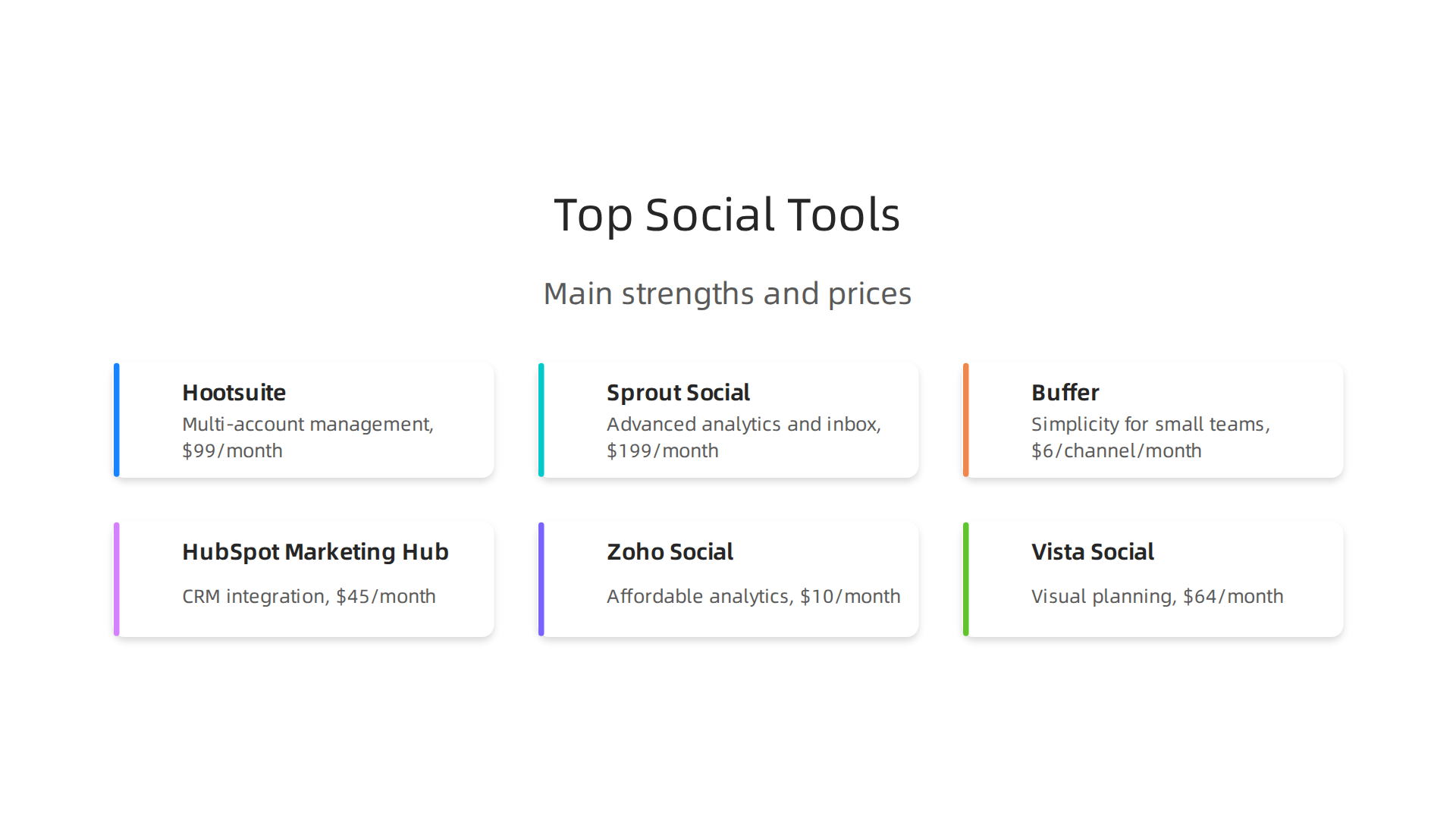
Hootsuite is often the first name people think of. It works well for teams that manage multiple accounts across many networks. You get a drag-and-drop calendar, AI caption suggestions, and solid analytics. Plans start at around $99 per month. It is a strong all-around choice for mid-sized teams.
Sprout Social is built for larger teams that need deeper analytics and a unified inbox. You can manage all your messages, comments, and mentions in one place. It also has advanced reporting. Plans start at about $199 per month. Sprout Social is often praised for its powerful analytics and customer care features, as highlighted in a review of the best social media management tools for 2026.
Buffer keeps things simple. It is best for small businesses and solo creators. You get easy scheduling, basic analytics, and a clean interface. Plans start at $6 per channel per month with a free tier available. Buffer is a great entry point if you are just getting started.
HubSpot Marketing Hub ties social media directly into your CRM. If you already use HubSpot for sales or email, this is a natural fit. It helps you run unified campaigns across email, landing pages, and social ads. This is what HubSpot social media marketing looks like in practice. You can start around $45 per month, but the full-featured tiers cost more.
Zoho Social offers strong analytics and smart scheduling at a lower price point. Plans start at just $10 per month. It integrates well with Zoho CRM, making it a good pick for teams already in the Zoho ecosystem.
Vista Social and Metricool are popular niche options. Vista Social stands out for its visual content calendar and AI caption generation. Metricool excels at analytics and reporting. Both are affordable for small teams.
Here is a quick look at the main trade-offs:
| Tool | Best For | Starting Price |
|---|---|---|
| Hootsuite | Multi-account management | $99/month |
| Sprout Social | Advanced analytics and inbox | $199/month |
| Buffer | Simplicity and small teams | $6/channel/month |
| HubSpot Marketing Hub | CRM integration | $45/month |
| Zoho Social | Affordable analytics | $10/month |
| Vista Social | Visual planning | $64/month |
Pricing is not the only factor. You also need to consider AI capabilities, integrations, and ease of use. Hootsuite and Sprout Social both offer strong AI features, while Buffer keeps things minimal. HubSpot wins on integration depth. Zoho and Vista Social offer good value.
The key is to match the tool to your specific needs. If you run a media team managing dozens of accounts, Sprout Social might be worth the investment. If you are a solo creator, Buffer or Zoho Social may be all you need. If you want a deeper look at how these tools fit into smarter workflows, check out our guide on best social media management tools in 2026 for smarter workflows.
AI is changing these tools fast. To stay ahead of the curve on AI trends that affect your social strategy, you may want clear daily updates delivered to your inbox. That is exactly why The AI Newsletter Worth Reading exists. It cuts through the noise and gives you the key developments in AI for media and marketing. Sign up to keep your knowledge sharp without spending hours researching.
5. How to Evaluate and Select the Right Tool for Your Team
Picking the wrong social media marketing tools wastes time, money, and team energy. I have seen teams sign up for a platform with fancy features only to realize it does not fit their daily workflow. Here is a simple process to avoid that mistake.
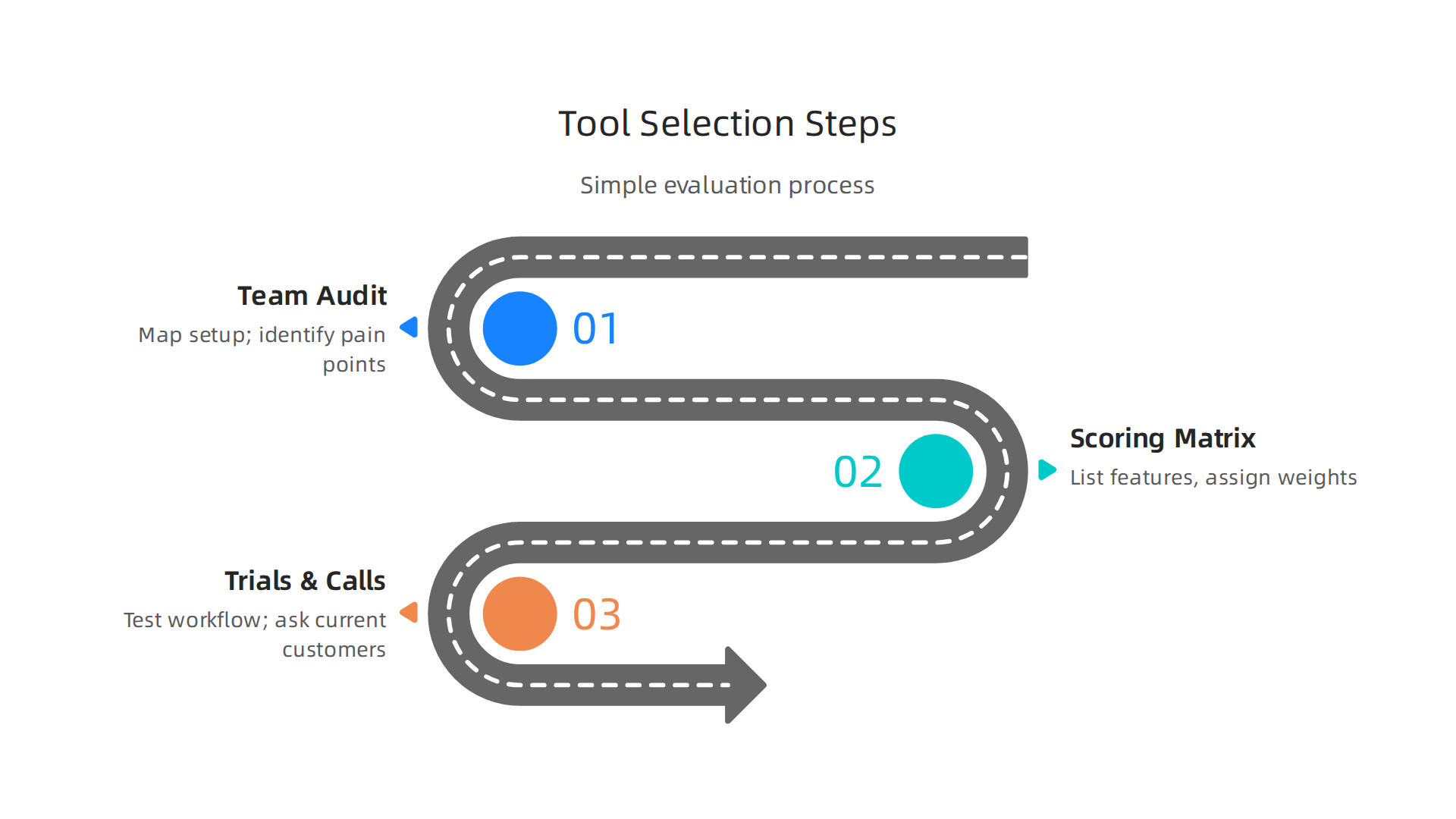
Start with a Team Audit
Before looking at any tool, map out your current setup. Ask three questions:
- Which social platforms do you actually post on?
- Who creates, reviews, and publishes content?
- What reports do you need to show your boss or clients?
You might discover you only use Instagram, LinkedIn, and TikTok. In that case, you do not need a tool that supports 15 networks. Focus on what you really use.
Also note your biggest pain points. Is scheduling the bottleneck? Are approvals taking too long? Do you struggle to measure ROI from social media advertising? List those problems. They will guide your feature checklist.
Build a Scoring Matrix
Once you know your needs, create a simple scoring matrix. List your must-have features, then assign a weight to each one based on what matters most. For example:
| Feature | Weight |
|---|---|
| Multi-platform scheduling | 10 |
| AI caption generation | 8 |
| Advanced analytics | 9 |
| Team collaboration | 7 |
| Budget (under $100/month) | 8 |
Score each shortlisted tool against these criteria. Multiply the score by the weight. Add up the totals. The highest score is your best match.
G2 compiles thousands of verified user reviews to help you compare options. Checking their Best Social Media Management Tools: User Reviews from June 2026 is a smart way to see how real users rate each platform.
Use Trials and Reference Calls
Never sign a long-term contract without testing first. Most tools offer a free trial of 14 to 30 days. Use that time to run your actual workflow through the system. Have your team post, approve, and pull reports. If the tool feels clunky in practice, move on.
Also ask the vendor for a reference call with a current customer who has a similar team size and use case. Questions like "How long did onboarding take?" and "What features do you wish existed?" reveal real limitations.
After your trial, map the tool against your matrix again. If it still scores high, you have found your winner.
To explore other platforms that complement your social strategy, our guide on digital marketing platforms in 2026 covers how to navigate the broader media landscape. It helps you see how your social tool fits into your full marketing stack.
Taking these steps might take a few hours, but it saves months of frustration. Choose slowly, and you will work faster for years.
6. Integration and Workflow Optimization
You picked your tool. Now comes the part that decides whether it actually saves you time: making it work with everything else you use.
Connecting Your Tech Stack
Your social media marketing tools should not sit in a corner alone. They need to talk to your CRM, your CMS, and your analytics platforms.

When these systems sync, you stop copying and pasting data between spreadsheets.
Look for three key connections:
- CRM sync. When someone fills out a lead form from a social post, your CRM should log that contact automatically. Your social efforts then tie directly to revenue.
- CMS integration. Your scheduling tool should pull new blog posts or landing pages from your CMS. That way you can share fresh content without manual uploads.
- Analytics feeds. Your social reporting should send data to your main analytics dashboard. This gives you one place to see how social drives traffic, conversions, and brand awareness.
Use APIs for Custom Workflows
Most modern tools offer APIs that let you build custom connections. If your team uses a proprietary dashboard or a unique reporting system, APIs let you push and pull data exactly how you need it.
The Social Media Strategy Template 2026: Full Framework points out that API access or a scheduling tool with API publishing built in is a requirement for a truly automated system. Without it, you end up doing manual exports week after week.
Automate the Repetitive Parts
The real time-saver is workflow automation. Think auto-publishing posts after they get approved, sending alerts when engagement spikes, or flagging mentions that need a quick response. These rules run in the background while your team focuses on strategy and actual content creation.
For a deeper look at which platforms handle automation best, check out our roundup of best social media management tools in 2026 for smarter workflows. It compares the automation features that actually make a difference in a busy media team.
If you want to stay current on how AI is changing these workflows, The AI Newsletter Worth Reading sends clear daily updates straight to your inbox.
7. Future Trends: Preparing for 2027 and Beyond
The tools you set up today need to work for tomorrow’s shifts. The social media marketing tools landscape is changing fast, and the next 12 to 18 months will bring three big changes.
AI Takes the Wheel
AI won’t just suggest captions or pick posting times anymore. By 2027, AI will handle full campaign management from start to finish. Think of it as a virtual marketing assistant that creates content, schedules posts, monitors responses, and adjusts strategy on the fly. Platforms already moving in this direction will make autonomous campaign management a standard feature. According to predictions on the Future of Social Media Predictions for 2027 and Beyond, AI will become predictive and contextually aware, serving content that feels custom built for each user.
Creator-Led and Decentralized Platforms
Relying on only the big platforms carries risk. New decentralized networks where users own their data and creators control their audiences are gaining traction. These platforms may require very different management approaches compared to traditional social media. Brands that start experimenting with niche, creator-led spaces now will have a head start. The shift from "likes" to meaningful engagement metrics like shares and saves will only accelerate. For a deeper look at how these changes affect your overall strategy, check out our 2026 playbook for growth marketing strategy.
Privacy and Data Ownership Reshape Tool Capabilities
Stricter privacy regulations and growing consumer demand for data control will limit how much user information social media tools can access. This affects everything from targeting to analytics. Tools that prioritize transparency, first-party data, and on-device processing will become essential. By 2027, the platforms that win will be those that build trust through clear data practices.
The best way to prepare is to stay flexible. Adopt social media marketing tools that are modular, open to integrations, and quick to adapt. The next year will reward teams that plan for change, not just react to it.
Summary
This article breaks down the social media management tools landscape in 2026, showing how AI, more platforms, and bigger budgets have reshaped day-to-day work for media and marketing teams. It explains which core features matter now—AI-driven content generation, predictive scheduling, sentiment analysis, collaboration workflows, and deep analytics—and compares leading vendors like Hootsuite, Sprout Social, Buffer, HubSpot, Zoho, Vista Social, and Metricool. You’ll learn a practical evaluation process: audit your team, build a weighted scoring matrix, run trials, and check references to avoid costly mistakes. The guide also covers how to integrate tools with CRM, CMS, and analytics via APIs, automate repetitive tasks, and prepare for upcoming trends such as autonomous AI campaigns, creator-led platforms, and stricter privacy rules. After reading, you’ll know how to match a platform to your needs, test it safely, and set up workflows that scale without breaking your budget.