Native Advertising 2026 How AI Personalization and Programmatic Are Redefining Ads
Introduction
You know the feeling. You are scrolling through a news site, reading an article, and you barely notice the content is actually an ad.

That is native advertising at work. It is paid media that matches the look, feel, and purpose of the platform where it appears.
But here is the thing. Native advertising in 2026 is nothing like it was five years ago.
According to the IAB’s Native Advertising Playbook, native ads are designed to complement the natural design and behavior of their environment. The format has worked well for years. But now, artificial intelligence and programmatic systems have transformed it into something much more powerful.
The IAB Native Advertising Task Force helped create standard definitions for different native ad types, such as in-feed ads and sponsored content. These standards matter because they give media professionals a clear framework to work with.

Today, native advertising competes for budget against sponsored products, display ads, and video formats across retail media networks and publisher sites. The ecosystem is complex. And it keeps changing fast.
Media professionals need to know two things. First, the basic definition of what native advertising is. Second, how cutting edge creative formats and AI tools are reshaping the playing field. Without both, you risk falling behind.
This guide gives you an authoritative look at native advertising in 2026. We cover the fundamentals, the latest benchmarks, and the strategies that actually work. Whether you are a creative strategist exploring pathos advertisements or a marketing director planning your next campaign, you will find practical, data-backed insights here.
The media landscape moves fast. Stay ahead by getting clear daily intelligence. The Deep View Newsletter delivers straightforward AI and tech updates that help you make smarter decisions.

Subscribe to The Deep View Newsletter and keep your edge.
What Is Native Advertising? Definition and Core Principles
So what is native advertising exactly? Let us break it down in plain terms.
Native advertising is paid media that fits naturally into the place where it appears. It matches the look, feel, and purpose of the surrounding content. The IAB defines it as advertising that "complements the natural design, location and behavior" of its environment. In other words, it does not look like a loud billboard. It looks like part of the page.
The IAB Native Advertising Task Force helped create standard definitions for different types of native ads. These standards give media professionals a clear language to work with.
The six main types of native ads
Native advertising comes in several common formats. Here are the key ones recognized by industry standards:
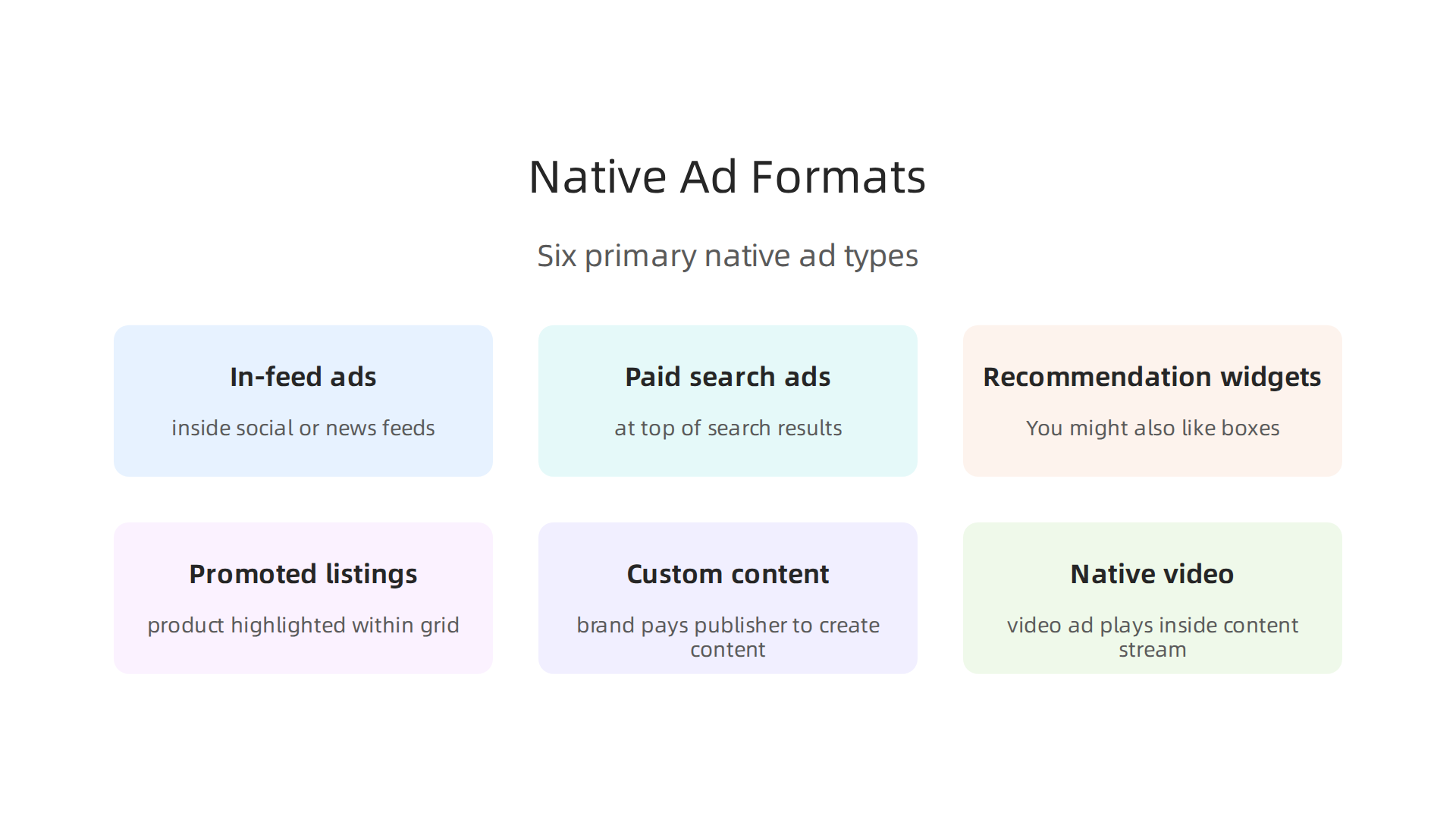
- In-feed ads – These appear inside a social media feed or a news list. They look like regular posts.
- Paid search ads – These show up at the top of search results and match the style of organic results.
- Recommendation widgets – You have seen these at the bottom of articles: "You might also like" boxes powered by platforms like Taboola or Outbrain.
- Promoted listings – Common on e‑commerce sites, where a product appears highlighted within a grid of products.
- Custom content – Also called sponsored content. A brand pays a publisher to create an article or video that matches the publisher’s editorial style.
- Native video – A video ad that plays inside a content stream and looks like a regular video post.
Core principles that make native advertising work
Not every ad that looks natural is native. Three core principles define this format:
- Non‑disruptive – The ad does not interrupt the user’s experience. It flows with the content.
- Value‑aligned – The ad provides useful or entertaining content that fits the context. A good native ad does not feel like an interruption. It feels like information.
- Clearly disclosed – This is the most important rule. Readers must be able to tell the ad is paid content. The FTC native advertising guidelines require clear labels like "Sponsored" or "Advertisement." Without proper disclosure, you risk losing trust and breaking the law.
Native ads often use emotional appeal, or pathos, to connect with readers. A creative strategist might craft a story that tugs at the heartstrings while still fitting the publisher’s voice. And unlike a short banner, native ads can be long advertising, allowing for deeper storytelling.
If you want to see how native ads fit into a broader marketing strategy, check out our guide on inbound marketing definition in 2026.
Understanding what native advertising is only gets you halfway. You also need to know how it performs today. The next section covers the latest benchmarks and data for 2026.
Want to stay ahead of every media shift? Get clear, daily updates on AI and tech that affect your campaigns. Subscribe to The Deep View Newsletter and keep your edge.
The Evolution of Native Advertising: From Sponsored Content to AI-Powered Personalization
Native advertising did not just appear overnight. It has a long history that goes back further than you might think.
The early days of advertorials
Before the internet, brands paid newspapers to run advertorials. These were articles that looked like news but promoted a product. They were the original form of what is native advertising today. The problem? They often lacked proper disclosure.
Then came the web. In the early 2000s, publishers started offering sponsored content that matched their editorial style. But these were still manual deals between a brand and a single publisher. Scaling was tough.
The programmatic shift
Everything changed when programmatic buying entered the picture. As the Social Media Today team noted back in 2020, native advertising was becoming more programmatic and mobile at the same time. This meant brands could buy native ads at scale using automated platforms rather than individual publisher deals.
Programmatic native advertising emerged as a way to integrate ads seamlessly within content feeds on social media, news sites, and apps, as brandmotech explains. And here is the key distinction: programmatic is about how ads are bought, while native is about what ads look like. When you combine them, you get powerful results.
Mobile and social changed the game
Smartphones and social platforms made native ads explode. Feeds on Facebook, Instagram, and TikTok are basically built for native ad formats. These platforms trained users to scroll past traditional ads but stop for content that looks natural. A good creative strategist today knows that pathos advertisements work best in these environments because emotion drives engagement.
Where AI comes in (2026 and beyond)
Now we are in a new era. AI powers everything from targeting to creative generation to real-time optimization. As the team at RevContent notes, AI-powered targeting and programmatic automation are shaping the future of digital advertising.
In 2026, AI driven hyper-personalization is expected to grow by 40%, with brands using predictive analytics to surface offers before a user even knows they want them.
According to McKinsey, companies that nail personalization can see revenue increases of 5 to 15% and improve marketing ROI by 10 to 30%. That is a huge lift.
AI also helps with long advertising formats. A machine can test hundreds of headlines, images, and layouts in seconds to find the winning combination. It adjusts bids in real time. It even writes ad copy that sounds human.
What this means for you
Understanding this evolution helps you see where the industry is heading. If you want to stay ahead of every media shift and get clear daily updates on AI and tech that affect your campaigns, subscribe to The Deep View Newsletter and keep your edge.
Advanced Native Advertising Formats Shaping 2026
You now understand how native advertising grew from simple advertorials into a programmatic, AI powered beast. But the formats themselves have changed too. In 2026, native ads look nothing like the old sponsored text boxes. They are smarter, more interactive, and they fit into places you might not expect.
Let’s break down the three biggest format shifts happening right now.
Programmatic Native and OpenRTB 2.6 Standards
First up is the technical backbone. Programmatic native advertising is nothing new, but the standards behind it are getting a major upgrade. The IAB has been working hard to define clear specifications for native ad units, like in feed ads and sponsored content. This makes it easier for brands and publishers to buy and sell native ads at scale.
One big development is OpenRTB 2.6. This standard improves how programmatic systems handle native ad requests. It gives buyers more detailed information about the ad space, like the exact layout and which elements are required. The result? Ads look more natural and perform better. The IAB Tech Lab is pushing for these updates in 2026 to create more efficiency across the ad industry.
As a creative strategist, you need to understand these standards. They affect what ad formats are possible and how you build them.
Interactive and Shoppable Native Ads
The line between content and shopping is disappearing. Interactive and shoppable native ads let users click, swipe, or buy without ever leaving the page or app. Imagine reading a recipe article and seeing a native ad for olive oil that lets you add it to your grocery cart instantly. That is shoppable native in action.
These ads use strong emotions, or pathos advertisements, to drive engagement. When a user feels something, they are more likely to interact. And because the ad looks like the surrounding content, it does not feel like a disruption. Brands are pouring budget into these formats because they convert well. In retail media networks, native ads compete directly with sponsored products and display for that click.
For long advertising campaigns, like a brand story told across multiple touchpoints, shoppable native ads offer a seamless way to move people from awareness to purchase.
Video and Audio Native Placements
Video native ads are not new, but they are getting smarter. Instead of just matching the visual style of the page, today’s video native ads use contextual targeting to show up in the right environment. For example, a video about hiking gear might appear inside a nature documentary article. Audio native ads are also growing fast on streaming platforms and podcasts. They blend into the listening experience, often read by the host or matched to the topic.
Contextual targeting helps these ads feel less intrusive. The same AI that personalizes your news feed is now analyzing the content around the ad to make sure it fits. This is a big shift from behavioral targeting, which relies on user history.
All these formats require a sharp creative strategist to design them well. If you want to stay on top of every new format and platform shift, get clear daily updates from The Deep View Newsletter. It is the easiest way to keep your edge in 2026.
Programmatic Native and OpenRTB Standards
First up is the technical backbone. Programmatic native advertising is nothing new, but the standards behind it are getting a major upgrade. To really understand what is native advertising in 2026, you need to know how it’s bought and sold at scale. Programmatic native means native ad formats purchased through automated platforms and scaled with data and targeting. This guide from Directive Consulting explains how programmatic native combines automation with the seamless look of native ads.
One big development is OpenRTB 2.6. This standard improves how programmatic systems handle native ad requests. It gives buyers more detailed information about the ad space, like the exact layout and which elements are required. The result? Ads look more natural and perform better. The IAB Tech Lab is pushing for these updates in 2026 to create more efficiency across the ad industry.
For creative strategists, this matters a lot. You need to understand these standards because they affect what ad formats are possible and how you build them. The benefits are clear: scalability across thousands of sites, real-time optimization based on performance data, and cross-device reach that follows users from phone to desktop.
But it’s not all smooth sailing. Two big challenges remain. Viewability fraud happens when ads load but users never see them. Inventory quality also varies widely. Not all native placements are created equal. Some publishers run ads next to low-quality content, which hurts brand safety. That’s why vetting your supply sources is critical.
These standards also support long advertising campaigns that rely on pathos advertisements, or emotional storytelling. Programmatic native ensures your emotional story reaches the right audience consistently, without the ad feeling out of place.
If you want to keep up with every new standard and platform shift, get clear daily updates from The Deep View Newsletter. It’s the easiest way to stay ahead in 2026.
And if you need a refresher on how different ad formats work, check out our guide to the types of Google Ads, which covers campaign types that often use programmatic native placements.
Interactive and Shoppable Native Ads
So you understand the technical side of programmatic native. Now let’s talk about the fun part: how native ads actually look and act in 2026. If you are asking what is native advertising at its most engaging, the answer includes interactive and shoppable formats.
Interactive native ads go beyond static images and text. Think quizzes, polls, swipeable galleries, and even micro-games. Instead of just reading, the user taps, swipes, or answers a question. That active participation boosts engagement time and social shares. For a creative strategist, these formats are a goldmine. They let you tell a story while the user plays along.
Then there are shoppable native ads. These blend a product catalog right into editorial content. Imagine reading a recipe article and seeing a native ad where you can tap to buy the featured olive oil without leaving the page. That is shopping without the friction. According to recent benchmarks, native ads in retail media can lift purchase intent by 18% and deliver strong ROAS on platforms like Instacart. This makes shoppable native perfect for pathos advertisements that pair emotional storytelling with a clear buying path.
Measurement for these formats goes beyond simple clicks. Sure, click-through rate (CTR) above 0.4% still signals strong performance. But you also want to track engagement time, social shares, and click-to-purchase conversion. Landing page conversion rates across industries average around 9.7%, so optimizing the post-click experience matters a lot.
If you want to design interactive or shoppable native ads, start by checking out our guide on the types of Google Ads. It covers campaign formats that often support these rich creative units.
The media landscape moves fast. To get daily insights on every new ad format and strategy, subscribe to The Deep View Newsletter. It keeps you ahead of the curve in 2026.
Video and Audio Native Placements
Video and audio native placements have become a huge part of what is native advertising in 2026. These formats blend naturally into the content the user is already enjoying, which makes them feel less like interruptions and more like part of the experience.
For video, think of in-stream native ads like sponsored pre-roll or mid-roll clips that match the style of the video content around them. If you are watching a travel vlog, a native video ad might show a hotel deal that looks like a mini travel tip. The key is that the ad does not disrupt the flow. It uses the same visual language and tone as the publisher’s own videos. This is where a creative strategist shines, crafting video stories that feel like part of the channel.
Audio native ads are rising fast too, especially in podcasts and music streaming. The best audio native ads use host-read authenticity. When a podcast host personally recommends a product during the show, the listener trusts it more than a generic audio spot. Brands that want pathos advertisements, or emotional appeals, love this format because a warm voice builds connection in a way a banner never can.
Both video and audio native formats rely heavily on contextual and intent-based targeting. Instead of just matching demographics, you match the mood or the moment. A running shoe ad appears during a fitness podcast. A coffee ad plays before a morning news video. This kind of relevance increases engagement. According to recent benchmarks, a CTR above 0.4% still signals strong performance for native ads. But for audio and video, you also want to track completion rates and brand lift.
If you want to understand how targeting fits into the bigger picture of a customer journey, check out our guide on how lifecycle marketing transforms customer relationships. It explains how to match ads to each stage of a buyer’s path.
The media industry is changing fast, and native audio and video are leading that change. To stay on top of new formats and strategies, subscribe to The Deep View Newsletter. It delivers daily AI and media insights straight to your inbox.
Creativity in Native Advertising: Measuring Impact and Best Practices
So we’ve seen how video and audio native ads blend seamlessly into the content we love. But creativity doesn’t stop with just choosing the right format. The real art of what is native advertising lies in balancing your brand’s message with the publisher’s editorial voice. If the ad feels like a sales pitch, it breaks the trust you just built. If it’s too subtle, nobody notices it’s yours. A good creative strategist walks this line every day.
Creative formats that drive real trust include storytelling, user-generated content, and data journalism. Storytelling taps into pathos advertisements, using emotion to create connection. User-generated content feels authentic and peer-driven. Data journalism, or long advertising that tells a story through numbers and insights, positions your brand as a helpful expert.
But creativity means nothing without measurement. You need to track the right metrics to know if your native ads are actually working. The key ones include:
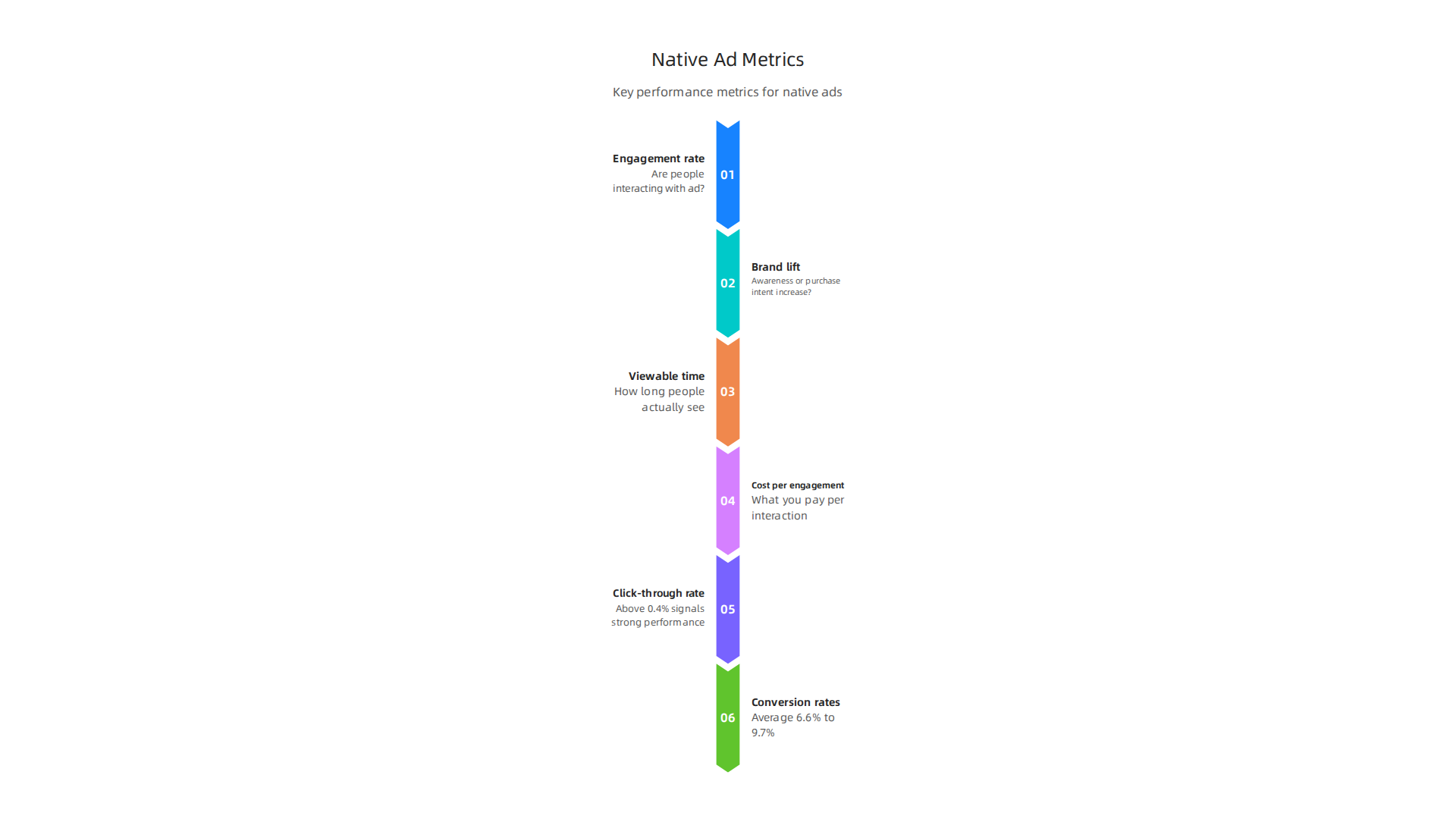
- Engagement rate – Are people interacting with your ad?
- Brand lift – Did awareness or purchase intent increase? One 2026 study found an 18% purchase intent lift from native retail media ads.
- Viewable time – How long do people actually see your ad?
- Cost per engagement – What you pay for each meaningful interaction.
According to benchmarks, a click-through rate above 0.4% signals strong performance for native ads. But CTR isn’t everything. You also want to look at conversion rates, which average around 6.6% to 9.7% across industries. The best creative practices keep copy simple with a single ask, and always ensure the ad is relevant to the surrounding content.
If you want to see how different types of Google Ads compare, check out our guide on the nine campaign formats every media pro should know. It helps you choose the right approach for your goals.
Measuring impact is an ongoing process. For daily insights on how AI and data are shaping the future of native advertising, get clear updates straight to your inbox with The Deep View Newsletter.
Native Ad Metrics and ROI
Click-through rate (CTR) is a good start, but it only tells part of the story. For native ads, the real value shows up in metrics that measure deeper engagement. Think about engagement time – how many seconds do people actually spend with your content? Brand recall – do they remember your message later? And purchase intent – are they more likely to buy after seeing your ad?
Research from 2026 shows that native ads in retail media can lift purchase intent by 18% Osmos.ai. That’s a big signal for ROI. But measuring that lift isn’t always easy. Here’s the thing: attribution is tricky. A person might see your native ad today, browse your site tomorrow, and buy a week later. Standard click tracking misses that. That’s where view-through conversion tracking comes in. It counts conversions that happen after someone sees your ad, even if they don’t click right away.
To get reliable numbers, you need the right tools. Native ad platforms like Taboola and Outbrain give you dashboards with metrics like cost per view, viewable time, and engagement rate. Third-party verification tools from companies like Nielsen or DoubleVerify help you check that your ads are actually seen by real people. A good creative strategist uses these tools to tweak campaigns in real time.
Want to see how engagement metrics worked for a real brand? Check out our case study on Sydney Sweney’s ad campaign that drove 47% higher engagement for American Eagle. It shows the power of measuring beyond clicks.
So you know the metrics that matter. Now, how do you actually build ads that hit those numbers? The answer starts with following a few creative guidelines. Think like a creative strategist who knows that native ads earn attention by blending in, not shouting.
Headline Best Practices
Keep headlines short and punchy. Aim for 5-9 words. Leave a curiosity gap so readers want to click. For example, instead of “Our New Software Boosts Sales by 30%,” try “The Simple Trick Most Sales Teams Miss.” Taboola’s creative guide recommends a single clear ask Taboola. A CTR above 0.4% already signals strong performance eMarketer, so a great headline can push that even higher.
Visual Considerations
Images matter just as much. Use a 1:1 or 4:3 ratio so the ad looks natural on any device. Keep text overlay to a minimum. You want the image to tell the story, not a cluttered label. Include source credibility signals like a trusted brand logo or a real person’s photo. Readers pay attention when they recognize the name.
Copy Strategy
Here’s where many long advertising efforts slip up. Write copy that matches the publisher’s tone. If you’re on a lifestyle site, sound helpful not corporate. Avoid overt selling. Instead of “Buy Now,” lead with “Read This” or “Find Out How.” Pathos advertisements, those that tap into emotion or curiosity, often outperform hard sells. Align your message with what the reader already expects from that publication.
Want to see these guidelines in action? Our case study on Sydney Sweney’s ad campaign shows how creative choices drove a 47% spike in engagement Media Industry News Today. And if you want daily insights on what works in 2026 media, check out The Deep View Newsletter The Deep View. It’s the smart way to stay ahead of ad trends.
The Future of Native Advertising: AI, Regulation, and Consumer Trust
So now you know the creative best practices for today. But what about tomorrow? To really understand what is native advertising in 2026, you need to look at three big forces changing the game: artificial intelligence, stricter rules, and the growing demand for honesty.
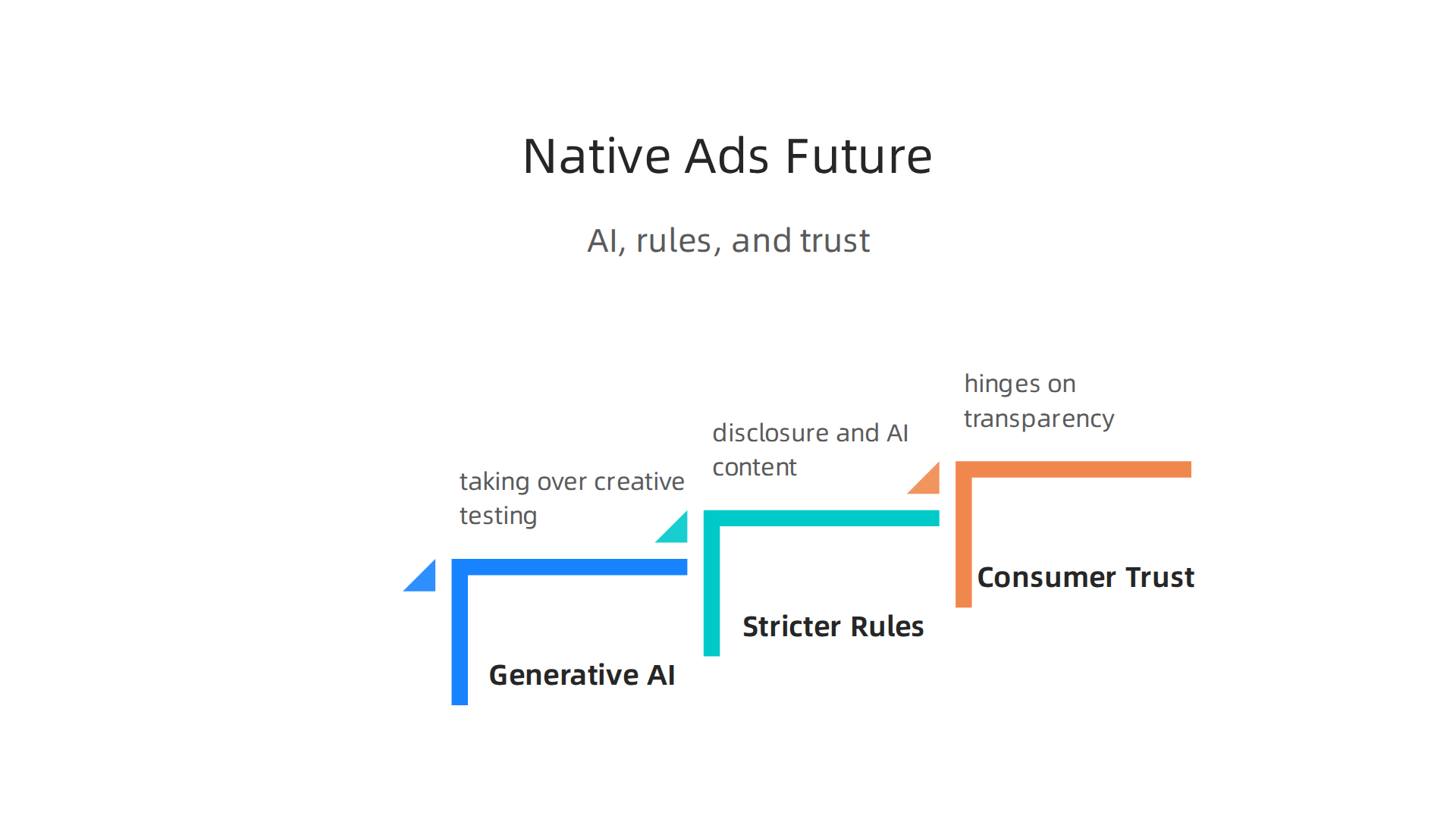
These trends will reshape how you plan, buy, and measure every campaign.
Generative AI Is Taking Over Creative Testing
Here’s one of the biggest shifts. AI tools can now generate dozens of headline and image combinations in seconds. Then they test those variations automatically to find the winner. That means you can personalize native ads for different audience segments without a huge team. According to Revcontent, AI-powered targeting and programmatic automation are shaping the future of digital advertising right now. A smart creative strategist uses AI to run more experiments faster, especially for pathos advertisements that rely on emotional triggers. And long advertising formats like native articles can be optimized for different reader moods using the same AI engine.
Stricter Rules on Disclosure and AI Content
Regulation is catching up fast. The FTC still requires clear labels like “Sponsored” or “Advertisement” on native ads, as the Native Advertising Institute explains. But in 2026, there’s a new layer. New York just passed the first law in the US that forces advertisers to disclose when an ad uses AI-generated content, as reported by eMarketer. Other states are watching closely. The Anstrex compliance checklist warns that privacy rules like GDPR also affect how you target native ads. If you ignore these rules, you risk fines and lost trust. So what is native advertising without compliance? It’s a liability.
Consumer Trust Hinges on Transparency
Here’s the thing. Readers are smarter than ever. They can spot a sneaky ad from a mile away. The AI Digital complete guide stresses that every native unit must include prominent disclosures so people can tell the difference between ads and editorial. When you’re upfront, engagement goes up. A study from smartads.tech shows that personalization done right can boost revenue by 5 to 15 percent. But personalization only works if readers trust you. That means your ads must deliver real value, not just clickbait. Align your message with what the audience actually wants, and they’ll reward you with their attention.
The bottom line? What is native advertising becoming? It’s a blend of machine speed, human creativity, and honest communication. If you want to stay on top of these changes, you need daily insights from people who live and breathe this stuff. That’s why we recommend The Deep View Newsletter. It gives you clear, no-fluff updates on AI, media trends, and ad strategies every day. Sign up and never miss the next shift.
And to put all this into practice, check out our guide on how inbound marketing builds trust in 2026. It connects the dots between native ads and the bigger picture of earning loyal readers.
Conclusion: Thriving in the Native Advertising Ecosystem
You have the full picture now. What is native advertising? It is paid content that matches the look and feel of the platform, designed to inform or entertain instead of interrupt. We covered the major formats, from in-feed units to sponsored content and long advertising pieces like native articles. And you learned creative best practices, like using pathos advertisements that tap into emotion and acting as a creative strategist who tests relentlessly.
But here is the truth: none of that matters without trust. The people who see your ads are getting sharper every day. They can spot a hidden ad in seconds. That is why clear disclosure is non-negotiable. The FTC requires prominent labels like "Sponsored" and "Advertisement", as the Native Advertising Institute explains. And as new laws like New York’s AI disclosure requirement roll out, staying compliant protects your relationship with your audience. Privacy rules are also expanding, according to DLA Piper. When you are transparent, personalization works. In fact, effective personalization can boost revenue by 5 to 15 percent, as smartads.tech reports.
So what should you do next? First, track native ad benchmarks like click-through rates and engagement time. Second, experiment with AI creative tools to test headlines and images faster. Third, keep learning every day. The best way to stay ahead is to subscribe to a trusted industry source. That is why we recommend The Deep View Newsletter. It delivers clear daily updates on AI, media trends, and ad strategies straight to your inbox. Sign up and never miss the next shift.
Want to dig deeper into how trusted advertising fits into the bigger marketing picture? Check out our guide on how lifecycle marketing transforms customer relationships in 2026.
Summary
This guide explains what native advertising is in 2026, why it matters, and how marketers should plan, buy, and measure it. It covers core definitions, the six common native formats (in‑feed, paid search, recommendation widgets, promoted listings, custom content, and native video), and the programmatic standards—like OpenRTB 2.6—that now power scale and richer placements. You’ll learn how interactive and shoppable units, plus video and audio native placements, change the path to purchase and why AI-driven personalization and creative testing are reshaping performance. The article also lays out creative best practices (headlines, visuals, copy), which metrics actually signal success, and the compliance and disclosure rules you can’t ignore. Read it to understand practical steps for launching native campaigns, what benchmarks to expect, and how to use AI responsibly while protecting consumer trust.