
Campaign Type Strategy How to Pick the Right Marketing Campaign for Real ROI
Introduction: Why Campaign Type Strategy Matters
Here is a truth that every marketing leader eventually runs into. There are so many campaign options today that choosing the wrong one can drain your budget fast. You have search ads, display ads, social campaigns, email funnels, influencer drops, and a dozen other formats all competing for your time and money. The problem is not having too few choices. It is having too many without a clear way to decide.
Strategic selection of the right campaign type is what drives real return on investment.

When you match a campaign format to your actual goal and audience, everything clicks. Your ad spend goes further. Your team focuses on what works. And you stop burning cash on channels that never convert.
The media landscape in 2026 moves faster than ever. Digital channels keep multiplying. AI tools reshape how we target, bid, and optimize every single day. Without a structured approach to campaign planning, you are basically guessing. And guessing costs money. As noted in the official Google Ads Help guide on how to choose the right campaign type, your selection should always start with your marketing goals, brand strategy, and the time you can actually invest.
This guide exists to give you a practical framework. We will walk through the most common types of marketing campaigns, look at real marketing strategy examples, explore integrated marketing campaign examples, and show you how each option fits into your marketing funnel. The goal is simple: help you pick the right format, run it well, and measure real results.
The media industry changes weekly. New platforms appear. Old playbooks stop working. But the fundamentals of smart campaign strategy do not change. You just need the right map to navigate.
If you want to stay ahead of the rapid shifts in AI and digital marketing, consider getting clear daily updates from The AI Newsletter Worth Reading. It helps busy media professionals track what actually matters without the noise.
Let us start with the first big decision you have to make: understanding the full landscape of campaign formats available to you.
The Strategic Importance of Campaign Type Selection
Here is the thing about picking a campaign type. It is not just a checkbox you tick before launching. The type you choose sets the rules for everything else. It decides which channels you will use, how you write your messaging, where your budget goes, and what success even looks like.
When you pick a campaign type that does not match your real goal, you lose in two ways. First, you waste money showing ads to the wrong people. Second, you hurt your brand by sending mixed signals. For example, running a performance-based search campaign when your real need is brand awareness will likely deliver cheap clicks that never convert. According to the latest Google Ads campaign management strategies for 2026, campaign type selection directly impacts ROI potential and requires strategic matching of search, display, or shopping formats to your goals.
On the flip side, getting the campaign type right makes your whole marketing operation run smoother. Your team knows exactly what kind of messaging and visuals to create. Your budget gets allocated to the right channels from day one. And your key performance indicators become easy to track because they are tied to the format you chose. This is where marketing strategy examples come to life. An ecommerce brand running a shopping campaign knows its KPI is return on ad spend. A publisher running a display campaign cares about impressions and cost per mille.
When you plan an integrated marketing campaign, you deliberately choose multiple campaign types that work together across the marketing funnel. A display ad builds awareness at the top, while a search ad captures intent at the bottom. Picking the wrong type at any stage breaks the whole chain.
A clear typology also helps different teams stay on the same page.

When everyone agrees on what type of campaign you are running, the creative team, the media buyers, and the analytics team all work toward the same outcome. This alignment makes it possible to scale your efforts without confusion.
So before you launch any ad, take a moment to match your campaign type to your actual goal. It saves money, protects your brand, and sets your team up for success. For a deeper look at specific formats, check out our guide on the types of Google Ads campaign formats every media professional should know.
Core Elements of a Successful Marketing Campaign
Every marketing campaign, no matter what format you pick, needs a strong foundation.
Think of it like building a house. You would not start framing walls without a solid base. The same goes for your campaign.
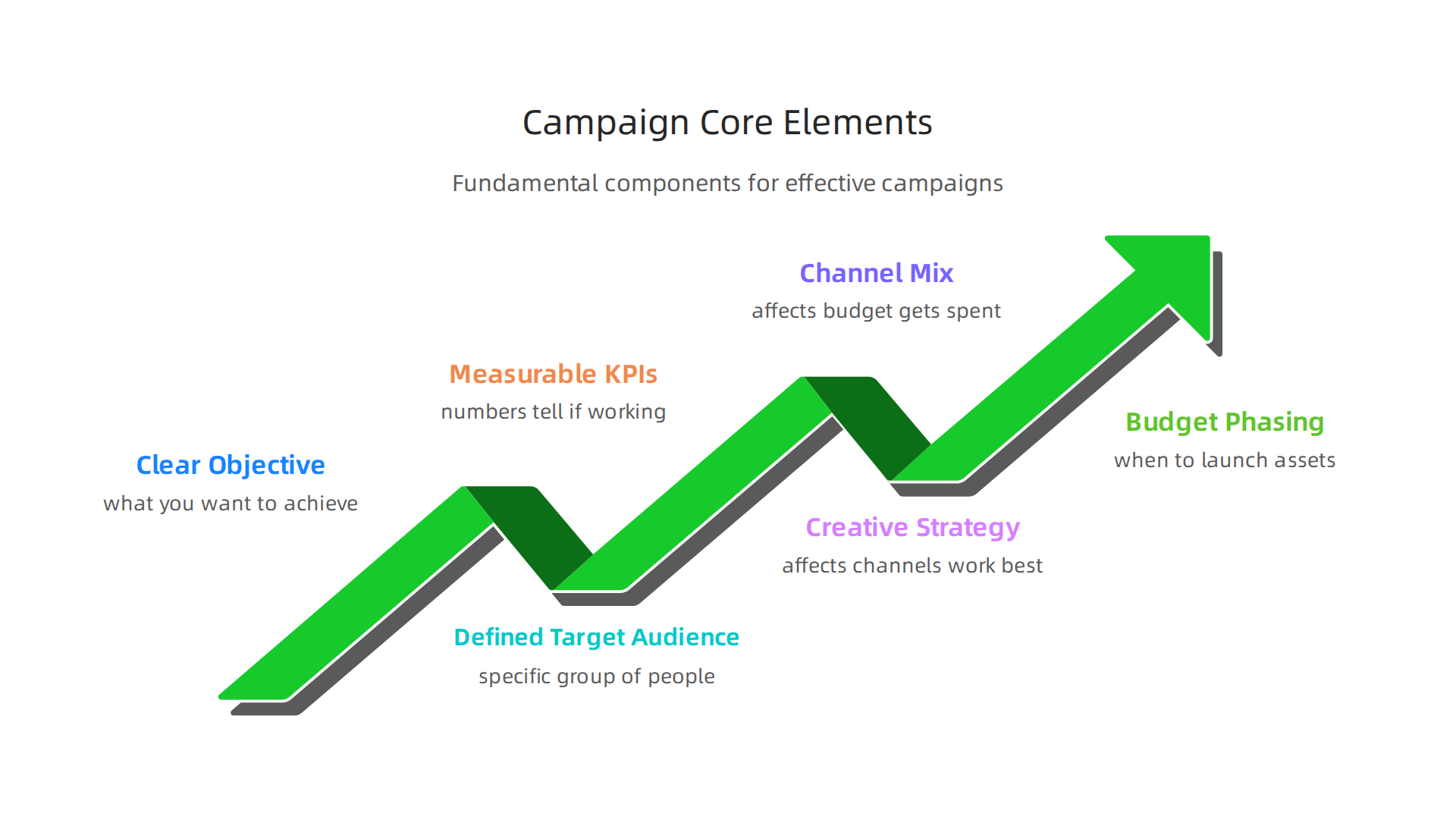
The first core element is a clear objective. You need to know exactly what you want to achieve. Is it more website visitors? More sales? More brand recognition? Your objective drives every other decision you make. Without one, your team will wander in different directions.
The second element is a defined target audience. You cannot market to everyone. The best campaigns focus on a specific group of people who will actually care about your message. This is where you define demographics, behaviors, and what motivates your audience. According to the step-by-step guide to writing a marketing brief from Ziflow, identifying your target audience is a core part of campaign planning because it shapes your entire strategy.
The third element is measurable KPIs. These are the numbers that tell you if your campaign is working. Common KPIs include conversion rates, click-through rates, return on ad spend, and engagement metrics. Without them, you are just guessing.
Now here is where it gets interesting. Your creative strategy, channel mix, and budget phasing are not separate decisions. They depend on each other. The creative you produce affects which channels work best. Your channel choices affect how your budget gets spent. And your budget phasing affects when you can launch certain creative assets. You cannot plan one in isolation.
This is where a campaign brief becomes your best friend. A good brief brings all these pieces together into one document. It outlines your objective, audience, key messages, timeline, budget, and deliverables. It makes sure the creative team, media buyers, and analytics team are all reading from the same playbook. For a deeper look at how different marketing elements interact, check out our guide on the marketing mix strategy in 2026.
When your brief aligns all these elements, your execution gets faster. Your team stops asking basic questions. They already know the audience, the goal, and the budget. They can focus on doing great work instead of figuring out what to do.
As you build your next campaign, start with these core elements. Write them down. Share them with your team. Get clear on the objective, the audience, and the KPIs before you spend a single dollar.
And if you want to stay sharp on the latest trends shaping modern campaigns, there is one resource you should not miss. Get clear daily AI updates from The AI Newsletter Worth Reading.
Now that you understand the core elements, let’s look at one of the most common types of marketing campaigns: the brand awareness campaign. This type focuses on getting your name out there. The goal is not a quick sale. It is about making people remember your brand when they need what you offer.
Brand awareness campaigns prioritize reach and frequency over direct conversions. You want as many eyes on your content as possible. You also want people to see your message multiple times so it sticks. This is called building top-of-mind presence.
To do this well, you need the right channels. Display ads work great because they put your brand in front of people as they browse the web. Video ads are even better for telling a story and creating an emotional connection. Influencer partnerships are another powerful tool. When a trusted creator mentions your brand, their audience takes notice.
The key is consistency. Your message, visuals, and tone should match across every platform. This repetition builds familiarity. And familiarity builds trust.
How do you measure a brand awareness campaign? You cannot just look at sales. Instead, track things like aided and unaided recall. Aided recall means someone recognizes your brand after a prompt. Unaided recall means they think of your brand on their own. Share of voice shows how much of your industry’s conversation belongs to you. Brand search growth measures how many people actively search for your name.
These metrics tell you that people are moving through the marketing funnel. Even if they do not buy today, they remember you for tomorrow. That is the power of awareness.
For a deeper look at one channel that works well here, check out our coverage of native advertising trends in 2026. And remember, every campaign needs a clear objective. As the creative briefs for effective ad campaigns explain, defining whether your goal is awareness or conversion shapes everything that follows.
Lead Generation Campaigns: Capturing Qualified Interest
Brand awareness gets you noticed. But notice alone does not pay the bills. The next step in the marketing funnel is getting people to raise their hand and say, “I’m interested.” That is exactly what lead generation campaigns do.
A lead gen campaign focuses on converting a visitor into a known contact.

You do this by offering something valuable in exchange for their information. The most common offers are gated content like eBooks and whitepapers, free product demos, free trials, or consultation calls. The goal is to capture someone who has a real interest in what you sell.
The difference between a brand awareness campaign and a lead gen campaign is intent. Awareness campaigns push your name out there. Lead gen campaigns pull people in. They work best when you target people who are already searching for a solution to a problem.
Key Metrics That Matter
Measuring a lead generation campaign requires different numbers than awareness.
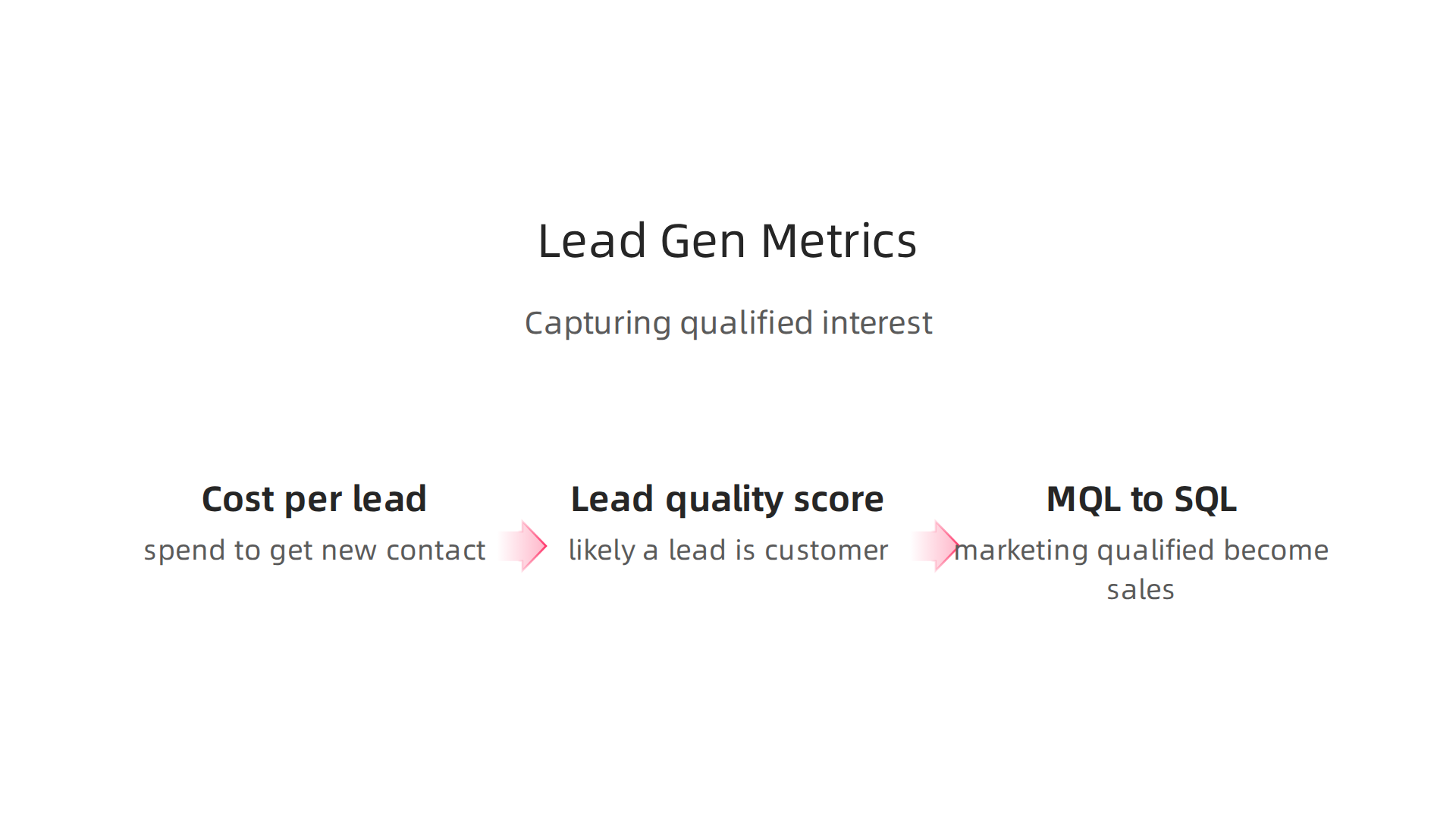
You want to track:
- Cost per lead (CPL). How much you spend to get each new contact.
- Lead quality score. Not all leads are equal. A score tells you how likely a lead is to become a customer.
- MQL to SQL conversion rate. This is the percentage of marketing qualified leads that become sales qualified leads. According to 2026 benchmarks, the median MQL to SQL conversion rate sits at 13%, with top companies hitting 28%.
That last metric matters a lot. It separates campaigns that fill your database from campaigns that actually fill your pipeline.
How AI Supercharges Lead Gen
Here is where things get exciting. AI has changed lead generation in a big way. AI-powered lead scoring improves conversion rates by 30% compared to manual scoring, according to recent B2B lead generation statistics. Instead of guessing which leads are hot, the system analyzes behavior, engagement, and intent data to prioritize the right people.
Nurture sequences also benefit. When a lead downloads a guide but does not book a demo, an automated email sequence can keep them warm. AI helps personalize these sequences based on what the lead clicked or read. This approach turns cold leads into conversations over time.
One of the best marketing strategy examples for lead generation combines paid search with a strong content offer. For example, run Google Ads on high-intent keywords, send traffic to a landing page with a free ROI calculator, and then nurture those leads with case studies. That is a classic lead gen machine.
If you want to explore how the overall marketing funnel connects from start to finish, check out our guide on the inbound marketing definition in 2026. It explains how all the pieces fit together.
And to stay current on the AI tools driving lead gen forward, consider subscribing to a daily intelligence source. The AI Newsletter Worth Reading delivers clear updates on technology shifts that affect your campaigns. It helps you spot opportunities before your competitors do.
Product Launch Campaigns: Driving Adoption and Early Revenue
After you have captured interest from your lead generation campaigns, the next step is to turn that interest into action. That is where product launch campaigns come in. These are among the most important types of marketing campaigns because they directly drive early adoption and revenue for new offerings.
A successful product launch campaign combines education, urgency, and social proof. You educate potential buyers about the problem your product solves. You create urgency with limited-time offers or early-bird pricing. And you use social proof like testimonials or case studies to build trust.
Most great launches follow a phased approach. The tease phase builds curiosity before the official announcement. The launch phase delivers the big reveal with clear calls to action. The post-launch phase nurtures early adopters and collects feedback to improve your messaging. This rhythm helps you maintain momentum and learn what works best.
Cross-functional alignment is critical here. Your product, marketing, sales, and support teams must be on the same page. Consistent messaging across owned and earned channels makes your launch feel unified and professional. According to 40 key lead generation statistics for 2026, businesses that use content marketing to attract leads get six times higher conversion rates than those that don’t. Educational content during a product launch can have the same effect.
One effective marketing strategy example for a product launch is to pair a demo video with a time-limited discount. Send the offer to your email list, run retargeting ads, and let your sales team follow up with hot leads. This kind of integrated marketing campaign example shows how multiple channels work together to drive results.
If you want to explore how in-person events can boost product launches, check out our article on experiential marketing in 2026, which shares how real-world experiences drive 85% higher purchase intent.
Content and Engagement Campaigns: Building Community and Trust
While product launches get people in the door, content and engagement campaigns are what keep them there. These campaigns focus on educating your audience, sparking conversations, and building long-term relationships. They turn one-time buyers into loyal fans.
So what does this look like in practice? You create blog posts, podcasts, webinars, and social media content that actually helps people. You answer their questions. You share stories they can relate to. And you invite them to join the conversation through comments, shares, and user-generated content. According to a Forbes Advisor report on content marketing statistics, content marketing campaigns cost 62% less than traditional marketing while generating three times more leads. That is a serious return on investment.
Engagement metrics matter more than raw views here. Time spent on a page, social shares, and thoughtful comments tell you whether your content truly resonates. High engagement means your audience trusts you. And trust is the foundation of customer loyalty. When people feel connected to your brand, they stick around longer and buy more often over time.
One of the most powerful tools in 2026 is AI-driven content personalization. By analyzing user behavior, you can serve the right content to the right person at the right moment. A personalized blog recommendation or a tailored email sequence makes each reader feel understood. That feeling of being seen boosts retention and keeps your audience coming back.
To manage all this engagement effectively, you need the right tools. Check out our guide on the best social media management tools in 2026 for smarter workflows to streamline your content distribution and community interaction.
Content and engagement campaigns are a core part of any marketing strategy. They help you nurture leads through the marketing funnel and create the kind of community that supports your brand for years. For daily AI insights that can improve your content strategy, subscribe to The AI Newsletter Worth Reading for clear daily AI updates.
Retargeting and Conversion Campaigns: Closing the Loop
You’ve done the hard work. People visited your site, read your content, maybe even added a product to their cart. But they left. That happens all the time. The good news? They are not gone forever. Retargeting campaigns are designed to bring those interested visitors back and turn them into paying customers.
Retargeting works by showing ads to people who already know your brand.

They have already shown some interest, so they are much more likely to convert. This is a smart way to focus your ad spend on the warmest leads. Think of it as the final push in the marketing funnel: you nurture them with content, then nudge them with a targeted ad to seal the deal.
To make retargeting effective, you need to reach people across different platforms. Maybe they browsed your site on their phone but check their email more often. Or they follow your brand on social media but haven’t revisited your site. Cross-platform retargeting connects the dots. But this requires unified identity resolution, which just means you need a system that recognizes the same person on web, email, and social channels. Without that, your message feels disconnected.
Another big mistake is showing the same ad too many times. That leads to ad fatigue, and people start ignoring your brand or worse, feeling annoyed. The fix is simple: set frequency caps to limit how often someone sees your ad, and rotate your creative so the message stays fresh. According to a guide on customer retention marketing strategies, using targeted retargeting alongside personalized email sequences can significantly boost lifetime value.
So when you plan your types of marketing campaigns, make sure retargeting and conversion campaigns are part of the mix. They close the loop on the marketing funnel and turn lost opportunities into loyal customers. For more insights on the bigger picture, read our article on integrated marketing campaign examples.
Selecting and Sequencing Your Campaign Mix
You now understand the main types of marketing campaigns. But running them all at once without a plan can waste time and money. The real skill is knowing which campaigns to run, when to run them, and how to sequence them for the best results.
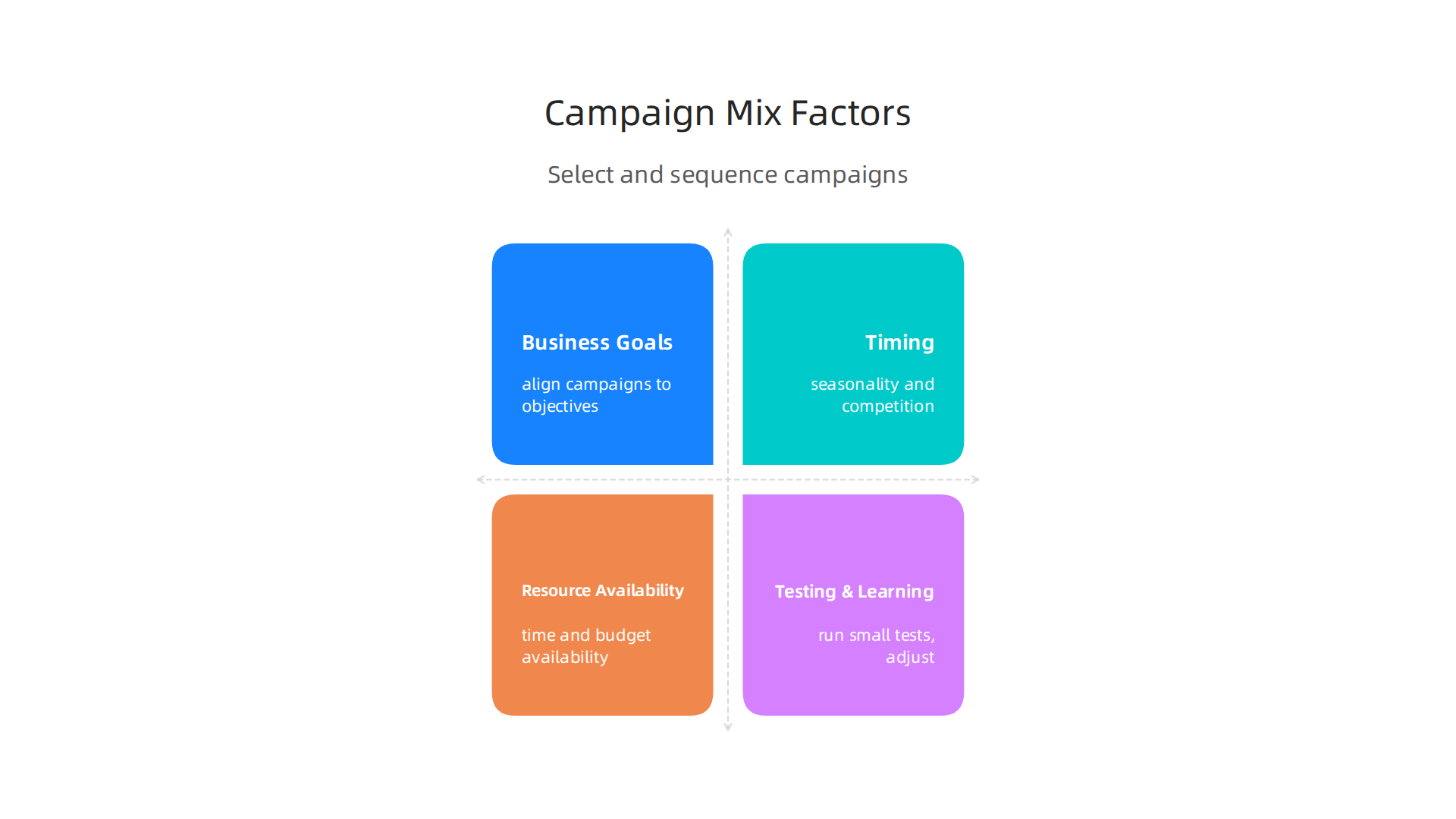
A balanced campaign portfolio starts with your business goals and your audience’s journey stage. Think of the marketing funnel. At the top, you need awareness campaigns like display ads or social content. In the middle, nurture campaigns build trust. At the bottom, retargeting and conversion campaigns drive sales. Your job is to match each campaign type to the right stage. For a deeper look at how the 4 Ps shape your approach, check out our guide on marketing mix strategy in 2026.
Timing also plays a big role. Seasonality affects when people are ready to buy. If you sell holiday products, launch awareness campaigns in late summer so they build momentum by November. Competitive activity matters too. If a big competitor runs a major campaign, you might want to shift your timing to avoid getting lost. And always consider your resource availability. A complex campaign with video production and paid ads needs more time and budget than a simple email blast.
Finally, build a testing and learning framework into your campaign mix. No one gets it perfect on the first try. Run small tests, measure results, and adjust. According to the Integrated Marketing Communications IMC guide for 2026, using a structured approach to channel selection and budget allocation helps you learn faster and improve over time.
To make smart decisions about your types of marketing campaigns, stay current with industry shifts. For daily insights on how AI and technology are reshaping media campaigns, subscribe to The AI Newsletter Worth Reading. It helps professionals like you keep up without the noise.
Summary
This article explains why choosing the right campaign type is the single biggest driver of marketing ROI and offers a practical framework to make that decision. It walks through the core elements of any successful campaign—clear objectives, defined audiences, measurable KPIs, and a unified campaign brief—then breaks down the most common campaign types: brand awareness, lead generation, product launches, content/engagement, and retargeting. For each type you get the key metrics, tactical examples, and how AI can improve things like lead scoring and personalization. The guide also covers how to sequence campaigns across the funnel, avoid common mistakes like ad fatigue, and align creative, media, and analytics for repeatable results. By reading this piece you’ll know which formats match specific goals, how to measure them, and how to build an integrated campaign mix that spends smarter and scales faster.