
Integrated Marketing Communications Drive Unified Brand Success
Why integrated marketing communications (IMC) matters now
In today’s fast-moving world, businesses need to connect with people everywhere they look. Think about it: customers see ads on social media, get emails, watch videos, and read websites. If all these messages don’t match up, it can get confusing. This is where integrated marketing communications, or IMC, comes in.
Simply put, integrated marketing communications (IMC) is a smart way to make sure all your marketing messages work together.

It’s like having all the instruments in a band play the same song in harmony. When you use IMC, all parts of your marketing, like ads, public relations, and social media, send out one clear, steady message to your customers. This helps your brand sound and feel the same no matter where someone sees or hears from you in 2026, creating a stronger connection according to the Integrated Marketing Communications (IMC) Guide 2026.
Why is this unified messaging so important now? Well, the business world has gotten much more complex. We have so many different places where companies try to reach people. This can lead to a big problem: fragmented channels. It means your messages can get broken up and lost across too many platforms. On top of that, there’s a flood of information, often called data overload, which makes it hard to know what’s working. Plus, new technologies like Artificial Intelligence (AI) are changing everything, putting even more pressure on businesses to keep up. To handle these challenges, companies need a smart way to bring all their efforts together.
If you are a media professional trying to navigate this new landscape, you might also want to read our guide on how to choose the best AI marketing agency for your business. Understanding IMC helps businesses cut through the noise, make sense of all their marketing data, and stay ahead in a world always being reshaped by new tech.
Staying on top of these changes, especially with AI, can be tough. But there’s a way to get clear, daily updates that matter to media professionals like you.
Get clear daily AI updates from The Deep View Newsletter. The AI Newsletter Worth Reading.
What is Integrated Marketing Communications (IMC)?
Let’s dive deeper into what integrated marketing communications (IMC) truly means. Imagine your brand is a person talking to friends. If this person says different things to different friends, it gets confusing. But if they always have the same clear message, everyone understands them well. That’s the main idea behind IMC.
IMC is a smart way to bring together all the different ways a business talks to its customers. This includes things like advertisements, messages on social media, emails, website content, and even what sales people say. The goal is simple: to make sure all these parts send out one clear, strong, and consistent message. It’s about making your brand feel the same everywhere, which helps people know and trust your business more easily in 2026. Experts say that IMC is a plan that helps coordinate all marketing channels to give a unified message to customers at every step

What Is Integrated Marketing Communications (IMC)? The ….
How IMC is different from old ways of marketing
In the past, marketing often worked in separate parts, like different departments doing their own thing. The TV ad team might not talk much with the email team. This is called a "siloed" approach. It means messages could feel disconnected or even clash with each other.
IMC changes this by being a "marketing 360" approach. It means looking at all angles and making sure every message works together. Instead of separate teams working alone, IMC encourages them to work as one big team. This way, your brand’s voice is always the same, whether someone sees an ad, visits your website, or reads a social media post. This careful planning can make each marketing campaign stronger and clearer. For help planning various marketing efforts, check out our guide on how to pick the right marketing campaign for real ROI.
Key goals of integrated marketing communications
IMC has important goals that help businesses succeed:
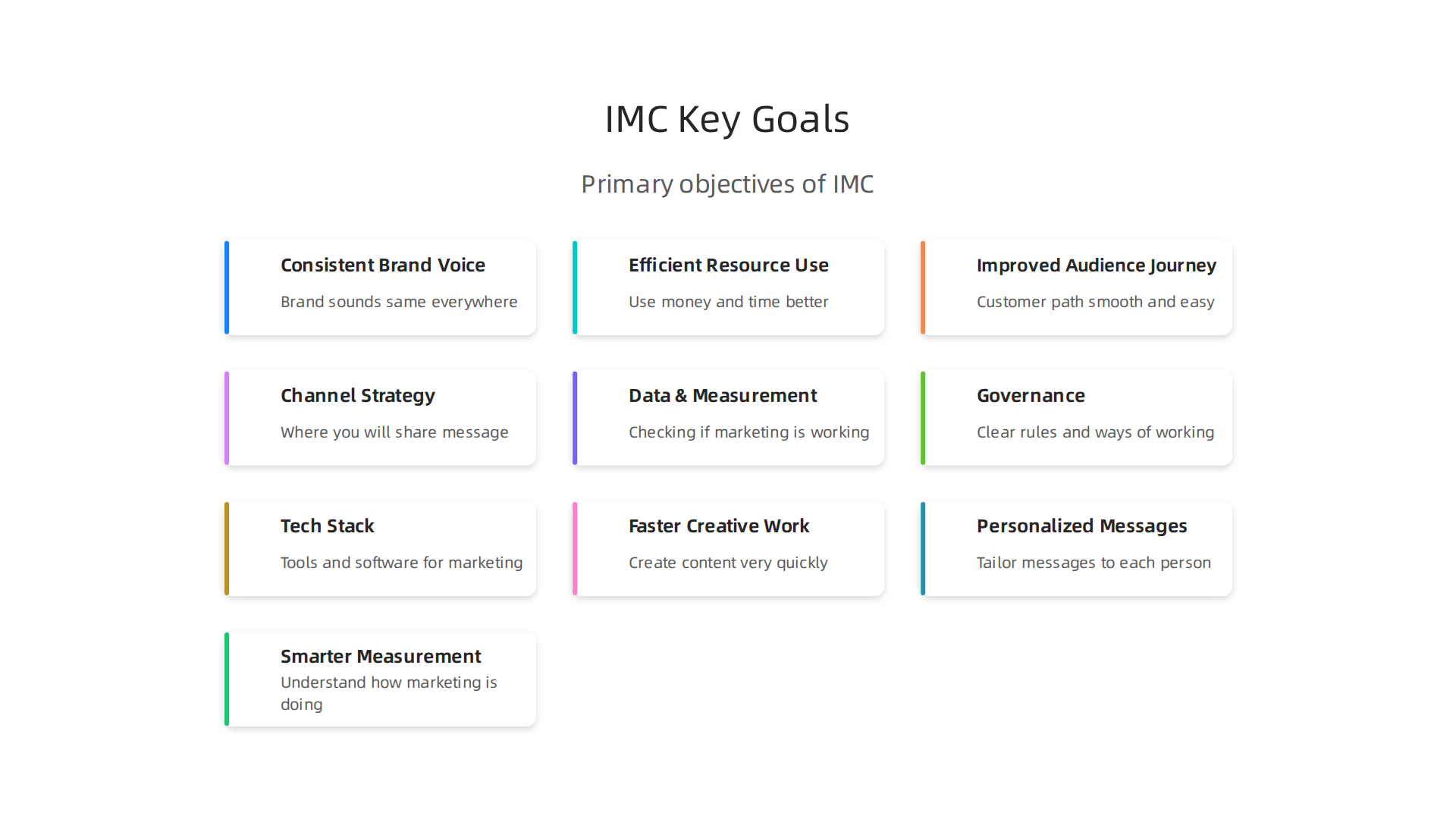
- Consistent Brand Voice: This means your brand sounds and feels the same, no matter where a customer sees or hears from you. This helps build trust and makes your brand easier to remember.
- Efficient Resource Use: When all your marketing efforts are planned together, you can use your money and time better. You avoid repeating work or sending out conflicting messages, which saves resources.
- Improved Audience Journey: IMC makes sure the path a customer takes with your brand is smooth and easy. From the very first ad they see to the moment they buy something, the messages flow together. This makes the customer’s experience better and more likely to lead to a sale.
Putting an integrated marketing communications (IMC) plan into action means looking at several key parts that all work together.

It’s like building a strong house: you need a good plan, the right materials, and people who know how to build it. A strong IMC program has these main parts working smoothly.
Key parts of an IMC program
When you set up an IMC program, you focus on different areas to make sure your message is clear and reaches the right people.
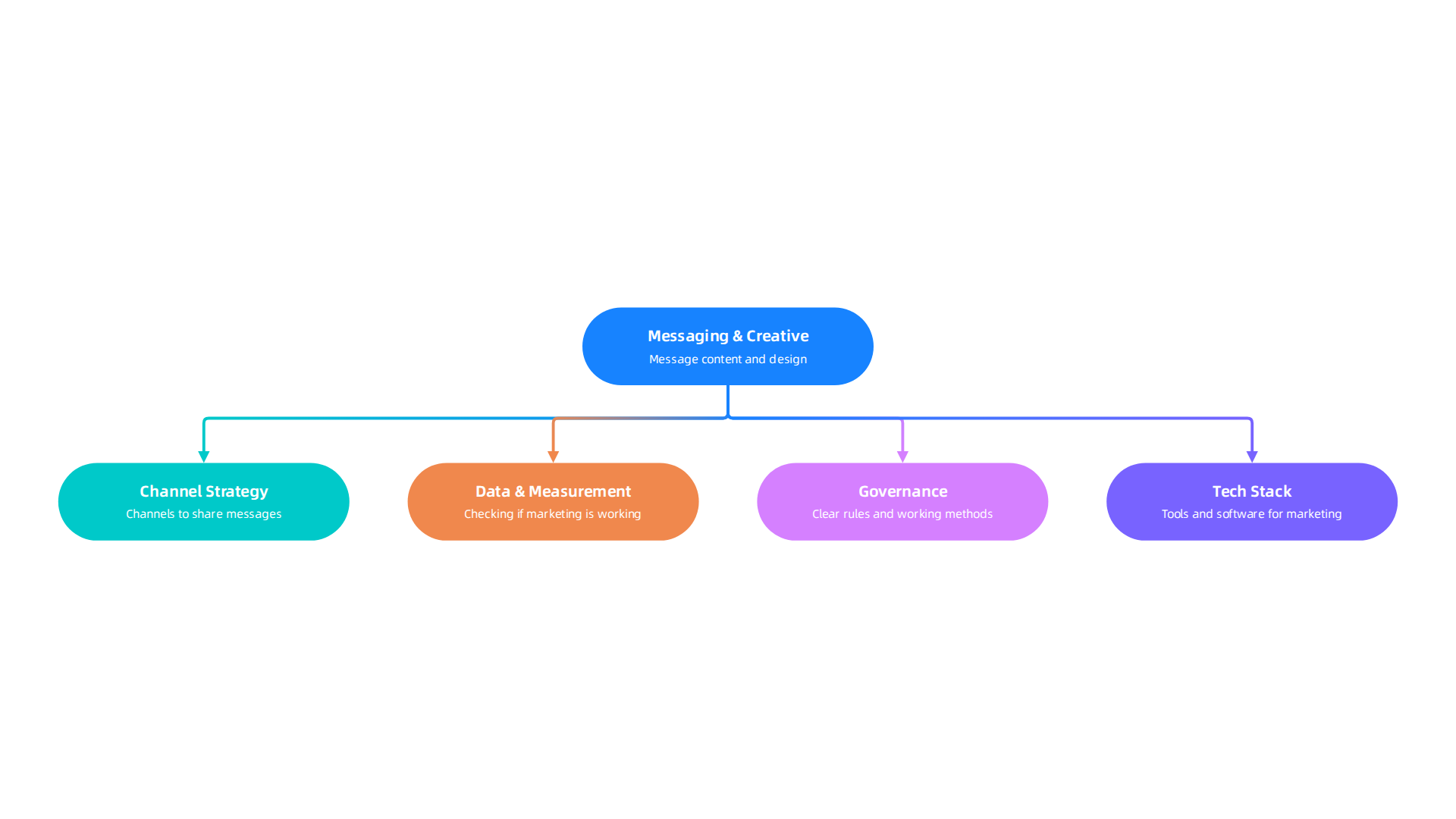
These are the building blocks of good communication:
- Messaging and Creative: This is all about what you say and how it looks. It includes the words you choose for your ads, the pictures, and the videos. The goal is to make sure your brand’s story is always the same, no matter where someone sees it. This consistent story helps people remember your brand better.
- Channel Strategy: This part figures out where you will share your message. Will it be on social media, through emails, on TV, or somewhere else? An IMC plan makes sure you pick the best places and that your messages on each platform work together, not against each other. For example, a video ad on social media might lead to a longer article on your website. This is a crucial part of your overall marketing mix strategy in 2026.
- Data & Measurement: This is about checking if your marketing is actually working. You look at numbers to see how many people saw your ads, clicked your links, or bought your product. This helps you understand what’s effective and what needs to change. It’s how businesses learn and get better, especially in areas like analytic marketing which helps drive smarter campaigns.
- Governance: This sounds like a big word, but it just means having clear rules and ways of working. Who is in charge of what? How do teams talk to each other? Good governance makes sure everyone follows the same plan for integrated marketing communications. It helps keep everything on track.
- Tech Stack: These are the tools and software your business uses for marketing. This includes email programs, social media schedulers, website analytics, and customer relationship management (CRM) systems. Having the right tools and making sure they all "talk" to each other is key for a smooth IMC process.
How teams work together for IMC
For integrated marketing communications to really work, different teams inside a business must work as one. Think of it as a "marketing 360" approach where everyone is aiming for the same goal. A clear framework helps coordinate all these efforts, ensuring a single strategy across all channels Integrated Marketing Communications (IMC) Planning ….
- Brand Team: They make sure the overall look, feel, and voice of the brand are consistent.
- Content Team: These are the writers, designers, and video creators who make all the actual messages and creative materials.
- Paid Media Team: They handle advertising that costs money, like ads on Google or social media. They focus on things like types of Google Ads and other paid channels.
- Product Team: They make sure the product or service itself matches what the marketing is promising.
- Analytics Team: They look at all the data to see what’s working and help everyone else make better choices.
By bringing these teams together, businesses can make sure every message they send out works towards the same big goals. This teamwork helps create a strong, unified experience for customers.
Want to stay on top of how AI is shaping these marketing components and strategies in 2026? The AI Newsletter Worth Reading offers daily insights to keep you informed.
Building on that idea of teamwork, integrated marketing communications helps a business make sure all its messages pull in the same direction.

It’s like having everyone sing the same tune, no matter which instrument they are playing. This means that what you say on social media, in an email, or in a paid ad on TV should all sound like they come from the same company.
This consistent approach covers what we call paid, owned, and earned channels. Paid channels are like the ads you pay for, such as those on social media or search engines. Owned channels are things you control, like your company’s website or blog. And earned channels are when people talk about your brand for free, like when they share your content or mention you in news stories. For example, understanding the differences between paid media vs earned media in 2026 helps you plan how to use each type of channel best.
This careful planning also helps with audience targeting. When you know who you are talking to, perhaps through something like psychographic marketing, you can make sure your messages really connect with them. This helps make sure that all the marketing efforts work together to reach the right people with the right message.
How teams stay aligned
To make sure everyone is on the same page and working toward common goals, businesses use smart tools and plans.
- RACI Models: One helpful tool is called a RACI model. RACI stands for Responsible, Accountable, Consulted, and Informed. This model makes it super clear who does what for each task. For example, someone is "Responsible" for doing the work, like writing an ad. Someone else is "Accountable" for making sure that ad gets done right. Others are "Consulted" for their ideas, and some are just "Informed" about what is happening with the ad. Using a RACI model can help in designing the AI governance operating model by making roles clear.
- Shared Roadmaps: These are like maps that show everyone where the company is going and how different projects fit into the bigger picture. When all teams can see the overall plan, they can make sure their daily work helps achieve the larger goals.
- Integrated Planning Sessions: These are meetings where all the different teams come together. They talk about what they are doing and plan how to work together. This helps make sure every campaign definition marketing goal is understood and that everyone is aiming for the same targets.
The way teams align their goals directly sets the stage for creating a strong integrated marketing communications plan. It’s like drawing up a detailed blueprint before you start building. An effective IMC plan makes sure all your marketing actions work together as one smooth "marketing 360" effort, aiming for the same big wins.
Here’s a simple, step-by-step framework to build your own integrated marketing communications plan:
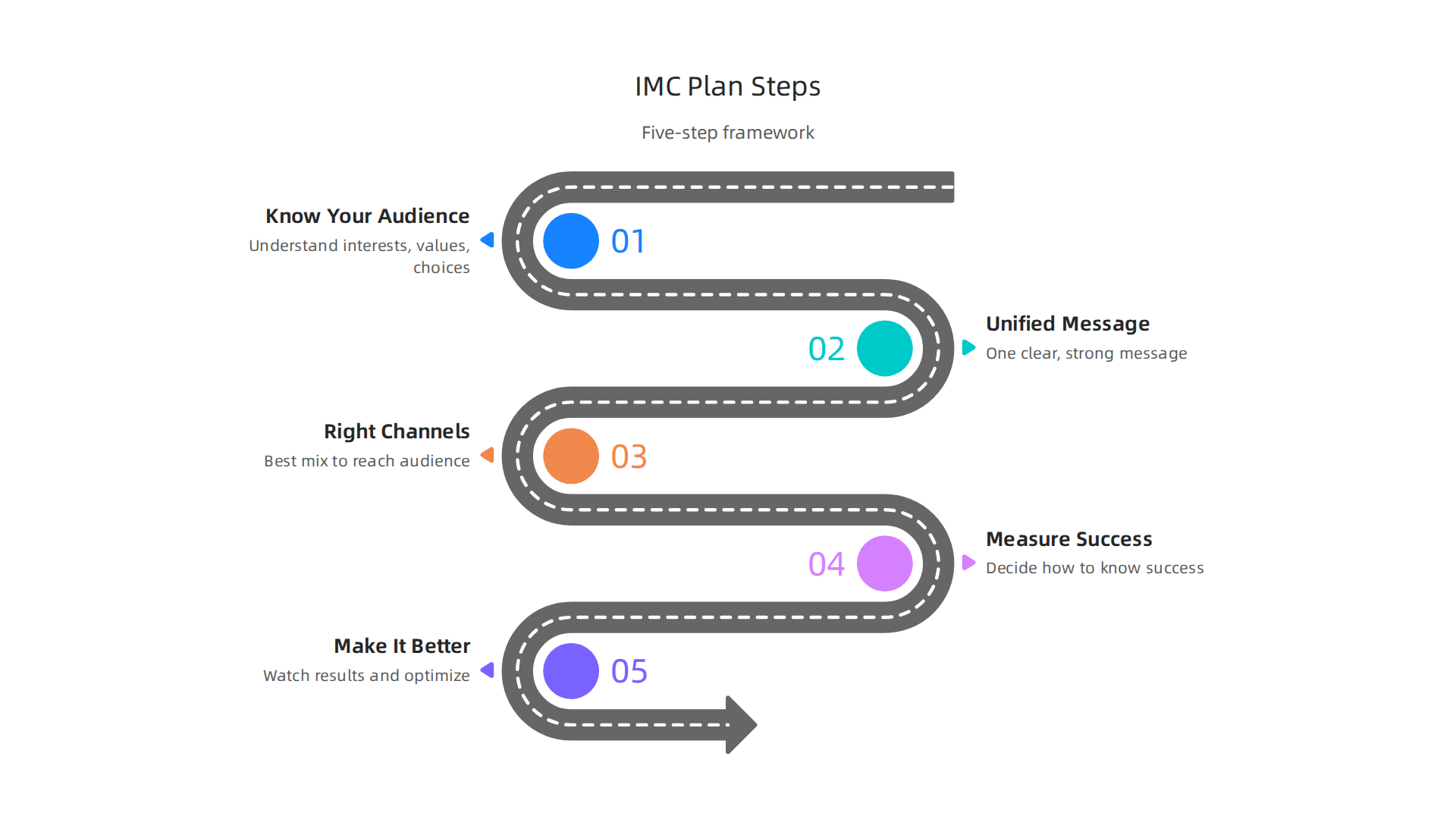
1. Know Your Audience Inside Out
First, you need to deeply understand who you want to reach. This goes beyond just age or location. It means looking into their interests, values, and how they make choices. This is often called psychographic marketing. By really knowing your audience, you can create messages that speak directly to their needs and wants. Many businesses use templates to outline their marketing communications plan, starting with a clear situation analysis and target audience details according to an Integrated Marketing Plan Template.
2. Craft a Unified Message
Once you know your audience, the next step is to create one clear, strong message. This message should be simple enough that everyone in your company can understand it and share it. It must sound the same, whether it’s on your website, in a social media post, or in an email. This consistency is key for your integrated marketing communications to work.
3. Pick the Right Channels
Think about all the places your audience spends their time. Will you use social media, email, ads on different websites, or even traditional TV and radio? You need to pick the best mix of channels to reach your audience with your unified message. This helps ensure your campaign definition marketing efforts are placed where they matter most. For example, understanding what channels are effective is part of a broader analytic marketing approach.
4. Plan How You’ll Measure Success
Before you even start, decide how you will know if your plan is working. What numbers will you look at? This could be how many people visit your website, how many sign up for your newsletter, or how many buy your product. This focus on clear results is often part of CRO marketing, which means Conversion Rate Optimization. Having clear goals and ways to track them is super important for an effective plan.
5. Keep Making it Better (Optimize)
Marketing is not a "set it and forget it" task. You need to watch your results and see what’s working and what’s not. If something isn’t working, change it. This is called an optimization loop. By constantly improving, your integrated marketing communications efforts will become more powerful over time. Many templates for an Integrated Marketing Communications Plan Example 2026: 7 Steps include steps for review and adjustment.
Using simple templates and checklists can really help businesses move from big ideas to actual steps. These tools help clarify who is in charge of what, and what Key Performance Indicators (KPIs) to watch. With a solid plan and clear checkpoints, your team can easily turn strategy into successful execution. Staying on top of fast-moving trends, especially in AI, is also crucial for any modern marketing professional.
For more profound, daily insights into AI and technology relevant to the media sector, get The AI Newsletter Worth Reading.
Measurement, analytics, and KPIs for IMC
After you’ve planned out your integrated marketing communications steps, it’s time to talk about how you know if it’s all working. This is super important. You need good ways to measure your efforts, look at the numbers, and see if your goals are being met. This helps you understand the real impact of your marketing 360 campaigns across all the different places you reach customers.
In 2026, simply counting clicks isn’t enough. We need to look deeper into how each part of your marketing helps reach your overall goal. This means using a few smart tools:
- Attribution Models: These try to figure out which marketing "touchpoints" or interactions a customer had before they bought something or signed up. It’s like giving credit to each step on the customer’s journey. However, basic attribution models sometimes only show what happened alongside a purchase, not what actually caused it, which can be tricky to understand for your marketing communications plan example.
- Incrementality Testing: This is a more powerful way to measure. It asks, "Would the customer have done this even without seeing my ad?" To find out, you show your marketing campaign to one group of people but not to another similar group. The difference in what they do helps you see the real extra sales or actions your marketing caused. This helps prove the true lift of your campaign definition marketing efforts. Many experts agree that incrementality testing helps measure the actual extra impact a marketing activity has, beyond what would have happened anyway What Is Incrementality In Marketing? A Guide to Measuring ….
- Brand Lift Studies: These look at how your marketing changes what people think or feel about your brand. Are more people aware of you? Do they like you more? This helps measure how your message affects people over time, not just if they click or buy right away.
The best approach in 2026 is to use these methods together. You can combine what attribution models show with the clear cause-and-effect results from incrementality tests. This gives you a complete picture of your integrated marketing communications success A Guide to Measurement in 2026.
To make all this measurement work, you need a good system for your data. Think of it like this:
- Single Source of Truth: All your marketing data should go to one main place. This makes sure everyone on your team looks at the same, correct information.
- Easy Dashboards: Create simple screens (dashboards) that show your most important numbers and KPIs (Key Performance Indicators) at a glance. This helps everyone quickly see what’s working and what’s not.
- Data Governance: This just means having clear rules for how you collect, store, and use your data. It keeps your information accurate and safe.
By putting all these pieces together, you can truly understand how well your campaigns are doing and make smart choices to improve them. This is key for any business looking to choose the right marketing campaign for real ROI.
Even with the best tools to measure your marketing, putting your integrated marketing communications plan into action can have its own set of problems.

Many businesses find that some common issues pop up again and again. It’s like trying to get all the parts of a big machine to work together perfectly.
Here are some big challenges you might face when trying to set up your marketing 360 efforts:
- Teams Not Working Together (Organizational Silos): Often, different departments in a company, like sales, marketing, and public relations, work separately. They might have their own goals and not talk much to each other. This makes it hard to send out one clear message to customers.
- Old Technology (Legacy Tech): Some companies still use older computer systems that don’t easily connect with newer tools. This can make it tough to share customer information or launch a unified campaign definition marketing across all platforms.
- Mixed-Up Information (Inconsistent Data): If different teams collect data in different ways, or if their systems don’t talk to each other, you end up with data that doesn’t match. This makes it hard to see the full picture of how your campaigns are doing. As we talked about before, having a single source of truth for your data is key.
- Disagreements on Success (Measurement Disagreements): Even if you have good measurement tools, teams might not agree on what numbers are most important or what "success" truly means. This can slow down progress and make it hard to decide what to do next.
But don’t worry, there are good ways to get past these problems!
How to Make IMC Work Better
To overcome these hurdles and make your integrated marketing communications strategy strong, think about these steps:
- Start Small (Phased Rollout): Instead of trying to change everything at once, pick one part of your business or one type of customer (maybe using psychographic marketing insights) to start with. See what works, learn from it, and then slowly expand your efforts.
- Test New Ideas (Pilot Projects): Before launching a huge campaign, try it out on a smaller group. This is like a mini-experiment that lets you fix problems before they become big issues.
- Help People Change (Change Management): People often don’t like new ways of doing things. Make sure to explain why these changes are good for everyone and provide training. Getting everyone on board is super important for successful cro marketing and other efforts. A digital marketing strategy consultant helps agencies navigate AI and grow by guiding them through big changes.
- Get Support from Leaders (Executive Sponsorship): When the top people in the company believe in integrated marketing communications and show their support, it makes a big difference. Their backing can help break down silos and get everyone working towards the same goals. Having clear plans, like those found in an integrated marketing communications campaign proposal, can also help get leaders on board.
By tackling these challenges head-on and using smart solutions, you can make your integrated marketing efforts much more effective in 2026. Staying informed about new tools and strategies, especially those powered by AI, is also a great way to stay ahead.
If you want to keep up with the latest advancements in AI and technology that are shaping the media world, you should definitely check out The AI Newsletter Worth Reading. It gives clear daily updates to help you make sense of it all.
The previous section touched on how staying updated with new tools, especially AI, helps overcome challenges in integrated marketing communications. Indeed, in 2026, Artificial Intelligence is not just a buzzword; it’s changing how we think about integrated marketing communications from the ground up.
How AI Changes IMC
AI helps businesses in many ways to make their marketing messages clear and strong:
-
Faster Creative Work: AI helps marketers create a lot of content very quickly. Think about writing ad copies, making different images, or even drafting social media posts. Tools powered by AI can generate many versions of creative content, saving time and helping brands keep their message fresh across all channels. For example, AI can create different ad copies and creative ideas almost instantly, making it easier to run tests and make campaigns better rapidly How AI Is Changing Digital Marketing in 2026. This boosts how much work teams can do and helps with planning for campaign definition marketing.
-
Personalized Messages: One of AI’s biggest strengths is making marketing feel personal. AI can look at what customers do online, what they like, and what they buy. Then, it can help tailor messages, content, and even the best time to send an email to each person. This means your marketing 360 efforts become much more effective, speaking directly to individual customer needs and behaviors. It’s like advanced psychographic marketing, but done for many people at once AI Marketing: Complete 2026 Guide to Strategies, Tools, and Real‑World Use Cases.
-
Smarter Measurement: AI also makes it easier to understand how well your marketing is doing. It can look at massive amounts of data from all your different campaigns. Instead of waiting days for reports, AI can flag issues like rising ad costs right away or suggest how to shift your ad budget for better results AI Marketing Use Cases in 2026: Real Examples & Strategies. This real-time look helps marketers improve their cro marketing by quickly seeing what works and what doesn’t. If you want to use data to make smarter marketing choices, you might want to explore Analytic Marketing Drive Smarter Campaigns and Boost ROI in 2026.
Risks and the Need for Human Input
While AI offers many good things, it also brings challenges. We need to be careful about things like bias in the data AI uses, which could lead to unfair or unhelpful marketing. It’s also important to be open about when AI is being used. Human oversight is still very necessary. AI is a powerful tool, but it works best when guided by human creativity, good judgment, and smart planning. People must set the rules and check the results to make sure AI is used in a responsible way. If you’re thinking about adding AI to your marketing efforts, it’s wise to consider how to Choose the Best AI Marketing Agency for Your Business to help navigate these new tools safely and effectively.
So, in 2026, AI is a game-changer for integrated marketing communications. It makes creative work faster, personalizes messages like never before, and provides smarter ways to measure success. But remember, the human touch, strong ethics, and clear guidelines are still key to making AI work its best for your brand.
Summary
This article explains integrated marketing communications (IMC) and why it matters in today’s fragmented, AI‑driven media landscape. It defines IMC as the practice of coordinating paid, owned, and earned channels so every message feels consistent and supports the customer journey. The piece covers how IMC differs from siloed marketing, outlines core program elements—messaging, channel strategy, measurement, governance, and tech—and shows how cross‑functional teams must align. You get a simple implementation framework (audience, unified message, channel choices, measurement, optimization), methods like incrementality testing and brand lift for proving impact, and practical ways to overcome common barriers like legacy tech and organizational silos. The article also describes how AI speeds creative, personalization, and analytics while stressing the need for human oversight and clear data governance.