
Marketing Mix Strategy in 2026 How the 4 Ps Drive Real Media Growth
Introduction: Why the Marketing Mix Still Matters in a Digital-First World
Let’s be real for a second. If you’re a media executive, a marketing director, or a creator trying to grow an audience, you probably feel like you’re drowning in tactics. New AI tools pop up every week. Platforms shift their algorithms overnight. And everyone is telling you to “go viral” or “double down on short-form video.” It’s loud. And it’s easy to mistake a flashy tactic for a real plan.

But here’s the thing: tactics without strategy are just random actions. That’s where your marketing mix strategy comes in. The classic framework of the 4 Ps of marketing (Product, Price, Place, Promotion) is still the bedrock of any effective marketing strategy. It keeps your team aligned, your budget focused, and your message clear.
In 2026, the marketing landscape is more complex than ever. We’re seeing a rise in AI-driven discovery, but consumers are also craving genuine human connection. A recent report on marketing trends in 2026 calls this a “paradox” for brands. At the same time, nearly half of marketers are now betting on marketing mix modeling (MMM) to measure what’s actually working. This shows that even as technology changes, the need for a solid strategic foundation only grows.
That’s why we wrote this guide. We want to refresh the foundational principles of the marketing mix and show you exactly how to apply them in 2026 for real competitive advantage. No fluff. Just practical steps you can use right now.
If you want to build a brand strategy or digital strategy that actually delivers, it all starts with the 4 Ps. And if you want to stay ahead of the AI curve, we recommend subscribing to a resource that cuts through the noise. The Deep View Newsletter delivers clear daily AI updates that help media pros like you make smarter decisions. Check it out here: The AI Newsletter Worth Reading.
For a deeper look at how the 4 Ps build trust in modern marketing, read our article on inbound marketing definition in 2026.
What Is the Marketing Mix? A Refresher on the 4Ps
So what exactly is a marketing mix? At its simplest, it’s the set of tools you use to bring your product or service to the right audience. The classic framework is the 4 Ps: Product, Price, Place, and Promotion. These four elements work together to form a complete marketing strategy. According to the American Marketing Association, the 4 Ps are the key factors in any marketing plan.
Here’s a quick breakdown, with examples from media and publishing to make it real.
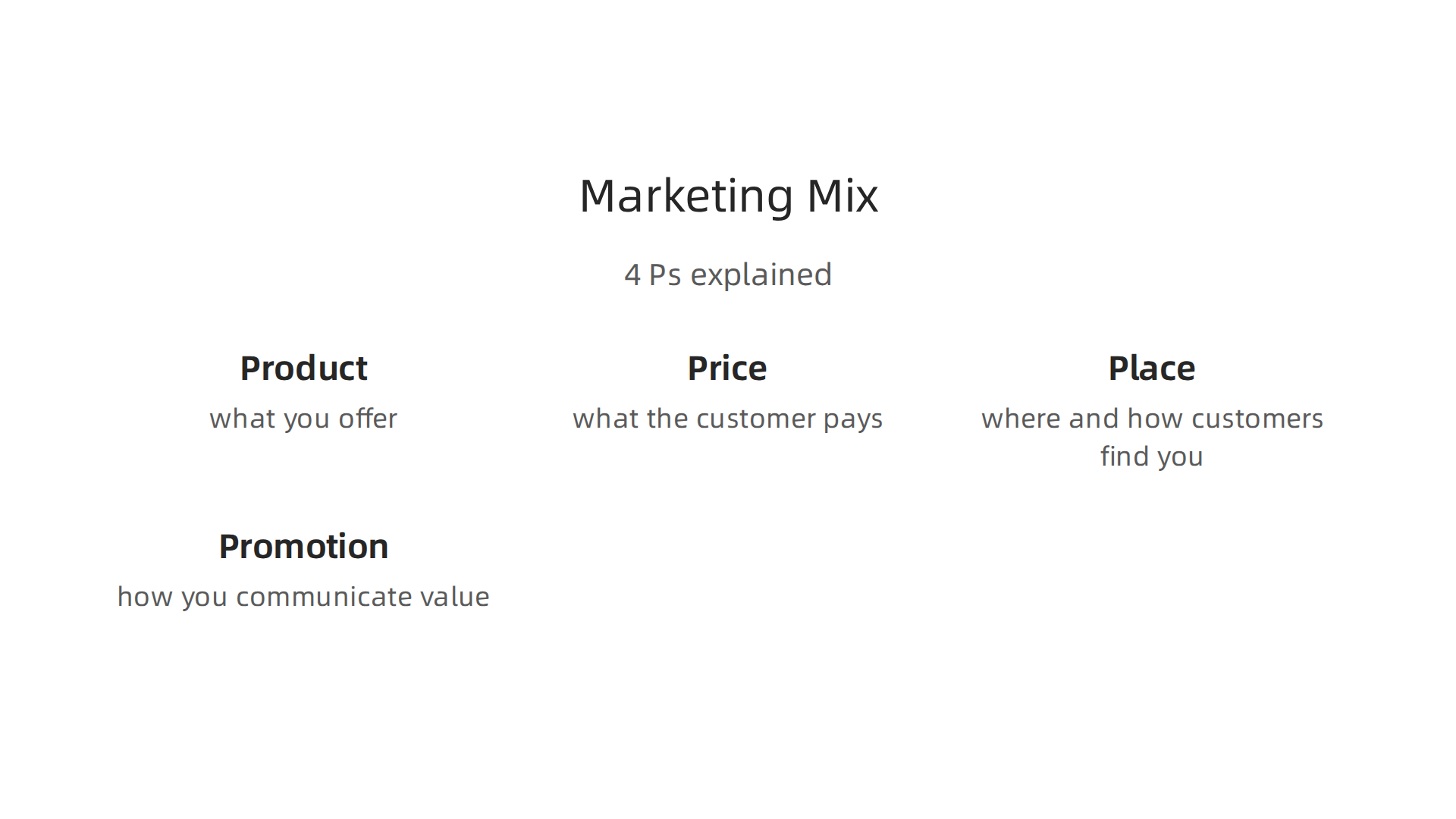
Product is what you offer. For a media company, that could be a streaming service, a newsletter, or a podcast. In 2026, your product might include an AI-powered recommendation engine that personalizes content. The product shapes everything else.
Price is what the customer pays. Think subscription tiers: a basic ad-supported plan, a premium ad-free tier, or a bundle with other services. Pricing affects how people perceive your brand and whether they convert.
Place is where and how customers find you. This includes your website, app, social media channels, and even third-party platforms. For publishers, place might be the Google Discover feed or a podcast directory. Getting place right means making your content easy to discover.
Promotion covers how you communicate value. That’s advertising, public relations, email marketing, and content marketing. In media, promotion often means native advertising or sponsoring a creator’s video.
Here’s the key: the 4 Ps don’t work in isolation. They influence each other. For example, a premium subscription (higher price) lets you offer an ad-free experience (better product) and focus on exclusive distribution (place). Your brand strategy must balance all four elements for a clear market position.
To see how promotion fits into the mix today, check out our guide on native advertising in 2026. It shows how modern promotion builds trust and drives subscriptions.
When you get the balance right, your digital strategy becomes far more effective. Every tactic you choose supports a unified goal.
Beyond the 4Ps: Introducing the 7Ps Framework
The 4 Ps are a solid foundation, but they were built for physical products. If you run a service, a subscription, or a digital media brand, you might feel something is missing. That is where the 7Ps framework comes in.
Service and digital contexts demand three more elements: People, Process, and Physical Evidence. These additions turn the marketing mix into a more complete tool for modern businesses.
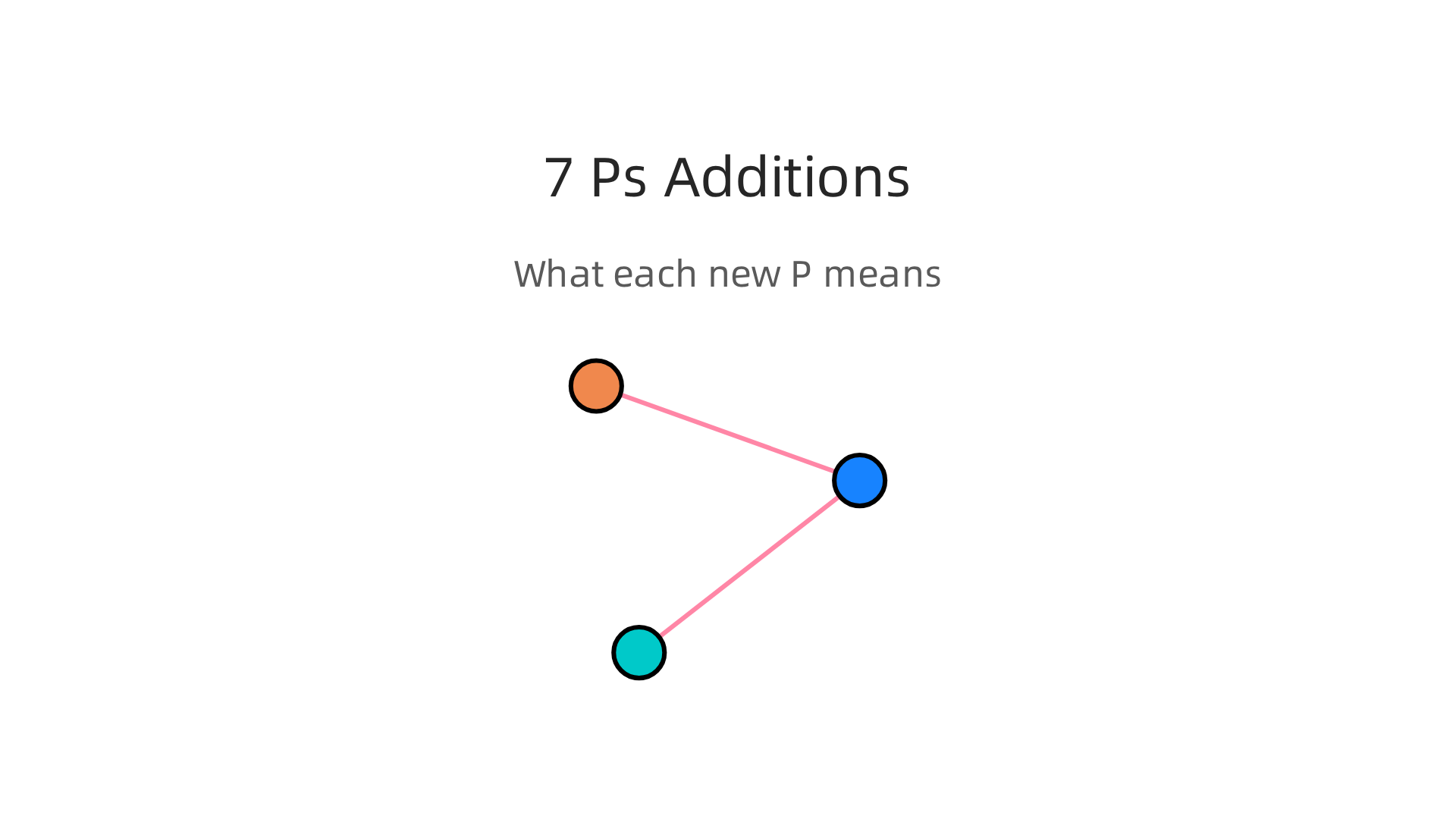
Here is what each new P means for a media or publishing company:
-
People are everyone who touches your customer. That includes your support team, your writers, your editors, and even your AI chatbot. In media, people also means creators, influencers, and community managers. How they interact with your audience shapes your brand strategy and trust.
-
Process covers the systems and workflows behind delivering your service. Think about how a subscriber signs up, how your newsletter gets sent, or how your ad server handles placements. A smooth process reduces friction and keeps customers happy.
-
Physical Evidence is any tangible proof of your service. For a digital product, that might be your website design, a podcast intro, a branded email template, or a review page. It builds credibility. Even in 2026, people rely on signals like a clean interface before they hit subscribe.
The 7Ps give you a more holistic view, especially for direct-to-consumer (DTC) and service-based media businesses. Researchers have long suggested that the original 4Ps may be too narrow for services (Semantic Scholar). So when you build your marketing mix strategy, think about which of these seven areas your team should focus on.
Not every P is equally important for every organization. A newsletter startup might put extra weight on Process and People. A streaming platform might care more about Physical Evidence and Price. Evaluate your specific business model and customer feedback to decide where to invest.
If you are curious how modern media brands use People and Process to build trust, our guide on inbound marketing in 2026 shows exactly how the 7Ps come to life.
And if you want daily insights on how AI is reshaping every one of these Ps, get the The Deep View Newsletter. It helps media professionals stay ahead of the curve.
How to Build a Marketing Mix Strategy from Scratch
So you understand the 7Ps. But where do you start building your marketing mix strategy from scratch?

Here is a simple step-by-step process that works for media companies, publishers, and digital brands in 2026.
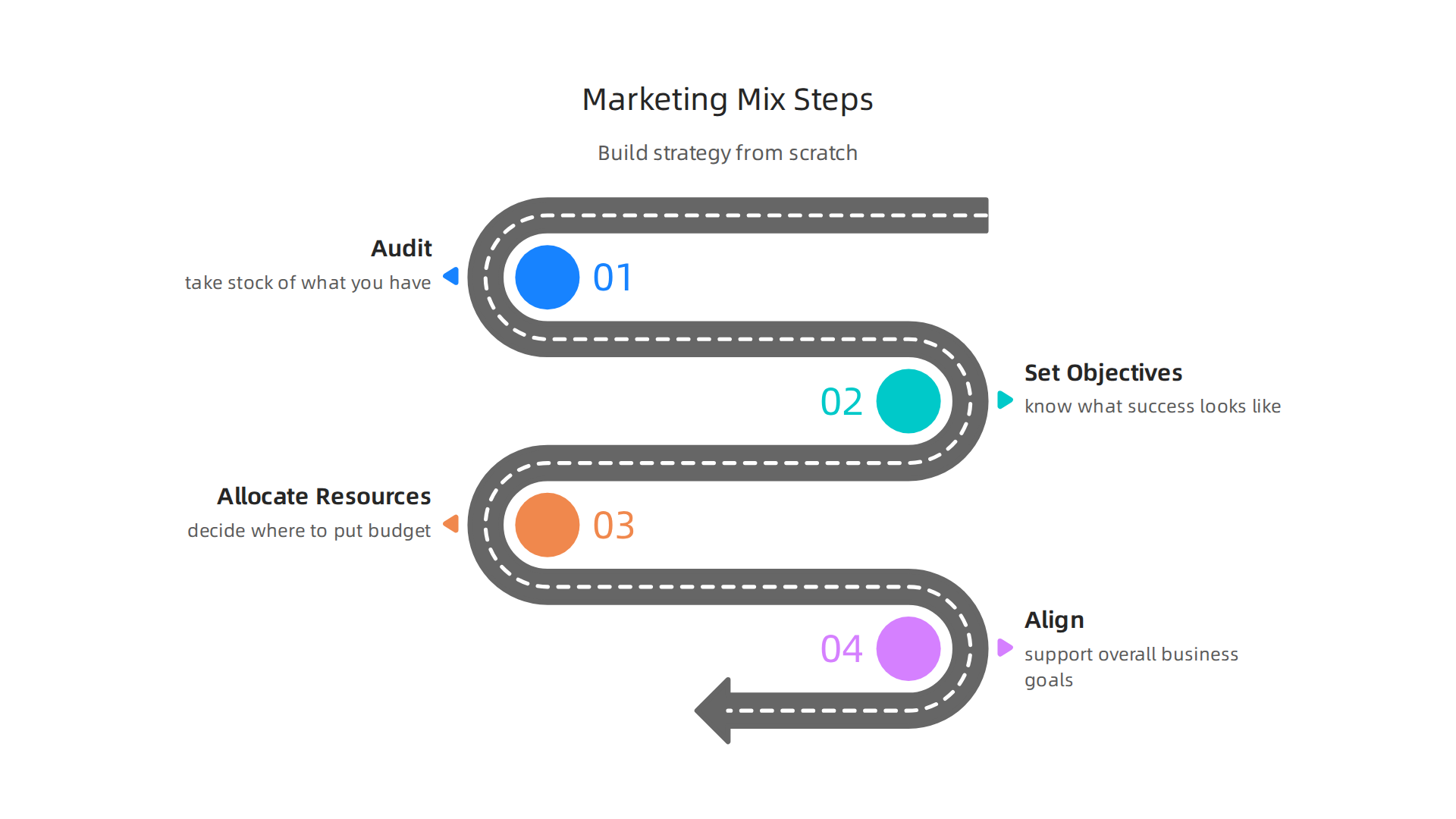
Step 1: Audit Your Current Marketing Mix
First, take stock of what you already have. Look at your existing product, price, place, promotion, people, process, and physical evidence. What is working? What is missing? According to Keen, a successful marketing mix strategy begins with a thorough audit of your current approach (source). This baseline gives you a clear picture before you make any changes.
Step 2: Set Clear Objectives
You need to know what success looks like. Are you trying to grow subscribers, increase ad revenue, or build brand loyalty? The monday.com guide suggests building strategy before tactics by defining your target audience, value proposition, and competitive positioning first (source).
That strategic foundation makes every later decision easier.
Step 3: Allocate Resources Across the Ps
Now decide where to put your budget and team effort. Not every P needs equal attention. For example, if your digital strategy focuses on content distribution, you might invest more in Place and Promotion. Our article on native advertising in 2026 shows how one channel can drive measurable results for media brands.
Step 4: Align with Business Strategy and Market Conditions
Your marketing mix should support your overall business goals. Salesforce’s 2026 guide to marketing strategy emphasizes that every marketing decision must tie back to the company’s larger mission (source).
Also keep an eye on market trends. In 2026, that means watching how AI, new platforms, and shifting consumer behaviors affect your audience.
Use Complementary Frameworks
Tools like the SWOT analysis or Ansoff Matrix can help you decide which P to prioritize. A SWOT might reveal that your customer service is weak, so you focus on People. The Ansoff Matrix can guide you on whether to go after new markets or deepen your presence in existing ones. These frameworks add clarity to your marketing mix strategy.
Building a marketing mix strategy in 2026 requires staying on top of fast changes, especially around AI. For daily insights on how AI is reshaping every part of marketing, get The Deep View Newsletter. It helps media professionals stay ahead of the curve.
Case Study: Applying the Marketing Mix in a Media Company
Let’s look at a real example to see the marketing mix strategy in action. Imagine a mid-size publisher we’ll call "Midwest Media" that publishes lifestyle content. In early 2026, they were struggling with subscriber retention and ad revenue. They decided to revisit every element of their marketing mix.
Product: Subscription Tiers
Midwest Media offered only one subscription level: full access for $10 a month. Many readers left after the free trial. So they introduced three tiers: a free ad-supported tier, a $5 "light" tier with no ads on articles, and a $15 premium tier with exclusive newsletters and early event access. This gave readers a clear reason to upgrade without feeling forced.
Price: Dynamic Pricing
Instead of a flat fee, the publisher tested dynamic pricing based on user behavior. Repeat visitors who read 10+ articles a month saw a special offer for the $5 tier. New visitors got a discounted first month. This approach increased conversions by 25 percent. According to the monday.com marketing strategy guide, building your pricing around your audience’s behavior is a smart tactic (source).
Place: Owned vs Rented Distribution
Midwest Media relied heavily on social media platforms like Facebook and Instagram. But algorithm changes kept cutting their reach. So they shifted resources to owned channels: their website, a curated email newsletter, and a new mobile app. They still used social for discovery, but the goal was to drive readers to their own properties. For more on this shift, read our deep dive on inbound marketing definition in 2026.
Promotion: Content Marketing and AI Tools
The team doubled down on useful content. They used an AI tool to personalize article recommendations for each reader based on past reading history. They also launched a daily "Hot Take" newsletter that quickly became their top source of new subscribers. The result was a 40 percent increase in email open rates and a 30 percent boost in ad click-throughs.
Measurable Outcomes
Within six months, Midwest Media saw subscriber churn drop by 18 percent. Monthly recurring revenue grew by 22 percent. Ad revenue stabilized because they no longer depended on shrinking social reach. The lessons were clear: a marketing mix strategy that adapts to your audience’s needs on your own terms pays off.
Lessons for Other Media Professionals
First, don’t be afraid to change your product. Readers want flexibility. Second, own your distribution channels. Third, use technology like AI to personalize the experience. Finally, test your pricing regularly.
Want to keep learning how AI is transforming every part of media marketing? Get fresh daily insights from The Deep View Newsletter. It helps media professionals like you stay ahead in 2026.
Data-Driven Decision Making in the Marketing Mix
Guessing won’t cut it in 2026. Every choice in your marketing mix strategy should be backed by real data.

Just look at Midwest Media from our case study. They didn’t pick those three subscription tiers out of thin air. They used customer behavior data to shape the product. They tested price elasticity to find the sweet spot. And they measured channel performance to shift from rented social platforms to owned channels like email and their app.
So how do you use data for each of the four Ps?
- Product. Customer data tells you which features your audience actually uses and what they’re willing to pay for. Midwest Media saw that many readers left after the free trial, so they built a low cost tier to keep them.
- Price. Price elasticity analysis shows how demand changes at different price points. Dynamic pricing based on visit frequency helped Midwest boost conversions by 25 percent. As the monday.com guide explains, building pricing around audience behavior is a smart move (source).
- Place. Channel performance data reveals where your audience spends time and where you get the best return. Midwest saw social reach shrinking, so they invested more in owned channels.
- Promotion. ROI tracking and attribution models show which campaigns actually drive results, not just vanity metrics.
Attribution models have evolved a lot with AI. Marketing mix modeling (MMM) used to be slow and backward looking. Now AI tools analyze data in real time and adjust targeting, creative, and bidding on the fly (source). Platforms like those covered in the Busylike CMO playbook show how AI continuously optimizes campaigns based on live signals (source).
Setting up a data feedback loop is key. You collect data from every P product usage, pricing tests, channel analytics, promotion performance. Then you analyze it with AI tools to find patterns. Then you adjust your mix and repeat. This continuous cycle keeps your strategy fresh and responsive (source).
For a deeper look at how data builds trust with your audience, read our article on inbound marketing definition in 2026.
Want to keep learning how AI is transforming every part of media marketing? Get fresh daily insights from The Deep View Newsletter. It helps media professionals like you stay ahead in 2026.
The Role of AI in Evolving Your Marketing Mix
AI takes the data feedback loop we just covered and puts it on autopilot. Instead of manually tweaking each P, you let AI handle the heavy lifting so your team can focus on big picture strategy. Here’s how AI supercharges each piece of your marketing mix strategy.
Price. AI runs dynamic pricing in real time. It looks at competitor prices, customer willingness to pay, and even time of day to adjust your rates on the fly. This goes far beyond basic A/B tests. As the Digital Applied guide explains, AI tools now analyze data continuously and adjust pricing to maximize conversions without human intervention (source).
Promotion. AI powers hyper personalization at scale. It can craft unique messages, offers, and send times for each customer based on their past behavior. The CMO playbook from Busylike shows how AI continuously tests and optimizes targeting, creative variations, and bidding in real time (source). That means your ad spend goes further.
Place (channel optimization). Predictive analytics helps you decide where to be. AI forecasts which channels will give you the best return next week or next month. It spots trends early so you can shift budget from a fading platform to a rising one before your competition does.
Product. Generative AI creates content at scale. Need a blog post, social caption, product description, or even a video script? AI can draft it in seconds. But here’s the catch: humans must review everything to keep your brand voice authentic. The same goes for customer service. AI chatbots handle routine questions instantly, but complex or sensitive issues still need a real person.
Balancing automation with human oversight is the secret to maintaining brand trust. As the adventuremedia guide notes, the smartest teams use AI for repetitive optimization tasks while keeping strategy, creativity, and final approvals in human hands (source).
Want to build a brand that people trust in the age of AI? Our article on corporate branding services that win audience trust and ad revenue in 2026 covers the key principles.
AI is moving fast. Get clear daily updates that help you stay ahead. Subscribe to The Deep View Newsletter and get actionable insights delivered to your inbox.
Common Pitfalls in Marketing Mix Strategy and How to Avoid Them
Even with AI doing the heavy lifting, it’s surprisingly easy to trip up on your marketing mix strategy. Knowing the most common mistakes helps you stay on track. Let’s look at three big ones and how to steer clear.
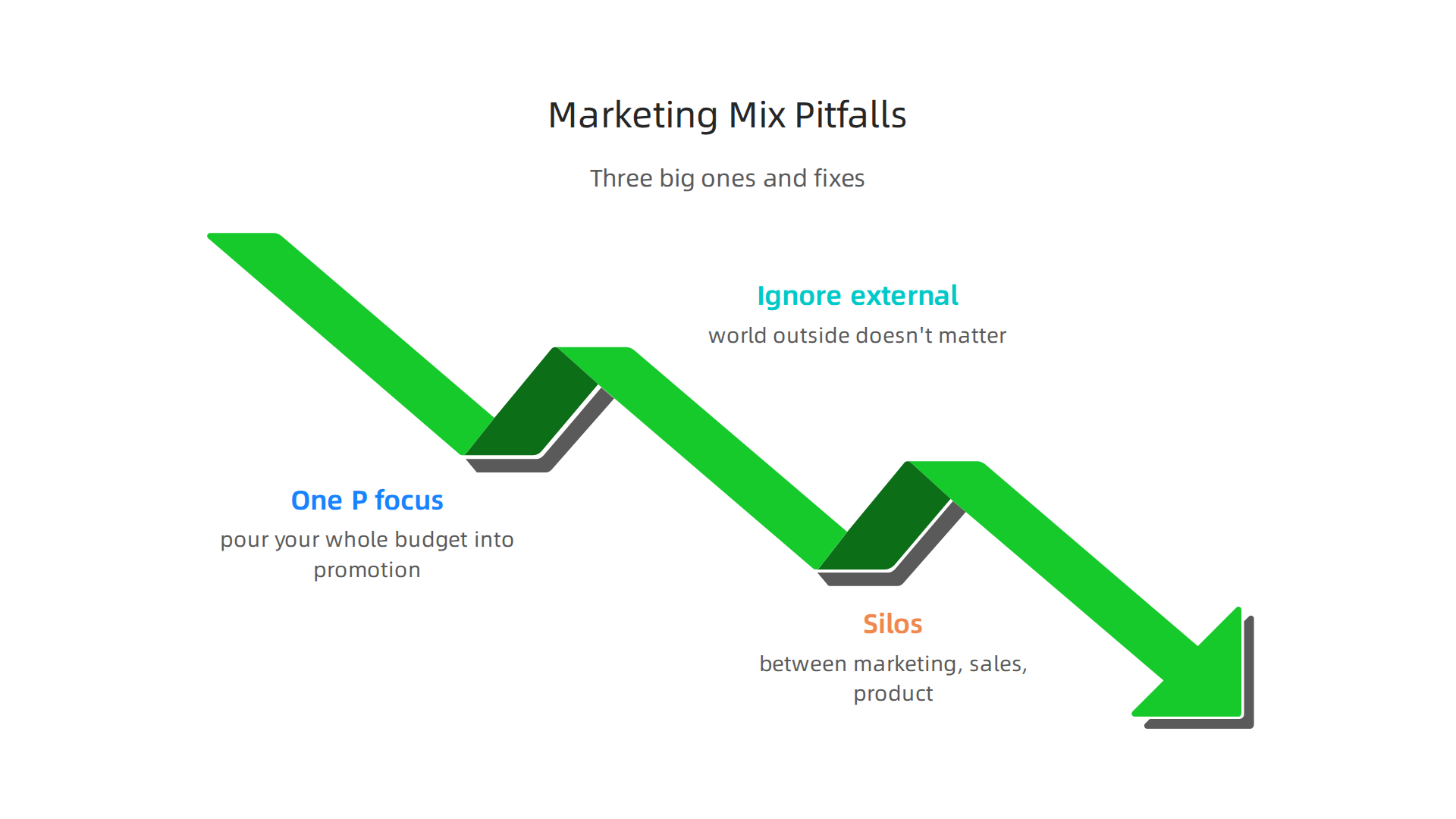
1. Putting all your energy into one P. Maybe you pour your whole budget into promotion and ignore product quality. Or you obsess over the perfect price but forget about place (how customers actually get to you). This imbalance hurts results. As Mailchimp points out, neglecting things like target audience research or competitive analysis throws your whole plan off balance (source). The fix is simple: regularly check all four Ps together. Ask yourself, "Are we giving each one fair attention?"
2. Acting like the world outside doesn’t matter. Your marketing mix doesn’t live in a bubble. What worked last quarter might fail now because of new regulations, a competitor’s move, or a shift in the economy. Ignoring these external forces is a classic mistake. The team at Funnel.io warns that not understanding the limitations of your data or models can lead you astray (source). Keep an eye on industry news and adjust your mix accordingly. Your brand strategy needs to breathe with the market.
3. Silos between marketing, sales, and product. When marketing runs one way and sales runs another, your customer feels the disconnect. A shiny campaign means nothing if the sales team doesn’t know what was promised. Lack of alignment is a top reason marketing plans fail, according to The Marketing Centre (source). Break down those walls. Share data, hold joint meetings, and make sure everyone is rowing in the same direction.
Avoiding these pitfalls makes your digital strategy stronger and your team more effective. Want deeper insights on how to align your entire marketing approach? Check out our guide on inbound marketing definition in 2026 how the 4 ps of marketing build trust for practical steps.
The media world changes fast. Get clear daily updates that help you stay ahead of these pitfalls. Subscribe to The Deep View Newsletter and get actionable insights delivered to your inbox.
Measuring the Success of Your Marketing Mix
You know the pitfalls now. But how do you tell if your marketing mix strategy is actually working? Measuring success is the only way to know if your effort pays off.

Let’s look at what matters.
Key metrics to watch. Start with revenue growth. Is your brand strategy driving more sales? Next, customer acquisition cost (CAC). If it costs more to get each customer, your mix might need a tweak. Market share shows your position against competitors. And brand equity, the trust people have in you, counts more than ever in 2026. As Inn8ly points out, not setting specific and measurable objectives is a huge mistake in marketing strategy (source). So pick your metrics and stick to them.
Use smart tools. A balanced scorecard helps you see financial, customer, and growth factors all at once. Attribution models show which channels actually earn conversions. Dashboards give you a real time view of performance. Without clean data, you are flying blind. Funnel.io warns that using poor quality data or ignoring what your model can and cannot do will lead you wrong (source). Invest in the right tools to keep your data honest.
Run an annual marketing mix audit. Once a year, step back and check every P. Is your product still solving real problems? Is your price fair in today’s market? Are your distribution channels easy for customers to use? Is your promotion reaching the right people? An audit keeps your digital strategy fresh and aligned with what customers expect today. For a deeper look at how the 4 Ps build trust over time, check out our guide on inbound marketing definition in 2026 how the 4 Ps of marketing build trust.
Measuring your mix is not a one time task. It is a habit that helps you grow. The media world shifts fast. Stay in the know with clear daily updates that help you measure smarter. Subscribe to The Deep View Newsletter and get actionable AI and tech insights delivered straight to you.
Summary
This article refreshes the classic marketing mix for a digital-first, AI-driven media landscape, explaining the 4 Ps (Product, Price, Place, Promotion) and the extended 7 Ps (adding People, Process, Physical Evidence). It walks media teams through a practical, step-by-step approach: audit your current mix, set clear objectives, allocate resources, and align everything with business strategy. The guide shows how to use data and modern AI tools for dynamic pricing, channel optimization, personalization, and continuous testing, and it includes a concrete case study of a publisher that improved subscriptions and revenue by rebalancing its mix. It highlights common pitfalls—over-focusing on one P, ignoring market changes, and internal silos—and explains how to measure success with KPIs, attribution models, and regular audits. Readers will finish able to build or refine a measurable marketing mix strategy that leverages AI responsibly while keeping brand trust and customer experience front and center.