
Performance Marketing 2026 From Fundamentals to Advanced AI Tactics
Introduction
Global online advertising is expected to hit roughly $680 billion in 2026. Digital now makes up over 70% of all media budgets worldwide. Those numbers come from the latest data on Online Advertising Statistics 2026.
And they tell one clear story. The money is flowing toward channels that can prove they work.
That is why performance marketing has become a must have for media and advertising professionals. The digital world is more fragmented than ever. You have connected TV growing fast. Retail media networks expanding quickly. Social commerce pushing toward huge numbers. Each channel promises strong returns. But only if you know how to measure and optimize correctly.
The real challenge is not just understanding performance marketing. It is executing well while technology keeps shifting under your feet. AI powered bidding, programmatic advertising, and new pay per click advertising platforms appear all the time. Keeping up can feel like a full time job.
According to the IAB’s 2026 Outlook Study, U.S. ad spend is projected to grow 9.5% this year. Social media, connected TV, and commerce media are leading the way with double digit gains. The shift toward performance based strategies is not a trend. It is a permanent change in how marketing decisions get made.
If you want to stay current with the latest paid online advertising tools for 2026, we have a full guide covering that too. But first, let us set the foundation.
This guide gives you a clear framework. You will move from the basics of performance marketing all the way to advanced AI driven tactics that actually deliver results. No fluff. No theory without real world use.
For daily updates on how AI is reshaping media and marketing, check out The AI Newsletter Worth Reading. It delivers clear, actionable insights straight to your inbox.
Let us start with the fundamentals.
The Evolution of Performance Marketing in a Digital-First World
Performance marketing did not always look like it does today. Go back ten or fifteen years, and it mostly meant direct response advertising. You ran a simple pay-per-click ad on a search engine. Someone clicked. You paid. You tracked the sale. That was it.
The whole model was straightforward. You measured one thing: the last click before a conversion. If that metric looked good, you kept spending. If it did not, you turned the campaign off.
But the world of paid online advertising has changed completely since then. Consumers now interact with brands across dozens of touchpoints before they buy. They see a video on connected TV. They hear a podcast ad. They scroll past a social post. They search for a product on their phone. Later they buy on a laptop.
So the old last click model no longer works. That is why performance marketing today covers complex multi-channel attribution. You need to understand how each channel contributes to the final outcome. According to the latest performance marketing guide for 2026, AI and data driven tools now make it possible to track these complex customer journeys in real time.
Technology changed how campaigns run
Two big shifts reshaped execution. The first is real time bidding. Programmatic advertising lets you buy ad impressions in milliseconds based on user data. The second is machine learning. AI powered systems now handle bid adjustments, audience targeting, and creative optimization automatically.
These changes mean that a lot of work that used to require human judgment is now handled by algorithms. The job of a media buyer has shifted from manually adjusting bids to training and monitoring AI systems that do the adjusting for them.

If you want to understand what this means for your career, check out this guide on the paid media buyer 2026 career path.
The walled garden problem
Here is the tricky part. The platforms where most performance marketing happens are walled gardens. Google, Meta, Amazon, TikTok, and others control their own data. They give you some signals but not the full picture. Attribution across platforms remains messy.
This forces advertisers to take a strategic approach to data integration. You cannot just rely on each platform’s own reporting. You need a unified measurement system that connects the dots. The key performance marketing trends for 2026 show that retail media networks and social commerce continue to grow fast, making cross platform measurement even more important.
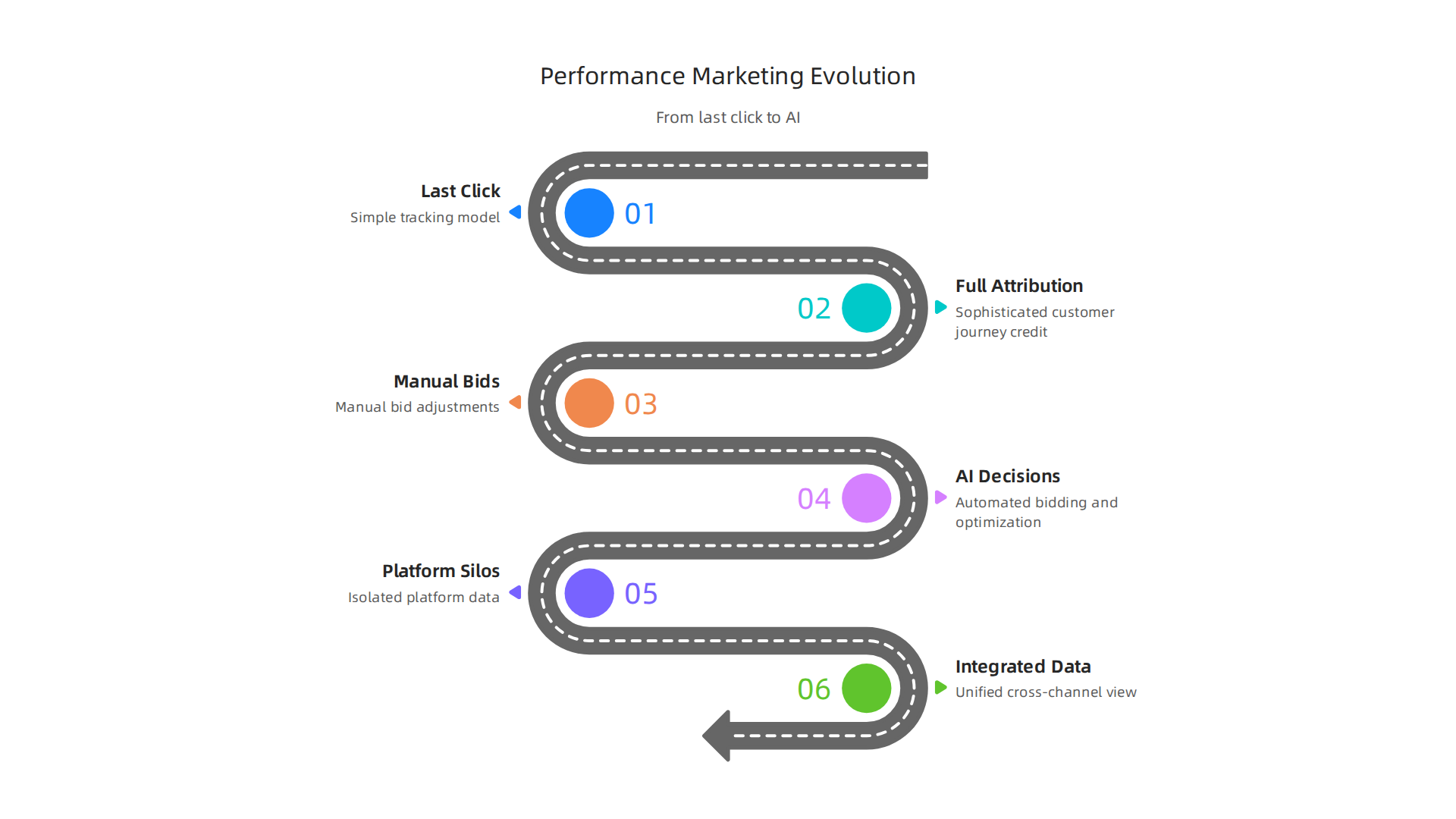
So the evolution of performance marketing is really about one thing. Going from simple tracking to sophisticated understanding. From last click to full attribution. From manual bids to AI driven decisions. And from platform silos to integrated data.
Core Principles of Effective Performance Marketing
Once you understand how performance marketing has evolved, the next step is learning the core principles that make it work in 2026.
These principles act as your foundation. They help you decide where to spend your budget, how to measure success, and when to change direction. Without them, you are just guessing.
Know your core metrics inside and out
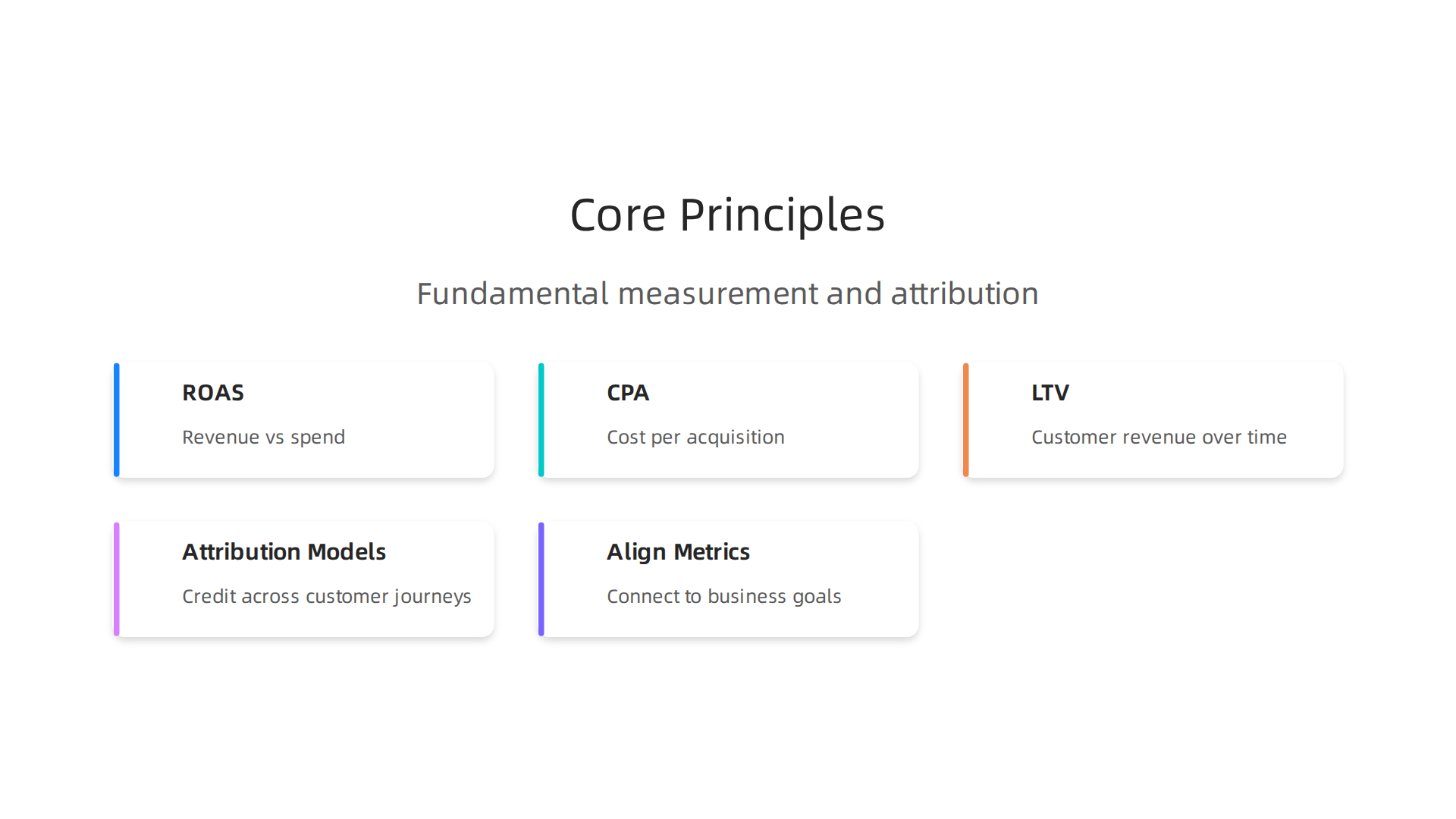
The first principle is understanding the big three metrics. ROAS stands for Return on Ad Spend. It tells you how much revenue your ads generate compared to what you spend. CPA stands for Cost Per Acquisition. It shows what it really costs to get a new customer. LTV stands for Lifetime Value. It reveals the total revenue a customer brings over their entire relationship with you.
Each metric answers a different question. ROAS asks if your ads are paying for themselves in the short term. CPA asks how efficient your acquisition is. LTV asks if those customers are actually valuable over time. Healthy performance marketing programs track all three together. According to a 2026 guide on marketing performance metrics that actually matter, a common LTV to CAC benchmark is 3 to 1.
That means each customer should be worth three times what it cost to acquire them.
Attribution models tell the full story
The second principle is using the right attribution model. Not every customer clicks once and buys. They see a social post. They search for your brand. They click a retargeting ad. They come back later on a different device.
Old school last click attribution gave all the credit to the final touchpoint. That hid the real value of your awareness and consideration channels. In 2026, data-driven models spread credit across the entire customer journey. This helps you invest budget where it actually builds momentum, not just where it closes the final sale.
Align metrics with business goals
The third principle is connecting your metrics to your business goals. It is easy to chase a high ROAS by cutting spend in channels that build long-term loyalty. But if your goal is to grow customer retention, you need to focus on LTV instead of short-term ROAS.
A holistic view prevents wasted spend. You choose the right lever for the right outcome. Building a strong marketing mix strategy in 2026 means picking the right metrics for the right stage of growth.
AI is making this easier. Tools now predict LTV more accurately and adjust bids automatically. If you want to keep up with how AI changes performance marketing every day, I recommend The AI Newsletter Worth Reading for clear, practical updates.
Building a Performance Marketing Technology Stack
You now know the principles that make performance marketing work. But principles alone won’t run your campaigns. You need the right tools to bring them to life. A solid technology stack is what turns strategy into results. In 2026, the right setup can mean the difference between wasted spend and steady growth.
What belongs in a modern stack
A good stack covers four areas: ad platforms, bid management tools, analytics software, and attribution systems.
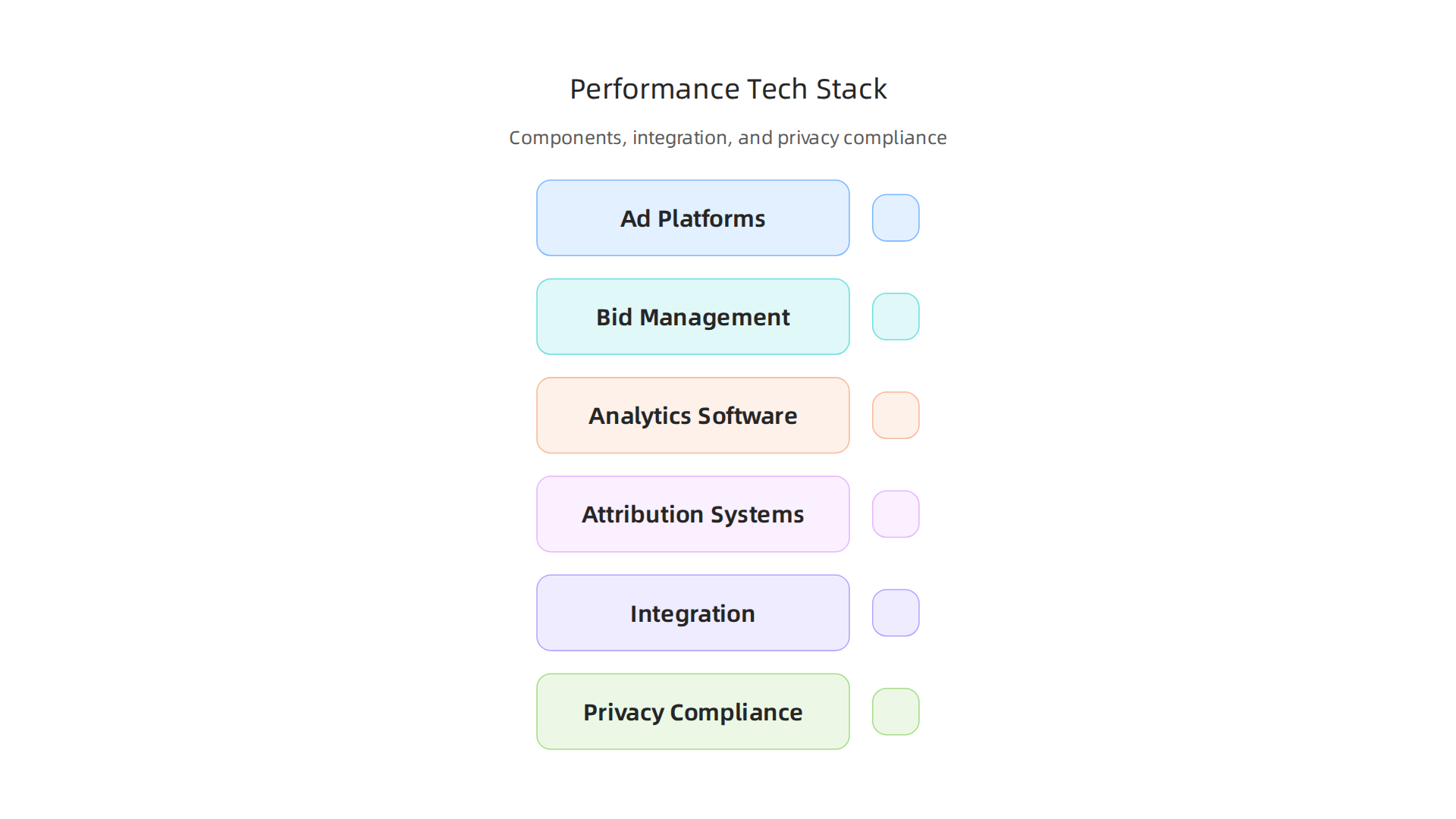
Each piece plays a different role. Ad platforms like Google Ads, Meta Ads, and programmatic DSPs give you the inventory to reach your audience. Bid management tools like Optmyzr or Marin Software help you adjust bids across multiple channels without manual work. Analytics tools track performance. Attribution systems tell you which channels actually drive conversions.
The best teams don’t pick just one platform. They match the tool to the goal. For high-intent search, Google Ads still dominates. For social discovery, Meta Ads shines. For B2B targeting, LinkedIn Ads works best. And for open-web programmatic reach, demand-side platforms like those listed in the guide to top AI advertising platforms for 2026 offer broad coverage with AI-driven optimization. The key is to pick platforms that talk to each other.
Integration is everything
Here’s the part many people miss. Having great tools is not enough if they sit in separate silos. Your CRM needs to share data with your ad servers. Your customer data platform should feed your attribution software. When these systems connect, you get a unified view of the customer journey. That unified view lets you see which touchpoints actually matter.
Without integration, you might double your spend on the same audience or miss a critical drop-off point in your funnel. A well-connected stack helps you avoid those blunders. For a deeper look at how to choose and connect these tools, check out this comparison of paid online advertising tools for 2026. It breaks down the top platforms and how they fit together.
Privacy compliance is non-negotiable
This point cannot be repeated enough. In 2026, every platform you choose must respect privacy regulations like GDPR and CCPA. That means tools that offer first-party data targeting, consent management features, and transparent data handling. If a platform cannot show you how it protects user data, it does not belong in your stack. The risk of fines and reputational damage is too high.
A good way to check is to look for platforms that provide clean-room analytics or data encryption options. These features let you measure performance without exposing personal information. Starting with the right privacy-compliant tools saves you from expensive headaches later.
Your tech stack is the engine of your performance marketing. Choose wisely, connect everything, and keep privacy front and center. Your campaigns will run smoother, and your results will follow.
Strategic Implementation: From Planning to Execution
You have your tech stack in place. Your platforms are connected. Your privacy settings are locked. But none of that matters if you do not have a clear plan for how to use those tools.
Here is where strategy meets real work. In 2026, the teams that win are the ones that turn their tech into action.
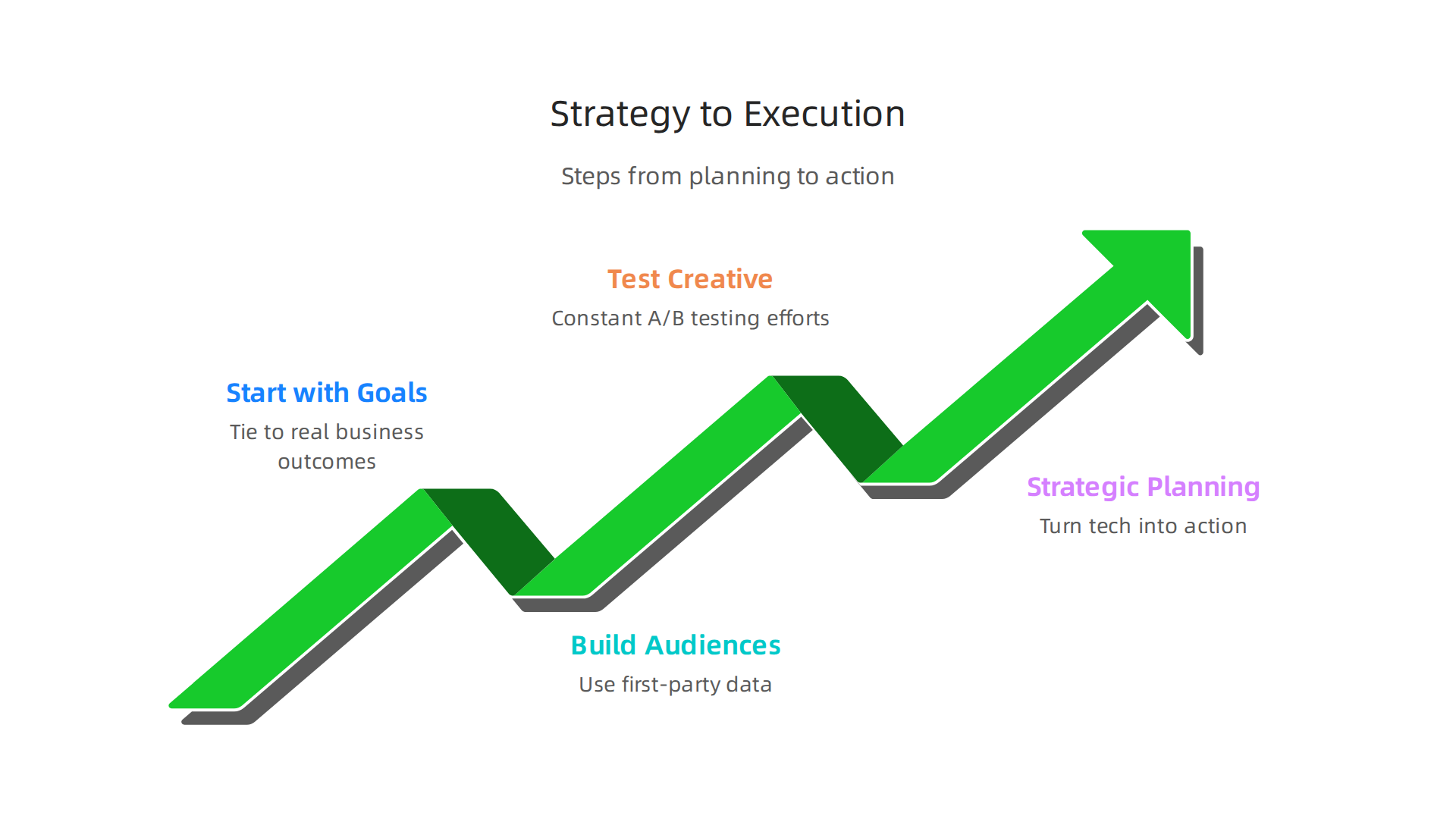
They do not just run campaigns. They build systems that improve over time.
Start with goals that matter to the business
The first step is to tie your performance metrics to real business outcomes. Do not just track clicks or impressions. Those numbers do not pay the bills.
Instead, link your media spend to revenue, retention, and customer lifetime value. If you are running paid online advertising, your goal should be a specific return on ad spend or a target cost per acquisition. If you are running programmatic advertising, your goal might be qualified pipeline or repeat purchases.
One smart way to do this is to define your CPA and ROAS targets before you launch a single campaign. Turn your business goals into media guardrails. That way, every optimization the algorithm makes is working toward something that actually matters to your bottom line. For a complete breakdown of how to set these guardrails, check out this guide on performance marketing strategies for 2026. It walks through how to align your media targets with your finance team’s expectations.
Build audiences you can reach again and again
Audience targeting in 2026 is all about first-party data. You cannot rely on third-party cookies like you used to. So you need to build audiences from your own customer information.
Start with the data you already have. Website visitors, email subscribers, past purchasers. These are your gold. Use that data to create lookalike models that find new people who behave like your best customers. Then add contextual signals on top. That means targeting based on the content someone is reading or the topic they are searching for.
The combination of first-party data and contextual cues gives you a powerful targeting mix. It also keeps you privacy-compliant because you are not using shady third-party data. For more on how to choose the right campaign structure for your goals, take a look at this comparison of campaign type strategy. It helps you match your targeting approach to the right campaign format.
Test your creative like it is your job
Here is the truth that separates good performance marketing from great performance marketing. Your creative is the engine of improvement. You cannot set a campaign and forget it. You need to test constantly.
Headlines, images, button colors, video lengths, offers. Every element is a variable you can test. Run A/B tests on your ad sets. Find the winner. Then test again against a new challenger. This cycle never stops.
The best teams set a goal for how many tests they run each month. They track their win rate. They measure the cumulative lift from automated allocation versus holdout A/B tests. When you build testing into your weekly workflow, your results compound over time.
Get clear daily AI updates from The Deep View Newsletter. It covers how the latest AI tools are changing ad testing and creative optimization across every channel.
Remember, you are not just running ads. You are running experiments. Each test teaches you something about your audience. Each winner improves your efficiency. That is how you turn a good performance marketing program into a great one.
AI and Automation in Performance Marketing
You have probably heard the buzz about AI in marketing. But let me tell you what it actually means for your day-to-day work in 2026. AI is no longer a nice to have. It is the engine that powers modern performance marketing.
Machine learning changes how you bid, target, and predict
The old way of setting bids and hoping for the best is gone. Today, AI handles real time bid optimization across programmatic advertising and pay per click platforms. It looks at thousands of data points every second. User behavior, time of day, device type, weather, past purchase patterns. Then it adjusts your bids automatically to get the best results.
The numbers back this up. AI driven bid management can reduce wasted ad spend by about 37 percent and increase overall ad ROI by 50 percent, according to recent industry data. That is not a small improvement. That is a game changer for your budget.
But bidding is just the start. AI also powers personalization at scale. Imagine showing every visitor a version of your ad that matches their exact interests. That is happening now. 73 percent of businesses expect AI to improve their personalization strategies by the end of 2026. And predictive analytics helps you see which customers are likely to convert before they even click.
Automation frees you up for bigger thinking
Here is the part that makes your job easier. AI automates all the routine tasks that used to eat your time. Budget management, reporting, audience segmentation, creative testing. Machines handle these tasks faster and more accurately than any human.
That frees you up to focus on strategy. On understanding your customers. On crafting messages that connect. Teams using AI report a 44 percent increase in productivity and save an average of 11 to 13 hours per week.

Imagine what you could do with that time.
The best performers in 2026 do not see AI as a replacement. They see it as a teammate. They let the machines handle the math while humans handle the meaning. If you want to see how the latest tools compare, check out this guide on paid online advertising tools for 2026. It breaks down which platforms give you the best AI features for real results.
But you cannot ignore the ethical side
AI is powerful, but it comes with risks. Algorithmic bias is real. If your training data has blind spots, your AI will make bad decisions. It might show ads to the wrong people or exclude groups unfairly. That hurts your brand and your performance.
Data privacy is another big concern. As third party cookies disappear and regulations tighten, you need to be careful about how you collect and use customer data. Only 27 percent of organizations review 100 percent of AI outputs before using them. That is a scary number. You need human oversight at every step.
The smart approach is to build ethical guardrails into your AI strategy from day one. Test your models for bias. Document your data sources. Always have a person review the outputs before they go live. That is how you get the benefits of automation without the headaches.
In the next section, we will look at how to build a team that can actually execute on all of this. The tech is only half the story. The people matter just as much.
Measuring Success and Continuous Improvement
Building the right team and setting up AI automation is a great start. But how do you know if your performance marketing is actually working? That is the question that keeps smart marketers up at night.

The answer lies in measuring the right things and building a habit of constant improvement.
Focus on actionable KPIs, not vanity metrics
Impressions and clicks can feel good, but they do not pay the bills. You need to focus on numbers that tell you if your business is healthy.
Three metrics matter most for any serious performance marketing effort. ROAS tells you your short term efficiency. CAC tells you what it really costs to get a customer. LTV tells you what that customer is worth over time.
As one guide on marketing performance metrics explains, each metric answers a different question. ROAS asks if your ad spend drove revenue. CAC asks what it really cost to get a customer. LTV asks what that customer is worth after the first purchase.
If your LTV is three times your CAC, you are in a healthy spot. If it is below one to one, you are losing money on every customer you bring in. That is the kind of number that demands immediate action.
A/B testing and incrementality show you the truth
A lot of marketers still rely on last click attribution. It gives all the credit to the final ad someone clicked before buying. But that is rarely the full story. Your customers might see a dozen touchpoints before they convert.
A/B testing helps you find out what truly works. You test one variable at a time. A headline. A button color. A landing page layout.
But incrementality measurement takes things further. It asks a hard question: Would this person have bought even if they had not seen my ad? If the answer is yes, your ad spend is wasted. This kind of testing stops you from spending money on people who would have converted anyway.
Small improvements compound over time
Performance marketing is not a set it and forget it game. The best teams treat it as a cycle of constant learning. They look at data, form a hypothesis, run a test, and apply what they learn.
A 5 percent improvement this week and another 5 percent next week adds up fast. Over a quarter, that kind of compounding growth is massive.
If you need help connecting your strategy to real results, working with a digital marketing strategy consultant can give you a fresh pair of eyes on your data and help you spot opportunities you might be missing.
Staying informed is also part of continuous improvement. AI changes fast, and the tools you use today might be outdated tomorrow. The AI Newsletter Worth Reading delivers clear daily updates so you never fall behind on the trends that actually move the needle.
Summary
This guide explains how performance marketing works in 2026 and gives a practical framework to move from basics to advanced, AI-powered execution. It covers the evolution from last-click tracking to multi-channel attribution, the core metrics you must master (ROAS, CPA, LTV), and how to align those metrics with real business goals. You’ll learn how to choose and integrate a privacy-compliant technology stack, when to use programmatic and platform-specific buys, and how AI automates bidding, personalization, and creative testing. The article also shows how to set measurable goals, run A/B and incrementality tests, and build teams that combine human judgment with machine speed. Read it to gain clear steps for planning campaigns, avoiding common pitfalls, and measuring real impact so your ad spend drives sustainable growth.