Master the Four Ps of Marketing to Drive Media Growth with AI in 2026
In 2026, the world of media and advertising changes faster than ever before. New social media platforms pop up all the time. Smart tools powered by Artificial Intelligence (AI) are changing how we create and share content. All these big shifts can make it hard to know what to do next.

It’s easy to get lost in all the new trends. But here’s the thing: to make smart choices, you need to remember the basic ideas that always work. That’s why the four Ps of marketing are still so important. They are the simple building blocks for any business, no matter how much the world around us changes.
The idea of the marketing mix first came about in the 1960s, thanks to E. Jerome McCarthy, who grouped key business elements into what we now call the four Ps: Product, Price, Place, and Promotion. These four elements help businesses decide what to offer, how much to charge, where to sell it, and how to tell people about it [PDF] A Review of Marketing Mix: 4Ps or More?. Even with new ideas like the 7 Ps of marketing or focusing on storytelling marketing, the original four Ps are the bedrock. They answer the core question of why is marketing important to a business by giving a clear path to reach customers.
This guide will walk you through each of the four Ps in a simple way. We will look at how they work today, especially with new tools like AI shaping our media. You’ll get clear, practical steps and modern examples to help you make better decisions for your media and advertising work. We’ll explore how these basic ideas can drive real growth.
Speaking of AI, keeping up with its fast pace in media is a challenge for everyone. Get clear daily AI updates that matter to your business.
The AI Newsletter Worth Reading
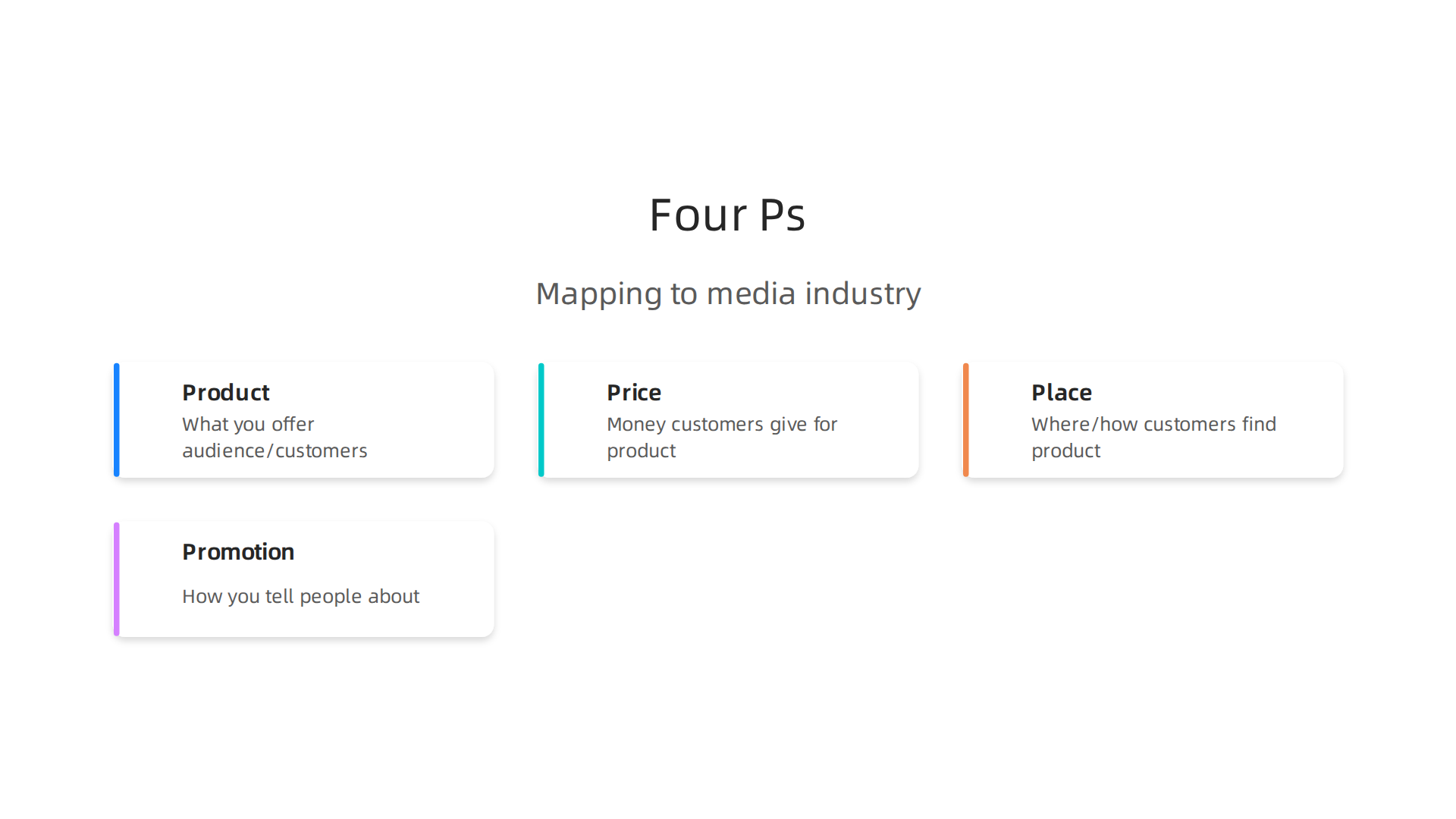
The Four Ps — Definitions and how they map to the media industry
Let’s break down each of the four Ps of marketing in simple terms.
We’ll see how they work for media companies, content creators, and advertisers in 2026. Think of these as the main tools in your marketing toolbox.
1. Product
In the world of media, "Product" is not always something you can touch. It is what you offer to your audience or customers.
- For a publisher: Their product might be a news article, a podcast series, a digital magazine, or a video documentary. It’s the content itself.
- For a content creator: It could be their YouTube videos, their artwork, their music, or even their personal brand.
- For a platform: Think of a social media site, a streaming service, or an app. The product is the service or experience they give users.
- For ad products: The "product" is the ad space itself, like a banner ad slot, a sponsored post, or an ad campaign that an agency creates.
The key is that your product must solve a need or bring joy to someone.

It should be good enough that people want to spend their time or money on it. Creating a strong product is the first step in any marketing mix strategy in 2026.
2. Price
"Price" is how much money customers give you for your product. In media, this can be tricky because many things are "free" to the user, but still have a price for advertisers.
- For a publisher or creator: This could be a subscription fee for special content, a one-time purchase for a premium article, or even selling merchandise.
- For a platform: They might charge for premium features, an ad-free experience, or a monthly subscription. Think about how many streaming services you pay for each month.
- For ad products: The price is what advertisers pay to show their ads. This can change based on how many people see the ad, how many times they click, or even how much competition there is for that ad space. In 2026, many media companies use smart tools to set ad prices, sometimes even in real-time based on demand. For instance, new research shows how AI can help set reserve prices in online ad auctions, making sure advertisers pay a fair, competitive rate for ad space Optimizing Reserve Prices in Display Advertising Auctions. Other studies look at how streaming media platforms choose between ad-supported models or ad-free subscriptions to maximize their income Media Platforms and Technology Disruption: Pricing in the Digital Age.
Setting the right price means knowing what your audience will pay and what your product is worth.
3. Place
"Place" is about where and how customers can find and get your product. It’s all about distribution.
- For a publisher: This means where their content lives. Is it on their own website, through a news app, on social media, or delivered by email?
- For a content creator: Their "place" might be YouTube, TikTok, Instagram, a personal blog, or even a podcast platform.
- For a platform: The "place" is often an app store, a web browser, or specific smart TVs where people can access their service.
- For ad products: "Place" is about where the ads are shown. This could be on websites, mobile apps, streaming videos, podcasts, or even billboards.
In 2026, with so many places online, choosing the right spots for your content and ads is more important than ever. You want to be where your target audience already spends their time.
4. Promotion
"Promotion" is how you tell people about your product and convince them to try it, buy it, or engage with it.
- For a publisher or creator: This involves using social media posts, email newsletters, search engine ads, public relations, and partnerships to get the word out.
- For a platform: They might run TV commercials, online ads, or use influencer marketing to attract new users.
- For ad products: This refers to the actual advertising campaigns that media companies run to sell their own ad space to businesses. For example, showing businesses why their platform is the best place to reach customers.
Promotion uses many tools, from traditional ads to modern digital campaigns, to explain why is marketing important to a business. It’s about crafting messages that connect with people and make them interested in what you offer. Thinking about what makes a good advertisement thrive is key here. These four basic elements help businesses plan how to get their offerings into the hands of their customers in the most effective way possible The 4 Ps of Marketing: What They Are and How to Use Them.
The "Product" part of the four ps of marketing is all about what you give to your customers. In media, this can be a bit different from selling a physical item like a toy or a car. For media companies, content creators, and those in advertising technology, the "product" means many things.
What is "Product" in the Media World?
Imagine your favorite newspaper, YouTube channel, or streaming service. What they offer is their product.
- For publishers: Their main product is usually content. This could be articles, videos, podcasts, or special reports. It might also be a membership that gives people extra content or special access. Some publishers also sell audience segments, which are groups of their readers with similar interests, to advertisers.
- For content creators: Their product is their unique creations. This includes their videos, music, art, online courses, or even live shows. Many creators also build a personal brand, which itself becomes a product that fans want to follow and support. They might offer special experiences or behind-the-scenes content as a premium product.
- For advertising technology (ad-tech) companies: Their product is often not seen by regular users. It’s the ad space itself on websites and apps. It could be specific audience groups that advertisers want to reach, or advanced tools that help advertisers make smart choices about where to put their ads. They might also sell valuable data insights about how people use media, which helps businesses understand their customers better.
In 2026, many of these "products" are shaped by smart technology. For example, AI helps create personalized content feeds, making the content product more appealing to each person. It also helps ad-tech companies better understand audience segments to offer more valuable ad space.
How to Package Your Media Product
Once you know what your product is, you need to package it so people want it.
- Content: Don’t just make a single article. Think about a series of videos, a themed podcast season, or a full digital guide. You can also offer content in different tiers, like free basic articles and paid premium investigative pieces.
- Audience Segments: For advertisers, packaging means showing how special your audience is. Highlight their interests, age groups, or buying habits. You’re selling access to a very specific group of people who are likely to be interested in an advertiser’s message.
- Subscription Tiers: Many media products are offered with different prices for different features. A basic plan might give you limited articles, while a premium plan offers ad-free viewing, exclusive shows, and early access to new content.
- Ad Units: This refers to the different types of ad spaces available. It could be a banner ad, a video ad that plays before a show, or a sponsored post. Each ad unit is a product with its own value.
Developing these products carefully is a big part of your overall marketing strategy. It’s about figuring out what value you bring to your audience or advertisers. Artificial intelligence is changing how these products are made and sold, making the whole process smarter and faster AI Transforms the 4 Ps of Marketing. Understanding how to define and package your offerings is key to success in the fast-moving media world of today. If you’re looking to enhance your product’s appeal, consider how strong CPG marketing strategies for media advertising and AI innovation in 2026 can apply to your brand.
Want to stay ahead of how AI is shaping products and marketing in media?
The Deep View Newsletter provides daily insights into AI and technology, helping you navigate these changes.
The AI Newsletter Worth Reading
After you know what you are selling, the next big part of the four ps of marketing is "Price." This is about how much money people will pay for your media products or services. In the media world, setting the right price is tricky. It needs a good plan, some testing, and smart ways to make money.
Pricing Models for Media
Media companies use different ways to set their prices. These models help them earn money from their content and services.
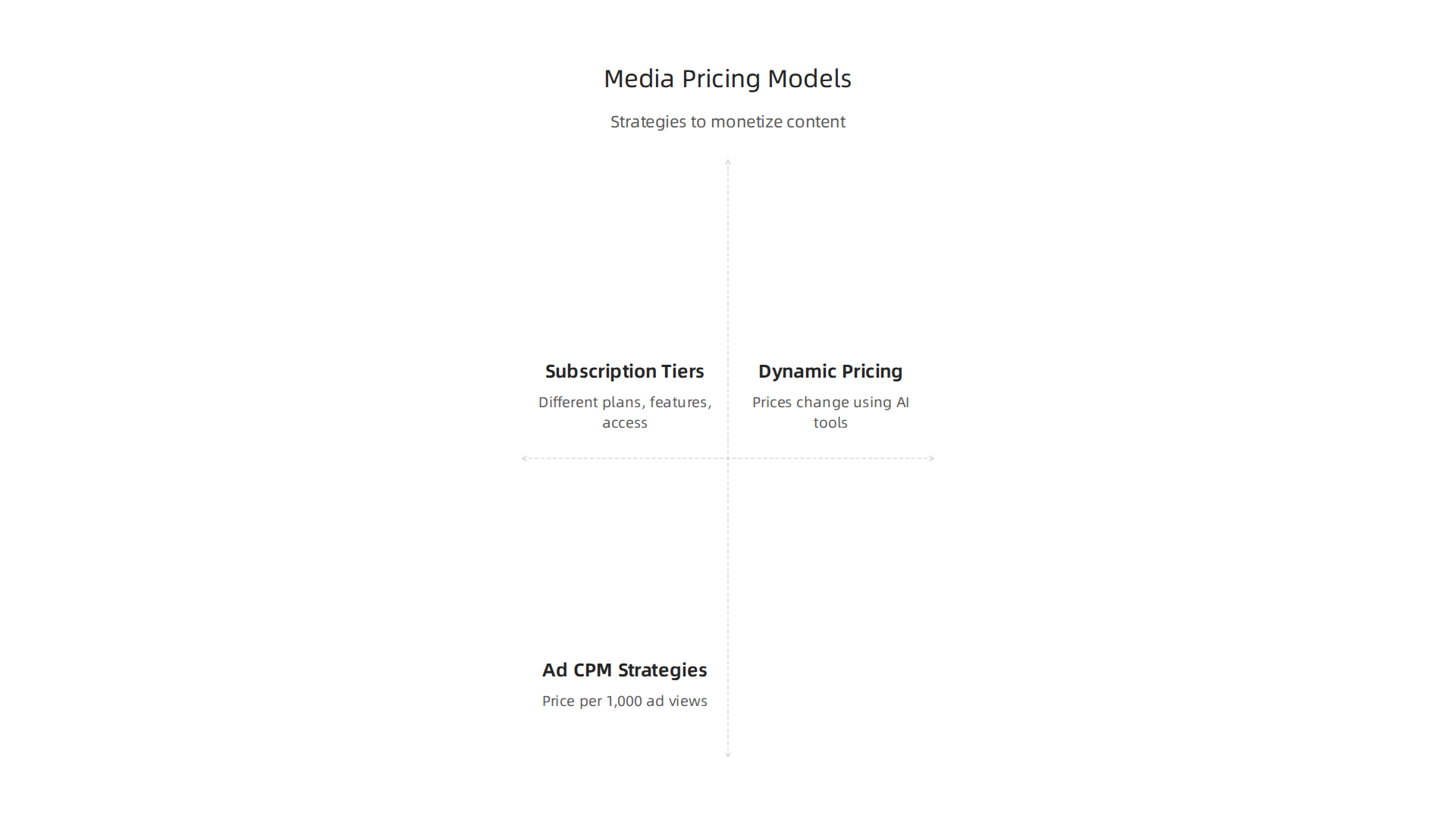
- Subscription Tiers: Many media brands offer different plans, often called tiers. A basic plan might give you access to some content, while a premium plan costs more but offers things like no ads, special shows, or early access. This helps serve different kinds of customers who are willing to pay different amounts Pricing Strategy of Competing Media Platforms. Research in 2026 shows that bundled subscriptions can offer a better deal per service even if the total price is higher AN EMPIRICAL ANALYSIS OF PRICING AND ADOPTION OF SUBSCRIPTION BUNDLES.
- Dynamic Pricing: This is when prices change often, sometimes based on who is looking or what time it is. AI tools are very good at this. They can guess how much someone might pay and change the price right then. For example, ad-tech companies might use AI to offer different prices for ad space depending on how many people are online or what they are interested in. This method is also used in online retail and is becoming more common in media Evidence From U.S. Online Retailers, 2022-2025.
- Ad CPM Strategies: For media that relies on ads, pricing is about how much advertisers pay to show their messages. CPM means "Cost Per Mille" or "Cost Per Thousand." It’s the price an advertiser pays for 1,000 views of their ad. Media companies need to set these prices carefully to get enough ad money without making ads too expensive for businesses. Understanding what drives these ad prices is key Pricing Power in Advertising Markets: Theory and Evidence. Optimizing these prices, especially in real-time bidding for display ads, is a big part of making money Optimizing Reserve Prices in Display Advertising Auctions.
Running Pricing Experiments
Knowing the right price for your media content or ad space is not always easy. Sometimes, you need to try out different prices to see what works best. This is called pricing experimentation.
- Testing with Limited Groups: Imagine you have a new subscription plan. You can’t just change the price for everyone at once without knowing if it will work. Instead, you might show different prices to small groups of people to see which price they like best and are willing to pay. This helps you learn without risking too much.
- Using Surveys and Feedback: Asking your audience directly what they think about prices or what they would pay can also give you useful clues. Online surveys can be a smart and cheap way to test different price ideas Using Experimental Survey Designs to Support Pricing Decisions. This helps you understand how sensitive people are to different prices.
- A/B Testing: This is a simple way to test. You show one price (A) to one group and a different price (B) to another group. Then, you see which price leads to more sign-ups or sales. With careful planning, you can run these tests even in short time windows.
In 2026, technology makes these tests even better. AI tools can help analyze the results of these experiments faster and suggest the best prices. This helps media companies make smart decisions about how they price their offerings, which is a big part of why marketing is important to a business. To make sure your overall marketing plan is strong, learning to develop a strategic marketing plan for media creator growth in 2026 is a vital next step.
After figuring out how to price your media products, the next important step in the four ps of marketing is "Place." This is all about how you get your content, services, or messages to your audience. It means choosing the right channels and platforms so people can easily find and use what you offer. For media companies in 2026, this part of marketing is more complex than ever before.
Where Your Media Lives: Channels, Platforms, and Access
Think of "Place" as your media’s home. It’s not just about where your content physically sits, but how it travels to reach viewers, listeners, and readers. A smart distribution plan helps your business grow because it makes sure your great stories and ads are seen by the right people at the right time.
Media companies use different ways to distribute their content:
- Owned Channels: These are platforms you control, like your own website, mobile app, or direct email lists. You have full say over the content and how it’s presented.
- Earned Channels: This is when others share your content for free because they like it. It could be through social media mentions, news articles, or word-of-mouth. Learning what is earned media and how to build a strategy that earns real influence in 2026 can be very helpful for this.
- Paid Channels: These are channels where you pay to get your content seen, like through advertising. This includes traditional ads and newer digital ads. To get a better understanding of how these different channels work, consider reading about paid media vs earned media 2026 maximizing your digital reach.
Modern Media Distribution Choices
In 2026, media distribution goes much further than just having a website.
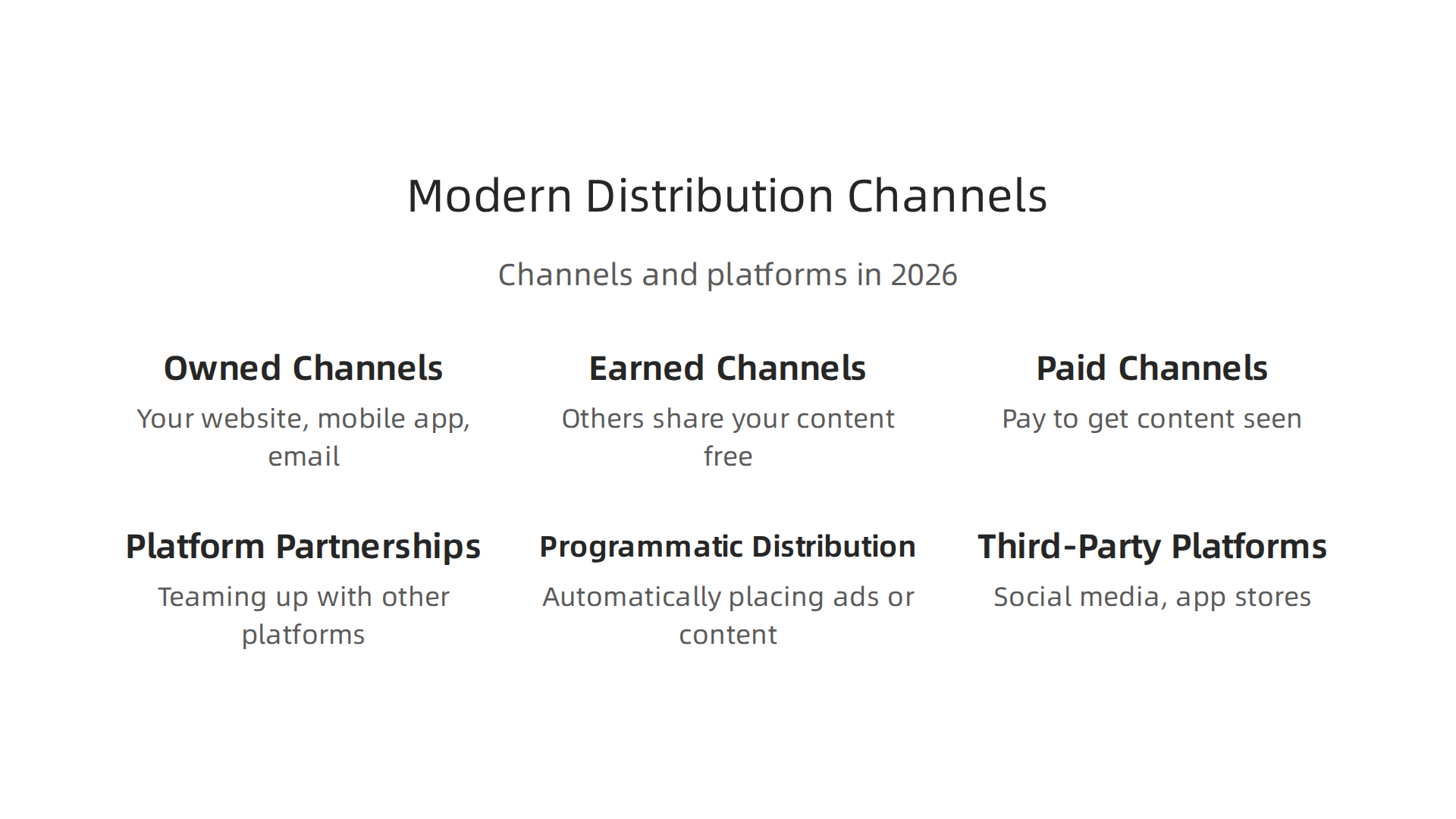
- Platform Partnerships: Many media companies work with other big platforms to share their content. For example, in 2026, we see more streaming services and traditional broadcasters teaming up. These partnerships help them reach new audiences and share costs. Some studies show we can expect even more deals between broadcasters and streamers in 2026 Public media partnerships with streamers. Also, streaming platforms are starting to be included in bigger distribution deals, especially outside North America 2026 Media & Entertainment Industry Predictions Report.
- Programmatic Distribution: This is a fancy term for automatically placing ads and sometimes content using special computer programs. It’s a huge part of how digital advertising works now. In fact, experts predict that by 2026, programmatic ad spending will reach over $821 billion, making up about 90% of all digital display advertising worldwide Programmatic Advertising Statistics 2026: 140+ Data. This kind of advertising is also growing fast for streaming TV (CTV) and audio. Programmatic audio, for instance, is set to become fully omnichannel by 2026, meaning it will be everywhere and tied to user identity Programmatic audio shifts to curation, identity, and video in 2026. This is also true for other platforms, as many advertisers plan to increase their spending in programmatic channels in 2026 Comscore 2026 State of Programmatic Report.
- Third-Party Platforms: This includes social media sites, app stores, and other popular digital spaces where people spend their time. For media brands, it’s key to choose the right digital marketing platforms in 2026 to reach their target audience. Integrating your services directly into existing interfaces, like streaming services into cable TV boxes, is also a growing trend in 2026 2026 M&E trends: simplicity, authenticity, and the rise of experiences.
AI plays a big role in all these distribution choices. It helps companies understand where their audience is, what they like, and how to deliver content most effectively. This ensures that the message gets to the right people, improving the overall success of the marketing efforts.
For media professionals, keeping up with AI’s impact on distribution and other areas is essential. Get clear daily AI updates from The AI Newsletter Worth Reading.
After figuring out how to price your media products and get them to your audience, the final "P" in the traditional four ps of marketing is "Promotion." This is where you tell people about your media content, products, or services. It’s about how you spread your message and make sure your target audience knows what you offer and why they should care.
For media companies in 2026, promotion is much more than just putting out an ad. It means building smart plans that connect your content directly to audience growth and give real value to advertisers.
Messaging and Campaigns
Good promotion starts with clear messages. Your messages should tell a compelling story about your media. This is often called storytelling marketing. It helps people connect with your brand and content on a deeper level. Crafting strong messages is key to showing why marketing is important to a business.
Modern promotion plans often use a mix of strategies:
- Paid Promotion: This is when you pay to get your message seen, like through advertisements on TV, radio, social media, or search engines. This helps you reach a large number of people quickly. To build a strong plan, you need to understand how to choose the right marketing campaign types for 2026 growth. You might also explore different advertising channels in 2026 to find the best fit.
- Earned Promotion: This happens when people talk about your content or brand for free because they genuinely like it. It could be news articles, social media shares, or reviews. This kind of promotion builds a lot of trust.
- Creator-Driven Promotion: This is a huge part of marketing in 2026. It involves working with influencers or creators who have their own audiences. They can share your message in an authentic way.
The Rise of the Creator & Influencer Economy
The creator economy is booming in 2026. Experts say its market size could be around $250-325 billion this year, depending on how you count it The Global Creator Economy Report 2026. Brands are spending more on this type of marketing, with US ad spending projected to hit $43.9 billion in 2026 for creator-led advertising alone Creator Economy Ad Spend Hits $44B in 2026: What Brands Must ….
Many companies are now working with a mix of influencers:
- Mega-influencers: These are big celebrities or internet stars with millions of followers.
- Macro-influencers: People with a large, but not enormous, following (e.g., 100,000 to 500,000 followers).
- Micro- and Nano-influencers: These individuals have smaller, but very engaged, audiences. In 2026, these smaller creators are expected to get 45.5% of all influencer marketing spending Creator Economy 2026. This is because their audiences often trust them more, which leads to better results.
Actually, for every dollar spent on creator campaigns, companies are seeing an average return of $5.78, with some top campaigns earning up to $18 back How Brands Find, Vet, and Scale Creator Partnerships with AI – Storika. This proves how effective this type of promotion can be.
To make these campaigns work, it’s important to measure what happens. Key things to track include how many people see your message (awareness), how much they interact with it (engagement), and if they take an action like buying something (conversion) Influencer Marketing KPIs in 2026: The Metrics That …. Many brands plan to increase their budgets for influencer marketing in 2026, showing its growing importance The State of Creator Marketing Report 2025-2026 – CreatorIQ.
AI’s Role in Promotion
Just like with Product, Price, and Place, Artificial Intelligence (AI) is changing promotion too. AI helps media companies understand which messages will work best for different audiences. It can help choose the right creators, predict how well a campaign will do, and even create parts of the promotional content itself. AI makes promotion smarter and more targeted, helping your marketing efforts reach the right people at the right time. AI transforms the four ps of marketing from a simple checklist into a system that learns and adapts in real time AI Transforms the 4 Ps of Marketing.
Now, let’s bring all these ideas together. We’ve talked about Product, Price, Place, and Promotion, the well-known four ps of marketing. Thinking about each one alone is helpful, but the real magic happens when they work hand-in-hand. This is called orchestration. It means making sure all parts of your marketing plan play nicely together to achieve your goals.
Bringing the Ps together: Strategy, workflows, and AI-enabled orchestration
Imagine your marketing as a big band. Each of the four Ps is a different instrument. If they all play their own tune without listening to each other, it just sounds like noise. But if they play together, following a plan, you get beautiful music. That’s what strategy and workflows do for your marketing. They connect your product, how you price it, where people can get it, and how you tell them about it, all across different teams and platforms.
A good marketing mix strategy in 2026 makes sure your messages are clear and consistent everywhere. This helps people understand your brand better. For media companies today, knowing why marketing is important to a business means seeing how these Ps build trust and help your audience grow. It’s not just about selling; it’s about telling a good story and offering real value.
In 2026, Artificial Intelligence (AI) is a big helper for orchestration. AI can look at lots of information to figure out what customers want and when they want it. This helps media companies create messages that feel personal to each person. AI also makes campaigns faster to launch and easier to change on the fly. This way, your media content gets to the right people at the right time, making your marketing efforts much more effective.
AI helps connect all your marketing efforts, from when you first think of a product idea to how you sell it and talk about it. It can help with things like:
- Better customer understanding: AI can figure out what your audience likes and dislikes, helping you make better products and promotions.
- Faster campaigns: AI can automate parts of campaign creation and launch, meaning your content gets to market quicker.
- Smarter spending: AI helps you see which marketing actions are working best, so you can put your money where it counts.
- Seamless experience: AI helps create a smooth journey for your audience, whether they’re seeing an ad, visiting your website, or using your product.
Experts in 2026 are already talking about the need for "unified omnichannel planning" which simply means planning all your different marketing channels (like social media, email, ads, etc.) to work as one smooth system. This is a big challenge, but AI makes it much easier to achieve. For example, many marketers are looking for stronger data partnerships and simpler technology to handle their many platforms and channels.
However, using AI in marketing also brings up some important questions about ethics and being fair. We need to be careful to use AI in ways that are honest and respect people’s privacy. For instance, creating fake customer reviews with AI is a big problem that leads to legal issues.
To truly use the four ps of marketing in an AI-powered world, businesses need to build smart workflows. These workflows guide how different teams work together and how AI tools are used. This makes sure that every step, from developing content to promoting it, is efficient and focused on helping the audience.
Do you want to stay up-to-date with all the latest in AI and technology that is changing the media world?
Get clear daily AI updates from The Deep View Newsletter.
After you’ve carefully put all your marketing pieces together with the help of AI, the next big step is to see if your plan is actually working.

This is where measurement and evolution come in. It’s not enough to just launch a campaign; you need to track how well it’s doing, learn from the results, and make things better over time. Think of it as tuning your band after each performance to make the music even sweeter.
Measurement and evolution: KPIs, experiments, and lifecycle optimization
To understand if your marketing efforts are hitting the mark, you need to look at Key Performance Indicators, or KPIs. These are like scorecards for each of the marketing Ps: Product, Price, Place, and Promotion. For media companies in 2026, linking these KPIs to big business goals like getting more subscribers, boosting ad revenue, and keeping customers coming back (retention) is crucial.
Let’s break down which KPIs matter for each P:
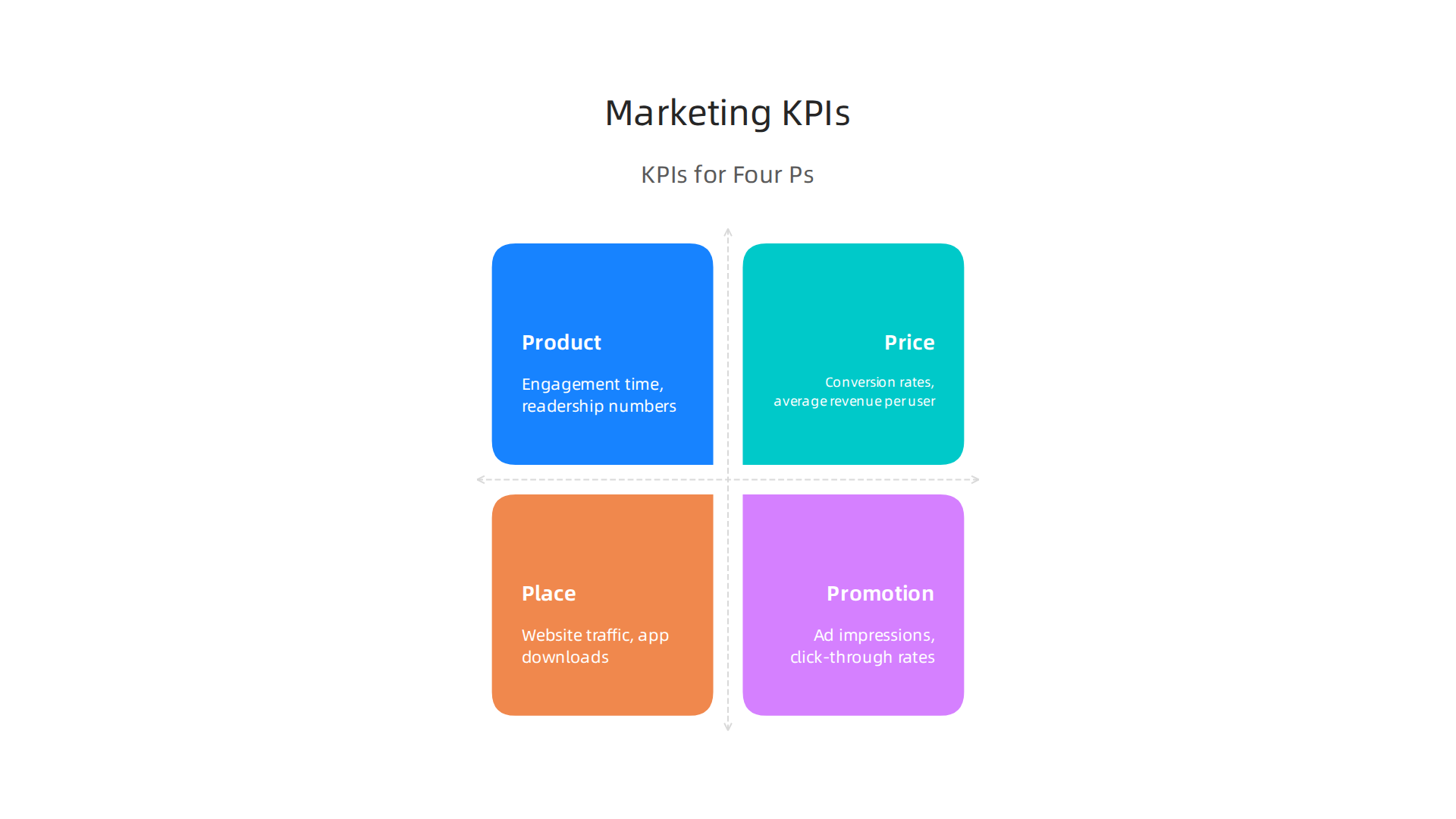
- Product: For your content or services, you’d look at things like how many people use it, how long they stay, and how often they come back. Are they watching your shows, reading your articles, or listening to your podcasts? KPIs here might include viewer engagement time, readership numbers, or app usage frequency. This tells you if your product is really what news readers want and helps with customer retention.
- Price: When it comes to how you charge for your offerings, like subscriptions or premium content, you’ll want to track things like conversion rates (how many people sign up after seeing a price), average revenue per user (ARPU), and churn rates (how many people cancel). Dynamic pricing, which changes based on demand, is becoming more common, so constantly checking these numbers is vital to see what works best for your audience and overall subscriptions. Studies even look at how pricing strategies affect user willingness to purchase subscriptions and bundled services.
- Place: This is all about where your audience finds your content. Are they discovering it through social media, your website, partner platforms, or mobile apps? Important KPIs might include website traffic from different sources, app downloads, or the number of new users acquired through a specific distribution channel.
- Promotion: This covers all your advertising and communication efforts. For media companies, KPIs might include ad impressions, click-through rates (how many people click your ads), conversion costs (how much it costs to get a new subscriber or customer), and the return on ad spend (ROAS). Many companies are focusing on cross-channel performance metrics for programmatic advertising to make sure their ad dollars are spent wisely across different platforms in 2026, aiming to optimize reserve prices in display advertising auctions. You might also look at things like brand awareness if you’re trying to tell a storytelling marketing message.
Using experiments is a smart way to figure out what works. You don’t need perfect data to start. Even with limited information, you can run small tests, like showing different prices to different groups or trying out various ad messages. This is called A/B testing. It helps you see which changes lead to better results. For example, you could test if a new way of showing ads leads to more ad revenue, or if a different subscription offer gets more sign-ups.
Attribution is about understanding which of your marketing actions led to a specific outcome. Did that new customer subscribe because of a social media ad, an email, or an article they read? Figuring this out helps you put your money and effort where it matters most. It’s how you continuously improve your strategies across the entire customer lifecycle, making sure your product evolves, your pricing stays competitive, and your promotions reach the right people in the right place. By always measuring, experimenting, and adapting, your marketing stays strong and keeps growing with your audience.
Summary
This guide explains how the classic four Ps of marketing — Product, Price, Place and Promotion — apply to media companies, creators, platforms and ad-tech in 2026, when AI and programmatic systems reshape every decision. It defines each P for publishers and creators, shows how to package digital offerings and audience segments, and reviews practical pricing approaches from subscription tiers to CPMs and dynamic pricing. The article covers distribution choices across owned, earned and paid channels, plus the rise of programmatic and platform partnerships. Promotion sections show how creator-driven campaigns and AI-powered targeting improve reach and ROI. Finally, it explains how to orchestrate the Ps with AI-enabled workflows, run experiments, track KPIs and iterate to grow subscribers, ad revenue and audience engagement.