Build a Strong Advertising Ethos for Trust in the AI Era
Why an Advertising Ethos Matters Now
In today’s fast-paced world, people see more ads than ever before. But how do you make your brand stand out and truly connect with people? The answer lies in having a strong "advertising ethos." Simply put, your advertising ethos is the set of beliefs, values, and character that your brand shows in all its messages.
It’s about being trustworthy and having good character, which helps people believe in what you say and sell Ethos in Advertising: Why It Works + Examples.
When a brand clearly shows its good character and values, it builds trust with its audience.

This trust is super important for staying strong over a long time. Think of it as the soul of your brand; it makes people want to stick with you and your products or services. A clear ethos guides all your advertising ethos examples, making sure every message feels honest and true to who you are.
Right now, leaders in media, advertising, and the creator economy face big challenges. Platforms are changing all the time, new AI tools are popping up every day, and it’s getting harder to grab and keep people’s attention. With so much noise, a strong advertising ethos is not just a nice-to-have; it’s a must-have. It helps your brand cut through the clutter and resonate with your audience on a deeper level. For any brand, truly understanding the marketing concept definition involves showing a clear and consistent character.
This guide will give you easy-to-follow steps and real-world advertising ethos examples. You’ll learn how to build and show your brand’s true character. We will explore helpful ideas and how to put them into practice, so your brand can grow stronger and earn lasting trust in 2026 and beyond. If you’re wondering what makes a good advertisement thrive, developing a clear ethos is a crucial first step.
To stay on top of the latest changes in media and technology, especially with AI, you need constant updates. Stay informed with daily insights.
AI Newsletter (placeholder)
Core Principles of an Effective Advertising Ethos
Building on the idea that your brand’s character, or advertising ethos, makes people trust you, let’s talk about the main rules that make this character strong. These rules help your brand show its best self in every advertisement. They are like the secret sauce for great advertising ethos examples that truly connect with people.
Key Rules for a Strong Ethos
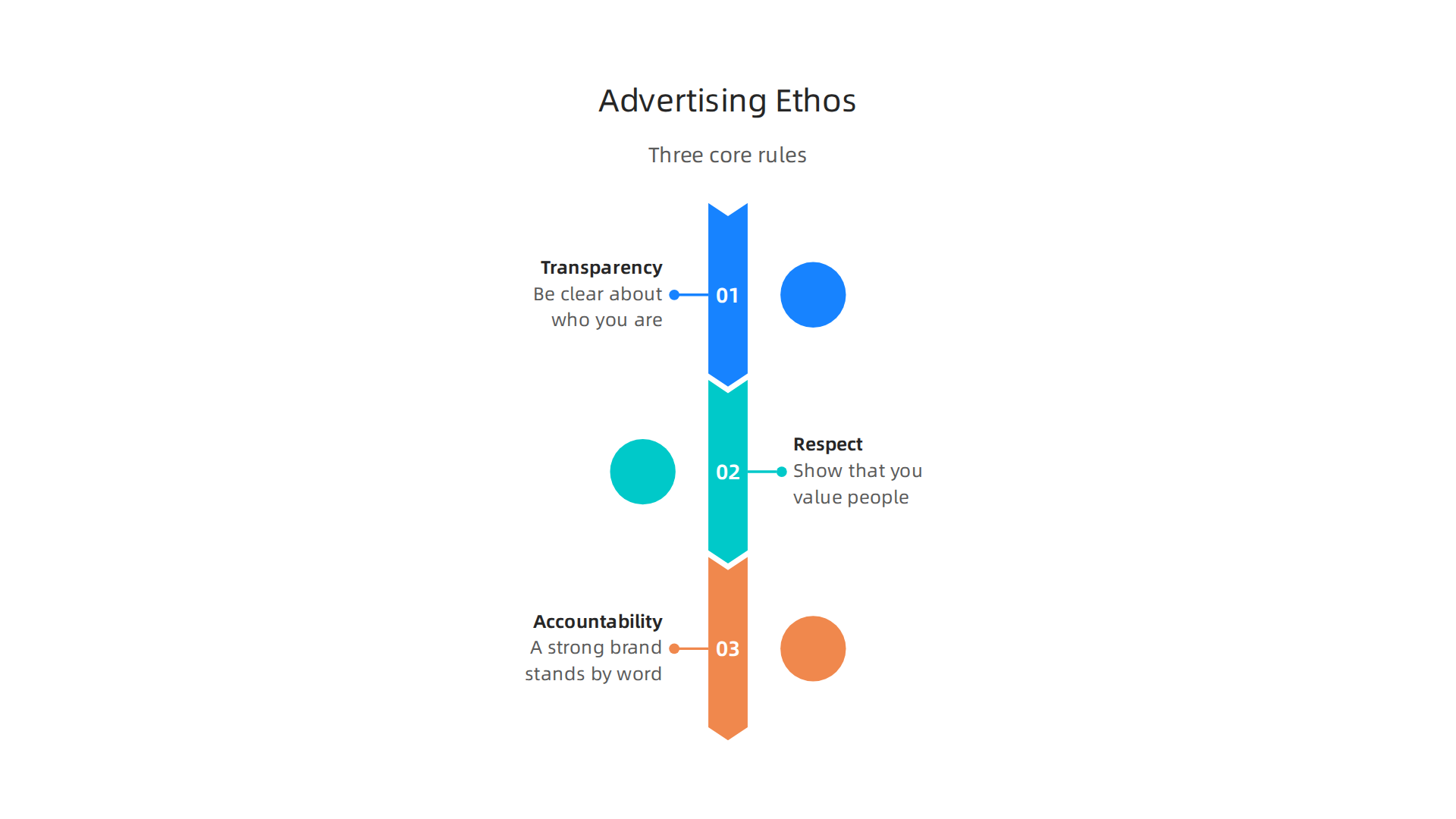
There are a few simple but powerful rules for a brand’s good character in advertising:
-
Be Open and Honest (Transparency): This means being clear about who you are, what you offer, and how your products or services work. Don’t hide important details or make promises you can’t keep. When you are open, people feel they can trust you more. Think about how important it is to be clear with customers about how their information is used. This is a big part of ethical advertising today, especially in 2026. Being truthful is a key part of your brand’s moral compass Pengaruh Etika Periklanan Dalam Komunikasi Pemasaran ….
-
Care for Your Audience (Respect): Show that you value the people you are talking to. This means listening to their needs, understanding their worries, and giving them helpful information. It also means not using tricky ads or pushing products that aren’t right for them. When you respect your audience, they respect you back. This builds a strong bond and helps your brand become a trusted friend, not just a seller.
-
Take Responsibility (Accountability): A strong brand stands by its word. If something goes wrong, it owns up to it and fixes it. This also means being careful about the messages you put out there. Make sure your ads don’t cause harm, spread false ideas, or go against good values. Being accountable means you care about the impact your advertising ethos examples have on the world. Ethical marketing tactics for 2026 include making sure ad claims are true and that your data practices are fair Ethical Marketing Metrics? → Question.
How These Rules Help Your Business Grow
These core principles do more than just make your brand look good. They help your business meet important goals:
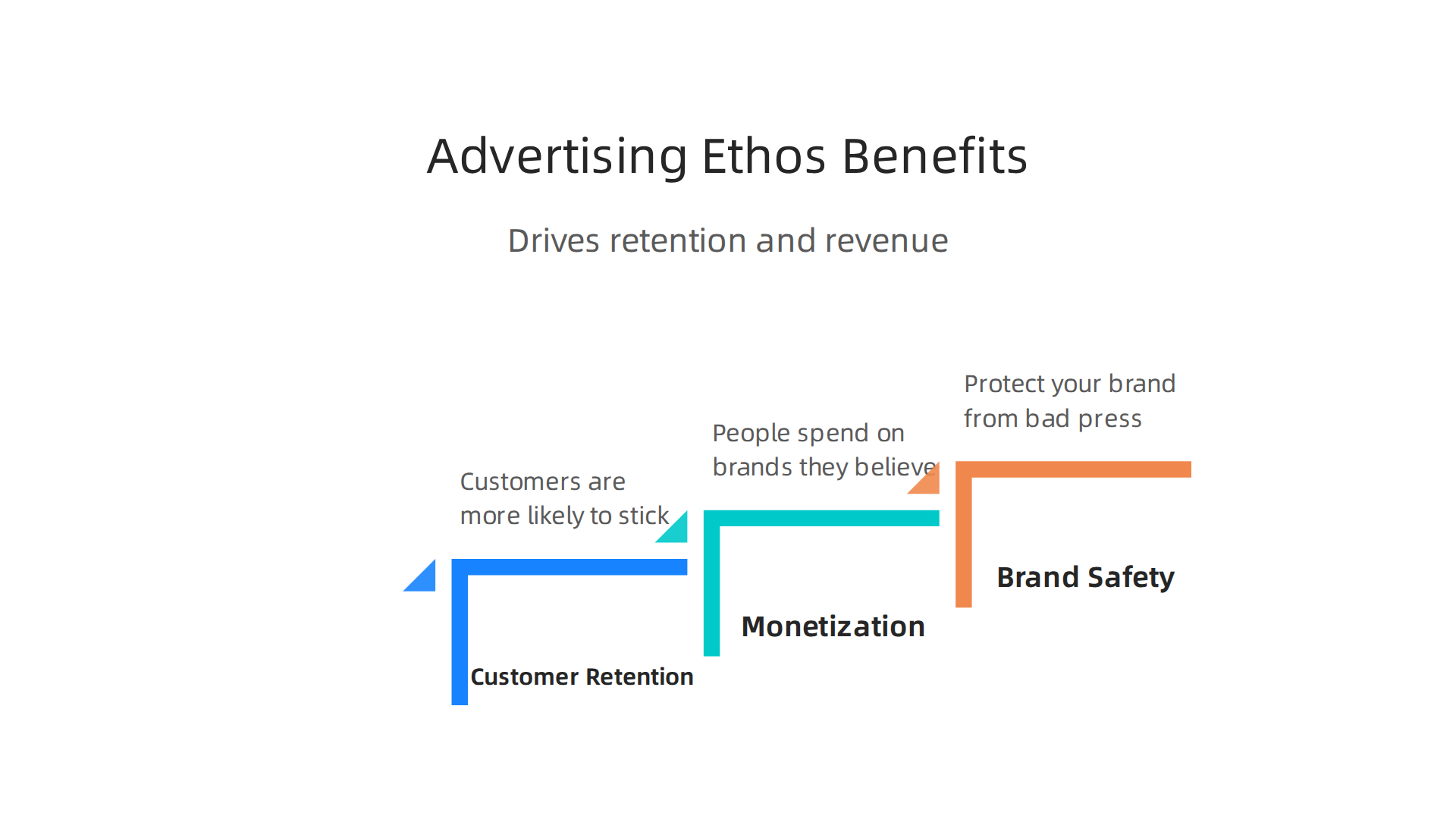
- Keeping Customers (Retention): When customers trust and respect your brand, they are more likely to stick with you. They won’t just buy once; they’ll come back again and again. This saves you money because it’s usually easier to keep old customers than to find new ones.
- Making Money (Monetization): People are willing to spend money on brands they believe in. A strong advertising ethos encourages loyalty, which turns into more sales. Your brand’s good character can become a marketing icon, known for reliability, which naturally leads to more income.
- Keeping Your Brand Safe (Brand Safety): In 2026, where news travels fast, a single mistake can hurt a brand’s name. By following these rules, you protect your brand from bad press and loss of trust. It’s like having a shield for your reputation. Good corporate branding services help build this trust and protect your image.
Finding a Balance: Personalization and Privacy
It’s not always easy to follow all these rules perfectly. Sometimes, brands face tough choices. For example, people like ads that feel personal to them, but they also want their private information kept safe. This is a big challenge for leaders in advertising today. How much personal info can a brand use to make an ad helpful without making people feel like their privacy is invaded?
Brands need to find a sweet spot. They must use customer data wisely and always ask for permission.

They should also be very clear about why they collect data and how they use it. This careful balancing act is part of building a strong marketing mix strategy in 2026, which some now refer to as the "5 Ps of marketing," including people and privacy alongside product, price, place, and promotion. It ensures that while you’re trying to reach people, you’re also doing so in a way that feels right and earns their long-term trust.
Building on how a brand’s character makes people trust it, let’s look at where these ideas of good advertising came from. The way we think about good advertising today has a long history, shaped by big changes over time and different ways of living around the world.
How Advertising Ethos Grew Over Time
The story of advertising goes way back. In the mid-1800s, ads mostly appeared in newspapers and magazines. As new ways to share information came along, like radio, television, and later the internet, advertising grew much faster. You can see a quick overview in this History of Advertising video.
With more ads everywhere, people started to wonder if all the claims were true. This led to important changes. For example, in the United States, rules began to form in the early 1900s. Laws like the Pure Food and Drug Act of 1906 and the Wheeler-Lea Act of 1938 started to make sure that claims about products were honest and not misleading Advertising And Regulation Of Advertising History. These acts helped set the stage for how federal groups like the Food and Drug Administration (FDA) and the Federal Trade Commission (FTC) would watch over advertising Advertising Regulation | Communications Law and Ethics. The FTC, for example, helps make sure ads aren’t false or tricky
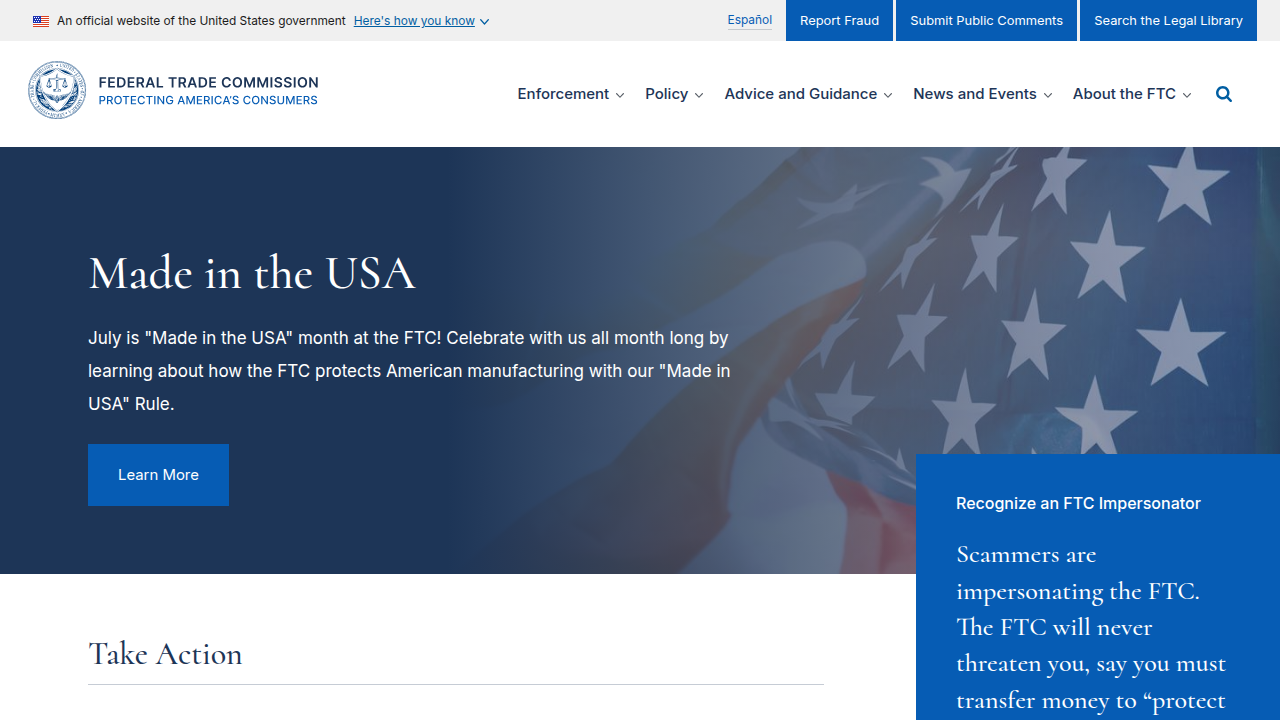
The Role of Advertising and Advertising Regulation in ….
Over in the UK, the advertising industry itself started to make rules. In 1925, the Association of Publicity Clubs put out the first set of rules for advertising History of self-regulation – ASA | CAP. Later, in 1961, groups came together to create the Committee of Advertising Practice (CAP) and the British Code of Advertising Practice. The next year, the Advertising Standards Authority (ASA) was formed to make sure these rules were followed Self- and co- regulation: the Advertising Standards Authority. This shows how both government and the industry itself worked to shape what good advertising looks like. These efforts are still in place today, with the ASA providing a "one-stop shop" for advertising regulation in the UK Regulation of advertising in the media.
Culture Shapes What We See as Ethical
What one country thinks is a good advertising ethos, another might not. Cultural beliefs and norms play a huge part in what audiences see as fair or ethical in ads. For example, Sweden passed a law in 1991 that stopped all TV ads for children under 12, much earlier than many other countries. More recently, China updated its advertising law in 2015 to catch up with the internet age Comparing Different Advertising Norms by Country and Era. These differences mean that a brand’s advertising ethos examples need to be flexible and think about where their message is being seen.
The Role of Rules Today
In 2026, institutional standards and government rules continue to guide what brands can and can’t do. These rules help make sure that the principles of honesty, respect, and responsibility are upheld. They influence every part of a brand’s marketing concept definition. These guidelines ensure that brands build trust, which is key for any business wanting to be a true marketing icon in their field. Understanding this history helps us see why clear and honest advertising isn’t just a nice idea, but a necessary part of how businesses work and grow. To truly succeed, businesses need to think about not just what makes a good advertisement, but also its ethical foundation. You can learn more about crafting impactful ads with strong strategies in 2026 by exploring what makes a good advertisement thrive.
The ethical foundation of advertising, built through a long history of rules and cultural shifts, is more important than ever. In 2026, business leaders need to know about the practical rules and standards that guide advertising. These frameworks help make sure brands act fairly and build trust.
Practical Frameworks for Ethical Advertising
For executives, understanding and using ethical frameworks is key. Here are some important ones:
- Consent-First Approaches: This means always asking for permission before using someone’s data or sending them ads. Think about how websites ask you to accept cookies. These rules, like those for data privacy around the world, make sure people feel safe and respected. This approach strongly influences how advertising ethos examples play out in practice, showing respect for the consumer’s privacy.
- Disclosure Standards: People need to know when something is an ad. This means clearly labeling sponsored content, like when an influencer is paid to promote a product. It helps keep things honest and open. Lack of clear disclosure can hurt a brand’s reputation and its overall marketing concept definition, as it makes customers feel tricked.
- Content Moderation Policies: With so much content online, especially with new tools like AI, brands need clear rules about what they will and will not show. This includes making sure ads are safe for all audiences and do not promote harmful ideas. It’s about maintaining brand safety and a positive advertising ethos.
Voluntary Standards Versus Legal Rules
It is important for businesses to know the difference between rules that the industry makes itself and laws set by the government. Both are vital for ethical advertising:
- Voluntary Industry Standards: These are guidelines that advertising companies and groups create for themselves. They aim to keep advertising fair and honest. For example, in the UK, the Advertising Standards Authority (ASA) makes sure ads follow these codes
Our history. These standards often come from a shared desire to keep the industry strong and trustworthy. Many countries have similar groups that set ethical expectations for businesses.
- Legal and Regulatory Requirements: These are actual laws that businesses must follow. Governments create these to protect consumers from false or harmful advertising. Breaking these laws can lead to big fines or other penalties. These legal rules often form the baseline for what is acceptable, while industry standards might go a step further. It is crucial to understand these rules, especially if your marketing concept definition involves global reach.
In 2026, navigating these rules means that companies must look at both what they should do (industry standards) and what they must do (laws). This helps build a strong advertising ethos. For businesses looking to grow, considering both is essential for a sound marketing mix strategy in 2026.
A Checklist for Ethical Advertising Practices
To make sure your brand is on the right track, executives can use this simple checklist:
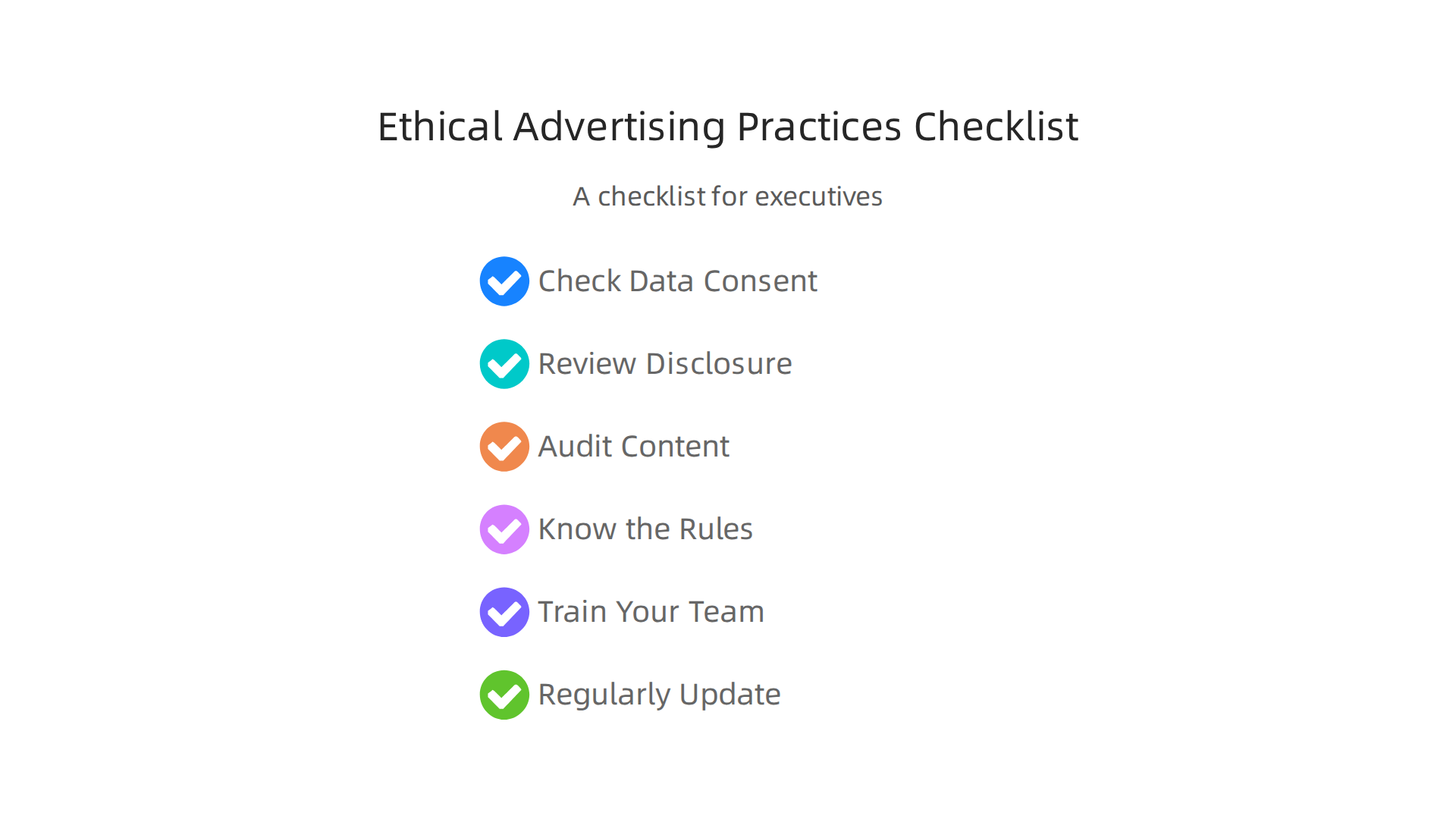
- Check Data Consent: Do we clearly ask for permission before collecting and using customer data for ads?
- Review Disclosure: Are all sponsored or paid contents clearly labeled so customers know it’s an ad?
- Audit Content: Do our ads avoid stereotypes or unfair portrayals? Are they safe for all audiences?
- Know the Rules: Do we understand both local laws and industry-specific guidelines in all the places we advertise? This is especially important for paid online advertising tools.
- Train Your Team: Does everyone involved in marketing and advertising know these ethical rules?
- Regularly Update: Do we keep up with new laws and changes in what people consider ethical?
By paying close attention to these areas, businesses can ensure their advertising efforts are not only effective but also responsible. This ongoing work helps build a respected brand, proving that strong ethics are a core part of being a successful marketing icon.
Modern Advertising Ethos in the Age of AI and Personalization
As businesses work hard to keep their advertising ethical, a new challenge is taking center stage in 2026: Artificial Intelligence, or AI. AI-driven personalization helps ads feel more relevant to each person. But it also brings new questions about fairness and trust.
New Ethical Concerns with AI
Imagine AI helping to show you ads for things you might really like. That sounds good, right? But here’s where it gets tricky:
- Hidden Decisions (Opaque Decisioning): Sometimes, AI makes choices in ways we cannot easily see or understand. It’s like a computer operating in a "black box," making it hard to know why an ad was shown to a certain person. This lack of clarity can hide if the AI has unfair biases or if its choices are not quite right. Research shows that a lack of transparency in AI-driven advertising systems is causing concerns about unfair practices AI in advertising risks fuelling information crisis, UN warns.
- Guessing Risks (Inference Risks): AI uses lots of data to guess things about people. It might guess your interests, your mood, or even your life situation. These guesses, or inferences, are not always correct. If AI infers something wrong about you, it could lead to ads that feel manipulative or even make you feel targeted unfairly. This could harm a brand’s overall marketing concept definition. The ethical use of AI in advertising needs careful thought about data privacy and how AI might unfairly target consumers The ethical use of AI in advertising.
These new ethical concerns mean businesses must think deeply about how AI affects their advertising ethos.

Balancing Act: Tough Choices with AI
Using AI in advertising creates a few important tensions that businesses need to manage:
- Helpful or Manipulative? (Relevance vs. Manipulation): AI can make ads super relevant, showing you exactly what you need. But when does helpful become manipulative? It’s a fine line. AI could target people when they are feeling vulnerable, like when they are sad or stressed. This raises serious questions about whether ads are truly helping or taking advantage The Ethics of AI Persuasion: Boundaries in 2026 Advertising.
- Fast or Fair? (Optimization Speed vs. Governance): AI helps companies make ads faster and better. But going too fast can mean skipping important steps to ensure fairness and safety. There is a balance needed between making things quick and making sure they follow good rules.
- Robot or Human? (Automation vs. Human Oversight): AI can do many things on its own. But we still need people to check the AI’s work and make sure it’s doing things ethically. Human oversight is key to catching problems like bias in algorithms, where AI might show unfair ads to certain groups of people because of the data it learned from AI Marketing Trends 2026 – Realize –.
To stay a trusted marketing icon, companies need clear rules for how AI is used. They also need to train their teams well. Learning about what makes a good advertisement thrive in 2026 can help teams navigate these new waters.
Principles for Ethical AI Advertising
To help steer clear of problems, advertising teams in 2026 should adopt some special rules for AI:
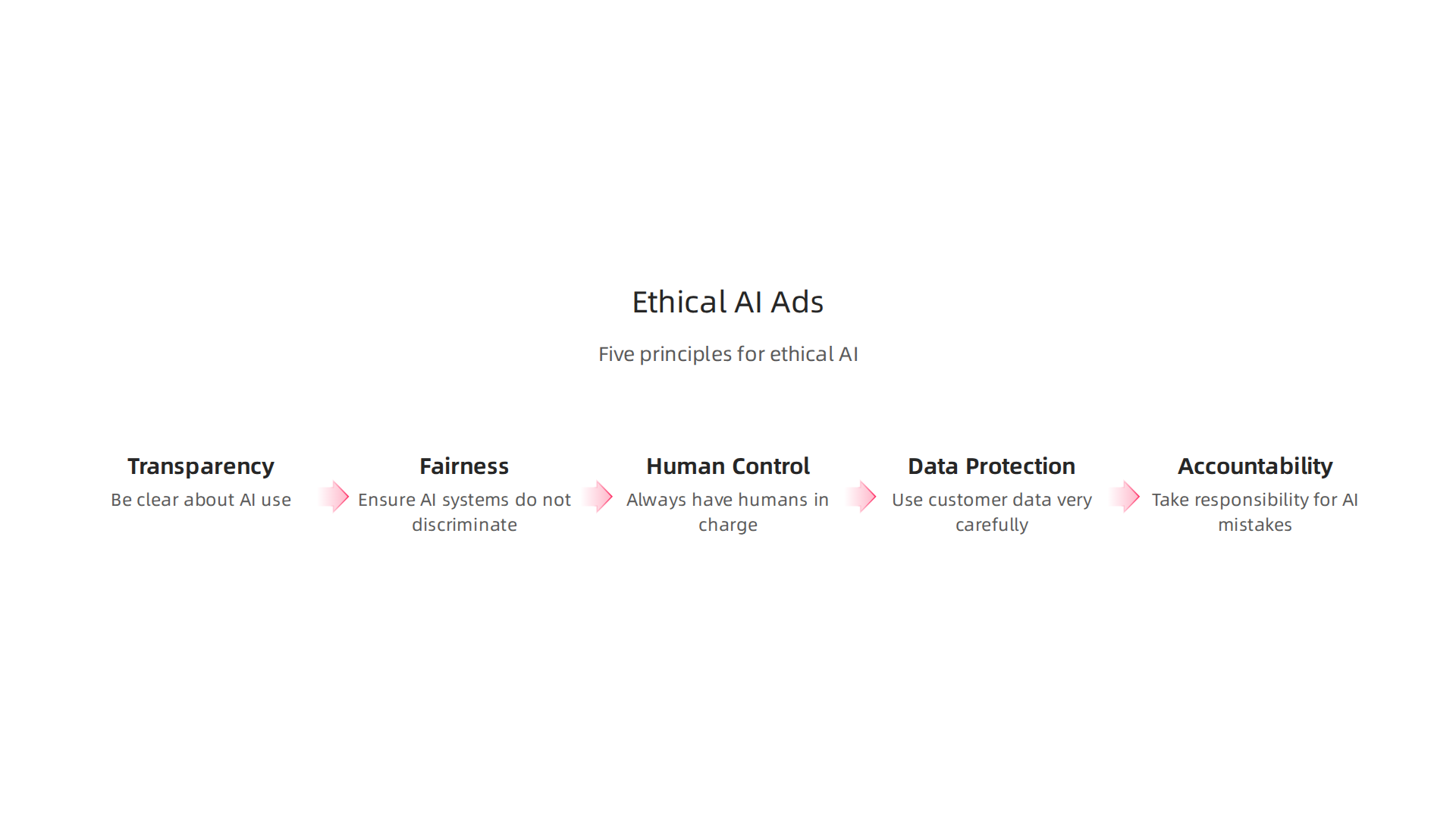
- Transparency: Be as clear as possible about when and how AI is used in ads. If AI helps create content or choose who sees an ad, let people know.
- Fairness: Make sure AI systems do not favor or discriminate against any group of people. This means checking AI for bias often.
- Human Control: Always have humans in charge. People should be able to review, adjust, and stop AI if it’s doing something wrong.
- Data Protection: Use customer data very carefully. Only collect what’s needed, keep it safe, and always get permission. This fits right in with the "5 Ps of Marketing," especially the "People" aspect.
- Accountability: If an AI makes a mistake, be ready to take responsibility and fix it.
By following these principles, businesses can use AI to make great advertising ethos examples that build trust, not break it. Keeping up with AI is important for everyone in the media world. To get clear, daily insights into how AI is shaping the media industry, make sure to Subscribe for concise daily AI updates.
Advertising Ethos Examples: Pragmatic Case Studies and Mini-Playbooks
After understanding the rules for ethical AI advertising, it’s helpful to look at real-world examples. How do companies actually put these ideas into practice? Let’s explore some advertising ethos examples that show how different approaches can help build trust and success. An "ethos" is basically what a brand stands for and how it acts, especially in advertising, aiming to show credibility and character Ethos in Advertising: Why It Works + Examples.
Here are a few ways companies are doing this in 2026:
Case Study 1: The Transparent Tech Company
- Problem: People were worried about their data being used in secret for ads. There was a lack of trust, affecting the overall marketing concept definition.
- Ethos Approach: This company decided to be very open. They created easy-to-understand guides that showed how they used customer data to pick which ads people saw. They also gave users simple ways to control their ad settings. This is a "transparency-first" approach.
- Observable Outcomes: While some people opted out of personalized ads, those who stayed felt much better about the company. They saw a slight dip in how many new people they reached, but a big jump in how much their existing customers engaged with their ads and trusted the brand. This shows that being transparent can pay off in the long run How to use transparency in your marketing.
Case Study 2: The Helpful Home Service Brand
- Problem: Ads felt pushy and interruptive, making potential customers annoyed instead of interested.
- Ethos Approach: Instead of just showing ads, this brand offered real value. Their ads might provide a quick, useful tip for home maintenance or a special discount for a first-time service, asking for nothing more than a brief view. This is a "value-exchange" approach.
- Observable Outcomes: Customers felt respected because the ads gave them something useful. The company saw higher numbers of people clicking on their ads and requesting services, showing that giving value first can lead to better results.
Case Study 3: The Eco-Friendly Apparel Maker
- Problem: This brand, known for its green values, worried its ads might appear next to content that didn’t fit its image, like articles promoting wasteful practices.
- Ethos Approach: They focused on "contextual relevance." They worked closely with media partners to make sure their ads only showed up in places that matched their eco-friendly message and the values of their customers. They also made sure their ad creatives highlighted their sustainable practices.
- Observable Outcomes: The brand strengthened its image as a true marketing icon in its niche. They avoided bad press and got positive feedback from customers who noticed their commitment to ethical placements. This helped them build customer loyalty.
Case Study 4: The Trustworthy Financial Advisor
- Problem: Many people are careful about financial advice online, due to flashy ads making big promises.
- Ethos Approach: This advisor focused on "authentic messaging." Their ads were simple, direct, and used real stories from clients (with permission, of course) about how they were helped. They avoided hype and focused on clear, honest information about their services.
- Observable Outcomes: The financial advisor built a strong reputation for being honest and reliable. This led to a steady flow of new clients who were specifically looking for a trustworthy partner, leading to stable growth.
Choosing Your Advertising Ethos Approach
Different businesses need different approaches. Here is a simple table to help leaders decide which advertising ethos examples might work best for them:
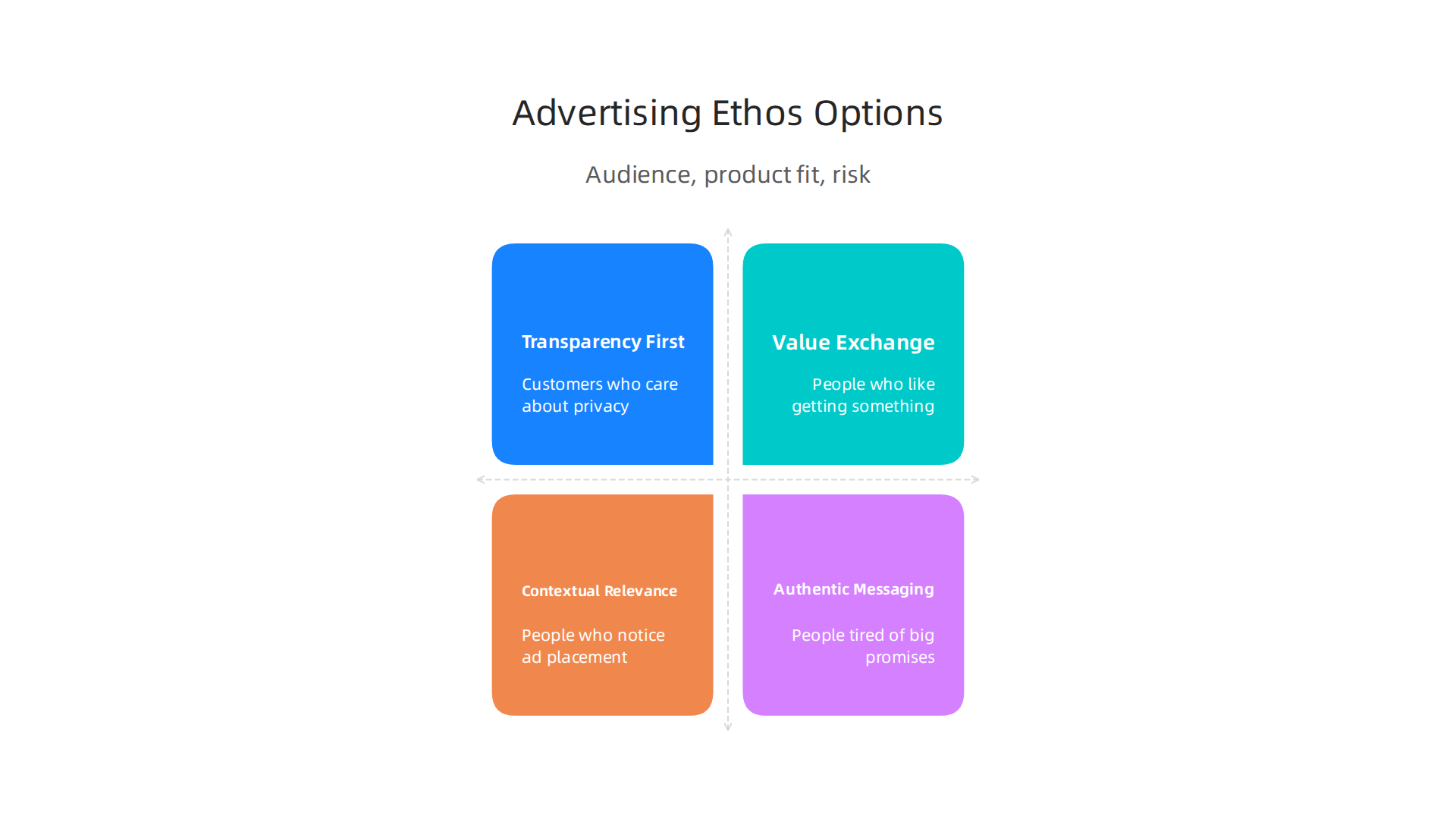
| Ethos Approach | Audience Focus | Product/Service Fit | Risk Tolerance |
|---|---|---|---|
| Transparency-First | Customers who care a lot about privacy and being informed. | Businesses in sensitive areas, like health or money, where trust is key. | Low risk tolerance for negative feedback. |
| Value-Exchange | People who like getting something useful or a good deal. | Products or services that have clear, immediate benefits. | Medium risk, needs careful planning to ensure value. |
| Contextual Relevance | People who notice where ads are placed and care about brand reputation. | High-end brands or those that need to protect their image carefully. | Low risk, good for avoiding bad associations. |
| Authentic Messaging | People who are tired of big promises and want honest information. | Any product or service that can show real, tangible results. | Low risk, but requires consistent, truthful efforts. |
By thinking about your audience, what you sell, and how much risk you can take, you can choose the right advertising ethos to make your brand stand out. This helps in understanding what makes a good advertisement thrive in 2026. A clear brand strategy, supported by corporate branding services, can further boost audience trust and ad revenue.
Implementing and Measuring an Organizational Advertising Ethos
After seeing different advertising ethos examples in action, the next big step is figuring out how to bring these ideas to life inside a company and how to know if they are working. It’s not enough to just say you have good values; you need to show it through your actions every day. This means setting up clear steps and ways to check your progress.
Building Your Ethical Advertising Roadmap
To truly embed an advertising ethos, you need a plan. Think of it like a recipe for good conduct.

-
Governance: Setting the Rules
First, decide who makes the rules for ethical advertising. This could be a special team or a group of leaders. They will create clear guidelines about what’s okay and what’s not, especially with new tools like AI. For example, using AI in ads has many ethical questions, like how data is used and if ads are fair to everyone The ethical use of AI in advertising. These guidelines become your company’s official stance, a core part of your marketing concept definition. -
Operating Model: Day-to-Day Work
Next, think about how these rules fit into daily tasks. This means creating easy-to-follow steps for everyone involved in making ads. Maybe it’s a checklist for new ad campaigns or a review process to ensure all ads meet the ethical standards before they go live. -
Tooling: Smart Systems
In 2026, technology can help a lot. There are tools that can check ad content for bias or privacy issues. Using strong digital marketing platforms that offer privacy controls and transparency features can make it easier to stick to your ethos. These tools help manage the risks that come with AI in advertising, like making sure your personalization efforts don’t feel "creepy" to customers. -
Cross-Functional Roles: Everyone Helps
Ethical advertising is not just for the marketing team. Product teams need to build features that respect privacy, editorial teams need to ensure content fits brand values, and legal teams make sure everything follows the law. Everyone plays a part.
Measuring Your Ethos: Key Performance Indicators (KPIs)
How do you know if your advertising ethos is actually working? You need to measure it. We use Key Performance Indicators, or KPIs, to track success. There are two main kinds:
- Leading Indicators: These tell you if you are on the right track before things happen. They are like warning signs or green lights. For example, training completion rates for ethical ad practices can be a leading indicator. If more people get trained, you can guess that future ads will be more ethical.
- Lagging Indicators: These show what has already happened. They look at the results. For instance, customer feedback on trust or reports of ad complaints are lagging indicators.
Here are some KPIs to measure your advertising ethos:
- Consent Rates: How many people agree to share their data for ads? Higher rates show trust and clear communication.
- Brand Sentiment: What do customers say about your brand online, especially regarding your ethical practices? Tools can help you track positive or negative mentions.
- Ad Placement Suitability: How often do your ads appear next to content that matches your brand’s values? This is key for contextual relevance.
- Employee Awareness: Regular surveys can check if your teams understand and follow the ethical guidelines.
Experts say new KPIs are emerging to measure ethical performance, such as a "Consent Quality Index" which looks at how clear and detailed your consent choices are for users What new KPIs will measure ethical performance?. Using analytic marketing helps you keep track of these numbers.
Pilot Experiments and Scaling Learnings
It’s smart to start small. Try out your new ethical advertising approaches with a small campaign or team. This is called a "pilot experiment."
- Run Pilots: Pick a specific ad campaign or a small product line to test your new ethos. Gather feedback from customers and employees.
- Learn and Adjust: Look at your KPIs. What worked well? What didn’t? Make changes based on what you learn.
- Scale Up: Once you know what works, you can slowly bring these ethical practices to more teams and bigger campaigns. Share what you learned across product, editorial, and ad operations teams so everyone benefits.
By following these steps, your organization can make sure its advertising ethos isn’t just a nice idea, but a real part of how you do business.
Stay ahead of the curve with insights into AI and technology. AI Newsletter (placeholder) to get concise daily updates directly in your inbox.
Summary
This article explains why a clear advertising ethos — the values and character a brand shows in every ad — matters now more than ever. It outlines core principles like transparency, respect, and accountability, and shows how those principles protect reputation, improve retention, and boost monetization. The guide covers historical and regulatory context, the tension between personalization and privacy, and specific ethical challenges raised by AI, such as opaque decisioning and inference risks. You’ll find practical frameworks for consent-first approaches, disclosure standards, and content moderation, plus real-world case studies that illustrate different ethos strategies. The piece also maps an implementation roadmap: governance, operating models, tooling, cross-functional roles, and pilot experiments. Finally, it offers measurable KPIs and a checklist so leaders can embed, test, and scale an ethos that builds trust and long-term growth.