
Account Based Marketing Drives Media Advertising and Creator Economy Success
Why Account Based Marketing (ABM) Matters for Media, Advertising, and the Creator Economy
In today’s fast-changing world, media companies, advertising agencies, and creators face a big challenge. They need to find and work with the right businesses and partners to grow. It’s not enough to just reach a lot of people; they need to reach the right people. Think about it: a big media outlet wants specific advertisers, not just anyone who might click an ad. A creator wants brands that truly fit their audience for sponsored content. This makes traditional broad marketing tricky.
This is where Account-Based Marketing (ABM) 2026: Targeting High-Value Accounts at Scale comes in. ABM flips the old way of doing things. Instead of throwing out a wide net to catch any fish, ABM helps you pick out the biggest, most important fish first. This means marketing and sales teams work together to focus all their efforts on a specific list of high-value companies they want to win over. As explained in one source, ABM starts with a clear list of target companies instead of just guessing who might be interested after a general campaign Account-Based Marketing in Programmatic Advertising.
For media, advertising, and the creator economy, using account based marketing means creating a special promotional marketing campaign just for those chosen businesses.

This could involve special emails, unique ad placements, or even direct mail marketing designed just for them. It’s about being very personal and thoughtful with each potential partner. This focused approach promises a clear roadmap for ABM programs that can truly boost revenue and audience monetization.
To stay on top of the latest strategies in this fast-moving space, especially with the growing role of AI, it’s key to have reliable insights.
Get clear daily AI updates from The AI Newsletter Worth Reading.
ABM Fundamentals Tailored to Media Companies
To truly use account based marketing well, it helps to know that not all ABM is the same. There are different ways to do it, depending on how many target companies you want to reach and how special you want your message to be. Knowing these types helps media companies, advertising agencies, and creators pick the best path for their own goals.
There are three main types of account based marketing strategies:
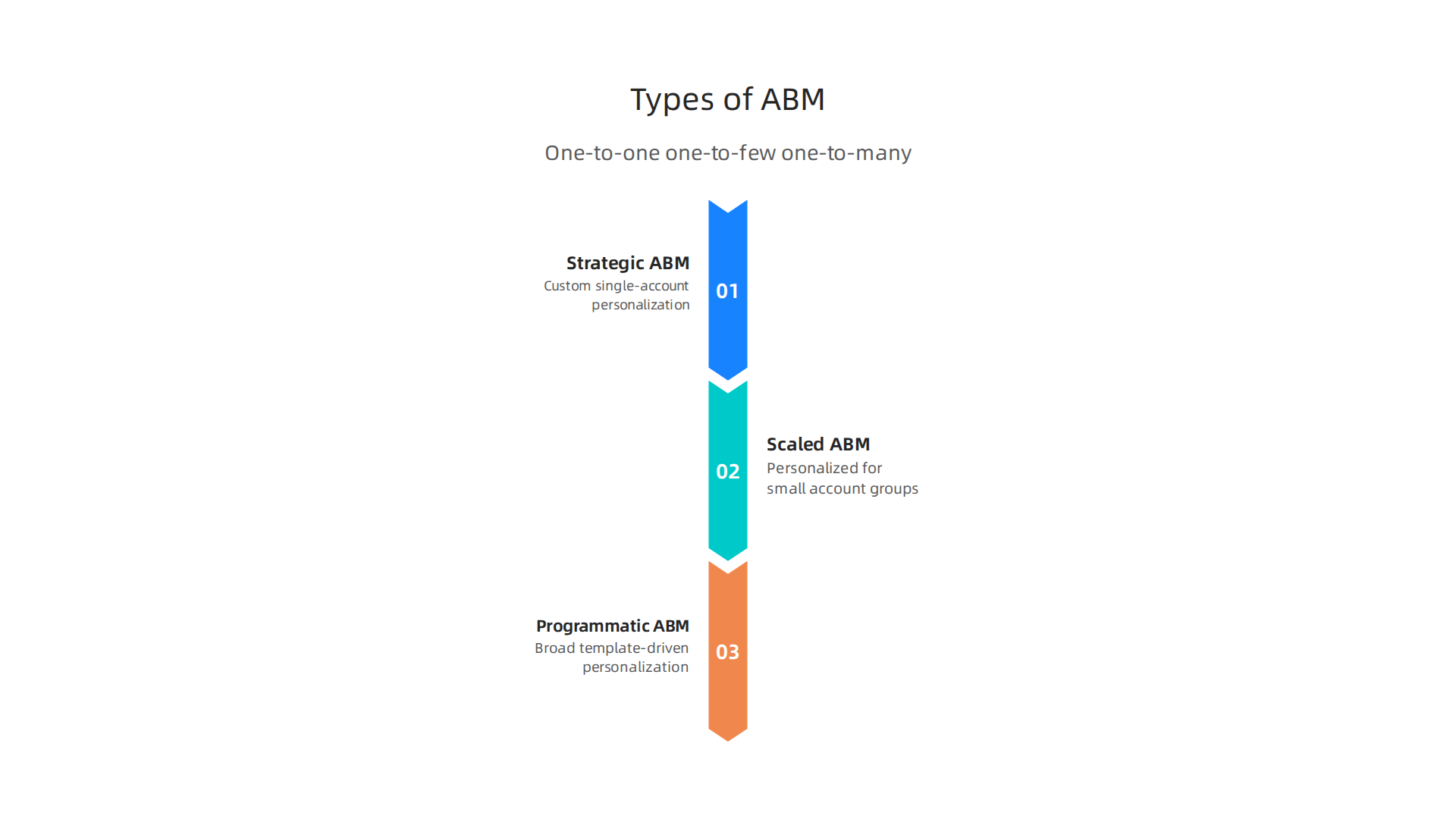
- Strategic ABM (One-to-One): This is like creating a very special, custom-made suit for just one person. You pick a very small number of super important companies, maybe 5 to 50, and make a unique promotional marketing campaign for each one. This approach takes a lot of effort but can lead to big deals. For example, a major media company might use this to win over a global brand for a huge advertising partnership or a long-term sponsorship. This is for the biggest "whales" you want to catch Account-Based Marketing (ABM) Guide 2026 – AdBid.
- Scaled ABM (One-to-Few): Think of this as making custom outfits for a small group of friends who all like similar things. You group 50 to 500 companies that are alike in some way, maybe they’re all in the same industry or have similar needs. Then you create a slightly personalized marketing plan for each group. A creator economy platform could use this to attract several mid-sized brands for ongoing sponsorships or product placements.
- Programmatic ABM (One-to-Many): This is like having many sizes of a popular T-shirt that can fit many people. You aim for more than 500 companies, using smart tools to personalize messages for them on a larger scale. This type uses technology to make sure your messages still feel special, even when you’re reaching many businesses. A publisher might use this for broader campaign marketing to many smaller advertisers or for driving subscriptions to a corporate audience. You can learn more about how to plan these different kinds of outreach by checking out our guide on Campaign type strategy.
For media outlets and creators, account based marketing helps a lot with making more money. It directly supports revenue goals like:
- Direct-sold ad deals: Instead of waiting for advertisers to come to you, you go to them with a clear, custom offer they can’t refuse.
- Sponsorships: You can find and land sponsors that truly fit your content and audience, making the partnership stronger and more valuable.
- Subscriptions: If your media company offers special content or data services to other businesses, ABM can help find and convince those key corporate subscribers.
- Partnerships: Whether it’s working with another media brand, a tech company, or a platform, ABM helps build strong relationships for long-term growth.
By focusing on these high-value accounts, media companies and creators can make sure their promotional marketing campaign efforts are not wasted. They can create a powerful email marketing campaign example or even special direct mail marketing that truly speaks to the needs of these important partners.
Identifying high-value accounts: intent, fit and predictive signals
After knowing the different ways to do account based marketing, the next big step is figuring out which companies are those important "high-value accounts."

For media companies, advertising agencies, and creators, this means finding the best media buyers and partners. It’s like having a special map to find hidden treasure.
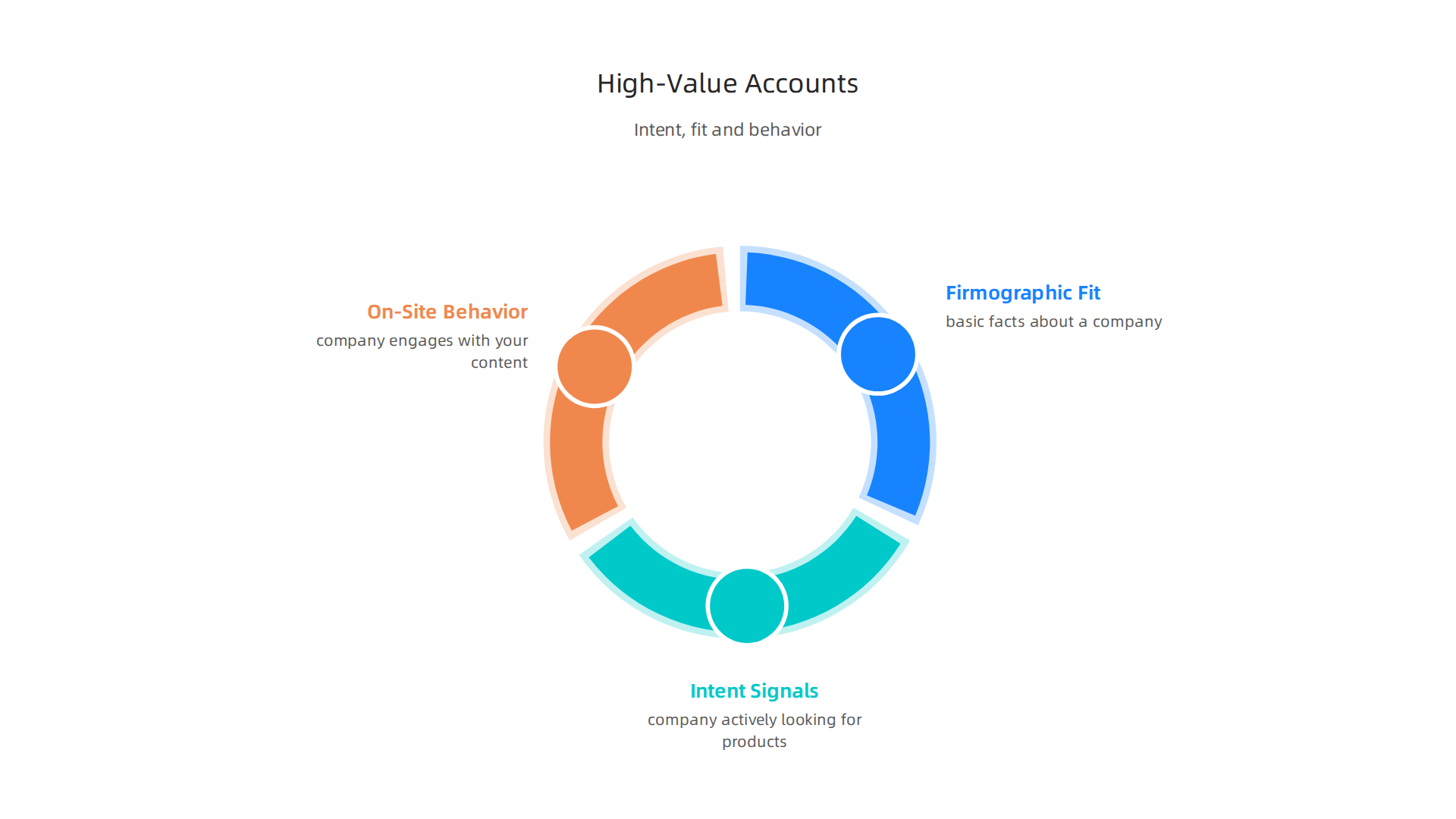
To do this, we combine three key things:
-
Firmographic Fit: This looks at basic facts about a company. Think of it like a checklist:
- Is the company in the right industry (like advertising, tech, or entertainment)?
- Is it the right size (small, medium, or large)?
- Where is it located?
- How much money does it make each year?
- Does it have a team that buys media or sponsorships?
When a company matches these points, it has a good "firmographic fit" for what you offer.
-
Intent Signals: This is super important in 2026. Intent data tells you when a company is actively looking for products or services like yours. It’s like seeing smoke and knowing there’s a fire nearby. This data shows their interest.
- First-Party Intent: This is data you collect yourself. It’s what companies do on your website. For example, which pages they visit, what white papers they download, or if they click on your email marketing campaign example links. This shows they’re interested in your content or services.
- Publisher Signals: These come from what companies do on other media sites and networks. When they read articles about "advertising strategies" or "creator partnerships" on industry sites, those are strong signals.
- Third-Party Intent: This data comes from special companies that track what businesses are researching all over the internet. They can tell you which companies are showing a sudden interest in topics related to your services. Using both your own data and third-party data helps a lot. Research shows that combining first-party website engagement with third-party topic data can make account scoring much more accurate in 2026 Intent Data News Today: New Research Shows Combining. Some popular providers for third-party intent data include Bombora and 6sense, which help identify buying signals Best Intent Data Providers in 2026: Compared & Ranked – Tomba Blog.
-
On-Site Behavior: This ties closely with first-party intent. It’s about seeing how much a company engages with your content once they’re on your site. Are they just browsing or deeply exploring your offerings? Are they reading about what makes a good advertisement? High engagement means they’re likely closer to making a decision.
By looking at all these pieces of information together, you can give each potential account a score. This "account scoring" helps you see which companies are the best fit, are actively looking for solutions, and are engaging with your brand. This way, your team can focus their promotional marketing campaign efforts, whether it’s through direct mail marketing or other campaign marketing tactics, on the accounts most likely to bring in revenue.
Understanding these predictive signals is crucial for any successful account based marketing plan in 2026. It allows you to tailor your outreach and make every effort count.
Staying updated on how data and AI are changing marketing is vital. For deeper insights into these shifts, especially in how AI impacts media and advertising, you might find this helpful:
Get clear daily AI updates from The AI Newsletter Worth Reading.
After you have found your high-value accounts, the next big question is: how do you know if your efforts are working? This is where measuring your account based marketing (ABM) campaigns comes in. For media companies, advertising agencies, and creators, it’s very important to see if your special efforts are leading to good results. This means looking at certain numbers and facts to understand your success.
Key Metrics for ABM in Media
To really know if your ABM plan is working in 2026, you need to track specific things. These are like a report card for your campaign marketing.
- Account Engagement: This tells you how much your target accounts are interacting with you. Are they visiting your website? Are they downloading your content? Are they opening your emails, like an
email marketing campaign exampleyou sent them? High engagement shows they are interested. You can also look at how much time they spend on your site or how many pages they view. - Pipeline Influenced: This metric looks at how many potential deals (or advertising partnerships for media companies) are moving forward because of your ABM work. It helps you see if your focused efforts are getting new conversations started with important accounts.
- Deal Velocity: This is about speed. How quickly are these deals or partnerships moving from the first talk to becoming a signed agreement? Faster deal velocity means your ABM approach is working well to shorten the sales cycle.
- Revenue Attribution: This is perhaps the most important. It answers the question: how much money came directly from your
account based marketingefforts? For a media organization, this means seeing how ABM campaigns led to new advertising revenue, sponsored content deals, or premium partnerships.
Understanding these metrics helps you see the real impact of your ABM work. It’s not just about reaching people, but reaching the right people and seeing real business growth.
Building Your ABM Measurement Dashboard
To keep track of all these important numbers, you need a special place to see them all. This is called an ABM dashboard. Think of it as a control panel for your promotional marketing campaign.
Here’s how to build a good one:
- Bring All Data Together: You need to connect information from different parts of your marketing. This includes data from your creative ads, programmatic campaigns (ads bought automatically online), and what your sales team is doing. For example, if you ran a
direct mail marketingcampaign, you’d want to see if the accounts who received mail then visited your site. - Tie Efforts to Outcomes: The dashboard should clearly show how each marketing effort leads to a result. Did a specific ad campaign make an account engage more? Did a series of emails help speed up a deal? When you link your actions to the results, you can see what truly works. Many tools today help combine first-party data (your website visits) with third-party intent data (what companies are searching for elsewhere) to give a full picture of buying signals and account readiness, which is vital for effective ABM execution How to Use B2B Intent Data for Effective ABM Execution. Knowing this helps refine your
campaign marketingand ensure you are spending resources wisely. - Regular Checks: You should check your dashboard regularly. This helps you spot trends, see what’s working, and fix what isn’t. It’s how you make your
account based marketingbetter over time.
By setting up a clear measurement framework, media companies can make smarter choices, get more value from their ABM campaigns, and show a clear return on their marketing investments. It’s all about making every effort count and proving its worth. If you want to dive deeper into making your marketing efforts truly impactful, learning how to improve your analytic marketing can drive smarter campaigns and boost your return on investment in 2026.
To make your ABM dashboard truly work and connect all the dots, you need the right set of tools that can talk to each other. This is called your "tech stack" for account based marketing. Think of it as the engine room for your whole promotional marketing campaign.
Essential Tools for Your ABM Tech Stack
In 2026, a strong ABM tech stack for media companies often includes these main parts:
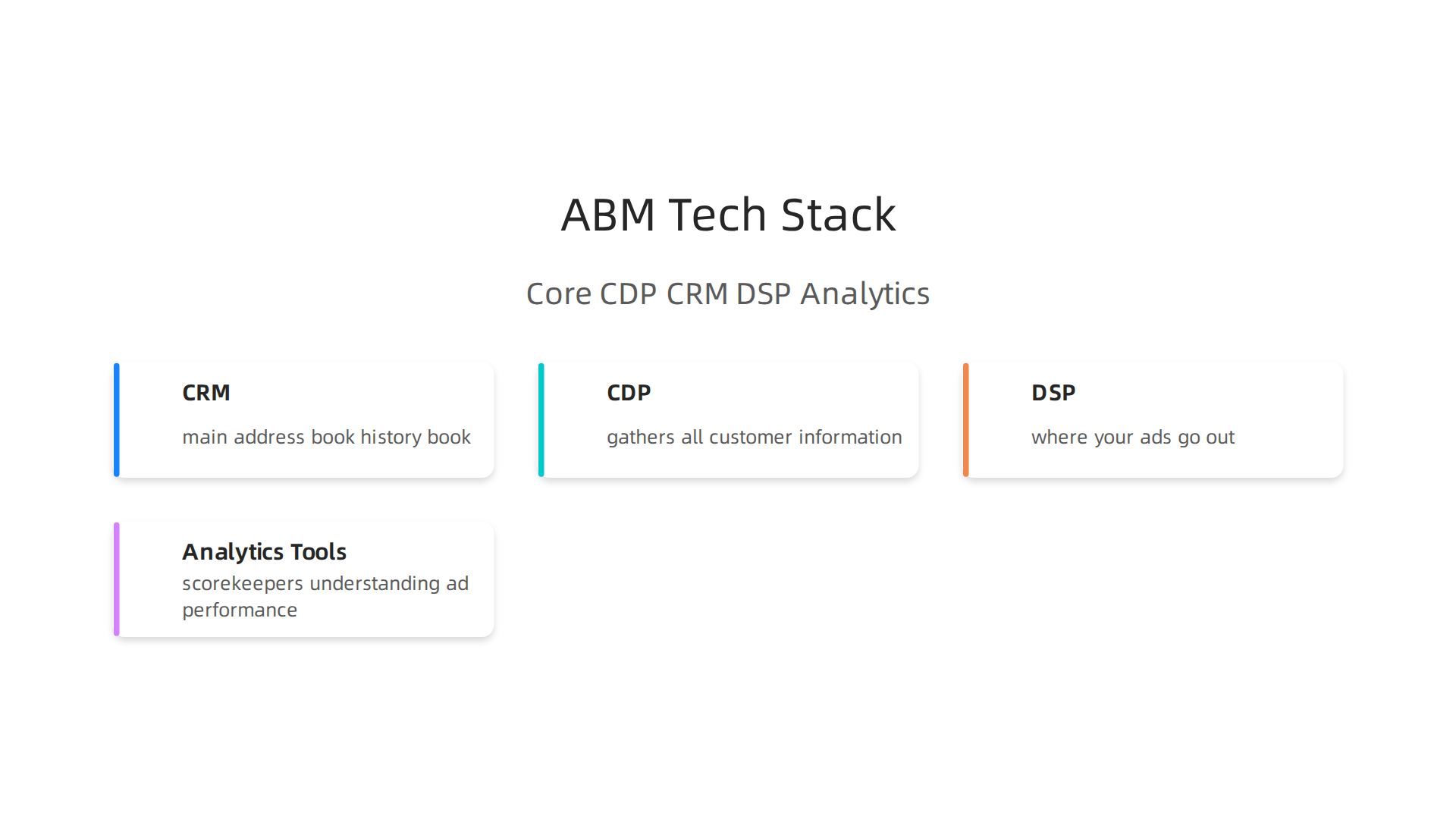
- CRM (Customer Relationship Management): This is like your main address book and history book for all your accounts. It stores who you talk to, what you’ve discussed, and where they are in becoming a partner or client. It’s the central place for all your customer information. Experts say your CRM should be the main record for all your accounts and potential deals.
- CDP (Customer Data Platform): This tool gathers all the information about your customers from many different places. It pulls together what they do on your website, how they interact with your emails (like an
email marketing campaign exampleyou sent), and even data from other systems. It creates one clear picture of each account, which is super helpful for knowing how to reach them best. - DSP (Demand-Side Platform): This is where your ads go out into the world. A DSP lets you buy ad space online in an automatic way. It helps you show your targeted ads to the specific accounts you’ve picked for your
account based marketingefforts. This is crucial for precise advertising. - Analytics Tools: These are like your scorekeepers. They help you understand how well your ads are doing, how people are reacting to your content, and if your focused
campaign marketingis leading to sales.
How These Tools Work Together
The magic of ABM happens when these tools connect and share information. It’s like a team where everyone passes the ball smoothly.
- CRM at the Center: Your CRM is the heart. It holds the list of your target accounts.
- CDP Gathers Data: The CDP pulls information from everywhere else about those accounts. It tells you what they are interested in, based on their online actions.
- DSP Delivers Ads: With the insights from the CDP, your DSP can make sure your ads reach the right people at the right time. For example, if your CDP shows an account is looking at content about a certain topic, your DSP can show them ads related to that topic. This is much more effective than a general
direct mail marketingcampaign. - Analytics Checks Results: All your efforts are then measured by your analytics tools, and this feedback helps you refine your strategy in the CRM and CDP for future campaigns.
To make sure your tech tools work together, it’s important to have a good plan for how data flows between them. This helps ensure that all systems are using the same, correct information about your important accounts. A good way to think about this is a connected "ad tech stack" that helps you manage everything from data to audience to showing ads The B2B Ad Tech Stack: A 2026 Reference Architecture.
Making it Work for Lean Teams
Even if you have a smaller team, you can still build a powerful ABM tech stack. The key is to start simple and make sure your data is clean and consistent across all your systems.
- Start with the Basics: Make sure your CRM is up to date. Then, look for a CDP that can easily connect with your CRM and any ad platforms you use.
- Keep Data Consistent: It’s very important that your account IDs (the unique numbers for each client) are the same across all your tools. This stops confusion and makes sure every tool knows it’s talking about the same customer.
- Automate Where You Can: Use features that automatically move data between tools. This saves time and helps your lean team focus on strategy rather than manual tasks.
Building the right tech stack ensures that your account based marketing efforts are not just guessing games. They become smart, data-driven campaigns that truly connect with your most valuable clients. For those who want to stay ahead in the rapidly changing world of media and technology, diving deeper into the impact of AI is essential.
The AI Newsletter Worth Reading
Get clear daily AI updates from The Deep View Newsletter.
Understanding how different technologies connect can also help you choose the best overall approach for your marketing. Learn more about navigating various options in our guide to digital marketing platforms in 2026 how to navigate the new media landscape.
For those who want to stay ahead in the rapidly changing world of media and technology, diving deeper into the impact of AI is essential. Knowing how your tech stack connects is just the first step. The real power comes from making your messages truly special for each important account.
Personalization at Scale: AI-Driven Creative and Messaging
Imagine your marketing messages changing automatically to fit exactly what each potential customer needs. That’s what personalization at scale means, and AI is making it possible in 2026.

This is a big step up for account based marketing because it lets you talk to many accounts in a way that feels personal to each one.
How Generative AI Helps Your Marketing
Generative AI is like a smart helper that can create new things. It learns from lots of examples and then makes its own content, images, and messages. Here’s how it’s used:
- For Ad Creative: AI can quickly make different versions of ads. This means you can show an ad with specific pictures and words to one account, and a slightly different ad to another account. It helps your
promotional marketing campaignfeel more direct and relevant to each target. - Dynamic Landing Pages: When someone clicks on your ad, AI can make the webpage they land on change just for them. If an account is interested in streaming services, the landing page can show examples only about streaming. This makes the experience smoother and more helpful than a general
campaign marketingpage. - Tailored Outreach for Account Segments: AI helps you write messages that are perfect for different groups of accounts. Instead of sending the same
email marketing campaign exampleto everyone, AI can craft emails that speak to the specific needs or challenges of each segment. This kind of deep personalization is a key part of modernaccount based marketingstrategies in 2026, where AI-powered personalization is changing what works according to experts ABM Strategy in 2026: What’s Changed and What Actually Works. This makes your messages much more effective than old-schooldirect mail marketing.
This level of customization means your content becomes very important to the specific account, not just general marketing. It’s about matching the message to the person and where they are in their journey with your company ABM Strategy: A Step-by-Step Framework for 2026. In fact, many believe that good account based marketing in 2026 needs smarter data and bolder creative ideas, with AI helping a lot 2026 ABM Trends: Data & Creative Strategies.
Staying Safe with AI-Generated Content
While AI is powerful, we still need to be careful. When using AI to make content, it’s important to have guardrails in place. Think of these as safety checks:
- Quality: Always make sure the AI-generated content looks good and makes sense. Sometimes AI can make mistakes or produce things that don’t sound quite right. A human eye should always review it.
- Brand Safety: Ensure all content matches your company’s values and image. AI might not always understand the small details of your brand’s voice, so a check is important to keep your message consistent and safe.
- Regulatory Compliance: Laws about privacy and advertising are always changing. Make sure any AI-generated content follows all the rules. This is very important to avoid problems.
By using these safety checks, you can get the best out of AI without taking big risks. AI is changing how ads are made, especially with personalization. To learn more about this, check out how native advertising 2026 how AI personalization and programmatic are redefining ads works.
Using AI for personalization is a game-changer, but making truly impactful messages still needs smart thinking about what you want to say and how you say it. For businesses selling to advertisers and partners, this means crafting messages that really speak to their needs. This is where your creative and messaging strategies become key to successful account based marketing in 2026.
Creative and messaging strategies for selling to advertisers and partners
When you talk to other businesses, like ad agencies, big brands, or tech partners, you need to show them exactly how you can help them. It’s not just about what your product does, but what problems it solves for them.
Crafting Value Propositions That Connect
A "value proposition" is just a fancy way of saying "what makes you special and why they should care." For advertisers and partners, your value proposition needs to be clear and focused on their goals.
- For Agency Buyers: Agencies want to make their clients happy and get great results. They look for solutions that are easy to use, save time, and help them prove their value. Your message should highlight how your offerings boost their client’s
promotional marketing campaignsuccess and streamline their work. - For Brand Marketers: Big brands care about reaching the right people, building their image, and growing their sales. They need to see how your solutions help them connect with their audience in new ways or expand their market reach. Show them how your platform helps them make a bigger impact than traditional
direct mail marketingor a generalcampaign marketingeffort. In fact, knowing your ideal customer is a huge part of your strategy foraccount based marketingin 2026, helping you to target better messages Account-Based Marketing (ABM) Guide 2026. - For Platform Partners: Other tech companies or platforms want to make their own services better and offer more to their users. Your message should explain how working together creates new opportunities for both sides. Think about how your solution adds value to their existing tools, helping them grow their ecosystem.
A strong value proposition is specific. Instead of saying "we help you advertise better," say "we help your brand marketers reach high-value customers with 30% more engagement through personalized AI-driven video ads." This kind of detail makes a difference. You can also explore different ways to deliver a strong message by looking into what makes a good advertisement thrive.
Multi-Channel Creative Journeys
Getting your message across means using many different ways to talk to your target accounts. This is called a "multi-channel creative journey," and it’s super important for modern account based marketing in 2026. It means your message stays consistent, no matter where your potential partner sees it.
Here’s how different marketing types can work together:
- Content Sponsorships: Imagine your company sponsors a special report or an event that your target agencies or brands care about. This shows you’re an expert and helps build trust. The content should be highly relevant to their needs, perhaps discussing the future of
campaign marketingor new ways to engage audiences. - Native Placements: These are ads that blend in with the content around them, like a sponsored article on an industry news site. When AI helps personalize these, they feel like natural recommendations, not pushy ads. This is a smart way to get your message to the right people without being disruptive. You can learn more about digital marketing platforms in 2026 to find the best places for such placements.
- Direct Outreach: This includes personalized emails, calls, or LinkedIn messages. Instead of a generic
email marketing campaign example, your outreach should refer to the content they’ve seen or the problems they face, showing you’ve done your homework. Many companies are seeing great success with combining direct contact and other methods, as highlighted in a Multi-Channel ABM Playbook 2026. - Events and Webinars: Hosting or participating in industry events allows you to meet potential partners face-to-face or virtually. You can share insights, show off your solutions, and answer questions directly. This personal touch builds stronger relationships.
The goal is to create a seamless experience where your messages appear at the right time, in the right place, and always feel helpful and relevant to the specific account. It’s about building a story over time that leads them to understand your value. To keep up with all the ways AI is changing how we create and share these stories, consider subscribing to The AI Newsletter Worth Reading. You’ll get clear daily AI updates from The Deep View Newsletter.
Getting your messages to the right people is just the start. To really win with account based marketing in 2026, you need a clear plan for how everything will work. This means having a step-by-step guide, knowing who does what, and how you’ll keep getting better.
Campaign Execution Roadmap, Governance, and Team Structure
A strong account based marketing effort needs a clear roadmap. This map shows how your teams will plan, run, and check their work together. It’s about making sure everyone is on the same page and working towards the same goals for your special accounts.
Your Step-by-Step Playbook
Think of a playbook as a guide with all the rules and steps for your promotional marketing campaign.
- Planning: First, you pick your important target accounts. These are the businesses you want to work with most. Then, you set clear goals. What do you want to achieve with them? This might be signing new deals or helping them grow. A good plan will lay out these steps from the beginning, as described in the ABM Playbook for 2026.
- Activation: This is when you put your plan into action. You launch your personalized
campaign marketingefforts. It’s not like a bigdirect mail marketingblast. Instead, it’s focused on those specific accounts, using all the channels we talked about before, like emails, sponsored content, and events. - Measurement Cadence: You need to check how well your campaigns are doing. This means looking at results often, like every week or month. Are your messages working? Are you getting closer to your goals? You need to measure things like how fast deals are moving along and how much money your efforts are bringing in. This helps you understand where you are in your ABM Maturity Model 2026.
- Handoffs: Sales, marketing, and advertising operations (ad ops) teams must work together smoothly. When one team finishes a part of the
account based marketingprocess, they need to pass it to the next team clearly. For example, when marketing warms up an account, they hand it over to sales to close the deal. This teamwork makes sure nothing gets missed. For more help building your campaigns, check out this Build Your Tool First Digital Marketing Campaign Playbook.
Setting Up Your Team for Success
For account based marketing to truly shine, your teams need a clear structure and rules.
- Governance and Roles: Everyone needs to know their job. Who is in charge of which accounts? Who creates the content? Who talks to sales? When roles are clear, work gets done faster and better. It’s about treating ABM as a full operating system for your business, not just one
email marketing campaign example. You can learn more about this in an Account-Based Marketing Operating Playbook for B2B 2026. - SLAs (Service Level Agreements): These are like promises between teams. For instance, marketing might promise to share new account information with sales within 24 hours. This keeps everyone accountable and ensures quick action.
- Data Ownership: Who owns the information about your target accounts? It’s important to have one clear place where all data is kept and managed. This makes sure everyone is using the same, most up-to-date facts.
- Change-Control: The world of marketing changes fast, especially with new tech. So, you need a way to easily change your plans and tools when needed. This helps you keep improving your
account based marketingefforts over time. Thinking about how to make all your messages work together can also be supported by understanding Integrated Marketing Communications.
By setting up a strong roadmap and team structure, your business can run its account based marketing programs efficiently and effectively, helping you reach your biggest goals in 2026 and beyond.
Summary
This article explains why Account Based Marketing (ABM) is essential for media companies, advertising agencies, and creators who need to reach the right business partners rather than broad audiences. It outlines the three ABM approaches (one-to-one, one-to-few, one-to-many), shows how to identify high-value accounts using firmographics, intent data, and on-site behavior, and explains how to score and prioritize targets. The guide covers how to measure ABM success with engagement, pipeline influence, deal velocity, and revenue attribution, and how to build a measurement dashboard that ties tactics to outcomes. It also describes the practical tech stack—CRM, CDP, DSP, analytics—and how those systems should share data, plus tips for lean teams. The piece highlights AI-powered personalization for ad creative and dynamic landing pages while stressing quality, brand safety, and compliance guardrails. Finally, it gives a roadmap for execution, team structure, SLAs, and governance so organizations can run repeatable, revenue-focused ABM programs.