Paid Media vs Earned Media 2026: Maximizing Your Digital Reach
Why understanding paid vs earned media matters now
In 2026, getting your message out there is more important than ever for any business. But how you do it can make a huge difference. You might be wondering, should I pay for ads, or should I try to get people to talk about my business on their own? This is the core question when we talk about paid media vs earned media. It’s a big choice that affects your whole marketing mix strategy.
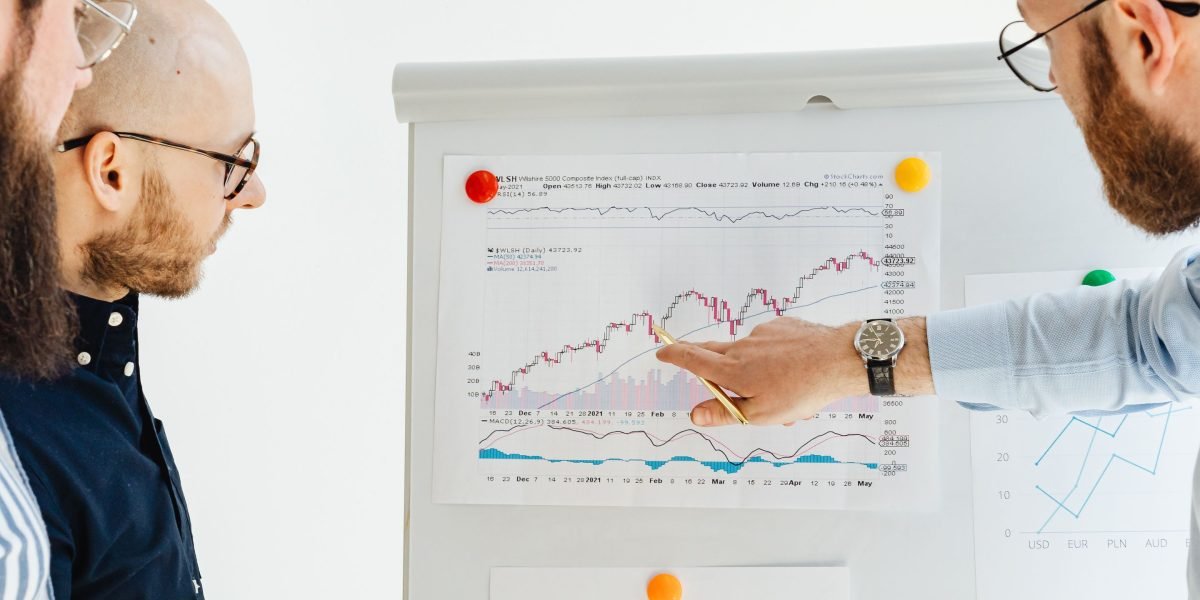
Paid media is when you pay money to show your message to people. Think of it like paying for an ad trade or any kind of advertising marketing. This can be ads on social media, search engines, or even sponsored posts. It gives you quick control over your message and who sees it. For example, Paid vs. Owned vs. Earned Media: What’s the Difference? explains that paid media is any effort where you pay to display promotional content.
Earned media, on the other hand, is when other people talk about your brand for free. This happens because they genuinely like what you do, or because your content is so good it gets shared. It could be news stories, reviews, mentions on social media, or even word-of-mouth. It’s like getting free publicity that you didn’t pay for.
Understanding the difference between paid media vs earned media is super strategic right now. Why? Because the online world is changing really fast. New social media platforms pop up all the time, and AI (Artificial Intelligence) is now a big part of how content gets shown to people. AI helps decide what people see in their feeds or search results. This means your digital marketing content strategy needs to be smart about both sides. You need to know when it’s best to invest in paid channels to get quick attention, and when it’s better to build real relationships that lead to earned coverage. Making smart choices here can really help your business grow its audience and bring in more money.
To truly master your promotional efforts, you need to think about how these two types of media work together. Getting this balance right is key to success in today’s fast-moving world. To understand more about how these parts fit into your overall plan, consider checking out our guide on Marketing Mix Strategy in 2026.
Keeping up with how technology changes marketing is also critical. If you want to stay ahead of the curve with AI and media, you’ll find great value in this resource:
Get clear daily AI updates from The AI Newsletter Worth Reading.
Now, let’s look closer at what paid media and earned media truly mean. Getting clear on these ideas is the first step to making smart choices for your business.
What Paid Media Really Means
Paid media is quite simple: it’s any advertising effort that you pay for. Think of it as advertising marketing where you spend money to get your message in front of people. You have full control over the message, where it appears, and who sees it. This gives you a quick way to reach a specific group of people.
Common examples of paid media channels include:
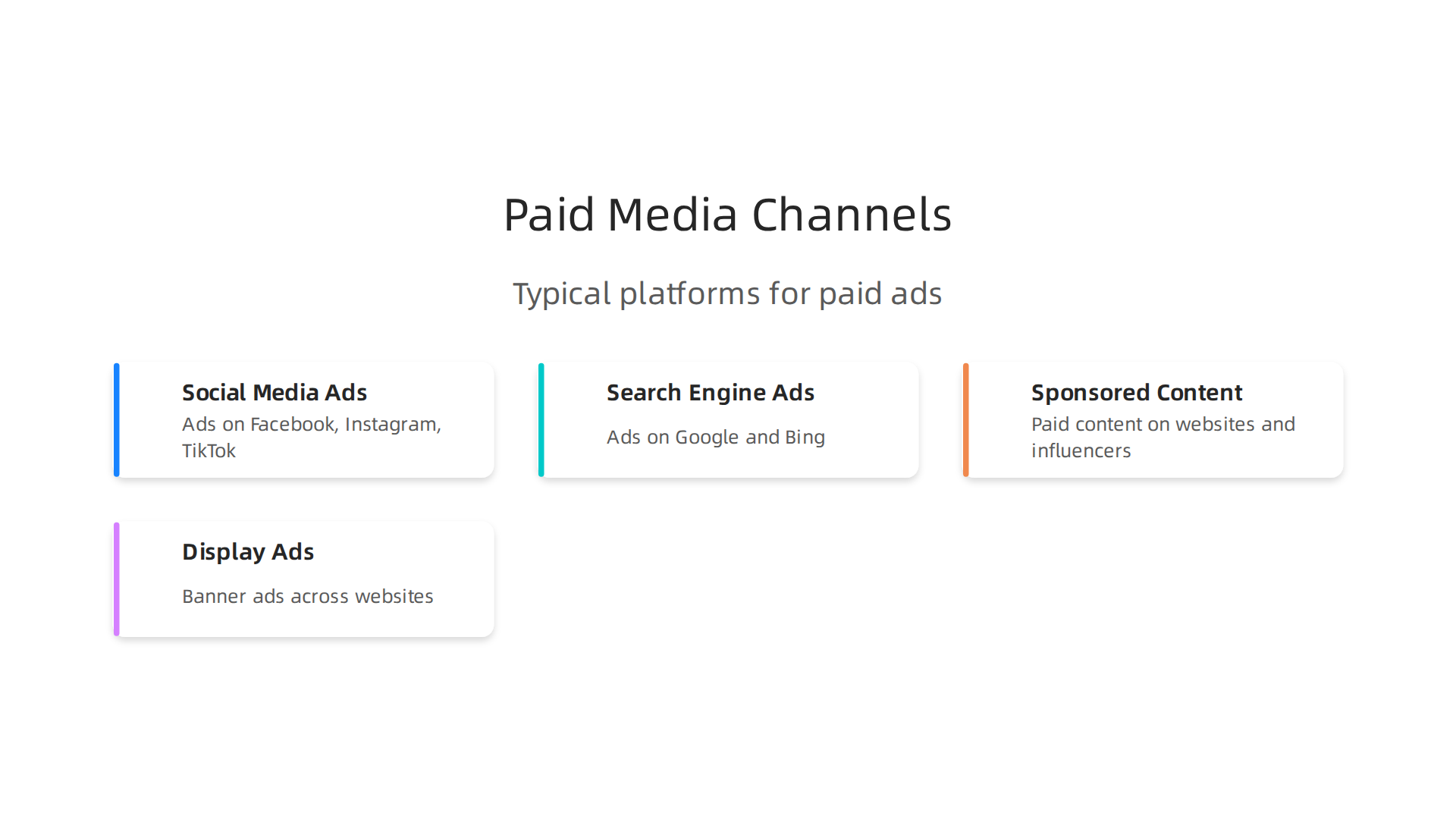
- Social Media Ads: Like the ads you see on Facebook, Instagram, or TikTok. You pay to show your posts to users who fit certain interests or demographics.
- Search Engine Ads: These are the ads that pop up at the top of Google or Bing search results when you look for something. You pay for certain keywords.
- Sponsored Content: This is when you pay a website, blog, or influencer to share your content or talk about your brand. It can look like a regular post but is actually paid for.
- Display Ads: These are the banner ads you see on many websites.
Some people think paid media is only for getting quick sales, or what we call "direct response." But actually, it can do much more. Paying for ads can also help people recognize your brand and build trust over time, even if they don’t buy something right away. As one source puts it, paid media means you pay others to carry out your advertising efforts, which has been a traditional method long before online marketing became a big deal Paid Owned and Earned Media.
What Earned Media Really Means
Earned media is the opposite. It’s when other people talk about your business because they want to, not because you paid them. You "earn" this attention through good work, great products, or helpful content. This kind of media is often seen as more trustworthy because it comes from an outside source.
Examples of earned media channels are:
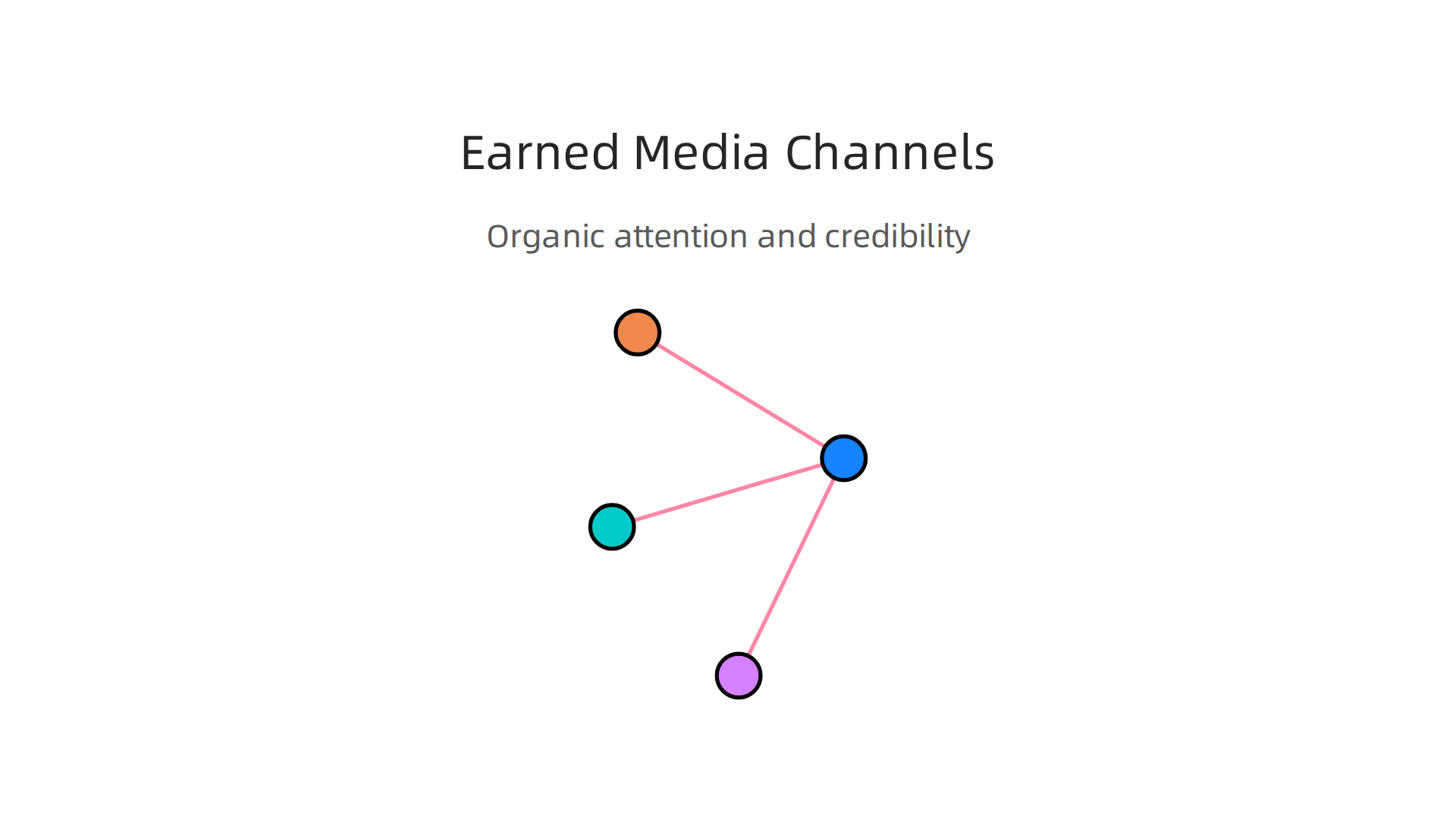
- News Coverage: When a news outlet writes an article about your company or product.
- Product Reviews: Customers sharing their good experiences with your products or services online.
- Social Media Mentions: People talking about your brand on their personal social media pages.
- Word-of-Mouth: When a happy customer tells their friends and family about your business.
A common idea is that earned media is completely "free." While you don’t pay money directly for the space, it’s not truly free. You earn it through hard work, creating great content, offering amazing customer service, or doing something newsworthy. It takes time and effort to build the kind of reputation that makes people want to talk about you. It comes from word-of-mouth, influenced by great content or good customer experiences Paid Media, Explained in 400 Words or Less. This means your digital marketing content strategy plays a huge role in getting that valuable earned attention.
If you want to dive deeper into how to get this kind of organic attention, you can learn more about What is earned media and how to build a strategy that earns real influence in 2026.
Now that we know what paid media and earned media are, let’s dive deeper into how paid media actually works. It’s all about getting your message out there fast and to the right people. Understanding the different kinds of platforms, ad types, and how you pay for them is a big part of creating a good marketing mix strategy.
How Paid Media Works: Platforms, Formats, and Buying Models
Paid media uses many different online places to show your ads. Each place has its own way of helping you find customers. Here are some of the main ones you’ll see in 2026:
- Search Ads: These ads show up when people search for things on sites like Google or Bing. For example, if someone types "best shoes," an ad for a shoe store might appear at the very top of the results. This works because you are reaching people who are actively looking for something Top 21 Paid Advertising Platforms to Try in 2026. If you want to know more about different kinds of Google Ads, you can check out this guide on types of Google Ads.
- Social Media Ads: These are the ads you see on Facebook, Instagram, TikTok, and other social sites. Companies pay to show their ads to people based on what they like, who they are, and what they do online. It’s a great way to show people things they might not even know they need yet. You can learn more about different paid online advertising tools.
- Display and Native Ads: Display ads are like banners that pop up on websites you visit. Native ads are a bit sneakier. They look like regular content on a website or app, but they are actually paid ads. They try to blend in so they don’t look like an
ad tradebut rather helpful information. - Connected TV (CTV) Ads: These are video ads you see on streaming services through smart TVs or devices like Roku. They’re becoming very popular because many people watch TV this way. These are great for showing videos that get people to remember your brand.
How You Pay for Ads: Buying Models
When you run paid media campaigns, you pay based on different rules. Here are the most common ways:
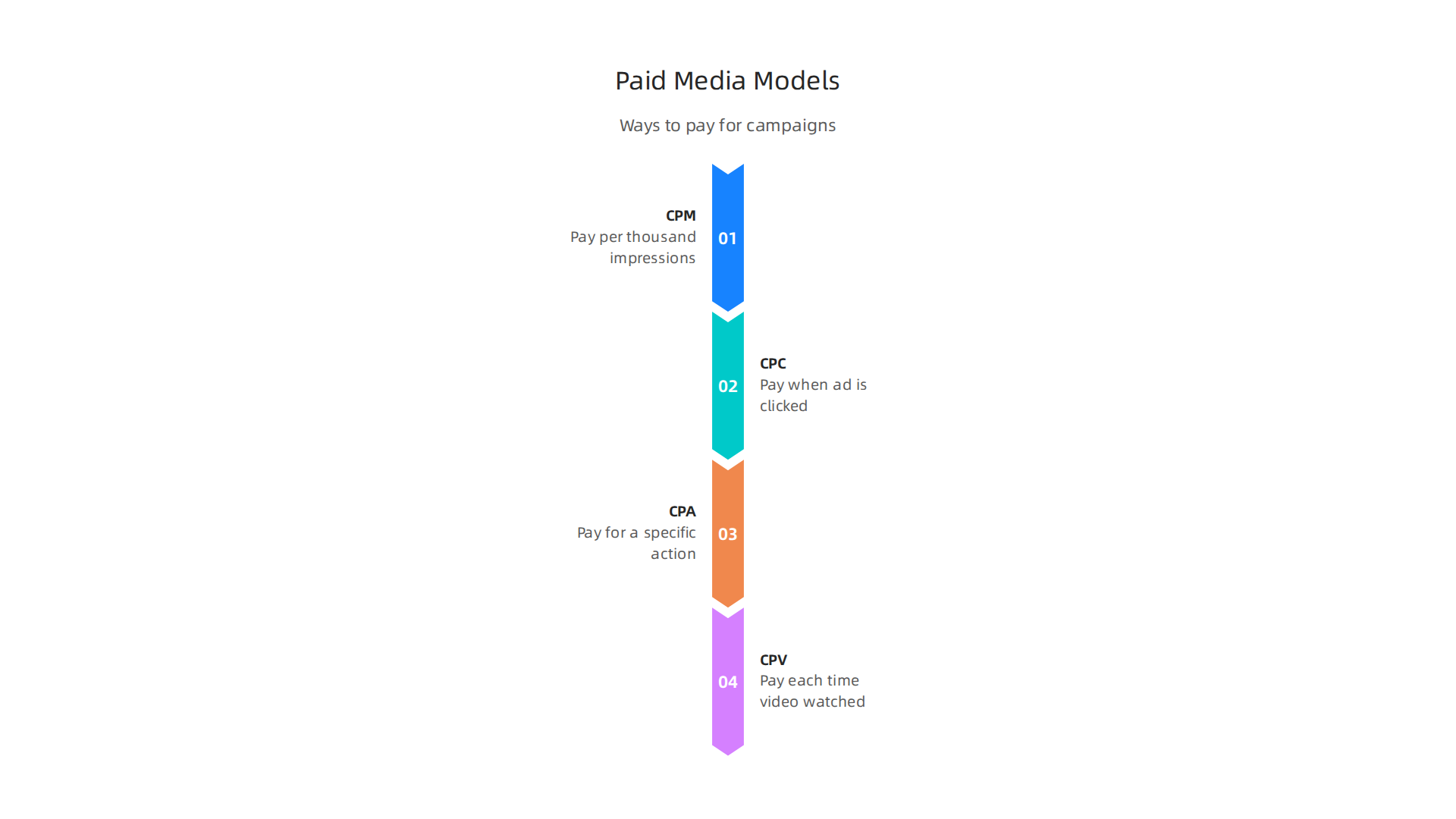
- Cost Per Mille (CPM): "Mille" means a thousand. So, you pay for every thousand times your ad is shown, even if no one clicks on it. This is good when you just want a lot of people to see your brand and remember it, like building brand awareness.
- Cost Per Click (CPC): With CPC, you only pay when someone actually clicks on your ad. This is great if you want to send people to your website, like a product page or a blog post.
- Cost Per Action (CPA): This means you pay only when someone takes a specific action you want, like buying something, signing up for a newsletter, or filling out a form. CPA is usually for goals where you want a direct result, like getting sales or new customer leads.
- Cost Per View (CPV): For video ads, you might pay per view, meaning you pay each time someone watches your video for a certain amount of time.
Choosing the right buying model depends on what you want your ad to do. If you want many people to simply know about your brand, CPM is a good fit. If you want people to visit your website, CPC is better. And if you want actual sales, CPA is the way to go. These models help you plan your budget and guess how well your ads will do, as outlined in a 2026 guide to paid media trends The Paid Media Playbook: Trends & Updates for 2026.
Keeping up with how technology changes how these ads work is super important.
Get clear daily AI updates from The AI Newsletter Worth Reading.
Unlike paid media, which you pay for, earned media is like getting a gold star because someone else thought your brand was great enough to share. You don’t pay money directly for it. Instead, you "earn" it through good actions, interesting stories, or quality products. It’s often seen as more trustworthy because it comes from a third party, not from your own advertising marketing efforts.
Here’s how earned media brings your message to a wider audience in 2026:
Public Relations (PR)
PR is all about getting news outlets and journalists to talk about your business. When a respected news site writes a story about you, or an expert from your company is quoted, that’s earned media. It gives your brand a big boost because people trust what they read in the news more than an ad trade message. For good PR, you need to build real relationships with journalists and offer them interesting, true stories. Being helpful and ready to share your knowledge is key for modern PR campaigns, as strategies keep evolving in 2026 to focus on participation over just promotion How earned media strategy is evolving in modern PR campaigns.
Organic Search (SEO)
When your website shows up naturally in Google search results, that’s also a form of earned media. You haven’t paid Google to be there; you’ve earned that spot by having good, helpful content that people are looking for. People trust search results, so ranking high can bring lots of visitors to your site without direct ad costs. This is often called Search Engine Optimization, or SEO. To learn more about getting your website noticed, you can check out a guide on SEO Marketing in 2026: How to Master Search Engine Optimization.
Creator Partnerships and Influencer Amplification
In 2026, many brands work with social media creators or "influencers." When these creators genuinely love and share your product with their followers, it feels like a friend’s recommendation. This is powerful earned media because their audience already trusts them. The goal is to get authentic mentions, not just sponsored posts. For instance, finding loyal fans and letting creators choose products they truly like helps build trust and deliver real results 4 Influencer Marketing Strategies That Actually Deliver in 2026.
The biggest benefit of earned media is trust. When others talk positively about you, it’s a strong vote of confidence that helps your brand grow over time. It makes your company seem more real and dependable, which can lead to long-term audience growth and discovery. If you want to dive deeper into building these kinds of strategies, there’s a guide on what is earned media and how to build a strategy that earns real influence in 2026.
Integrating Paid and Earned: Channel Synergies and Campaign Design
Now that we understand what earned media is, let’s talk about how to make it even stronger by working with paid media. Think of it like a team. Paid media gets your message out fast, and earned media gives it trust. When they work together, your message reaches more people and feels more real. This smart way of combining different channels is a key part of any good marketing mix strategy in 2026.
Here are some ways to combine your paid and earned efforts for bigger results:
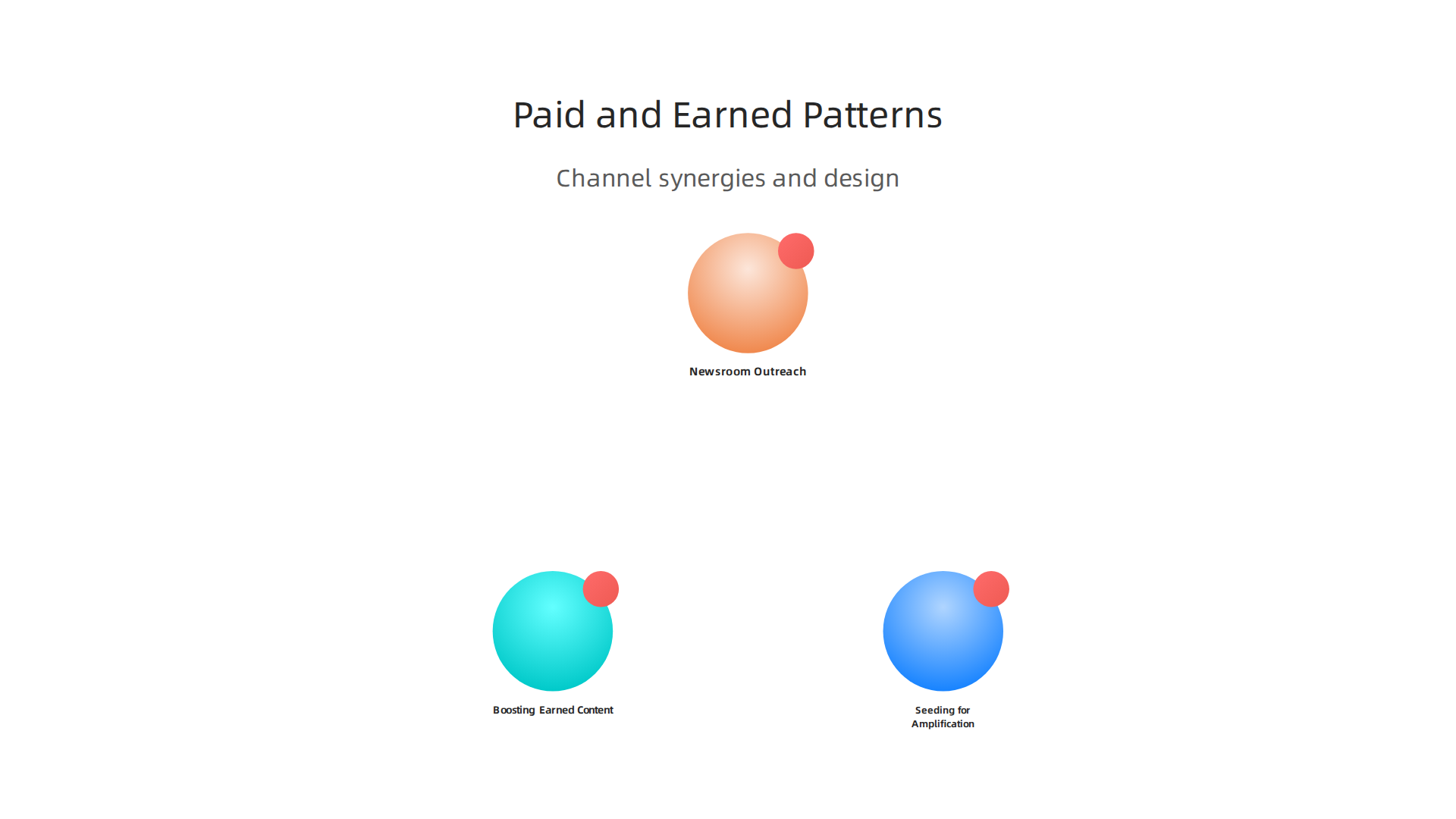
Practical Patterns for Combining Paid and Earned
- Seeding for Earned Amplification: You can use paid advertising to "seed" or kickstart earned media. For example, if you have a really interesting report or a new product, you might run some targeted social media ads (paid media) to get it in front of key journalists or influencers. If they find it newsworthy or exciting, they might share it with their audience, leading to earned media like news articles or organic social posts. This helps your special content get noticed and gain traction, rather than just waiting for it to be found.
- Boosting Earned Content: Once you get some great earned media, don’t just let it sit there. You can use paid media to "boost" it. If a respected news site writes a glowing review of your product, or an influencer posts a super positive video, you can pay to promote that content to a wider audience. This is powerful because you’re using paid ads to spread a trusted, third-party endorsement. It combines the reach of paid media with the credibility of earned media. For overall success, businesses in 2026 are using these kinds of tactics to master 2026 Media Dominance: Tactics for Paid, SEO, Brand.
- Newsroom Outreach and Thought Leadership: For strong public relations, you need to build relationships with news outlets. Sometimes, paid media can support this. For instance, promoting an expert from your company on a specific topic through sponsored content can make them more visible. This helps journalists see them as a reliable source for quotes or stories, leading to earned media mentions. Crafting pitches for publications and building relationships are top Earned Media: Top 10 Strategies for 2026 – PR & Visibility.
Timing and Orchestration
The magic truly happens when you time these actions right. Often, paid media acts as the spark. You use it to launch a new idea, product, or piece of content. Then, you wait for that initial push to generate earned media, like reviews, shares, or news coverage. Once that earned media starts flowing, you can then use paid media again to amplify it, reaching even more people.
It’s all about creating a continuous loop: paid media ignites interest, which leads to earned media, which then gets boosted by more paid media. This helps your brand build lasting connections and truly stand out. Knowing which advertising channels in 2026 to use for each step is key to a winning digital marketing content strategy.
To keep up with how these strategies are always changing, especially with new technology impacting the media industry in 2026, staying informed is super important.
Get clear daily AI updates from The AI Newsletter Worth Reading.
Staying informed about changes is crucial, but knowing if your efforts are truly working is even more important. This is where measuring your success comes in. To really know if your combined paid media and earned media campaigns are making a difference, you need to look at the right numbers and use smart tools.
It helps you see the true value of your digital marketing content strategy.
Measurement & Attribution: KPIs, Models, and What to Avoid
When you spend money on advertising or work hard to get free mentions, you want to know what you get back. We use special numbers called Key Performance Indicators, or KPIs, to track this. These KPIs help us understand how well each type of media is doing and how they work together.
Different Ways to Measure Paid and Earned Media
For paid media, we often look at things like:
- Cost Per Acquisition (CPA): How much it costs you to get one new customer or lead.
- Return on Ad Spend (ROAS): How much money you make back for every dollar you spend on ads. This helps you understand your ad trade.
For earned media, the numbers are a bit different because you’re not paying directly for the space. You might look at:
- Organic Traffic: How many people visit your website because they found you through search engines or shared content, not from a paid ad.
- Referral Quality: How good the visitors are who come from other websites that mentioned you. Do they stay longer, or buy things?
- Mentions and Shares: How many times your brand is talked about online or shared by others.
When paid media and earned media work together, you also look at shared business goals like Customer Lifetime Value (LTV). This is how much money a customer is expected to bring to your business over their whole relationship with you. This bigger picture helps you see how your marketing mix strategy impacts long-term growth. To really drive smarter campaigns and boost your return on investment in 2026, understanding these analytics is key for any business doing analytic marketing.
Understanding Attribution Models
Imagine a customer buys something from you. But before they bought it, they might have seen your ad on social media, read a news article about you, and then searched for your website. Which one deserves the credit for the sale? This is where attribution models come in. They help you figure out which part of your advertising marketing efforts gets credit for a sale or action.
- Last-Click Attribution: This is the simplest model. It gives all the credit to the very last thing a customer did before buying. So, if they clicked your website link from a Google search right before buying, Google Search gets all the credit. This model is easy to understand, but it doesn’t show the whole story of how the customer found you.
- Multi-Touch Attribution (MTA): This model is smarter. It understands that a customer’s journey usually involves many steps. MTA gives credit to several interactions along the way, not just the last one. For example, it might give some credit to the social media ad they saw first, some to the news article they read, and some to the Google search. This gives a much clearer picture of how different parts of your campaign, like
paid media vs earned media, work together to create results. Multi-touch attribution models distribute conversion credit across several interactions in a customer’s journey, making sure no important step is ignored Multi-Touch Attribution Models: A Complete Guide to Measuring Every…. - Marketing Mix Modeling (MMM): For bigger businesses or long-term planning, there’s Marketing Mix Modeling. This uses lots of historical data to see how different marketing channels, including paid and earned, impact overall business goals like sales or brand awareness. It’s more about the big picture and long-term effects than individual customer paths. Choosing between MTA and MMM depends on what questions you need to answer and the data you have MMM vs MTA: When to Use Each Method in 2026.
What to Avoid
One big mistake is only looking at the easy numbers or giving all the credit to one type of media. If you only focus on paid media metrics, you might miss the huge impact of earned media on building trust and making your brand well-known. Don’t let your measurement system lead you to think only one thing matters. A true view of your efforts shows how everything works together.
Knowing if your marketing efforts are working well, as we talked about, is just the first step. The next big step is using what you learn to decide where to spend your money and how to make your campaigns even better.

This is where smart budgeting and always improving your work come into play. It helps you get the most out of your digital marketing content strategy.
Budgeting and Optimization: Where to Spend and How to Iterate
When you understand which parts of your advertising marketing are giving you the best results, you can make smarter choices about your money. This means figuring out how much to put into trying new things, how much to spend on things that are already working well, and how much to invest in building free, earned mentions.
How to Divide Your Marketing Budget
Thinking about your budget as having different "buckets" can be helpful:
- Experimentation Bucket: Always save a part of your budget for trying out new ideas. This could mean testing new ad platforms, different types of messages, or reaching new groups of people. What you learn here can show you fresh ways to use both paid media and earned media.
- Paid Scale Bucket: When you find something that truly works well with paid media, like an ad that brings in many new customers at a good price, you should put more money into it. This is called scaling. Many businesses in 2026 still put a lot of their ad budget into big platforms like Google and Meta, while also saving some for newer, high-return tests on platforms like TikTok and YouTube Where To Spend Your Ad Budget in 2026. You can explore various paid online advertising tools for 2026 to see which fits your goals best.
- Earned Development Bucket: This is where you invest in things that help you get free attention, like creating great content that people want to share, working with influencers, or getting news stories about your brand. While you don’t pay directly for these, there’s still a cost in time and resources to make them happen. Thinking about your overall marketing mix strategy in 2026 helps you balance these efforts.
The Optimization Loop: Testing and Learning
One smart way to make your paid media and earned media work together is through a fast "optimization loop." This means:
- Rapid Paid Testing: Use your paid media budget to quickly test different messages, images, videos, and audience groups. Paid ads let you see results very fast. You can quickly learn what people like and what gets them to act.
- Feeding Earned Strategies: Once you find out which messages or content types get the best response from your paid tests, you can use those insights to guide your earned media efforts. For example, if a certain headline works great in an ad campaign, you might use a similar idea for a blog post or a pitch to a news outlet. This way, your ad trade helps make your free content even better, boosting your overall visibility and trust.
By constantly testing, learning, and adjusting, you can make sure your budget is always working its hardest for you. This ongoing cycle helps you stay ahead in the fast-paced world of 2026 and ensures your efforts are always getting better.
To keep up with the newest strategies and changes, especially how AI is shaping advertising, there’s a valuable resource available. Get clear daily AI updates that are worth reading in The AI Newsletter Worth Reading.
By constantly testing, learning, and adjusting, you can make sure your budget is always working its hardest for you. This ongoing cycle helps you stay ahead in the fast-paced world of 2026 and ensures your efforts are always getting better. A big reason for this speed and change is the growth of Artificial Intelligence, or AI.
Trends, risks, and the role of AI in paid and earned media (2026 view)
In 2026, AI is not just a fancy tool; it’s a main part of how we do advertising marketing.

It’s changing everything from how we pick who to show ads to, what those ads look like, and even how people find out about brands for free. AI is reshaping both your paid media and earned media efforts in very big ways How advancements in AI are reshaping paid, owned and …. Many experts agree that AI is now at the heart of how media works Annual Paid Media & AI Trends Report 2026 – Marketing Powered.
How AI Changes Paid Media
For paid media, AI helps in many ways:
- Smarter Targeting: AI can look at huge amounts of data to find just the right people for your ads. This means your ads are shown to those most likely to be interested, making your ad trade more effective. This also leads to hyper-personalization, where ads feel like they were made just for one person.
- Creating Ads: AI can help make different versions of ads very quickly. It can write headlines, suggest images, or even create videos. This helps you test many ideas fast, feeding your optimization loop. By 2026, some reports suggest that a large part of paid media budgets will go to AI-driven campaigns that make ads personal for each user Paid Media’s AI Future: Ready for 2026’s Changes?.
- Better Spending: AI tools can also decide the best time and place to show your ads and how much to pay for them, all to get you the best results for your money. This moves control from manual choices to smart computer programs How AI Advertising in 2026 Will Transform Paid Media.
However, there are also things to watch out for. As AI creates more content, we need to make sure it’s used fairly and openly. For example, some platforms now ask for clear labels when AI is used to make ad content AI Advertising in 2026: How YouTube, Meta, Reddit, Snap … – LinkedIn.
How AI Helps Earned Media
AI also has a big role in earned media, which is the free attention your brand gets:
- Finding Trends: AI can spot what people are talking about online, helping you create content that others will naturally want to share. This helps your digital marketing content strategy.
- Content Ideas: AI can give you ideas for blog posts, social media updates, or news stories that are likely to get attention. This makes your earned development bucket more effective.
- Working with Influencers: AI can help you find the best people to work with who can talk about your brand in an honest way, leading to more free mentions. To really shine in this area, you’ll need to know what is earned media and how to build a strategy that earns real influence in 2026.
The risk here is making sure that AI-generated content still feels real and honest. People want to trust the information they get.
What Your Team Needs to Do Next
To keep up with AI in 2026, teams need to do a few things:
- Invest in AI Tools: Look for tools that use AI to help with your advertising marketing, whether it’s for planning, making content, or checking results. You might even consider if you need to choose the best AI marketing agency for your business.
- Learn New Skills: Your team members need to understand how AI works and how to use these new tools. This means learning about things like performance marketing 2026 from fundamentals to advanced AI tactics.
- Update How You Measure: With AI changing things, you need new ways to measure if your efforts are truly working. This means looking beyond old ways of tracking success.
By focusing on these steps, your business can use AI to make both its paid media and earned media efforts stronger and more successful in the years to come.
Summary
This article explains the practical difference between paid media (paid ads and sponsored placement) and earned media (organic coverage, reviews, shares and PR) and shows why that distinction matters in 2026. It covers how paid channels work — platforms, ad formats and buying models (CPM/CPC/CPA/CPV) — and how earned tactics like PR, SEO and influencer amplification build trust over time. The piece walks through concrete ways to integrate the two — seeding, boosting earned content, and timing campaigns — and describes the KPIs and attribution models (last-click, multi-touch, MMM) you should use to measure impact. It also outlines budget buckets for experimentation, scaling, and earned development, plus an optimization loop for testing and iteration. Finally, the article examines how AI reshapes targeting, creative production, trend detection and measurement, and suggests the team investments and measurement updates you’ll need to stay effective.