
What Is Earned Media and How to Build a Strategy That Earns Real Influence in 2026
Introduction: Why Earned Media is the New Currency of Influence
Think about the last time you decided to try a new product or service. Was it because of a flashy online ad, or because a friend told you about it? If you are like most people, you probably trust a personal recommendation or an article you read far more than a paid banner. That is the core idea behind earned media.
So, what is earned media exactly? In simple terms, it is the publicity your brand gets without paying for it directly. It comes from word of mouth, online reviews, blog posts, news coverage, and social media shares. PRNewswire defines earned media as "publicity your brand earns through word-of-mouth, content sharing or media coverage without directly paying for it." It is the opposite of paid media, which you buy, and owned media, which you create and control. Think of it as the buzz that builds naturally when people genuinely like what you do.
Why does this matter so much right now? Because trust is harder to earn than ever.

Audiences have learned to ignore ads or skip them altogether. But when a trusted journalist writes about your brand, or a happy customer posts about it, that carries real weight. That is where social media influence and PR agency work come in. Smart marketers know that building relationships with reporters, bloggers, and influencers can create a ripple effect that paid ads simply cannot buy.
Here is the problem: many media professionals still struggle to define, measure, and leverage earned media effectively. The digital landscape changes fast. AI tools, new platforms, and shifting consumer habits make it tough to keep up. How do you track something you did not pay for? How do you prove it works? And how do you earn it consistently instead of just hoping for a lucky break?
That is exactly what this guide will help you solve. We are going to walk you through a complete framework for understanding earned media, measuring its impact, and building a strategy that actually delivers results. If you want a refresher on how earned media fits into the bigger picture of marketing, check out our article on inbound marketing definition in 2026 for a solid foundation.
The media world moves fast, and staying ahead means learning every day. To get clear, daily updates on how AI and technology are reshaping media, subscribe to The Deep View Newsletter. It is the smart way to keep your finger on the pulse of what is next.
Let us dive into what earned media really means and how you can start using it to build real influence in 2026.
What Is Earned Media? Defining the Core Concept
So, what exactly is earned media at its simplest level? Let us break it down.
Earned media is any attention your brand gets without paying for it directly. It comes from other people talking about you. This could be a news article, a blog post, a social media share, an online review, or a customer telling a friend. According to PRLab, earned media is "publicity for brands earned organically through word-of-mouth, media coverage, or an online buzz." The key word here is "earned." You do not buy it. You earn it through what you do.
Earned media is one of three main types of media in marketing. The others are owned media and paid media.
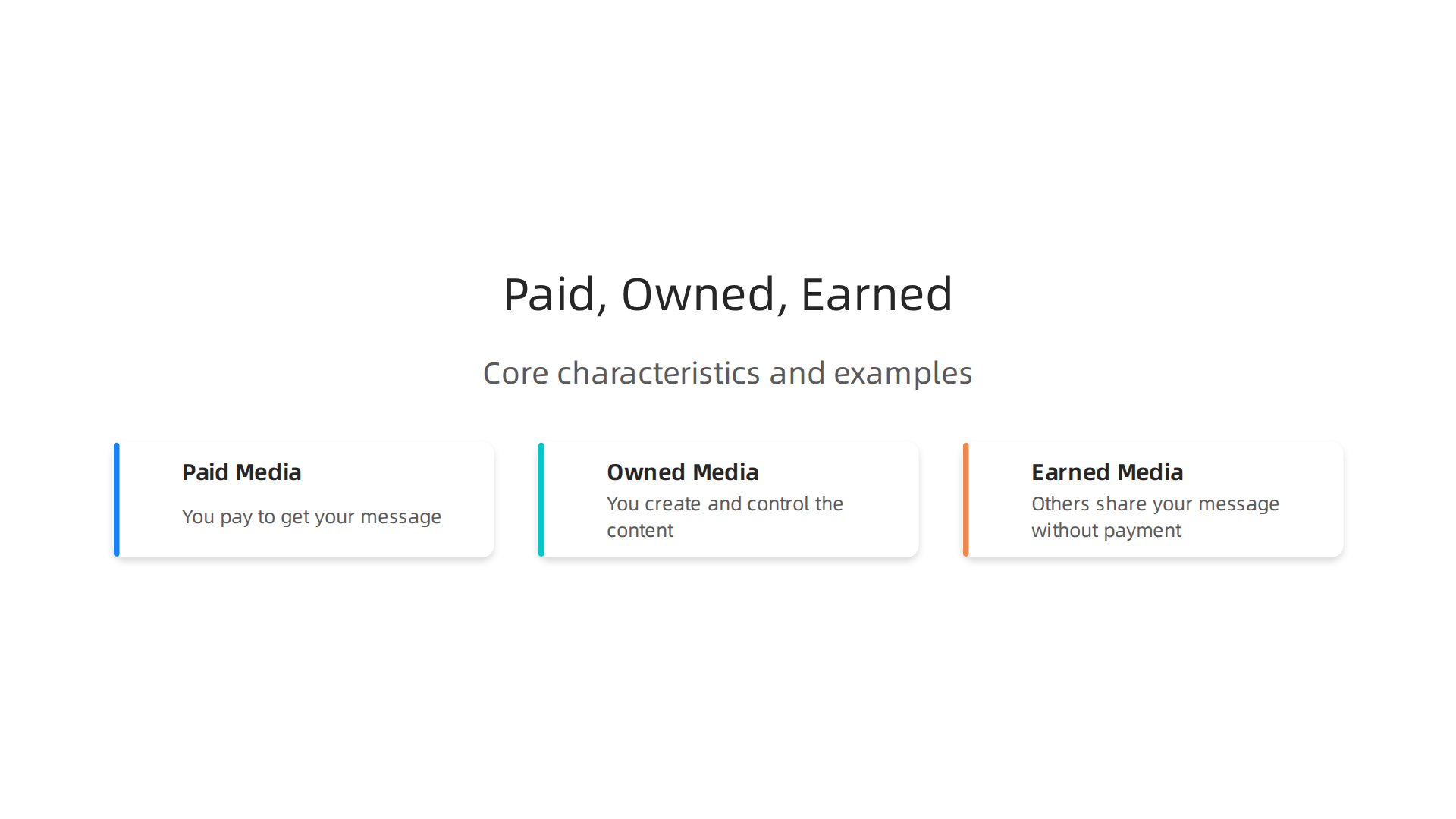
Understanding the difference helps you see where each fits in your overall strategy.
| Media Type | What It Is | Examples |
|---|---|---|
| Paid Media | You pay to get your message in front of people. | Ads, sponsored posts, pay-per-click |
| Owned Media | You create and control the content. | Your website, blog, social media channels |
| Earned Media | Others share your message without payment. | Press coverage, reviews, shares, word of mouth |
Let us look at each one a bit more.
Paid media is the easiest to understand. You spend money on ads, and you get guaranteed placement. But people know it is an ad. Trust is lower.
Owned media is what you build yourself. Your website, your newsletter, your blog. You control the message completely. But you have to work hard to get people to visit.
Earned media is different. You do not control it. Someone else decides to talk about you. That independence makes it powerful. When a journalist writes about your product or a customer posts a positive review, that message feels real. It feels honest. The Keap blog notes that earned media includes "publicity gained by word-of-mouth, online reviews, blogs, press releases, and influencer relations." It is the most authentic form of exposure.
Why does earned media carry so much weight? Because it comes from a third party. People trust recommendations from others more than they trust ads. It is simple psychology. If a friend recommends a restaurant, you are likely to try it. If you see an ad for the same restaurant, you might ignore it. That is the power of social media influence and organic buzz.
This is where a good PR agency becomes essential. PR pros know how to build relationships with reporters, bloggers, and influencers. They help you earn that third-party endorsement. They do not buy coverage. They pitch stories that journalists actually want to tell.
If you want to see how earned media fits into the bigger picture of a marketing strategy, check out our article on marketing mix strategy in 2026. It explains how earned media works alongside other tactics.
To sum up, earned media is unpaid, organic, and trusted. It is the kind of exposure you cannot buy. And that is exactly why it matters so much in today’s skeptical world.
Now that you have a solid definition, let us move on to how you can actually earn it consistently.
The Evolution of Earned Media in the Age of Social Influence
Earned media has changed a lot over the last 20 years. It used to be simple. You sent a press release to a newspaper. If a journalist liked it, they wrote a story. That was it. Traditional media like TV, radio, and print were the only games in town.
Then social media arrived. And everything shifted.
Today, earned media is driven by social media influence more than anything else. A single post from a creator can reach millions of people.
That reach used to belong only to big news outlets. Now it belongs to anyone with a smartphone and a following. According to the Presspage blog on earned media strategy, the modern approach requires you to "earn the attention of your audience through valuable content and authentic engagement." You cannot just pitch journalists anymore. You have to connect with communities directly.
The rise of social media platforms created entirely new earned media channels. Think about it. A customer shares a photo of your product on Instagram. A Reddit user recommends your service in a thread. A LinkedIn post about your brand gets hundreds of likes and comments. All of that is earned media. And it happens every single day, often without you even knowing.
Micro-influencers and brand advocates are the real stars of 2026. These are creators with smaller, loyal followings. They may have only 5,000 or 20,000 followers. But their audiences trust them deeply. When a micro-influencer recommends your product, it feels like a friend giving advice. That trust is pure gold for earned media. Research from Impact on influencer marketing trends in 2026 shows that brands are shifting toward "micro-creators, AI, hybrid compensation, and long-term creator partnerships." The era of chasing mega-influencers with millions of followers is fading. Authenticity matters more than scale.
The same goes for brand advocates. These are your happiest customers. They talk about you because they love what you do. You do not pay them. You do not pitch them. They just share their genuine experience. That kind of organic buzz is hard to beat.
Here is the thing. In 2026, the PR agency has evolved too. PR professionals now build relationships with creators, manage online communities, and monitor social conversations alongside traditional media outreach. As Ogilvy’s 2026 influence trends report puts it, "influencer marketing can no longer survive on reach and engagement vanity metrics." Impact is everything. Earned community is everything.
If you want to understand how this all fits into a bigger picture, check out our guide on digital marketing platforms in 2026. It shows how earned media works alongside everything else in your marketing toolkit.
So the old way of earned media was press releases and phone calls. The new way is authentic conversations with real people. The medium changed. But the core is the same. You still have to earn it.
Next, let us look at how you can actually build a strategy to earn media consistently in 2026.
Measuring Earned Media: Key Metrics and Frameworks
So you are building relationships and getting people to talk about your brand. That is great. But how do you know if your earned media efforts are actually working? You cannot just count mentions and call it a day. In 2026, you need real data to show that your PR agency and social media influence are driving results.
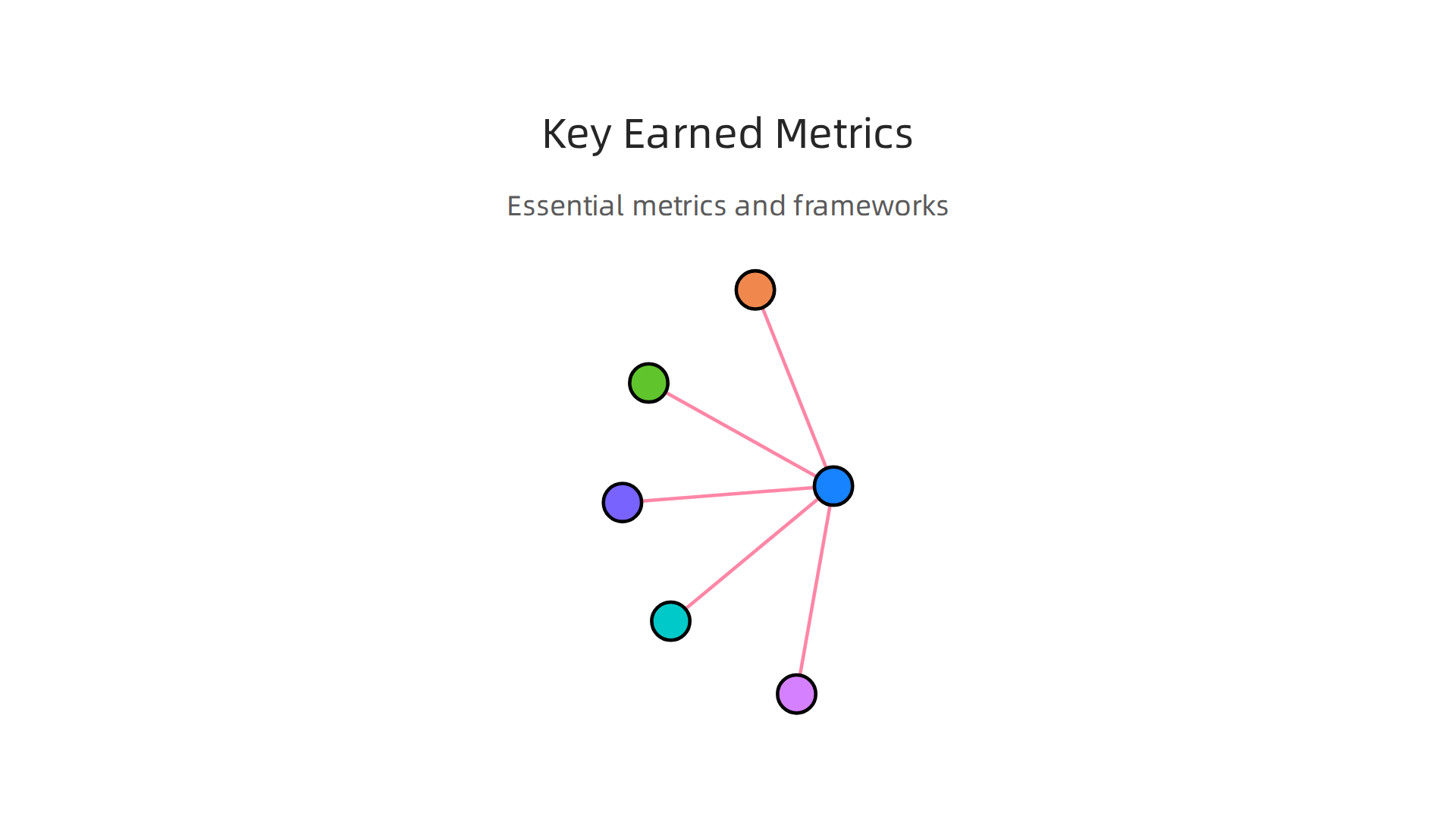
Traditional metrics still matter. They give you a baseline. The big three are share of voice, sentiment analysis, and reach.
Share of voice tells you how much of the conversation in your industry belongs to you. The formula is simple. Divide your brand mentions by the total mentions across your market. SproutSocial explains that you track this across social platforms to see where you stand against competitors. If your share of voice is growing, more people are talking about you than your rivals.
Sentiment analysis goes deeper. It tells you not just how many people are talking, but how they feel. Are they happy? Frustrated? Confused? Sprinklr’s guide on sentiment analysis shows how enterprises use emotional insights to improve customer experience and make real-time decisions. A thousand positive mentions are worth more than ten thousand neutral ones.
Reach is the total number of people who see your earned media. It is a vanity metric by itself. But combined with sentiment and share of voice, it tells a full story.
Advanced frameworks go further. In 2026, smart marketers use earned media value (EMV), ROI attribution, and influence scoring.
EMV estimates what your earned coverage would cost if you had paid for it as advertising. It puts a dollar figure on organic buzz. ROI attribution connects earned media to actual business outcomes like sales or sign-ups. This is harder to do because the path from a mention to a purchase is rarely direct. But tools are getting better. Pendulum’s guide to social intelligence notes that text-only monitoring is outdated. Modern platforms analyze images, videos, and conversation patterns to give you richer data.
Influence scoring ranks how much impact each mention or creator has. Not all earned media is equal. A shoutout from a micro-influencer with high engagement may be worth more than a mention from a celebrity with low trust.
The big challenge is linking earned media to business outcomes. Unlike paid ads, you cannot always track a conversion back to a single post. A customer may see a Reddit thread, hear a friend mention your brand, and then search for you later. The path is messy.
How do you overcome this? Start by aligning your metrics with your goals. If you want brand awareness, focus on share of voice and reach. If you want reputation, focus on sentiment. If you want revenue, build an EMV model and track assisted conversions. Meltwater’s guide to brand awareness recommends identifying the metrics that match your business goals first. Then use the right tools to measure them.
Another tip is to use consistent tracking across channels. Many brands miss 75% of their earned media because they only monitor text. Pendulum warns that traditional social listening tools are blind to images and videos. Upgrade your toolkit to catch everything.
If you want a broader view of how earned media fits into your full marketing strategy, check out our guide on marketing mix strategy in 2026. It shows you how earned, owned, and paid media work together to drive real growth.
Building a Strategy to Earn Media Coverage
You already know how to measure earned media. But how do you actually get it? In 2026, you cannot just send a generic press release and hope for the best. Journalists get hundreds of pitches a day. Influencers ignore anything that feels like a sales pitch. And your audience can smell insincerity from a mile away.
Building a real earned media strategy takes three things: a newsworthy angle, real relationships, and data that backs up every pitch you send.
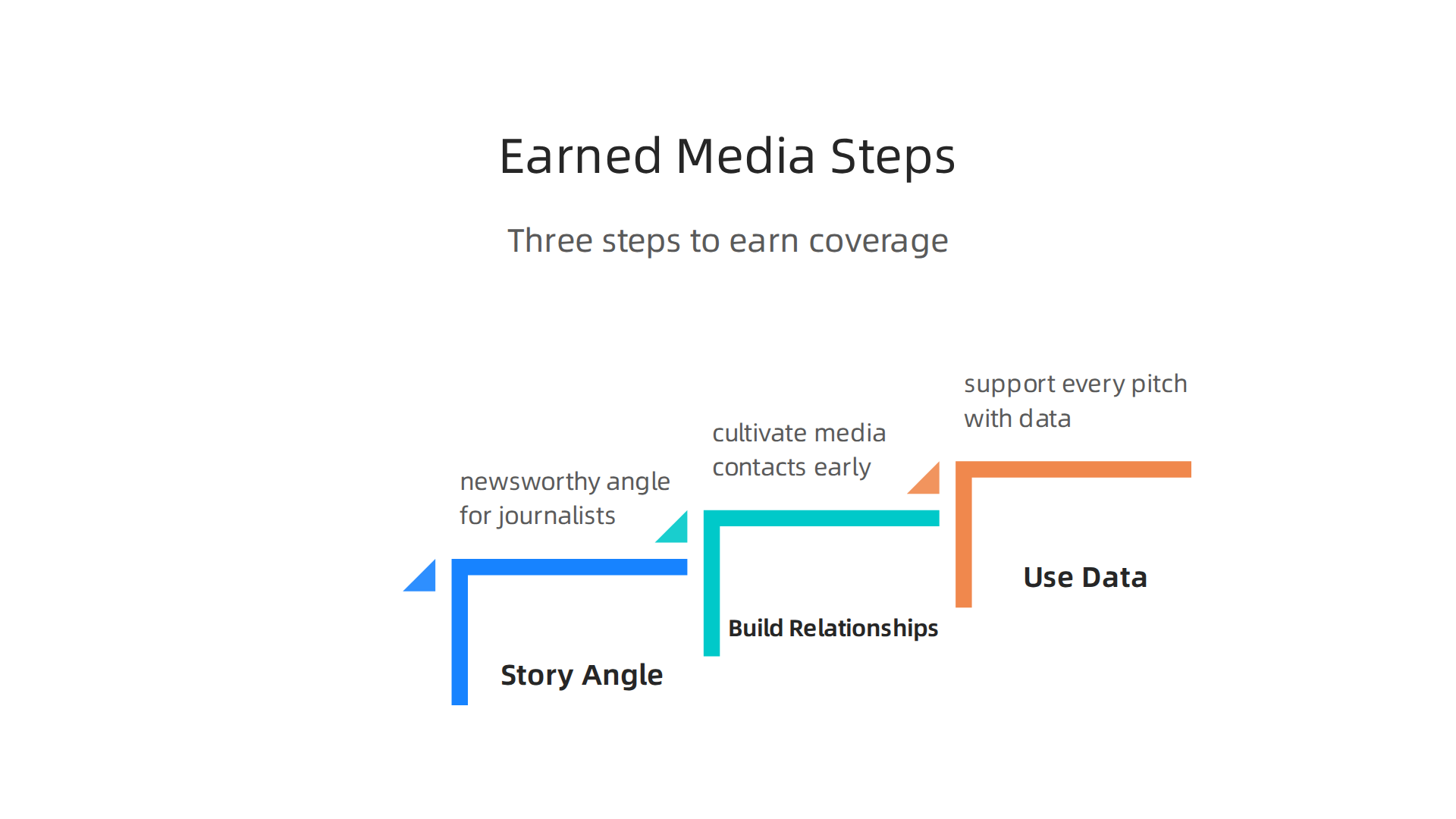

Start with your story. Not every piece of news is media worthy. You need an angle that fits what journalists actually cover. That means knowing their beat, their audience, and their publication inside out. Presspage walks through the six steps to build an earned media strategy that actually works. Step one is always research. Who are the reporters writing about your space? What kind of stories do they tell? Then craft your pitch around their needs, not yours.
A great example is franchising brands in 2026. Instead of pushing corporate announcements, smart brands now spotlight franchisee stories. A recent trend report shows that franchisee led narratives get more traction because they feel personal and real. The same logic applies to any industry. Find the human angle.
Next, build relationships before you need them. Do not wait until you have a press release to reach out to a journalist or creator. Start following their work. Share their articles. Leave thoughtful comments. Then when you have a story, your email will not feel like a cold pitch.
Prowly’s guide to earned media strategy suggests you treat media relationships like any other partnership. Nurture them over time. And in 2026, that means working with influencers too. The creator economy is huge. Impact’s research on influencer marketing trends shows that micro-creators with high engagement often deliver better results than big names with low trust. Build a list of creators who align with your brand values. Offer them something valuable, not just a product sample.
Finally, use data to back your pitches. Journalists love stories that come with proof. If you can say "we saw a 30% increase in engagement after this campaign" or "our survey of 1,000 customers shows this trend," your pitch becomes stronger. Cision offers nine strategies to maximize the impact of coverage once you get it. One key tip is to share social proof with reporters before they even ask. Give them the data they need to sell the story to their editor.
If you are new to building a strategy, start small. Pick three target publications. Research five reporters who cover your beat. Craft one strong angle backed by real numbers. Then reach out personally.
For a fuller picture of how earned media fits into your overall marketing toolkit, check out our article on inbound marketing definition in 2026. It explains how earned media, owned content, and paid ads all work together to build real trust with your audience.
The Impact of AI on Earned Media and PR
Here is the thing: AI is changing how earned media works in 2026 faster than most people realize. And not just in small ways. It is reshaping the entire relationship between brands, journalists, and audiences. If you want your earned media strategy to survive, you need to understand both the power and the risks of AI.
AI-powered monitoring and sentiment analysis tools have become essential for modern PR agencies. Instead of relying on clippings or manual searches, you can now track real time conversations across news sites, social platforms, and even forums. Pendulum’s guide to social intelligence in 2026 shows that text-only monitoring is dead. Modern tools use OCR to detect visual content too, catching logos and brand mentions in images. This gives you a much fuller picture of your brand reputation. NYWICI also highlights how AI platforms now let PR teams track public sentiment in real time. That means you can spot a potential crisis before it explodes.
But here is where it gets tricky. Automated content creation is booming, and it threatens the authenticity that earned media depends on. Many PR agencies now use AI to draft press releases, write pitch emails, and even generate story ideas. OBA PR reports that leading agencies using AI see 3-5 times higher media placement rates and 70% faster campaign execution. That sounds great. But the problem is that journalists can spot AI generated pitches instantly. If your outreach feels robotic or generic, you lose trust. And as PR Week notes, brand reputation in 2026 is not just shaped by what the media says. It is also shaped by how AI tools perceive and summarize your brand. So if your content lacks a human voice, AI summarizers might treat it as low quality.
That brings us to the ethical side. Deepfakes, algorithmic bias, and the erosion of trust are real dangers for earned media in 2026. If a bad actor creates a fake video of your CEO saying something offensive, that false content can spread before you even know it exists. Your earned media coverage might end up fact-checking lies instead of celebrating wins. The PRSA emphasizes that using AI ethically requires a commitment to truth and transparency. You cannot let AI cut corners on honesty. If you use AI to generate quotes or fabricate data points, you are betraying the trust that earned media is built on. And once that trust is gone, it is nearly impossible to get it back.
To navigate this new landscape, you need to stay informed about AI tools and their impact. That is why we recommend subscribing to The Deep View Newsletter. It gives you clear, daily updates on AI developments that affect media and PR. No fluff, just actionable insights.
For more on how AI fits into your overall marketing mix, check out our article on digital marketing platforms in 2026. It covers the tools that help you combine earned media, owned content, and paid advertising into one cohesive strategy.
The key takeaway? Use AI to work faster and smarter, but never let it replace the human connection that makes earned media valuable.
Common Challenges in Earned Media and How to Overcome Them
Even with AI on your side, earned media comes with some tough challenges.
The same tools that help you move faster also create new problems. Here are the biggest hurdles brands face in 2026 and practical ways to solve them.
Handling Negative Coverage and Crisis Management
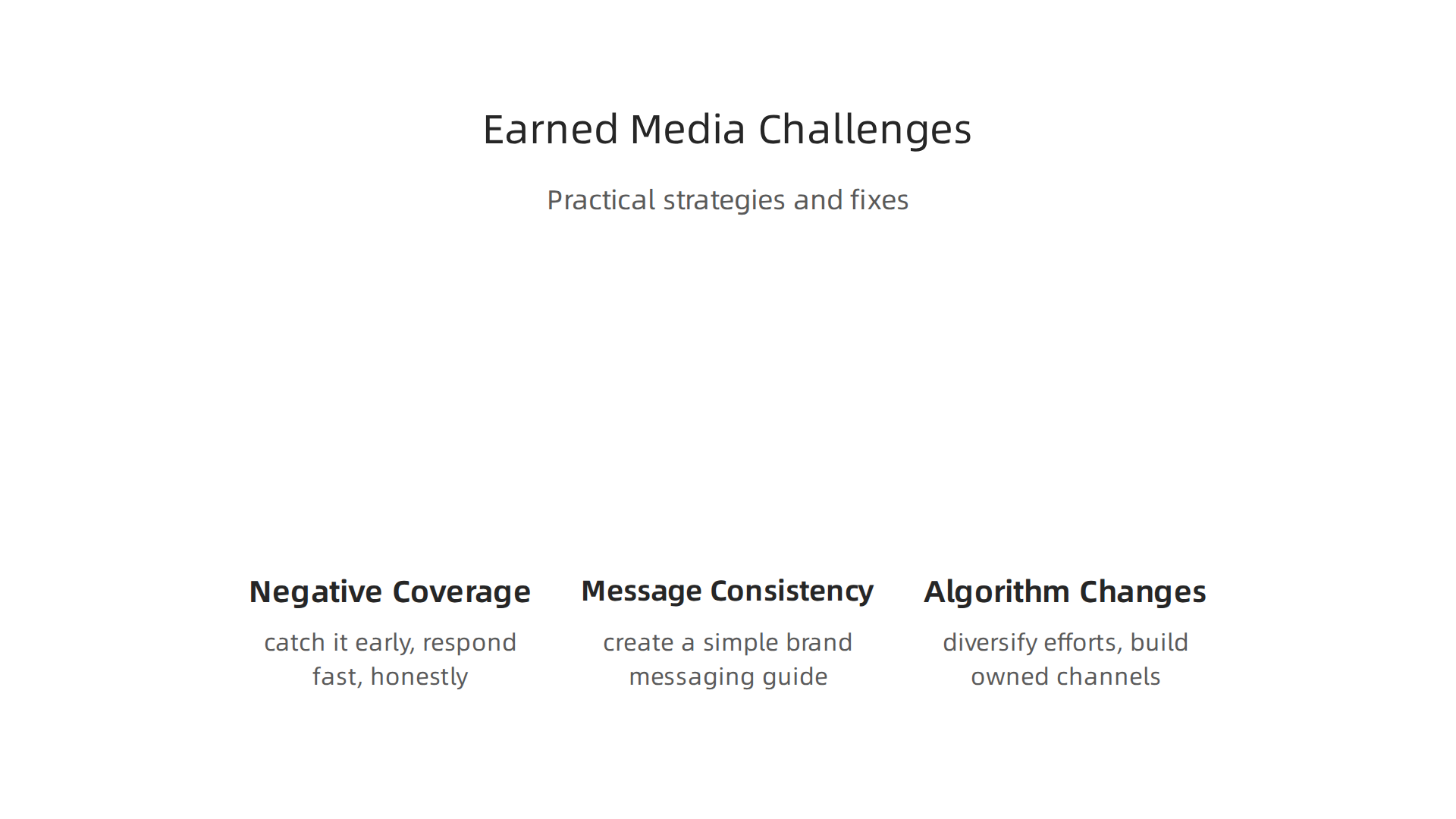
A bad story can spread in minutes. One negative article or viral post can undo months of good work. The key is to catch it early. Use modern social listening tools that go beyond text. Pendulum notes that in 2026, you need to monitor images and videos too. A logo in a negative meme could be your first warning. Set up alerts for sentiment shifts. When a crisis hits, respond fast with a clear, honest statement. Do not hide. And always keep a crisis plan ready before you need it.
Keeping Your Brand Message Consistent Across Earned Channels
You might get coverage in trade publications, local news, podcasts, and influencer posts all at once. That is great. But each channel can distort your message. Journalists rewrite your quotes. Influencers add their own spin. To stay consistent, create a simple brand messaging guide. Share it with every journalist and creator you work with. Make sure your PR agency knows your core story inside out. And when you work with creators, let them sound like themselves while keeping your key points intact. Authenticity matters more than a rigid script. For deeper help on building a unified brand voice, check out our guide on corporate branding services that earn audience trust.
Adapting to Platform Algorithm Changes and Audience Fragmentation
Social media platforms change their algorithms all the time. What worked last month might not work today. Your organic reach can drop overnight. And audiences are spread across more channels than ever. TikTok, Instagram, YouTube, LinkedIn, newsletters, podcasts. You cannot rely on one platform. The solution is to measure your share of voice across every channel. Brandwatch explains that share of voice shows how much of the industry conversation your brand owns. If one platform stops delivering, you will see it in the data. Diversify your earned media efforts. Build your own owned channels like a newsletter or blog. That way, you control the relationship with your audience. And always track your brand awareness metrics so you know exactly where your earned media is making the biggest impact.
These challenges are real, but they are not unbeatable. With the right monitoring, clear messaging, and a diversified strategy, your earned media program can thrive even in a fragmented world.
Future Trends in Earned Media for 2026 and Beyond
So you have tackled the toughest challenges. Your earned media program is running smoothly. But what comes next? The landscape is shifting again. Three major trends will define how earned media works over the next few years. Understanding them now gives you a serious head start.
Decentralized Media and Community-Owned Platforms
Big social platforms are losing their grip. Audiences are moving to smaller, community-owned spaces like Discord servers, private newsletters, and decentralized networks. People trust their peers more than brands or algorithms. In 2026, your earned media strategy needs to include these intimate channels. The trick is to show up as a helpful member, not a promoter. PR Week explains that brand reputations are now shaped by the responses of AI tools and by authentic community conversations. If you earn a mention in a private Slack group or a Substack recommendation, that carries more weight than a general social post. For more on adapting to these new spaces, check out our deep dive on digital marketing platforms in 2026.
Deep Personalization Through AI and Its Impact on Earned Reach
Generic press releases are dead. In 2026, AI tools let you personalize your pitch for every single journalist or creator. You can analyze what topics they cover, what tone they prefer, and even the best time to reach them. OBA PR reports that leading agencies using AI see 3 to 5 times higher media placement rates. That is a massive jump. But here is the catch. AI also personalizes the other side. Readers get content tailored to their interests, which means your earned media story only shows up if it matches their exact needs. You have to create stories that feel like they were written for one person. That is how you earn real attention.
Integration of Earned Media with ESG and Corporate Purpose
In 2026, your brand is expected to stand for something. Environmental, social, and governance goals are not just nice to have. They are a core part of earned media. Journalists and creators want to cover companies that walk the talk. Medianet notes that people increasingly get answers from AI rather than reading multiple articles, creating a zero-click search environment. Your earned media must be so compelling that AI tools choose to cite it. Stories about real impact, community work, and ethical practices get picked up. They also build long term trust. That is the kind of earned media that survives algorithm changes. To keep up with these shifts, consider subscribing to the Deep View Newsletter for clear daily updates on AI and media trends.
Summary
This article explains earned media—the unpaid publicity your brand gets from press coverage, reviews, social shares and word-of-mouth—and shows how it fits alongside paid and owned media. It reviews the evolution from traditional press releases to social influence and micro‑creators, and it lays out practical ways to build a repeatable earned media strategy: find newsworthy angles, nurture relationships, and back pitches with data. You’ll learn how to measure value with share of voice, sentiment, EMV and attribution models, how AI is changing monitoring and personalization (and what ethical risks to avoid), and how to handle crises and platform fragmentation. The guide closes with operational tips for tools, messaging consistency, and future trends like community-owned channels and ESG-driven storytelling so you can earn more credible coverage that drives business outcomes.