
Power Digital Marketing Explained Choose Your Agency For 2026 Growth
In 2026, media leaders face a big task: finding the right partners to help their businesses grow online.

The world of digital marketing is always changing fast. New tools pop up, and artificial intelligence (AI) is changing everything. Because of this, picking and working with a specialized digital marketing firm, also known as an agency fb or an agency 360, has become very important.
Many companies are looking for what is called "power digital marketing."
This means getting strong, full-service help that brings together different online marketing efforts. Firms specializing in Power Digital Marketing focus on providing complete marketing solutions. These solutions often include everything from making your website show up higher in searches to creating catchy ads and managing social media. Think of them as a front page agency that can handle all your online growth needs.
It can be hard to know which firm to choose, or how to get the most out of working with one. This article will give you a simple plan, like a playbook, to make these choices easier. We’ll help you learn how to look at the different services an agency offers. You will also understand how they charge for their work and how to check if their efforts are truly helping your business. We will also talk about how ready these firms are for new technologies like AI, which is super important in 2026. This framework will help you make smart choices for your media company.
To learn more about finding the right partner, check out our guide on how to choose an online marketing company for media professionals.
Staying informed about new tech, especially AI, is key for any media professional. Get clear daily AI updates from The AI Newsletter Worth Reading.
What Power Digital Marketing Actually Does and Who Benefits Most
So, what does it truly mean when a company offers "power digital marketing"? It means they offer many strong digital services all at once. Think of them as a team of experts who use clever ways to make your business grow online. These firms are like a front page agency that brings together different parts of online marketing to work as one.
Here are the main things these agencies do:
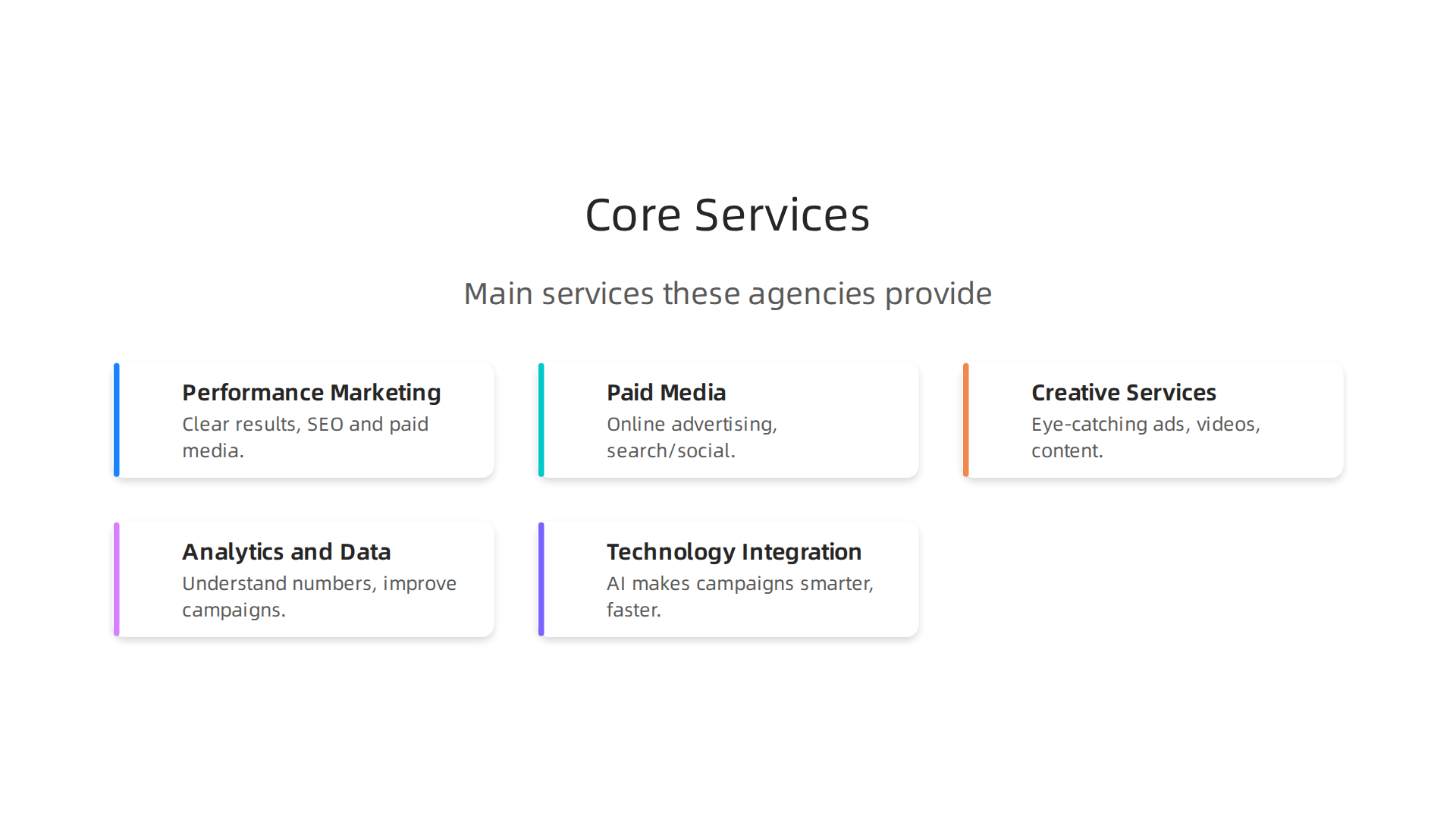
- Performance Marketing: This is all about getting clear results. It includes things like making your website show up higher on Google (called SEO) and running ads that people click on (called paid media). The goal is to get more people to visit your site, buy your products, or use your services. Agencies like Power Digital often focus on these measurable outcomes, helping businesses see a clear return on their investment 1. You can learn more about this in our guide on performance marketing 2026 from fundamentals to advanced AI tactics.
- Paid Media: This covers all forms of paid advertising online. This means ads on search engines, social media, and other websites. A good agency 360 helps you choose where to place your ads and how much to spend to get the best results. They make sure your ads reach the right people at the right time.
- Creative Services: This is where the art comes in. Agencies create eye-catching ads, videos, and content that grab people’s attention. They help you tell your brand’s story in a way that makes people want to engage. Having strong creative is key to standing out online.
- Analytics and Data: This is about understanding numbers. These agencies collect data on how well your marketing is working. They use special tools to see what’s popular, what’s not, and where you can improve. This helps them make smart choices for your campaigns, making sure every dollar spent counts. Firms often use their own special technology to analyze data and improve campaigns 2. Our resource on analytic marketing drive smarter campaigns and boost ROI in 2026 dives deeper into this topic.
- Technology Integration, especially AI: In 2026, AI is a game-changer. Power digital marketing firms use AI to make campaigns smarter, reach more people, and even create content faster. They know how to use the newest tech tools to give their clients an edge. These agencies are often called "tech-enabled" because they combine expert people with smart technology 3.
Who Benefits Most From Power Digital Marketing?
Many types of businesses can get a lot from working with a power digital marketing agency.
- Media Publishers: If you run a website that shares news or articles, an agency can help more people find your content. They can boost your audience numbers and make it easier for you to sell ad space. They also help your brand look more professional and trustworthy.
- Advertisers: If you’re a business trying to sell products or services, these agencies help your ads reach the right customers. This means more sales and better use of your advertising budget. They can also help your brand become well-known and loved.
When to Partner vs. Build In-House
It’s a big question: should you hire an agency or build your own marketing team inside your company?
-
Partner with an Agency When:
- You need special skills quickly. It takes a long time to hire experts in SEO, paid media, and analytics. An agency already has these people.
- You want fast growth. Agencies are built to scale up your marketing efforts quickly.
- You struggle to keep up with new technology, especially AI. Agencies are usually at the forefront of new tools and trends.
- You need an outside view. An agency can spot things your internal team might miss. Many digital marketing services cover a wide range of needs, from advertising to web design 4. If you’re unsure, our guide on expert guide to digital marketing advertising agency specializations and hiring can help you decide.
-
Build an In-House Team When:
- You have a very big, ongoing need for a specific type of marketing that requires deep knowledge of your company’s inner workings.
- You have enough budget and time to hire, train, and manage a full team of specialists.
- Your company’s growth is steady and predictable, allowing for slower, organic team building.
Success with a power digital marketing agency means you see more traffic, more leads, and ultimately, more money for your business. It means your brand grows stronger, and you stay competitive in the fast-paced digital world of 2026.
To keep your brand strong and competitive in 2026, understanding the core services that power digital marketing agencies offer is key. These agencies act like an agency 360, providing a full range of services that media teams can use to solve common business problems. Here’s a look at these modules and how they help.
Core Service Modules Explained
Power digital marketing firms offer many specialized services. Think of these as different tools in a big toolbox, all working together for your success.
- Paid Search and Social Media: This module focuses on running ads where people search (like Google) and on social media platforms (like Facebook and Instagram). Agencies help you create ads, decide who sees them, and manage your budget to get the most clicks and views. They aim for a good "click-through rate" (CTR) and low cost for each click (CPC). For example, in 2026, average costs per click for various ads can range, and knowing these numbers helps agencies plan better Ad Performance Benchmarks Guide 2026. This is crucial for attracting new readers or customers to your content or products.
- Creative and Content Operations: This service creates all the eye-catching stuff people see online. This includes writing engaging articles, making videos, designing ads, and crafting social media posts. The goal is to make content that truly connects with your audience and tells your brand’s story. A smart creative click media approach can make a big difference in how well your ads perform.
- Analytics and Measurement: This module is all about understanding the numbers behind your marketing. Agencies use special tools to track how well your campaigns are doing. They look at things like how many people saw your ads, how many clicked, and how many made a purchase. This data helps them learn what works best and make changes to get even better results. They use benchmarks, like those for display advertising in 2026, to see how your campaigns stack up.
- Programmatic Media: This is a smart way to buy and sell online ads using computer programs. Instead of buying ad space one by one, programmatic media lets agencies buy ads across many websites and apps at once, often in real-time. This helps your ads reach the right people more efficiently and at a better price. It includes things like native advertising which blends ads into the content.
- Audience Development: This service focuses on helping your business find more of the right people. This means growing your audience for publishers or finding more potential customers for advertisers. Agencies use different strategies, like improving your search engine ranking (SEO) and using social media, to bring in more people who are interested in what you offer. They also help you learn more about who your audience is and what they like.
How These Services Solve Media Team Problems
Power digital marketing services are not just a list of things an agency does. They are solutions designed to fix common problems faced by media publishers and ad tech companies.
- Audience Growth: If you need more people to read your articles or watch your videos, agencies combine paid search, social media ads, and strong content strategies. By using good advertising channels in 2026, they can put your content in front of more eyes. This helps media publishers grow their readership and increase their online presence.
- Yield Optimization: This means getting the most money possible from your ad spaces. Agencies use programmatic media and detailed analytics to make sure your ads are shown to the right audience at the best time. This increases the chance of people clicking on ads, which brings in more money for publishers. For example, AI-optimized display ads can show much higher click-through rates, even 60.9% better than old methods in 2026 TOP 20 DISPLAY AD PERFORMANCE STATISTICS.
- Advertiser Demand: For ad tech companies, getting more advertisers to use your platform is vital. Power digital marketing helps by showcasing your platform’s strengths through smart content and targeted ads. They can also provide data-driven insights to help advertisers see the value in working with you, proving that your platform can deliver good results for their campaigns.
By choosing a power digital marketing agency, media teams can tackle these challenges head-on. They get a full team of experts and the latest technology, helping them achieve their goals more quickly and effectively.
To keep up with all the fast changes in digital marketing, especially with AI, you need reliable information daily.
The AI Newsletter Worth Reading offers clear updates to help you stay ahead.
To truly know if your power digital marketing efforts are working, you must look closely at the numbers.

It is not enough to just run campaigns; you need to understand what the data tells you. This means knowing which metrics matter most, how to compare your results to industry standards, and what questions to ask your agency or team.
Essential Metrics for Publishers
For publishers, success often means growing your audience and making money from it. Here are some key metrics:
- Audience Reach: This tells you how many people see your content. Key numbers here are impressions (how many times your content was shown) and unique visitors (how many different people saw it). A higher reach means more potential readers or viewers.
- Engagement: It is not just about showing content, but also about how people interact with it. Click-through rate (CTR) shows how many people clicked on your links compared to how many saw them. Time on page tells you how long people stayed to read. A high bounce rate can mean people leave quickly, which is not good.
- Revenue Metrics: Publishers often track CPM (Cost Per Mille, or cost per thousand views) to see how much advertisers pay for ad space. Revenue per visitor is another important metric, showing how much money you make from each person who comes to your site. This helps you understand the true value of your audience.
These metrics are useful, but remember they do not tell the whole story. For example, many impressions are good, but if no one clicks, it is not very helpful. You need context to understand the data.
Essential Metrics for Advertisers
For advertisers, the goal is usually to get people to take a specific action, like buying something or signing up for a service.
- Conversion Metrics: Conversion rate tells you how many people took the desired action (like a purchase) after seeing your ad. Cost per conversion or cost per lead shows how much you spent to get one person to convert. For example, in 2026, the average cost per conversion across Facebook Ads is about $27.66, and for Google Ads, it is around $70.11, according to Conversion Rate Benchmarks for YOUR Industry (Exclusive Data!).
- Return on Ad Spend (ROAS): This is a critical metric. It tells you how much money you made back for every dollar you spent on ads. A ROAS of 2x means you made $2 for every $1 spent.
- Customer Lifetime Value (LTV): This metric looks at the total revenue a customer is expected to bring in over their entire relationship with your business. If your cost per conversion is high, but your LTV is even higher, your campaigns might still be very successful in the long run.
The challenge with these metrics is sometimes knowing what truly led to the action. Did the ad cause the sale, or did the customer see it elsewhere first? This is called "attribution," and it can be tricky. You can learn more about this in articles about performance marketing 2026.
Using Benchmarks to Guide Your Strategy
Benchmarks are like report cards for your marketing efforts. They are average numbers from many other businesses in your industry. By comparing your own metrics to these benchmarks, you can see if you are doing better, worse, or about the same as your competitors. For instance, knowing the average cost per click (CPC) or click-through rate (CTR) for your industry can help you set realistic goals and spot problems early. In 2026, PPC campaigns across all industries saw an average CTR of 6.64% and an average CPC of $5.42, as shown in Digital Benchmarks by Industry: PPC.
These benchmarks help you understand what’s normal. If your numbers are much lower, it might mean you need to change your strategy. If they are higher, you are doing great! You can find benchmarks for many things, like 2026 Digital Marketing Benchmarks: How Do You Compare? in general, or more specific ones like Meta Ad Benchmarks by Industry 2026 for social media campaigns. Knowing these averages helps you make smarter choices, whether you are working with an agency or managing your own creative ads.
Validating Vendor Reporting and Agency Claims
When you work with a digital marketing strategy consultant or a power digital marketing agency, they will provide reports. It is important to know how to read these reports and validate their claims.
- Ask for Details: Do not just accept big numbers. Ask for specific breakdowns by platform, campaign type, and even audience segments. Understand their methods for tracking and reporting.
- Compare to Benchmarks: Use industry benchmarks to check if the agency’s reported performance is reasonable. If they claim amazing results, ask how those compare to the industry average and what specific strategies led to that success. A good agency should be able to explain this clearly.
- Understand Limitations: No report is perfect. Discuss any data limitations or challenges with your agency. For example, if they only track last-click conversions, ask about multi-touch attribution or other ways to measure the full customer journey.
- Focus on Your Goals: Make sure the metrics they report directly tie back to your business goals. If your goal is sales, conversion rates and ROAS are more important than just impressions.
By taking these steps, you can make sure your marketing dollars are well spent and that you are getting real value from your power digital marketing partners. It is about being a smart client and understanding the story behind the numbers.
After checking your reports and making sure your marketing partners are doing a good job, the next big step is understanding how they charge for their work and how to set up contracts. This is super important for anyone buying media or working with a [power digital marketing] agency. Knowing these details helps you get the best value for your money.
Common Pricing Models for Agencies
Agencies offer different ways to pay for their services. Each has its own good and bad points:
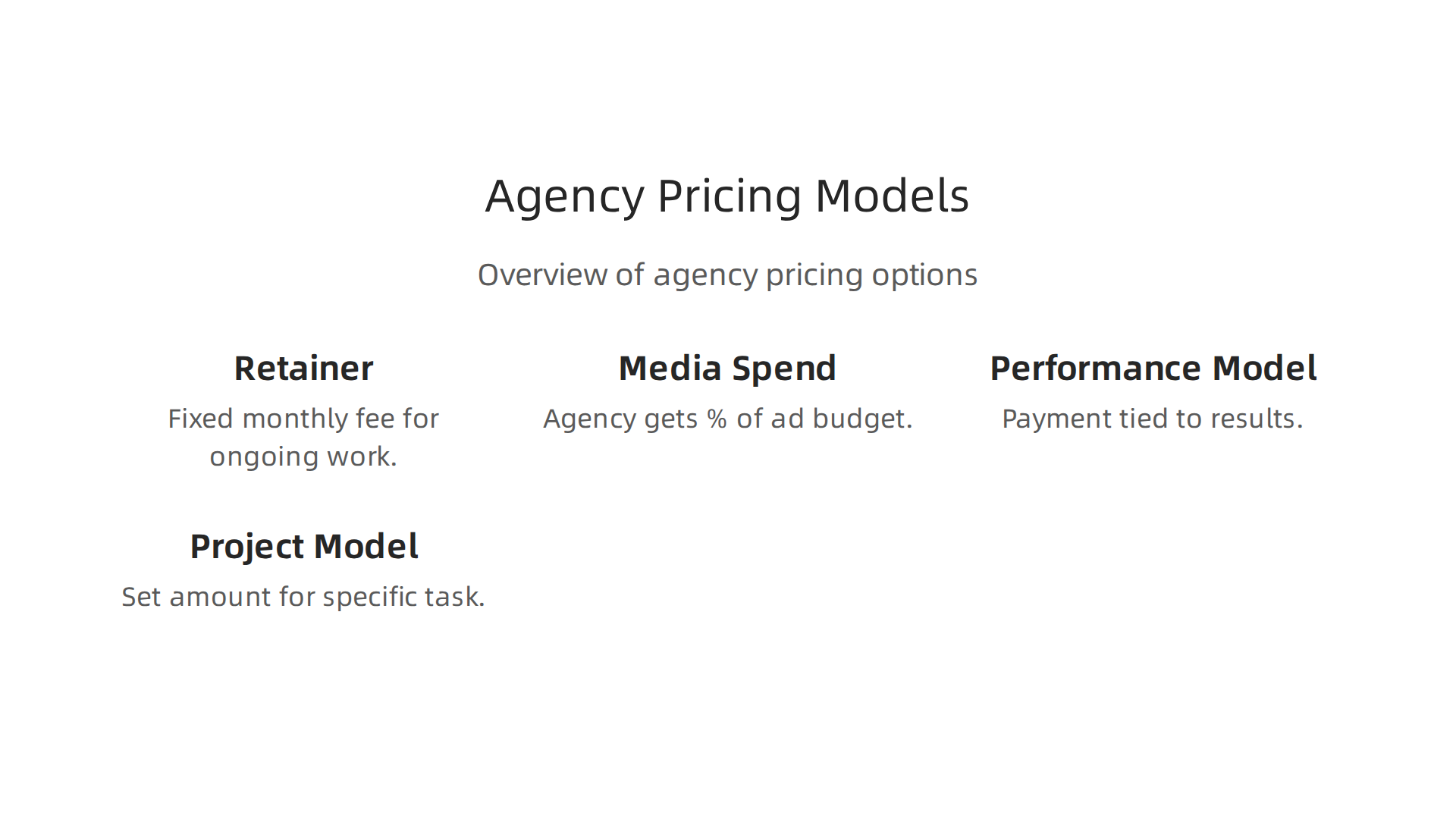
- Retainer Model: This is like a fixed monthly fee. You pay the same amount each month for ongoing work, like managing your social media or running your ads.
- Good for you: Predictable costs, easy budgeting.
- Good for agency: Steady income, helps them plan their team’s time.
- Percentage of Media Spend: With this model, the [creative click media] agency gets a percentage of the money you spend on ads. For example, if you spend $10,000 on ads and the agency’s fee is 10%, they get $1,000.
- Good for you: The agency is motivated to help you spend more effectively, as their pay goes up with your ad budget.
- Good for agency: Their income grows with bigger client budgets.
- It is important to discuss how these fees are charged, as they impact the agency’s profit margins, which usually sit between 15% and 20% net for healthy agencies, according to one report on Ad Agency Profit Margin: Benchmarks, Breakdown, And What Drives The ….
- Performance-Based Model: Here, the agency’s payment is tied to the results they get. If they help you get more sales or leads, they earn more. This can be a fixed fee plus bonuses for hitting certain goals.
- Good for you: Lower risk, as you only pay more when you see real results.
- Good for agency: Strong motivation to perform well. Pricing for performance marketing services can vary a lot, from $1,000 a month for small businesses to over $25,000 for bigger companies, often achieving 200-600% return on investment within 6-12 months for clients, as noted in a 2025 review of Performance Marketing Services Pricing.
- Project-Based Model: You pay a set amount for a specific project, like creating a new website or launching a single campaign.
- Good for you: Clear cost for a defined task.
- Good for agency: Clear scope of work.
It is common to see these models mixed together in a single contract. Understanding the specific details of a digital marketing contract is key to a good partnership, as explained in a Digital Marketing Contract Template.
Smart Tips for Hiring and Buying
When you are looking to hire a [front page agency] or buy media, you want to be smart about it. Here are some tips for how to find the right partner and set up good deals:
- Design a Clear Request for Proposal (RFP): An RFP is a document where you ask agencies to tell you how they would help your business. Make sure it has clear goals, what you need done, and your budget. This helps agencies give you good, clear proposals. You can find many guides on how to write a good one, like this Digital Marketing Request For Proposal (RFP) Template.
- Think About Trial Phases: For big projects or new partnerships, consider starting with a small trial project. This lets you see how the [agency 360] works and if they are a good fit before you commit to a long-term contract.
- Tie Payments to Results (KPIs): Make sure your contract links what you pay to actual results. If an agency promises to increase your website traffic by 20%, part of their payment could depend on hitting that goal. A good benchmark checklist for paid media and advertising negotiations will look at these performance clauses, among other things, to ensure fair terms, according to Benchmarking Checklist for Paid Media & Advertising – Negotiations.AI.
- Watch for Red Flags During Talks: Be careful if an agency promises results that seem too good to be true, or if they are not clear about how they track things. Also, look out for contracts that are hard to understand or change. A trustworthy partner will be open and honest.
By using these tips, you can make sure you pick the best partners and get the most out of your [power digital marketing] investments. Choosing the right online marketing company requires careful thought. You can learn more about this by reading our expert guide to digital marketing advertising agency specializations and hiring.
Staying informed about how agencies price their services and how to negotiate effectively is always a good idea, especially as the world of marketing keeps changing with new technology.
Get clear daily AI updates from The AI Newsletter Worth Reading.
As the world of marketing keeps changing with new technology, it is really important to understand how new tools like Artificial Intelligence (AI) are shaping how agencies work. This new tech is changing everything, from how campaigns are planned to how customers are reached, making a big difference in [power digital marketing].
AI’s Role in Modern Digital Marketing Agencies
AI is no longer just a fancy word. In 2026, it is a key part of how many agencies get things done.

Agencies are using AI to work smarter and faster, helping them reach their goals more easily. In fact, many agencies are looking to AI to help them become more efficient and earn more, with three out of four seeing productivity as AI’s biggest short-term benefit, according to a 2026 report on AI Adoption for Digital Agencies: The Complete 2026 Best Practices.
Here is how AI is adding value across different parts of marketing:
- Better Campaign Planning: AI can look at tons of data very quickly. This helps agencies figure out what has worked well in the past and what might work best for new campaigns. It helps them make smarter choices about where to put ads and what messages to use.
- Faster Creative Production: Coming up with new ideas for ads and content used to take a long time. Now, AI tools can help create different versions of ads, write social media posts, and even adapt content for different languages and cultures. This means a [creative click media] agency can make many more options, much faster. For example, AI-made display ads have shown much better results, improving click-through rates by over 60% compared to older methods, as found in a 2026 study on TOP 20 DISPLAY AD PERFORMANCE STATISTICS.
- Smarter Audience Targeting: AI helps agencies truly understand who their customers are. It can find the right people for ads on platforms like Facebook (important for any [agency fb]) by looking at their online behaviors and interests. This makes sure that ads are shown to people who are most likely to care about them, saving money and getting better results.
- Deeper Analytics and Reporting: Agencies deal with a lot of numbers. AI can help sort through all this data, spot important trends, and create easy-to-understand reports. This frees up time for the agency’s team to focus on bigger ideas instead of just crunching numbers. AI can reduce operational costs by 30-50% for tasks like reporting and data entry, notes a 2026 guide on The Complete Guide for Digital Marketing Agencies in 2026. If you want to dive deeper into how data can boost your marketing, read our guide on analytic marketing drive smarter campaigns and boost roi in 2026.
How to Spot True AI Maturity in Agencies
With so much talk about AI, it can be hard to know if an agency is truly using it well or just saying they are. When you are looking for a [front page agency] or any [agency 360], here are some ways to tell if their AI claims are real:
- Look for Clear Processes: Ask the agency how they actually use AI in their daily work. Do they have clear steps or tools for it? A good agency will be able to show you exactly how AI helps them, instead of just using vague terms.
- Ask for Specific Examples and Results: Instead of just saying "we use AI," a capable agency should show you how AI helped a client achieve specific results, like better website traffic or more sales.
- Focus on How They Learn and Adapt: AI is always getting better. A strong agency will show that they are also learning and improving their AI use. They should be able to talk about how they test new AI tools and adjust their strategies.
- Transparency is Key: A truly advanced AI marketing agency will be open about what their AI does, how it works, and how it helps you. They will not hide behind technical terms.
Choosing an agency that genuinely uses AI to improve its services can give your business a big advantage in 2026. If you are thinking about hiring an agency with AI expertise, it is wise to learn how to choose the best AI marketing agency for your business.
Choosing the right partner for your digital marketing needs, especially when AI is involved, can feel like a big puzzle. After understanding what makes an agency truly good at using AI, the next step is to find one that fits your business. This means having a clear plan for how you will pick them.
Finding Your Perfect Marketing Match: A Step-by-Step Guide
To make sure you pick an agency that can really deliver powerful digital marketing, follow these steps:
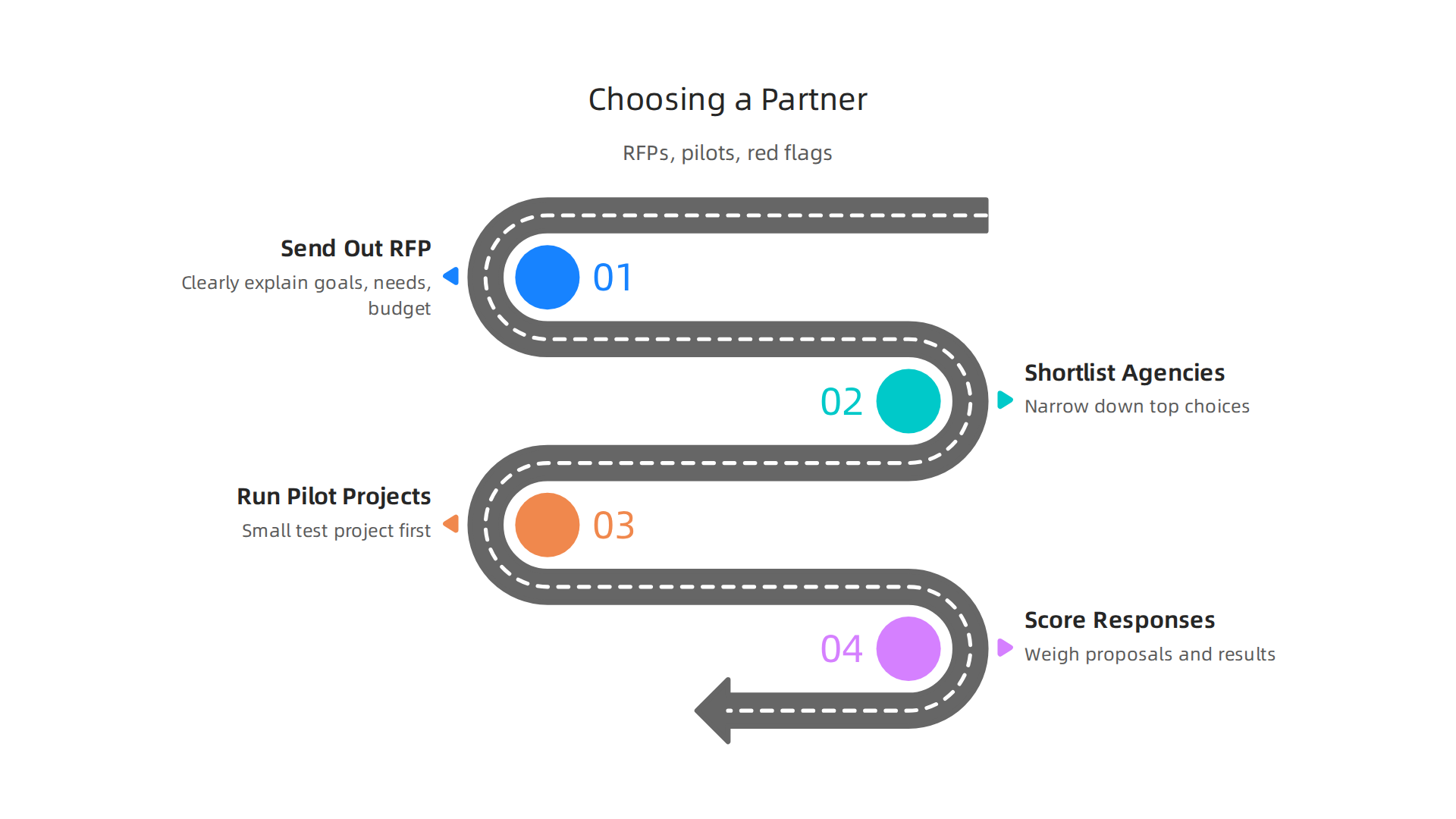
- Send Out a Request for Proposal (RFP): This is like writing a detailed wish list for what you need. In your RFP, clearly explain your business goals, what kind of work you need done, and how much money you have to spend. It is key to focus on what you want to achieve, like getting more sales or website visitors, rather than just using a lot of marketing words. Agencies should disclose how they plan to measure success and report back to you, ideally matching your own financial tracking methods 2026 to avoid confusion, as noted in a guide on RFP Template With Built-In Scoring Rubric (2026). A good RFP helps you compare agencies fairly. You can find many ideas and a template in a Digital Marketing Request For Proposal (RFP) Template.
- Shortlist Your Agencies: After getting proposals, narrow down the list to a few top choices. Look for agencies that showed they truly understood your needs and offered clear ideas, not just big words.
- Run Pilot Projects: Instead of diving into a big contract right away, consider doing a small test project. This is a great way to see how an agency works, especially with new AI tools. For example, you could ask them to improve a small part of your website traffic or create content for a specific social media platform. Starting small lets you see their skills in action without much risk. This is often called "test small pilots" when looking at AI use cases, according to experts on 15 Practical AI Use Cases for Digital Marketing Agencies (2026).
- Score Their Responses and Results: Use a simple scorecard to weigh different parts of each agency’s proposal and pilot project. Think about their plans, their past success stories, their team, and how well they connect with your business. You can compare their proposed results against general Digital Marketing Benchmarks by Industry to see if their goals are realistic.
What to Watch Out For: Red Flags
When you are looking for a marketing partner, especially for powerful digital marketing using AI, some signs should make you pause. These "red flags" can help you avoid problems later on.
- Vague Promises: If an agency talks a lot about AI but cannot give clear examples of how it will help your business or show real results, be careful. A good agency, whether it is a
creative click mediaor a generalagency 360, should be able to connect their AI methods to actual improvements. - Hiding Costs or Tricky Contracts: Watch out for agencies that are not clear about their pricing. Make sure their contract explains how they charge, any extra fees, and what happens if you need to stop working with them. A clear Digital Marketing Contract Template should outline all these details, including late fees and cancellation terms, as advised in one guide.
- No Focus on Measurable Results: Your agency should be all about helping you reach clear, measurable goals. If they do not talk about key numbers like how much new business they will bring in or how much your ads will cost, this is a warning sign. Every
agency fbshould be ready to show how their work improves your bottom line. Benchmarking how an agency’s proposed commercial terms compare to industry standards for things like staffing costs and reporting scope can be very helpful, as outlined in a Benchmarking Checklist for Paid Media & Advertising – Negotiations.AI. - Lack of Transparency: You want an agency that is open about their work. This means they should be able to explain their strategies, how they use data, and what tools they use. If they keep things secret, it might be hard to trust them.
By carefully evaluating agencies using RFPs and pilot projects and looking out for these common red flags, you can find a partner that helps you achieve your business goals with powerful digital marketing strategies in 2026.
Staying updated on the latest AI advancements is crucial for making smart decisions in this fast-changing landscape. To deepen your understanding of how AI is shaping the media industry daily, consider getting more insights.
Get clear daily AI updates from The AI Newsletter Worth Reading.
Summary
The article provides a practical playbook for media leaders who must choose and manage full-service digital marketing partners in the fast-moving, AI-driven market of 2026. It defines what ‘power digital marketing’ agencies do—covering performance marketing, paid media, creative, analytics, programmatic buying and audience development—and explains which publishers and advertisers benefit most. The guide shows which metrics matter for publishers and advertisers (reach, engagement, CTR, conversion, ROAS, LTV), how to use benchmarks to judge performance, and how to validate vendor reporting. It also reviews common pricing models (retainer, percent of spend, performance, project) and offers concrete hiring steps: write focused RFPs, run small pilots, score responses, and negotiate KPIs into contracts. Finally, it explains how AI changes agency work, how to spot real AI maturity versus hype, and lists red flags to avoid so you can pick partners that deliver measurable growth and ROI.