
Paid Media Buyer 2026 Skills Certification and Career Path
Introduction
You have probably seen job postings for "paid media buyer" and wondered what the role really involves. Maybe you are already in marketing and want to level up. Or perhaps you are just starting out and looking for a career that blends data, creativity, and strategy.

Here is what you need to know in 2026. The paid media buyer role has changed a lot over the past few years. AI tools now handle many of the manual tasks that used to eat up hours of your day. Privacy rules have shifted how we track and target audiences. And platforms like Google and Meta keep adding new features that change the game every few months.
So what does a paid media buyer actually do today?
In simple terms, a paid media buyer is the person who plans, buys, and manages advertising space across different platforms. Think Google Ads, Facebook, Instagram, TikTok, LinkedIn, and even connected TV. The goal is to get the right message in front of the right people at the right price. A good media buyer knows how to research their audience, negotiate rates, and tweak campaigns to get the best return on every dollar spent. According to the Media Buyer Job Description Template from LinkedIn Business, media buyers also develop solid strategies, analyze consumer behavior, and collaborate with creative teams to make sure ads actually connect with people.
But here is the thing. In 2026, being a paid media buyer is about more than just clicking buttons in an ad platform. The best buyers now split their time between technical execution and creative strategy. They understand how AI-powered tools like Performance Max and Meta Advantage+ work. They know how to write ad copy that stops the scroll. And they stay on top of trends like zero-party data, conversational search ads, and ad-free subscription models that are reshaping the entire advertising landscape.
This is where the Google Ads Certification comes in. It is still one of the most respected credentials in the industry.
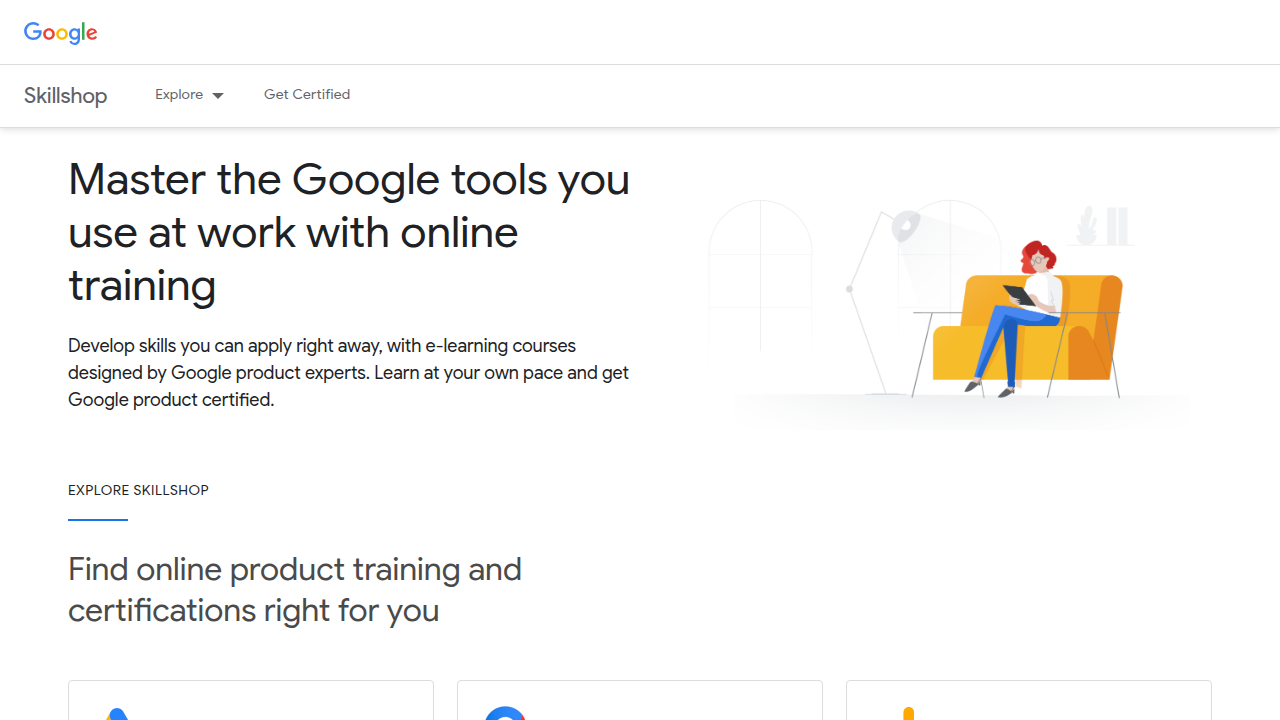
Getting certified shows employers and clients that you know the platform inside and out. It proves you understand bidding strategies, keyword research, audience targeting, and campaign optimization. In a field that changes fast, having that certification on your resume can open doors.
Whether you are looking for social media marketing jobs remote or building your own social media advertising business, this guide will walk you through everything you need to know about becoming a paid media buyer in 2026. We will cover the skills that matter most, the tools you need to master, and how certification can help you stand out.
For a deeper look at the platforms and tools that top buyers use every day, check out this comparison of paid online advertising tools for better results.
And if you want to stay ahead of how AI is changing media and advertising every single day, I highly recommend getting clear daily AI updates from The Deep View Newsletter. It is one of the best ways to keep your finger on the pulse of what is coming next.
Let us jump in.
What Does a Paid Media Buyer Do in 2026?
If you think a paid media buyer just clicks buttons and sets budgets, think again. The role in 2026 is far more strategic. Yes, you still plan campaigns, choose platforms, and manage ad spend. But the daily work now involves a lot more thinking and a lot less manual busywork.
Let’s break down the core responsibilities.
A paid media buyer plans, launches, and optimizes ad campaigns across search engines, social media, and programmatic networks.
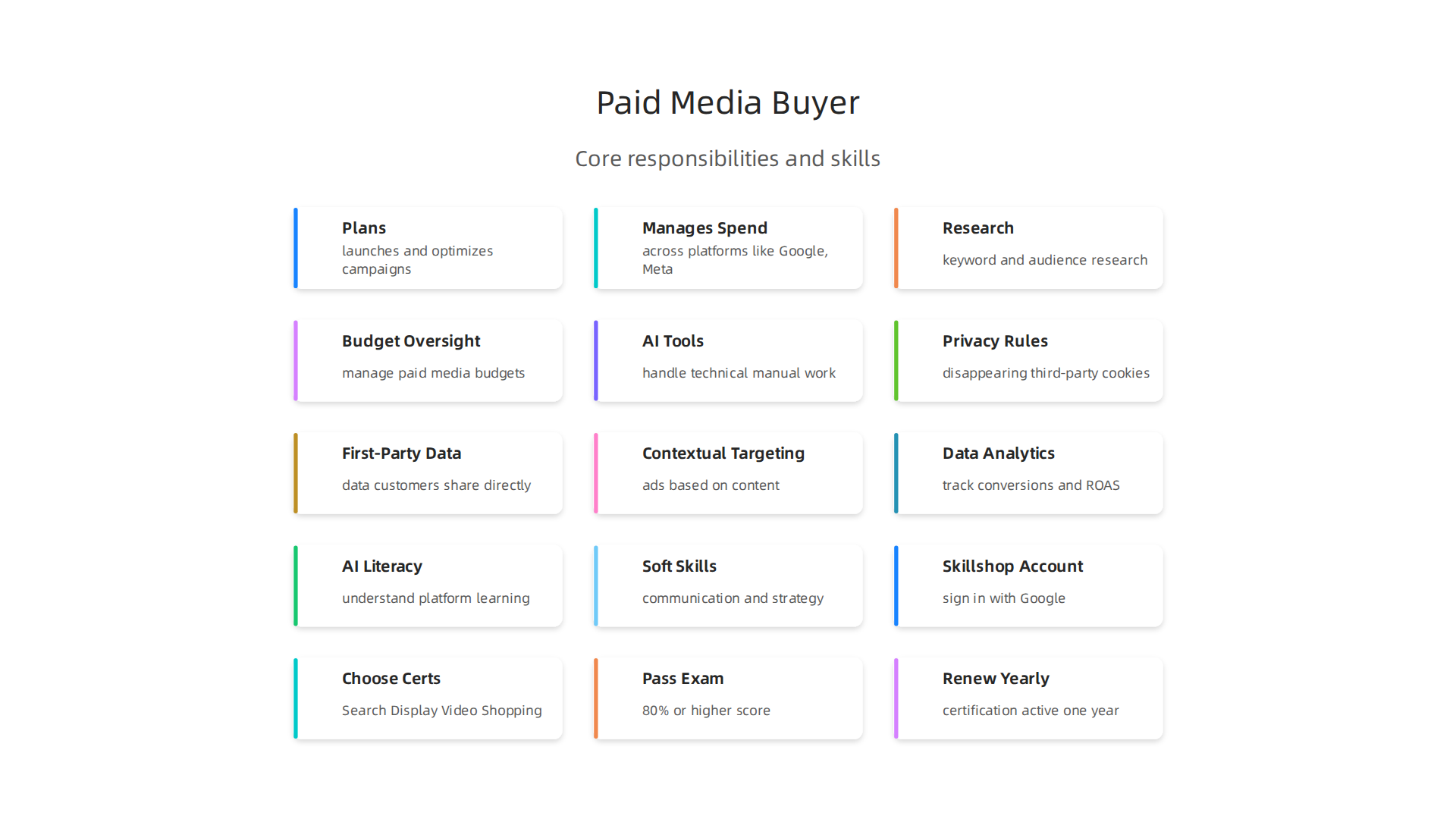
That means running Google Search and Shopping ads, Facebook and Instagram campaigns, TikTok promotions, LinkedIn sponsored content, and even connected TV spots. You set up targeting, choose bidding strategies, and track performance metrics like ROAS and CPA. According to a typical media buyer job description from Celarity, daily tasks include building out media buys for various ad platforms, conducting keyword and audience research, and overseeing the overall budget for paid media.
But here is the biggest change in 2026. AI tools now handle a ton of the technical work that used to fill a buyer’s day.
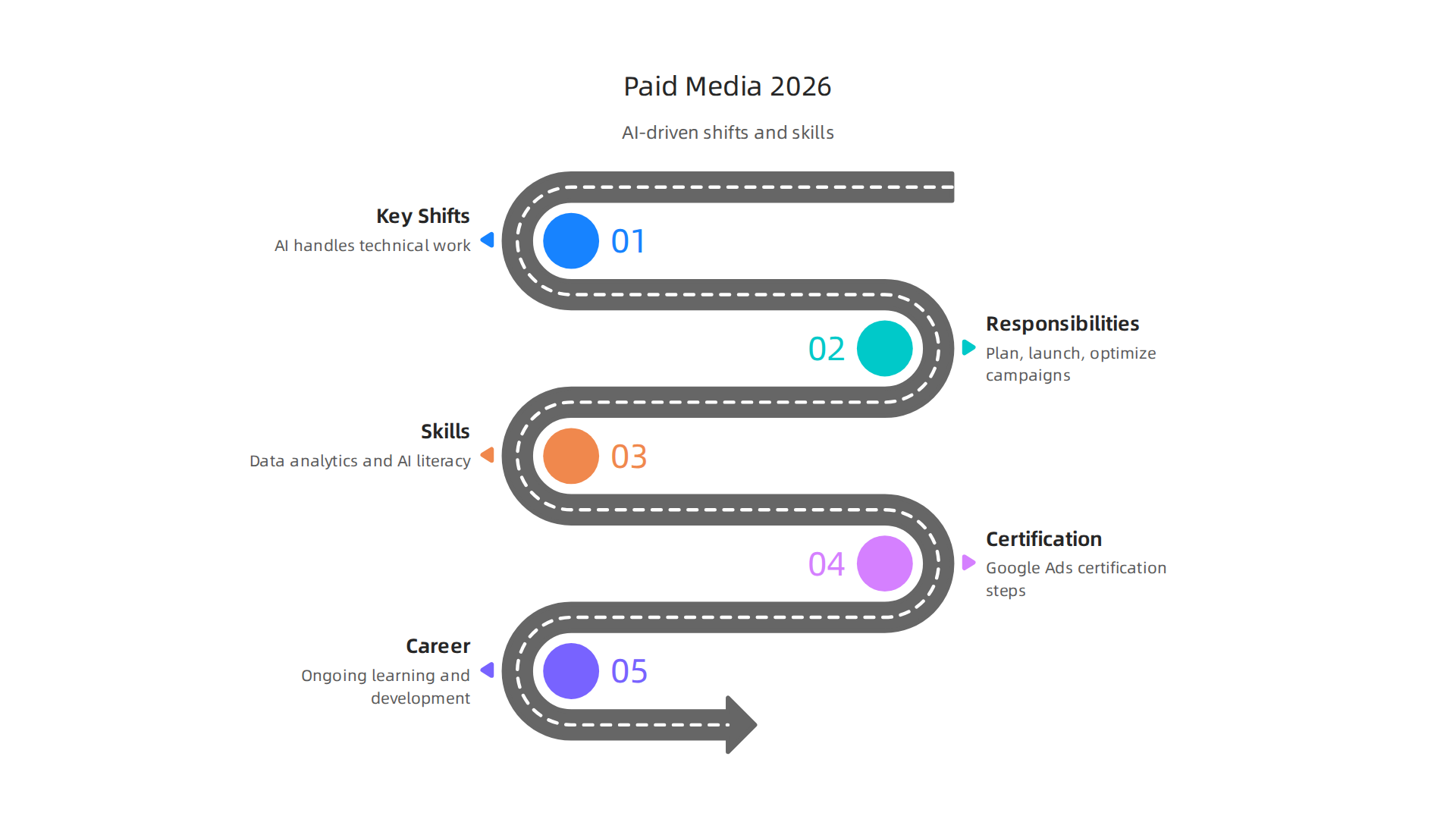
Platforms like Google Performance Max and Meta Advantage+ automatically test different audiences, placements, and even ad creatives.
This means you spend less time manually adjusting bids or A/B testing ad copy. Instead, your job shifts to strategic oversight. You decide which audiences matter most, what creative direction makes sense, and how to interpret the data AI serves back to you. A paid media trends post from Greenlane points out that AI has moved beyond simple automation and now sits at the core of creative production and platform ecosystems.
Another big shift comes from privacy rules. Third-party cookies are disappearing. Governments have tightened tracking laws. So you can no longer rely on old-school retargeting tactics. Smart paid media buyers now focus on first-party data (information customers share directly) and contextual targeting (placing ads based on the content people are currently viewing). This is not just a workaround. It is actually a better way to reach people because the ads feel more relevant and less creepy. Neil Patel’s paid media trends guide highlights that premium placements like TikTok Pulse and YouTube Select let buyers position ads alongside top content for added credibility.
So in 2026, a paid media buyer is part strategist, part data analyst, and part creative director. You need to understand how AI works, respect privacy rules, and build campaigns that actually connect with real people. Whether you are aiming for a traditional agency role or searching for social media marketing jobs remote, these skills set you apart. And if you ever want to start your own social media advertising business, understanding how media buying works is the foundation.
If you are exploring this career path, you will want to understand the full landscape of tools and platforms available. Check out this guide to digital marketing platforms in 2026 to see how the field is evolving.
Key Skills for Modern Paid Media Buyers
The tools only get you so far. What really makes a paid media buyer stand out in 2026 is a mix of hard technical skills and soft people skills.
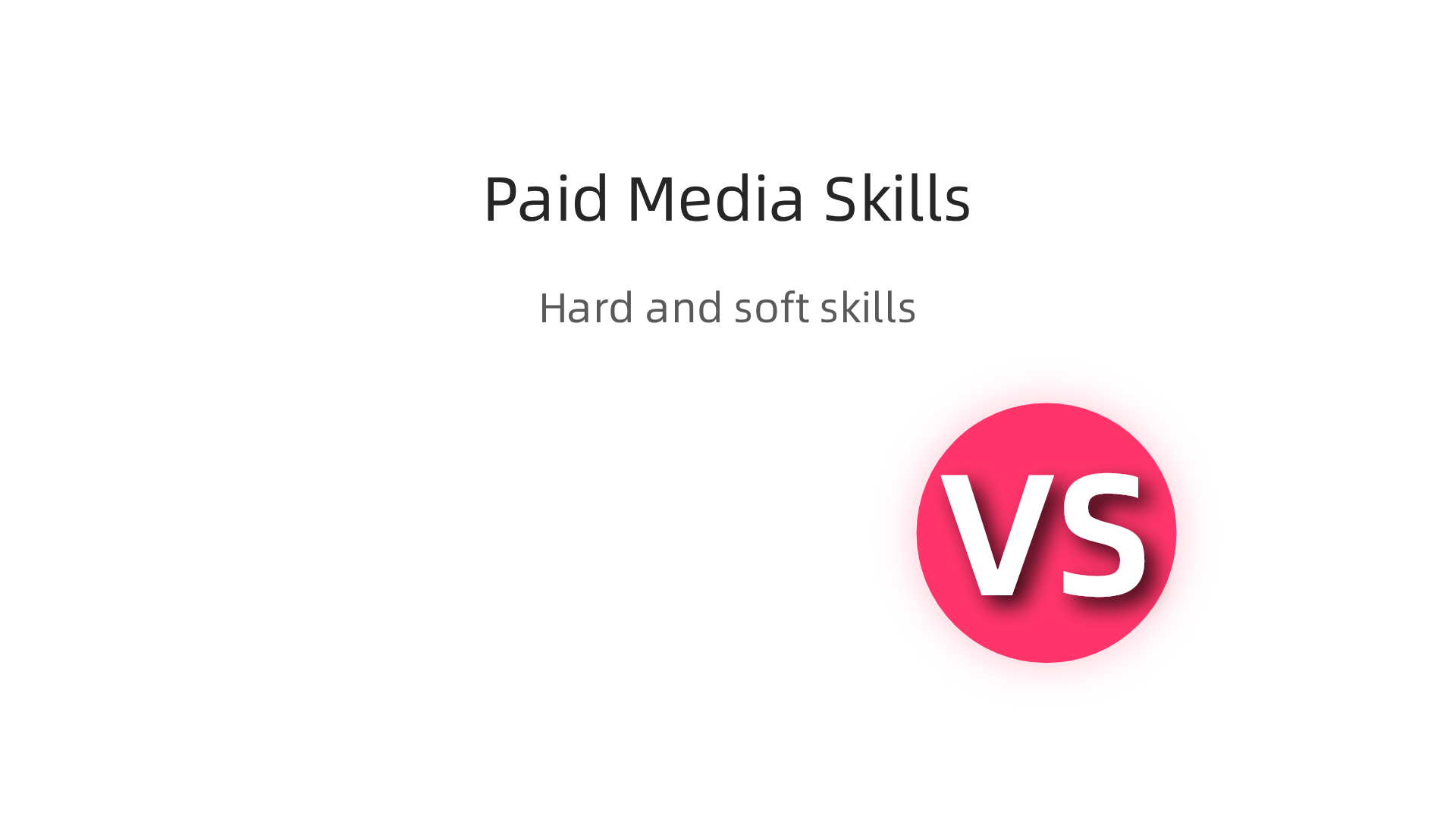
Let’s look at what you actually need to master.
Data analytics is no longer optional. You need to be comfortable with numbers every single day. Tools like Google Analytics 4 and Looker Studio help you track what happens after someone clicks your ad. You look at conversion rates, customer lifetime value, and return on ad spend. Then you use that data to decide what to do next. According to an article on core skills for junior media buyers, GA4 tracks user behavior after the click, and Looker Studio visualizes the numbers so stakeholders can actually understand them. The best buyers do not just look at the data. They ask why the data looks that way. They spot patterns and use them to improve campaigns.

AI literacy is now a core requirement. You do not need to build machine learning models from scratch. But you do need to understand how they work under the hood. Platforms like Google Performance Max and Meta Advantage+ use AI to test audiences, placements, and creatives automatically. If you understand how these systems learn, you can guide them better. A guide to the modern media buyer in 2026 explains that today’s buyer acts like a growth product operator, part creative strategist and part AI engineer. You need to know when to trust the AI and when to override it. You also need to know which AI tools speed up your workflow.
Soft skills still matter a lot. Yes, technical skills get you in the door. But communication and strategic thinking keep you there. You have to explain campaign results to clients or bosses who may not know the jargon. You need to ask the right questions before launching a campaign. And you need to adapt quickly when platforms change overnight. One Reddit thread from agency professionals says a solid grasp of marketing concepts and an analytical mindset matter more than knowing every single feature of a platform. You can learn a tool in a week. You cannot learn strategic thinking that fast.
If you are building a full skill set, do not sleep on other digital marketing areas either. For example, understanding SEO can make your paid campaigns stronger. Check out this overview of SEO marketing in 2026 to see how search and paid work together.
The truth is that the best media buyers blend all three skill types. They can read a dashboard, understand what the AI is doing, and explain it all to a nervous client. That combination is rare. That is also what makes you invaluable.
Are you also trying to keep up with how AI keeps changing the media world? You need a source you can trust that cuts through the noise. The AI Newsletter Worth Reading delivers clear daily updates so you never fall behind.

It is free and built for professionals like you. The AI Newsletter Worth Reading
The Value of Google Ads Certification
You have probably wondered if getting certified is worth the time. It is a fair question. The Google Ads certification is completely free. You just need to spend 40 to 60 hours studying and pass an exam with a score of 80% or higher. The certification expires after 12 months, so you have to renew it every year. But does that piece of paper actually help your career as a paid media buyer?
The short answer is yes, but it depends on where you are in your journey. For someone just starting out, certification shows potential employers that you have studied the fundamentals and understand how the platform works. It signals baseline competence and a real commitment to professional development. A detailed guide to the Google Ads certification in 2026 explains that many job postings specifically mention certifications as preferred qualifications. When you are competing for your first role, that credential can help your resume stand out.

For a paid media buyer with a few years of experience, the value shifts. You probably already know how to run campaigns. But certification still matters if you work at an agency that needs to maintain Google Partner or Premier Partner status. Those status levels require a certain number of certified individuals on staff, and that opens the door to exclusive benefits like early access to beta features and dedicated Google support. So even experienced buyers benefit from staying current.
What about the salary impact? This is where the data gets interesting. According to industry analysis on Google Ads certification salary impact, entry-level professionals with certification earn about 8% more on average than those without it. But that gap shrinks fast. Mid-career buyers see only a 2% difference, and senior buyers actually earn slightly less on average when certified. Why? Because at that level, your portfolio and track record speak louder than any badge. The certification is a foot in the door, not a lifelong salary booster.
Here is the honest truth. The Google Ads certification proves you can read training material and pass a multiple choice test. It does not prove you can manage a real budget, optimize a failing campaign, or handle a client who wants to cut spending. That comes from experience. So treat certification as a starting point, not a destination.
If you are looking to deepen your understanding beyond the basics, check out this guide to the best paid online advertising tools in 2026. It compares the platforms top buyers actually use every day.
The certification is worth it for the learning alone. The curriculum is well organized, it is free, and it teaches you how Google thinks about advertising. That knowledge makes you a stronger paid media buyer, even before you add the credential to your LinkedIn profile. Just remember to pair it with real practice and a results driven mindset. That combination is what separates a certified buyer from a great one.
Google Ads Certification Process: Steps and Costs
Now let’s walk through exactly how to get that Google Ads certification. The process is straightforward and completely free.
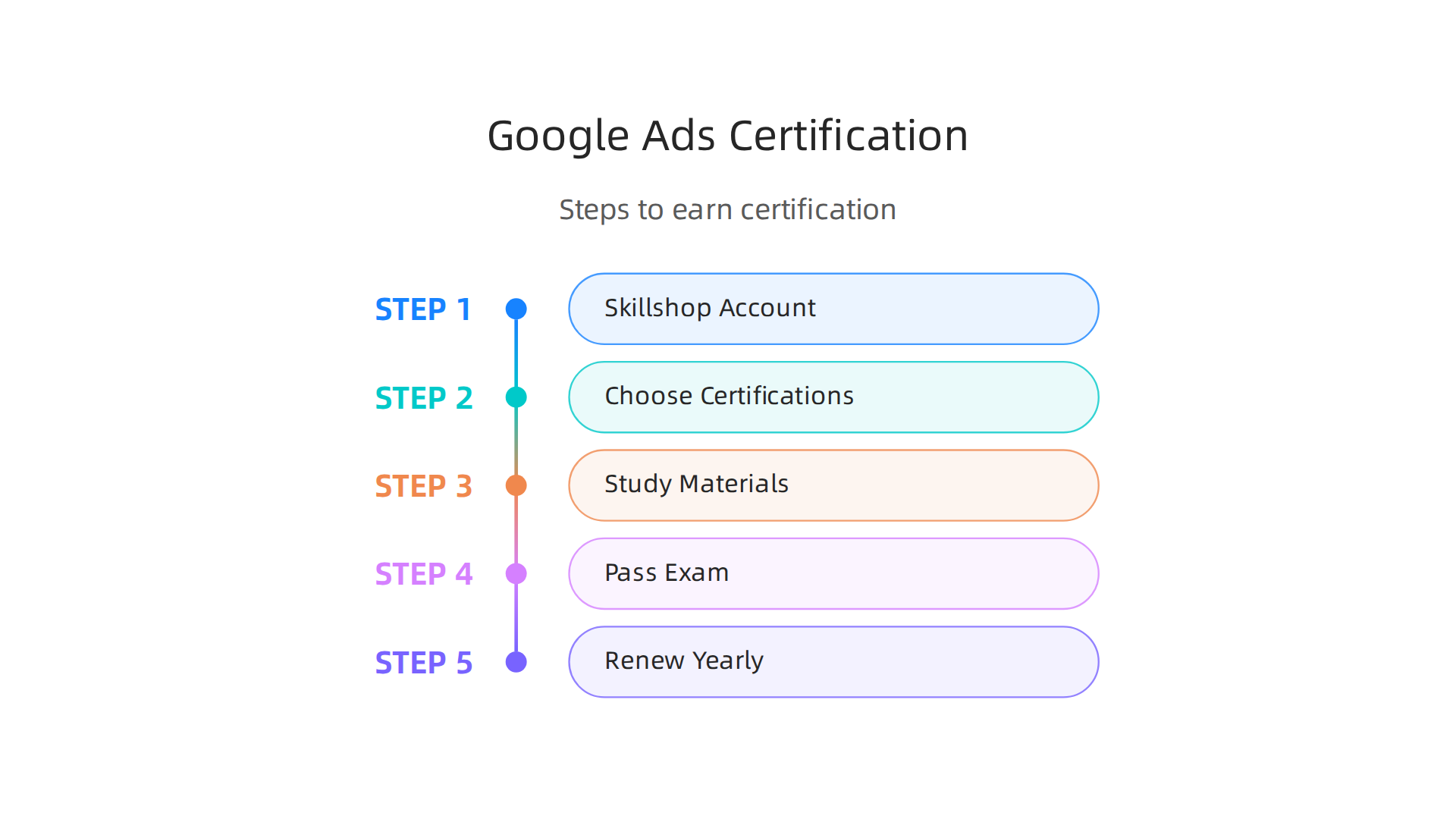
But it does take real time and focus. Here is what you need to know.
First, you need a Google Skillshop account. Head over to skillshop.withgoogle.com and sign in with your Google account. Use the same email you plan to use for managing ad campaigns. This keeps everything connected. Once your account is set up, you can browse the available certifications.
Google offers several core certification options. The most common ones are Search, Display, Video, Shopping Ads, and Measurement. Each one focuses on a different campaign type. As a paid media buyer, you will likely want the Search and Display certifications first. Those cover the fundamentals most agencies and clients expect.
Next comes the study phase. Google provides all the training materials for free inside Skillshop. These include video modules, written guides, and practice questions. Expect to spend 40 to 60 hours preparing for each certification. The official Google Ads support page on certifications confirms you need a score of 80% or higher to pass. You get 75 minutes to answer about 50 questions. And if you do not pass on the first try, you can retake the exam after waiting one day. There is no limit on retakes and no additional cost.
The time investment is the real cost here. The exams themselves are free, but your time matters. A good strategy is to study in short blocks over a few weeks rather than cramming. Use the practice tests early to find your weak spots. This saves hours of unnecessary review.
Once you pass, your certification stays active for one year. Then you retake the exam to renew. Many companies require team members to stay certified to maintain Google Partner status. So plan to schedule a renewal each year.
To understand how these certifications fit into the bigger picture of agency partnerships, you might find this guide on how to vet a media agency helpful.
While you study for your Google Ads certification, staying current on broader industry trends will make you a stronger paid media buyer. The AI Newsletter Worth Reading delivers daily updates on how AI is reshaping advertising and media. It is a smart way to keep your knowledge fresh alongside your certification.
How to Prepare for Google Ads Certification in 2026
Getting certified starts long before you open the exam. Your study approach makes the difference between passing on the first try and needing a retake. Here is how to prepare smartly.
Start with Google’s Own Materials
Google Skillshop offers the official learning paths for every certification. These modules are free and always up to date. Google updates certification content quarterly, so third-party courses can fall behind by months. Stick with the source. The Skillshop training includes video lessons, written guides, and built-in practice checks. This is your primary study resource.
Get Hands-On Experience
Reading about Google Ads is not the same as using it. The exam asks scenario-based questions about real campaign situations. You need to understand how settings work together in practice. If you have access to a Google Ads account, set up a small test campaign. Run a few ads with a tiny budget to see how keywords, bids, and targeting interact. Even budget mock campaigns build the practical insight the exam tests. One experienced PPC trainer notes that the certifications favor rote memorization over actual tactical skill, so real account time gives you an edge.
Use Practice Tests and Study Tools
Do not wait until you have finished all the modules to test yourself. Take a practice exam after covering about one third of the material. This shows you where your weak spots are early. You can then focus your study time where it matters most. The official materials include practice questions, but you can also find study guides and sample tests online. Look for a detailed preparation guide that covers the certification process and exam format.
Supplement your studying with community forums where other people share tips and tricky questions. Some learners also use AI-powered tools to generate practice scenarios or quiz themselves on terminology. These extra resources help you move beyond passive reading.
If you want to understand the different campaign types the exam will cover, exploring this guide on types of Google Ads campaigns can give you a head start.
Schedule Your Study Blocks
Plan to study in short sessions over a few weeks. Cramming does not work well for a test that covers many details. Set aside 40 to 60 hours total per certification. Break that into one to two hours per day. Review your notes often and revisit topics you find confusing.
When you feel ready, schedule your exam at a time when you are fresh. Friday afternoon is a good pick because if you do not pass, you can study over the weekend and retake Monday after the mandatory one day wait.
Preparation is the part you control. Put in the time with the right materials and real practice, and you will walk into the exam with confidence.
Beyond Certification: Building a Career as a Paid Media Buyer
Passing the Google Ads Certification is a great first step. But it is just the beginning. The real goal is to become a skilled paid media buyer who can manage real budgets and drive results. In 2026, this role looks different than it did a few years ago.
Keep Learning as Platforms Change
Google and Meta update their ad systems constantly. AI tools now handle tasks that used to require manual work. Privacy rules have changed how tracking works. A certification from six months ago might already feel outdated. The best paid media buyers treat learning as an ongoing habit.

The modern media buyer in 2026 blends creative strategy with technical skills. You need to understand how AI helps with bidding and targeting while also knowing how to write ad copy that connects with real people. One agency describes the role as half creative strategist and half operations expert. That mix is what makes you valuable.
Network to Find Opportunities
Some of the best social media marketing jobs remote and in-office come from who you know. Join online communities where other media buyers share tips. Attend industry events like AdWeek Social Media Week 2026 to meet people face to face. A conversation at a conference can lead to your next job offer or client.
Many agencies and brands hire through referrals. If you show up in the right spaces and share what you know, people remember you. That matters more than a certification alone.
Build Advanced Skills That Set You Apart
The basic Google Ads certification qualifies you for entry level work. To earn more and move up, focus on specializations. Learn about AI driven programmatic buying. Understand connected TV advertising. Explore retail media networks where brands advertise directly on shopping sites.
One key skill many beginners overlook is analytics. Employers want people who can read campaign data and explain what it means. Learning Google Analytics 4 and Looker Studio early on helps you prove you can handle the numbers side of the job. The core skills every junior media buyer needs include platform fluency, data analysis, and clear communication.
As you grow, you might aim for a marketing manager 2026 roles and skills position where you lead a team. That path starts with building a strong foundation right now.
The industry changes fast, but the people who adapt and keep learning stay in demand. If you want to stay ahead of AI updates and platform changes, consider subscribing to a daily source of clear, practical insight.
The AI Newsletter Worth Reading delivers daily updates that help you understand what matters in tech and media without the noise.
Summary
This article explains what a paid media buyer does in 2026 and how the role has evolved with AI, privacy changes, and new platform features. It covers daily responsibilities—planning, buying, and optimizing ads across search, social, programmatic, and connected TV—while highlighting that AI now automates much of the manual work, shifting the job toward strategic oversight and creative direction. The guide outlines the key technical and soft skills you need (data analysis, AI literacy, communication), why the Google Ads certification still matters, and the practical steps to get certified including study time and exam details. It also gives study tips—use Google Skillshop, get hands-on account time, and schedule consistent study blocks—and shows how to build a long-term career through continuous learning, networking, and advanced specializations.