Build Your Tool-First Digital Marketing Campaign Playbook for 2026
Why modern marketing digital campaigns need a tool-first playbook
Today in 2026, the world of marketing is changing super fast. It’s like trying to hit a moving target! Every day there are new platforms, new ways to advertise, and smart tools that use AI.

This makes running a successful marketing digital campaign much harder for teams. There’s so much data, and keeping up with everything can feel overwhelming.
Think about it: just when you learn one way to do online advertising, a new update or a completely different tool comes out. This is especially true with advanced ads and clever ads that use AI to help. Even common tools like Google Ads promotions are always changing. For marketing teams, it’s tough to make sure everyone is on the same page and knows the best way to do things. They need a clear plan to guide them.
This guide is here to help you. We will give you a simple, step-by-step plan that focuses on the best tools to use.

We’ll cover how to plan your campaigns, pick the right tools, figure out who you want to talk to, create great ads, and then see what works best. Having a playbook helps teams work together and makes sure everyone follows the same good steps, leading to better results
How to Create a Marketing Operations Playbook. This way, you can handle all the new changes, including those driven by AI, without feeling lost.
Staying up-to-date with AI and technology is crucial for modern media professionals. To learn more, get clear daily AI updates in The AI Newsletter Worth Reading. We will show you how to choose the right tools and strategies so your marketing digital campaign can shine in today’s busy world. Understanding the best digital marketing platforms in 2026 is a big part of that.
1) Start with campaign objectives and mapping to ad tool capabilities
To make your marketing digital campaign truly shine, the very first step is to know exactly what you want to achieve.

Think of it like planning a trip: you can’t pick the best route or car until you know where you’re going! For your marketing, this means figuring out your main goals and then turning those big ideas into smaller, measurable steps.
Translate Big Business Goals into Small Steps
Every business has big goals, like getting more people to know about their brand (awareness), collecting names of interested customers (leads), selling more online memberships (subscriptions), or simply making more money (revenue). For your marketing digital campaign, you need to turn these big business goals into clear, measurable numbers. These are called Key Performance Indicators, or KPIs.
For example, if your goal is to boost awareness, you might want 1 million people to see your ads. If you want more leads, you might aim for 10,000 people to fill out a form on your website. Setting these clear numbers from the start helps you track if your campaign is working. It’s important to define your goals and success metrics early in your marketing operations planning

How to Build Marketing Operations: A Step-by-Step Playbook. A good playbook also starts with a clear primary goal for each campaign Marketing Ops Playbook Template for Scaling Brands.
Match Your Goals to What Tools Can Do
Once you know your goals and KPIs, the next step is to see how different on line advertising tools can help you reach them.
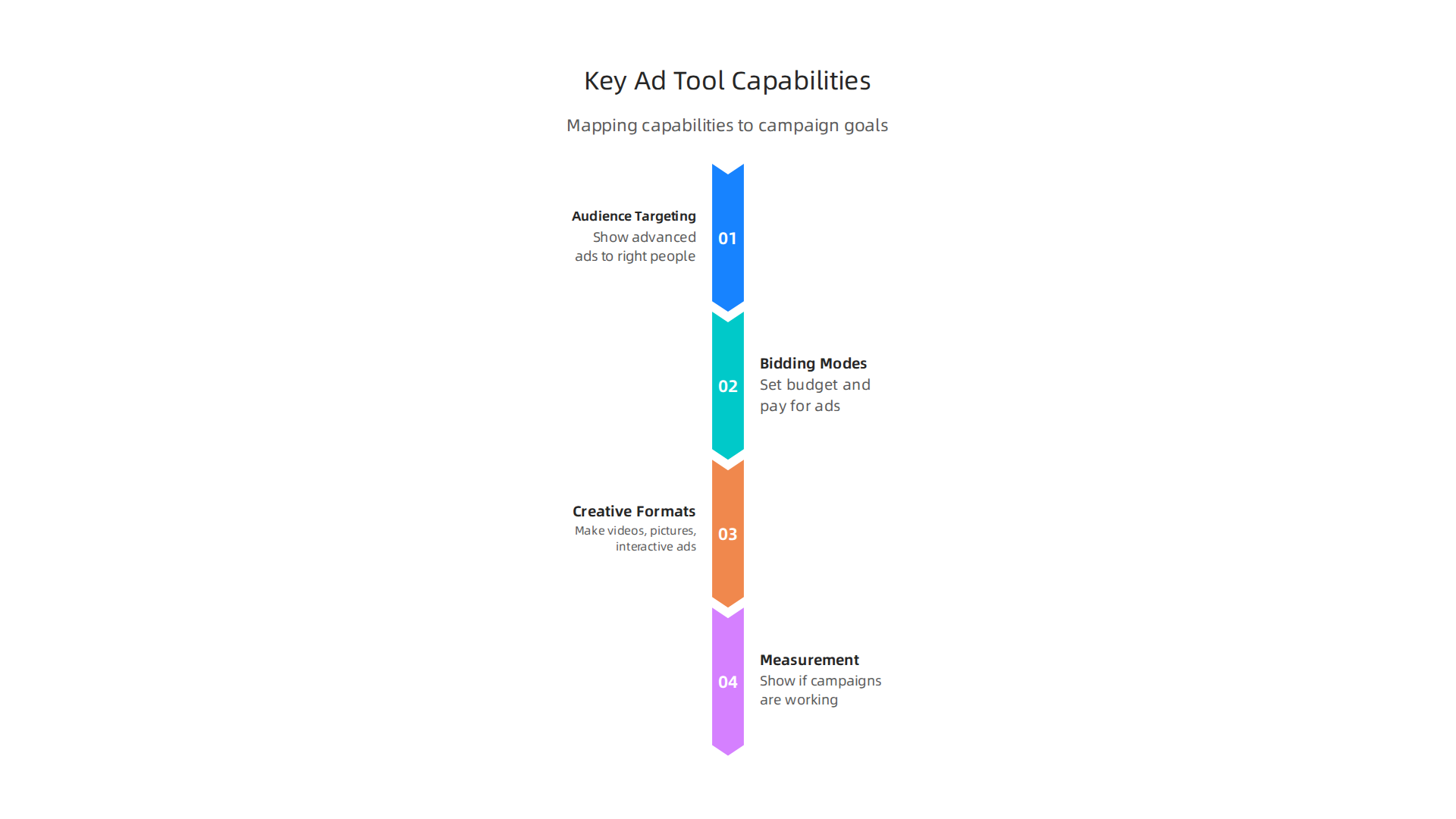
This is like creating a map that shows which tool features match your needs. This map should look at things like:
- Audience Targeting: How do tools let you show your advanced ads to the right people? In 2026, new rules mean we have to be careful about who we target. For instance, Meta has changed its privacy rules, affecting how ads can target people and phasing out some older ways of finding audiences Meta AI Privacy Policy 2026: How Ad Targeting Changes. Also, rules like COPPA have new amendments in 2026 that change how we handle children’s data and get consent for ads COPPA Rule Amendments 2026: Children’s Data, Ad Consent. You can learn more about how to pick the right campaign type for your goals in our guide on Campaign type strategy how to pick the right marketing campaign for real roi.
- Bidding Modes: How can you set your budget and pay for your ads? Do you pay per click, per view, or something else? Different tools offer different ways to manage your money.
- Creative Formats: What kind of ads can you make? Can you use videos, pictures, or interactive clever ads? Many AI tools can now help you create great ad visuals and videos quickly for all platforms Best Ad Creative AI Tools in 2026 (Tested & Ranked). For more on comparing various ad platforms, check out Paid online advertising tools 2026 top platforms compared for better results.
- Measurement: How do these tools show you if your Google Ads promotions or other campaigns are actually working and meeting your KPIs? Knowing how to measure helps you make smarter decisions. You can dive deeper into this by exploring Analytic marketing drive smarter campaigns and boost roi in 2026.
By carefully matching your marketing digital campaign goals to the features of your advertising tools, you set a strong foundation. This careful planning helps avoid wasting money and makes sure your efforts are focused on what really matters for your business.
Now that you have your goals clearly set for your marketing digital campaign, the next big step is picking the right tools. Think of it as putting together a toolbox. You need different tools for different jobs, and they all need to work well together. Choosing the best on line advertising tools and platforms for your business is super important for success.
Different Types of Ad Tools You’ll Need
There are many kinds of tools that help with your marketing digital campaign. You might use some or all of these:
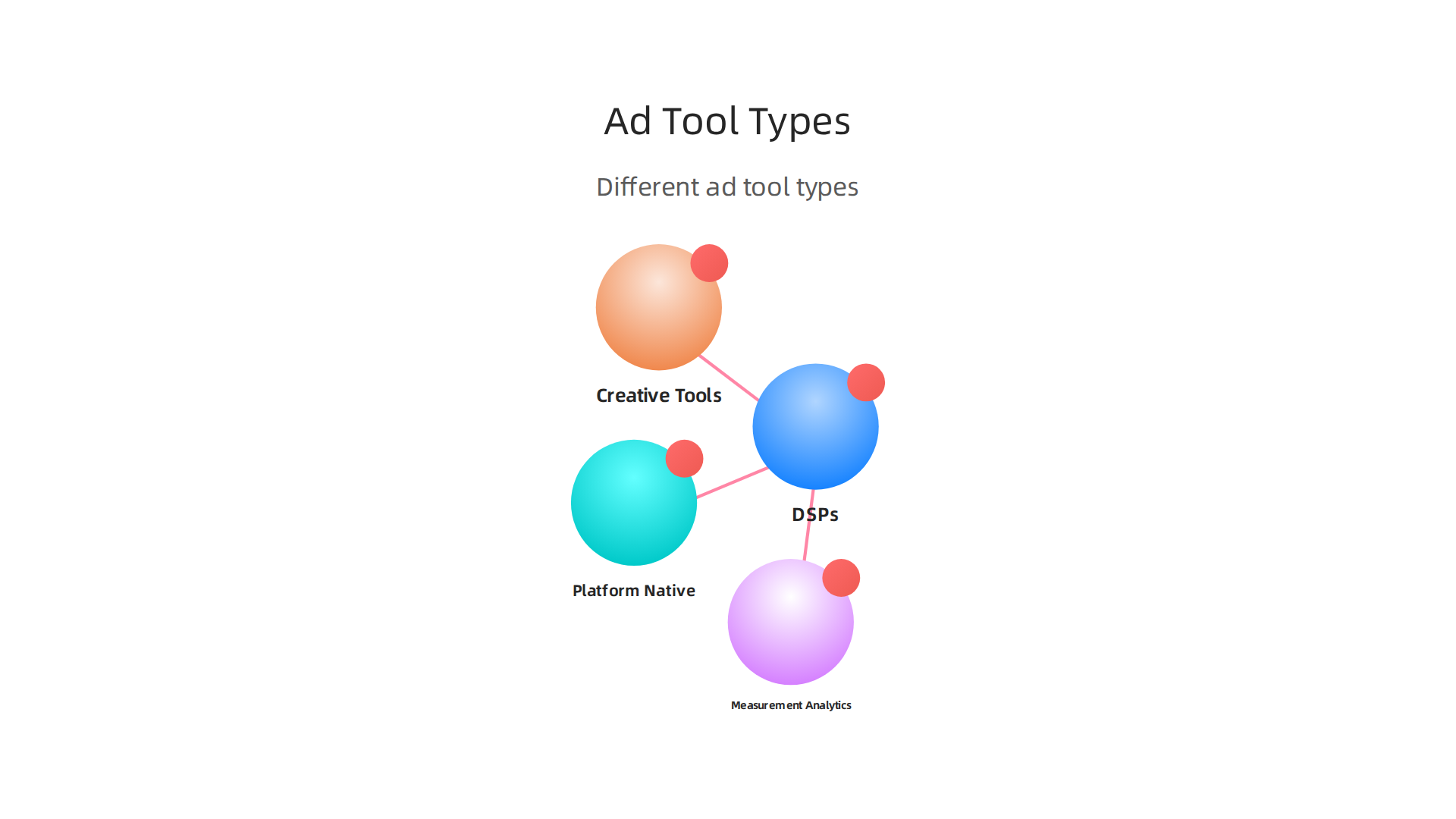
- Demand-Side Platforms (DSPs): These are like central hubs that let you buy advanced ads across many different websites and apps all at once. They help you find your audience wherever they are online.
- Platform-Native Ad Managers: These are the tools built right into big platforms like Meta or Google. For example, if you want to run Google Ads promotions, you’d use Google’s own ad manager. These tools are great because they know their own platforms best.
- Creative Tools: These tools help you make the actual ads. In 2026, many clever ads are made with the help of AI. These AI tools can help you quickly create pictures, videos, and text for your ads. Some popular options for AI ad creative tools include AdCreative.ai and Pencil AI, which can generate high-performing ads and predict their outcomes across platforms
9 Best AI Ad Creative Tools for Performance Advertising in 2026. For even more advanced creative options, you might look into dynamic creative optimization (DCO) platforms that tailor ads to each user Dynamic Creative Optimization: The Ultimate Guide & Top Platforms 2026.
- Measurement and Analytics Tools: These tools track how well your ads are doing. They tell you if people are seeing your ads, clicking them, and taking the actions you want them to. It’s smart to use more than one way to measure your ad success, because no single method is perfect Ad Measurement: The Complete 2026 Guide to Accurate ….
Important Things to Look For
When you’re putting together your set of tools, keep these things in mind:
- How They Work Together (Integrations): Can your creative tool easily send ads to your ad manager? Can your ad manager send data to your measurement tools? Tools that connect well save you time and help you see the full picture of your marketing digital campaign.
- Moving Your Data (Data Portability): You want to be able to move your audience data and ad results from one tool to another easily. This helps you get a complete view of what’s happening.
- Following the Rules (Privacy Compliance): This is super important in 2026! There are many new rules about how companies can use people’s data for ads. For example, US state privacy laws require businesses to respect "do not sell or share" signals from users US State Privacy Laws 2026: What Marketing Teams Must …. Also, Google’s Privacy Sandbox is changing, affecting how retargeting and measurement work Privacy Sandbox Shutdown 2026: Ad Retargeting Compliance. Meta also has new ad policies and privacy updates that change ad targeting Meta Ad Policy Compliance: Key Strategies for 2026. Make sure your chosen tools help you stay on the right side of these rules. Failing to do so can lead to big problems as regulators are now actively enforcing privacy laws
Privacy Enforcement in 2026: The Shift From Policy to Penalties.
Choosing the right mix of tools means finding a balance. No single tool does everything perfectly. You’ll need to weigh the good and bad parts of each one to build a powerful "stack" that helps your advanced ads reach the right people, stays within privacy rules, and shows you clear results. Learning how to pick the right platforms for your online advertising can really improve your business outcomes. To learn more about navigating the current media landscape, check out our guide on Digital marketing platforms in 2026.
Keeping up with all the new technologies, especially AI, can be tricky.
Get clear daily AI updates from The AI Newsletter Worth Reading.
Keeping up with all the new technologies, especially AI, can be tricky. But understanding how to build your audience strategy to respect privacy while still getting good results is a must-do in 2026. This means changing how you find and talk to customers in your marketing digital campaign.
Smart Ways to Find Your Audience in a Private World
The old ways of finding people for your ads, like using "third-party cookies" (tiny files that track you across many websites), are going away. Google’s Privacy Sandbox, which aimed to replace them, is effectively over, marking a big change for how ads are targeted and measured online Privacy Sandbox Shutdown 2026: Ad Retargeting Compliance. This means you need new strategies for your advanced ads. Here’s how:
- Your Own Customer Data (First-Party Data): This is information you collect directly from people who visit your website, use your app, or buy your products. Think email addresses, purchase history, or things they told you in a survey. Using this data is important because it’s yours and you know it’s accurate and collected with permission. It helps you make your on line advertising much more personal and effective.
- What People Are Reading (Contextual Segments): Instead of tracking what a person did before, you can show ads based on what they are looking at right now. For example, if someone is reading an article about new cars, they might see an ad for a car dealership. This method doesn’t rely on personal data, so it’s very privacy-friendly.
- Groups of People with Shared Interests (Platform Cohorts): Big platforms like Meta and Google can group users with similar interests together without sharing each person’s private details. You can then aim your ads at these large groups, knowing they are likely to be interested in your product. Meta, for example, has made big changes to its AI privacy policy and how ad targeting works, including phasing out lookalike audiences Meta AI Privacy Policy 2026: How Ad Targeting Changes. Also, Meta has rolled out new rules for teen accounts globally, placing strict limits on targeting young people with ads Meta Teen Accounts Global Rollout April 2026. This means your marketing digital campaign must be extra careful when dealing with sensitive groups.
To really nail your on line advertising efforts, understanding different audience strategies is key. If you want to dive deeper into how different types of ads work, you can explore the types of Google Ads and how they can fit into your strategy.
Measuring What Works While Keeping Things Private
Knowing if your advanced ads are doing well is crucial. This is where "measurement" (tracking results) and "attribution" (figuring out which ads led to which actions) come in. In 2026, you need to do this in a way that respects privacy.
- Finding the Real Impact (Incremental Signal): It’s not enough to just see that people bought something after seeing your ad. You need to know if they would have bought it anyway. Measuring "incremental signal" means figuring out the extra sales or actions that happened because of your ad. This helps you spend your money wisely, especially for powerful tools like google ads promotions.
- Staying on the Right Side of the Rules (Privacy Compliance): Privacy laws are very serious in 2026. Laws like the Children’s Online Privacy Protection Act (COPPA), updated in 2025, have strict rules about collecting data from children under 13, requiring parental consent for targeted advertising COPPA Rule Amendments 2026: Children’s Data, Ad Consent. Many US states also require businesses to honor "do not sell or share" signals from users US State Privacy Laws 2026: Mandatory Opt-Out for Advertisers. Breaking these rules can lead to big problems. So, your measurement tools must help you understand your ad performance without storing or sharing personal data in ways that are not allowed. It’s vital to know the global privacy rules that apply to your marketing digital campaign The global privacy rules every marketing team should understand.
By using your own data, thinking about content, and working with platform groups, you can build a strong audience strategy. And by making sure your measurement respects privacy, you can run clever ads that deliver clear results and keep your business safe from privacy issues. This approach is key to success in the modern advertising world.
In the modern world of advanced ads, just finding your audience is not enough. You also need to create many different ads quickly and make sure they feel personal to each viewer. This is where clever ads and smart ways of working come in.
Scale creative production with AI and modular workflows
To keep up with the fast pace of marketing digital campaign needs in 2026, businesses are turning to new ways to make ads.

It’s about being fast and smart with your on line advertising.
One big change is using "modular creative templates." Think of these as building blocks for your ads. Instead of making each ad from scratch, you have ready-made parts like headlines, images, and videos. You can mix and match these parts to create many different versions of an ad. This helps you get more ads out there faster, fitting various needs for your marketing digital campaign.
Along with modular templates, "Dynamic Creative Optimization" or DCO is key. DCO uses technology to show the right ad creative to the right person at the right time. It takes those building blocks and puts them together in real-time, based on what it knows about the person seeing the ad. This means someone interested in sports cars might see an ad with a speedy car and an exciting headline, while another person might see the same brand’s ad with a family-friendly SUV and a comfort-focused headline. DCO helps personalize your advanced ads to make them super relevant Dynamic Creative Optimization: The Ultimate Guide & Top Platforms 2026. Many top platforms use DCO to deliver the best creative combination to different people in real-time Best AI Ad Creative Automation Tools 2026 | Synter.
Using AI to Boost Your Ad Creations
Another game-changer is using AI to help create ads. AI-assisted tools can help you come up with new ideas for ads much faster. They can also take your existing pictures or videos (assets) and change them slightly to fit different ad spaces or platforms. This is super helpful for something like google ads promotions, where you might need many different ad sizes.
AI tools can even help with "localization." This means making your ads fit different cultures and languages without you having to do all the work by hand. While AI does a lot of the heavy lifting, you still get to decide on the final look and feel, keeping your brand’s unique message clear. This balance of speed from AI and control from you makes for very powerful on line advertising.
In 2026, there are many clever AI tools out there to help. Some popular ones include ImagineArt, which works with many different ad types, and Pencil AI, which helps create videos and even guesses how well they will do Best Ad Creative AI Tools in 2026 (Tested & Ranked). Tools like AdCreative.ai are great for quickly making image ads and different versions that are designed to get people to act Top Ad Creative Tools: Options for Every Marketer Need in 2026. If you’re looking for smarter ways to run your campaigns, learning about these tools is a great next step. You can also explore hiring a digital marketing strategy consultant to help guide your choices.
Staying updated on the latest AI advancements is crucial for anyone in media and marketing.
Get clear daily AI updates from The AI Newsletter Worth Reading.
Using AI in your marketing digital campaign allows you to make more advanced ads, faster, and more relevant than ever before. It helps you keep your creative output high, making sure your clever ads reach the right people at the right time. For those interested in a career in this exciting field, understanding these tools is key to creative advertising jobs in 2026.
After creating advanced ads and clever ads with smart tools, the next big step is to know if they actually worked. This is what measurement is all about. For any marketing digital campaign, you need to understand what real impact your on line advertising has.

In 2026, it is not enough to just hope your ads are doing well. You need a clear plan to check their success.
Measurement: Build Reliable Attribution, Reporting, and Experiments
Think about it this way: just because someone saw your ad and then bought something, does that mean your ad caused the sale? Maybe they would have bought it anyway. This is where advanced measurement comes in. To really know, businesses are using special ways to measure.
One important way is called "incrementality testing" or "lift studies." These help you see if your ads truly caused more sales or actions. Many companies have found that a good chunk of sales often credited to ads would have happened even without the ad. Studies show that between 10% and 40% of sales that seem to come from ads might not actually be new sales created by the ad Incrementality Testing Adoption: Key Marketing Statistics 2026. This is why just looking at the last ad someone saw before buying isn’t enough.
Incrementality testing helps you prove that your advertising efforts, like those successful google ads promotions, are making a real difference. It helps answer the question: "Would this sale have happened if we hadn’t shown this ad?" Brands that run these tests often see much better results from their ad spending. This kind of testing is the best way to really know if your ads are causing sales Incrementality Testing: Proving Ads Actually Caused Sales.
To get the best picture of your marketing digital campaign, experts in 2026 say you should not trust just one way of measuring. Instead, you should combine different methods like attribution models, which track the journey of a customer, with lift studies and other tools. This "triangulation principle" helps you get a more complete and honest view of your results Digital Marketing KPIs 2026: 100+ Metrics Reference. This detailed approach connects your on line advertising efforts directly to your main business goals, so you can see how much profit each dollar spent on advanced ads truly brings.
Another key part of good measurement is making sure everyone is looking at the same information. This means having standard reports and dashboards. When all the important people in your company see the same numbers and facts, it creates a "single source of truth." This stops confusion and helps everyone make smart choices about the marketing digital campaign. It ensures that the creative ads you make are not only great but also clearly tied to measurable business success. Learning how to properly analyze your campaigns can greatly boost your returns, making your analytic marketing more effective.
For those focused on getting clear results, understanding performance marketing 2026 means knowing how to measure correctly. It’s about using smart tools and methods to make sure your marketing dollars are well spent and truly growing your business.
Once you know what truly works for your marketing digital campaign, the next big step is to keep making it better. This isn’t a one-time thing; it’s an ongoing process called continuous optimization. Smart businesses in 2026 don’t just measure their results; they use that information to make their online advertising stronger every single day.
This means setting up regular routines, helpful dashboards, and clear decision rules. These tools guide how you automatically adjust things like how much you pay for ads, where you put your money, and how often you change your creative ads. For example, automated bidding tools are now very common. They use special rules and smart computer programs to help your Google Ads promotions get the most clicks or sales. They do this without you having to change bids by hand all the time, ensuring your advanced ads perform at their peak. For tips on setting up these systems, you can check out this Google Ads Campaign Structure in 2026 guide.
It’s also about moving your budget around to where it works best. If one type of advanced ad is bringing in more sales, you might want to put more money there. This smart shifting of funds helps make sure every dollar spent is doing its most important job. Also, your creative ads need to be refreshed often. People get tired of seeing the same ads, so keeping them new and interesting is key for a successful marketing digital campaign. Studies show that focusing on continuous testing, like A/B tests, is crucial. Successful ad optimization in 2026 means putting at least 20% of your budget towards testing different creative ideas and targeting methods Ad Optimization: 2026’s 20% A/B Test Rule.
But it’s not just about the automatic changes. You also need clear rules and people in charge. This is called "governance." Governance makes sure everyone knows their part in the team, who needs to approve big changes, and that all the facts and figures you use are correct and come from a trusted place. This helps avoid mistakes and makes sure your online advertising efforts are consistent and reliable. Many top-performing AI advertising campaigns in 2026 have strong governance behind them, including clear rules for brand voice and human oversight The Best AI Advertising Campaigns of 2026: What Worked.
Good governance means having a clear plan for everything, from the types of Google Ads you run to how you manage different platforms. When you have these systems in place, your business can adapt quickly to new trends and keep growing. To learn more about how strategy drives growth, explore The 2026 Playbook for Growth Marketing Strategy. It is about making sure that every part of your marketing digital campaign works together smoothly, like a well-oiled machine, always improving and always reaching for better results.
Ready to dive deeper into the future of marketing with AI?
The AI Newsletter Worth Reading
Summary
This article explains why modern digital marketing needs a tool-first playbook that puts the right platforms and workflows at the center of campaign planning. It walks teams through defining clear business objectives and KPIs, mapping those goals to tool capabilities (targeting, bidding, creative formats, measurement), and assembling a stack that integrates DSPs, platform-native ad managers, creative AI, and analytics. The guide shows how to find audiences in a privacy-first world using first-party data, contextual and cohort strategies, and how to measure true ad impact with incrementality testing and triangulated attribution. It also covers scaling creative production via modular templates, DCO and AI, and explains the governance and optimization routines needed to continuously improve performance. Readers will learn practical rules of thumb—like dedicating testing budget and blending measurement methods—to run compliant, efficient, and high-performing campaigns in 2026.