Build a Modern Marketing Department for 2026 Success
The world of marketing changes super fast. It feels like every day there are new platforms, new ways to talk to people, and amazing new tools like Artificial Intelligence (AI). Because of all these big changes, knowing exactly what each person in your marketing department should do has become really important. The old ways of doing things might not work anymore.
Think about it: audience behavior is shifting, meaning how people find and interact with brands is different now. This constant change means that the skills and jobs needed inside a marketing department are also changing quickly. For example, some jobs like a digital marketing specialist jobs are seeing their tasks grow a lot. This year, in 2026, companies are looking for new ways to build their teams and make sure everyone knows their part.
Many companies are trying to figure out the best way to structure their marketing teams for today’s world. They want to make sure they can keep up with things like Essential Marketing Roles and Team Structure in 2026. It’s a real puzzle to know who to hire, what skills they need, and how to measure if they are doing a good job.
This guide will help leaders in media and advertising solve that puzzle. We will give you a clear map to understand:
- The most important roles in a marketing team right now.

- How to set up your team for success.
- What to look for when you are hiring new talent.
- How to check if your team’s efforts are working well.
By the end, you’ll have a much better idea of how to make your marketing department strong and ready for anything that comes next. Staying updated on AI’s impact on marketing is key.
Get clear daily AI updates from The AI Newsletter Worth Reading.
A strong marketing department today needs different groups of people working together like a well-oiled machine. It’s not just one person doing everything anymore. Instead, we see many specialized jobs, especially with new tools like AI changing how things are done.
Here are the main parts of a modern marketing team and some of the key jobs you’ll find in each:
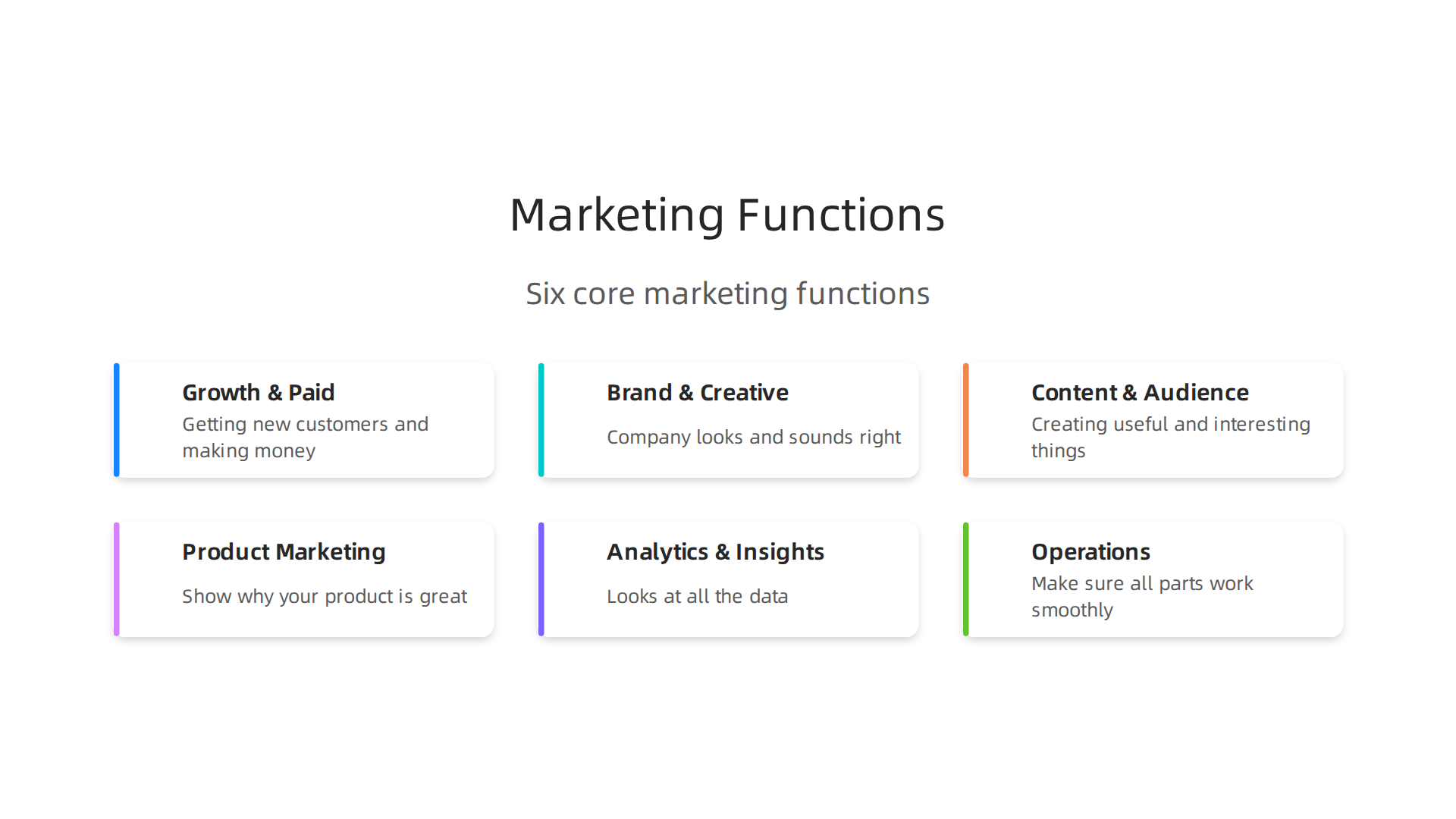
Growth and Paid Marketing
This group is all about getting new customers and making money. They use paid ads on social media, search engines, and other websites. They focus on quick results and knowing what brings people in.
- Paid Media Specialist: These folks set up and manage ads. They watch the numbers closely to make sure the ads are working well. They need to understand what makes people click.
- Demand Generation Manager: This person plans bigger campaigns to create interest in products or services. They aim to get many potential customers to notice the brand.
Brand and Creative
This team makes sure your company looks good and sounds right to everyone. They design how ads look, write compelling messages, and create visuals that catch the eye.
- Brand Manager: They take care of your company’s overall image and story. They ensure everything you put out there matches your brand’s true self.
- Graphic Designer/Creative Specialist: These people make all the pictures, videos, and other visuals for ads and content. They are important for making your brand stand out.
Content and Audience
This part of the marketing department focuses on creating useful and interesting things for people to read or watch. They build a community around your brand and keep people engaged.
- Content Strategist: This role plans what kind of stories, articles, or videos should be made. They think about what your audience wants to know.
- Copywriter/Writer: These are the people who write all the words for websites, emails, ads, and other marketing materials.
- Social Media Manager: They handle your company’s presence on social media platforms, talking with customers and sharing content.
Product Marketing
This group helps show why your product or service is great. They work closely with the teams that build products to make sure customers understand how these products solve their problems.
- Product Marketing Manager: This person figures out the best way to talk about new products or features. They explain what the product does and why people need it. You can learn more about this area with a product marketing agency.
Analytics and Insights
Numbers are super important in marketing! This team looks at all the data to see what campaigns are working, who your customers are, and where you can do better.
- Marketing Analyst: This job involves collecting and understanding data from all your marketing efforts. They help the team make smarter choices.
- Data Scientist (Marketing Focused): These experts dig even deeper into data, using advanced tools to find hidden patterns that can help predict what customers will do next. This is a key skill for a modern marketing major.
Operations
Think of this team as the conductors of an orchestra. They make sure all the different parts of the marketing department work smoothly together, using the right tools and processes.
- Marketing Operations Manager: This role builds and manages the systems and tools that the marketing team uses every day. They help automate tasks and make work easier.
- Project Manager: They keep track of all the different marketing projects, making sure they stay on time and on budget.
Breaking down the marketing department into these key areas helps companies organize better and ensure every important task is covered. Many companies are building their teams with these roles in mind for 2026, often adjusting based on new trends like the rise of AI in marketing, as noted in a report on Marketing Team Structure 2026.
While understanding the different roles in a modern marketing department is important, how you actually set up your team depends a lot on your company’s size and how much money you have to spend. It’s not a one-size-fits-all approach. For 2026, companies are smartly structuring their teams to match their growth stage.
How to Structure Your Marketing Team by Company Stage and Budget
Building a marketing department often changes as a company grows. Let’s look at how this happens:
For Early-Stage Startups
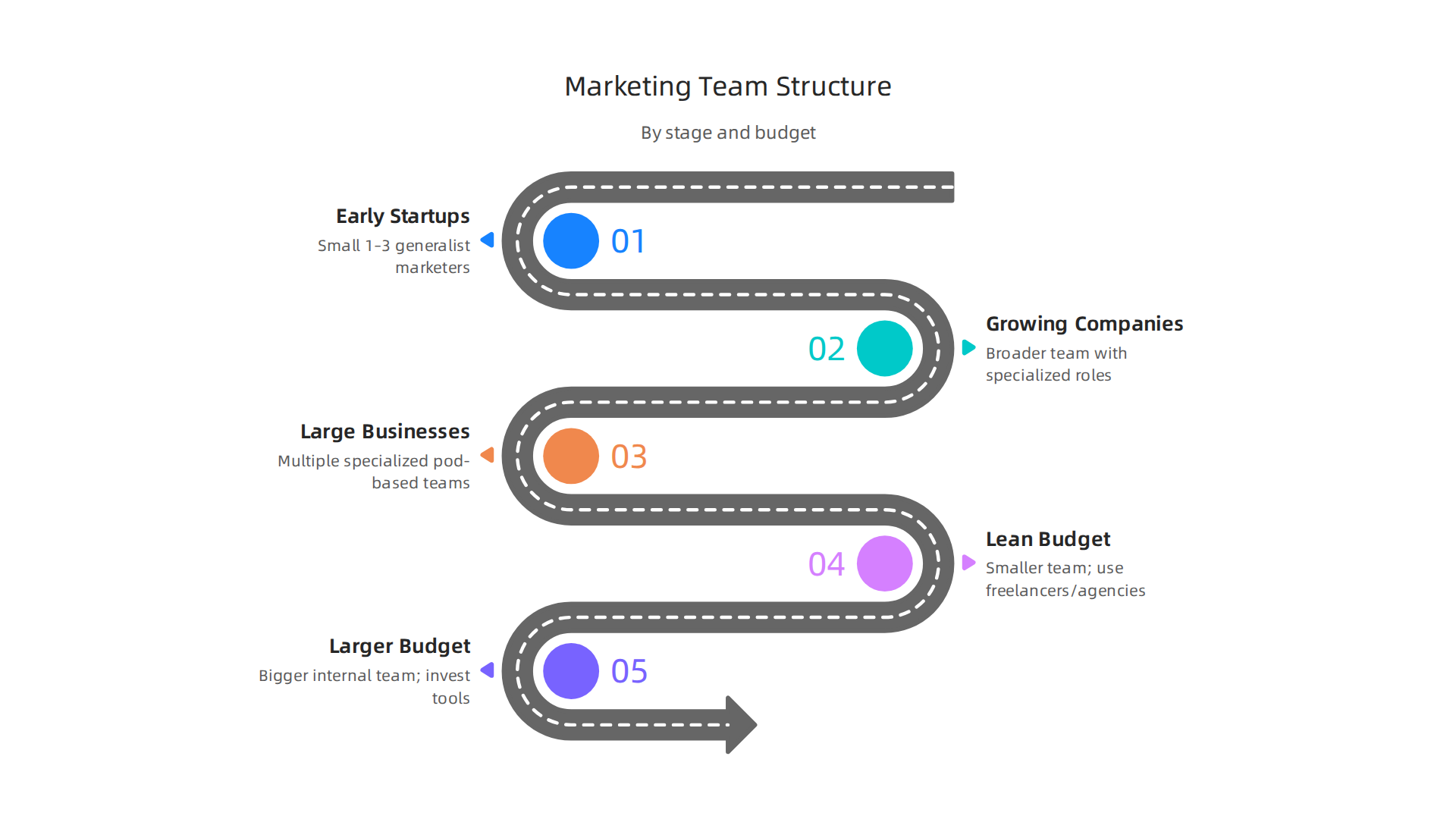
When a company is just starting out, often with less than $10 million in yearly sales, the marketing team is usually small. You might have only one to three marketers. In these lean setups, one person, maybe a Head of Marketing, handles many different tasks. This person acts as a generalist, doing everything from planning content to managing ads. They focus on finding one clear way to bring in customers that can be repeated. Instead of hiring many people for specific digital marketing specialist jobs, these startups often use outside help like freelancers or agencies for certain tasks, such as creating specific campaigns or managing paid ads. This agile approach helps them save money and stay flexible as they figure things out, as noted in a report on Marketing Team Structure by Company Size (2026).
For Growing Companies (Scale-Ups)
As a company grows and its sales reach between $10 million and $50 million, the marketing department usually gets bigger. Instead of just generalists, companies start to hire people for more specific roles. For example, they might hire a demand generation manager to focus on getting more leads, or a content strategist to plan out all their written and video materials. Data from 2026 shows that companies in this range might have around eleven marketers. This is when the team starts to split into different groups, each with its own special tasks, moving beyond a generalist approach to more defined functions.
For Large Businesses (Enterprises)
Big companies with lots of sales have much larger and more specialized marketing departments. These teams can have many people focusing on very specific areas. They might use what’s called a "pod-based" structure, where small teams work on specific customer groups or projects, or a "hybrid" model that mixes different ways of organizing. At this stage, advanced roles like marketing analysts and data scientists become very important for understanding customer behavior and improving campaigns. These larger structures help them manage many different marketing efforts at once, whether for overall brand awareness or very targeted ICP marketing campaigns.
Budget’s Role in Team Structure
Your budget always plays a big part in how you build your marketing department.
- Lean Budget: If you don’t have a lot of money, you’ll likely stick to a smaller team of generalists or rely more on agencies and freelancers. This allows you to get specialized work done without the cost of a full-time employee.
- Larger Budget: More money allows you to build a bigger internal team with many different digital marketing specialist jobs. You can invest in tools and systems that make the team more efficient. This also allows for more strategic planning, helping you develop a strategic marketing plan for media creator growth in 2026.
No matter your company size or budget, staying up-to-date with the latest trends, especially in AI, is key to making smart decisions about your marketing team. To get clear daily AI updates that can help guide your strategies, consider subscribing to The AI Newsletter Worth Reading.
When you think about building your marketing department, it’s really important to know who to hire and when.

It’s like building a house; you need the right people for different jobs at different times. This means knowing when to hire someone for their specific skills and when to bring in someone to lead the whole team.
Hiring for Skills: Digital Marketing Specialists
In the beginning, especially for smaller companies or those just starting out, you often need people who can do many tasks. After you have a general marketing person, the next hires are usually people with very specific skills. These are your digital marketing specialist jobs. For example, you might need someone who is really good at making content, like blog posts or videos. Or you might need someone who knows how to get more people interested in your product (this is called demand generation).
These specialists are important because they focus on doing one or two things really well to help the company grow. Data from 2026 shows that for a company with $1-10 million in sales, the second marketing hire is often a specialist who helps bring in new customers, maybe in content or demand generation, as described in one guide on Marketing Team Structure 2026: Roles, Org Charts & Models. To learn more about these roles, you can explore the marketing specialist in 2026 skills, AI tools, and career paths.
Hiring for Leadership: Setting the Path
As your company gets bigger and your marketing department grows, you start to need people who can lead. These are roles like a Head of Marketing, a VP of Marketing, or even a Chief Marketing Officer (CMO). These leaders don’t just do tasks; they think about the big picture. They set the overall plan for the entire marketing department, making sure everyone is working towards the same goals.
Leaders need to understand things like how to market to your ideal customer profile (ICP marketing) and guide many different projects at once. They help shape the future of your company’s advertising and growth. For more insights into these leadership roles, check out marketing manager 2026 roles, skills, and trends for success.
How to Pick the Right Person
When you hire, you should look at two main things:
- Capability: What can this person do right now? Do they have the exact skills you need for a specific job today?
- Potential: Can this person learn and grow into bigger roles in the future? Do they have a good attitude and a desire to improve?
Sometimes, you hire for a specific skill because you have an urgent need. Other times, you look for someone who shows great promise to become a leader. People who have worked in different parts of a business or marketing before often have valuable "cross-functional experience." This means they understand how different teams work together, which is super helpful for leadership roles. Even a digital marketing major is a good start, but real-world experience and the ability to adapt are key in 2026.
Once you have the right people in your marketing department, the next big step is to make sure they all work together smoothly. It’s not enough to just hire great talent; you also need clear ways of doing things. This includes how tasks move from one person to another and who makes decisions. Think of it like a sports team. Everyone has a role, but they also need a game plan to win.
Operational Playbooks: Making Work Flow
To make sure your marketing department works well, you need "operational playbooks." These are like step-by-step guides for common tasks. They help everyone know what to do, from start to finish. Good playbooks cover a few key areas:
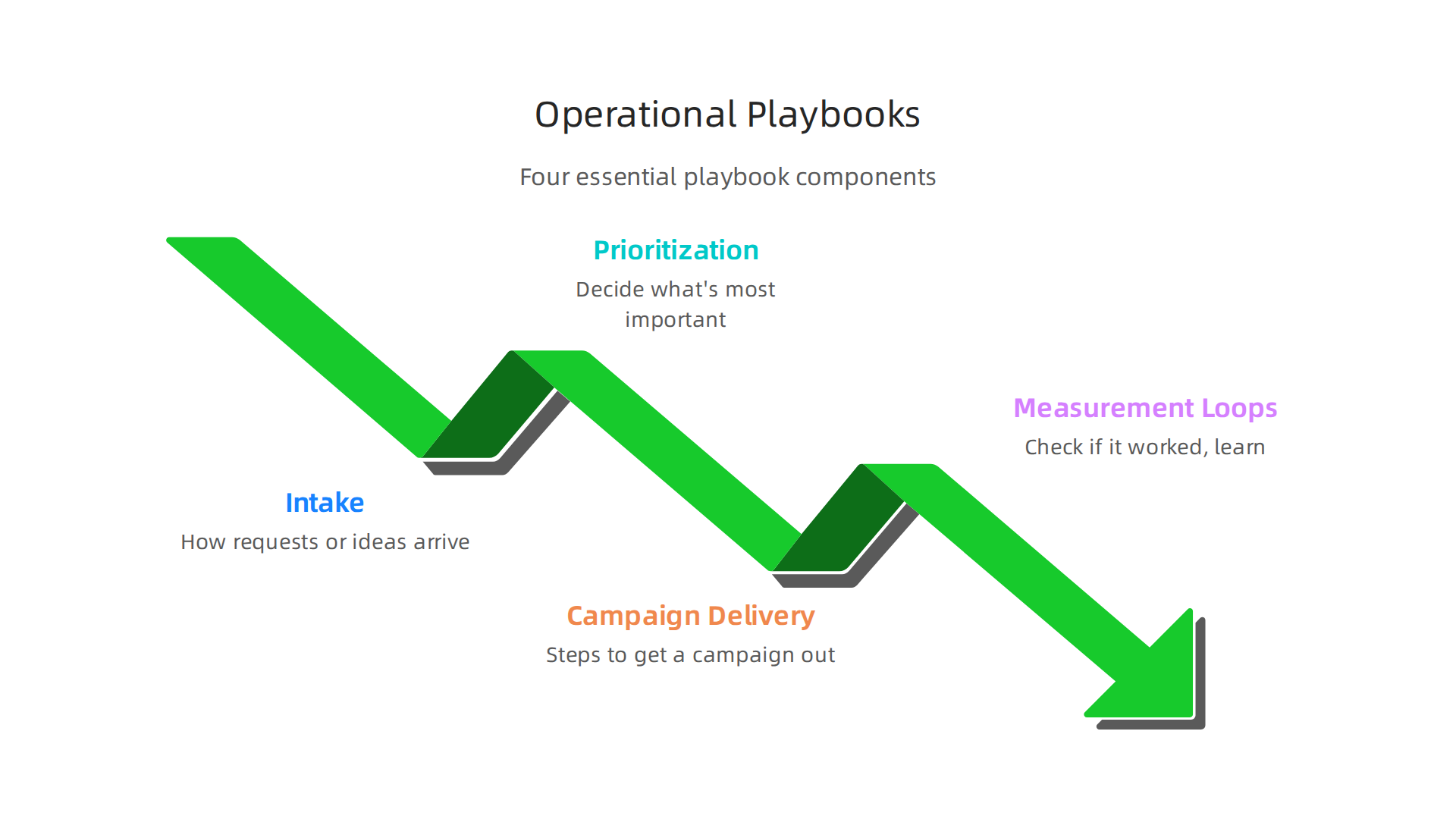
- Intake: This is how new ideas or requests for marketing projects first come in. It could be from the sales team needing new leads or the product team launching something new. Having a clear way for these requests to be made helps organize everything from the start.
- Prioritization: Not all ideas can be worked on at once. This part of the playbook helps your team decide what’s most important. You might prioritize based on what helps your ideal customer profile (ICP marketing) the most or what brings in the most sales.
- Campaign Delivery: These are the steps to actually get a marketing campaign out to the world. It includes who does what, when, and how work is passed between team members. For example, a content writer finishes a blog post, then "hands it off" to a digital marketing specialist who helps promote it. A marketing project manager often guides these steps.
- Measurement Loops: After a campaign is done, it’s important to check if it worked. This means looking at results and learning from them. What numbers went up or down? This feedback helps the marketing department do even better next time. For more on this, check out Analytic Marketing Drive Smarter Campaigns and Boost ROI in 2026.
Governance Models for Teamwork
Another important part of a smooth marketing department is "governance." This means having clear rules and ways to work with other teams, like product development, sales, and even the people who write news stories for your company. This is called "cross-functional work."
When teams work together, they need:
- Shared Goals: Everyone should know what they are trying to achieve together. If marketing, sales, and product all aim for the same customer growth, they’ll work better.
- Clear Roles and Decisions: It’s helpful to know who is responsible for what and who gets to make the final decision on big projects. This avoids confusion and makes sure things move forward. Working with a strong structure for cross-functional teams is crucial for success, as highlighted in insights on What Is a Cross Functional Team? Build One That Drives …. A useful tool for this is a "team charter" that sets out shared responsibilities and decision rules, according to a practical guide to cross‑functional team working.
By setting up these clear paths for work and good rules for teamwork, your marketing department can be much more effective. Staying on top of the latest changes in the media industry, especially with new technologies like AI, can help you keep your workflows sharp.
Get clear daily AI updates from The AI Newsletter Worth Reading.
Building on strong workflows and teamwork, the next big thing for a marketing department is making sure everyone has the right skills, especially as technology changes fast. In 2026, the world of marketing is greatly shaped by artificial intelligence, or AI. This means your team needs new talents to keep up.
Skills, training, and the rising importance of AI literacy
For your marketing department to stay strong, you need to look at both basic skills and new skills related to AI. The American Marketing Association’s 2026 report shows that while old skills like critical thinking are still good, AI skills are what marketers expect to need most in the next five years. Actually, 78% of marketing jobs are changing this year because of AI, moving from simple tasks to more strategic ones, according to findings on AI and the Marketing Career 2026.
Here are the key skills to focus on for your team in 2026:
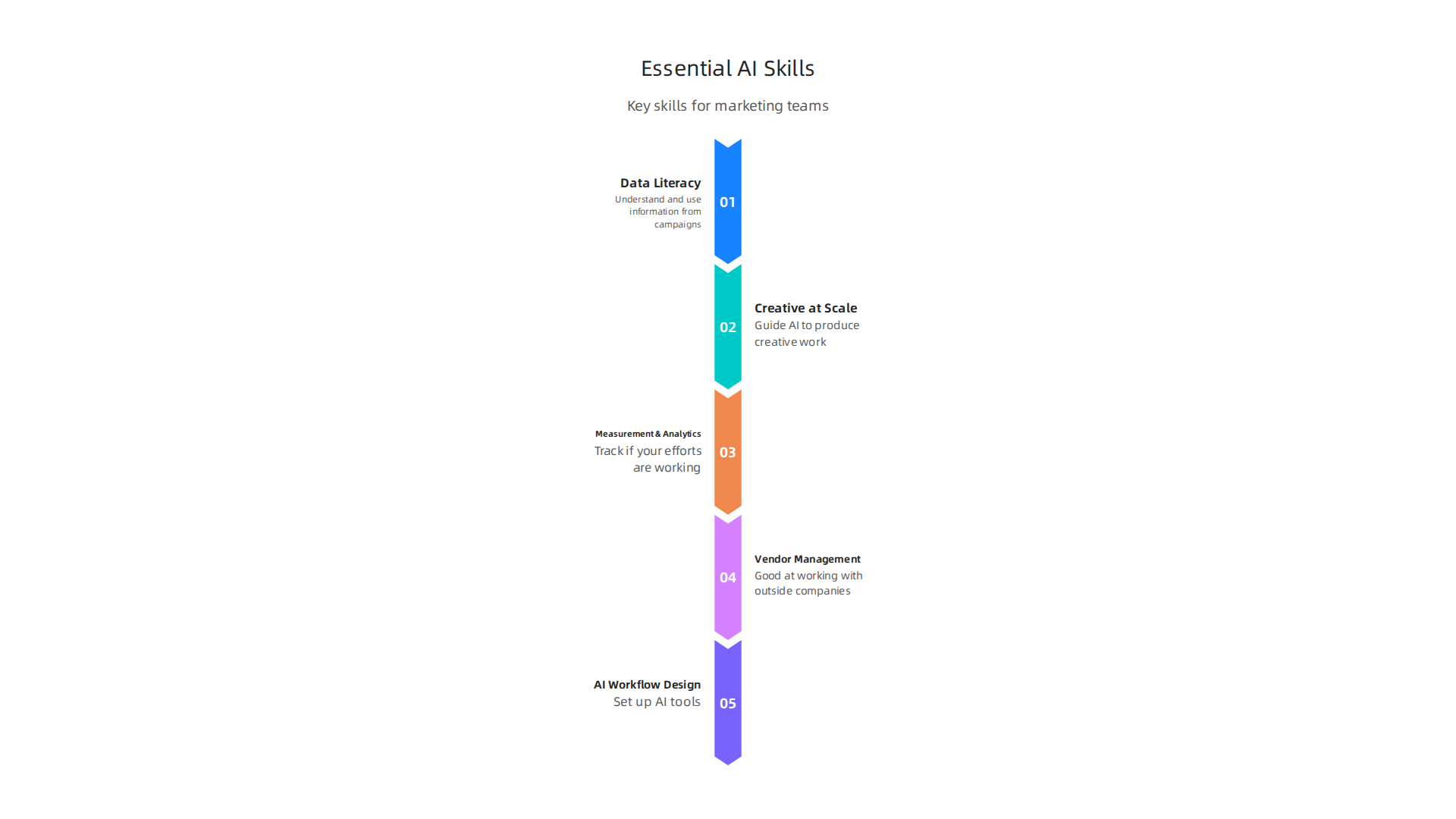
- Data Literacy: This means being able to understand and use information from campaigns. AI tools give us lots of data, and knowing how to read it helps make better choices.
- Creative at Scale: With AI, marketers can create many different ads or content pieces very fast. Your team needs to learn how to guide AI to produce creative work that truly fits your brand and your ideal customer profile (ICP marketing).
- Measurement and Analytics: Just like we talked about in the "Measurement Loops," knowing how to track if your efforts are working is super important. This involves using data to see what’s effective and what needs to change.
- Vendor Management: Many AI tools and services come from outside companies. Your team needs to be good at working with these vendors to get the best tools for your marketing department.
- AI Workflow Design and Automation: This is about knowing how to set up AI tools to do tasks on their own, making your marketing processes smoother. This is a top skill employers are looking for in 2026, as noted in a report on the marketing skills employers are actually paying for in 2026.
Upskilling Your Team for AI Success
It’s clear that AI is changing marketing roles, but it’s not taking them away completely. Instead, it’s shifting what people need to know. More than three-quarters of marketers (77%) say AI is already making them more productive, and most expect to learn new skills because of it, according to research on how marketers are upskilling in artificial intelligence.
To help your team get these new skills quickly and without breaking the bank, consider these steps:
- Online Courses and Workshops: Many online platforms offer quick courses on AI basics, prompt engineering (how to talk to AI), and using AI in marketing tools.
- Internal Training: Bring in an expert or have a tech-savvy team member teach others. Learning together can be very effective.
- Hands-on Projects: Give your team small projects where they can try out new AI tools. Learning by doing is a great way to build confidence.
- Stay Informed: Encourage your team to read industry news and reports about AI. This helps them understand what’s coming next. For a deeper dive into the changes for a marketing specialist in 2026 skills ai tools and career paths, there are great resources available.
By focusing on these skills and giving your team the chance to learn, your marketing department can not only keep up with the latest changes but also lead the way in using AI to grow your business.
After making sure your team has the right skills, especially with AI, the next step for any modern marketing department is to equip them with the best tools. In 2026, a strong "tech stack" is not just a nice-to-have, it’s a must-have.

This means picking the right software and making sure it all works together smoothly with AI.
Technology stack: what to own, what to buy, and how to integrate AI tools
A marketing department’s toolkit usually has several key parts. Think of them as the different engines that power your marketing efforts.
Here are the main types of tools your team needs:
- Analytics Tools: These help you understand numbers and see how your campaigns are doing. They show you what’s working and what’s not, which is super important for smart choices.
- Customer Data Platforms (CDPs): These tools collect all the information you have about your customers in one place. This helps you understand who your customers are, what they like, and how to reach them best for effective ICP marketing.
- Creative Tools: These are for making ads, videos, social media posts, and other content. Many now use AI to help create things faster and in many different styles.
- Campaign Platforms: These are the systems where you plan, run, and manage your marketing campaigns, like email marketing or social media ads. Some of the best social media management tools in 2026 come with AI features to make your work easier.
- Automation Tools: These tools use AI to do repetitive tasks by themselves, freeing up your team for bigger ideas. This makes your marketing department much more efficient.
Making all these tools talk to each other is key. This is called integration. When your tools are well-integrated, information flows easily, and your team can work faster and smarter.
Deciding to Build or Buy Your Tools
When thinking about new software, your marketing department might wonder if you should build a tool yourself or buy one that’s already made.
- Buying: Most of the time, buying tools is faster and cheaper. Companies that sell marketing software often have expert teams to keep them updated and secure. This is a good choice for common needs like analytics or social media scheduling.
- Building: Sometimes, if your marketing department has a very special need that no existing tool can meet, building your own might make sense. But this costs a lot of time and money. For most businesses, buying off-the-shelf digital marketing software is the smarter way to go.
Safe AI Use and Rules for Your Team
As you bring more AI tools into your marketing department, it’s very important to use them safely and wisely. This is called governance. You need clear rules for how your team uses AI, especially when it comes to customer information and creating content.
- Data Privacy: Make sure your AI tools protect customer data and follow all privacy laws.
- Fairness and Bias: AI tools learn from data, and sometimes they can pick up unfair ideas. Your team needs to check AI outputs to make sure they are fair and accurate. The 2026 State of AI in Technology Marketing report highlights the need for teams to discern "AI slop," meaning low-quality or biased AI outputs.
- Clear Guidelines: Create simple rules for your team on how to use AI for different tasks. This helps everyone use the tools correctly and consistently. Actually, 65% of marketing teams now have special roles just for AI tasks, like managing how AI operates or fits into strategy, showing how important good governance is in 2026, according to a Report on The State of AI in Marketing 2026.
By carefully choosing the right tools, integrating them well, and setting up clear rules for AI use, your marketing department will be ready to tackle any challenge in 2026 and beyond.
Stay ahead of the curve with insights on the latest AI advancements. For a comprehensive daily overview, we recommend: The AI Newsletter Worth Reading.
Setting up the right tools and rules for AI is just the first part. To know if your marketing department is truly succeeding, you need to measure how well it’s doing. This is where KPIs (Key Performance Indicators) and good reporting come in.

They help you see if your efforts are leading to real business success.
KPIs, reporting, and how to evaluate marketing team performance
When we talk about how to evaluate marketing team performance, we often look at two kinds of numbers:
-
Outcome-driven KPIs: These are the big picture goals. They tell you if your marketing efforts are actually helping the business grow. Think about things like:
- Audience growth: Are more people discovering your brand?
- Revenue: Is marketing directly bringing in more money?
- Customer retention: Are existing customers staying with you longer?
- These types of metrics are key for executives and show the real impact of your marketing department. In 2026, many top marketing leaders focus on revenue-driven KPIs like customer acquisition cost (CAC) and customer lifetime value (LTV) to show marketing’s worth Top 75 VP of Marketing Interview Questions and Answers [2026]. High-performing teams often use shared outcome metrics, like pipeline and retention, instead of just focusing on what each small part of the team does What Is a Cross Functional Team? Build One That Drives ….
-
Activity KPIs: These track the smaller tasks and actions your team takes. Examples include:
- Number of social media posts
- Website traffic
- Email open rates
These are important for the team to see their daily progress, but they must link back to the bigger outcome-driven goals. You need a clear system for your metrics, with strategic KPIs answering big questions, operational KPIs guiding teams, and diagnostic KPIs explaining why things are moving the way they are Digital Marketing KPIs 2026: 100+ Metrics Reference.
The main idea is to align all your marketing numbers with your company’s overall goals. This helps everyone in the marketing department know what really matters. To dive deeper into using data effectively, consider exploring Analytic Marketing to Drive Smarter Campaigns.
Reporting Cadence and Dashboards
Once you know what to measure, you need a good way to share that information. This is where reporting and dashboards come in.
- Dashboards: These are like easy-to-read summaries of your most important KPIs. They should be clear and show what’s happening quickly. In 2026, a good KPI dashboard usually tracks about 10-15 metrics. For top leaders, 5-8 outcome metrics are enough, while team-level dashboards might have more tactical metrics Marketing KPI Dashboard: Track What Matters in 2026.
- Reporting Cadence: This refers to how often you share these reports. Some things, like paid ads, might need to be checked almost constantly. Other things, like how well your website content is doing, might only need to be looked at weekly or monthly. The goal is to give your team and leaders the right information at the right time so they can make smart decisions. Building integrated dashboards that show financial impact is very important, and regular review meetings help ensure everyone understands the numbers Cross-functional collaboration is no longer optional for luxury hotels ….
By focusing on the right KPIs and setting up useful reports, your marketing department can clearly show its value and keep improving its performance.
Summary
This article explains how to design a modern marketing department that can keep pace with fast-changing platforms, AI, and audience behavior. It maps the key functional groups—growth/paid, brand/creative, content/audience, product marketing, analytics, and operations—and describes the specific roles within each. You’ll learn how team structure changes by company stage and budget, when to hire generalists vs specialists or leaders, and what operational playbooks and governance look like. The guide also covers essential skills for 2026, especially AI literacy and data competence, plus advice on choosing tools, deciding to build or buy, and integrating systems. Finally, it shows how to set outcome-driven KPIs, build dashboards, and establish reporting cadences so your team proves impact and keeps improving.