Winning Creative Ads Digital Campaign Strategies 2026
Why creative ads still win: the changing rules of digital campaigns
It feels like the world of online advertising changes every single day, doesn’t it? One moment you are on top of the latest platform, and the next there’s a new trend or tool. For anyone working with product advertisements, from small businesses to big online advertising companies, keeping up is a real challenge. We’re seeing rapid platform changes, tons of data that can be hard to understand, and new AI tools popping up all the time. These things are shaking up how media and advertising leaders do their jobs.
In fact, digital advertising is bigger than ever. In 2026, people are spending over $740 billion on digital ads globally, showing how important this area is Digital Advertising Statistics 2026: 180+ Data Points. But with all this growth comes pressure to stand out. It’s not enough to just put an ad online; you need truly creative ads to catch people’s attention.

The good news is that even with all these new challenges, being creative still helps your ads win. New reports, like the 2026 Outlook Study: A Snapshot of U.S. Ad Spend and More, show that AI and changes in how people behave online are forcing everyone to rethink their strategies.
This article will give you a clear, easy-to-follow guide to help you make your digital marketing campaigns examples shine. We will look at smart ways to plan your campaigns, how to measure if they are working, and share real-life examples you can use as inspiration. You will learn how to build high impact ad creative campaigns in 2026 that truly connect with your audience.
The fast pace of AI updates can be hard to track. For daily insights into how AI is shaping the media and tech world, make sure to read The AI Newsletter Worth Reading. This resource will help you stay informed and ready for what’s next.
1) A strategic framework for creative ads: audience-first, hypothesis-driven, test-heavy
To truly succeed with your creative ads in 2026, you can’t just guess what people want. You need a smart plan. This plan should be like a recipe with three main parts: first, focusing on your audience, then using good ideas to test, and finally, testing a lot to see what works best.
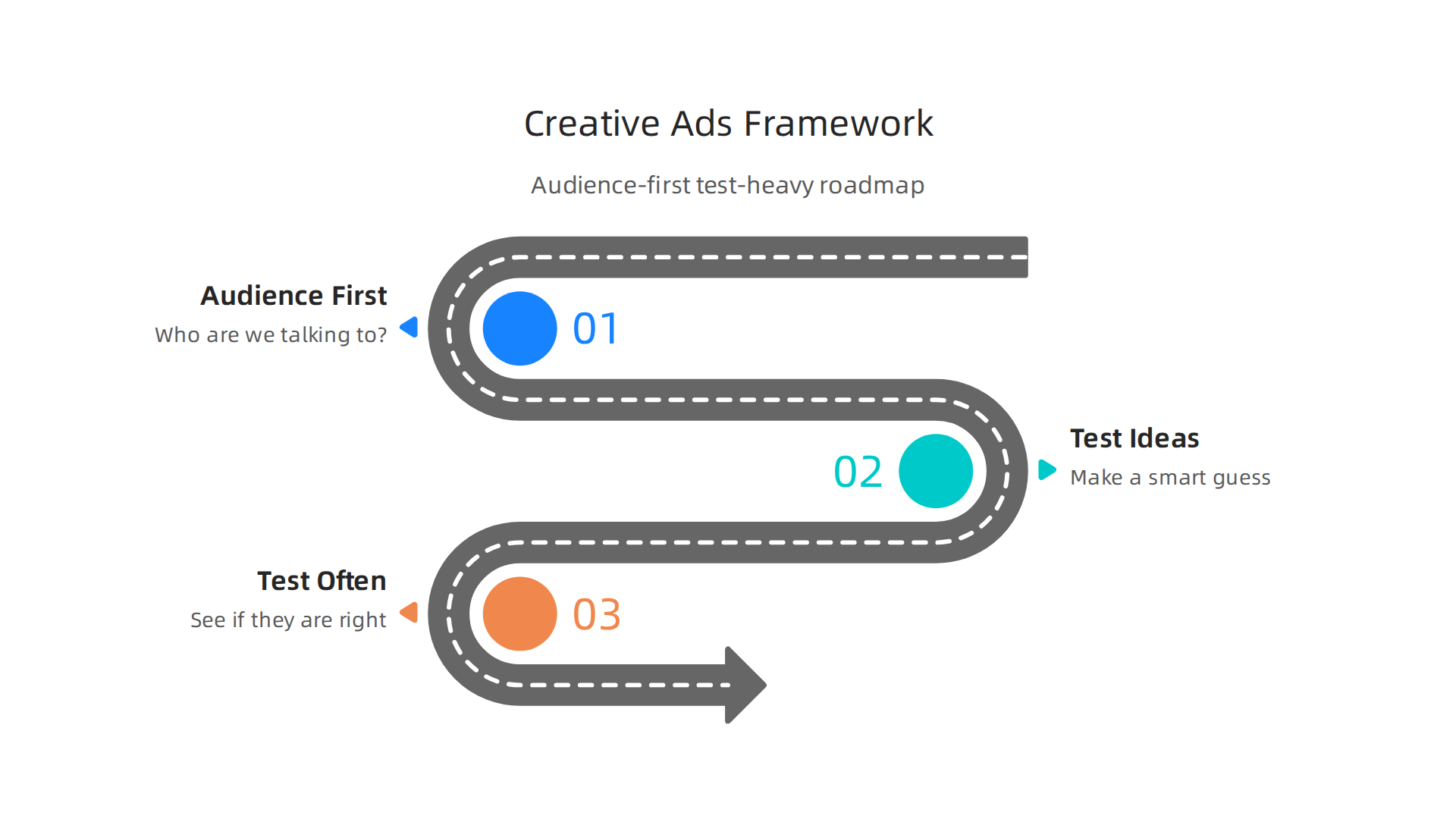
This helps your product advertisements shine.
Start with Your Audience
Think of your audience as the main characters in your story. Before you even think about your ad, ask: Who are we talking to? What do they care about?

What problems do they have that our product can solve?
It’s helpful to break your audience into smaller groups. These are called "micro-segments." For example, instead of just "people who like coffee," think about "busy parents who need quick coffee in the morning" or "young adults who enjoy fancy, new coffee flavors." Each of these groups might need a different kind of message.
Once you know your audience groups well, you can map out when and where they might see your ads. This is called understanding their "moments." A busy parent might see ads on their phone while making breakfast, while a young adult might see them on social media at night. Your creative ads should fit into these moments naturally. You want your digital marketing campaigns examples to feel helpful, not annoying. Creating a plan for your advertising helps connect with people better.
Test Your Ideas with a Hypothesis
After you know your audience, it’s time for ideas! This is where you make a "hypothesis," which is just a fancy way of saying "a smart guess." Your hypothesis is a simple statement about what you think will work. For example, "We believe that showing happy families using our product will make busy parents click on our ad more often."
This approach helps online advertising companies reduce risk. Instead of spending a lot of money on one big idea, you start with small, focused ideas. Then, you test them out. Reports show that companies that test more creative ideas often see better results. For example, some top advertisers are sending out 12 to 19 new ads every week to see what works best Ad Creative Testing Stats for 2026. This fast testing helps them learn quickly.
Test, Test, and Test Again
The last part of the plan is all about testing. You have your smart guesses, now you need to see if they are right. This means running different versions of your ads at the same time. This is often called A/B testing. You might change just one thing, like the picture, the words, or the first few seconds of a video.
By testing different creative ads, you learn what truly works for your audience. What colors do they like? What kind of headlines get their attention? This constant testing helps you get better and better at making ads that grab attention and get people to act. You can find more tips on this in guides about best creative practices for performance marketers in 2026.
This way, you keep improving your digital marketing campaigns examples, making sure your money is spent wisely, and your ads are always fresh and exciting.
The world of creative ads is changing fast, and a big reason for this is AI, or Artificial Intelligence. AI is like a smart helper that can make creating product advertisements much quicker and more personal for everyone.
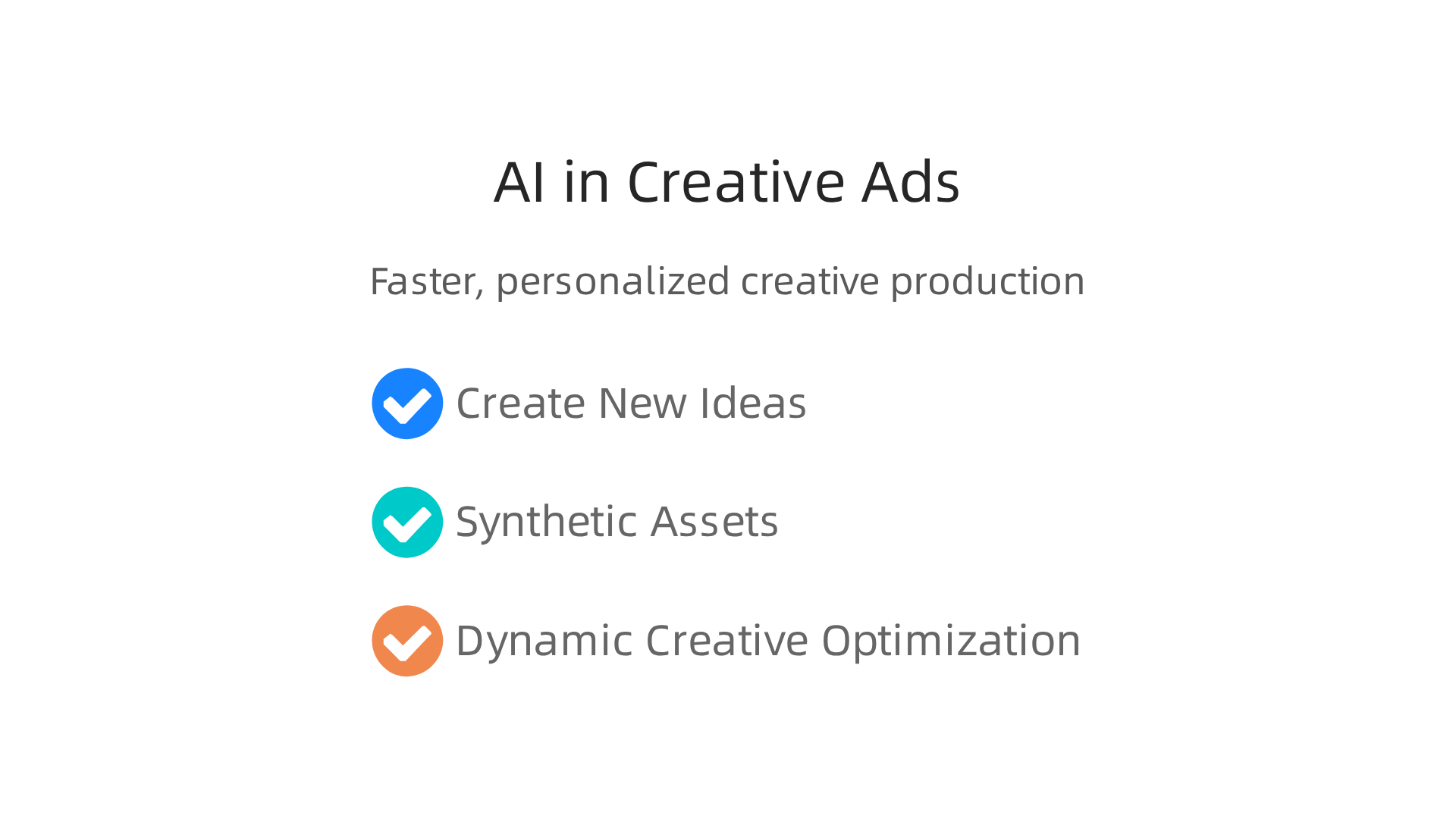

In 2026, AI is not just a fancy tool; it’s reshaping how online advertising companies think about their digital marketing campaigns examples.
AI Helps Create New Ideas
One cool thing AI does is help teams come up with fresh ideas for ads. Instead of staring at a blank page, marketers can use AI tools to brainstorm. These tools can suggest headlines, ad text, and even video concepts based on what has worked well before for similar audiences. This is called "AI-assisted ideation." It means you can get many new ideas quickly, helping you keep your creative ads fresh for your audience.
Making Ads with AI: Synthetic Assets
AI can also create parts of ads, not just ideas. This is where "synthetic assets" come in. AI can make pictures, videos, and even voices that look and sound real. For example, it can generate an image of a happy family using your product without needing to hire actors or photographers. This speeds up the process a lot, making it easier for online advertising companies to produce many different product advertisements. In fact, some studies show that AI-generated ads can perform just as well as, or even better than, human-made ads, especially for click-through rates AI Ads That Work:.
Ads That Change for Each Person: Dynamic Creative Optimization
Another big change is "Dynamic Creative Optimization," or DCO. This means AI can change parts of an ad automatically to fit each person who sees it. Imagine an ad for shoes: DCO might show one person a red shoe if they like red, and another person a blue shoe if they prefer blue. It can also change the words in the ad or the call to action. This makes digital marketing campaigns examples much more personal and effective. A 2026 report found that AI-generated creative can consistently outperform human-created ads in click-through rates across platforms like Meta AI-generated creative in marketing: what the 2026 performance data …. This kind of personalization helps ads feel more helpful and less like generic messages. You can learn more about building effective ad creative in 2026 by checking out our guide on Ad Creative Build High Impact Campaigns in 2026.
The Good and Bad of Using AI for Ads
Using AI brings a lot of good things, like speed and the ability to make many different ads very quickly. This helps online advertising companies reach more people with personalized messages. But there are also things to think about.
- Speed and Scale: AI lets you make and test many more creative ads than before. This means you can find what works best much faster.
- Brand Control: Sometimes, when AI creates ads, they might not sound or look exactly like your brand usually does. It can be a challenge to keep your brand’s unique voice and style when AI is doing a lot of the work.
- Creative Look: There’s a concern that if everyone uses AI, all ads might start to look the same, making it harder for product advertisements to stand out. Studies have shown that while AI ads can be hard to tell apart from human-made ones, they sometimes don’t predict short-term sales as well AI ads are almost indistinguishable from human-made ….
The key is to use AI smartly. It’s a powerful helper, but human creativity and oversight are still very important to make sure your creative ads truly connect with people and represent your brand well. For anyone working in media and advertising, staying on top of these AI changes is a must.
Get clear daily AI updates from The AI Newsletter Worth Reading.
Using AI helps make many kinds of creative ads, but it’s also important to make sure those ads fit where people see them.
Different online places, or "platforms," need different kinds of product advertisements. What works best on TikTok might not work well on a blog or a longer video site. Understanding these differences is key for any online advertising company in 2026.
Short Videos for Quick Attention
Today, short videos are very popular. Think about TikTok or Instagram Reels. People scroll through these apps quickly, so ads need to grab their attention right away. These short videos usually last from 6 to 30 seconds. Most of them are tall, or "vertical," because people hold their phones upright. In fact, most of Meta’s ads, which include Facebook and Instagram, are now shown vertically, as almost all users check these platforms on their phones Meta Advantage+ Creative Best Practices for 2026.
These creative ads need a "hook" in the first few seconds to stop someone from scrolling past. A hook could be a surprising fact, a funny moment, or a question. Short-form videos are great for getting many eyes on your product quickly, especially for new customers. Many consumers, about 73%, even prefer watching a short video to learn about a new product or service 600+ Digital Marketing Statistics 2026: Trends & Benchmarks.
Longer Videos for Deeper Stories
While short videos are great for quick attention, sometimes you need more time to tell your story. This is where longer videos come in. These might be used on platforms like YouTube or on websites where people expect to spend more time learning. A longer video, maybe 60 seconds or more, lets you explain how a product works, share customer stories, or show off different features. These are perfect for product advertisements that need more detail, helping people understand your brand better.
Native Ads: Blending In
Native ads are special because they are made to look and feel like the regular content on a platform. They don’t always look like traditional ads. For example, an ad on a news website might look like another news article, or an ad on a social media feed might look like a regular post from a friend. This helps them not interrupt what people are doing. It also helps online advertising companies share their message in a way that feels more natural. You can explore how these blend-in ads are changing with new technology in our guide on native advertising 2026.
Interactive Ads: Getting People Involved
Another format gaining steam is interactive ads. These are ads where people can do something, not just watch. Maybe it’s a quiz, a mini-game, a poll, or an ad where you can swipe through different product options. This kind of ad makes people feel more connected to the brand. Over three-quarters of young people, called Gen Z users, like these interactive ad formats Digital Marketing Statistics 2026: Big Insights.
Tips for Adapting Your Creative Ads
The most important rule is: don’t use the exact same ad everywhere. Each platform is different, and your creative ads need to fit each one.
- Change the Size: A tall video for TikTok won’t look right on YouTube, which usually uses wider videos. Many ad experts suggest having different sizes ready, like square (1:1), tall (9:16), and wide (16:9) versions of your ad 2026 Social Media Marketing Industry Report — Tactical Guide.
- Change the Words: How you talk in an ad should match the platform. A serious tone might work on LinkedIn, but a fun, light tone is better for TikTok.
- Think About How People Use the App: People use Pinterest to find ideas, Instagram to see friends’ lives, and Google to search for things. Your ad should match what people are trying to do on that platform. Never just copy and paste an ad from one place to another; always make it fit 12 Proven Frameworks for Building High-ROI Ad Creative.
By adapting your digital marketing campaigns examples to each platform, you make sure your product advertisements connect better with your audience and deliver stronger results. It means thinking about where your audience is and what they like to see in that space.
After making sure your creative ads fit each platform, the next big step for online advertising companies is to know if those ads are actually working. It’s not enough to just make and show product advertisements; you also need to measure their success.

This means understanding what to track and why, especially with all the changes in privacy and how people use different online places in 2026.
What to Track: Quick Signs vs. Big Results
When we talk about how well creative ads are doing, we look at two main kinds of signs:
- Quick Signs (Leading Indicators): These are things you see right away that tell you if your ad is catching people’s eyes. Think of how many people see your ad (views), how many click on it (click-through rate, or CTR), or how many share it. These quick signs let you know if your creative ads are interesting enough to stop someone from scrolling. For example, some studies in 2026 show that advertisers are shipping many new creatives each week, meaning they are constantly testing for good quick signs Ad Creative Testing Stats for 2026.
- Big Results (Lagging Indicators): These are the numbers that show if your ads are helping your business grow. This includes how many products you sell, how many new customers you get, or how much profit you make. These are the final goals for any digital marketing campaigns examples. You might see good quick signs, but if they don’t lead to big results, your ads aren’t truly successful.
It’s important for online advertising companies to look at both. Good quick signs tell you if your creative ads are grabbing attention, and good big results tell you if that attention is turning into real business growth.
Figuring Out Where Sales Come From (Attribution)
One of the trickiest parts of measuring ads is "attribution." This means figuring out which ad or touchpoint truly led to a sale or a new customer. Imagine someone sees your product advertisements on Instagram, then later clicks a link on a blog, and finally buys your product a week later after seeing another ad on YouTube. Which ad gets the credit?
- Cross-Platform Challenges: People use so many different apps and websites that it’s hard to follow their journey. Did the first ad on Instagram plant the seed? Or was it the last ad on YouTube that convinced them to buy? Modern digital marketing campaigns examples often involve many different platforms, making this even harder.
- Privacy Changes: New privacy rules and changes in how internet browsers work (like not tracking users as much) make it harder to see the full path a customer takes. This means online advertising companies have to get creative with how they measure.
To deal with this, many online advertising companies use different ways to guess where the sale came from. They might give all credit to the last ad a person saw, or spread the credit across all the ads a person saw. Some even use smart tools that try to guess the most important steps in a customer’s journey, which can help measure advertising performance more accurately Advertising Analytics Guide: 15 Metrics & Attribution (2026).
Practical Ways to Measure Your Creative Ads
Even with challenges, there are good ways to measure your creative ads:
- Look at Trends: Don’t just focus on one day’s numbers. Look at how your ads perform over weeks or months. Are more people clicking over time? Are sales going up? You can learn more about making smart choices with our article on analytic marketing.
- Test Different Ads: Always try out different versions of your creative ads. Change the picture, the words, or the video. See which ones get better quick signs and lead to more big results. This is called A/B testing, and it’s a key part of good digital marketing.
- Connect the Dots: Use special software that brings all your ad data together. This helps you see how your ads on different platforms might be working together, even if you can’t track every single step perfectly. Many tools can help you develop a strong performance marketing strategy.
By carefully watching your quick signs and big results, and by being smart about how you figure out where sales come from, you can make sure your creative ads are not just pretty, but also powerful. It means you’re truly learning what works and getting the best value for your marketing money.
To keep up with the latest in AI and how it’s changing creative ads and measurement, you might want to check out The AI Newsletter Worth Reading.
By carefully watching your quick signs and big results, and by being smart about how you figure out where sales come from, you can make sure your creative ads are not just pretty, but also powerful. It means you’re truly learning what works and getting the best value for your marketing money.
Now, let’s look at real-world examples and playbooks you can use. This will help online advertising companies and teams of any size create winning strategies for their own projects in 2026.
Digital Campaign Examples and Creative Breakdowns (Playbooks You Can Adapt)
Knowing what makes good creative ads is super helpful. But seeing how those ideas come together in real digital marketing campaigns examples is even better. Here, we’ll break down different types of campaigns and give you ideas for your own creative ads, no matter your budget or team size.
1. Product Launch Campaigns
Goal: To make people excited about a new product and encourage them to buy it quickly.
When you launch a new product, you want everyone to know about it and want it. Your creative ads should build buzz and show off what’s special.
-
Creative Ideas:
- Teaser Videos: Short clips that hint at the product without revealing everything. These build curiosity.
- Unboxing Videos: Show someone opening the product for the first time. This feels real and exciting.
- Product Demos: Simple videos showing how the product works and solves a problem. Short-form videos, often 15-30 seconds, are great for this, especially for getting new customers Digital Marketing Statistics 2026: Big Insights.
- Countdown Ads: Graphics or videos that count down to the launch date, creating a sense of urgency.
-
Creative Checklist:
- Is the product the star of the ad?
- Is the main benefit clear and easy to understand?
- Is there a strong call to action, like "Buy Now" or "Pre-Order Here"?
- Does it use vertical video (9:16) for social media stories and reels, which is very popular in 2026? This format is key for platforms like Meta, where most users are on mobile Meta Advantage+ Creative Best Practices for 2026.
2. Brand Awareness Campaigns
Goal: To help people recognize and remember your brand, making them feel good about it.
These campaigns aren’t always about selling right away. They’re about making a lasting impression. Strong brands use creative ads to tell their story and connect with people.
-
Creative Ideas:
- Storytelling Videos: Ads that tell a short, engaging story related to your brand’s values.
- Emotional Connections: Ads that make people feel something, like happiness, inspiration, or understanding.
- Consistent Look: Use the same colors, fonts, and styles across all your product advertisements so people easily know it’s you.
- User-Generated Content (UGC): Ads that show real customers using or talking about your product. People, especially younger audiences like Gen Z, often prefer this over super polished ads 150+ Eye-Popping Gen Z Marketing Statistics for 2026.
-
Creative Checklist:
- Does the ad clearly show your brand’s logo or name?
- Does it create a positive feeling about your brand?
- Is the message simple and easy to remember?
- Are you using formats that do well on different platforms, like vertical video for TikTok and Instagram Reels, or clear images for Pinterest? You can learn more about how different platforms need different content in our guide to Content Strategies for Different Social Platforms.
3. Direct Response Campaigns
Goal: To get people to take a specific action right away, like clicking a link, signing up for something, or making a purchase.
These are often the "buy now" or "learn more" types of ads. They need to be very clear about what you want the viewer to do.
-
Creative Ideas:
- Problem/Solution Ads: Show a common problem and how your product solves it.
- Testimonial Ads: Feature real customers giving good reviews. These are very powerful.
- Special Offer Ads: Highlight a discount, free trial, or limited-time deal.
- Before/After Comparisons: Great for products that show a clear change, like cleaning supplies or fitness programs. Many of the best-performing static ad formats in 2026 use clean product shots, before/after images, or review quotes Ad Creative Best Practices in 2026: What’s Working Right Now.
-
Creative Checklist:
- Is there a strong, eye-catching "hook" in the first few seconds?
- Is the offer very clear (e.g., "50% off today only")?
- Is the call to action bold and easy to find?
- Does it provide proof that the product works, like a demo or customer review?
- Consider static image ads for direct response, as they can be very effective 5 Static Ad Formats Outperforming Video in 2026.
4. Creator Collaboration Campaigns
Goal: To use popular online personalities (creators or influencers) to reach their audience in a natural, trusted way.
People often trust recommendations from creators they follow more than traditional ads. These partnerships can lead to very engaging creative ads.
-
Creative Ideas:
- Influencer Reviews: A creator honestly talks about and reviews your product.
- Creator Tutorials: The creator shows how to use your product in a fun or helpful way.
- Giveaways/Challenges: Creators host contests involving your product, encouraging their followers to participate.
- Behind-the-Scenes: Show the creator using the product in their daily life. Many consumers, especially Gen Z, prefer this kind of unscripted, user-made content Social and Mobile Marketing Preferences Report.
-
Creative Checklist:
- Is the creator a good fit for your brand and audience?
- Does the ad feel genuine and not too "salesy"?
- Is it clear that it’s a paid partnership (as required by law)?
- Does it encourage the audience to engage, perhaps by visiting your website or using a special code?
- To get the most out of these partnerships, you might want to explore Mastering Platform-Aware Influencer Strategies.
Adapting Your Playbook for Success
No matter which campaign type you’re running, the key is to learn and adapt. Online advertising companies are constantly testing and improving their creative ads.
- Test Everything: Don’t just make one ad and hope it works. Make different versions (A/B testing) and see which ones perform best. Change the words, the pictures, or the videos one at a time to see what people like most Best Creative Practices for Performance Marketers in 2026.
- Use Modular Creative: Instead of making a whole new ad every time, think about ads like building blocks. Have different "hooks" (the start of the ad), different "body parts" (the middle message), and different calls to action. You can mix and match these parts to create many new ads quickly. This modular approach is a top strategy in 2026 for those winning the creative testing game The 9 Sharpest Creative Ad Strategies of 2026, Ranked.
- Learn from Others: Look at successful digital marketing campaigns examples from other brands. What hooks do they use? What visuals catch your eye? You can find many inspiring campaigns, including ones that combine consistent assets, emotional priming, and narrative branding, in guides like the Best Advertising Campaigns 2026: 18 Top Examples.
By using these playbooks and staying flexible, you can create product advertisements that truly connect with your audience and help your business grow. For more ideas on effective campaigns, check out these Inspiring Digital Marketing Campaign Examples. You can also learn about What Makes a Good Advertisement Thrive to ensure your ads are impactful.
Moving from understanding great digital marketing campaigns examples to actually making them happen is the next big step. This means thinking about how your team is set up, who you work with outside your company, and how you create many creative ads quickly. For online advertising companies, getting this right in 2026 is key to growing.
Execution: Team Structures, Vendor Choices, and Scaled Production Workflows
To make sure your creative ads are not just good ideas but also real, working campaigns, you need a smart plan for how you get things done. This involves choosing the right people and tools, whether they are in your office or outside.
Different Ways to Organize Your Team
How you set up your team for creative work can make a big difference. There are a few main ways online advertising companies handle this:
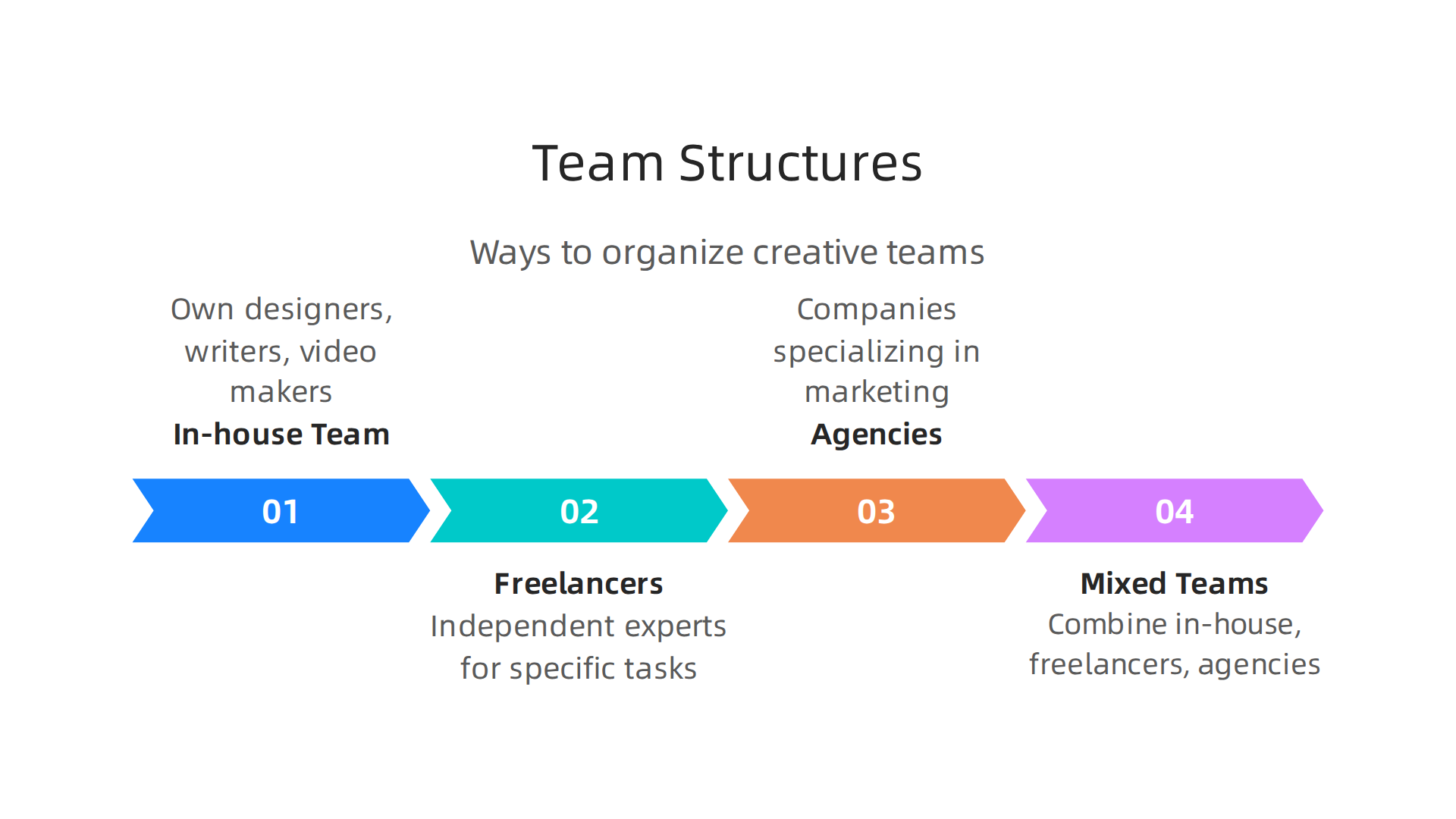
- In-house Team: This means you have your own designers, writers, and video makers who work only for your company.
- Good for: Keeping your brand’s look and feel very consistent. They deeply understand your products and goals.
- Things to think about: Can be expensive to hire and keep a full team. They might not have all the latest specialized skills.
- Freelancers: These are independent experts you hire for specific tasks or projects, like making a few product advertisements or editing a video.
- Good for: Filling skill gaps or getting extra help when you’re really busy. They can bring fresh ideas.
- Things to think about: Might need more managing from your side. You have to make sure they understand your brand well.
- Agencies: These are companies that specialize in marketing and advertising. They can handle everything from ideas to making ads and running campaigns.
- Good for: Getting a full team of experts without hiring them all yourself. They often have experience with many digital marketing campaigns examples. You can learn more about how to find the right partner in our guide on how to choose the right advertising agency.
- Things to think about: Can be more expensive than freelancers. You need to pick an agency that truly fits your needs, perhaps a performance creative agency.
- Mixed Teams: Many companies use a mix of all three. They might have a small in-house team for core work, hire freelancers for special projects, and work with an agency for big campaigns or new platform launches.
Choosing Your Partners and Tools Wisely
When you work with people or tools outside your company, it’s important to choose them carefully. Here’s what to look for:
- Quality: Do they create creative ads that look great and match your brand’s style? Look at their past work.
- Speed: Can they deliver what you need on time, especially with the fast pace of digital advertising in 2026?
- AI Capability: Is the vendor or tool up-to-date with artificial intelligence (AI)? AI is changing how creative ads are made. For example, some studies show that AI-generated creative can perform as well as, or even better than, human-made ads for certain metrics like click-through rates AI-generated creative in marketing: what the 2026 performance data. However, other research suggests that while AI-made ads are hard to tell apart from human ones, they might not always lead to as many short-term sales AI ads are almost indistinguishable from human-made. It’s crucial to understand how to use AI wisely.
- Rights Management: Make sure you own the rights to all the creative work they produce for you. This avoids problems later.
- Good Communication: You need partners who talk clearly and openly with you about projects and progress.
When picking an agency or a marketing specialist, especially one that uses AI, consider their approach to technology. If you’re looking to choose the best AI marketing agency for your business, we have a helpful guide on that too. For daily insights into how AI is shaping the media and marketing world, consider subscribing to The AI Newsletter Worth Reading.
Making Creative Work Happen Faster
To keep up in 2026, online advertising companies need workflows that can create many creative ads without sacrificing quality. This is called scaled production.
- Templates and Guidelines: Have clear rules and templates for all your creative ads. This helps everyone, whether in-house or external, create work that looks consistent.
- Use of AI Tools: AI can help speed up tasks like coming up with ideas, writing first drafts of ad copy, or even generating basic images. However, it’s important to use AI strategically. One study found that AI-generated ads sometimes deliver higher click-through rates but might perform worse on conversion rates for bigger purchases AI in advertising: How to use it the right way in 2026. The best approach often involves humans guiding AI tools.
- Feedback Loops: Have a clear system for giving and getting feedback. This helps fix problems quickly and keeps projects moving.
- Asset Libraries: Keep all your brand’s pictures, videos, and logos in one easy-to-access place. This makes it simple for anyone working on your product advertisements to find what they need.
Summary
This article explains why creative advertising remains the competitive edge in a fast-changing digital landscape dominated by AI, new platforms, and stricter privacy rules. It walks readers through an audience-first, hypothesis-driven framework for producing and testing ad creative at scale, shows how AI can speed ideation and generate synthetic assets while cautioning about brand control, and details how to adapt creative to platform formats like short vertical video, native, and interactive ads. The piece also covers practical measurement—leading indicators (views, CTR) versus lagging business outcomes—and offers playbooks for product launches, brand awareness, direct response, and creator collaborations, plus guidance on team structures, vendor selection, and production workflows to turn ideas into measurable campaigns.