Ad Creative: Build High-Impact Campaigns in 2026
Why ad creative matters now: a concise primer for media and advertising leaders
In the world of advertising in 2026, how good your ad creative is means everything. But what exactly is ad creative? Simply put, it’s all the parts of an advertisement that make it unique and help it connect with people. This includes the pictures, videos, words, and even the main idea or story behind the advertisement commercial. Experts say that a truly creative ad is both surprising and also relevant to what it is selling
Creativity in Advertising | Columbia Business School.
Think of ad creative as the engine that drives your whole campaign. Even if you have the best product or service, without strong advertising techniques and an eye-catching ad, it might not get noticed. Good ad creative helps your message stand out, makes people remember your brand, and encourages them to take action. It directly impacts how well your campaigns work and if you reach your goals. For more on making ads that truly connect, you might want to read about what makes a good advertisement thrive.
Today, media and advertising leaders face many new challenges.

One big challenge is that people use so many different platforms online. From social media apps to streaming services, an ad maker has to create ad creative that fits everywhere and still looks good. This is called platform fragmentation.
Another huge change is the rise of Artificial Intelligence, or AI. AI tools can help create ad creative faster than ever before. But this also means leaders need to be smart about how they use AI. The goal is to make sure ads still feel real and connect with human emotions, not just to make them quickly. It’s a balance between speed and quality. This fast pace also ties into "speed-to-market," meaning companies need to get their new ad creative out very quickly to keep up with trends and competitors. Staying on top of AI changes is key for any ad maker in 2026.
Get clear daily AI updates from The AI Newsletter Worth Reading.
To make ad creative that truly works, it helps to understand its different parts. Think of ad creative as a puzzle. Each piece is important, and they all fit together to show your message. In simple terms, ad creative is made of assets, comes in different formats, and uses various creative elements. It also has a special way we talk about its parts, which is called taxonomy.
What are Ad Creative Assets?
Assets are the basic building blocks of any ad.
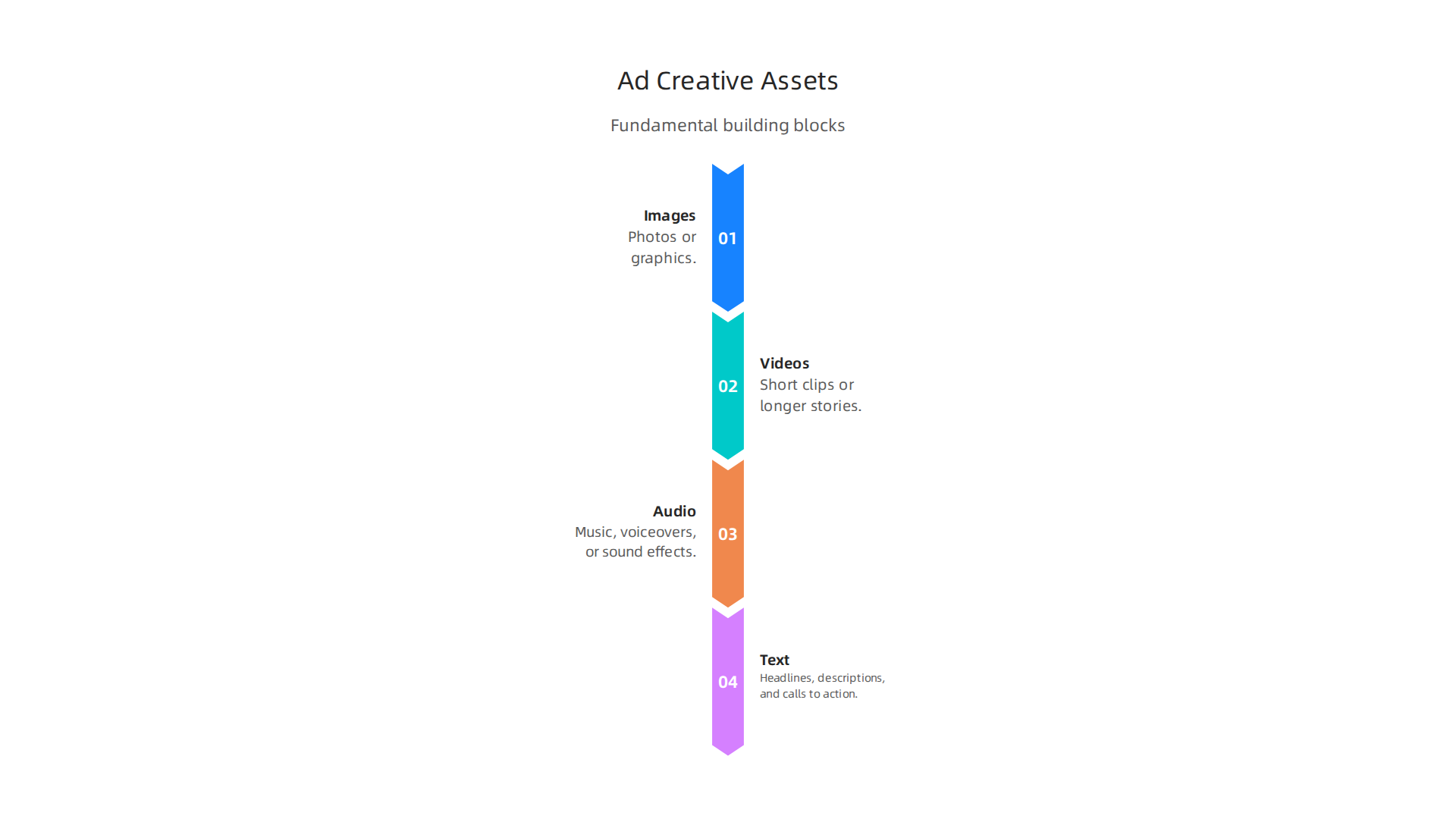
These are the raw materials an ad maker uses. They can be:
- Images: Photos or graphics.
- Videos: Short clips or longer stories.
- Audio: Music, voiceovers, or sound effects.
- Text: Headlines, descriptions, and calls to action.
These assets are like the ingredients for a delicious cake. You pick the best ones to make your advertisement commercial appealing.
Different Ad Formats
Once you have your assets, you put them together into different formats. The format is how your ad actually shows up to people.
- Video Ads: These are ads that play a moving picture with sound. They can be short clips on social media or longer spots on streaming TV.
- Display Ads: These are usually pictures or animated images that you see on websites. They are often banner ads that sit at the top or side of a page.
- Native Ads: These ads blend in with the content around them. They look like a regular article or post, but they are actually an ad. They are designed to feel natural and not interrupt the user’s experience.
- Audio Ads: These are ads you hear, like on podcasts or music streaming services. They rely on sound and voice to get their message across.
Choosing the right format is very important. For example, if you want to show how a product works, a video ad is best. If you want people to click a link, a clear display ad might do the trick. To learn more about how different ad types can help your campaigns, check out Types of Google Ads: Nine Campaign Formats Media Professionals Need to Know.
Creative Elements Within Ads
Beyond the overall format, ad creative has specific creative elements. These are the finer details that make an ad work.
- Visuals: This includes all the images, colors, and design choices. Good visuals grab attention and make the ad easy to look at. For video ads, even how the scenes are put together counts as part of the visuals. Studies show that even typical ads can use surprising elements to grab attention Automatic Understanding of Image and Video Advertisements.
- Copy: This is all the written words in your ad. It includes the main headline, any descriptions, and special messages. Clear and simple copy helps people understand what you are selling. For example, "Ad Copy" is what Rutgers University defines as "All printed text in an advertisement" in their marketing glossary Glossary of Marketing Terms.
- Call to Action (CTA): This is the part of the ad that tells people what to do next. It might say "Shop Now," "Learn More," or "Sign Up." A strong CTA guides people to take the desired step.
How Formats Match Campaign Goals and Platforms
The formats and elements you choose should always match your campaign goals and where you plan to show the ad. For example, a short, punchy video ad works great for social media where people scroll quickly. A detailed native ad might be better for a news site if you want people to read more. Different platforms, like Instagram, TikTok, or a website, all have their own best practices for advertising techniques. An ad maker needs to know these rules to make sure the ad looks good and gets seen. This careful planning is part of creating a "taxonomy" for your content, which helps organize how you think about and use your ads Content Taxonomy and Labeling.
To make ad creative that truly connects with people, it’s not enough to just have great parts. You need a smart plan that brings everything together. This plan is your ad creative strategy. It helps you make sure your message reaches the right people, in the right way, at the right time.
Aligning Audience, Message, and Format
Creating a strong ad creative strategy means thinking about three main things: your audience, your message, and the format of your ad.

It’s like putting together a roadmap for your advertisement commercial.
Knowing Your Audience Through Segmentation
First, you need to deeply understand who you’re talking to. This is called audience segmentation. It means dividing your big group of possible customers into smaller groups based on what they have in common. For example, you might group people by:
- Demographics: Things like age, where they live, or how much money they make.
- Behaviors: What they do online, like what websites they visit or what they buy.
- Psychographics: Their beliefs, values, and interests.
By breaking down your audience, you can create ad creative that speaks directly to each group’s needs and wants. This makes your ads much more powerful. Many experts in 2026 suggest using different types of segmentation to get a full picture of your audience, as a single approach isn’t enough anymore
Audience Segmentation Guide 2026. Knowing your audience well helps an ad maker choose the best pictures, words, and even colors for each specific group.
Testing Your Message for Best Results
Once you know your audience, you need to make sure your message hits home. This is where message testing comes in. You might have a few ideas for what to say or how to show your product. Instead of guessing, you can test these ideas to see which ones work best. For example, you could show different versions of an ad to small groups of people and see which one they like more or click on more often.
This testing helps you fine-tune your ad creative. It’s a key part of good advertising techniques. Testing is very important because even top ad platforms show that many ads don’t perform well and get turned off early if they aren’t engaging Ad Creative Testing Stats for 2026. By testing, you learn what makes people interested and what makes them want to take action.
Matching Creative to the Buyer’s Journey
People don’t just suddenly buy something. They go through different steps, often called the "buyer’s journey."
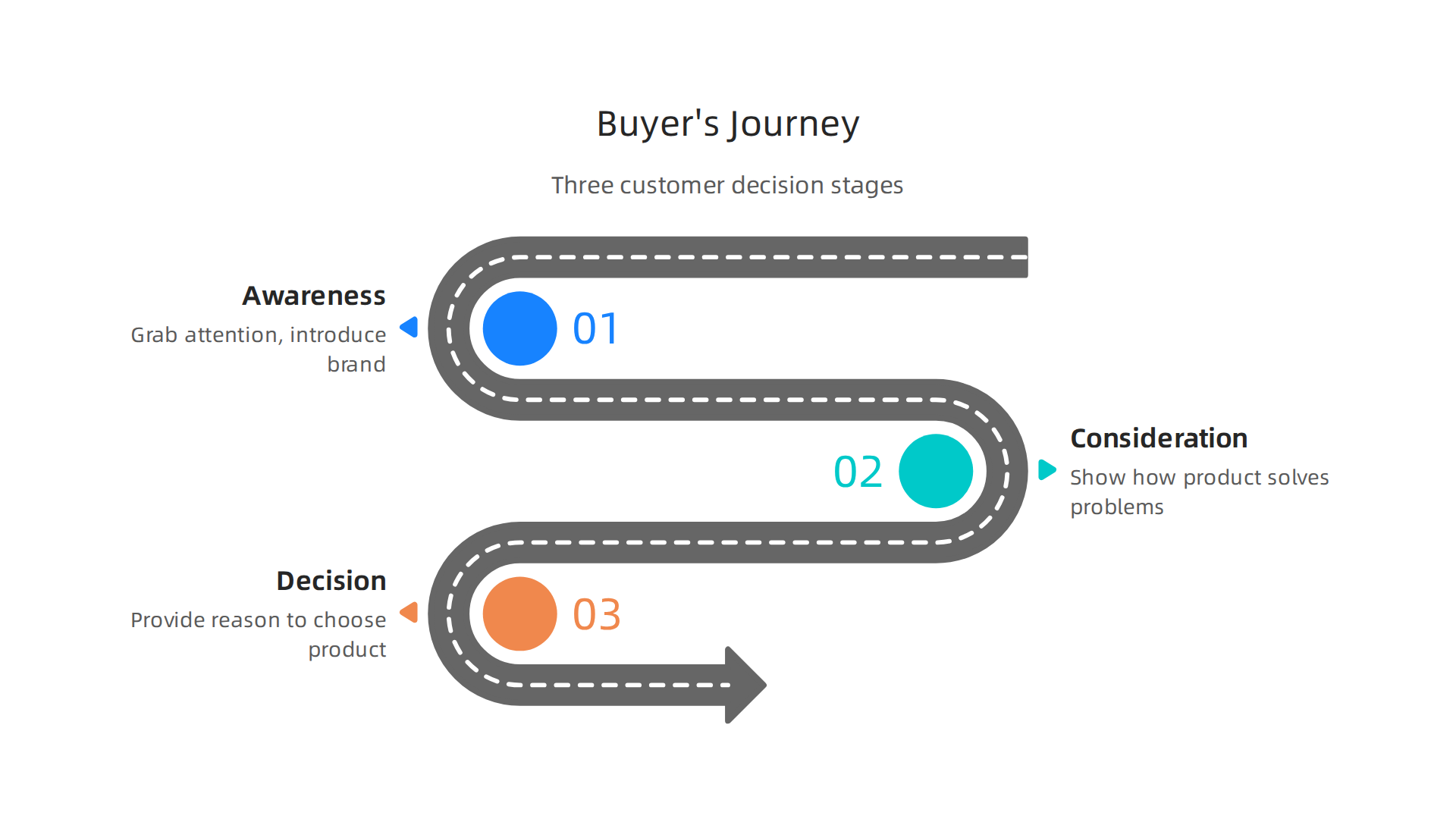
Think of it like a journey from not knowing about a product to becoming a happy customer.
- Awareness: At first, people might not even know they have a problem or that your product exists. Your
ad creativehere should just grab their attention and introduce your brand or a common problem. - Consideration: Next, they know they have a problem and are looking for solutions. Your ads should show how your product can help and why it’s a good choice.
- Decision: Finally, they are ready to buy. Your ads at this stage should give them a clear reason to choose you, like a special offer or a strong call to action.
It’s important to create different ad creative for each stage of this journey. For example, a short, eye-catching video might be great for the awareness stage, while a detailed story about how your product solves problems might work better for the consideration stage. Adapting your ad creative to these stages is a powerful way to guide customers. A good strategy creates specific creative for each state of awareness Creative Strategy in 2026.
By thoughtfully combining audience understanding, message testing, and matching ad creative to the buyer’s journey, you create a strategy that helps your ads truly stand out and get results. To dive deeper into creating ads that really connect, explore what makes a good advertisement thrive, with strategies for impact in 2026 on our site: What Makes a Good Advertisement Thrive.
After you have a smart plan for your ad creative, the next step is to actually make the ads. This involves a clear way of working, often called a creative production workflow. It’s like having a step-by-step guide that helps everyone on the team know what to do, when to do it, and how their work fits together. This makes sure that your advertisement commercial ideas turn into real ads smoothly and with good quality.
Common Roles in Creative Production
Making ad creative usually involves different people with special skills.
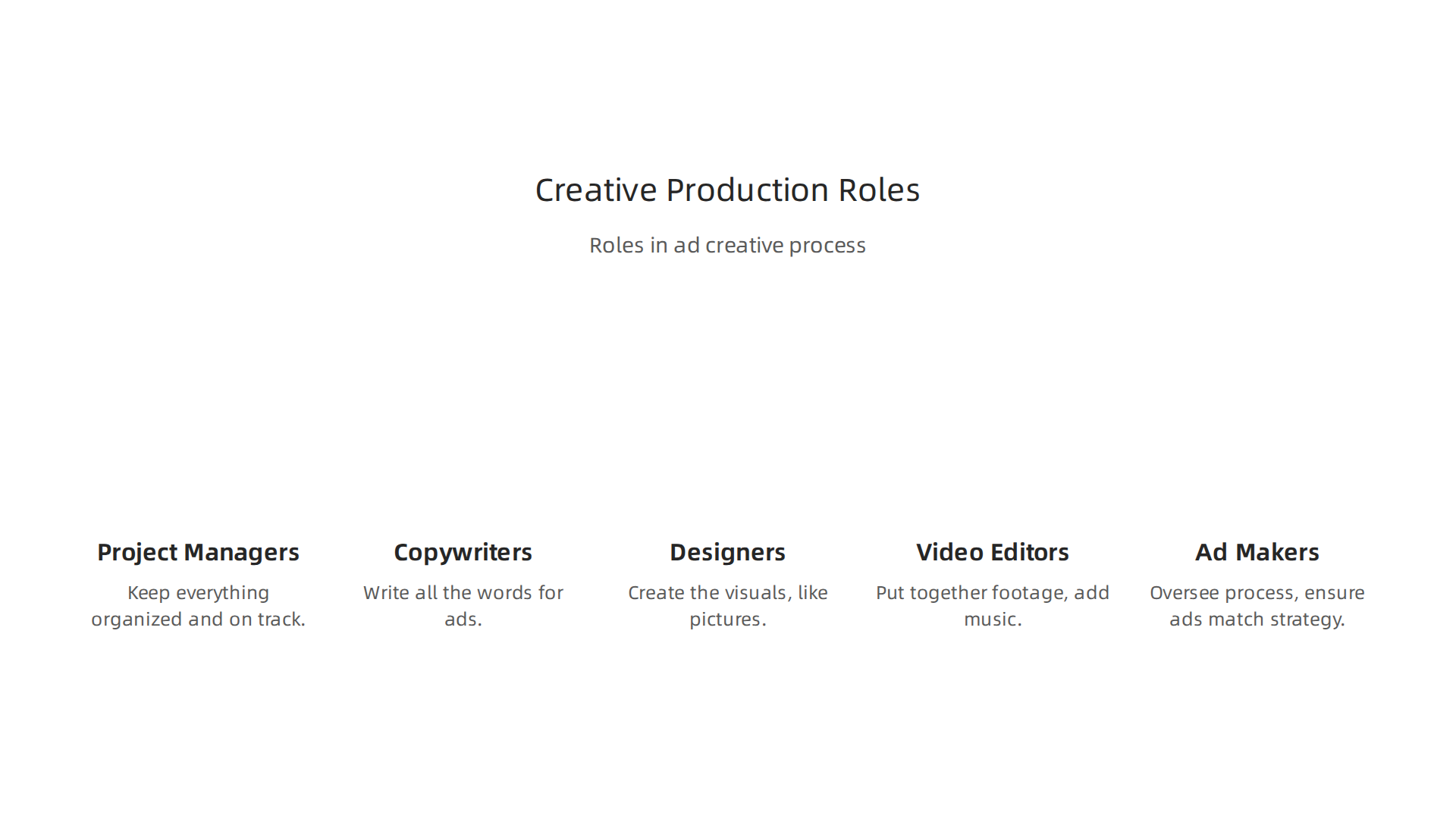
Think of them as a team working together:
- Project Managers: These people keep everything organized and on track. They make sure deadlines are met and that the right people are doing the right tasks.
- Copywriters: They write all the words for your ads. This includes headlines, slogans, and longer descriptions.
- Designers: They create the visuals, like pictures, graphics, and layouts. They make sure the
ad creativelooks appealing. - Video Editors: For video ads, these experts put together footage, add music, and make sure the video tells a compelling story.
- Ad Makers/Strategists: These individuals might oversee the whole creative process, ensuring the ads match the overall strategy and perform well. To learn more about the different people involved, you can explore the skills needed for Creative advertising jobs in 2026.
Starting with a Creative Brief
Every good ad creative project starts with a creative brief. This is a special document that acts like a blueprint for the ad. It tells everyone involved important things like:
- What the ad needs to achieve (its goal).
- Who the ad is for (the target audience).
- The main message or idea.
- Where the ad will be shown.
- The overall tone and style.
Using a clear creative brief helps everyone stay on the same page. It saves time by answering questions before work even starts, making sure the final ad creative meets the goals. Many teams use templates for these briefs to make the process easier and faster, helping to speed up production while keeping quality high

Creative Brief & Production Workflow Template.
Handoffs and Smooth Workflows
As ad creative moves from one person to another, these steps are called "handoffs." For example, a copywriter finishes the words and "hands off" to a designer for the visuals. A smooth workflow means these handoffs happen easily, without delays or misunderstandings. This is where workflow tools and templates really help. They make sure that when a task is done, the next person instantly knows it’s their turn and has all the information they need.
Making Ads Better Through Iteration
Even with a perfect plan, the first version of an ad creative might not be the best. That’s why iteration is so important. Iteration means making small changes and improvements based on feedback and testing.
- Rapid Prototyping: This means quickly making early versions of ads to see what works. It’s like making a rough sketch before painting a masterpiece.
- Variant Management: You might create many slightly different versions (variants) of an ad. For example, the same ad but with different headlines or pictures.
- Cross-Functional Reviews: Different team members, like designers, copywriters, and marketers, look at the
ad creativetogether. They give feedback to make it stronger.
By trying out different versions and getting feedback often, teams can find the best-performing ad creative much faster. This continuous cycle of creating, testing, and improving is a core part of modern advertising techniques. In 2026, many creative teams also use AI tools to quickly generate multiple ad variations and test them, further speeding up this process.
Staying on top of the latest developments in AI and advertising can give you an edge in creating effective ad campaigns.
Get clear daily AI updates and profound insights from The AI Newsletter Worth Reading.
Creating great ads often means using the right tools. After you plan your ad creative and set up your team’s workflow, these tools help bring your ideas to life. In 2026, many different kinds of tools help ad maker teams design, manage, and automate their work.
Types of Ad Creative Tools
Here are the main kinds of tools that help make advertisement commercials and other ad creative:
- Design Editors: These are programs where designers create the pictures, graphics, and videos for ads. Think of tools that let you draw, edit photos, or put together video clips. They help make sure your
ad creativelooks good and grabs attention. - Digital Asset Management (DAMs): This sounds fancy, but it just means a smart way to store all your ad parts. A DAM system keeps all your images, videos, logos, and text snippets organized. This makes it easy for anyone on the team to find what they need, quickly. No more searching through endless folders for that one special image.
- Creative Automation Platforms: These tools help you make many different versions of an ad very fast. For example, if you need an ad in 10 different sizes or with slightly different words for various groups of people, these tools can do it almost instantly. This saves a lot of time and effort in producing lots of
ad creativevariants. - Dynamic Asset Platforms: These are even smarter. They can change parts of an ad on the fly, based on who is seeing it. Imagine an
advertisement commercialthat shows a different product picture or message depending on where the viewer lives or what they like. These platforms make that possible. - Testing and Analytics Tools: Once ads are made, these tools help you see how well they are doing. They tell you which
ad creativeworks best with your audience, so you can make smarter choices for future campaigns. To find out more about useful options, you can explore the Best Creative Workflow Software in 2026 available today.
Choosing the Right Tools: Customization vs. Scale
When picking tools, teams often think about two main things:
- Customization: How much can you make the ad exactly how you want it, with unique touches?
- Scale: How quickly can you make many ads or many versions of an ad?
Sometimes, a tool that lets you make super customized ad creative might be slower for making many ads. And a tool that automates everything might make it harder to add very specific, unique details. It’s about finding the right balance for your team and your goals.
These tools also need to work well with other advertising systems. This means they should easily connect with the platforms where you run your ads, like Google or social media, and with your analytics tools that track how well your ads perform. This smooth connection is key for modern advertising techniques and helps ensure all your paid online advertising tools work together for better results.
After putting together your ad creative with the right tools, the next big step is to see how well those ads actually work.

It’s not enough to just make beautiful advertisement commercials or stunning images. You need to know if they truly help your business grow. This means looking closely at how people react to your ads and using smart ways to test them.
Measuring Creative Performance: Metrics, Testing Frameworks, and Attribution
When it comes to checking how well your ad creative is doing, simply counting clicks is often not enough in 2026. While clicks are important, they don’t tell the whole story. A good ad maker team looks at deeper signs to understand what truly grabs attention and drives action.
Here are some key things to look at:
- Engagement: This goes beyond clicks. How long do people watch your video
advertisement commercials? Do they like, share, or comment on your posts? High engagement means your ad is connecting with people, not just being seen. - Lift Studies: These studies are like special experiments. They compare a group of people who saw your ad with a group who didn’t. If the group that saw the ad bought more or did more of what you wanted, then your
ad creativecreated a "lift" in results. This helps show the real impact of your ads. - Attention Metrics: Did people truly notice your ad, or did they just scroll past it quickly? New tools can measure if an ad was actually "viewable" and for how long. This is important because an ad can’t work if no one pays attention to it.
To know which ad creative works best, smart ad maker teams use testing methods. A report from 2026 showed that almost half of all ads on platforms like Meta are turned off before they run for 28 days because they are not performing well, highlighting the need for good testing strategies Ad Creative Testing Stats for 2026.
- A/B Tests: This is a simple but powerful way to test. You create two slightly different versions of an ad, like changing the headline or picture. Then, you show version A to half your audience and version B to the other half. By comparing the results, you can see which version performs better. For example, you might test different approaches in your Google Display Ads vs X Ads for creative and product campaigns.
- Holdout Tests: Similar to lift studies, holdout tests involve setting aside a small group of your audience who will not see your ad at all. Then, you compare their behavior to those who did see the ad. This helps you understand if your
ad creativeis truly making people act differently or if they would have done so anyway. - Creative Experiments: Sometimes, you need to try something completely new. These experiments let you test big changes in your
ad creativeor try out differentadvertising techniquesto see what new ideas resonate with your audience. Having a strong 2026 Creative Strategy: From Idea to Conversion can guide these experiments.
Figuring out which specific ad or combination of ads led to a sale or a sign-up is called attribution. It’s like giving credit to each part of your marketing efforts. Modern attribution models are complex, but they help you understand the full path a customer takes before they convert, giving valuable insights into the effectiveness of your ad creative. Understanding your advertising definition 2026: how lifecycle marketing transforms customer relationships is key to setting up good attribution.
After learning how to test and measure your ad creative, it’s clear that making good ads takes a lot of effort. But what if there was a way to make this process faster and smarter? This is where Artificial Intelligence, or AI, comes into play. In 2026, AI is changing how ad maker teams create and manage their ad creative, bringing both exciting new powers and important new rules.
AI in ad creative: capabilities, governance, and responsible use
AI has become a very helpful tool for creating ad creative. It helps teams work faster and often makes ads that connect better with people. In fact, a report from 2026 showed that 43% of marketing teams now use AI to help make some of their ads [The State of AI Ad Creation in 2026 — What the Data Shows].
Here’s how AI is changing advertising techniques:
- Quick Ideas and Brainstorming: AI can help come up with many different ideas for
advertisement commercialsor images very quickly. It can suggest headlines, captions, and even entire concepts, giving human creatives a strong starting point. This speeds up the first steps of making ads. - Personalized Ads: AI can look at what people like and then make ads that feel special for each person. This means showing an ad with images or words that are more likely to grab their attention. This level of personalization makes ads much more effective.
- Creating Many Versions: To find out which ad works best, you need to test many different versions. AI can quickly make hundreds of slight changes to an
ad creative, like different colors, fonts, or layouts. This helpsad makerteams run A/B tests much faster. Some studies in 2026 even show that AI-generated ads can have a 12% higher click-through rate on platforms like Meta compared to human-made ads, especially for certain products [AI Ad Creative Benchmarks 2026: CTR and ROAS Data].
While AI is very powerful, it’s not a magic wand. Human oversight is still super important. AI helps creative people meet the growing demand for content, making them more efficient
[AI helps creative pros meet growing demand – Adobe for Business]. But people need to guide the AI, set the vision, and make sure the ads fit the brand. Experts agree that human checks are critical for keeping ads safe for brands and ensuring good quality [AI in advertising: How to use it the right way in 2026].
Risks and Rules: Keeping AI Ads Safe and Fair
Using AI in ad creative also comes with some important things to think about.
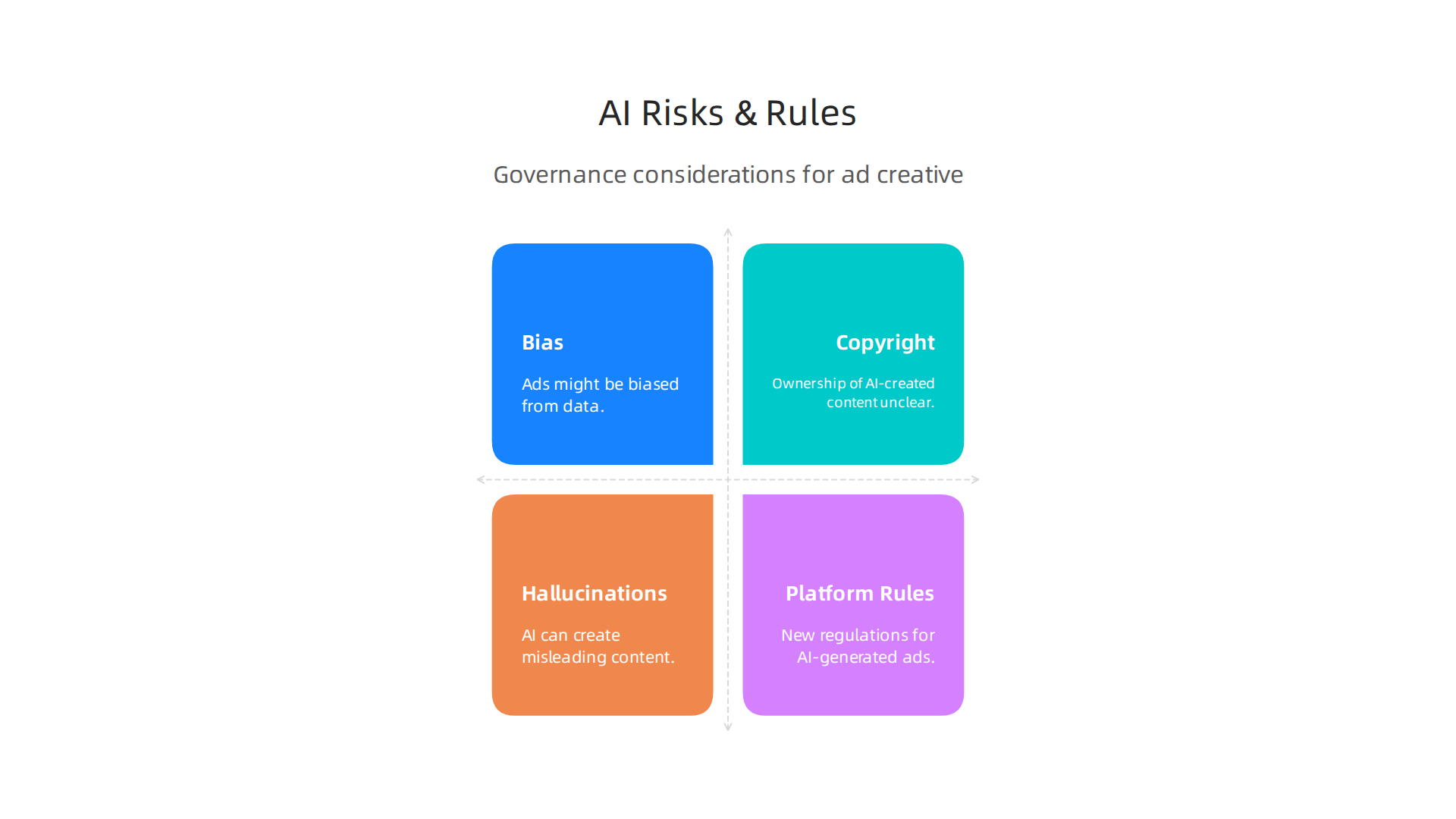
We need good rules, or "governance," to use AI responsibly:
- Bias: AI learns from data. If the data it learns from has unfair biases, the ads it creates might also be biased. This could mean showing certain products only to certain groups of people or using language that isn’t fair to everyone.
- Copyright: Who owns an image or video that an AI creates? This is a new and tricky question. Companies need to be careful to avoid problems with owning the things their AI makes.
- Hallucinations: Sometimes, AI can "make things up" or create things that are not real or correct. This can lead to misleading or even harmful
advertisement commercialsif not checked by a human. - Platform Rules: As AI becomes more common, advertising platforms and governments are making rules. For instance, the FTC treats AI creative much like regular user-generated content [Ads and AI: Leveraging AI Creative in 2026]. It’s likely that soon, all AI-generated
ad creativemight need to be clearly labeled as such, so people know when they are seeing something made by AI [EACA_AI Ad Trends 2026 – AI Hub Publication_final].
To use AI well, ad maker teams must set clear guidelines for how the AI should work.

This includes telling it about the brand’s voice and style so it creates ads that fit perfectly [The Best AI Advertising Campaigns of 2026: What Worked …]. Building a strong advertising ethos for trust in the AI era is more important than ever. By doing so, businesses can use AI’s power to create amazing ad creative while still being responsible and trustworthy.
Staying updated on how AI is changing the advertising world is key for any ad maker. Get clear daily AI updates to help you navigate these changes.
The AI Newsletter Worth Reading
Summary
This primer explains why ad creative is the central driver of campaign performance in 2026 and breaks down how teams should think about making effective ads. It defines ad creative as the assets, formats and creative elements—visuals, copy and CTAs—that combine to tell a story and drive action, and shows how format choice must match platform and campaign goals. The article walks through audience segmentation, message testing and matching creative to awareness, consideration and decision stages so leaders can target the right message at the right time. It then maps the end-to-end production process: briefs, roles, handoffs, iteration and variant management to speed delivery without sacrificing quality. You’ll also learn which tool categories (design editors, DAMs, creative automation, dynamic asset platforms and analytics) to consider and how to balance customization versus scale. Finally, it covers measuring creative with engagement, attention metrics, A/B/holdout tests and attribution, and explains how AI can accelerate idea generation and personalization while requiring governance for bias, copyright and transparency.