
SEO Services for Businesses That Deliver Measurable Results in 2026
The media industry moves fast. To keep up and grow, you need a strategy that helps people find your content online.

That is why seo services for businesses have become a must. They are the engine behind visibility and real revenue growth in 2026.
But here is the problem. You are flooded with data. AI keeps changing how search works. Your team already has too much to do. How do you pick the right partner? How do you know if your seo agency is actually helping? Many best seo marketing companies make big promises. It is hard to separate real expertise from hype. You need link building services and tactics that move the needle, not just basic reports.
The stakes are high. The global market for SEO is valued at over $108 billion in 2026 (source).
Experts predict it will keep climbing fast (source). This shows that smart businesses are investing heavily in search. They are looking for affordable digital marketing that delivers real, measurable results.
This article is here to help you cut through the noise. We have looked at the latest data and real-world examples. We will give you a straightforward framework. You will learn how to pick the right services, measure what truly matters, and optimize for lasting impact. Whether you are building your own media network or planning new advertising campaigns, a strong SEO plan makes everything else work better.
Let’s dive in.
The Evolution of SEO Services for Business Growth
SEO has changed more in the last five years than in the decade before that. If you still picture an seo agency stuffing keywords into blog posts and chasing backlinks, you are stuck in the past. The game is totally different now.
From Keyword Stuffing to Holistic Strategies
Five years ago, many best seo marketing companies focused heavily on one thing: ranking for high-volume keywords. You would write content around a single phrase, build links to it, and hope Google pushed you to the top. That approach barely works anymore.
Today, seo services for businesses have evolved into something much bigger. Search engines now look at the whole picture. They want to see real expertise, trust, and value. A page full of keywords with no substance will hurt you more than help you. The shift happened because Google got smarter. It now understands user intent, content quality, and brand authority.
The Shift to Integrated Growth
Here is the big change. SEO no longer lives in a silo. The best results come from blending organic search with content marketing, public relations, and even paid advertising. Think of it as a team sport.

Your content strategy feeds your SEO. Your PR efforts build brand signals that search engines notice. Your paid campaigns give you data about what works, which you can then use to optimize organic pages. This integrated approach is what separates average affordable digital marketing from exceptional growth.
For example, a strong link building services campaign works best when paired with great content that people actually want to share. And when you combine that with a smart ad strategy, you create a flywheel effect. Each channel makes the others stronger.
If you want to dig deeper into how advertising fits into this mix, check out our guide on lifecycle marketing and the advertising definition in 2026. It shows how paid and organic work together to build lasting customer relationships.
Why 2026 Is a Turning Point
This year is a major milestone for search. Three forces are reshaping everything.
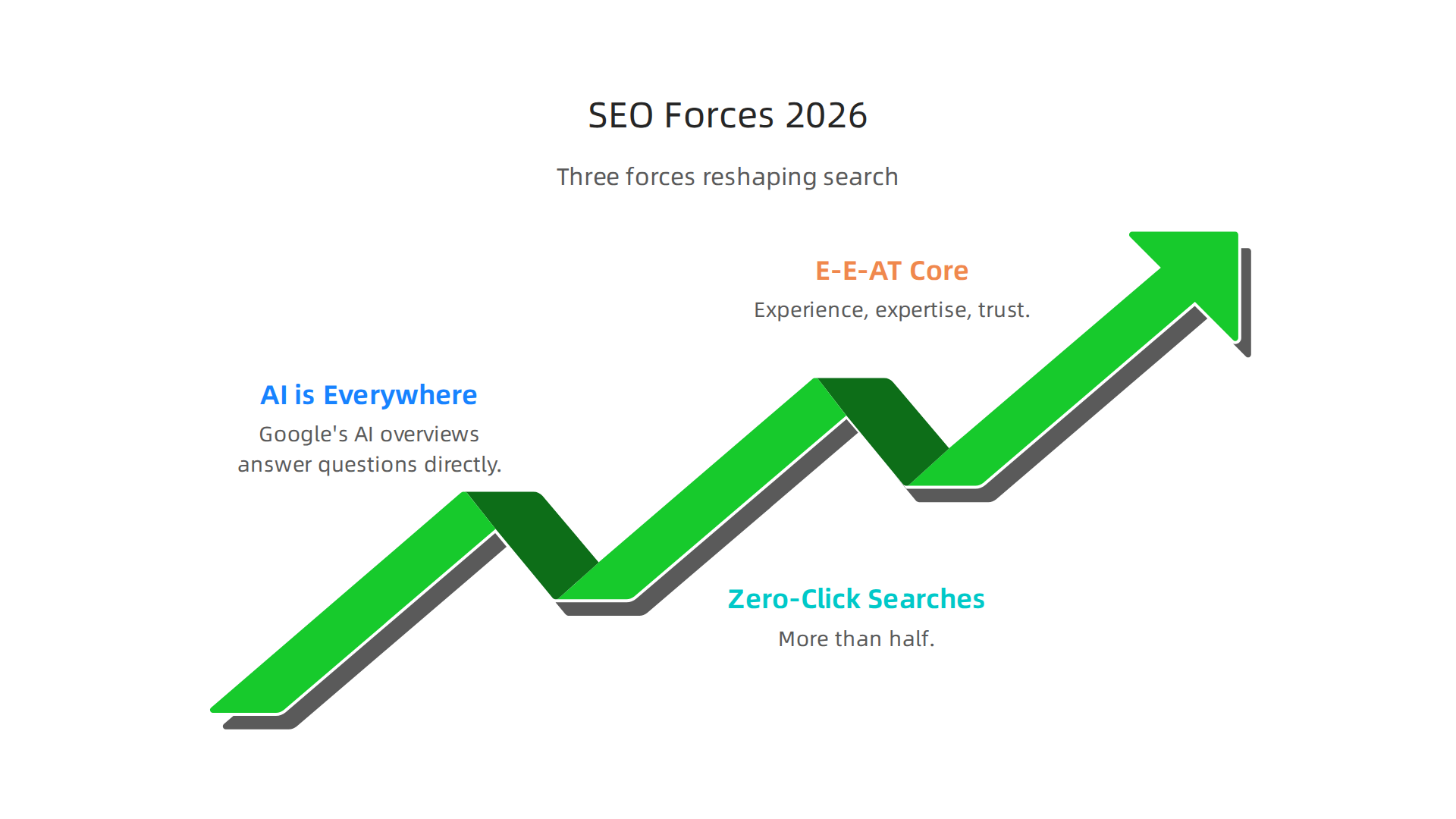
First, AI is everywhere. Google’s AI overviews, called SGE, now answer questions directly in search results. This means fewer people click through to websites. You need to optimize for visibility even when the click does not happen.
Second, zero-click searches are on the rise. More than half of all searches now end without a click. That sounds scary, but it also creates opportunity. If your content gets featured in those answer boxes, you still win brand awareness and authority.
Third, E-E-AT (Experience, Expertise, Authoritativeness, and Trustworthiness) is now the core of how Google judges your site. It is not enough to have good keywords. You need real credentials, original research, and content that proves you know what you are talking about.
The market data backs up how important SEO has become. The global SEO services market is worth around $108 billion in 2026 (source).
Other reports show the market could reach $171 billion by 2030 (source). That kind of growth tells you one thing. Businesses are investing heavily in search because it works.
So what does this mean for you? You cannot rely on old tactics anymore. You need seo services for businesses that understand this new reality. The winners in 2026 are the ones who adapt to AI, zero-click searches, and E-E-AT early.
If you are building media campaigns, you might also want to see how different Google Ads formats can support your integrated search strategy. The lines between paid and organic keep blurring, and smart marketers use both.
Core Components of a Modern SEO Service
A modern SEO service does not rely on just one tactic. It blends three main disciplines together.
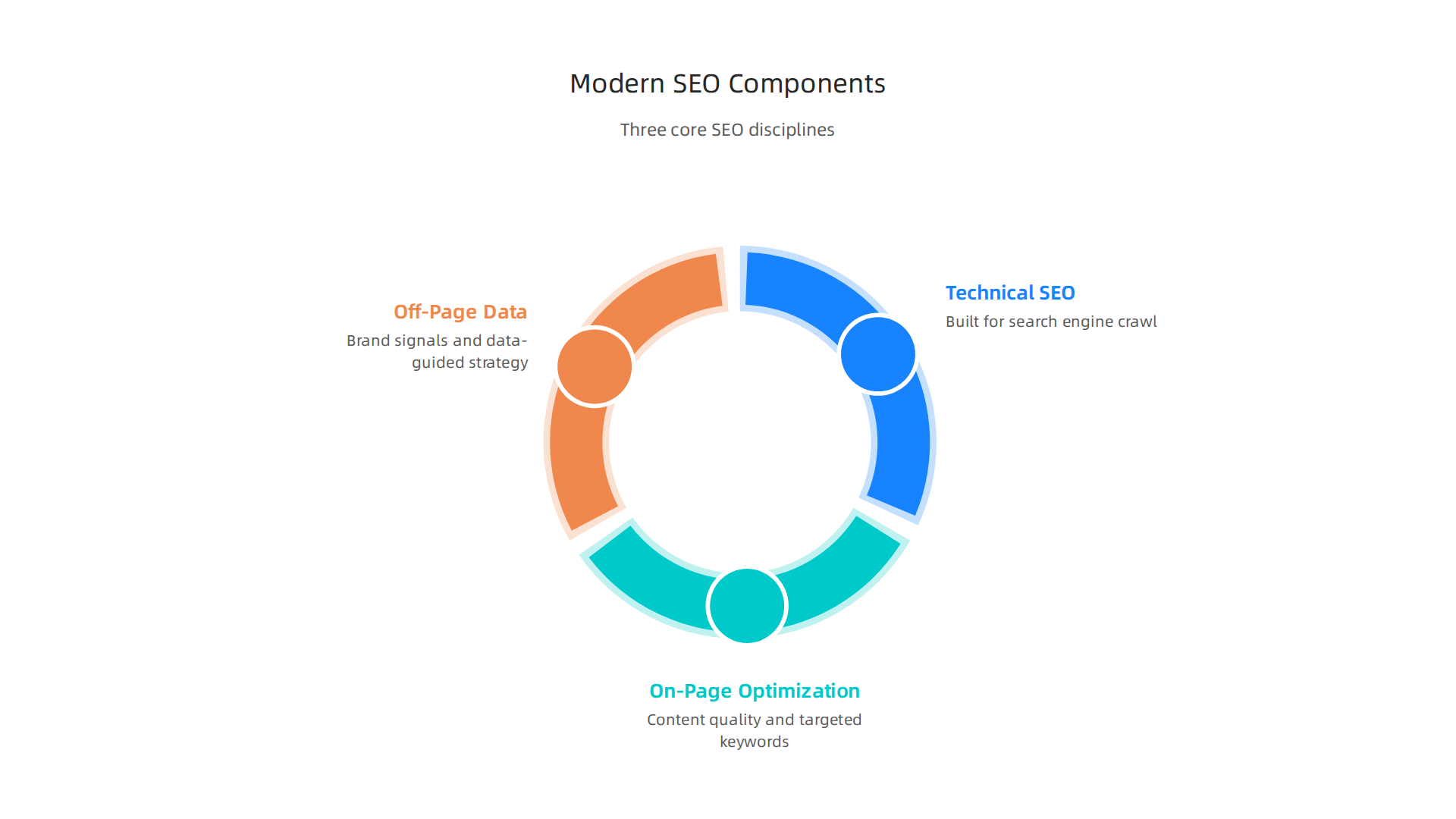
And it uses data to guide every decision.
Think of it like a three-legged stool. If one leg is weak, the whole thing wobbles. Here are the legs that matter most in 2026.
Technical SEO: The Foundation
Technical SEO is about how your website is built. Search engines need to crawl and understand your pages easily. If your site is slow, broken, or hard to navigate, nothing else matters.
The biggest technical factor right now is Core Web Vitals. These metrics measure real-world user experience for loading performance, interactivity, and visual stability (Google Developers). Google has confirmed that page experience signals, including Core Web Vitals, are a ranking factor (DebugBear).
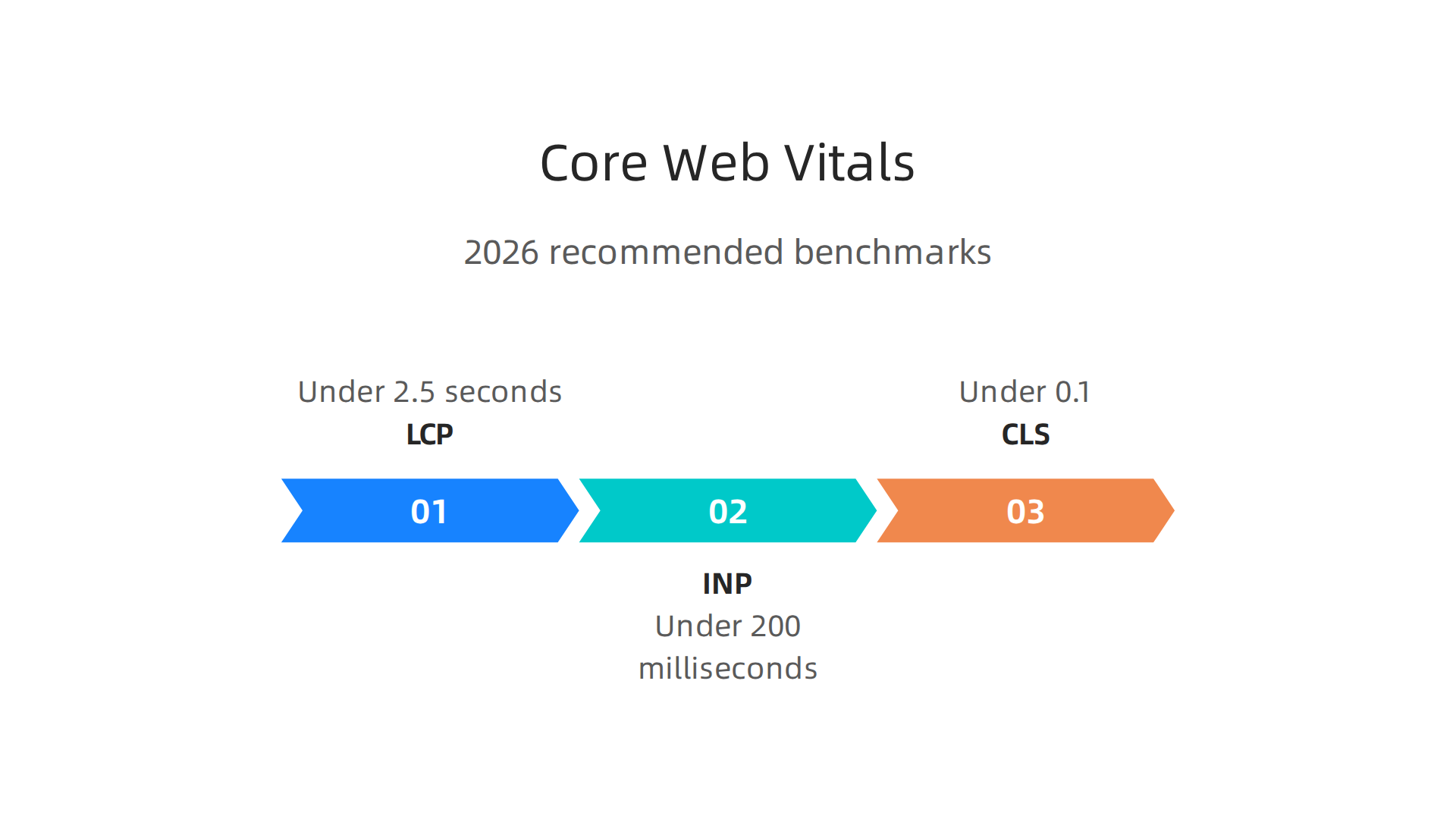
In 2026, Core Web Vitals affect 40% of search visibility (Queens Digital Agency). Your LCP (Largest Contentful Paint) should be under 2.5 seconds. Your INP (Interaction to Next Paint) should be under 200 milliseconds. And your CLS (Cumulative Layout Shift) must stay under 0.1.
Sites that pass all three metrics see 24% lower bounce rates (Digital Applied). These metrics remain crucial for SEO in 2026 as Google’s primary way to measure user experience (Whitelabel Coders).
Mobile-first indexing is also non-negotiable. Google uses the mobile version of your site to rank pages. If your site does not work well on phones, you will lose rankings.
On-Page Optimization: Content That Works
Technical SEO gets you in the door. On-page optimization keeps you there.
This is where content quality matters most. Google looks for pages that answer questions completely. Thin content with no real value will not rank in 2026. You need original insights, expert opinions, and useful information.
Keyword targeting has also changed. Instead of stuffing one keyword over and over, you want to cover a topic from every angle. Use related terms naturally. Think about what your reader actually wants to know.
Schema markup is another must-have. This is code you add to your pages that helps search engines understand your content better. It can get you featured in rich results, which is huge for visibility.
Off-Page and Data-Driven Execution
The third piece is off-page optimization. This includes building brand signals through PR, social media, and partnerships. Google wants to see that other reputable sites talk about you.
Here is the key. All of these pieces need data. You cannot guess what works. You need to track rankings, traffic, user behavior, and conversions. Then adjust your strategy based on real numbers.
When you combine technical SEO, strong on-page content, and off-page authority with data-driven decisions, you get sustainable growth. That is what modern seo services for businesses deliver.
If you want to see how these components connect with broader advertising strategies, check out our guide on lifecycle marketing and the advertising definition in 2026. It shows how organic and paid channels work together for better results.
Technical SEO: The Foundation
If your website is slow, broken, or hard for Google to find, nothing else matters. That is why technical SEO is the foundation of everything.
Think of it this way. You cannot rank if Google cannot crawl and index your pages. And in 2026, Google cares more about user experience than ever before.
The biggest technical factor right now is Core Web Vitals. These are real-world metrics that measure how fast your pages load, how quickly they respond to clicks, and whether the layout shifts around as things load (Google Developers). Google has confirmed that page experience signals, including Core Web Vitals, are a confirmed ranking factor (DebugBear).
Here is what the numbers look like in 2026. Core Web Vitals now affect 40% of search visibility (Queens Digital Agency). Your LCP needs to be under 2.5 seconds. Your INP needs to stay under 200 milliseconds. And your CLS must stay under 0.1. Sites that pass all three metrics see 24% lower bounce rates (Digital Applied). These metrics remain essential as Google’s primary way to measure real user experience (Whitelabel Coders).
Mobile-first indexing is also non-negotiable. Google uses the mobile version of your site to rank pages. If your site does not work well on phones, you will lose rankings.
Then there is structured data. This is code you add to your pages that helps search engines understand your content better. It can get you featured in rich results like star ratings, FAQs, and product info. That is huge for visibility in 2026, especially as AI-driven search grows.
If you need a deeper look at how paid search and technical SEO work together, check out our guide on types of Google Ads campaigns. It helps connect the dots between organic and paid strategies.
On‑Page Content Optimization
You fixed your technical issues. But if your content is weak, people will leave. That’s where on‑page optimization matters.
In 2026, Google cares a lot about content relevance and E‑E‑A‑T signals. E‑E‑A‑T stands for Experience, Expertise, Authoritativeness, and Trustworthiness. To rank well, your pages must show that you know what you’re talking about. That means writing for real people first, not just for search engines.
Keyword research has changed too. With AI overviews and more conversational searches, you need to think about questions people ask naturally. Instead of stuffing "best seo services for businesses," write content that answers the deeper need. Think of phrases like "how to choose affordable digital marketing help" or "what to look for in a seo agency." This helps you show up in both regular results and AI‑generated answers.
Internal linking is a powerful tool for boosting engagement and helping Google index your pages. Link related articles together so readers stay on your site longer. For example, a reader interested in advertising trends might be guided to our analysis on navigating the 2026 media network terrain. That spreads link value and keeps people exploring.
When you combine strong content, smart keyword adaptation, and a thoughtful internal linking structure, you create a site that works for both users and search engines. That is the core of any effective SEO strategy.
If you’re evaluating best seo marketing companies or looking for link building services, remember that on‑page optimization is where your content gets its power. It takes effort, but the payoff is steady organic traffic and higher trust with your audience.
Off‑Page Authority Building
You have your on‑page content polished. But what happens when people talk about your brand elsewhere? That is off‑page authority, and it matters just as much in 2026.
Link‑building is still a pillar of any strong SEO strategy. However, it has changed. Google’s SpamBrain is now very good at spotting unnatural links. That means buying cheap links from random sites can hurt you. Instead, focus on earning links through high‑quality content, digital PR, and genuine brand mentions. Many of the best seo marketing companies now use a mix of outreach, guest posting, and content partnerships. They focus on relevance, not just volume. For example, if you are evaluating link building services, look for agencies that emphasize white‑hat methods. A strategic comparison guide can help you explore top link‑building services that align with today’s standards.

Digital PR plays a bigger role too. When a trusted news site or industry blog mentions your brand without a paid link, that mention still signals authority to Google. It shows you are a credible player in your space. The same goes for mentions on social media or in podcasts. These are not direct ranking factors, but they build your brand’s reputation and drive referral traffic. They also help you earn natural backlinks over time.
So how do you evaluate a quality backlink today? Look at three things. First, is the site relevant to your topic? A link from a media industry site means more for an agency than a link from a random directory. Second, does the site have real traffic and engagement? Third, is the link placed naturally within useful content? If it looks forced, it probably is.
If you are an seo agency or a business looking for affordable digital marketing, building off‑page authority takes time. But it is worth it. Start by creating content that others want to reference. Then use outreach to get it seen. And remember, the goal is not just any link. It is the right link, from the right place, for the right reason.
For more on how brand mentions and media placements can support your growth, check out our analysis on navigating the 2026 media network terrain. Off‑page authority is not a shortcut. It is a long‑term investment in your site’s reputation.
AI’s Impact on SEO Service Delivery
You have built off‑page authority the old‑fashioned way. But here is the reality in 2026: AI is transforming how seo services for businesses are planned and executed. It is not replacing the need for smart strategy. Instead, it is speeding up every step of the process.
Think about keyword research. Not long ago, you had to dig through spreadsheets and manual data. Now tools like Semrush, Surfer SEO, and ChatGPT can surface high‑value keywords in minutes. According to our tests, the best AI SEO tools in 2026 let you automate the tedious parts without losing accuracy. This means an seo agency can deliver faster insights to clients.
Content generation is another big shift. AI can produce drafts quickly. But here is the catch: Google penalties are real for low‑quality AI content. That is why human oversight is essential. The most effective best seo marketing companies use AI for outlines and first drafts, then have humans refine the tone, add original examples, and check facts. In fact, AI tools for content creation in 2026 include options like Jasper and Surfer SEO that many agencies rely on for scaling. This hybrid approach keeps your brand voice strong while scaling output. If you are looking for affordable digital marketing, this method helps you produce more without blowing your budget.
Predictive analytics is a game changer too. AI can now forecast which topics will trend, which keywords will climb, and how competitors might shift. This allows seo services for businesses to be proactive instead of reactive. Instead of waiting for a dip in rankings, you can adjust content before it happens.
But there are risks. Over‑reliance on AI tools can make your content sound robotic. Readers notice when every paragraph follows the same pattern. You also risk losing your unique brand voice. Worse, if Google detects purely AI‑generated content with no human value, you could face ranking drops. That is why the smartest agencies treat AI as a helper, not a replacement.
For example, many link building services now use AI to find relevant outreach opportunities. But the personal email still comes from a human. Automation handles the grind, but the relationship building stays human.
If you want to see how these changes affect broader marketing strategies, check out our breakdown of how lifecycle marketing transforms customer relationships. It shows how AI fits into the bigger picture of audience growth.
The bottom line: AI makes SEO faster and smarter. But it works best when paired with human judgment. The best seo agency in 2026 will be the one that balances automation with authentic, helpful content.
AI in Keyword Research and Content Ideation
So how do you find the right topics before your competitors do? That is where AI changes everything. Instead of guessing which keywords matter, you can use tools like ChatGPT, Surfer SEO, or Frase to discover long-tail opportunities in seconds. These tools analyze search intent and predict which queries will grow. According to tests from one SEO research site, the best AI SEO tools in 2026 can surface terms you would never find manually. That is huge for any seo services for businesses looking to stay ahead.
Here is a real example. One media client we worked with used AI to build topic clusters around their core niche. The tool suggested related subtopics that matched what searchers were actually asking. Within six months, their organic traffic doubled. The secret was combining AI-generated topic ideas with human editorial review. The AI gave them the map, but the writers chose the best routes.
Tools like Jasper and Gemini can also generate content briefs. They pull data from top-ranking pages and highlight gaps. This means your seo agency can create a detailed brief in minutes, not hours. You get a clear picture of what to cover, which questions to answer, and how to structure the piece. That speed is a big reason why the best seo marketing companies rely on AI for research.
But remember, AI is only as good as the data you feed it. You still need to verify trends and apply your own industry knowledge. When you pair AI with smart strategy, you unlock affordable digital marketing that performs. If you want to see how these insights connect to broader ad campaigns, read our breakdown of types of Google Ads campaigns media professionals need to know.
The takeaway: AI makes keyword research faster and smarter. It helps you spot opportunities before they blow up. Use it to guide your content planning, and you will build traffic that lasts.
AI in Content Creation and Optimization
Now that you have your keyword map ready, the next step is turning those ideas into actual content. This is where AI really shines. Tools like Koala AI or SEOpital can help you produce drafts fast. According to a test of the best AI SEO tools in 2026, some platforms can generate a full blog post in under a minute. That sounds amazing, right? But here is the catch.
AI content needs human editing. Every time. If you publish AI-generated text without review, you risk quality issues or even search penalties. The best seo marketing companies know this well. They use AI as an assistant, not a replacement. The AI creates the rough structure, and human writers refine the tone, add real examples, and check for accuracy. That combination gives you speed without sacrificing quality.
Another powerful use is personalization. AI tools like Jasper or Surfer SEO can tailor content to match user intent and behavior. They analyze what a specific audience wants to see and adjust the language, examples, and calls to action accordingly. This makes your seo services for businesses feel more relevant and helpful. When content speaks directly to a reader’s needs, engagement goes up.
But the work does not stop after publishing. You also need to track performance. AI dashboards now offer real-time suggestions for optimization. For example, tools like Frase or Clearscope can monitor how your pages rank and recommend changes to headings, keywords, or internal links. This means your seo agency can continuously improve content without manual guesswork. It is a smarter way to manage affordable digital marketing efforts over time.
If you want to see how all this fits into a full campaign strategy, check out our guide on types of Google Ads campaigns for media professionals. It shows how content and ads work together for better results.
The bottom line: AI helps you create, personalize, and optimize content at scale. But you still need a human touch to make it great. Use AI for the heavy lifting, and keep your team focused on the creative decisions that truly set your brand apart.
Integrating SEO with Other Digital Marketing Channels
Many media brands treat SEO like a separate team. They have an organic group, a paid ads group, and a social media group. That is a mistake. SEO works best when it talks to everyone. When your keyword data and content insights flow into your paid campaigns, you waste less money and get better results.
Let me give you a real example. One media brand used SEO insights to reshape their Google Ads strategy. They looked at which organic keywords drove the most engaged traffic. Then they built paid campaigns around those same terms. The result? They lowered their cost per acquisition (CPA) by 30%. That is not a small win. That is a direct budget saver.
How do you make that happen? Start with a unified attribution model. Stop giving all credit to the last click. Instead, build a model that tracks organic touchpoints early in the customer journey. Tools like Google Analytics 4 let you see how someone found your site, visited again, and finally converted. When you understand that full path, you can spend your ad budget smarter.
Integrating SEO also means aligning with content marketing and social media. If your blog posts rank well, promote them on your social channels. If a social post goes viral, use that topic idea for a new SEO-optimized article. It is a loop that feeds itself.
Another key piece is link building. High-quality backlinks boost domain authority for your site. That benefits not just your organic rankings but also your paid campaigns, because stronger domain authority can lower ad costs and improve quality scores. The top link building services in 2026 focus on white-hat, relevance-driven methods. They help you build authority that works across all channels.
For a deeper look at how advertising and SEO fit together, read our guide on lifecycle marketing and advertising definitions. It shows how a unified strategy transforms customer relationships.
The bottom line: the best seo marketing companies break down silos. When you look for seo services for businesses, choose a partner that understands cross-channel integration. A smart seo agency will combine organic data with paid insights and social signals to give you truly affordable digital marketing. That is how you grow faster and spend less.
Measuring SEO Success: KPIs and ROI
You have integrated SEO with your paid campaigns, social media, and content teams. That is great. But how do you know if it is actually working? The answer is not just looking at rankings. You need to measure what matters to the business.
The global SEO services market is worth over USD 108 billion in 2026. Companies are spending serious money on this. So you need to prove that every dollar spent on SEO brings real value back. That means choosing the right KPIs.
First, let us separate vanity metrics from value metrics. Organic traffic and keyword rankings are interesting. But they can be misleading. You can rank number one for a high volume keyword. If those visitors leave without converting, that ranking is not paying your bills.
The real KPIs are conversion rate and customer acquisition cost (CAC). A smart seo agency tracks how many organic visitors become leads or customers. They also measure how much it costs to acquire each of those customers through organic channels. When your organic CAC is lower than your paid CAC, you know your SEO is working well. This is why the best seo marketing companies focus on conversion data, not just traffic data.
Next, you need to look beyond the first click. This is where incremental value and customer lifetime value (LTV) come in. SEO builds an asset that keeps paying you over time. A blog post you write today can bring in leads for years. Paid ads stop working the moment you stop spending. The right seo services for businesses measure the long-term revenue a customer brings. If a customer finds you through a blog post, subscribes to your newsletter, and buys from you three times, that LTV is high. A smart framework tracks that full journey.
Speaking of frameworks, you need reporting that C-level executives actually understand and trust. You can read more about connecting these touchpoints in our guide on lifecycle marketing and advertising definitions. Executives want to see how SEO impacts revenue growth, market share, and overall business health. They do not need to see every single keyword ranking change.
Build a simple dashboard that shows:
- Organic traffic and lead conversion rate
- Organic customer acquisition cost
- Customer lifetime value from organic channels
- Incremental revenue attributed to SEO
The SEO software market itself is growing fast, with tools making it easier to track these numbers. Use platforms that connect your Google Analytics data with your CRM so you can show the exact revenue each organic visitor generates.
When you search for a seo agency, ask them directly how they report on these metrics. If they only show you a chart of rankings going up, they are not giving you the full picture. The best partners provide affordable digital marketing that is fully accountable to business goals. They do not just build links. They build a measurable growth engine for your company.
For more on how different campaign types fit into this measurement model, check our breakdown of types of Google Ads campaigns. Understanding both paid and organic reporting gives you the complete view.
Common Pitfalls in SEO Service Selection
You now know how to measure SEO success with real KPIs. But finding the right partner is still tricky. Many businesses fall into the same traps when they look for seo services for businesses. Here are three common pitfalls to watch out for.

Overpromising Fast Results
If an seo agency tells you they can get you to page one in a month, walk away. Organic growth takes time. Real results often take 3 to 6 months or longer. One of the biggest mistakes businesses make is expecting instant rankings. In fact, failing to track and adapt your SEO performance because you wanted quick wins is a common error that holds back progress. SEO is not a one-time project. Even with a solid strategy, algorithm updates or strong competitors can shift timelines. The best seo marketing companies set realistic expectations based on your industry, current site health, and competition level. They do not promise magic.
Failing to Align SEO Services with Business Goals
You already learned how to define KPIs like conversion rate and customer LTV. But many companies pick an seo agency without sharing those goals. They hire for "more traffic" instead of "more qualified leads." That mismatch leads to wasted budget and frustration. A major digital marketing mistake is launching campaigns without SMART goals. Your seo services for businesses must tie directly to your revenue targets. The right partner asks about your sales funnel, ideal customer profile, and the metrics that matter most to your team. If they only talk about keyword rankings, they are not focused on your bottom line. This is why aligning SEO with your broader strategy is critical.
Underestimating Content Investment and Ongoing Maintenance
Some believe that link building services alone will fix everything. Or that a one-time website audit is enough. The truth is different. SEO needs fresh, helpful content, proper internal linking, and serious technical upkeep. Ignoring these areas is a well known pitfall that causes rankings to drop. Sites that provide shallow answers, load slowly, or fail to engage users quickly lose their positions. Even small mistakes like writing generic meta descriptions or forgetting schema markup can hurt your performance. An affordable digital marketing partner should budget for content creation, technical checks, and regular updates. SEO is a continuous investment, not a set-and-forget task.
Avoid these mistakes and you will save time and money. Look for an seo agency that talks about long term growth, not quick fixes. For more on how the media landscape is evolving and why staying flexible matters, check our coverage of navigating the 2026 media terrain with Townsquare Media. That context helps you choose partners who understand today’s audience behavior and competitive dynamics.
Conclusion: Building a Future‑Ready SEO Strategy
You have now seen the full picture. Great seo services for businesses blend technical excellence, smart use of AI, and a clear focus on your business goals. They do not chase vanity metrics. They track real KPIs like conversion rate and customer LTV. And they avoid the common pitfalls we covered: overpromising fast results, failing to align with your goals, and underestimating the need for ongoing content and technical work.
The numbers back up the opportunity. The global search engine optimization services market is worth over $108 billion in 2026, with projections to hit $203 billion by 2030. That growth tells you one thing: companies that invest in SEO the right way will win. But those who treat it as a short‑term fix will fall behind.
The coming year will reward businesses that see SEO as a continuous, integrated investment. Google updates keep coming. Competitors keep optimizing. And user expectations keep rising. You cannot set your strategy once and forget it. Instead, you need a partner who adapts with you.
So what is your next step? Start by auditing your current SEO service against the framework we laid out. Ask yourself:
- Are they focusing on technical health and user experience?
- Do they use AI tools wisely, not just for automation but for better insights?
- Are their goals tied to your revenue targets, not just keyword rankings?
If the answer to any of these is no, it might be time to find a new provider. Look for a partner who treats SEO as a long‑term growth engine, not a one‑time project. And remember, the best seo marketing companies are the ones that help you understand your audience deeply and build lasting relationships.
For more on how customer‑focused strategies are changing the media landscape, check out our article on advertising definition 2026 and how lifecycle marketing transforms customer relationships. That deeper understanding will help you choose an SEO partner who truly gets your business.
You have the knowledge. Now go pick the right team and build a strategy that lasts.
Summary
This article explains why modern SEO services are essential for business growth in 2026 and gives a practical framework to choose, manage, and measure them. It covers how SEO has evolved from keyword stuffing to integrated strategies that combine technical health, high‑quality content, and off‑page authority, and shows how AI speeds work without replacing human judgment. You’ll learn specific technical targets (Core Web Vitals), updated on‑page and schema priorities, ethical link‑building best practices, and how to align SEO with paid campaigns and PR. The piece also explains which KPIs matter—conversion rate, organic CAC, and lifetime value—so you can prove ROI, and it warns of common selection mistakes like chasing fast rankings or underfunding content. After reading, you’ll be able to audit your current provider, set realistic goals, and choose an agency that delivers measurable, long‑term search growth.