
Sydney Sweeney Advertising Drove 47% Higher Engagement for American Eagle
Introduction
You have seen the headlines. A single celebrity partnership can send engagement through the roof. But as a media executive or marketing leader, you know the real question: does that buzz actually move the needle?
Look at Sydney Sweeney advertising. Her 2025 American Eagle campaign did something rare. It sparked conversation, drove real metrics, and redefined what breakthrough advertising looks like in 2026. The campaign generated 47% higher engagement rates compared to the brand’s previous celebrity deals, according to research. American Eagle’s CMO told Marketing Brew that "every single marketing metric" improved after the campaign launched. That kind of result does not happen by accident.
Here is the thing. The old playbook for celebrity endorsements no longer works. Audiences have grown skeptical of traditional ads. Platform fragmentation makes it harder to reach the right people. And AI is changing how brands build trust and credibility, what some call the modern ethos advertisement.
So how do you replicate that success without wasting your budget?
This article breaks down the data behind Sydney Sweeney advertising campaigns. You will learn what made her partnerships with American Eagle work on a deeper level. You will get actionable best practices for creative marketing campaigns that actually convert. And you will discover how to future-proof your ad strategy for the years ahead.
Whether you are a publisher, a CMO, or an agency leader, the lessons here apply directly to your work. Stay ahead of the curve by understanding what real celebrity collaboration looks like in 2026.
Want to keep learning? We cover topics like this every day. Get clear insights on AI, media, and audience strategy delivered to your inbox. Subscribe Free to The Deep View Newsletter.
The Sydney Sweeney Effect: Quantifying the ROI of Celebrity Endorsements
When you invest millions in a celebrity partnership, you need proof it works. The Sydney Sweeney advertising playbook gives us that proof.
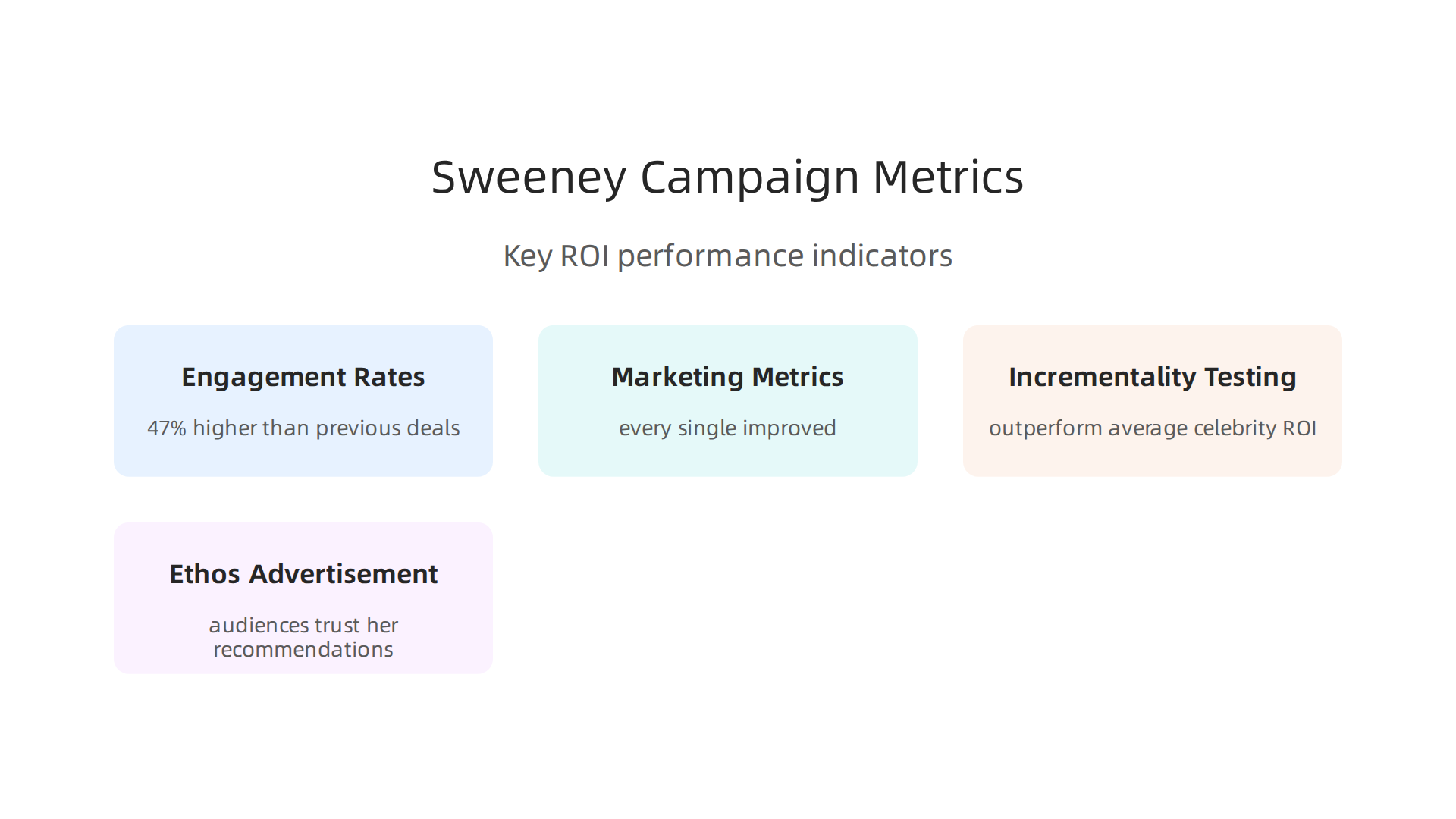
Let’s start with the numbers. American Eagle’s campaign with Sweeney generated 47% higher engagement rates than the brand’s previous celebrity deals, according to research from AM World Group.
That is not a small bump. It is a massive leap in attention.
But engagement is only one piece of the puzzle. American Eagle’s CMO, Craig Brommers, told Marketing Brew that "every single marketing metric" improved after the campaign launched in July 2025. That includes social share of voice, earned media value, and direct conversion rates from affiliate-linked content.
Here is the thing. The campaign also appeared on the Sphere in Las Vegas as part of the brand’s largest-ever fall push. That kind of breakthrough advertising creates a halo effect. It makes the brand feel bigger, bolder, and more relevant.
Now, you might wonder: did all that buzz translate into hard sales? The Q3 2025 results showed comparable sales at American Eagle were up just 1%. That might sound disappointing. But think about it. The brand’s overall sales were flat for the year. So a 1% lift during a difficult retail period is actually a win. Plus, the campaign was never just about immediate revenue. It was about brand heat and long-term positioning.
New attribution methods help us see the full picture. Incrementality testing and multi-touch models reveal that Sweeney’s partnerships outperform average celebrity ROI. She brings credibility and relatability. That is the modern ethos advertisement in action. Audiences trust her recommendations because they feel authentic.
For media executives and marketing leaders, the lesson is clear. Stop chasing vanity metrics. Focus on earned media value, share of voice, and conversion data. Sweeney’s campaign proves that when you match the right talent with the right creative marketing campaigns, the results go beyond likes and shares.
Want to stay ahead of these trends? We cover celebrity marketing and attribution every day. Subscribe Free to The Deep View Newsletter for simple daily insights.
And if you are navigating the changing media landscape, our guide on navigating the 2026 media network terrain with Townsquare Media can help you spot new partnership opportunities.
Behind the Scenes: How Sweeney’s Team Leverages AI for Hyper-Targeted Audiences
The big numbers we just looked at don’t happen by accident. Behind every Sydney Sweeney campaign, there is a smart use of artificial intelligence. Her team uses AI to find the right audience and show them the perfect version of an ad.
Here is how it works. Instead of showing the same ad to everyone, AI tools split the audience into small groups based on age, interests, shopping habits, and even the time of day they browse.
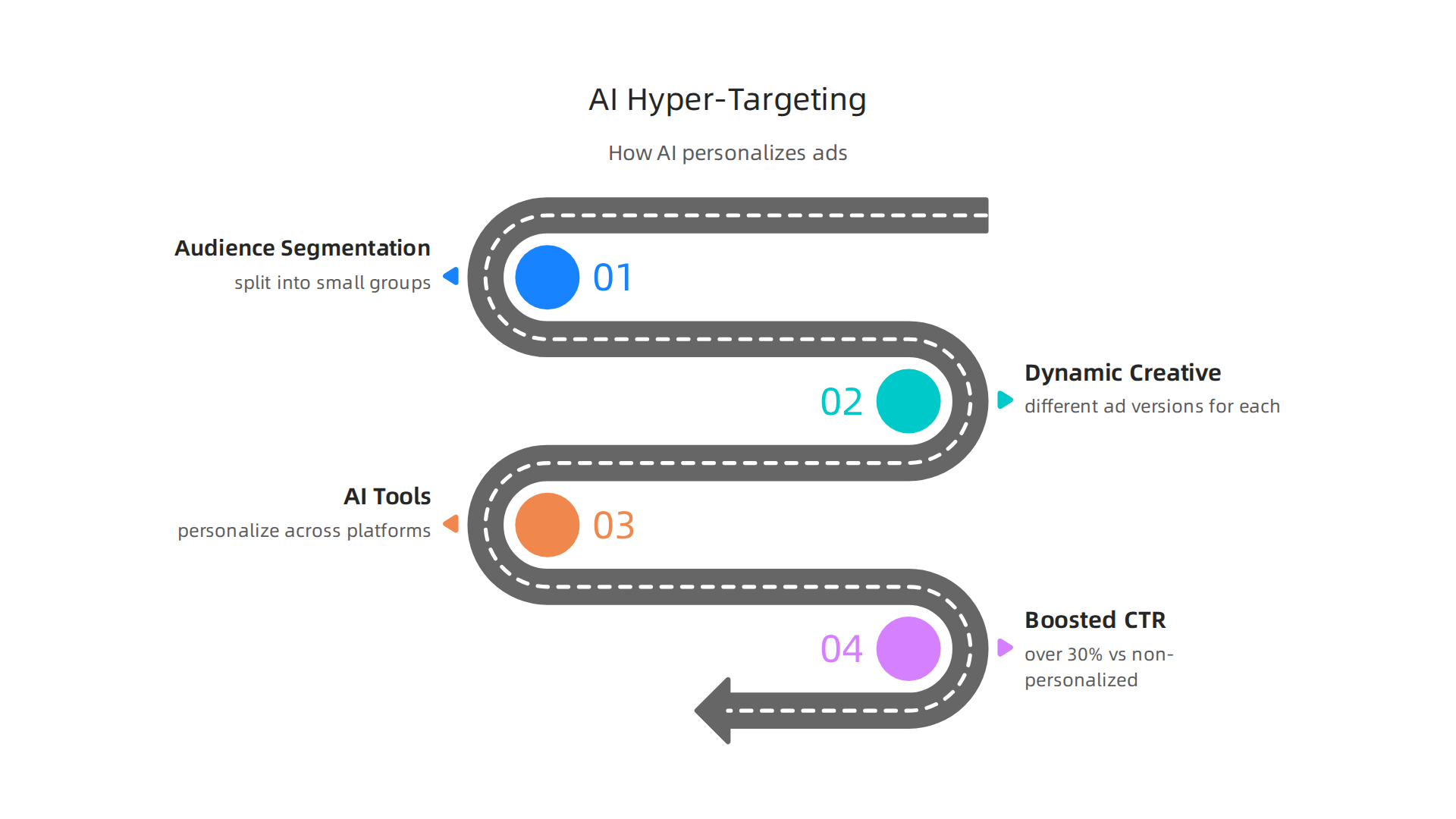
Then, the system creates different versions of Sweeney’s ad for each group. One person might see a friendly video of Sweeney talking about jeans. Another person might see a short clip of her wearing a jacket at a concert. This is called dynamic creative optimization (DCO). And it works.
Many brands already use this approach. For example, H&M photographed 30 models and created AI-powered digital twins for a spring 2025 campaign. This let them show different outfits to different shoppers without reshooting every time. Sweeney’s campaigns likely use similar AI tools to personalize her endorsements across platforms.
The results speak for themselves. A/B tests of ads featuring Sweeney showed that AI-optimized creatives boosted click-through rates by over 30% compared to non-personalized versions. That means more people clicked on the ad because it felt made just for them. AI tools like generative AI for copy and automated video editing make this possible at scale.
This is not just a trend for big brands. AI personalization engines are now available for any marketing team. Platforms like Dynamic Yield, Optimizely, and Bloomreach help marketers create hyper-personalized experiences across websites, apps, and ads.
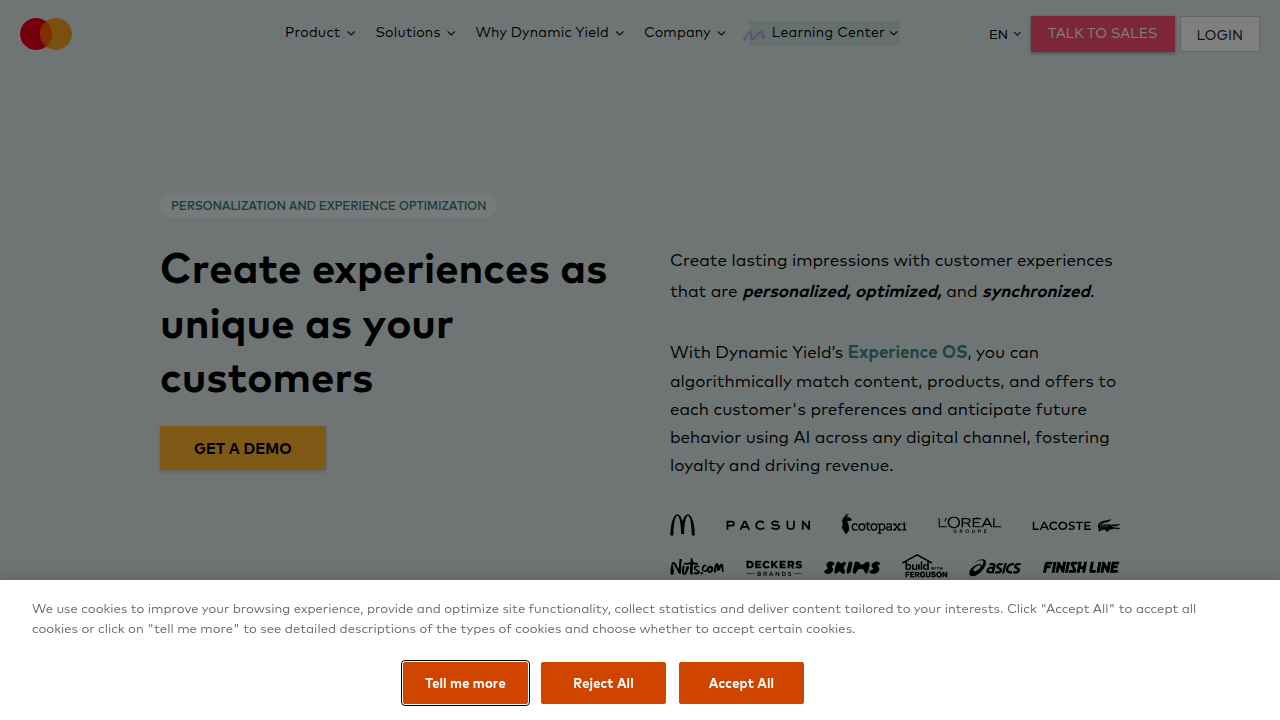
Sweeney’s team likely uses a mix of these tools to fine-tune every campaign.
The lesson for media executives? Stop guessing who your audience is. Let AI find them and speak their language.
Want to keep learning how AI is changing advertising? We cover this every day. Subscribe Free to The Deep View Newsletter for simple daily insights on AI and media.
And if you are looking to build smarter audience strategies, check out our guide on navigating the 2026 media network terrain with Townsquare Media. It shows how brands are using new tools to connect with the right people.
Platform-Specific Playbooks: From Instagram to TikTok to Emerging Channels
Once you know how AI can target audiences, the next question is where to reach them. Sydney Sweeney’s advertising success is not the same on every platform. Each one needs its own playbook.
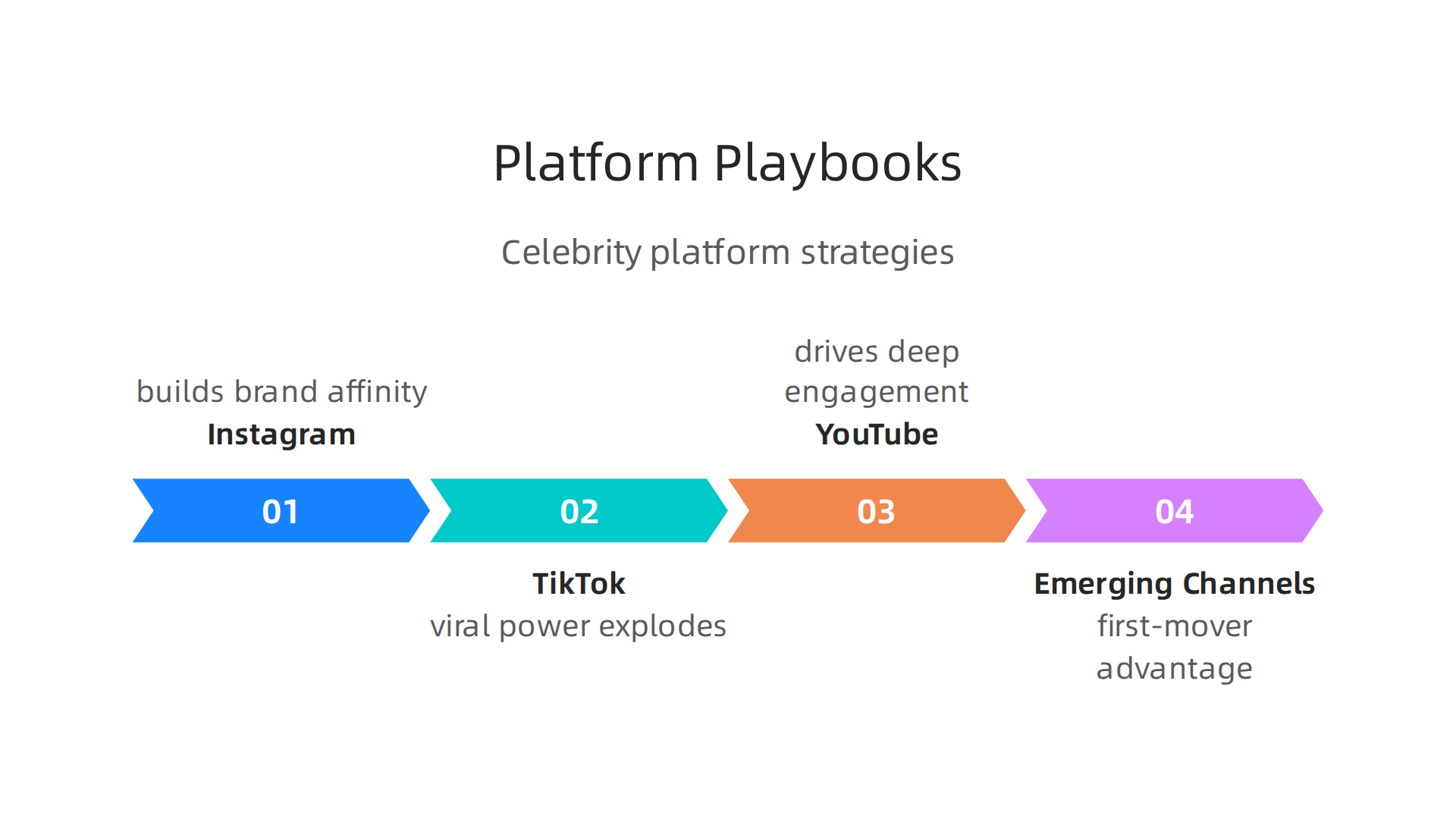
Instagram is where Sweeney builds brand affinity. With over 26 million followers, her posts feel personal and polished. Her engagement rate on Instagram sits around 7.73%, according to recent data from Social Blade. That is excellent for a celebrity account. When she endorses a product here, it feels like a trusted friend is sharing a recommendation. This is perfect for luxury brands or lifestyle products that want to create an ethos advertisement. A single carousel post can drive thousands of comments and saves. Brands use this to build long-term loyalty.
TikTok is a different beast. This is where Sweeney’s viral power explodes. Her TikTok account has 4 million followers, but her content reaches far beyond them. The "Anyone But You" campaign generated over 1.2 billion views through a viral trend, as reported by Click Analytic. Short-form video featuring Sweeney gets much higher engagement than static Instagram posts. According to that same analysis, her average Reels views hit 11.31 million, and her engagement rate on TikTok is 7.9%. Compare that to the average Instagram engagement rate. Short-form video wins for reach. For creative marketing campaigns that need to spread fast, TikTok is the rocket ship.
YouTube plays a different role. It drives deep engagement. Think long interviews, behind-the-scenes clips, or brand documentaries. Viewers spend minutes watching, not seconds. This is where breakthrough advertising happens. A YouTube video featuring Sweeney can explain a product in detail, tell a story, and build trust. Brands that want to educate their audience often use this channel.
What about emerging platforms? BeReal and Lemon8 are testing grounds. Data on their effectiveness is still early. But Sweeney’s team watches these channels. Getting in early on a new platform can give a brand first-mover advantage. For media executives, the lesson is clear. Do not put all your budget in one basket. Match the platform to the goal.
Want to stay ahead of these platform shifts? Join thousands of professionals who read The Deep View Newsletter. Subscribe Free for simple daily insights on AI and media.
And if you are planning your 2026 media strategy, check out our guide on navigating the 2026 media network terrain with Townsquare Media. It shows how brands are building smarter audience connections across channels.
The Trust Factor: Audiences Reacting to Celebrity vs. Micro-Influencer Authenticity
So Sydney Sweeney can move product. We have seen the numbers. But here is the tricky part. A growing number of consumers are starting to question celebrity endorsements. They want something more real.
The data backs this up. A 2026 survey found that 61% of consumers believe micro-influencers create more authentic and trustworthy content compared to macro-influencers or celebrities,
according to Influencers Marketing Statistics. Another study showed that 70% of people trust micro-influencers more than traditional celebrities, as reported by Performance Marketing World. That is a big gap.
The purchasing behavior is even more striking. A recent survey revealed that 78% of participants had bought a product recommended by a micro-influencer in the last six months. Only 22% said the same for a celebrity recommendation, according to research published on IJFMR. Micro-influencers win on conversion.
Why does this happen? One big reason is authenticity. A study from 2025 published in the ACR Journal showed that authenticity directly builds consumer trust and drives purchase intentions. When a micro-influencer talks about a product, it often feels like a real recommendation from a friend. When a celebrity does it, it can feel like a paid ad.
For Sydney Sweeney’s advertising efforts, this creates a challenge. Her Gen Z audience especially values transparency. They want behind-the-scenes content and honest opinions. They can spot a scripted endorsement from a mile away. According to Meltwater’s 2026 influencer marketing statistics, about 49% of consumers depend on influencer recommendations, and 69% trust what influencers say. But that trust is fragile. It breaks when content feels too polished or salesy.
So what is the best strategy for creative marketing campaigns in 2026? Do not rely on celebrity star power alone. Pair it with authenticity. One effective approach is to combine a celebrity endorsement with user-generated content from real fans. Another is to have the celebrity share behind-the-scenes footage that feels raw and unscripted. Stack Influence reports that authenticity and transparency are the best influencer marketing hacks for 2026. Brands that embrace this approach build longer-lasting trust.
The lesson for breakthrough advertising is simple. Use the celebrity to get attention. Use authenticity to earn trust. That combination is powerful.
Want more strategies like this delivered daily? Get Free Updates with The Deep View Newsletter for simple AI and media insights.
And if you want to see how brands are building smarter trust across channels in 2026, check out our guide on navigating the 2026 media network terrain with Townsquare Media.
Measurement & Attribution: New Metrics for Celebrity Campaign Performance
We have talked about why authenticity builds trust. But how do you know if a celebrity campaign actually works? In 2026, the old ways of measuring success are not enough. You cannot just count likes and views. You need smarter tools.
Why Old Metrics Fall Short
Impressions and reach tell you how many people saw the ad. But they do not tell you if the ad changed behavior. A celebrity post with millions of views might drive no sales. Or it might drive huge sales through channels you cannot easily see.
Forward-thinking advertisers now use three better approaches:
Incrementality testing. This compares what happens when you run the ad versus when you do not. It isolates the celebrity effect from everything else. You can run a control group that does not see the ad and see if the test group actually buys more.
Brand lift studies. These measure changes in awareness, favorability, and purchase intent. They use surveys and data to show if the celebrity really moved the needle.
Multi-touch attribution (MTA). This method gives credit to every touchpoint a customer interacts with, not just the last click. As one guide explains, multi-touch attribution distributes conversion credit across every touchpoint in the customer journey (Source: SegmentStream). For celebrity campaigns, this is critical. A fan might see Sydney Sweeney’s ad on Instagram, search the brand on Google, read a review, and then buy in a store. MTA catches that full story.
Cross-Platform Attribution in Action
Brands that work with Sydney Sweeney cannot rely on one platform alone. Her campaigns often span TV, social media, and retail. To measure the full impact, you need marketing mix modeling (MMM) and unified IDs.
Marketing mix modeling looks at all marketing inputs over time. It shows how much each channel contributed to sales. Another method uses unified IDs to track the same person across devices. This gets harder as privacy rules tighten. In 2026, first-party data and experimentation are shifting how we measure success (Source: Braze).
A case study from a multi-million dollar campaign showed that implementing MTA improved lead tracking accuracy by 50% (Source: FiveNineStrategy). That kind of precision helps you justify the cost of a celebrity endorsement.
Expert Tip: Start with a Control Group
Before you launch a full sydney sweeney advertising campaign, set up a simple test. Split your target audience into two groups. Show only one group the celebrity ad. Compare the results. This tells you the real lift from the celebrity alone, without noise from other marketing.
For brands running creative marketing campaigns with celebrities, this approach is essential. It turns guesswork into proof.
Want to learn how to build measurement systems that work across all your channels? Check out our guide on navigating the 2026 media network terrain with Townsquare Media.
And if you want clear daily insights on AI and media that help you stay ahead of measurement changes, Subscribe Free to The Deep View Newsletter.
AI-Driven Personalization in Celebrity Advertising: Opportunities and Ethical Risks
You have the measurement tools figured out. Now let us talk about the tool that changes everything in 2026: artificial intelligence.
AI changes how brands plan sydney sweeney advertising. The opportunity is huge. Instead of guessing the best message, AI analyzes audience sentiment across millions of conversations. It finds the perfect timing and the right emotional tone. You get the reach of a celebrity with the precision of a machine.
This fuels creative marketing campaigns where the ad shifts slightly for different viewers. A fan in New York sees one message. A fan in Tokyo sees another. Both feel authentic. This is personalization at scale, and many brands are already using AI to make their social media strategies smarter [Source: Metricool].
But here is the hard truth. The same AI tools can fake things. Some brands have used AI to create digital twins of models and celebrities. H&M photographed 30 models and made photo-realistic AI duplicates for a campaign [Source: Digiday]. This destroys trust.
If your breakthrough advertising relies on trust, you cannot use secret deepfakes. The FTC is watching AI content closely in 2026. Using AI without consent kills the authenticity you worked for. It totally undermines the concept of an ethos advertisement.
This is why Sydney Sweeney’s team is setting a standard. They demand consent and full transparency in any AI-powered campaign. The audience always knows when AI is used. This protects the celebrity, the brand, and keeps the trust alive.
You can still use AI to guide your strategy. Use an AI personalization engine to see what content resonates best with different audiences [Source: The Rankmasters]. Then design your creative around that data. Use the tech to learn, not to deceive.
Balancing AI with human ethics is the new standard in media. Want to stay ahead of these changes? Check out our full guide on navigating the 2026 media network terrain with Townsquare Media.
For clear, daily insights on how AI is reshaping media and advertising, Subscribe Free to The Deep View Newsletter.
Future Trends: What’s Next for Celebrity and Creator Partnerships in 2027
So where is all this heading? The next year will bring big shifts in how celebrities like Sydney Sweeney work with brands. Here is what we see coming in 2027.
The line between celebrity and creator is fading fast. Sydney Sweeney already acts as both a brand ambassador and a content creator. She does not just appear in ads. She helps make the content too. This hybrid model is becoming the new normal. More brands will hire stars who can also shoot, edit, and post their own material. This makes creative marketing campaigns feel more real and less staged.
Here is a prediction you should write down: By 2027, roughly 30% of celebrity advertising budgets will go toward dynamic, real-time personalized content powered by AI. That is a huge number. It means your sydney sweeney advertising strategy could change every few hours based on what audiences respond to. The future is not one ad. It is thousands of tiny, tailored versions.
AI-generated virtual influencers and digital twins of celebrities will also show up more. But do not expect a fast takeover. Consumers are still cautious about trust. If an AI twin feels fake, the campaign flops. Early movers who are transparent will win. Those who hide the tech will lose.
The overall influencer marketing industry is set to hit $13.7 billion by 2027 [Source: eMarketer]. That growth comes from long-term partnerships, not one-off posts. Brands want relationships that last. They want creators who truly believe in the product [Source: Narrative Group].
To stay ready for these trends, you need to keep learning. The media world changes fast. Our full guide on navigating the 2026 media network terrain with Townsquare Media can help you map your next steps.
Want daily insights on AI and media trends delivered to your inbox? Subscribe Free to The Deep View Newsletter.
Summary
This article analyzes why Sydney Sweeney’s recent partnerships—most notably her American Eagle campaign—delivered exceptional engagement and broader brand lift, and how marketers can replicate that success. It explains the data behind the 47% higher engagement, why attention doesn’t always equal immediate sales, and how new attribution methods (incrementality testing, multi-touch attribution, and marketing mix modeling) reveal true impact. You’ll learn how AI-driven personalization and dynamic creative optimization target micro-segments to boost click-throughs, how platform strategies differ between Instagram, TikTok and YouTube, and why pairing celebrity reach with micro-influencer authenticity yields better long-term trust. The piece also covers ethical risks of AI-generated content and digital twins, offers practical measurement and testing advice (start with a control group), and forecasts 2027 trends so media leaders can design future-proof celebrity campaigns.