Marketing Major 2026 Why Employers Want More Than a Degree
Introduction
Is earning a marketing degree still worth it in 2026? If you are a marketing major or thinking about becoming one, you have probably asked yourself this question. And the honest answer is yes, but with a catch. The marketing field has changed a lot in the last few years. AI tools, data analytics, and digital platforms are now at the center of everything. A traditional marketing degree still matters, but you need to adapt to what employers actually want today.

The good news is that opportunity is still strong. According to data from the Bureau of Labor Statistics, marketing managers earn a median salary of $161,030 per year, and the field is growing faster than average through 2034. Companies need people who understand both the fundamentals and the new tools shaping the industry.
That is where this guide comes in. We will give you a clear, data-backed roadmap for making the most of your marketing major. Whether you want to understand what a marketing strategist does, build a strong marketing portfolio, or learn from the best marketing books and behavioral marketing trends, you will find practical advice here.
The field is changing fast, and staying ahead means learning continuously. One smart way to do that is by keeping up with daily AI and tech updates. For that, we recommend The AI Newsletter Worth Reading. It delivers clear insights straight to your inbox.
If you are curious about specific career paths, check out our guide on marketing manager roles and skills for a deeper look. The bottom line is this: with the right strategy, your marketing major can open doors to a rewarding career.
Is a Marketing Major Still Worth It in 2026?
Yes, a marketing major is still worth it in 2026. But the rules have changed. The degree gives you a solid foundation. What you add on top of it determines how far you go.
The numbers back this up. The US Bureau of Labor Statistics data for 2026 shows that marketing managers earn a median of $161,030 per year. The field is growing by 6% through 2034, which is faster than the average for all jobs. New graduates are not starting at that level, but the path is clear. According to Coursera’s marketing salary breakdown, graduates with a bachelor’s in marketing earn an average of $67,990. Entry-level roles like digital marketing specialist or marketing coordinator start around $40,000 to $55,000 depending on where you live. Indeed’s marketing salary guide shows that social media managers average $55,933 and digital marketers average $62,307. These numbers climb fast with experience.
So the earning potential is real. But employers today want more than a diploma. They want proof that you can execute. They want to see a marketing portfolio that shows real campaign results. They want to know you understand behavioral marketing, not just textbook theory. And they expect you to be comfortable using AI tools for tasks like content creation and data analysis.
This is why specialization matters so much. Robert Half salary trends for marketers show that marketing analytics professionals and content strategists are getting the biggest pay increases. Employers often ask, what is a marketing strategist? It is someone who plans big campaigns using data and creativity. As a marketing major, aiming for this kind of role means focusing on analytics and digital strategy courses early.
Building real skills outside of class is essential too. Start a blog. Run a small ad campaign for a local business. Read the best marketing books in your free time to stay sharp. If you are wondering where to begin, our guide on digital marketing platforms in 2026 covers the essential tools every marketer needs today.
A marketing major is still a strong investment. But you must pair it with real digital skills, curiosity about AI tools, and a strategic mindset. Do that, and you will be in high demand.

Core Skills Every Marketing Major Needs for Media & Advertising
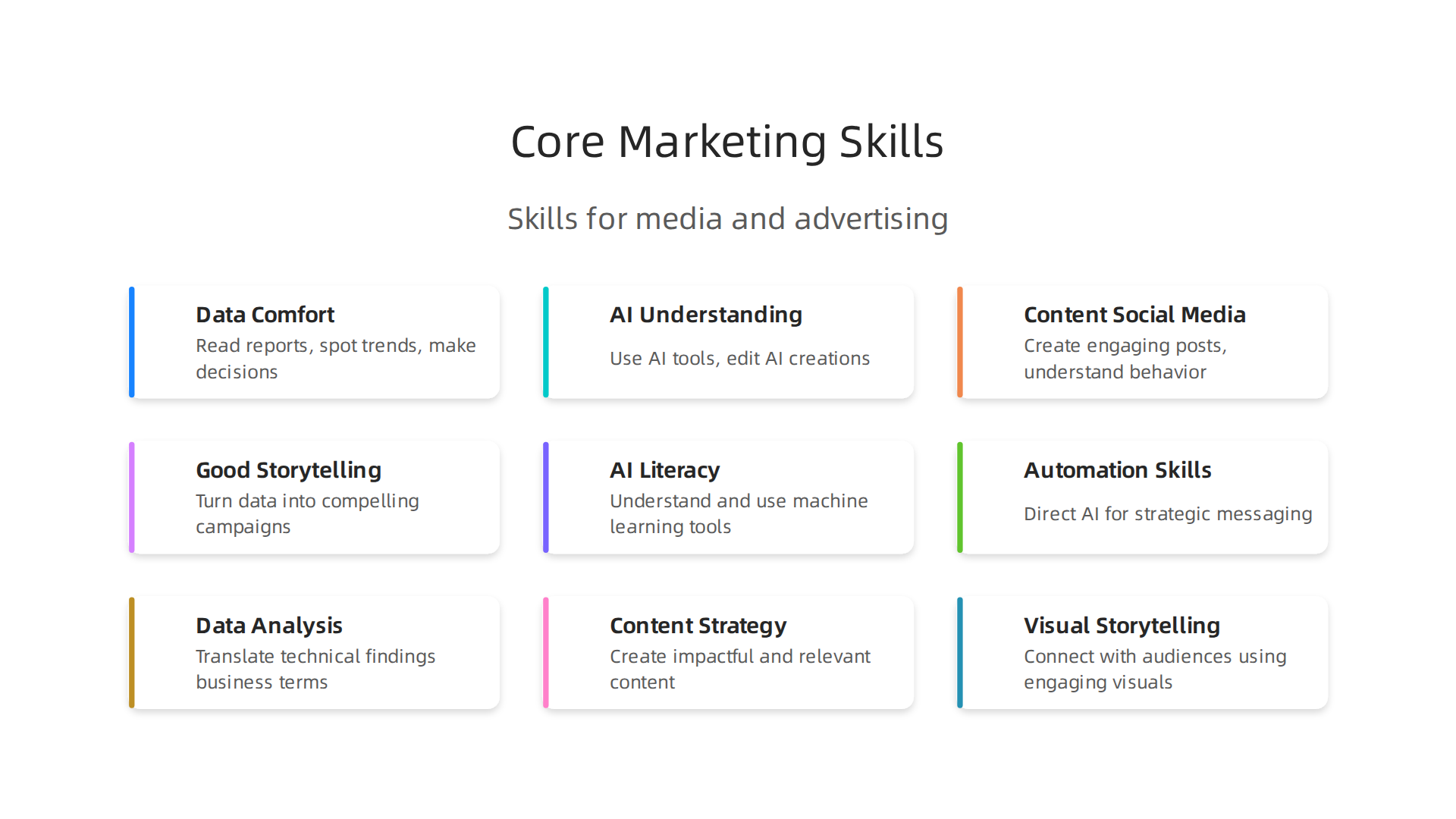
So what does it take to be in high demand in 2026? Your marketing major gives you a broad base of knowledge. But to really stand out in media and advertising, you need to build specific core skills.
Let us look at what employers are hunting for right now.
First, you must get comfortable with data. Marketing today runs on numbers. You do not need to be a statistician. But you must know how to read campaign reports, spot trends, and make decisions based on facts. According to a guide to marketing skills for 2026, data analysis lets you connect your work to real business results. This is a skill you should show off in your marketing portfolio. Build a sample campaign, track the results, and explain what you learned.
Next, you need to understand AI. It is changing how the whole industry works. LinkedIn’s 2026 Skills on the Rise report shows that AI literacy is now the second most important marketing skill. You should know how to use AI tools to write drafts, analyze data, and brainstorm ideas. But you also need to edit and improve what the AI creates. For a deeper look, check out this guide on creative advertising jobs in 2026 skills AI and career paths. One easy way to stay current is to get clear daily AI updates from The Deep View Newsletter.
Third, content marketing and social media management are non-negotiable. You need to know how to create posts that stop the scroll. You also need to understand behavioral marketing. That means knowing what makes people click, share, and buy. It is about psychology as much as it is about writing. This matches exactly what employers are looking for in 2026 digital marketing skills, where content creation is seen as a foundation. To get started, explore the best social media management tools 2026 guide.
Finally, never underestimate the power of good storytelling. Data tells you what is happening. Stories tell people why they should care. The best marketers can take a spreadsheet and turn it into a campaign that touches people. Reading the best marketing books can sharpen this skill. Seeing it in action helps too. Look at these 10 pathos ads that prove emotional advertising wins to understand how emotion drives real results.
Master these four areas, and your marketing major will take you far in media and advertising.
Top Career Paths for Marketing Majors in Media & Advertising
Now that you know the core skills, let’s look at where those skills can take you. A marketing major opens doors to many different jobs. Some roles have been around for decades. Others are brand new in 2026. Here is what you need to know.
Traditional Roles That Still Pay Well
Your marketing major prepares you for roles like brand manager, digital strategist, media buyer, and content marketing manager. Each one uses different parts of your training. A brand manager shapes how people see a company. A media buyer decides where to spend ad money for the best return. A content marketing manager leads a team that creates blogs, videos, and social posts.
The job outlook is strong. The Bureau of Labor Statistics says overall employment for advertising, promotions, and marketing managers will grow by 6 percent from 2024 to 2034. That is faster than the average for all jobs. They also report about 36,400 new openings each year. You can check the full Advertising Promotions and Marketing Managers outlook for more details.
New Roles You Need to Know
The industry is changing fast. Some jobs that barely existed five years ago are now in high demand. An AI marketing specialist helps teams use artificial intelligence to personalize ads and automate tasks. A growth data analyst digs into numbers to find what drives more sales. These roles blend creativity with technical know-how.
According to a marketing hiring expert, the Marketing roles to watch for 2026 include Content Strategist, Marketing Analytics Specialist, and AI-Integrated Marketing positions. Employers want people who can mix data, creativity, and technology. That fits perfectly with a strong marketing major foundation.
How Career Progression Works
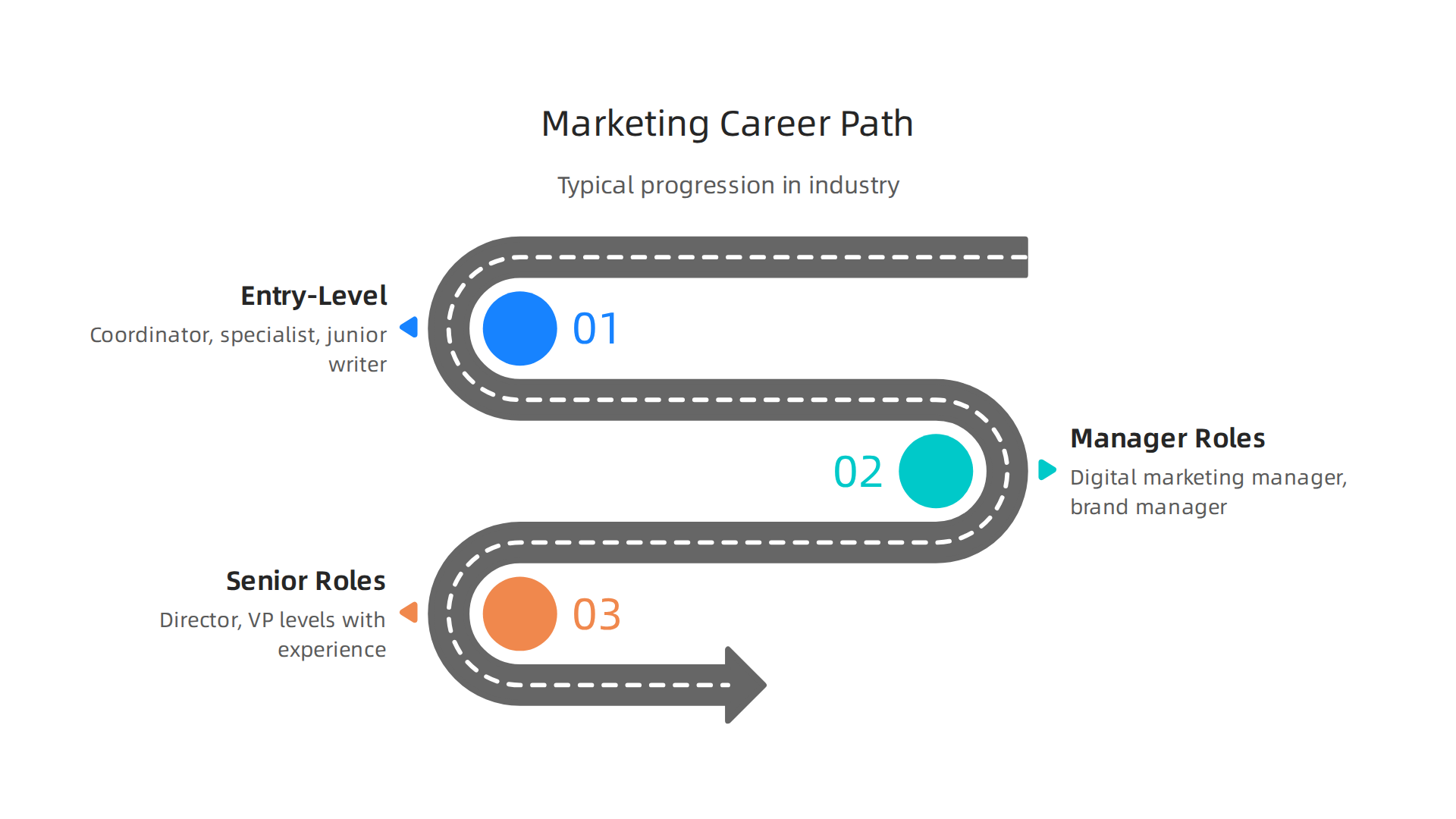
Most people start in coordinator or associate roles. Think marketing coordinator, social media specialist, or junior content writer. These entry-level jobs let you learn the ropes and build a solid marketing portfolio. From there, you move to manager roles like digital marketing manager or brand manager. With experience, you can reach director or VP levels.
The Robert Half report on 2026 marketing job market trends shows real salary ranges. A marketing coordinator earns around $58,000. A marketing manager can make up to $127,500. And a product manager can earn over $139,000. The smartest move is to build skills that lead to higher pay over time.
If you want to learn more about moving up, check out this guide on marketing manager roles and skills. It covers exactly what employers look for at that next level.
No matter which path you choose, your marketing major is a strong starting point. Keep learning and keep building that portfolio. The opportunities are growing.
How to Build a Competitive Portfolio and Resume
Your marketing major gives you the knowledge. But employers want to see proof. A strong portfolio and resume can make the difference between getting an interview or getting passed over.

Here’s how to build both the right way.
Real-World Projects That Prove Your Skills
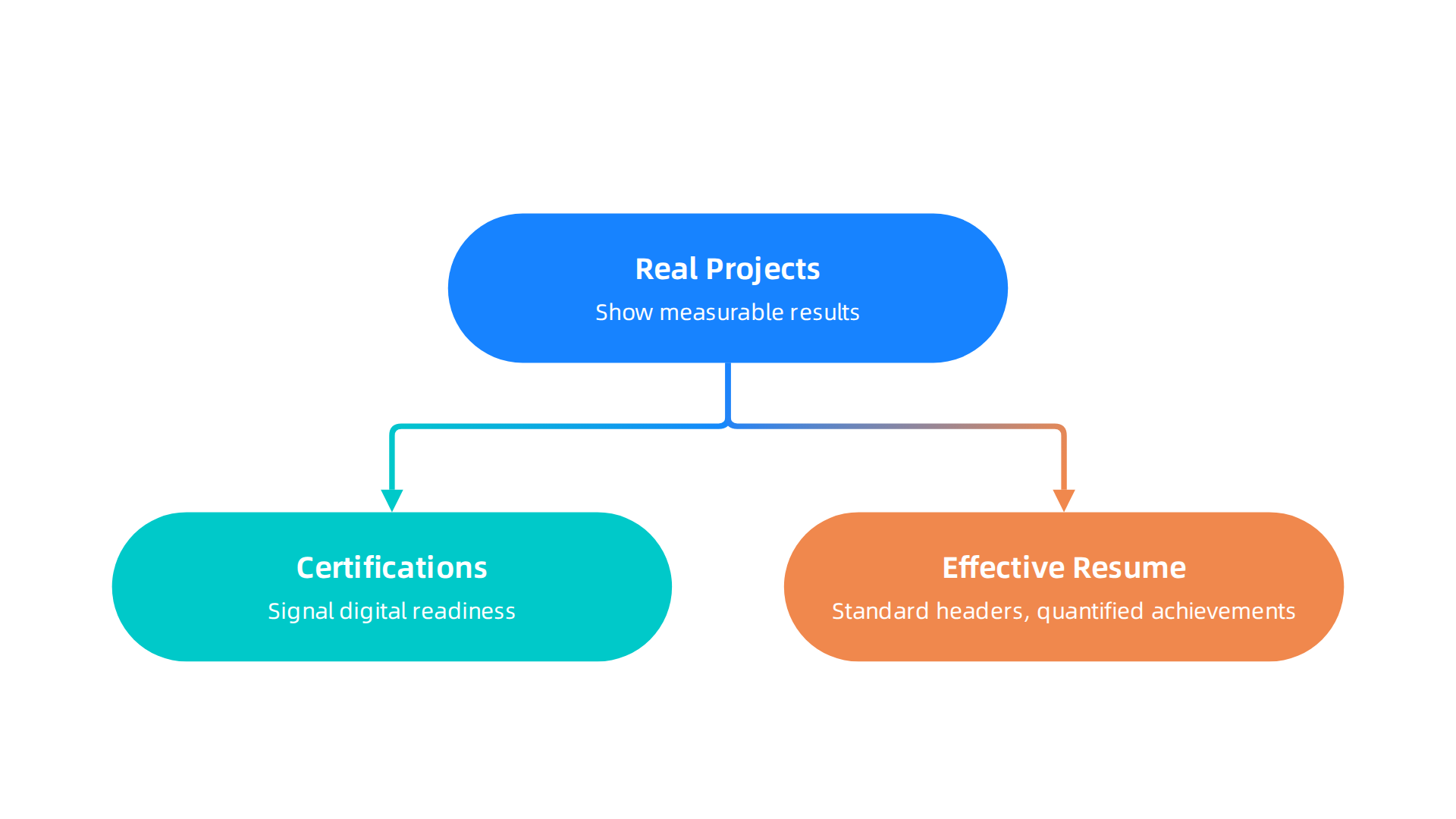
Classroom theory matters, but hands-on work is what hiring managers look at first. Join a campus marketing agency where you run real campaigns for local businesses. Take on freelance projects for small brands. Enter case competitions where you solve actual marketing problems.
Each project becomes a case study you can show. Include screenshots of ad results, graphs of website traffic growth, or samples of content you created. The goal is to show you can take a marketing major concept and turn it into measurable results.
Certifications That Signal Digital Readiness
In 2026, a degree alone is not enough. Employers want proof you can use the tools of the trade. Free or low-cost certifications from Google, HubSpot, and Meta are widely recognized. According to the American Marketing Association, certifications add real credibility to your resume and show you take initiative in staying current. The Are Marketing Certifications Worth It? article explains that they also require renewal, which keeps your skills fresh.
Start with Google Ads Search and Google Analytics 4 certifications. Add HubSpot’s Inbound Marketing or Meta Blueprint for social advertising. These take only a few hours each and give you a huge edge.
Writing a Resume That Passes the Bots
Most companies use AI screening systems to filter resumes. Your carefully designed layout might look great to a human, but a robot reads it differently. Use standard section headers (Experience, Education, Skills). Avoid fancy fonts or graphics.
The most important part is quantified achievements. Instead of "Managed social media accounts," write "Grew Instagram engagement by 40 percent in three months." Numbers catch attention. They tell employers you can deliver real impact.
If you need more help getting started with practical marketing tools, check out this guide on social media management tools in 2026 to see what platforms you can learn.
Keep Building While You Apply
The job search itself can be a learning opportunity. Follow industry news, try new tools, and keep adding projects to your portfolio. The marketing world changes fast, and the candidates who stay curious are the ones who get hired.
To stay ahead of trends like AI in marketing, consider subscribing to The AI Newsletter Worth Reading for clear daily updates that help you speak the language of modern marketing.
Networking and Professional Development Strategies
You have a solid marketing major on paper. Your portfolio shows real work. But the best opportunities often come from who you know, not just what you know. Networking can open doors that applications never will.

Here’s how to build connections that actually help your career.
Go Where the Industry Gathers
Marketing conferences are worth attending for one simple reason: they put you in the same room as people who are hiring. Events like INBOUND in Boston, Social Media Marketing World in Anaheim, and DigiMarCon World in Las Vegas draw thousands of marketing professionals each year.
According to the guide on the best marketing conferences of 2026, early bird rates can save you 20 to 40 percent. If you are a student, many conferences offer discounted tickets or volunteer passes in exchange for free entry. Even one good conversation at a conference can lead to an internship or job referral.
Do not just attend sessions. Talk to speakers after their talks. Connect with exhibitors at their booths. Ask thoughtful questions. People remember those who show genuine curiosity.
Stay Current Without Getting Overwhelmed
The marketing world moves fast. What worked six months ago might be outdated today. Subscribing to curated newsletters and following thought leaders keeps you in the loop without spending hours scrolling through random feeds.
A single daily newsletter can save you time and keep you sharp. If you want to stay ahead of AI and tech trends in media, consider subscribing to The AI Newsletter Worth Reading for clear updates that help you speak the language of modern marketing during interviews and networking conversations.
Follow respected voices on LinkedIn and Twitter. Comment on their posts with your own insights. This is free visibility and a way to get noticed by industry leaders.
Find Mentors and Use Informational Interviews
Some of the best jobs never get posted publicly. They go to people who heard about them through a conversation. This is the hidden job market, and informational interviews are your way in.
Reach out to marketing professionals on LinkedIn. Send a short message like "I am studying marketing and would love to hear about your career path. Could we chat for 15 minutes?" Most people say yes because they remember being in your shoes.
Prepare good questions. Ask what skills matter most in their role. Ask what they wish they had known when they started. Ask for advice specific to your marketing major focus.
These conversations build relationships that can turn into mentorship over time. And when that person hears about an opening at their company, you will be the first person they think of.
The Future of Marketing Careers: AI and Beyond
Here is something that might surprise you. The marketing career you are studying for today will not look the same in two years. That is not a bad thing. It just means you need to understand where the industry is heading.
AI is automating routine marketing tasks like basic copywriting, simple keyword research, and data entry. According to the guide on digital marketing hiring trends and salaries in 2026, demand is actually growing for market research analysts, digital marketing managers, SEO specialists, and AI automation strategists. These roles pay well, with digital marketing managers earning over 112,000 dollars on average.
The catch? You need to bring more than just textbook knowledge to the table.
What Is Changing for Your Marketing Major
Think about what a marketing major teaches you. Brand strategy. Consumer behavior. Campaign planning. Those fundamentals still matter. But employers now want graduates who can also work with data, understand machine learning tools, and think strategically about automation.
A report on AI’s seismic impact on marketing careers found that marketing professionals who resist AI face 43 percent lower salaries and higher burnout rates. That sounds scary, but it is actually a massive opportunity. If you add AI skills to your marketing major, you position yourself ahead of most other graduates.
New Roles You Should Know About
The job titles of tomorrow are appearing right now. You might work as a personalization architect who tailors customer experiences using AI. You could become an AI ethics officer who makes sure marketing practices are fair and transparent. Or you might step into a voice search strategist role as more people use smart speakers and voice assistants.
These roles blend human judgment with technical know-how. That is exactly where your marketing major gives you an edge. You understand people. AI helps you reach them at scale.
Skills That Make You Valuable
What matters most in 2026? The article on essential marketing skills and strategies for 2026 breaks it down into several key categories. AI literacy and automation skills are near the top. So are data analysis, content strategy, and the ability to translate technical findings into clear business terms.
LinkedIn’s report on 2026 skills on the rise confirms that AI literacy has jumped into the number two spot. Performance analysis, social media branding, and visual storytelling round out the top five.
Continuous Learning Is Not Optional
Your marketing major gets you started. But staying relevant means you keep learning. Micro-credentials and bootcamps focused on AI tools, data analytics, and behavioral marketing are worth your time. Even short courses can fill gaps your degree might not cover.
According to an article on how AI will impact marketing careers, the most valuable marketers will not be those who write copy. They will be those who can direct AI to produce strategic, on-brand messaging. That is a skill you can start building today.
For more on how AI is reshaping the role itself, check out this guide on the marketing manager role in 2026.
The Bottom Line
AI is not here to replace you. It is here to make you better. The marketers who thrive will be the ones who embrace these tools and use them to amplify their human strengths. If you pair your marketing major with a willingness to learn and adapt, your career path looks bright.
Summary
This guide answers whether a marketing major still pays off in 2026 and gives a practical roadmap for making it work. It explains that the degree remains valuable—backed by strong job growth and high median salaries for senior roles—but success now requires pairing fundamentals with data literacy, AI skills, content strategy, and real-world projects. The article covers which core skills employers hire for, how the job market is changing with new AI-driven roles, and concrete steps to build a competitive portfolio and resume. You’ll learn which certifications and tools to prioritize, how to network effectively, and what career paths (from coordinator to marketing manager and beyond) look like today. The emphasis is on measurable results, continuous learning, and using AI to amplify human strengths so you stay hireable and advance faster.