
Marketing Manager 2026 Roles Skills and Trends for Success
Introduction: Navigating the New Media-Marketing Landscape
If you work in media or marketing today, you have probably noticed something strange. Job titles that used to mean one thing now mean something else. The line between what a media company does and what a marketing team does is getting blurrier by the day. And at the center of this shift sits one role that keeps evolving: the marketing manager.
Here is the thing. Digital transformation and artificial intelligence are not just buzzwords anymore. They are actively reshaping how teams are built, how campaigns run, and how careers grow. In 2026, the demand for marketing talent remains strong. According to the latest research, job growth for digital marketing professionals is projected at about 6% through 2032, with roles like digital marketing managers ranking among the nation’s top jobs. You can see the full picture in these 2026 digital marketing hiring trends.
But here is the catch. The same forces that create opportunity also create confusion. Companies are hiring for titles like marketing campaign manager, product strategy jobs, and media-specific roles that overlap heavily with traditional marketing. If you are building a team or planning your own career path, you need to know what each role actually does and where the real value lies.

This guide is here to help with that. We will break down the most critical roles in this new media-marketing landscape. And we will give special attention to the marketing manager’s evolving remit because that role touches nearly everything: content, data, AI tools, brand strategy, and revenue growth.
If you are trying to figure out which digital marketing platforms in 2026 matter most or how to structure a modern team, you are in the right place.
AI is a huge part of this change. It is automating repetitive tasks and making personalization the new standard. Marketers who understand AI will have a serious edge. That is why we recommend staying informed with The AI Newsletter Worth Reading. It delivers clear daily updates on the AI trends that are reshaping marketing and media.
Let us dig into the roles, the skills, and the strategies that will define success in 2026.
The Evolving Role of the Marketing Manager
The marketing manager job has changed more in the last three years than in the previous decade. What used to be a role focused mainly on campaigns and brand messaging now requires a much wider toolkit.
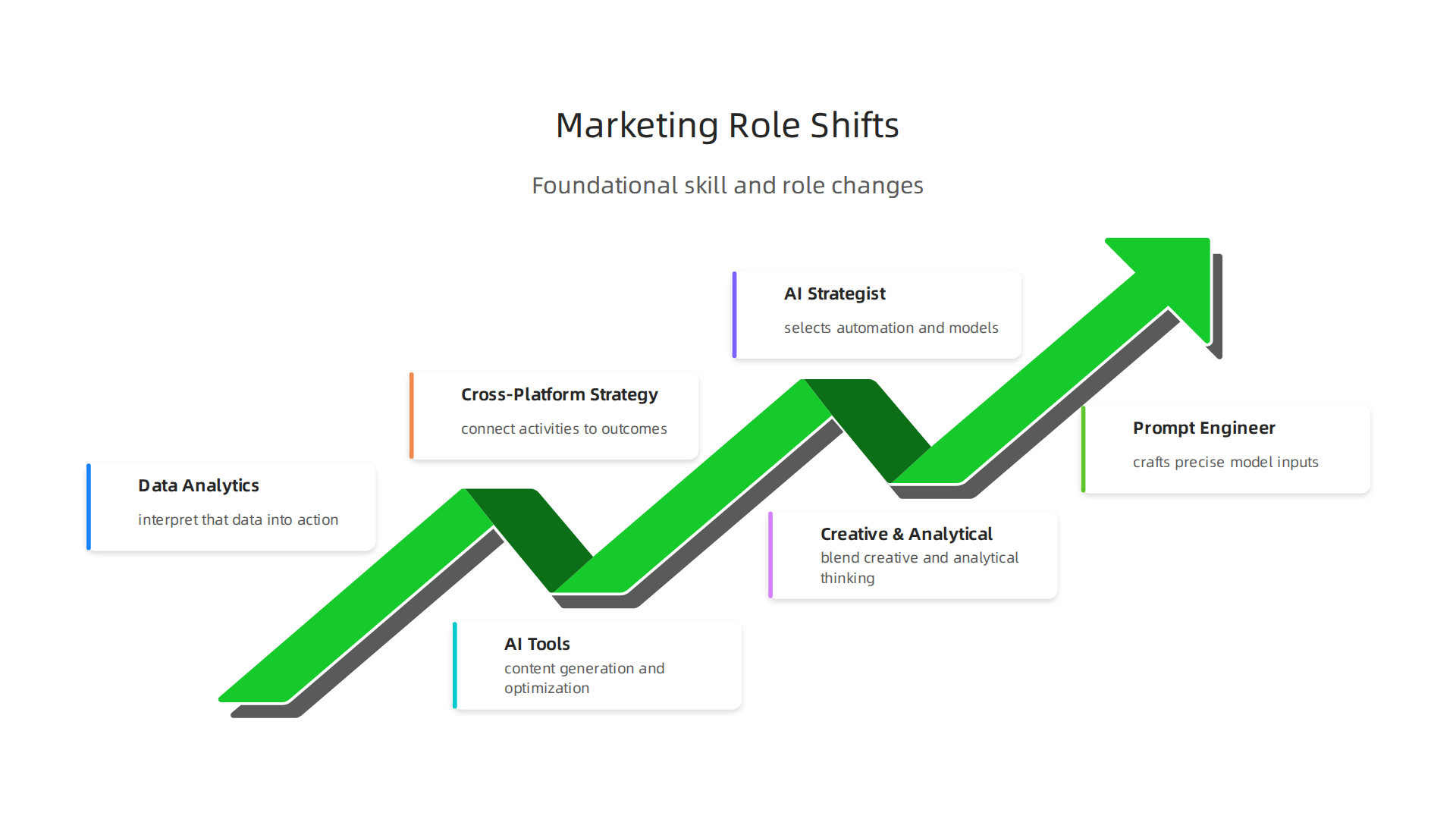
In 2026, successful marketing managers must be comfortable with data analytics, AI tools, and cross-platform strategy all at once.
Let us look at what has shifted. First, data is no longer optional. Marketing teams generate massive amounts of information from customer interactions, ad performance, and website behavior. The marketing manager who can interpret that data and turn it into action is the one who gets results. According to recent research, essential skills now include things like platform proficiency in Google Analytics, attribution modeling, and the ability to connect marketing activities to business outcomes. You can see the full breakdown in this overview of essential marketing skills for 2026.
Second, AI has moved from nice-to-have to everyday tool. Marketing managers use AI for content generation, campaign optimization, and personalization at scale. But the human touch still matters. The best managers know how to blend AI efficiency with genuine brand storytelling. That blend is what separates average campaigns from memorable ones.
Third, the role now sits at the intersection of creative and analytical work. You have to write a compelling brand story one minute and examine conversion data the next.

That mix requires both right-brain and left-brain thinking.
Career paths are also expanding. Many marketing managers now move into growth roles, digital strategy positions, or product strategy jobs within media companies. The title "marketing manager" is becoming a stepping stone to more specialized high-demand roles. For example, some people transition into marketing campaign manager positions that focus purely on performance metrics. Others move toward product strategy jobs where they shape the offering itself.
If you are trying to map your own career path, it helps to see where others are going. This guide on creative advertising jobs in 2026 shows the skills and roles that are growing fast right now.
The bottom line: the marketing manager role in 2026 is bigger, broader, and more strategic than ever. Those who embrace the data side without losing the creative heart will thrive.
Emerging Roles: AI and Data Specialists
As the marketing manager role expands, entirely new job titles are appearing on team rosters. In 2026, media companies and marketing teams are hiring for positions that did not exist just a few years ago. Roles like AI Strategist, Prompt Engineer, and Data Insights Manager are becoming essential.
These specialists do more than handle technical tasks. They bridge the gap between what AI tools can do and what the business actually needs.

An AI Strategist might decide which automation tools fit the company’s goals. A Prompt Engineer crafts the exact inputs that get useful output from AI models. A Data Insights Manager turns raw numbers into clear recommendations for campaign improvements. Each role drives efficiency and personalization in ways that were impossible before.
The demand for these roles is real. According to the updated list of top AI marketing jobs for 2026, positions like AI Marketing Automation Director, Generative AI Content Strategist, and Autonomous Campaign Manager all command high salaries. Pay ranges often start above $100,000 and go well into six figures. The common thread is that these professionals know how to connect AI outputs to measurable business results.
Adoption of AI tools is not just adding new jobs. It is also reshaping existing roles. A marketing manager who used to focus only on brand messaging now needs to understand prompt writing and data analysis. A content strategist must evaluate AI-generated copy for quality and brand fit. Companies are updating their hiring priorities to find people who combine AI literacy with creative thinking and strategic judgment.
If you are aiming for one of these specialist roles, staying current on AI developments is a smart move. One resource that helps professionals keep up is The AI Newsletter Worth Reading. It delivers daily updates on AI and technology that are directly relevant to media and marketing work.
For media companies looking to build teams that can handle these changes, understanding the full picture of what a modern marketing strategy requires is important. You can explore how to adapt with this guide on growth marketing strategy in 2026.
The bottom line: AI and data specialists are not replacing marketing managers. They are making the whole team stronger. Those who learn to work alongside these specialists will be the ones who drive real results.
Content Creators and Influencer Relations: New Power Players
So you thought the only new roles in marketing were AI-focused? Think again. The creator economy has exploded in 2026, and media companies are scrambling to build teams that can handle it. That means titles like Creator Partnership Manager and Influencer Marketing Lead are now essential parts of any modern marketing team.
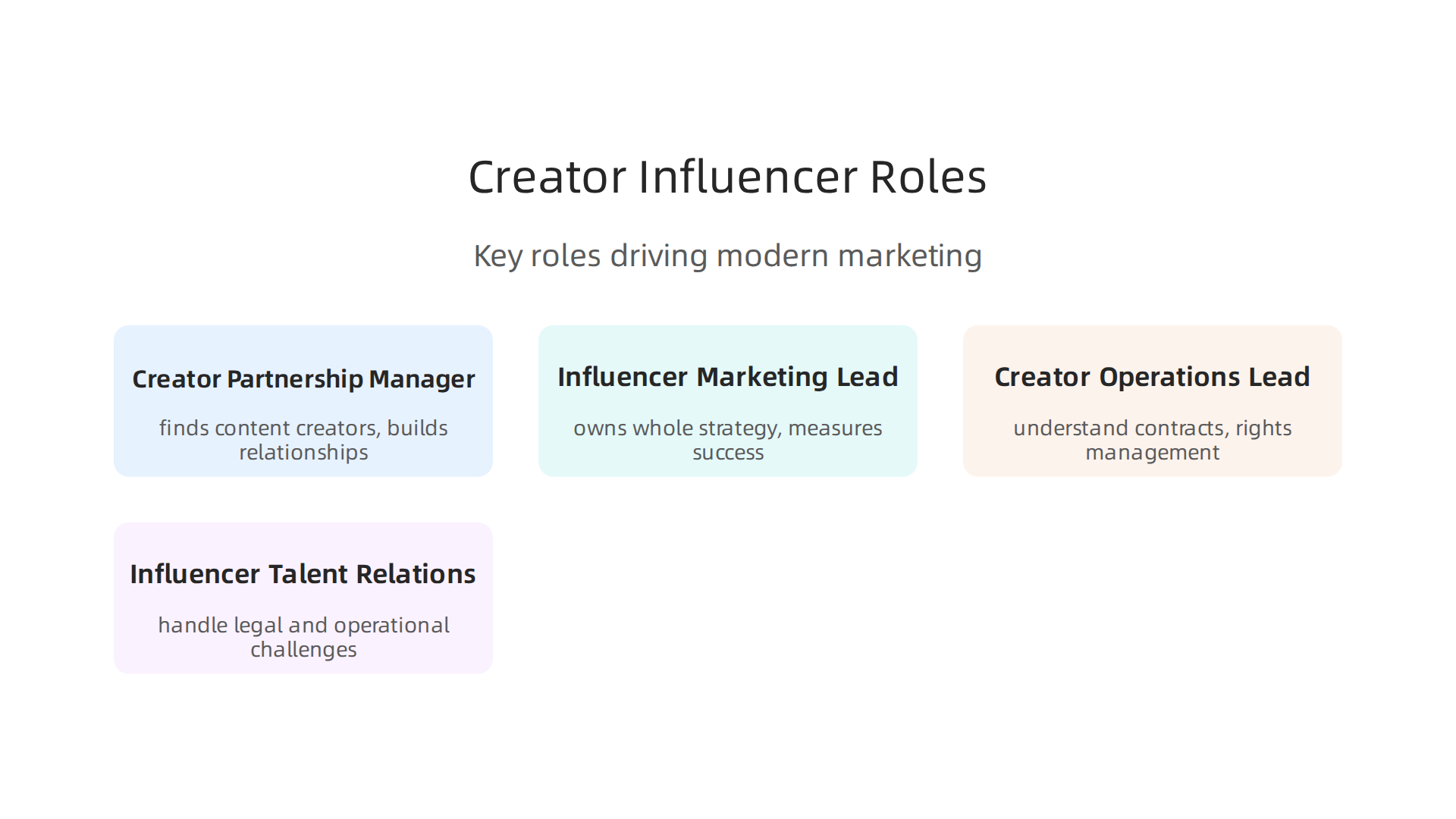
These roles are not just nice to have. They are central to how brands connect with real people. A Creator Partnership Manager finds the right content creators, builds long-term relationships, and makes sure every partnership delivers real value. An Influencer Marketing Lead owns the whole strategy – from picking the right influencers to measuring campaign success.
The types of influencer marketing jobs in 2026 range from entry-level coordinators who handle outreach and tracking, all the way up to Directors who oversee seven-figure budgets. According to the influencer marketing career guide from Mediabistro, an Influencer Marketing Manager typically earns between $85,000 and $150,000 a year. That is serious money for a role that barely existed a decade ago.
What is really changing in 2026 is where these roles live. More and more companies are building internal teams to manage creator relationships instead of handing everything to outside agencies. Why? Because keeping this work inside gives brands tighter control over messaging, faster response times, and deeper partnerships with creators who become true brand advocates.
But here is the tricky part. Content creators are not full-time employees. They are often treated as semi-employed partners. That creates new legal and operational headaches. Companies now need people who understand contracts, rights management, payment schedules, and compliance. Roles like Creator Operations Lead or Influencer Talent Relations are popping up to handle exactly these challenges. These specialists make sure the partnership runs smoothly without legal surprises.
For marketing managers in 2026, understanding the creator economy is no longer optional. You do not need to manage every influencer yourself, but you do need to know how to work alongside these new specialists. It is another way the inbound marketing definition in 2026 has expanded – building trust through authentic creator partnerships is now a core strategy.
The bottom line: content creators and influencer relations are not a side project anymore. They are a full department. And the marketing manager who learns to lead these new power players will stay ahead of the curve.
The Overlap Between Media and Marketing: Revenue and Growth Roles
If influencer relations feel like the new creative frontier, then revenue and growth roles are the engine room. These are the jobs where media meets money, and they are some of the fastest-growing positions in 2026. Titles like Brand Partnerships Manager, Growth Marketer, and Revenue Strategy Lead sit right at the intersection of content creation and performance metrics. They are not just about making things go viral. They are about making sure things actually pay off.
Let me give you a quick picture. A Brand Partnerships Manager does not just find another company to work with. They find the right partner, negotiate a deal that benefits both sides, and then build a long-term relationship that keeps generating revenue. A Growth Marketer owns the strategy for getting more customers. They test channels, optimize spend, and use data to decide where to put the next dollar. A Revenue Strategy Lead looks at the big picture. They figure out how content, advertising, subscriptions, and partnerships all fit together to grow the bottom line. These roles are not optional anymore. According to the digital marketing hiring trends for 2026 from Addison Group, demand is strongest for Digital Marketing Managers, Market Research Analysts, and AI/Automation Strategists. That tells you right there that the old divide between "media people" and "marketing people" is gone.
What makes these roles work in 2026? It comes down to two things: understanding content pipelines and understanding performance marketing metrics. You cannot build a great partnership if you do not know how your content gets made and distributed. And you cannot grow revenue if you cannot read a dashboard. The best professionals in these roles speak both languages. They can talk to a creative director about storyboarding and then turn around and explain cost-per-acquisition numbers to the CFO.

That skill set is rare, and it is exactly what media companies and brands are fighting over right now.
If you are a marketing manager looking to level up, this overlap is your sweet spot. Start learning how content teams work. Understand what makes a story click. At the same time, get comfortable with metrics like return on ad spend, customer lifetime value, and conversion rates. The growth marketing strategy playbook for 2026 goes deeper into how these skills come together in practice. It is a good next read if you want to see how the best teams are structured.
Here is the thing though. Staying on top of all this change takes effort. AI is reshaping how we measure success every quarter. New platforms pop up. Audience behavior shifts. To keep your finger on the pulse of what is actually working, you need a reliable source of daily insight. That is why I recommend The AI Newsletter Worth Reading. It gives you clear, daily updates on AI and tech trends that directly affect growth and revenue roles in media and marketing. No fluff. Just the signal.
Bottom line: revenue and growth roles are where the action is. If you can bridge media and marketing, you will be in high demand.
Operational and Strategic Roles: From Project Management to C-Suite
But all that growth does not happen by itself. Someone has to make the engine run smoothly every single day. That is where operational roles come in. These are the people who keep campaigns on track, teams aligned, and deadlines met. Think of an Agile Coach who helps marketing teams move faster without breaking things. Or a Marketing Operations Manager who owns the tech stack, the data flow, and the reporting. Or a Media Project Manager who makes sure every piece of content launches on time and on budget. These roles are not glamorous, but they are the backbone of any successful media company in 2026.
Without strong operations, even the best strategy falls apart. Campaigns miss their launch dates. Budgets get wasted on the wrong channels. Teams end up fighting over spreadsheets instead of building great work. If you are early in your career, operational roles are a fantastic place to start. They teach you how the whole machine works. You learn project management, cross-functional communication, and how to make things happen at speed. According to the latest guide on key marketing skills in 2026 from Randstad USA, project management is one of the top skills employers are looking for right now. That makes sense. Teams that execute well win.
Now let us look up the ladder. Strategic C-suite roles are also evolving fast. The Chief Marketing Officer, Chief Growth Officer, and Chief Content Officer of 2026 are not the same as they were five years ago. They now need to understand data pipelines and AI tools just as much as they need to understand brand storytelling. They are expected to oversee not just creative direction, but also attribution modeling, automation workflows, and revenue forecasting. The days of the CMO who only worried about the Super Bowl ad are over. Today’s leaders have to be fluent in both art and science.
Here is the important part. The best organizations do not treat operational roles and strategic roles as separate worlds. They build clear career ladders that connect them. A great Media Project Manager can grow into a Marketing Operations Director, and from there into a Chief Growth Officer. The skills you learn at the operational level, like managing timelines, budgets, and cross-team dependencies, directly prepare you for the strategic decisions you will make later. If you are a marketing manager wondering where your career could go, pay attention to this path. Every operational role you master today is a stepping stone to a leadership seat tomorrow.
To see how strategy and operations come together in practice, check out this deep dive on how brand strategy services drive media and publishing success in 2026. It shows you how the best teams align their daily work with their long-term goals.
Building a Future-Proof Team: Key Roles to Hire For
So what does a future-proof team actually look like in 2026? The answer might surprise you. It is not about hiring dozens of people with the same job title. It is about finding the right mix of skills, attitudes, and learning ability.
Here is the thing. The smartest media companies today hire for adaptability first. They care more about how someone thinks than what their last job was called. A marketing manager who can pivot from campaign strategy to data analysis to creator relationships in the same week is worth more than a specialist who only knows one thing. According to the latest digital marketing hiring trends from Addison Group, demand is strongest for roles that combine strategic thinking with data literacy and AI comfort. That is the new baseline.
Let us look at three roles that are becoming essential for every future-ready team.
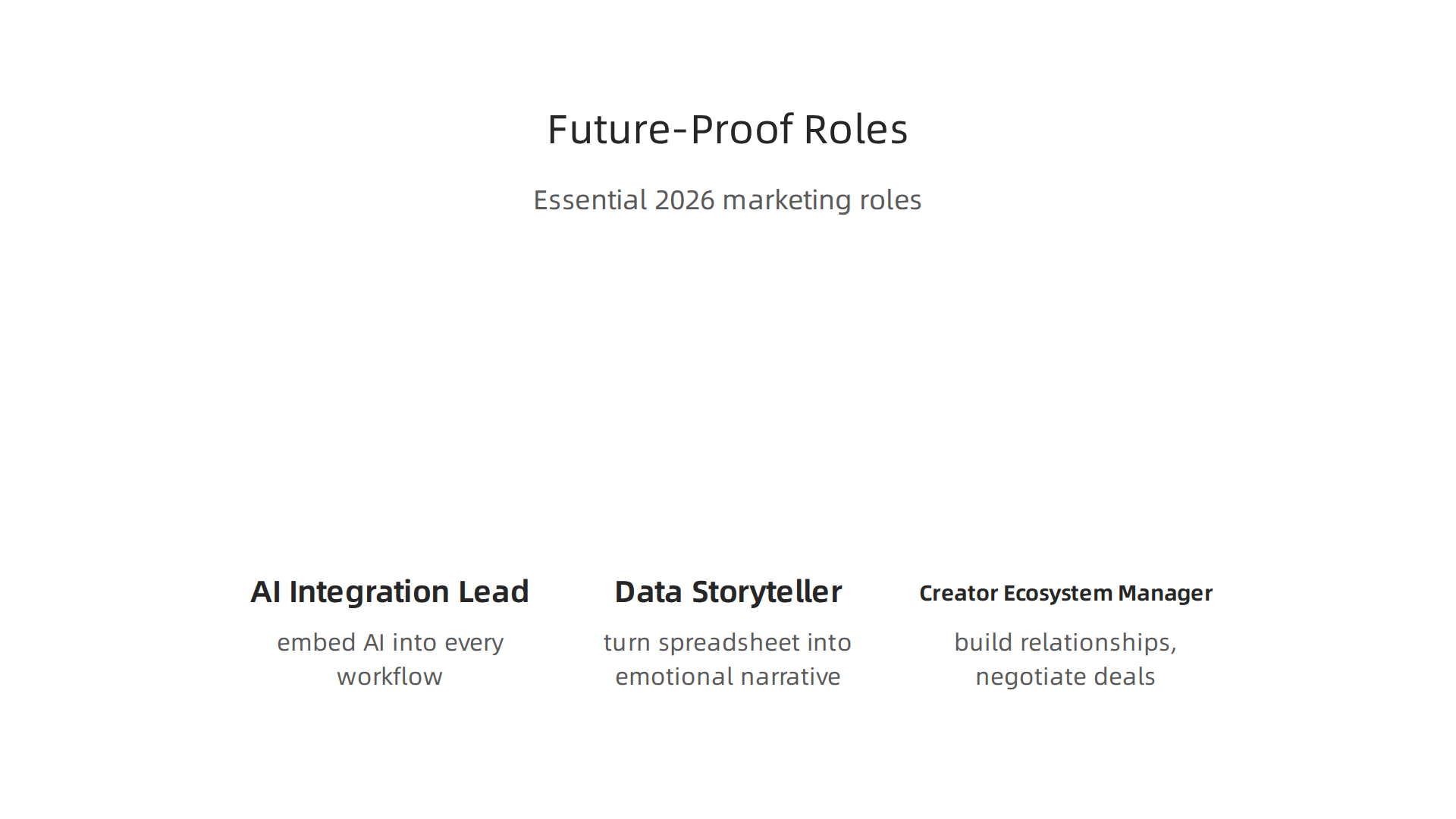
First, there is the AI Integration Lead. This person does not just use ChatGPT to write headlines. They figure out how to embed AI into every part of the workflow, from content creation to performance forecasting to audience targeting. They know when to automate and when to keep a human in the loop. This role is emerging fast because AI is no longer a nice to have. It is the backbone of modern marketing in 2026.
Second is the Data Storyteller. Data alone is boring. But a person who can take a spreadsheet and turn it into a clear, emotional narrative that drives decisions, that person is invaluable. This role sits between the analytics team and the creative team. They translate numbers into strategy. They help everyone understand what is working and why.
Third is the Creator Ecosystem Manager. Media companies now depend on a network of influencers, partners, and independent creators. This person does not just send contracts. They build relationships, negotiate deals, and manage a portfolio of 20 to 50 or more creators at a time. The role combines talent management with marketing strategy. It is becoming a core function for brands that spend significant budgets on creator partnerships. You can explore the full range of influencer marketing career paths in this 2026 career guide from Mediabistro if you want to see how these roles stack up by title and salary.
Now here is the key insight. No single role can do it all. A future-proof team needs both technical specialists and strategic generalists. Specialists dive deep into AI, data, or creator ecosystems. Generalists connect the dots across functions and keep the big picture in view. When you combine them, you get a team that can handle anything the market throws at it.
Finally, invest in continuous learning. The skills that got you here will not keep you here. Teams that learn together stay ahead. For clear, daily updates on how AI is reshaping the media landscape, check out The AI Newsletter Worth Reading. It gives you actionable insights without the fluff.
Building a future-proof team is not about predicting the future. It is about building a team that can learn, adapt, and grow no matter what comes next.
Summary
This article explains how the media and marketing landscape has shifted by 2026, making the marketing manager role broader and more strategic than ever. It covers how data literacy and AI proficiency are now baseline requirements, why new specialist roles (like AI Strategist, Prompt Engineer, and Data Insights Manager) are emerging, and how the creator economy has turned influencer relations into a core function. The piece also outlines revenue- and growth-focused positions that bridge content and performance, plus the operational roles that keep teams running and provide clear career ladders to leadership. Readers will learn which roles to hire, which skills to develop, and how to combine specialists and generalists to build a resilient team that adapts to AI, platform shifts, and changing audience behavior. Practical guidance helps hiring managers, marketing leads, and individual contributors plan career moves and team structures for sustainable growth.