
The 2026 Playbook for Growth Marketing Strategy: Adapt to AI & New Demand
Why demand generation must evolve: the new rules for growth marketing
It’s 2026, and getting new customers for your business feels a lot different. For many companies, the old ways of finding people who want your products or services are getting harder. We’re seeing "rising acquisition costs," which means it costs more money to get each new customer. Plus, there are so many places to share your message now, like social media, websites, and apps. This creates "fragmented channels" where your message can get lost.
On top of all this, computers with smart "AI" programs are changing how people look for things and decide what to buy. This means the way people act online has changed a lot. Our usual "growth marketing strategy" might not work as well as it used to. We need to think about "demand generation marketing" in a new way to keep up.
It’s truly harder to tell if your ads are making a real difference and bringing in new customers FAQ on incrementality: How to prove your ads actually work in 2026. When we use many channels, it can be tricky to pick the right ones and use the best tools, like understanding Digital marketing platforms in 2026.
This article will give you a clear, easy-to-follow guide to help. Think of it as a "practical, evidence-backed playbook" to help your "growth marketing strategy" fit today’s world.

We’ll show you how to handle these new "demand generation realities" so you can still find and connect with your audience, no matter how much the world changes. Because AI is such a big part of how customers behave now, staying updated on this fast-moving area is key. Get clear daily AI updates from The AI Newsletter Worth Reading. We’ll cover everything from how to use "digital marketing services" better to picking the right "marketing platform" for your goals.
Different terms can sometimes feel confusing, but understanding them helps us aim for the right goals. Let’s talk about "demand generation marketing" and "growth marketing strategy" to see what they each do and how they fit together.
What is Demand Generation Marketing?
Think of "demand generation marketing" as all the steps you take to make people interested in your product or service. Its main job is to create a strong desire for what you offer, even before someone is ready to buy. The main things it tries to achieve are:
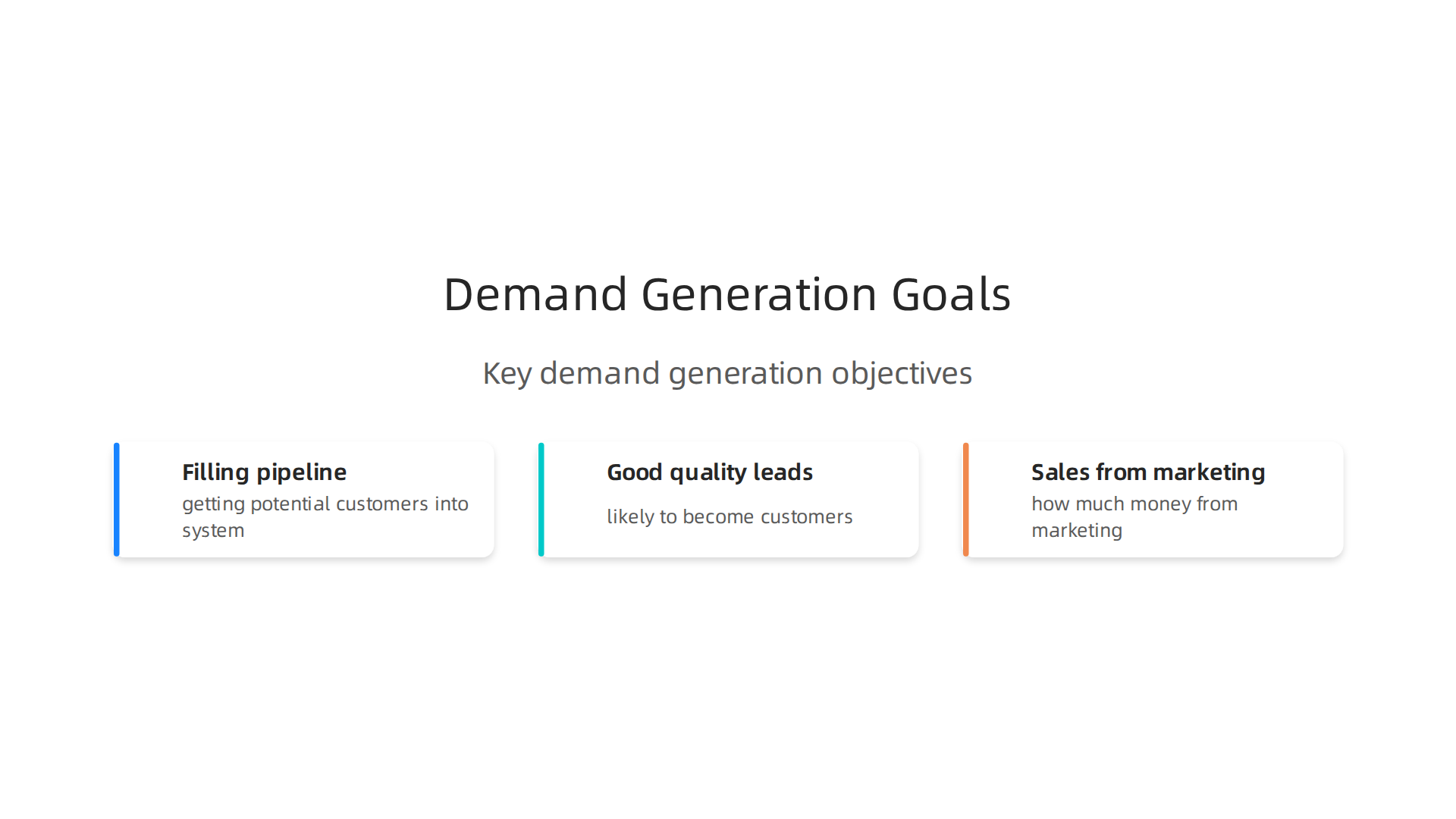
- Filling the "pipeline": This means getting a lot of potential customers into your system.
- Good quality leads: Not just any leads, but people who are truly likely to become paying customers.
- Sales from marketing: Showing how much money came directly from your marketing efforts.
Demand generation often uses different tactics to get noticed, like ads, content, and events, making people aware of what you do. It’s about bringing new opportunities in the door.
What is Growth Marketing Strategy?
On the other hand, a "growth marketing strategy" looks at the whole customer journey. It’s not just about getting new people interested, but also about making sure they have a great experience, stick around, and even tell others about you. This kind of marketing pays attention to different numbers:
- Customer Lifetime Value (LTV): How much money a customer brings to your business over their entire time with you.
- Customer Acquisition Cost (CAC) payback: How quickly you earn back the money you spent to get a new customer.
- Customer retention: How many customers stay with you over time.
A good growth marketing strategy works on improving every step: from when someone first hears about you, to when they buy, use your product, and stay loyal. It often involves many parts of your business, like how your product works or how customer service helps people.
Where They Overlap and How to Prioritize
Here’s the thing: "demand generation marketing" and a good growth marketing strategy are like two sides of the same coin. Demand generation brings new people in, and growth marketing makes sure those people stay and grow with your business. Demand generation feeds into the broader growth strategy.
In 2026, knowing when to focus on each is key. If your business needs a lot of new leads quickly, you might put more effort into demand generation marketing. If you have many customers already and want them to be happier and spend more, then improving your growth marketing strategy is likely your main focus. Both are important for making your business grow.
To make this work well, your teams need to be on the same page. The people doing demand generation marketing should know what kind of customers the growth marketing strategy team wants. This way, everyone is working towards the same big goals for the business. Getting your team structure right is crucial for continued growth in 2026. You might even consider hiring a digital marketing consultant to accelerate business growth or looking into how to better organize your internal team for success. Knowing how to set up your marketing team for success in 2026 is vital for optimizing your overall marketing team structure for growth.
Audience Architecture and Intent Mapping: Building the Demand Funnel
After understanding how "demand generation marketing" brings new people in and a "growth marketing strategy" keeps them happy, let’s talk about how to really know who those people are and what they want. This is called "audience architecture" and "intent mapping." It’s like having a special map that shows you where potential customers are on their journey and what they’re looking for.
Knowing Your Audience Layers
Imagine your audience in different groups or "layers." Not everyone is at the same stage.
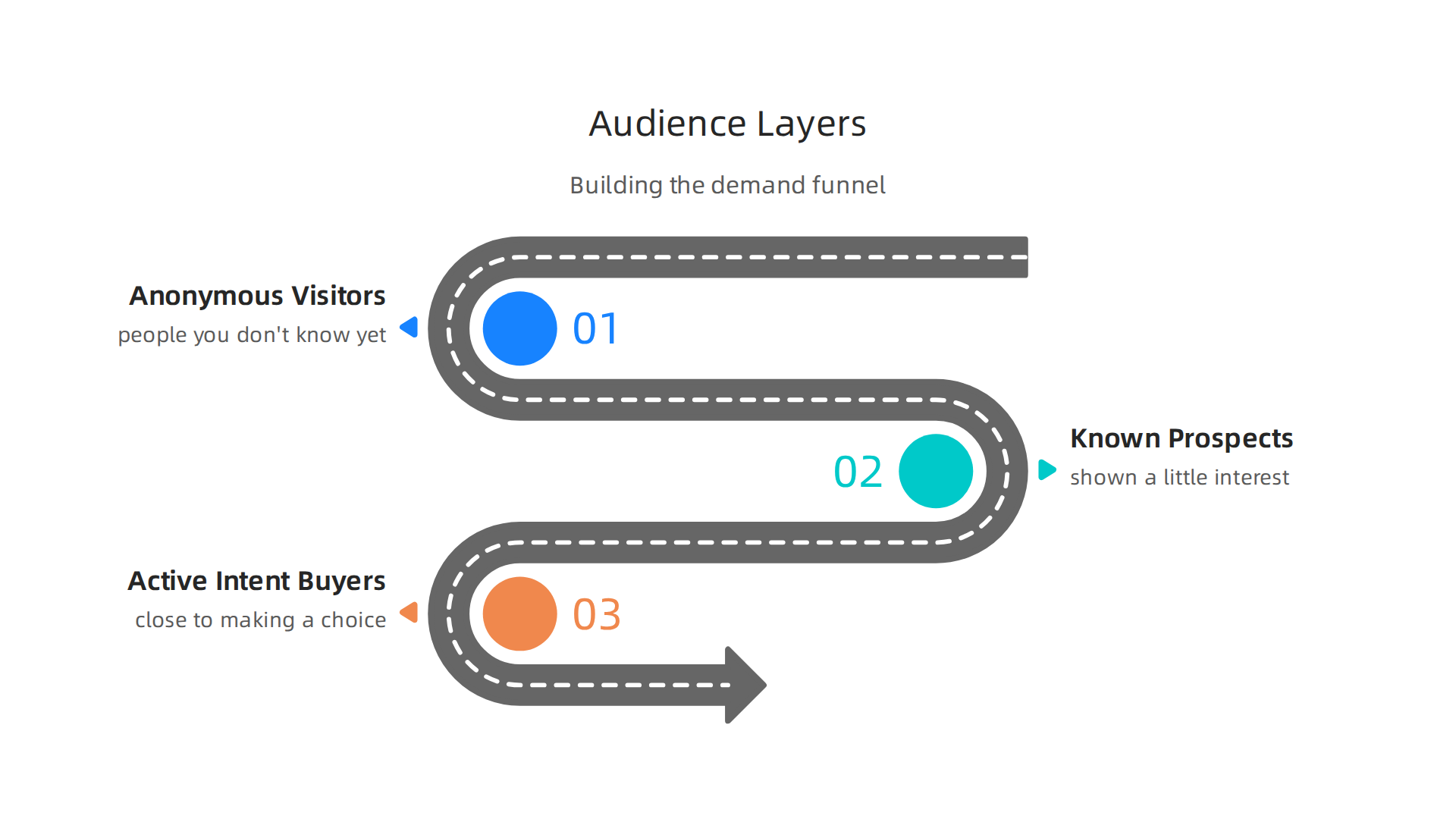
- Anonymous Visitors: These are people you don’t know yet. They might see your ads or content, but you don’t have their names or contact info. They’re just browsing. For these folks, "demand generation marketing" focuses on making them curious and getting them to notice you. You might use general ads or helpful articles that teach them something new.
- Known Prospects: These are people who have shown a little interest. Maybe they gave you their email for a newsletter, downloaded a free guide, or visited your website a few times. You know who they are, but they’re not ready to buy just yet. Here, you’ll offer more specific content that helps them learn even more about your solutions.
- Active Intent Buyers: These are the people who are really close to making a choice. They’re looking for solutions to their problems right now and are checking out different options, maybe even comparing prices. They are actively searching and showing clear signs they want to buy. This is where your marketing should be very direct and show them exactly how your product or service helps.
To guide people through these layers, it helps to use different digital marketing services and tactics.
Understanding What People Want: Intent Signals
How do you know which layer someone is in? You look for "intent signals." These are clues that tell you what someone is thinking or planning to do.

In 2026, understanding these signals is a big part of any strong "growth marketing strategy."
- First-Party Signals: This is information you collect yourself. Did someone visit your pricing page? Did they read an article about a specific problem your product solves? Did they fill out a form? These are strong clues that they are interested.
- Contextual Signals: These clues come from what people are reading or looking at online, even if it’s not on your website. For example, if someone is reading articles about "how to improve social media presence," they might be interested in your "digital marketing services" that help with that.
- Search Signals: What words are people typing into search engines like Google? If they’re searching for "best email marketing platform reviews," they’re showing clear buying intent. This kind of data can be a game-changer for customer acquisition in 2026, helping connect with valuable potential customers more efficiently Intent Data in 2026: Your Customer Acquisition Game Changer.
- Partnership Signals: Sometimes, other companies can share information about potential customers who have shown interest in related products. This can give you even more clues.
These signals are super important because they help you score leads and decide who to focus on first. Marketers in 2026 are increasingly looking for context and value buying intent, with many rebuilding their foundations to use this data better Demand Gen Reports’s 2026 Data Survey: Why Marketers Are Rebuilding Their Foundation.
When you put all this together, you can create a clear path for potential customers from just knowing about you to becoming a loyal client. Using a smart "marketing platform" can help you gather and understand all this information. This approach is key to effective "demand generation marketing" and supports your overall "growth marketing strategy."
With all the talk about AI and data influencing how we reach audiences, staying informed is more important than ever. If you want to keep up with the latest in AI and technology for the media industry, you should definitely check out The AI Newsletter Worth Reading. This helps you get clear daily AI updates from The Deep View Newsletter. Understanding how algorithms will impact daily life by 2026 is also a big part of this shift The 2016 Survey: Algorithm impacts by 2026.
Content Systems and AI-Driven Creative at Scale
Building on knowing your audience and their intent, the next step in a strong "growth marketing strategy" is making sure you have the right content for each person at the right time. This means having smart "content systems" and using AI to create amazing things quickly. In 2026, AI is changing how we make and use content for marketing.
Different Content for Different Stages
Think back to the different groups of people we talked about: anonymous visitors, known prospects, and active intent buyers. Each group needs a different kind of content to move them along.

- For Anonymous Visitors (Top of the Funnel): At this stage, people are just getting to know you. Your content should be wide and helpful, like giving free advice. Think about blog posts that answer common questions, fun videos, or simple social media posts. The goal is to catch their eye and make them curious about what you do. These are like friendly greetings to start a conversation.
- For Known Prospects (Middle of the Funnel): These folks know a bit about you and have shown some interest. Now, your content can be more detailed, showing how you can help solve their problems. This could be things like helpful guides, case studies that show real-world success, or webinars where they can learn more. This content helps them see you as a good solution.
- For Active Intent Buyers (Bottom of the Funnel): These are people ready to make a choice. Your content here needs to be very clear about why they should choose you. Offer product demos, free trials, or testimonials from happy customers. This is where you close the deal, showing them exactly how your product or service makes their life better. Creating content like this helps businesses build a strong SaaS Marketing Strategy in 2026.

AI Helps Make Content Faster and Smarter
AI is a game-changer for content creation in 2026. It helps with many parts of a "growth marketing strategy":

- Coming up with Ideas: AI can quickly give you many content ideas based on what people are searching for or talking about online. This saves a lot of time.
- Making it Personal: Imagine every person seeing an ad or article that feels made just for them. AI can do this, changing headlines, images, and even the text to match what each person likes best. This kind of personalization is key for modern "digital marketing services".
- Creating Content at Scale: AI tools can write basic drafts, create different versions of ads, or even help make videos much faster than a human could alone. This means you can have more content out there, reaching more people. Many brands are already using AI for marketing successfully, as shown by over 119 AI Marketing Case Studies in 2026.
In fact, AI is so good at this that AI-generated content can often get more clicks and better results than content made only by people. Some studies in 2026 show AI content outperforming human-only content by a good margin in click-through rates and conversions TOP 20 AI-DRIVEN CONTENT MARKETING STATISTICS 2026. This is a big win for "programmatic marketing" and other automated systems.
Staying Safe with AI: Guardrails You Need
Even though AI is powerful, it’s not a magic bullet. You still need human smarts to guide it.
- Human Oversight is Key: Always have real people review AI-generated content. AI is a tool, not a replacement for human creativity and judgment. It helps to have a team structure that supports this, ensuring a good marketing team structure is in place.
- Brand Safety: Make sure the AI understands your brand’s voice and values. You don’t want AI to create something that doesn’t sound like you or, worse, something that could be harmful or offensive. Setting clear rules for the AI is very important.
- Test and Learn: AI lets you create many different versions of an ad or piece of content. Use this to your advantage by "A/B testing" them. This means showing different versions to small groups to see which one works best. This helps you understand what truly connects with your audience and keeps your "growth marketing strategy" improving. Even with AI, human-made ads can still perform better on conversions for very expensive products, so testing is always important AI Ad Creative Benchmarks 2026: CTR and ROAS Data.
By using a smart "marketing platform" that includes AI tools, and by putting these guardrails in place, you can create a powerful content engine that supports your entire "growth marketing strategy." This blend of smart technology and human supervision helps you reach your audience with the right message every time.
After creating great content with the help of AI, the next big step in your "growth marketing strategy" is to share it effectively. This means using many different ways to reach people. We call this "omnichannel activation." It’s like having a team of messengers who all work together to get your message out. This approach helps with "demand generation marketing" by reaching people wherever they are.
Mixing Channels for Different Stages
Just like content, different channels work best for different stages of your customer’s journey.
-
Paid Media (Ads): These are channels you pay for, like ads on social media (Facebook, Instagram, LinkedIn), search engines (Google Ads), or through "programmatic marketing" systems. Paid media is great for getting your message to many people quickly, especially those who don’t know you yet. For example, search ads can catch people actively looking for solutions, while social media ads can introduce your brand to new audiences. In 2026, understanding Paid Media Benchmarks across platforms is key for smart spending.
- For Anonymous Visitors: Use broad search ads and social media campaigns to grab attention.
- For Known Prospects: Use more targeted ads that show how your product solves their specific problems. You can use data about their interests to make these ads very personal. People’s buying intent is very important here, with 66% of marketers valuing buying intent data in 2026.
- For Active Intent Buyers: Show ads with clear offers, trials, or product comparisons.
-
Owned Media (Your Stuff): This includes your website, blog, email newsletters, and your own social media pages. You control these fully. Owned media is perfect for building trust and giving detailed information.
- For Anonymous Visitors: Your blog posts and website are welcoming places to learn.
- For Known Prospects: Your email newsletters can share useful tips, case studies, and special content.
- For Active Intent Buyers: Your website can host product pages, FAQs, and easy ways to buy.
-
Earned Media (Word-of-Mouth): This is when others talk about you for free. Think of news articles, social media shares, reviews, and mentions from influencers. Earned media builds strong trust because it comes from a third party. To learn more about getting this kind of attention, you can explore what is earned media and how to build a strategy that earns real influence in 2026.
- For All Stages: Positive reviews and shares can help people at any point in their journey feel more confident about your brand.
Smart Budgeting and Cross-Channel Teamwork
Putting your money in the right places is part of a good "growth marketing strategy." Look at benchmarks in the 2026 Marketing Benchmarks & Insights Report to see how others are doing. Your budget choices should match where your audience spends their time and what stage they are in.
The real power of omnichannel marketing comes from making all these channels work together. Imagine someone sees your ad on social media (paid), then visits your blog (owned), and then sees a friend share your content (earned). This "cross-channel sequencing" makes your message stronger.
- Creative Rotation: Don’t show the same ad over and over. Change up your images and messages to keep things fresh. This is where AI helps a lot, creating many versions for different channels. For examples of successful creative, check out Creative Benchmarks 2026.
- Signal-Sharing: Make sure your different "digital marketing services" and tools talk to each other. If someone watches a video on your website, that’s a "signal." You can then show them a related ad on social media. This sharing of information reduces wasted effort and helps improve how many people turn into customers. This focus on customer intent is transforming acquisition, making intent data a customer acquisition game changer in 2026.
By using a smart "marketing platform" that connects all your efforts, you can make sure your content, whether made by humans or AI, reaches the right people at the right time through the right channel. To learn more about choosing the right tools, check out digital marketing platforms in 2026. This smooth experience builds trust and drives results for your "demand generation marketing" efforts.
Keeping up with AI’s fast changes in marketing can be tough. Get clear daily AI updates to help you stay ahead.
The AI Newsletter Worth Reading
After making your content with AI and sending it out in many ways, the next big step is to know if all that effort actually worked. This is where "Measurement, attribution, and a practical data strategy" comes in.

It’s how you figure out what parts of your "growth marketing strategy" are truly helping your business grow. You want to make sure your marketing dollars are well spent, and that means looking closely at your data.
Building Your Measurement Tools
To truly understand your marketing, you need a good system. Think of it like a set of tools that help you see what’s happening.
- Event Collection: This is about gathering all the small actions people take. Every click, every page visit, every video watched, and every purchase is an "event." You need a way to collect all this information from every place your customers interact with you.
- Identity Resolution: People might visit your website from their phone, then later from their computer. They might use a different email or interact with your social media. Identity resolution is like being a detective. It helps you figure out that all these different actions actually belong to the same person. This gives you a full picture of their journey, not just small pieces.
Understanding Who Gets Credit: Attribution
Once you collect all the data, you need to decide which marketing efforts get credit for a sale or a new customer. This is called "attribution." It can be tricky because customers often see many ads or pieces of content before they buy.
- Deterministic Attribution: This is like a clear path. If a customer clicks an ad and buys something right away, you can "deterministically" say that ad led to the sale. It’s straightforward when you have direct, provable links.
- Probabilistic Attribution: Sometimes, the path isn’t so clear. Maybe a customer saw a few of your ads but didn’t click any of them. Then, they searched for your brand and bought something. Probabilistic attribution uses clever math and patterns to guess which ads or content likely helped influence that purchase, even without a direct click. It helps you see the bigger picture when direct links are missing. Many "digital marketing services" offer tools to help with both kinds of attribution.
Choosing the right way to give credit depends on what you want to learn. If you want to see which ad gets the very last click before a sale, a "last-touch" model is simple. But if you want to understand all the steps a customer takes, a "multi-touch" model will give credit to several different marketing efforts along the way.
Going Deeper: Incremental Lift Testing
Attribution tells you what happened. But a truly smart "growth marketing strategy" asks, "Did our marketing cause this to happen, or would it have happened anyway?" This is where "incremental lift testing" comes in. It helps you see the true extra value your marketing brings.
Imagine you show ads to one group of people (your test group) but not to another similar group (your control group). If the test group buys more, the extra sales are the "incremental lift" from your ads. This is especially important for "programmatic marketing" where ads are shown automatically to many people.
Running these tests can be complex. You need to design them well to make sure your results are real and not just by chance. Experts share best practices for incrementality experiments to help avoid common mistakes. You can also find a helpful incrementality measurement guide for 2026 to understand the pros and cons of different approaches. There are many great incrementality testing tools for marketers in 2026 that can help you design and run these important tests. You can even check out a video on Marketing Measurement for Beginners | Part 3 which covers incrementality testing.
When should you run these tests?
- When launching new campaigns: To see if a new idea truly boosts sales.
- For big budget changes: To make sure increasing or decreasing spending has the expected effect.
- To prove return on investment: To show that your marketing isn’t just spending money, but actually making more.
This kind of testing helps you prove your ads actually work in 2026, which is crucial for any "marketing platform" trying to deliver "demand generation marketing" results.
Your Practical Data Strategy
Putting all this together means having a clear plan for your data. You need to decide:
- What to measure: Focus on what matters most for your business goals.
- How to collect it: Make sure your tools are set up to gather all the important "events."
- How to understand it: Choose the right attribution models for different questions.
- How to test it: Use incrementality tests to find the true impact of your efforts.
Think of it like a decision tree:
- If you need a quick answer on last-click performance: Use a simple attribution model.
- If you want to understand the full customer journey: Use a multi-touch attribution model.
- If you need to prove your marketing truly causes more sales: Run an incrementality test with a control group.
A strong data strategy, along with using tools that connect all your information, is key to refining your "growth marketing strategy" and making smart choices. You might even consider working with a digital marketing consultant to help set up these systems. This way, you can clearly see what’s working and keep getting better.
After figuring out how to measure your marketing results, the next step is to put the right people, plans, and tools in place. This means building a strong team, having clear ways of working, and using the best technology. These three things are like the engine that drives your whole growth marketing strategy.
Building a Strong Growth Team
For your growth marketing strategy to truly work, you need a team that knows what to do and how to do it together. Many companies today use "growth squads" or small, focused teams. These teams often have people with different skills, like marketers, data experts, and tech developers, all working on one goal. They focus on growing a specific part of your business.
Thinking about how to arrange your team for growth in 2026 is important. Some experts share advice on optimizing your marketing team structure for growth to help you make smart hiring choices. To make sure everyone knows their part, you can use something called a RACI matrix. This simply shows who is:
- Responsible: Who does the work.
- Accountable: Who is in charge and makes sure it gets done.
- Consulted: Who needs to give their input.
- Informed: Who needs to know about the progress.
This helps avoid confusion and keeps everyone working towards the same goals. For more ideas on how different roles fit together, you can look at different Marketing Team Structure: Roles & Org Charts or watch a helpful video on how to build a marketing team in 2026.
Running Experiments and Creative Work
A big part of a growth marketing strategy is always trying new things to see what works best. This means setting up a regular rhythm for your experiments. You need to decide how often your team will:
- Brainstorm new ideas: What ads, messages, or offers could you try?
- Set up tests: Like A/B testing different headlines or images.
- Look at the results: What did you learn from the test?
- Decide next steps: Should you keep using the new idea or try something else?
This continuous testing helps your digital marketing services get better over time. Also, don’t forget about creative operations. This is about how you make and use all your ads, videos, and other content. In 2026, many teams use AI to help create new ad ideas faster. For example, some AI-generated ad creatives are now outperforming human-made ads in certain areas according to AI Ad Creative Benchmarks 2026. Having a clear plan or B2B content playbook for how you create and use content is vital for success.
Your Essential Tech Stack
To support your growth team and their work, you need the right tools. Think of your tech stack as the collection of software and platforms that help your growth marketing strategy run smoothly. Here are some key pieces of technology:
- Customer Data Platform (CDP): This tool gathers all the information you have about your customers from different places. It helps you get a complete view of each person, making your marketing much smarter.
- Experimentation Platform: This is where you set up and run all your tests, like showing different versions of a webpage to see which one works better.
- Ad Stack: These are all the tools you use for your ads, especially for
programmatic marketingwhere ads are bought and sold automatically. This helps withdemand generation marketingby reaching the right people. You can learn more about different digital marketing platforms in 2026. - Analytics Platform: This is where you dig deep into all your data to understand what’s happening. It helps you see how well your marketing is doing.
- Creative Operations Tools: These tools help your team manage and create all the marketing materials, from images to videos. With AI, these tools are changing how people approach creative advertising jobs in 2026, making it possible to produce more content faster. This is also where you might see the power of native advertising 2026 using AI to create ads that fit perfectly into website content.
Making sure all these tools can "talk" to each other is super important. When your tech stack is well-integrated, information flows freely, making your marketing efforts much more effective.
Staying up-to-date with how AI is changing these tools and strategies can be a lot. Get clear daily AI updates from The AI Newsletter Worth Reading.
Summary
This article explains why traditional demand generation and growth marketing need to evolve for 2026’s higher acquisition costs, fragmented channels, and AI-driven customer behavior. It defines demand generation (filling the pipeline and creating qualified leads) and growth marketing (optimizing lifetime value, retention, and payback), and shows how they should work together. You’ll learn how to map audience layers and intent signals, build AI-assisted content systems with human guardrails, and activate coordinated paid, owned, and earned channels. The piece also walks through practical measurement—event collection, identity resolution, attribution models, and incrementality tests—to prove what marketing actually drives lift. Finally, it covers team structure, experimentation cadence, and the essential tech stack pieces that let data, creativity, and automation work together for sustained growth.