
Inbound Marketing Definition in 2026 How the 4 Ps of Marketing Build Trust
Introduction: Why Inbound Marketing Still Matters in 2026
Think about the last time you saw an ad that actually felt useful. Not the pop-up that blocked your screen. Not the cold email you deleted without reading. The kind of content that answered a question you were already asking yourself.
That is the core idea behind the inbound marketing definition. Instead of interrupting people with messages they never asked for, inbound marketing focuses on creating content that people actually want to find. It shifts the dynamic from screaming for attention to earning it naturally.
As HubSpot explains it, inbound marketing works by aligning your content, your distribution channels, and your automation to match what a buyer is already looking for at every stage of their journey.
The right content reaches the right audience at exactly the right time. That sounds simple, but in 2026 it takes real strategy to pull off.
Here is where the classic marketing mix comes back into play. You have probably heard of the 4 Ps of marketing: product, price, place, and promotion. These four elements form the foundation of any solid marketing concept. But here is the thing. Inbound marketing reshapes how you apply each one. Your product becomes the content you create. Your place becomes the platforms where your audience already spends time. Your promotion becomes distribution, not interruption. And your price? That is the value exchange of trust and attention.
For media professionals, applying this inbound marketing definition to real campaigns comes with unique hurdles. Audiences shift platforms fast. Attention spans shrink. And the noise keeps getting louder. You cannot just publish content and hope people find it. You need a structured approach that respects both the buyer’s journey and the constant changes in how people consume media.

That is why understanding the marketing mix in the context of inbound is so critical right now.
If you want to see how this thinking applies to modern advertising strategies, check out our breakdown of how lifecycle marketing transforms customer relationships. It shows exactly how the inbound approach ties into broader audience growth tactics.
Inbound marketing has evolved a lot since the early days. But the core principle remains the same. Help people first. Sell second. When you get that order right, everything else follows.
Defining Inbound Marketing in 2026: Beyond the Buzzword
You have heard the term a thousand times. Everyone says their strategy is “inbound.” But in 2026, the inbound marketing definition has grown beyond just blogging and social media posts. It is a complete marketing concept built around helping people first instead of shouting over them.
At its core, inbound marketing is a customer-centric methodology focused on attracting, engaging, and delighting your audience at every stage of their journey.

As HubSpot explains, it works by aligning your content, your distribution channels, and your automation to match what a buyer is already searching for. You stop interrupting people with ads they ignore. Instead, you create content they actually want to discover. Another way to think about it comes from the bakedwith.com integration guide: inbound marketing means generating attention through relevant content rather than actively interrupting potential customers. That shift from interruption to attraction is what separates inbound from traditional outbound tactics.
But the definition keeps evolving. In 2026, artificial intelligence and omnichannel distribution have reshaped how this marketing concept plays out. You can now personalize content at a massive scale. A single blog post can adapt to different audience segments. An email sequence can adjust send times based on when each person opens. And you can deliver that content across social media, search engines, email, podcasts, and even connected TV in a coordinated way. The old 4 Ps of marketing still apply here, but they look different. Your product is the content you create. Your place is every platform your audience uses. Your promotion is smart distribution, not paid interruption. And your price is the trust and attention you earn over time.
Having a clear inbound marketing definition matters for one big reason: it keeps your team aligned. When everyone understands that the goal is to attract, engage, and delight rather than just push sales messages, your efforts stay focused on long-term business outcomes. You measure success by organic growth, engagement quality, and customer loyalty, not just click-through rates.
If you want to see how inbound tactics rely on strong search visibility, check out our guide on SEO services for businesses that deliver measurable results in 2026. It shows how organic discovery fuels the entire inbound engine.
The 4 Ps of Marketing: A Foundational Framework for Inbound
So how do you actually apply that inbound marketing definition to real campaigns? The old marketing mix gives us a powerful lens.
Back in 1960, E. Jerome McCarthy codified the 4 Ps of marketing: Product, Price, Place, and Promotion. As Coursera explains, these four factors together make up the marketing mix that businesses have used for decades to plan their strategies. But here is the thing. Most media professionals still treat these four Ps as separate silos. Your product team works on content. Your sales team manages pricing. Your distribution team handles channels. And your advertising team runs promotions. That fragmented approach kills the integrated campaigns you need in 2026.
The smarter move is to rethink each P as a strategic lever inside your inbound marketing concept.
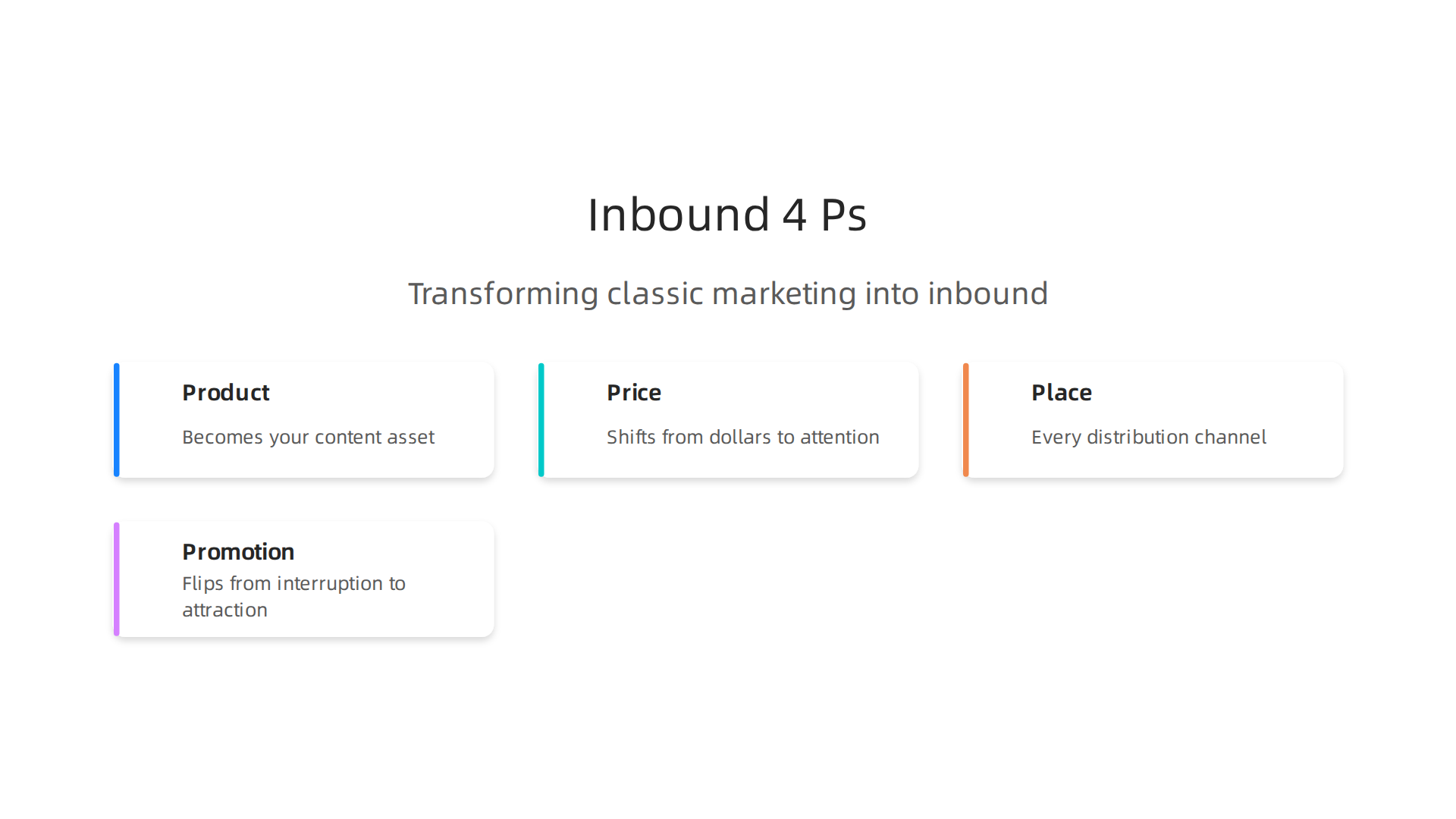
Here is how it works for your inbound engine.
Product becomes your content asset. Every blog post, video, podcast episode, or newsletter you create is a product your audience consumes. It needs to solve a real problem. That is why a strong corporate branding service helps you build trust by delivering consistent, helpful content.
Price shifts from dollars to attention. Your audience pays you with their time and engagement. So you need content valuable enough to earn that currency.
Place means every distribution channel where your audience hangs out. In 2026, that includes search engines, social platforms, email inboxes, podcasts, and even connected TV. Your job is to be present where they already look for answers.
Promotion flips from interruption to attraction. Instead of buying eyeballs, you use content distribution and organic discovery to draw people in. This is where lifecycle marketing comes to life. Check out our guide on how advertising definition in 2026 transforms customer relationships to see the shift in action.
When you apply this 4 Ps framework to your inbound marketing definition, you stop thinking in silos. You start building campaigns where product, price, place, and promotion all work together to attract, engage, and delight your audience. That is the integrated approach that wins in 2026.
Product: Your Content as the Core Offering
Now let’s zoom in on the first P: Product. In traditional marketing, product means the physical item or service you sell. But when you apply the inbound marketing definition to your strategy, your product changes completely. In inbound, your content is your product.
Every blog post, video, podcast episode, newsletter, free tool, or interactive experience you create is something your audience consumes. And just like any physical product, it needs to deliver real value. If it does not solve a problem, answer a question, or teach something useful, it will fail.
This shift matters because your audience has limited attention. They choose to spend it on content that helps them. That is why media companies that treat content as a serious product invest in quality. They do not just publish to fill a calendar. They create with purpose.
Think about what makes a great product in any market. It solves a real need. It is reliable. It builds trust over time. Your content should do the same. When someone reads your blog or watches your video, they should walk away with a clear takeaway that improves their day or business.
Some media companies go even further. They use proprietary data, original research, or unique storytelling to create content that no one else can replicate. That becomes a true product differentiator. It gives your audience a reason to come back to you instead of your competitors.
The Coursera article on the 4 Ps explains that product is the foundation of the marketing mix. Without a strong product, the other three Ps cannot save you. The same applies to inbound. Your content product must be strong enough to attract attention naturally.
To make your content product work, focus on three things.
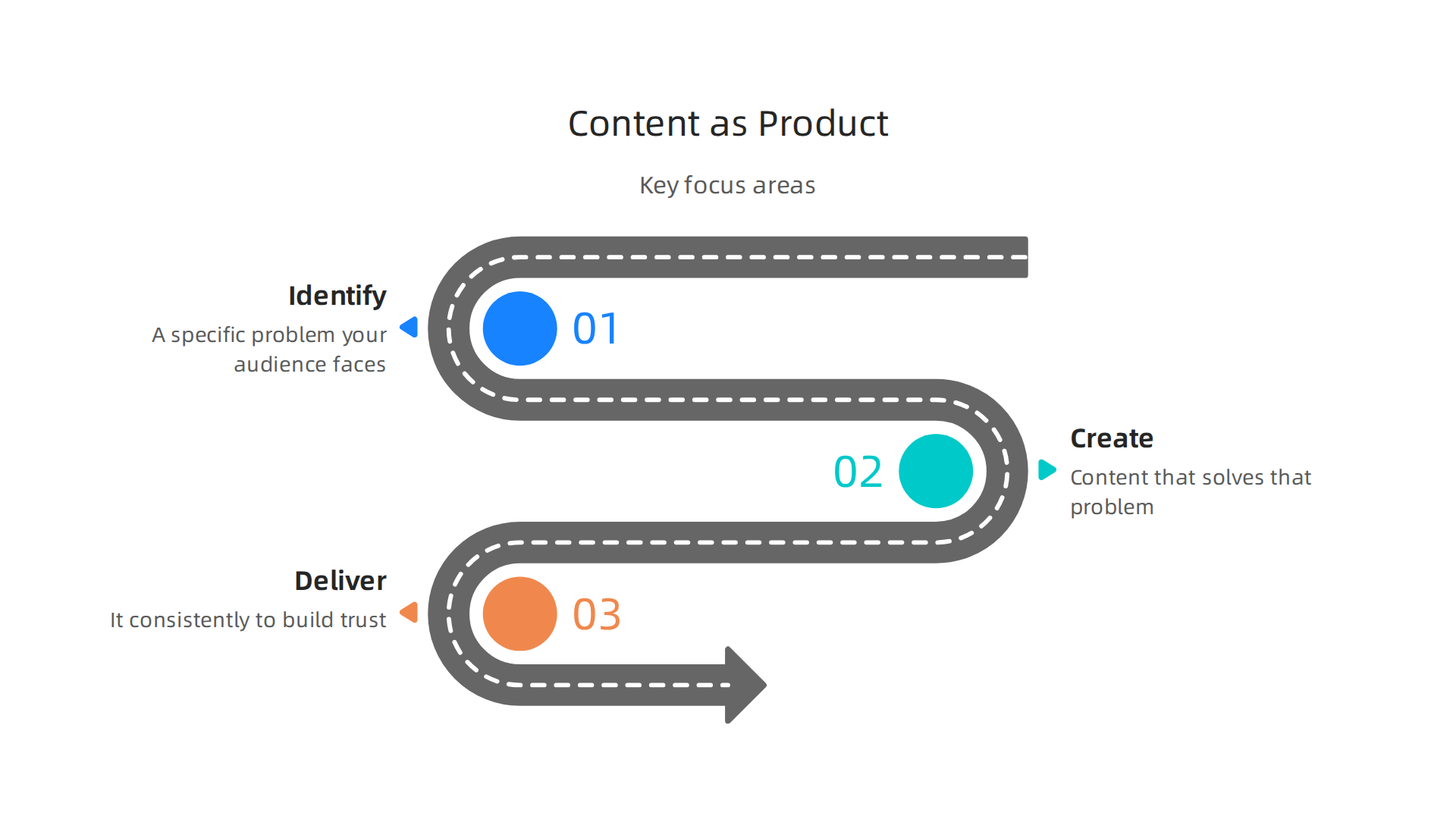
First, identify a specific problem your audience faces. Second, create content that solves that problem completely. Third, deliver it consistently so your audience learns to trust your brand.
This is where corporate branding services that win audience trust can help. When your content product consistently delivers value, it builds your brand reputation over time. That trust translates into loyal readers, subscribers, and eventually customers.
And when your content product is strong, you also need to make sure people can find it. That is where a smart distribution strategy comes in. Professional Academy notes that the traditional marketing mix has evolved from 4 Ps to 7 Ps over time to include people, process, and physical evidence. For inbound, think of your content’s discoverability as part of that process. SEO services for businesses that deliver measurable results can help your content product reach the right audience at the right time.
Remember, your content is not just filler. It is your product. Treat it with the same care and strategy you would any physical offering. That is how you make your inbound marketing definition work in practice.
Price: The Strategic Value Exchange in Inbound
When we talk about the marketing mix and the 4 Ps of marketing, price usually means money. But the inbound marketing definition flips that idea on its head. In inbound, price is not just about dollars. It is about what your audience gives you in exchange for your content.
Here is the thing. Your audience gives you three things. They give you their time, their attention, and sometimes their data.
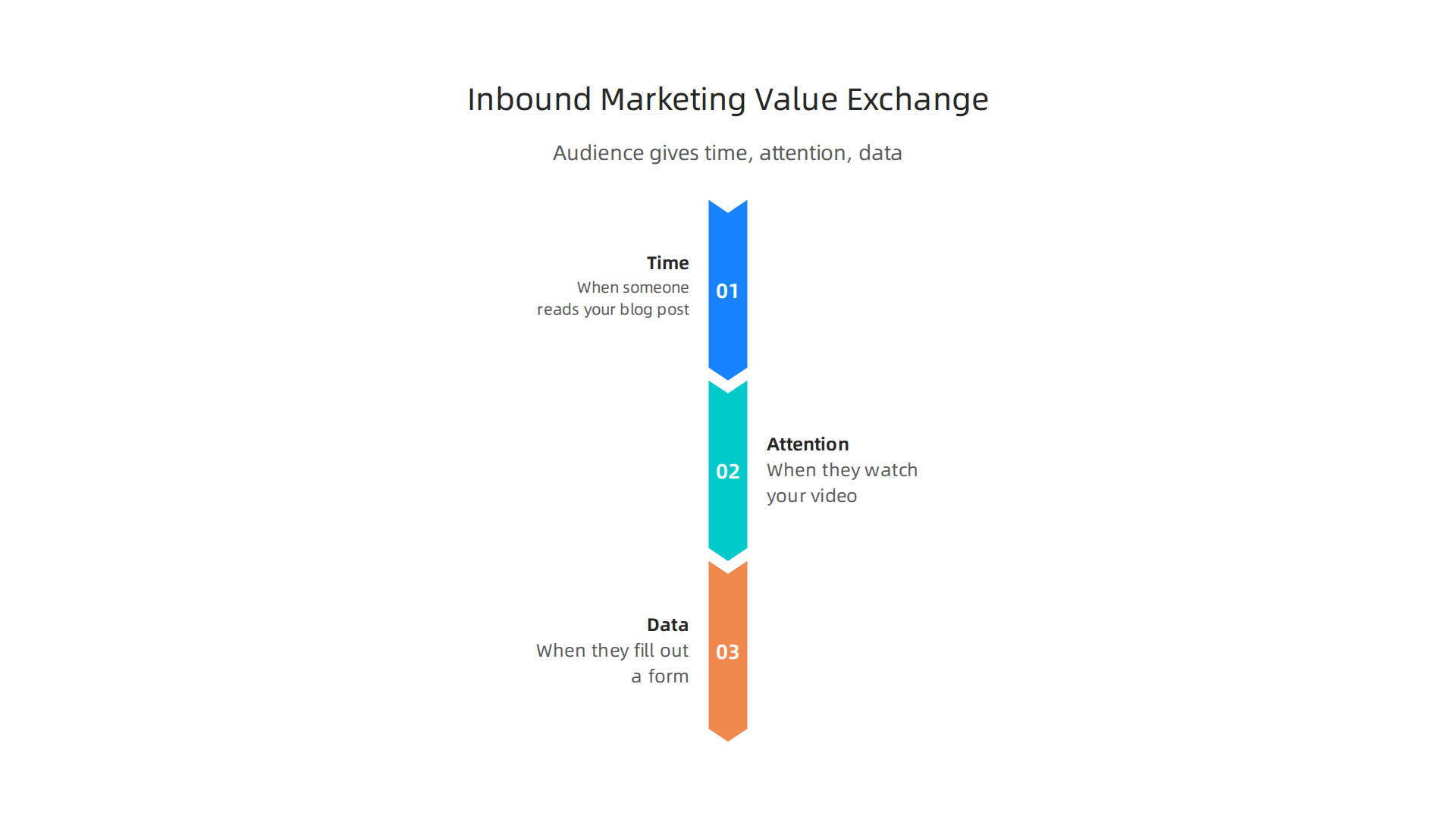
In some cases, they give you money for premium content. Every single one of these is a form of payment.
Let us break that down.
When someone reads your blog post, they pay you with their time. When they watch your video, they pay you with their attention. When they fill out a form to download a lead magnet, they pay you with their personal information. And when they subscribe to your paid newsletter or course, they pay you with money.
Getting this value exchange right is critical. If you ask for too much, your audience walks away. If you ask for too little, you leave value on the table.
So what does a fair price look like in inbound?
Lead magnets are a great example. A lead magnet is a free piece of content like an ebook, checklist, or template that you offer in exchange for an email address. According to a 2026 study by GetResponse, 47% of marketers said video and text-based lead magnets performed best as opt-in incentives. That means almost half of marketers see the best results when they offer something genuinely useful before asking for data.
The key is matching the value of your content to the price you ask.
Think about the median B2B cost per lead in early 2026. According to Digital Applied, it reached $213. But here is the interesting part. Channel level CPLs ranged from $98 for organic content and SEO all the way up to $487 for account based marketing. That huge gap shows that organic inbound content is one of the cheapest ways to acquire leads.
But cheap does not mean low quality. It means your content is doing the heavy lifting.
When your audience gives you their email address, they expect something valuable in return. A 2026 report from Warmly found that 50% of businesses feel email has the most impact on the success of their multichannel lead generation strategies. That means the lead magnet you offer is often the first step in a longer relationship.
The same idea applies to subscription models. If you offer a freemium version of your content, your audience pays with their time and attention first. Then if they see enough value, they pay with money for the premium tier. This gradual value exchange builds trust over time.
And that trust is the real currency. When your audience feels like they are getting a fair deal, they keep coming back. They share your content. They become loyal subscribers. That is how the inbound marketing definition creates sustainable growth.
When you get the price right, everything else falls into place. That is why the value exchange is one of the most important parts of your marketing concept. Get it wrong, and you lose your audience. Get it right, and you build a relationship that lasts.
This is exactly where corporate branding services that win audience trust can help you strengthen that value exchange over time.
Place: Mastering Distribution Channels
You have great content. You set a fair price in the value exchange. But now you need to get that content in front of the right people. That is where Place comes in. In the marketing mix, Place is all about distribution. For the inbound marketing definition to work, you must choose the right channels to deliver your content to your audience where they already spend time.
Think of it this way. You could create the best blog post in the world. But if nobody sees it, it does not matter. Place is how you solve that problem. It covers everything from SEO and social media to email, podcasts, and partnerships. The goal is simple. Put your content where your audience pays attention.
The tricky part is choosing the right channels. A 2026 study by Taboola found that the most effective distribution channels were in person events (52%), webinars (51%), and email that did not include newsletters (42%). Another report from Belkins showed that live events (71%), influencer marketing (70%), and video content (69%) have mainstream adoption in B2B. These numbers tell you one thing. Your audience is scattered across different platforms. You need to meet them where they are.
But here is the catch. Being everywhere at once is not a strategy. It is a recipe for burnout. You need a coherent Place strategy that matches each channel’s strengths with your audience’s habits. For example, organic search through SEO is a powerful distribution channel. It also happens to be one of the cheapest ways to generate leads. According to Digital Applied, the cost per lead for organic content and SEO was just $98 in early 2026. Compare that to $487 for account based marketing. That is a huge difference.
Email is another key distribution channel. A 2026 report by Warmly found that 50% of businesses say email has the most impact on their multichannel lead generation strategies. That means email should be a core part of your Place strategy.
When you align your distribution with your audience’s habits, your content works harder. It attracts the right people and builds trust over time. That is how the inbound marketing definition comes to life.
To build a strong organic distribution foundation, you need solid SEO. That is where professional help can make a difference. Check out these SEO services for businesses that deliver measurable results in 2026 to make sure your content reaches the right audience.
Mastering Place is not about trying every channel. It is about choosing the ones that matter most to your audience. When you get that right, the whole marketing concept starts to click.
Promotion: Attracting and Nurturing Audiences
So you have created useful content. You have placed it on the right channels. But what if it still does not get seen? This is where Promotion steps in. In the marketing mix, Promotion covers everything you do to amplify your content and get it in front of more eyes. Think paid ads, influencer partnerships, PR, and social sharing. Without Promotion, even the best content stays hidden.
Promotion works hand in hand with the other Ps. Your inbound marketing definition only comes to life when you connect the right message with the right audience at the right time. The goal is not just to shout louder. It is to attract and nurture people who already want what you offer. That is the heart of the whole marketing concept.
Here is the challenge. Organic reach keeps dropping on most platforms. Social media algorithms change constantly. Email open rates require strong subject lines. To keep up, you need a mix of organic and paid tactics. The trick is finding a balance that does not blow your budget.
One smart approach is to focus on cost effective paid strategies. For example, using retargeting ads to reach people who already visited your site. Or partnering with micro influencers in your niche. These tactics let you spend less while still reaching the right people.
But how do you know if your Promotion is working? That is where KPIs come in. According to a guide from Klipfolio, you should start with outcome KPIs like conversion rate and customer acquisition cost, then layer on channel specific KPIs. The Semrush blog lists 20 marketing KPIs to track in 2026, including click through rate, cost per acquisition, and return on ad spend. Picking the right KPIs helps you see which promotional tactics actually drive results.
A strong Promotion strategy also builds trust over time. When you consistently show up with valuable content across ads, social posts, and PR, your audience starts to recognize you. That recognition turns into loyalty. And that loyalty feeds back into your entire marketing mix.
To make your promotional efforts even stronger, consider how your brand looks across all touchpoints. Consistent branding makes your ads and social content more memorable. If you need help shaping that identity, check out these corporate branding services that win audience trust and ad revenue in 2026.
Remember, Promotion is not about shouting the loudest. It is about being helpful and consistent. When you align your promotion tactics with your audience’s needs, you attract people who actually want to hear from you. That is how the 4 ps of marketing work together to create real growth.
Measuring and Optimizing Inbound with the 4 Ps
You have set up your Product, Price, Place, and Promotion. But how do you know if each part is actually working? That is where measurement comes in. The marketing mix gives you a framework, but numbers tell you the real story.
Here is the thing. Each P needs its own set of KPIs. That way you can see exactly where things are clicking and where they are stuck. For example, for Product you might track content engagement time or conversion rate. For Price you watch customer lifetime value and average order value. For Place you look at traffic by channel and cost per lead. And for Promotion you check click through rate, cost per acquisition, and return on ad spend.
According to Klipfolio’s inbound marketing KPIs guide, you should start with outcome KPIs like revenue and conversion rate. Then add channel specific KPIs. That keeps you focused on what matters most.
A smart way to bring it all together is a measurement dashboard aligned with the 4 ps of marketing. This dashboard gives you a single view of your entire inbound performance. You can see if your marketing concept is working across all dimensions at once. For example, if your Promotion KPIs look great but your Place KPIs are low, you might have an awareness problem. Or if Product conversions are low, maybe your pricing needs a tweak.
Once you have that dashboard, data driven optimization becomes your best friend.

You do not guess anymore. You look at the numbers and make small changes. Maybe you adjust your ad targeting or tweak your landing page. Over time these small improvements add up to big gains.
If you are looking to sharpen your digital presence, check out SEO services for businesses that deliver measurable results in 2026. A solid SEO strategy supports your Place and Promotion efforts by bringing in the right traffic.
Remember, the inbound marketing definition is all about attracting people who want what you offer. But you can only attract them well if you measure what works. Keep tracking, keep optimizing, and your whole marketing mix will get stronger every month.
The Future of Inbound Marketing: AI, Automation, and the 4 Ps
So where is all this heading? The marketing world is changing faster than ever, and the biggest driver is artificial intelligence. In 2026, AI is no longer just a tool for writing blog posts or generating images. It is becoming a core part of how we understand and reach audiences. According to Dotdigital’s 2026 marketing predictions, AI is evolving from simply creating content to truly understanding context. That means your campaigns can adapt in real time to what your audience actually wants.
This shift touches every part of the marketing mix. Let us look at how AI changes each of the 4 ps of marketing:
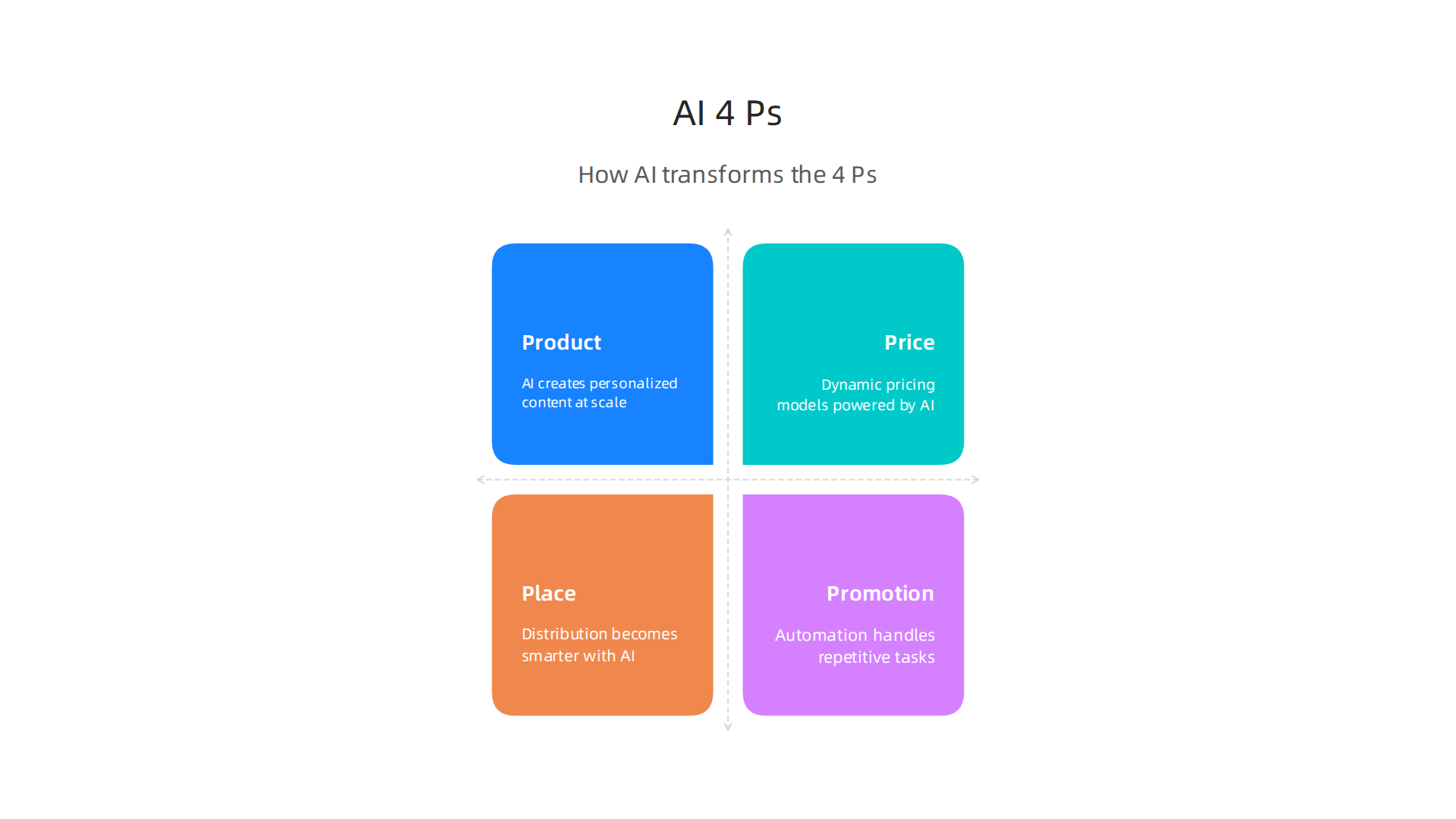
- Product: AI helps you create personalized content at scale. Instead of guessing what your audience needs, you can use tools to analyze data and deliver exactly the right information at the right time. The HubSpot State of Marketing Report shows that top marketers are using AI to drive efficiency and build trust.
- Price: Dynamic pricing models powered by AI let you adjust based on demand, competition, and customer behavior. This is a natural fit for media professionals who sell subscriptions or ad space.
- Place: Distribution becomes smarter. AI can decide which channels get which content, when to post, and how to optimize for each platform. The Improvado guide to AI marketing trends highlights how AI Overviews are already changing organic traffic patterns.
- Promotion: Automation handles repetitive tasks like ad targeting and email sequencing. This frees you up to focus on strategy and creativity.
Here is the thing. The marketing concept behind the 4 Ps is still solid. But you need to adapt it to 2026. The Adobe Digital Trends Report calls this the promise and pressure of generative and agentic AI. Brands that get this right will build stronger customer experiences.
If you want to stay ahead, focus on how AI can support your inbound marketing definition of attracting people who already want your offer. That means using AI to enhance, not replace, your human touch.
For media professionals looking to sharpen their distribution strategy, check out corporate branding services that win audience trust and ad revenue. A strong brand identity helps you stand out in an AI powered world.
The future belongs to those who master the interplay of AI and the 4 Ps. Start experimenting now so you are ready for what comes next.
Summary
This article defines inbound marketing for 2026 and shows how the classic 4 Ps of marketing—Product, Price, Place, and Promotion—must be rethought for modern media professionals. It explains why content is now the product, why price is a value exchange of time, attention and data, how to choose distribution channels that match audience habits, and how promotion shifts from interruption to attraction. The piece also covers measurement—what KPIs to track and how to build a dashboard—and highlights AI and automation as tools to personalize at scale without losing the human touch. Readers will learn a practical framework to design integrated inbound campaigns, pick the right channels, set fair value exchanges, and optimize performance over time.