Mastering Advertising ID for 2026 Privacy and Ad Operations
Why Advertising IDs Matter Right Now
Have you ever wondered how ads on your phone or tablet seem to know just what you like? This magic happens thanks to something called an advertising ID. An advertising ID is like a special, secret number linked to your device, but not directly to you as a person. It helps advertisers understand what types of apps you use and what things you might be interested in.
This unique number is super important for how advertising works today. It lets companies show you ads that are a good fit for you. Think of it like a smart tag that helps a store know what products to put in front of a customer. In the world of ad operations, especially on big platforms like the Google Ad Network, the advertising ID has been a key tool. It helps advertisers not only target ads better but also measure if their ads actually work. For instance, if an ad leads you to download an app, the advertising ID helps connect those two actions. Amazon’s Advertising ID Policy states it’s a "user-resettable, unique identifier that helps protect the privacy of the user."
However, things are changing very quickly in 2026. New rules about privacy and how companies handle your information are shaking up the world of online advertising. Platforms are updating their policies, making it harder for advertisers to use these IDs in the old ways. For example, users now have more power to reset their advertising ID, which means the old ways of tracking aren’t as reliable. We are seeing a big shift towards new ways of doing things that protect your privacy more. This means everyone in advertising needs to learn new strategies to keep up.
Staying informed about these fast-moving changes is critical for anyone in the media and advertising industry.

To keep up with all the big changes in technology and advertising, including the rise of new AI-powered tools, consider subscribing to The AI Newsletter Worth Reading. It offers clear daily updates to help you understand what’s happening.
The talk about new rules for privacy and how companies use your information might make things seem confusing. But don’t worry, understanding the main types of advertising IDs can help. An advertising ID is a special string of letters and numbers that helps advertisers know your device without knowing who you are as a person.
Think of it as a special tag for your phone or tablet that helps ads be more relevant to what you like.
What Makes an Advertising ID Different?
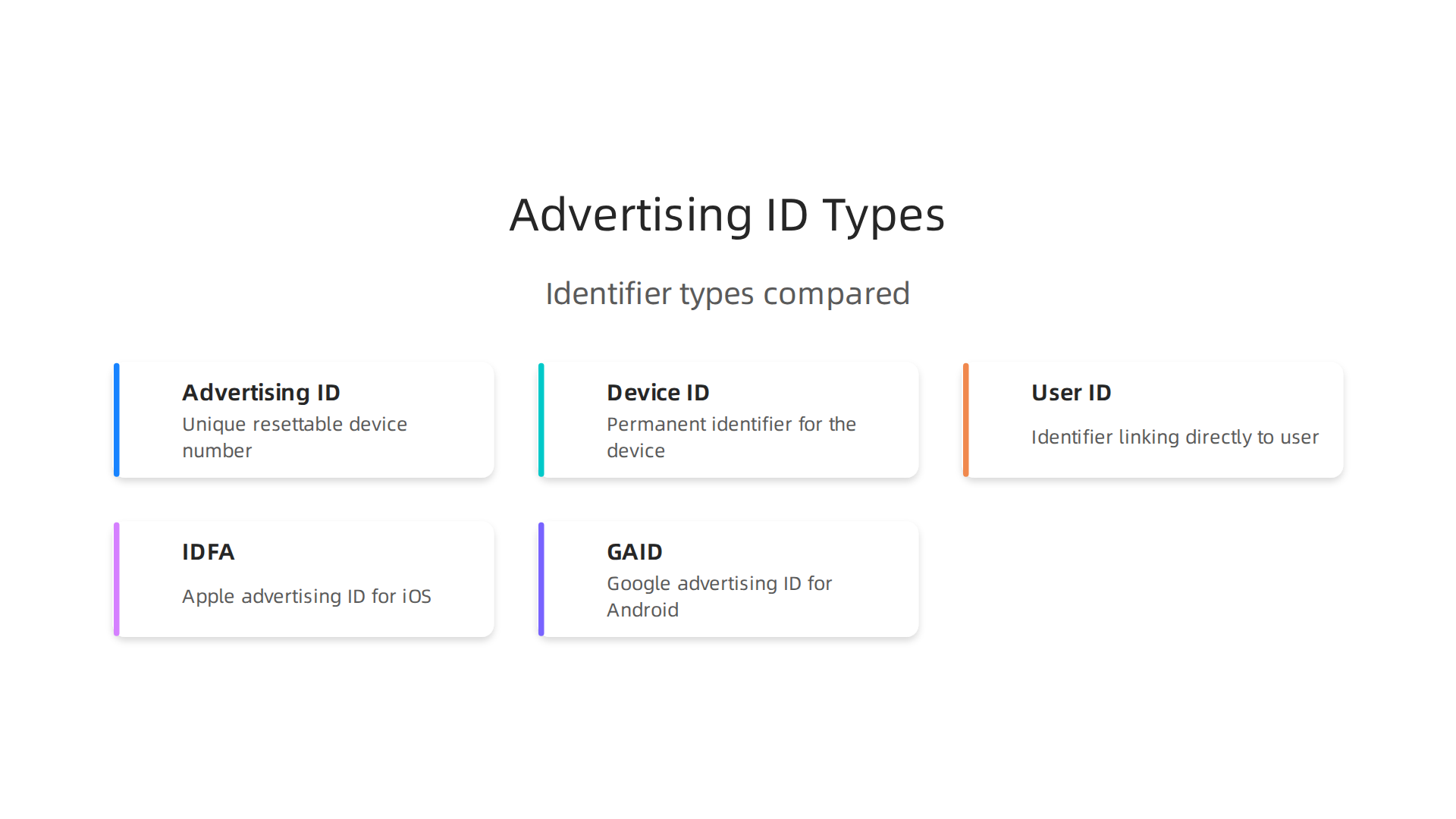
It’s helpful to know that an advertising ID is not the same as a "device ID" or a "user ID."
- Advertising ID: This is a unique, resettable number given to your device by its operating system, like Android or iOS. It’s mainly used for showing ads and measuring how well they work, all while trying to protect your personal privacy. For instance, Google Play services provide an advertising ID that users can reset or delete to control their ad tracking more easily in 2026 Advertising ID – Play Console Help.
- Device ID: This is a more permanent number that identifies your actual device. While advertising IDs can be reset, a true device ID is usually fixed. Many companies have moved away from using permanent device IDs for ad operations due to privacy concerns.
- User ID: This is a number that links directly to you as a person, often tied to an account you create, like an email address. Advertising IDs are built to avoid linking directly to your personal identity.
Main Types of Advertising IDs
In the world of mobile advertising, two types of advertising IDs are very important. They are used on the biggest phone systems:
- IDFA (Identifier for Advertisers): This is Apple’s advertising ID for iPhones and iPads. It’s a unique number that helps advertisers see how well their ads work and learn about app installs on iOS devices. However, starting in 2026, apps need to ask for your clear permission to use your IDFA because of Apple’s App Tracking Transparency (ATT) rules IDFA in 2026: A Complete Guide for iOS Marketers. If you say no, advertisers can’t use your IDFA.
- GAID (Google Advertising ID): This is Google’s advertising ID for Android devices. Just like IDFA, GAID helps app makers and advertisers understand how ads perform and track user behavior without sharing private details about you GAID: Google Advertising ID Guide & Future. The Google Ad Network relies on GAID for many of its ad operations. You can often find your advertising ID on an Android phone by going to Settings > Privacy > Ads or Settings > Google > Ads Understanding Mobile Advertising IDs and DROP – privacy.ca.gov.
There are also other types of advertising IDs from different companies, but IDFA and GAID are the most common ones you’ll hear about for mobile ads. Understanding these IDs is a key part of building a successful advertising strategy in 2026. If you want to dive deeper into how different channels work, you might find our guide on Advertising Channels 2026: How to Build Your Winning Media Mix helpful.
Learning about advertising IDs is like looking under the hood of your phone to see how ads appear. Let’s talk about how these special IDs are made, where they live, and how apps get to use them.
How Advertising IDs Are Generated, Stored, and Accessed (Technical Overview)
Think of your phone’s operating system, like Apple’s iOS for iPhones or Google’s Android for other phones, as the boss. It’s the boss that creates your advertising ID. This ID is not something you pick; it’s a long, random set of letters and numbers. For example, Google’s advertising ID (GAID) is a special 128-bit number that looks a bit like a secret code Identity – Android Developers.
Once this unique advertising id is made, your phone’s operating system keeps it safe. It’s stored right on your device, separate from your personal information like your name or email. This makes sure that even though ads can be shown that match your interests, your true identity stays private. A very important thing about this ID is that you, the user, can reset it or even delete it. This gives you power over how much your device is tracked for ads.
Now, how do apps use this advertising id? Apps don’t just reach in and grab your advertising ID whenever they want. They have to use special tools or rules set by Apple and Google.
- For Apple devices (IDFA): Starting in 2026, apps on iPhones and iPads must ask your clear permission before they can use your IDFA. This is part of Apple’s App Tracking Transparency (ATT) rules. If you say no, the app cannot access your IDFA. Developers use Apple’s special tools to get this ID, but only after you give the okay advertisingIdentifier | Apple Developer Documentation. This helps you decide which of the statements is true regarding advertising on your device.
- For Android devices (GAID): Apps need to use a special helper tool from Google Play services to get your GAID AdvertisingIdClient | Google Play services. Even when they get it, they must follow rules and respect your choices about ad tracking. If you turn off ad personalization in your settings, apps and advertising networks must respect that. This is crucial for smooth ad operations. The Google Ad Network, for example, relies on apps following these rules to make sure ads are shown fairly and privately.
Understanding how these advertising IDs are managed helps everyone in the advertising world work better. It shows how important it is for companies to respect user choices while still being able to show helpful ads.
If you are a professional trying to build successful campaigns, understanding the different ways Google helps deliver ads can be a game-changer. Discover more about Types of Google Ads: Nine Campaign Formats Media Professionals Need to Know.
In 2026, technology like AI continues to change how ads work. It’s smart to stay updated.
Get clear daily AI updates from The AI Newsletter Worth Reading.
The idea of respecting user choices in advertising has brought about big changes. In 2026, it’s not just about how advertising IDs work, but also about the strict rules and policies that guide their use. These rules come from governments, big tech companies, and even from the users themselves wanting more privacy.

This shift has truly changed the game for how ads are shown and managed.
What Drove the Big Changes?
The main reason for these changes is a growing focus on privacy.
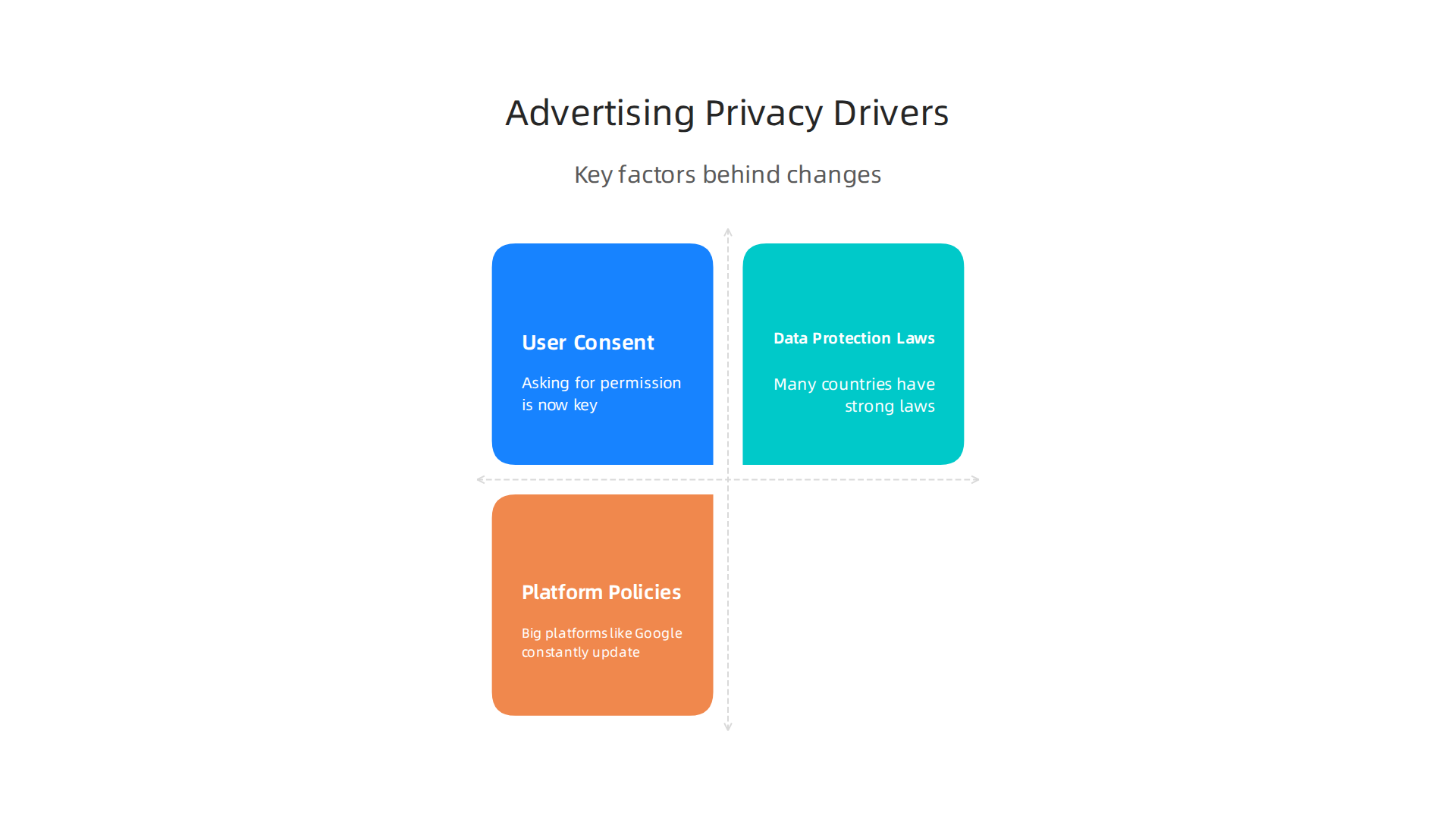
People want more control over their personal data. This led to new laws and updates from the big companies that make phones and run ad platforms.
- User Consent: Asking for permission is now key. For example, Apple’s rules mean apps must ask you directly if they can track your activity across other apps and websites. If you say no, they can’t use your advertising id for targeted ads. This is a big part of knowing which statements are true regarding advertising and your personal data.
- Data Protection Laws: Many countries have strong laws about protecting personal information. In Europe, for instance, rules mean that consent to use data for things like a European Unified ID must be freely given and clear Advertiser information | European Unified ID. This makes sure companies explain exactly what data they will use and why. In the US, states like California also have laws that help people ask for their data to be deleted, including information linked to mobile advertising IDs Understanding Mobile Advertising IDs and DROP.
- Platform Policies: Big platforms like Google, Meta (Facebook and Instagram), TikTok, and Amazon constantly update their rules. In 2026, many updates focus on making sure advertisers respect user choices, especially when a user resets their advertising ID. Google, for example, updated its Personalized Advertising policy, though the core rules about privacy remain strong Update to Google Ads Personalized Advertising policy. These platforms track how often policies are updated, sometimes several times a month Platform Policy Tracker 2026. This impacts all ad operations, including the entire Google Ad Network. If you’re running ad campaigns, understanding these ever-changing rules is vital to build a strong advertising ethos for trust in the AI era.
These rules mean that advertisers have to be very careful about how they use the advertising id. They must respect when users choose to limit tracking, and they cannot try to get around these choices by using other ways to link user data without permission Common use cases and the…. This new landscape pushes the advertising world towards more privacy-focused methods. This move is also part of a larger trend towards a cookieless future, where tracking users across websites becomes even harder without third-party cookies.
Following the discussion on privacy changes, it’s helpful to see how advertisers and agencies actually use the advertising id in their day-to-day work. Even with new privacy rules in 2026, the advertising id remains a key tool for running smart ad campaigns.
Advertisers use advertising IDs for several important reasons:
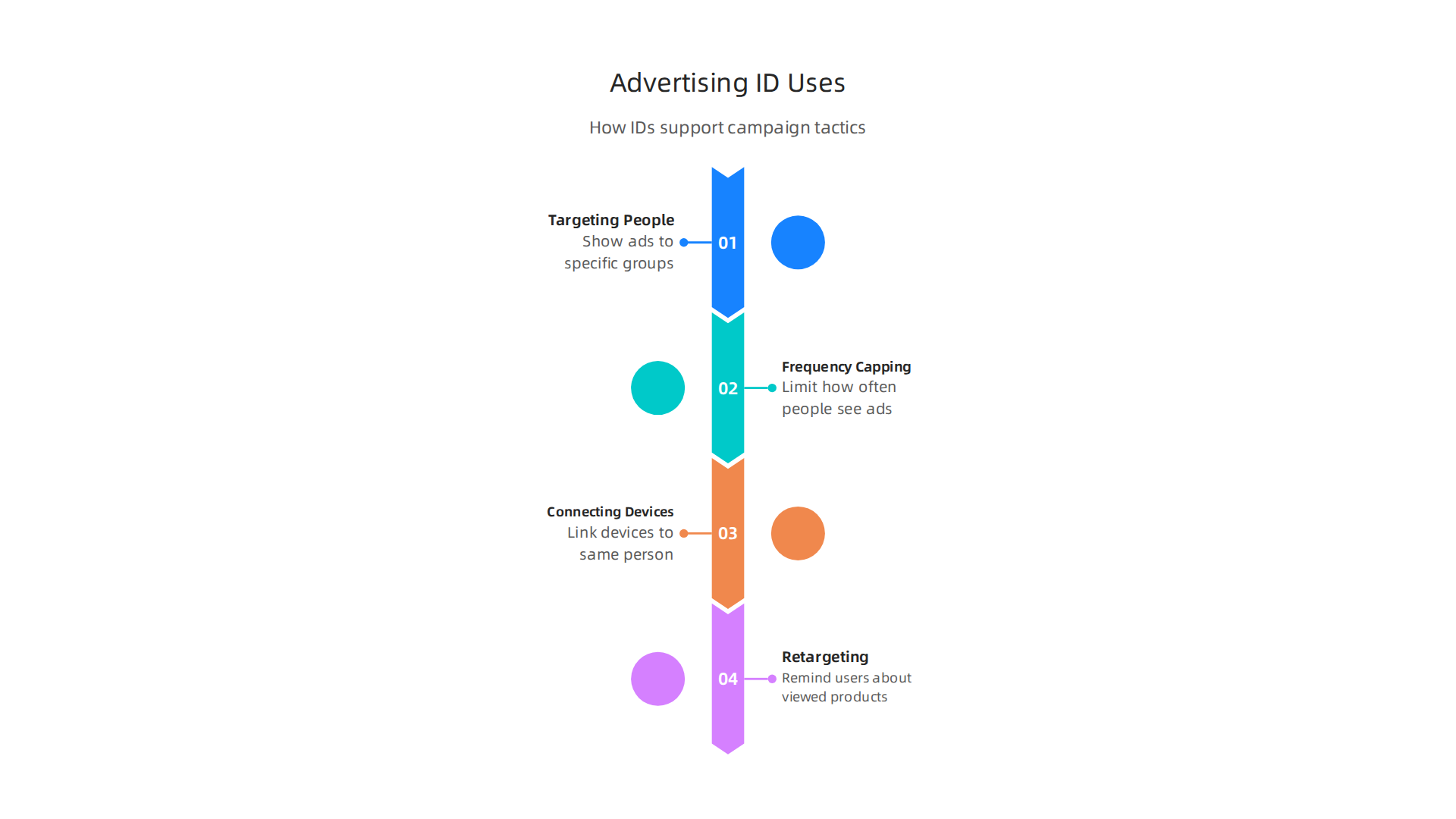
- Targeting the Right People: Advertisers use an advertising ID to show ads to specific groups of people. For example, if you’ve been looking at sports gear in an app, advertisers might use your advertising ID to show you more ads for sports gear. This is a core part of winning creative ads digital campaign strategies 2026. These identifiers, like Apple’s Identifier for Advertisers (IDFA) or Google Advertising ID (GAID), help connect ad views to actual app installs or purchases, all while protecting privacy. GAID, for example, is a unique ID for Android devices that helps measure how well campaigns perform, without sharing personal information. This ID is similar to a web cookie but works for tracking across apps on a device, not just websites, as explained in the article Advertising ID (IDFA and GAID).
- Not Showing Too Many Ads: Nobody likes seeing the same ad over and over again. This is called "frequency capping." By using the advertising id, advertisers can limit how many times a person sees a certain ad on their phone or tablet. This makes ads less annoying and more effective for the user.
- Connecting Across Devices: Sometimes, you might see an ad for a product on your phone and then later see a related ad for the same product on your tablet. An advertising ID helps advertisers understand that these devices might belong to the same person. This "cross-device matching" helps create a smoother and more relevant ad experience across all your devices.
- Reminding You About Things You Like: If you put an item in a shopping cart on an app but didn’t buy it, you might start seeing ads for that item later. This is called "retargeting," and the advertising id helps make it possible. Advertisers want to remind you about products you’ve shown interest in to encourage you to complete a purchase.
How Advertising IDs Work in Daily Ad Operations
In 2026, ad operations teams carefully use advertising IDs. They build audience groups, set up how much to bid for ads, and measure how well their campaigns are doing.
- Building Audience Groups: Advertisers collect anonymous data linked to an advertising ID to create groups of users with similar interests. These groups are called segments. They send these segments to ad platforms, like those in the Google Ad Network, to make sure their ads reach the right people. An identity solution helps recognize users without breaking privacy rules.
- Setting Bids for Ads: When an ad spot is available, advertisers bid on it. The advertising ID helps them decide how much to bid based on how likely that specific user is to be interested in the ad.
- Measuring Success: After an ad campaign runs, advertisers need to know if it worked. They use the advertising id to see which ads led to an app download, a purchase, or another important action. This helps them understand what makes a good advertisement thrive and adjust their strategy. For example, Google provides a system for app developers to get the advertising ID and respect user privacy choices, which is important for measuring ad performance accurately according to Google Play Console Help.
Understanding how these IDs are used is part of staying on top of the fast-changing world of advertising. For deeper daily insights into how AI and technology are changing the media landscape, including advertising, consider subscribing to The AI Newsletter Worth Reading.
The fast-changing world of advertising means that how we track and show ads is always improving. While the advertising id is still important, new privacy rules mean advertisers are also looking at other ways to reach people.

These new ways help keep people’s information safe while still showing useful ads.
New Ways to Track Without the Advertising ID
In 2026, advertisers are using new tools that do not rely on a single advertising id for each person. Here are some of these new methods:
- Cookieless Identifiers: Think of these as new kinds of IDs that are not tied to cookies in your web browser or to your phone’s advertising ID. These "universal IDs" are often built from data you’ve already agreed to share, like an email address, but they are used in a way that keeps your personal details private. These solutions help advertisers recognize users across different websites and apps without sharing sensitive personal info, as explained in a guide for navigating identity solutions.
- Cohort-Based Approaches: Instead of tracking you as an individual, advertisers group you with many other people who have similar interests. This group is called a "cohort." Ads are then shown to the whole group, not to you alone. This keeps your personal actions private because the focus is on the group. Google’s Privacy Sandbox, for example, is using this method to help advertisers reach audiences without tracking individuals, showing how identity solutions work in programmatic advertising.
- Server-Side Strategies: This means data is collected and sent directly from an advertiser’s website server to an ad platform’s server. It helps advertisers understand what makes a good advertisement thrive by measuring actions directly. This method bypasses the need for client-side tracking, which often relies on cookies or advertising IDs. Moving to server-side tracking helps maintain marketing performance visibility in a privacy-first world. This approach gives advertisers more control over their data and can lead to more accurate reporting.
Balancing Privacy and Ad Effectiveness
These new privacy-focused ways of advertising come with some trade-offs.
- More Privacy, Less Direct Tracking: The biggest upside is better privacy for users. When you reset your advertising ID, for example, advertisers should always respect that choice and not try to link you to a new ID using other methods, as highlighted in developer guides on common use cases for user data IDs. This means it’s harder for any single company to build a full picture of everything you do online. However, this also means that advertisers might not be able to show you ads that are as perfectly matched to your interests as before. This shift is a core part of data privacy marketing strategies for 2026.
- Different Ways to Measure: Advertisers using these methods need to change how they measure if their ads are working. Instead of seeing exactly what one person did after seeing an ad, they might look at trends across large groups. While this still helps ad operations teams understand general success, it’s a different approach. Advertisers are adapting to these changes by focusing on other signals and partnerships, as discussed in a guide on advertising without cookies.
The goal for advertisers in 2026 is to find a good balance. They want to respect your privacy while still showing ads that are helpful and not annoying. This means they are always looking for better ways to understand their audience within new rules, like those from California that help people understand mobile advertising IDs and privacy by offering tools to opt-out or delete personal information. Learning about these new methods is key for anyone in the ad world, as it will shape how businesses connect with people in the future. If you want to dive deeper into how digital marketing platforms are changing, check out strategies for digital marketing platforms in 2026.
Measurement, Attribution, and the Limits of ID-Based Approaches
In the past, the advertising id was a key tool for advertisers. Think of it like a special number on your phone or tablet that helps apps and websites know it’s you, without sharing your actual name. These IDs, like Apple’s Identifier for Advertisers (IDFA) or Google’s Advertising ID (GAID), were central for figuring out if an ad worked. For example, if you saw an ad for a game and then downloaded it, your advertising id helped show that the ad led to the download. This is called "attribution." The Advertising ID from Google Play services allowed app developers a standard system for ad measurement. Similarly, Apple’s IDFA is used to support ad attribution and campaign measurement.
The Downsides of Relying Only on Advertising IDs
But relying only on one advertising id has its problems. First, not everyone has one, or some people choose to reset it often for privacy. This creates gaps in what advertisers can see. It’s like trying to count apples in a basket, but some apples are hidden, and others keep moving to different baskets. This makes it hard for ad operations teams to get a full and clear picture. Also, with new privacy rules, it’s not always easy or even allowed to track individual users across every app and website. This means the old way of using a single advertising id for everything is no longer enough. The industry is moving beyond third-party cookies, requiring new ways to measure ads, as noted in the Guide to the Post Third-Party Cookie Era.
Combining IDs with Newer Measurement Ideas
Today, in 2026, measurement teams in advertising are getting smarter. They know a single advertising id isn’t the whole story anymore. Instead, they combine different methods to understand how well ads are doing.
- Using what’s still available: They still use advertising IDs where they can, but with full respect for user privacy choices. This data is often used in a way that respects the user’s intent to limit ad tracking.
- Looking at groups: As we talked about before, they look at "cohorts," or large groups of people with similar interests, rather than tracking each person. This gives a general idea of how ads are performing for a type of audience.
- Smart guesses (probabilistic models): Advertisers also use clever computer programs that make educated guesses about what might be happening. For example, if many people from a certain area click on an ad and then visit a store, the program might guess there’s a connection, even without knowing each person’s specific advertising id. This helps fill in the blanks where direct tracking isn’t possible. Teams are now challenged to evolve their ad measurement strategy to adapt.
By mixing these approaches, advertising teams can get a better idea of what makes a good advertisement thrive in this new privacy-first world. This kind of analytic marketing helps them make good choices about where to put ads, even when they don’t have all the old individual tracking data. It’s all about adapting to new rules and new tools, ensuring ads are still useful and effective without stepping on privacy.
To stay ahead in understanding these swift changes, especially with AI’s growing role, you need reliable insights.
Get clear daily AI updates from The AI Newsletter Worth Reading.
It is clear that simply using an advertising id is no longer enough. To truly succeed in 2026, marketers, publishers, and ad operations teams need a clear plan. Here’s a checklist to help your team make smart choices as the world of advertising keeps changing:
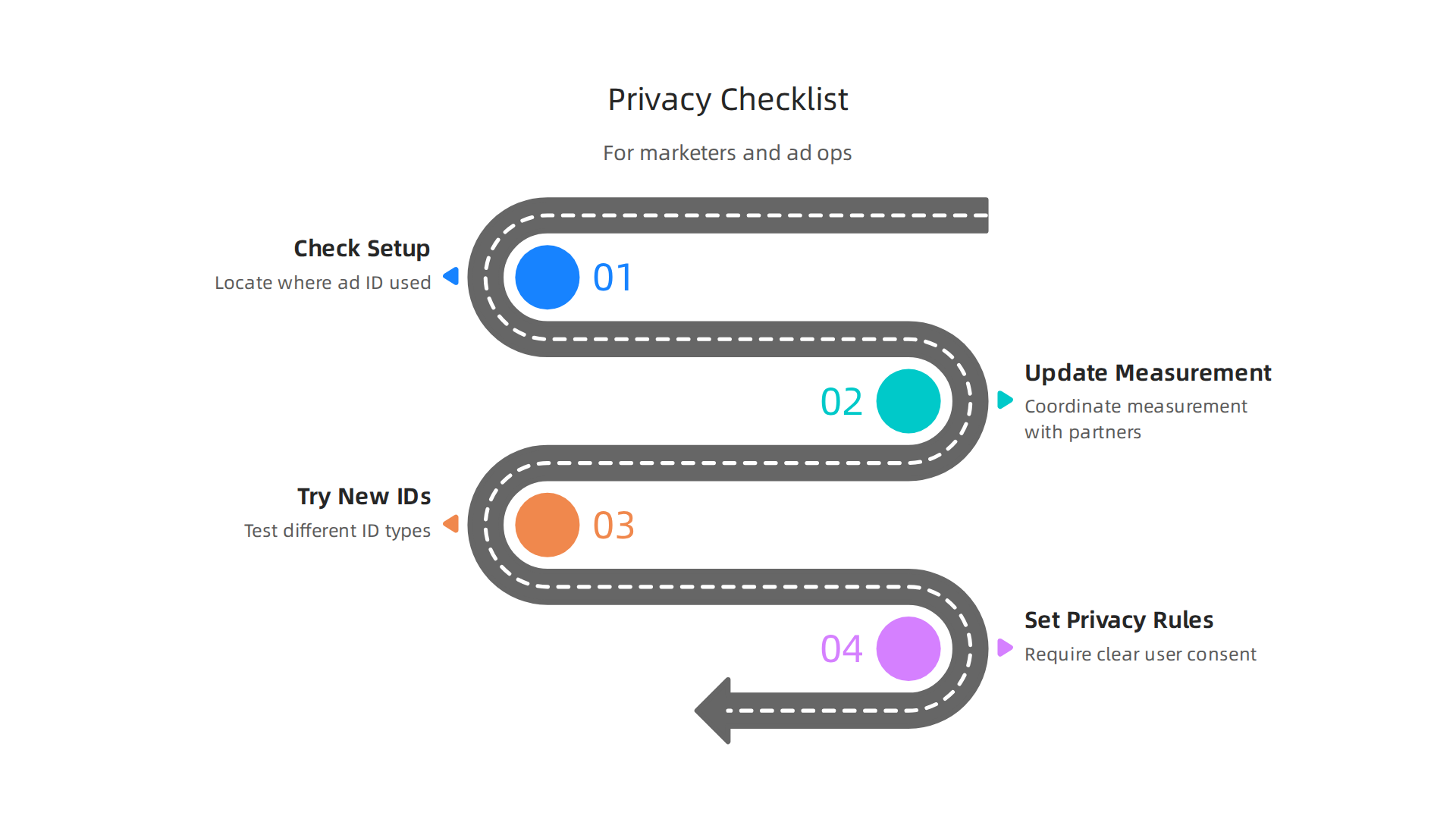

1. Check Your Current Setup
First, look closely at how your company uses advertising IDs right now.
- Find out where your advertising id is used: Do you use it in your apps, on your websites, or for sharing data with partners? Understand every place it’s involved. This helps you see where you might have problems or gaps.
- See what information relies on old IDs: Which of the statements is true regarding advertising data? Do your old reports only show what happened because of a single advertising id? You need to know what insights might go away when these IDs are used less. This initial check is a key step, as highlighted in a guide for advertisers, publishers, and adtech to navigate new identity solutions.
2. Update How You Measure Success
Your team needs new ways to see if ads are working.
- Change your measurement rules: Talk to your partners and make sure your agreements for measuring ad performance match the new privacy rules. This might mean using new tools or looking at data in groups instead of focusing on single users. Check out ways to get a Cookieless Attribution Guide to help you understand different measurement methods.
- Look beyond clicks and views: Think about other ways to tell if an ad is good. For example, how much time do people spend on a page after seeing an ad? What about how many people later search for your brand? The Attention Measurement Playbook for Marketers suggests looking at attention metrics alongside traditional measures. For specific advice on your media mix, consider different advertising channels 2026.
3. Try New Ways to Identify Users
Don’t wait! Start testing new identity solutions.
- Test different kinds of IDs: There are many new tools out there. These include "universal IDs" or ways to use data from your own customers directly. Trying them out in small steps helps you see what works best for your specific needs without big risks. The Cookieless Future Is Already Here offers practical steps for marketers.
- Work with trusted partners: Find companies that offer new ways to identify users and measure ads while respecting privacy. Make sure they fit with your company’s values. Publishers, for instance, can get guidance from a Programmatic Identity Signals: A 2026 Publisher Guide.
4. Set Up Clear Rules for Privacy
Having strong rules is very important in 2026.
- Get clear consent: Make sure you always ask users if you can collect their data, and explain simply why you need it. Users need to feel in control of their information. This is part of building a strong advertising ethos that people trust.
- Check your vendors: When you work with other companies, make sure they also follow strict privacy rules. Ask for their privacy policies and how they protect data. The IAB Europe Guide to Identity Technical Standards provides information on what to look for in identity solutions. This ensures your ad operations are always running smoothly and ethically.
By following these steps, marketers, publishers, and ad ops teams can be ready for the future. You can still reach the right people with your ads while making sure everyone’s privacy is protected. It’s about being smart and flexible in a changing world, and having a strategic marketing plan that adapts.
Summary
This article explains what advertising IDs are, how they work, and why they remain central to mobile ad operations even as privacy rules reshape the landscape in 2026. It defines the main types—IDFA for iOS and GAID for Android—describes how operating systems generate and store these resettable identifiers, and outlines how apps access them under new consent rules. The piece covers practical uses such as audience targeting, frequency capping, cross-device matching and attribution, while also noting the limits of relying on a single ID for measurement. It then presents privacy-focused alternatives—cohort-based approaches, universal IDs, and server-side strategies—and shows how advertisers must adapt measurement and partner relationships. Finally, the article gives a clear checklist to audit current setups, test identity solutions, update measurement rules, and set privacy-first vendor policies so teams can run effective campaigns while respecting user choice.