
Winning Global Marketing Strategy for SaaS and Media in 2026
Why a global marketing strategy is now table stakes for SaaS and media businesses
The world of marketing changes super fast. It’s 2026, and businesses, especially those that sell software (SaaS) and media companies, are seeing big shifts. New platforms pop up all the time, and what worked yesterday might not work today. Think about how many different social media apps or video sites people use in various countries. It’s a lot!
On top of that, Artificial Intelligence (AI) is changing everything. AI tools can help with content, ads, and even understanding what customers want. But it also means companies need to be smart about how they use these tools. Marketing strategies need to adapt quickly to keep up with these new ways of doing things. In fact, AI-powered tools are expected to be a huge part of marketing plans in 2026, helping with personalized messages and automatic tasks, as highlighted in a guide to Essential Strategies for an Effective Marketing Plan 2026. This is a big deal for a global marketing strategy. To stay truly current with these rapid changes, especially in AI, you should consider subscribing to The AI Newsletter Worth Reading.
Imagine trying to talk to people all over the world. People in different countries speak different languages, have different customs, and use different online places. This makes it hard for a company to reach everyone with just one message. Audiences are "fragmented," meaning they are spread out and need special attention. An effective marketing strategy in 2026 must think about all these different groups.
Because of all these changes, having a strong global marketing strategy is no longer just a nice-to-have. It’s a must-have.

This guide will give you a clear roadmap. We’ll share proven frameworks and show you how to build the right team. We’ll also cover how to make your messages fit different local markets and how to measure if your efforts are working. This is especially true for a b2b saas marketing strategy or any modern digital marketing strategies. To explore how to navigate these challenges, check out The 2026 Playbook for Growth Marketing Strategy. We’re here to help you get ahead in this fast-moving world.
Strategic frameworks: How to choose global priorities (markets, segments, and outcomes)
Now that we know a global marketing strategy is key, let’s talk about how to actually make choices. It’s like planning a big trip. You can’t go everywhere at once, right? You need a good map and a plan to decide where to go first, who to talk to, and what you want to achieve. This is what strategic frameworks help you do.
First, you need to decide which markets (countries or regions) are best for your business. For SaaS companies, this often means looking at different ways to grow. You might choose a "product-led" way, where your product itself attracts new users. Or, you might choose a "partner-led" way, working with other companies already in a new country. A good place to start is defining who your ideal customer is and what makes your product special, which is part of building a strong go-to-market strategy.
These choices are super important for any modern company, especially for a b2b saas marketing strategy or other digital marketing strategies. When building your plan, you’ll find different ideas like focusing on product-led growth, community-led growth, or how to get people to really want your product. This mix is often crucial for an effective SaaS marketing strategy in 2026.
It’s also not just about making money right away. While sales are important, a smart global marketing strategy also thinks about the long game. This means focusing on:
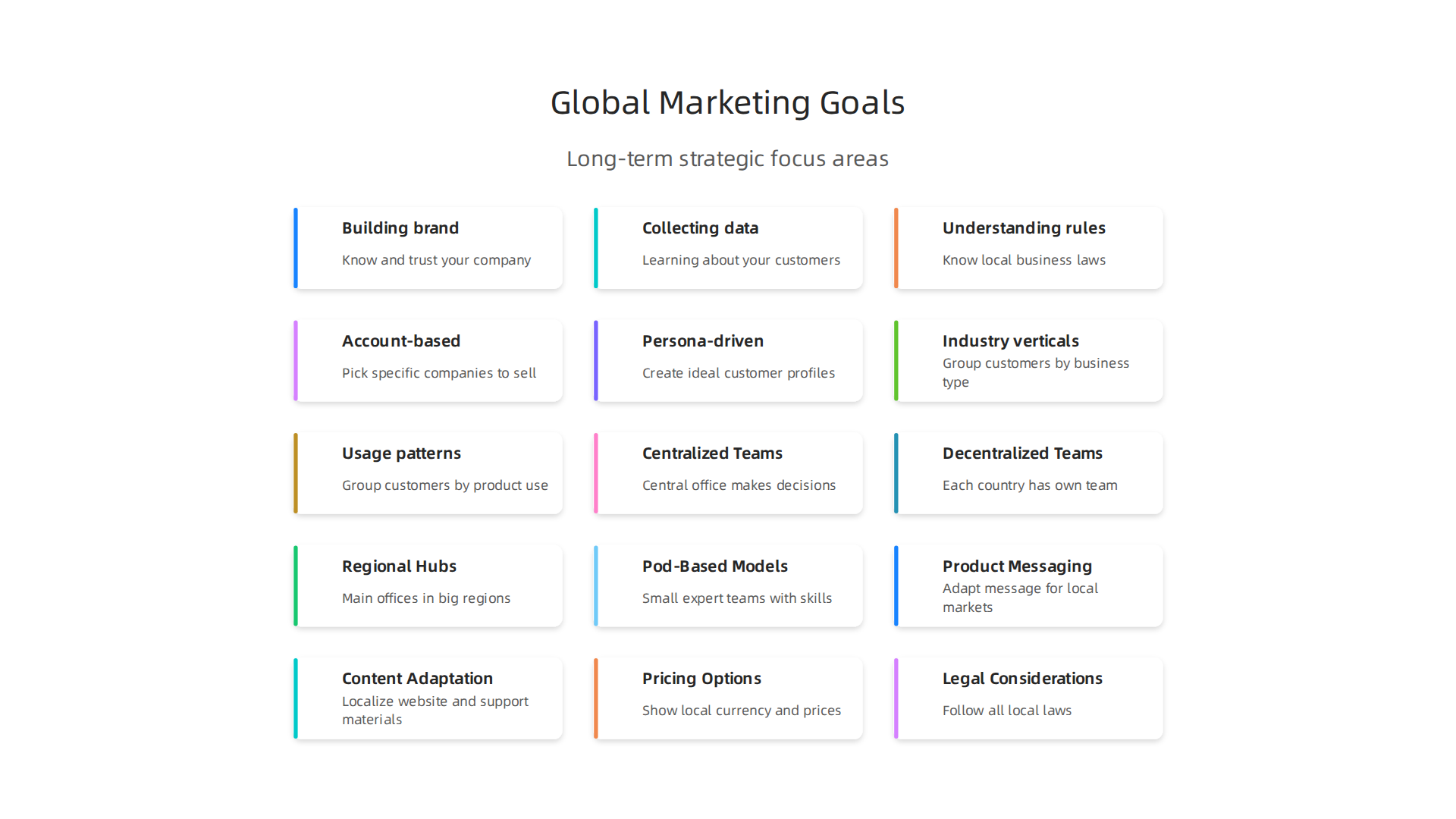
- Building your brand: Making sure people know and trust your company.
- Collecting data: Learning more about your customers in different places. This helps you serve them better later.
- Understanding local rules: Knowing the laws and ways of doing business in each country. This can be tricky but is super important to avoid problems.
These things help you set up a strong base for future growth, even if they don’t bring in huge money right now. Thinking about these longer-term goals is a big part of creating an effective marketing strategy that really works in 2026. If you want to dive deeper into planning, learning how to develop a strategic marketing plan for media creator growth can offer more insights. Remember, picking the right paths helps your business grow strong and steady.
A strong global marketing strategy means you don’t just pick countries, you truly understand the people in them. This brings us to a very important step: learning about your customers’ "buyer journeys" and grouping them into "segments" in each new place. Think of it like this: how people decide to buy something in one country might be very different from how they do it in another.
How People Buy in Different Places
To really connect with people, you need to map out their buyer journey. This means understanding all the steps a person takes from realizing they have a problem to choosing your solution. In 2026, for businesses selling software (B2B SaaS), this journey often involves a lot of online research, including asking AI tools for help. Customers might first ask AI search "how do I solve X," then look at different types of solutions, and finally ask for "best B2B SaaS for X" to find vendors The B2B SaaS and B2B Buyer Journey in 2026: From Google ….
What’s key is that these steps can change a lot across regions:
- What they care about: In one country, price might be the most important thing. In another, ease of use or how much customer support they get could matter more.
- Where they look for info: Some regions might rely heavily on social media, while others prefer detailed articles or video tutorials. This also affects your digital marketing strategies. You need to create content that matches each stage of the buyer journey, from just becoming aware of a problem to making a decision B2B SaaS Marketing Strategies 2026: Channels & ABM.
Grouping Customers for Better Marketing
To deal with these differences, you need to define your customer "segments." This means sorting your customers into smaller groups based on what they have in common. This helps you create a more effective marketing strategy because you can talk to each group in a way that truly matters to them. Here are some common ways to segment your audience for your b2b saas marketing strategy:
- Account-based segmentation: This is when you pick specific companies you want to sell to. Instead of targeting individuals, you focus all your efforts on getting that specific company as a client. This approach is very powerful in the media and advertising world account-based marketing drives media advertising and creator economy success.
- Persona-driven segmentation: Here, you create detailed profiles of your ideal customers (personas). These profiles include things like their job, what problems they face, and what they need. You can then make different versions of your product or message for each persona.
- Industry verticals: You might group customers by the type of business they are in. For example, marketing to a healthcare company is very different from marketing to a finance company.
- Usage patterns: This means grouping customers based on how they use your product or service. Are they heavy users, occasional users, or just trying it out? This can help you offer them the right features or help at the right time.
By mapping buyer journeys and creating smart segments, your global marketing strategy becomes much clearer. You know who you’re talking to, what they need, and how to reach them effectively. This is vital for any company looking to grow in 2026.
Staying updated on the latest trends, especially how AI shapes customer journeys and marketing, is key to success.
Get clear daily AI updates from The AI Newsletter Worth Reading.
After understanding who your customers are and what they need in different parts of the world, the next big step is to set up your team to make all that happen. This is about how you organize your people and their daily work, also known as your "operating rhythms," to put your global marketing strategy into action.
How Teams Can Work Together Around the World
When you’re marketing in many countries, you have choices about how your teams are set up:
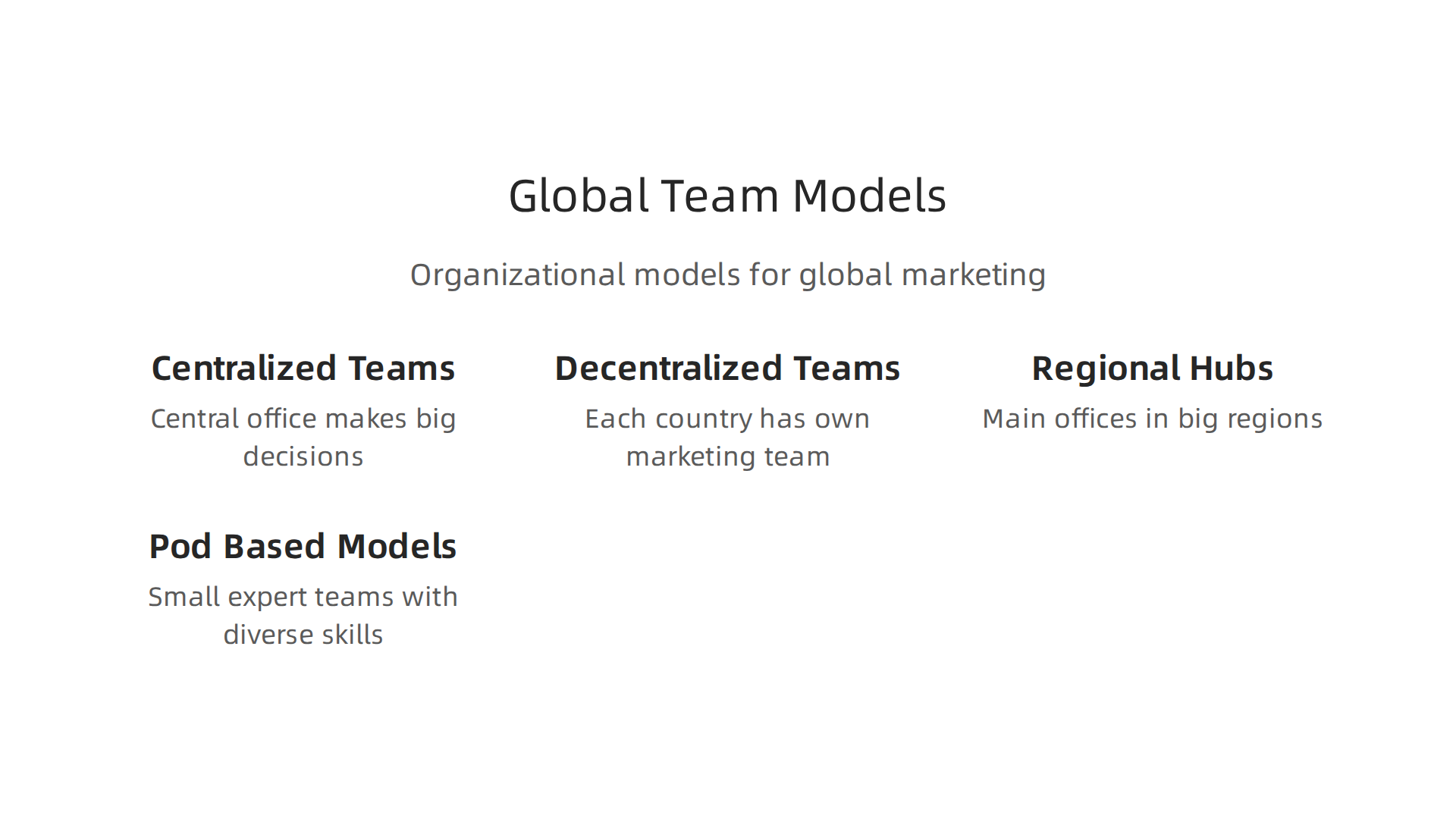
- Centralized Teams: Imagine a central office that makes all the big decisions and sends out instructions to every country.
- Pros: This helps keep your brand message very clear and consistent everywhere. It can also save money by not doing the same work many times.
- Cons: It can be slow to react to quick changes in local markets. Local teams might feel like they don’t have enough say or that their unique needs aren’t being met. This can make an effective marketing strategy harder to build at a local level.
- Decentralized Teams: Here, each country or region has its own marketing team that makes most of its own choices.
- Pros: These teams can move fast and create marketing that fits perfectly with local culture and trends. They can quickly adapt their digital marketing strategies to what’s happening on the ground.
- Cons: The biggest challenge is keeping the brand message consistent across different regions. It can also lead to different teams doing similar work, which might not be the most efficient use of money.
- Regional Hubs: Many companies in 2026 choose a mix, like having main offices in big regions (like Europe, Asia, or North America). These hubs handle broader regional strategies while letting local teams have some freedom. This approach balances central guidance with local understanding, which is especially important for a b2b saas marketing strategy that needs both global reach and local precision.

When entering new markets, like the US, careful thought about team architecture is a key pillar of success B2B SaaS Marketing Strategy for Entering the US Market in 2026.
- Pod-Based Cross-Functional Models: Think of small, expert teams, or "pods," that have all the different skills needed (like marketing, sales, product) to focus on one specific product, customer type, or region. These teams are very agile and can get things done quickly, which is great for fast-moving markets. You need a clear develop a strategic marketing plan for media creator growth in 2026 for each pod.
Making Decisions and Planning Content Across Borders
Once you have your teams, you need clear rules about who decides what. This is called "governance" and "decision rights." For example, the central team might decide the main brand message, while local teams choose the exact words and pictures that fit their audience best. For those in leadership, understanding the marketing manager 2026 roles skills and trends for success is crucial for setting up these teams effectively.
A "global content calendar" is also very important. This is like a master plan that shows what marketing messages will be shared throughout the year. It helps everyone know what’s coming, but it should also be flexible enough for local teams to add their own ideas and quickly jump on new trends. This blend of global planning and local speed is how companies keep their integrated marketing communications drive unified brand success in diverse markets in 2026.
After setting up your international teams and deciding how they will work together, the next big step for your global marketing strategy is to make sure your product and all your messages speak to people in each local market. This is called localization. It’s about changing things to fit the local culture, language, and rules, making your effective marketing strategy truly connect with people around the world.
Localization checklist: product positioning, content, pricing, and legal considerations
Think of localization as making your product feel like it was made just for that specific country. It’s not just about changing words; it’s about understanding and respecting local ways.
Here’s a simple checklist to guide you:
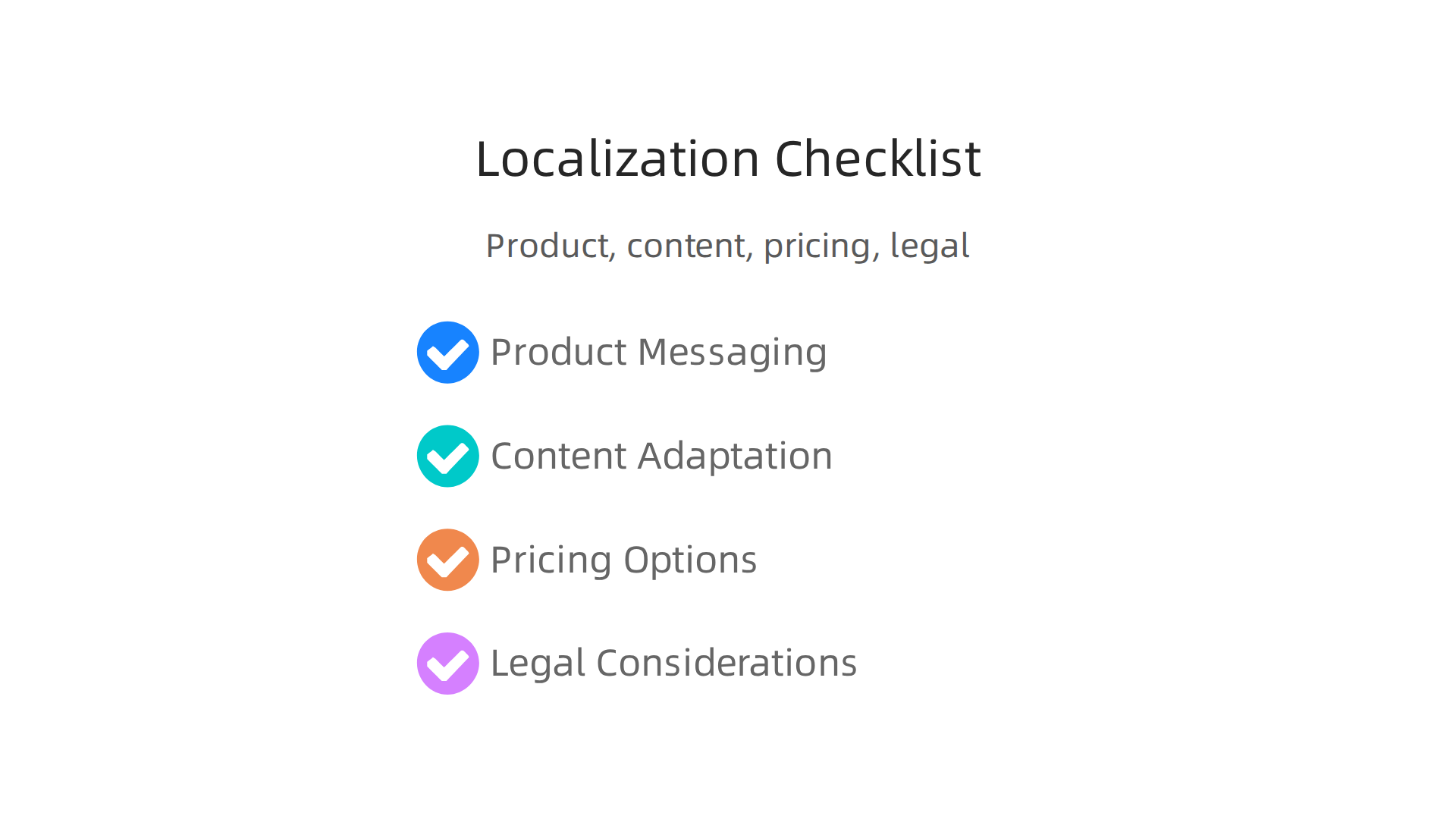
1. Product Messaging and User Experience (UX)
First, look at your product’s core message and how people use it.
- Adapt Your Message: Your main selling points might need to change to resonate in different cultures. What’s important in one country might not be in another.
- Translate with Care: Don’t just translate words directly. Make sure the meaning, tone, and feel are right for the local audience. For software products, move all user-facing text into special files that translators can change without touching the code. This is a key part of how to translate software in 2026.
- Design for Local Needs: Make sure your website and app layouts can handle longer words or different ways of reading (like right-to-left languages). Also, use a coding system that supports all global languages, like Unicode, to avoid problems with characters SaaS Localization Guide for Global Product Growth.
2. Content Adaptation
Your content is how you talk to your customers. It needs to be local too.
- Website Content: Start with important pages like your homepage, product descriptions, and frequently asked questions. Also, consider translating your most popular blog articles How to Localize Your SaaS Product to Enter New Markets in 2026.
- Support Materials: Make sure your help guides and support documents are available in local languages. This makes customers feel understood and valued.
- Leverage AI and Experts: You can use smart AI tools to help with first drafts, but always have human experts check the language to make sure it sounds natural and fits the local culture. This is part of the best SaaS localization strategies for 2026.
3. Pricing and Payment Options
Money matters are very local.
- Local Currency and Prices: Always show prices in the local currency. Also, think about how much people can afford in that country. Prices might need to be different to match local purchasing power SaaS Localization | Best Practices and Strategies.
- Payment Methods: People in different countries prefer different ways to pay. Offer payment options that are common and trusted in each region, not just what you use at home. This is vital for SaaS checkout localization best practices.
4. Legal Considerations
Laws are different everywhere, and you must follow them.
- Terms and Privacy: Your terms of service and privacy policies are super important. They need to be checked by legal experts in each country you operate in. Rules like GDPR in Europe are very strict about how you handle customer data.
- Regulatory Review: Before you launch in a new market, always do a check to make sure your product and marketing follow all local laws. Getting local legal experts involved can prevent big problems down the road 10 Software Localisation Best Practices 2026.
What to localize first, what to keep global, and what to test?
It’s not possible to localize everything at once. Here’s how to think about it:
- Prioritize: Start with what makes the biggest difference. Your homepage, pricing page, and most-read articles are good places to begin.
- When to Start: It’s best to start thinking about localization early, but you should only put serious effort into it after you know your product works well in your main market. This means you have "product-market fit" SaaS Localization Playbook 2026: 0 to 100 Languages.
- Keep Global: Some things, like your core brand logo or certain product features, might stay the same everywhere. These are the elements that define your brand no matter where it is.
- A/B Testing: For things you’re not sure about, like a specific marketing message or a design element, try different versions in a new market to see which one works best. This helps you refine your digital marketing strategies for local impact.
Staying on top of changes, especially in areas like AI, is a big part of successful global marketing. To get clear daily AI updates that help you stay ahead, consider subscribing to The AI Newsletter Worth Reading. This can help you better understand how AI impacts your b2b saas marketing strategy as you adapt to different markets.
To make your product reach people everywhere, you also need to pick the right places and ways to talk to them. This means choosing the best channels and using new tools, especially AI, to spread your message. It’s how you make sure your global marketing strategy gets seen by the right eyes in each country.
Channels, platforms, and AI-powered optimization for global reach
Finding the best ways to reach customers in different countries is key. What works in one place might not work in another.
Choosing the best channels for each market
Think about where people in each target market spend their time online.
- Search Engines: Many people use search engines to find products. You need to make sure your product shows up when they search in their local language.
- Programmatic Advertising: This is like smart advertising that uses computers to show ads to the right people at the right time. It can be very helpful for reaching specific groups in different countries.
- Social Media: Different countries love different social media apps. For example, some might prefer TikTok, while others use Facebook or local apps. You need to be where your audience is.
- Newsletters: Email newsletters can be a great way to talk directly to your customers. Just remember to send them content that matters to them.
- Partnerships: Sometimes, working with local businesses or influencers can help you reach new customers who already trust them.
- Platform Ecosystems: Think about app stores or other big online marketplaces. Getting your product listed there, with local descriptions, can open up new doors.
In 2026, the best ways to get your message out for businesses include using social media, creating good content, and working with partners. These methods are now often more effective than traditional ads for a strong effective marketing strategy SaaS Marketing in the AI Era: 10 Channels Replacing …. To learn more about where your ads should go, check out our guide on advertising channels 2026 how to build your winning media mix.
How AI tools change marketing campaigns
Artificial intelligence, or AI, is changing how we do marketing. It helps make your campaigns much smarter and more personal.

Using AI for marketing, especially for B2B SaaS companies, means using smart tools to handle many marketing tasks at a large scale AI Marketing for B2B SaaS: How to Scale Pipeline Without ….
- Campaign Optimization: AI can look at lots of data very quickly to see which parts of your campaign are working best. It can then suggest changes to make your ads more successful and get more people interested. This helps to improve your overall digital marketing strategies.
- Creative Personalization: Imagine showing each person an ad that feels made just for them. AI can help create different versions of your ads, changing the words or pictures to fit what each person might like best. This makes your message much stronger. Tools for creating content with AI, like ChatGPT or Jasper, can help with first drafts, but always need a human touch Digital Marketing Strategy for SaaS Companies in 2026 ….
- Content Distribution at Scale: AI can also help decide the best time and place to share your content, like articles or videos, so that more people see it. This is especially helpful for b2b saas marketing strategy when you have many different local markets to reach.
The way AI and automation are changing marketing for SaaS companies in 2026 is truly remarkable How AI and Automation Are Redefining SaaS Marketing in 2026. For a deeper dive into making your content work better for search engines, read our guide on seo marketing in 2026 how to master search engine optimization.
After using AI to make your campaigns smarter, the next big step is to know if all your hard work is paying off. This means carefully watching how your campaigns do in each country. You need a clear way to measure everything so you know what’s working and what’s not across your whole global marketing strategy.

What to Measure: Global Goals, Local Signs
When you are marketing around the world, you need a smart way to measure success. Think of it like a set of nested goals:
- Global Metrics: These are the big numbers that show how your whole business is doing across all countries. For example, how many new customers did you get worldwide? What was your total income?
- Regional Signals: These tell you how well you are doing in bigger areas, like all of Europe or all of Asia. They help you see trends in different parts of the world.
- Local Leading Indicators: These are smaller, early signs that things are going well (or not) in a specific city or country. For example, how many people clicked on an ad in Germany? Or how many signed up for a trial in Japan? These early signs help you make quick changes.
Having a good plan for how you measure things, also called a Marketing Measurement Framework, helps make sure you’re always looking at the right information. This helps create an effective marketing strategy that can change and grow.
Keeping Data Safe and Private in Every Country
A big challenge in 2026 is gathering useful data while also keeping people’s information private. Different countries have different rules about data privacy, and you must follow all of them. This means you need to be very careful about how you collect, use, and store customer data.
- Privacy-Safe Measurement: New tools are helping businesses measure their advertising success without looking at specific individual users. Instead, these tools use bigger groups of data or smart math to see general trends. This is called privacy-safe marketing measurement and it’s key in a world without third-party cookies.
- Data Clean Rooms: These are like secure rooms where different companies can safely combine their customer data to get insights, but without seeing each other’s private customer details. They are an important part of cross-channel measurement for privacy-first advertisers in 2026. This helps a b2b saas marketing strategy stay on track while respecting privacy.
- Local Laws: You need to know the specific data privacy laws for each country where you operate. For instance, some laws might say you can’t collect certain types of data or that data must be stored in that country. This makes sure your digital marketing strategies are not just smart, but also legal. Following a good privacy-preserving product analytics guide is very important for businesses today.
It’s all about finding a balance. You want to learn as much as you can from your data to improve your marketing, but you also need to protect your customers’ privacy. This careful approach helps build trust and makes your global marketing strategy stronger in the long run.
Want to understand the ever-changing world of AI better? Get insights delivered daily to your inbox.
The AI Newsletter Worth Reading
After understanding how to safely measure your campaigns across different countries, the next big step is to make sure your ideas and money can grow everywhere. This means being smart about how you test new things, manage your spending, and learn from what happens around the world. It’s all part of making your global marketing strategy truly work.
Scaling Experiments Across Markets
When you have a great marketing idea, you usually want to test it. But how do you test it in one place and then use what you learn to help all your markets? This is called scaling experiments. You can start by running a small test, maybe in one country or a few cities. You look closely at the "local leading indicators" we talked about earlier. Did people click more? Did more sign up?
If the test does well, you then scale it up. This means you use what you learned to try the same idea in more countries. It’s important to watch how things change from market to market. A campaign that works well in Germany might need small changes to work in Japan. This helps you create an effective marketing strategy that fits different cultures while keeping your main message. Many businesses, especially B2B SaaS companies, use this test-and-learn approach to adapt their plans in 2026, as outlined in a SaaS Marketing Strategy: A 2026 Playbook for B2B SaaS.
Smart Ways to Handle Your Budget
Managing money for a global plan can be tricky. There are a few ways to think about your marketing budget:
- Test-and-Scale: This is where you put a small amount of money into new tests. If a test shows good results, you then add more money to it and spread it to more markets. This helps you avoid wasting money on ideas that don’t work.
- Ring-Fenced Local Pilots: For this, you give a certain amount of money to each local team. They can use this money to try out new ideas that fit their specific market best. This allows for local creativity and faster learning.
- Central Funding Models: With this approach, all marketing money comes from one main pot. The central team decides how the money is spent across all countries. This can make sure everyone is working towards the same big goals. However, it needs a good way for local teams to ask for money and show why their ideas are worth it.
No matter which way you choose, it’s key to track your spending and results carefully. This ensures your digital marketing strategies are always efficient. For many, figuring out how to scale pipeline for a b2b saas marketing strategy without overspending is a top priority in 2026. This careful budgeting and testing cycle creates a learning loop where you constantly improve your global marketing strategy based on real-world feedback.
Summary
This article explains why a global marketing strategy is now mandatory for SaaS and media businesses and walks through a practical roadmap to build one. It covers how to set global priorities—choosing markets, growth models, and long-term outcomes—then shows how to map buyer journeys and segment customers so messaging lands locally. The guide outlines team architectures (centralized, decentralized, regional hubs, and pods), operating rhythms, and decision rights needed to execute across borders. It provides a localization checklist for product messaging, content, pricing, payments, and legal compliance, plus advice on channel selection and AI-powered campaign optimization. The piece also explains how to measure success with global metrics, regional signals, and privacy-safe tools like data clean rooms. Finally, it covers how to run tests, manage budgets, and scale winning experiments so teams can expand efficiently while respecting local rules and cultures.