
SEO Marketing in 2026 How to Master Search Engine Optimization
Introduction: Why SEO Marketing Matters More Than Ever
Picture this. You work in media. You spend hours creating great content. But nobody finds it. Sound familiar?

That is where SEO marketing comes in. SEO stands for Search Engine Optimization. It is the practice of making your website and content show up higher in search results like Google. When done right, people find you without you paying for ads. In 2026, this matters more than ever.
The way people search has changed. They now use AI tools, ask questions in new ways, and expect fast, clear answers. Search engines have gotten smarter too. They no longer just match keywords. They look for content that truly helps the user. That is the core of what is SEO marketing today.
According to the American Marketing Association, SEO marketing in 2026 focuses on answering questions clearly, covering topics fully, and demonstrating expertise. It is not about tricks or shortcuts. It is about earning visibility by being the best answer.
Media professionals face pressure to understand these changes. The industry moves fast. AI keeps disrupting old methods. Without a solid SEO foundation, your hard work stays hidden.
In this guide, we will break down everything you need to know. We will cover the definition, the main pillars like on-page and technical SEO, the key metrics to track, and the best free courses to learn. You will also get a look at where SEO is headed next.
If you want to stay ahead in media, understanding search engine optimization is no longer optional. It is essential. And if you need daily insights on how AI is changing everything, consider subscribing to The AI Newsletter Worth Reading.
It helps professionals like you keep up with rapid changes.
Let us start with the basics. First up, a clear definition of what is SEO marketing in 2026 and why it works so well for long-term growth.
What is SEO Marketing? The Core Definition
So, what exactly is SEO marketing? Let us break it down simply.
SEO stands for Search Engine Optimization. When we talk about SEO marketing, we mean the process of improving your website so it shows up higher in organic search results on Google, Bing, and other search engines. The goal is to attract people who are already looking for what you offer. You earn their visit. You do not pay for it.
Think of it this way. If someone searches "how to grow a media audience," you want your content to be the first thing they see. SEO marketing helps make that happen by aligning your content, technical setup, and authority signals with what search engines reward.
The American Marketing Association defines what is SEO marketing as the practice of optimizing a website and its content to increase visibility in organic search results.
It is not about buying traffic. It is about earning it by being the best answer.
This is a major difference from SEM, or Search Engine Marketing. SEM includes paid ads. With SEO, you invest time and effort upfront. Over time, that investment pays off with steady, free traffic. For media professionals, this is crucial. Organic search is one of the most reliable ways to build an audience, establish brand authority, and create sustainable revenue.
In 2026, SEO marketing focuses on three core areas: understanding what users actually want, making your site fast and easy to use, and proving your expertise. Search engines today care less about keyword stuffing and more about whether your content truly helps someone.
If you are working in media or publishing, mastering SEO is a must. It is one of those foundational skills that affects everything from content strategy to audience growth. To see how this fits into a broader plan, check out this guide on SEO services for businesses that deliver real results.
Next, we will explore the main pillars that make up a strong SEO strategy. That is where the real action happens.
The Three Pillars of SEO Marketing: Technical, On-Page, and Off-Page
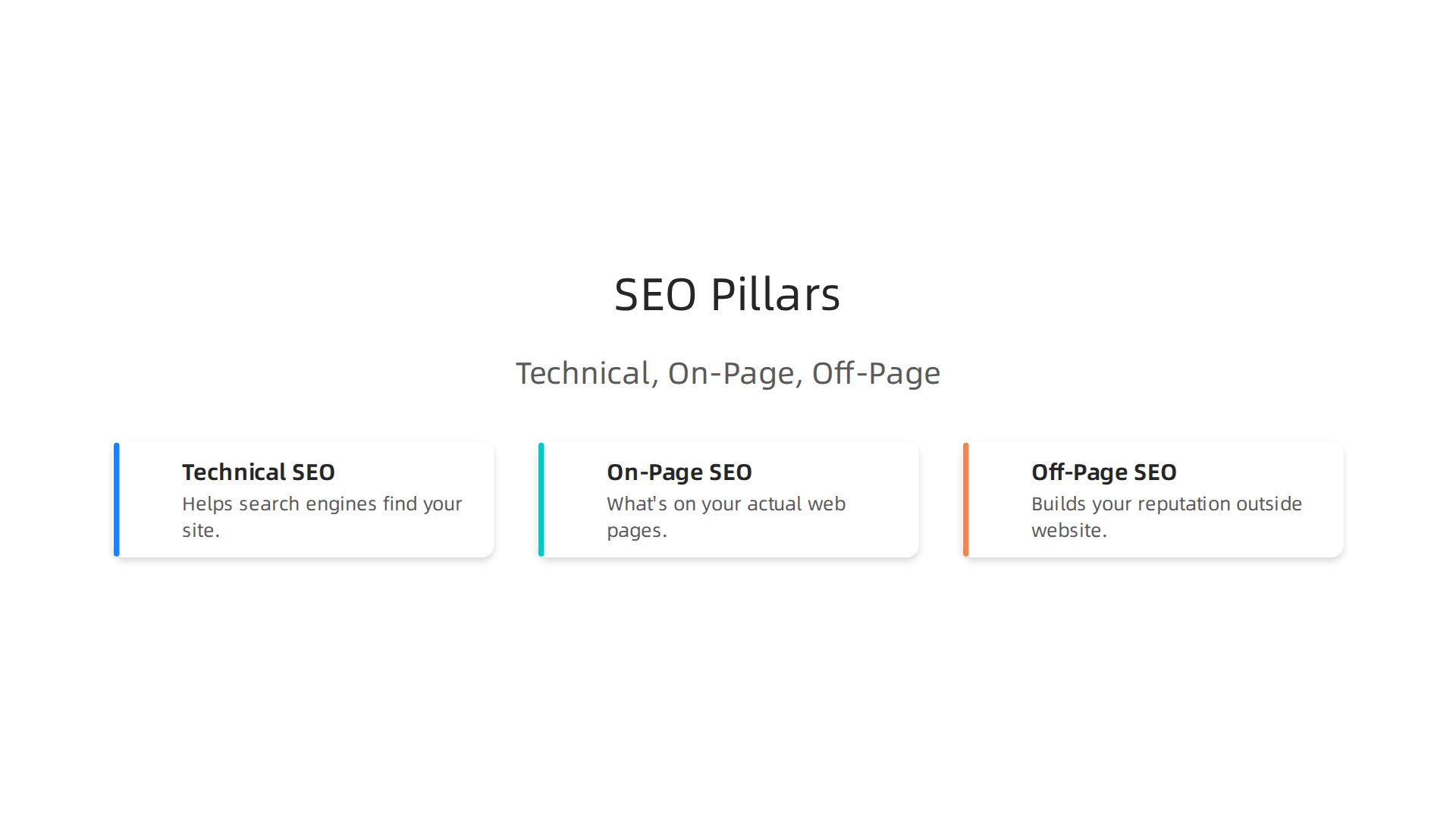
Let’s dive into those three pillars now. Think of SEO like a three-legged stool. If one leg is weak, the whole thing wobbles. To rank well in 2026, you need all three working together.
Technical SEO: The Foundation
Technical SEO is the behind-the-scenes work that helps search engines find, understand, and store your site. Without it, your best content might never get seen. Search engine optimization means more than just writing well. It also means making sure your site loads fast, works great on phones, uses structured data, and is easy for Google to crawl.
Key things to focus on:
- Site speed: If your site takes more than a few seconds to load, visitors leave. And Google notices.
- Mobile-friendliness: Most searches now happen on phones. Your site must look and work perfectly on small screens.
- Structured data (schema markup): This helps search engines understand your content better. It can also get you rich snippets in search results.
- Clean site architecture: A logical structure with clear internal links helps both users and search engines navigate.
As Mailchimp explains, SEO in digital marketing involves optimizing your website’s technical setup, content, and link popularity.
The technical part is where you make sure your site is crawlable and indexable.
On-Page SEO: The Content
On-page SEO is all about what’s on your actual web pages. This includes your content, headlines, meta descriptions, and even the images you use. The goal is to show search engines exactly what each page is about and prove it’s valuable to readers.
Important on-page elements:
- Keyword targeting: Use relevant keywords naturally in your titles, headers, and body text. But don’t stuff them in. Write for humans first.
- Meta tags: Write compelling title tags and meta descriptions. These are often the first thing people see in search results.
- Internal linking: Link to your own related pages. This helps spread authority and keeps readers on your site longer.
- Content quality: Search engines now reward depth, accuracy, and helpfulness. Answer the question fully.
For media professionals, on-page SEO is where you turn your expertise into pages that rank. It’s not just about what you say, but how you say it and how you structure it.
Off-Page SEO: The Authority
Off-page SEO is everything that happens outside your website to build your reputation. This is where you earn trust and authority from other sites and from users.
Key off-page signals include:
- Backlinks: When other reputable websites link to your content, Google sees it as a vote of confidence. Quality matters more than quantity.
- Social signals: Mentions on social media, forums like Reddit, and other platforms can boost your visibility.
- Brand mentions: Even links that aren’t clickable can help. Google notices when people talk about your brand online.
- E-E-A-T (Experience, Expertise, Authoritativeness, Trustworthiness): This is Google’s way of checking if your content is credible. In 2026, E-E-A-T is more important than ever. Off-page signals like who links to you and what people say about you directly affect your E-E-A-T score.
Building off-page authority takes time. You earn it by creating content so good that others want to share and reference it.
All three pillars work together. A fast, well-structured site with great content becomes even stronger when other trusted sites point to it. If you’re looking for practical ways to apply these pillars in your own work, check out these affordable digital marketing tactics for media businesses that combine SEO with other growth strategies.
And to keep up with how AI is changing search and authority signals every day, consider signing up for The AI Newsletter Worth Reading. It gives you clear daily updates on AI trends that directly affect your SEO strategy.
Now, let’s talk about how AI is completely reshaping all three of those pillars in 2026. If you’re asking what is SEO marketing in today’s world, the answer has to include artificial intelligence. It’s not just a tool anymore. It’s woven into the very fabric of how search engines work and how we create content.
How AI Is Transforming SEO Marketing in 2026
Search engines themselves run on AI. Google uses systems like RankBrain, BERT, and MUM to understand the meaning behind your search, not just the exact words you type. This means your content needs to answer real questions in a natural, thorough way. Keyword stuffing is dead. Relevance and depth are what matter now.
At the same time, AI tools have become essential for SEO work. They help with keyword research, content generation, personalization, and even predicting which topics will perform well. Some teams report that AI speeds up research by 70 to 80 percent. But here is the catch: automation alone will not make your content rank.
The Rise of AI Overviews and Zero-Click Searches
One of the biggest changes in 2026 is the growth of AI Overviews. When you search on Google, you often see a box at the top with a direct answer written by AI. These overviews appear on many informational, how-to, and comparison queries. The result? People get their answer without clicking any link.
Studies show that the presence of an AI Overview can reduce clicks to top organic results by nearly 60 percent. This trend is called zero-click search, and it is reshaping traffic patterns across the web. For media professionals, this means you cannot rely only on traditional organic clicks anymore. You need to optimize for AI citation. When your content is referenced inside an AI Overview, you can still get qualified visitors who want to dig deeper.
How to Balance Automation with Human Quality
AI can accelerate SEO growth, but used incorrectly, it can hurt your rankings and brand authority. According to recent AI SEO statistics for 2026, almost 70 percent of businesses report higher ROI after integrating AI into their SEO workflows.
The successful ones use AI as a support system, not a replacement.
They use AI for research and first drafts. Then they add expert human insights, real examples, and careful editing. This mix of speed and human judgment is what builds trust. In 2026, Google’s E-E-A-T system rewards content that shows real experience and authority. AI alone cannot provide that. Only people can.
Adapting Your SEO Strategy for an AI-First World
So what does this mean for your daily work? First, you should audit your keywords to see which ones trigger AI Overviews. Prioritize those queries where your content is close to being citation-worthy.

Restructure your pages to make it easy for AI to extract clear, accurate answers.
Second, broaden your view of visibility. In 2026, SEO is becoming Search Everywhere Optimization. You need to show up not just on Google, but also on ChatGPT, Bing Copilot, YouTube, and even social platforms. AI systems mention brands that appear across many trusted sources.
If you are building a media business, staying on top of these changes is critical. You can explore professional SEO services for media businesses to get expert support tailored to this new environment.
The core idea is simple: AI is not a shortcut. It is an accelerator. When you pair it with human quality, you create content that ranks, earns citations, and builds lasting authority.
Now that you understand how AI is changing SEO, the next big question is: how do you know if your efforts are actually working? Measuring SEO success can feel tricky, but it doesn’t have to be. Here are the key numbers to watch and the tools that help you track them.
Measuring SEO Success: Key Metrics and Tools
First, let’s talk about the essential KPIs. These are the numbers that tell you whether your SEO strategy is on track.
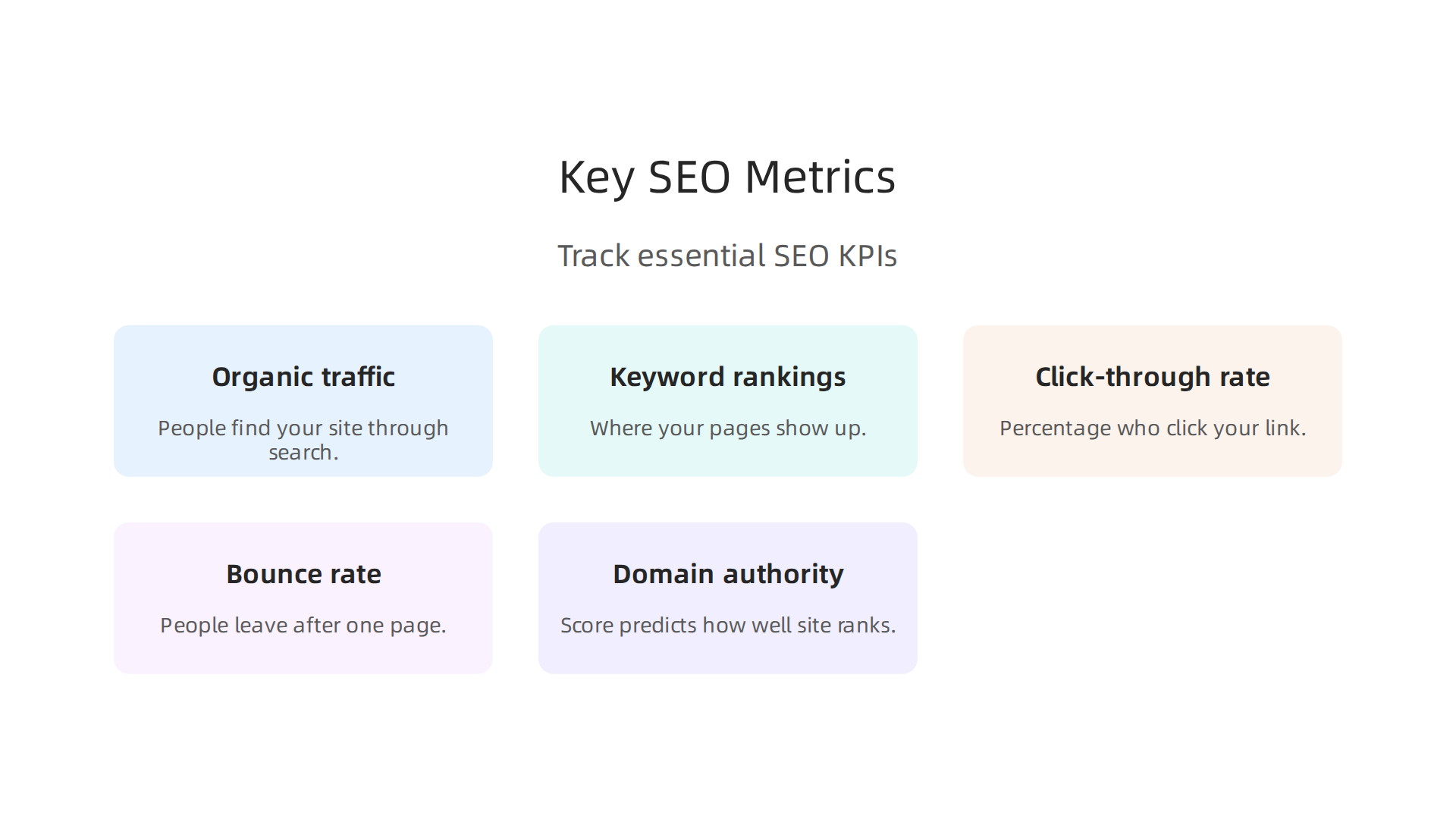
Organic traffic is the most basic one. It shows how many people find your site through search results, not ads. Keyword rankings tell you where your pages show up for specific searches. Higher rankings usually mean more visitors.
Click-through rate (CTR) is the percentage of people who see your link and actually click it. A high CTR means your title and description are compelling. Bounce rate shows how many people leave after viewing just one page. A high bounce rate might mean your content does not match what they expected.
Domain authority is a score that predicts how well your site will rank. It considers things like backlinks and overall site quality. While this is not an official Google metric, many SEO tools use it as a helpful benchmark.
Benchmarks Vary by Industry
The same numbers do not mean the same thing for every site. For media businesses, raw traffic numbers can be misleading. What matters more are engaged sessions and return visitor rate. An engaged session means the visitor stays for a while, scrolls, or interacts. People who come back often are building a habit with your brand. These metrics show real audience loyalty, which is more valuable than a one-time click.
Top Tools and How to Use Them
You need the right tools to track these KPIs. Google Search Console is free and gives you direct data from Google, including clicks, impressions, and average position. Semrush and Ahrefs offer deeper keyword research, competitor analysis, and backlink tracking. But here is the thing: tools only provide raw data. You have to interpret that data to make smart decisions.
For example, if your organic traffic drops, do not panic. First, check if it happened across all pages or just one. Look at search rankings for those pages. Maybe an AI Overview is stealing clicks. Or maybe a technical issue like a broken link is causing the drop. That is why understanding the full SEO landscape matters.
To get a complete view of the tools and platforms available in 2026, you can explore our guide to digital marketing platforms in 2026. It covers how to choose the right tools for your media business.
Evolving Your Reporting Beyond Traffic
Many SEO experts now say that focusing only on traffic is outdated. A better approach is to measure visibility and influence. How often does your brand appear in AI Overviews? How many people are seeing your content across different platforms? According to Moz’s top SEO tips for 2026, you should also track branded demand and session quality signals. These give you a much clearer picture of your real impact.
Stay Ahead with Daily AI Insights
The way we measure SEO keeps changing as AI evolves. To stay on top of these shifts, you need a steady stream of clear, reliable information. That is why we recommend The AI Newsletter Worth Reading. It delivers daily updates on AI developments that affect search, content, and media. It is a simple way to keep your finger on the pulse.
Remember, measuring SEO is not just about collecting numbers. It is about understanding what those numbers mean and using them to make your content better.

With the right metrics and tools, you can build a strategy that delivers real, lasting results.
Digital Education for SEO Marketing: Courses, Certifications, and Learning Paths
Knowing how to measure SEO is only half the battle. The other half is making sure you and your team have the right skills to execute a winning strategy. Whether you are just starting to ask "what is SEO marketing" or looking to sharpen advanced skills, the right training makes all the difference.

The good news? You have more options than ever in 2026. And many of them are free.
Start with Free Certifications That Carry Weight
You do not need to spend a lot of money to get a strong foundation. Several respected platforms offer free certifications that employers actually recognize.
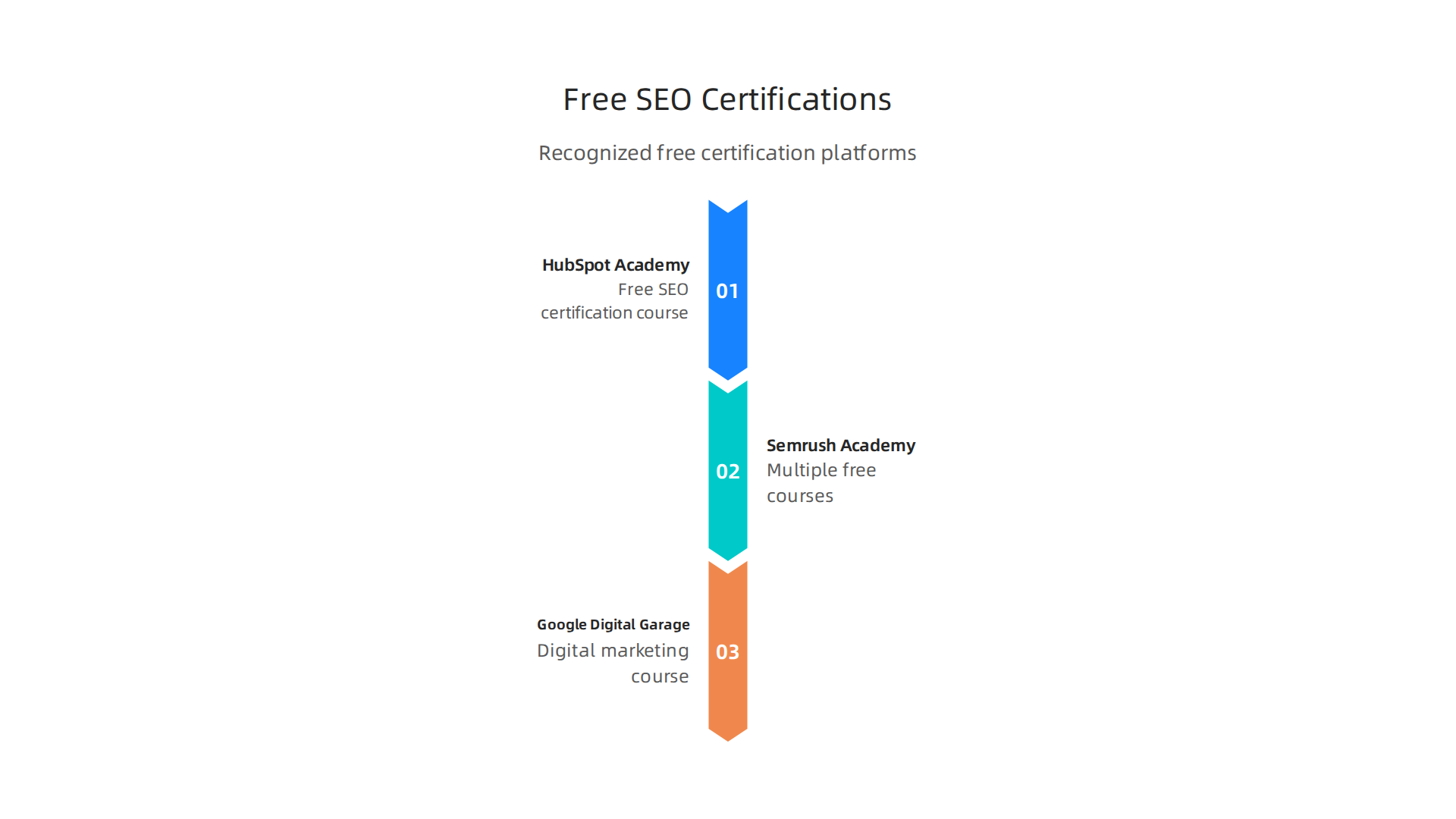
HubSpot Academy offers a free SEO certification course that covers content marketing and technical SEO. It is practical and fits well into a broader inbound marketing strategy. Semrush Academy lets you take multiple free courses, from beginner level to advanced competitive analysis. You learn at your own pace and earn a certificate upon completion.
Google Digital Garage also offers a digital marketing course that includes SEO fundamentals. This is a solid starting point if you are new to the field. It is completely free and built by Google’s own teams.
For a complete comparison of trusted options, you can check out the best SEO certifications for 2026. This list covers everything from Moz’s Essentials Certificate to the UC Davis SEO Specialization on Coursera.
University Courses and Bootcamps for Structured Learning
If you prefer a more formal path, university-level courses offer depth and structure. The UC Davis SEO Specialization on Coursera is a popular choice. It takes about five months if you study six hours per week. It covers keyword theory, on-page optimization, and how search engines work.
Bootcamps are another option for media professionals who want fast, practical training. Programs like ClickMinded and SEO Unlocked by Neil Patel offer ready-to-use templates and workflows. These are ideal if you need to apply what you learn right away.
Keep Learning with Blogs and Communities
Certifications are great, but SEO changes fast. The best professionals stay curious and keep reading. Free resources like blogs, webinars, and community forums help you stay up to date.
If you are looking to build a career in this field, understanding what employers actually want matters. A degree alone is not enough anymore. That is why it helps to explore why employers look for marketing major in 2026 skills beyond the classroom. Certifications show you can apply real knowledge.
Focus on AI-Powered SEO
Here is the thing: the best programs in 2026 include training on AI tools and data analysis. Standard SEO courses teach the basics. Advanced ones show you how to use AI for keyword research, content creation, and performance tracking. If you are a media professional, look for courses that cover AI-powered SEO specifically. That is where the industry is heading.
Learning does not stop after one course. The professionals who stay ahead are the ones who treat education as an ongoing habit. Pick a certification that matches your goals, schedule time for it, and keep adding new skills as the field evolves.
Common SEO Marketing Mistakes Media Professionals Make
Knowing what is SEO marketing is a great start. But even well trained professionals slip up. Here are the most common SEO marketing mistakes media professionals make in 2026 and how to avoid them.
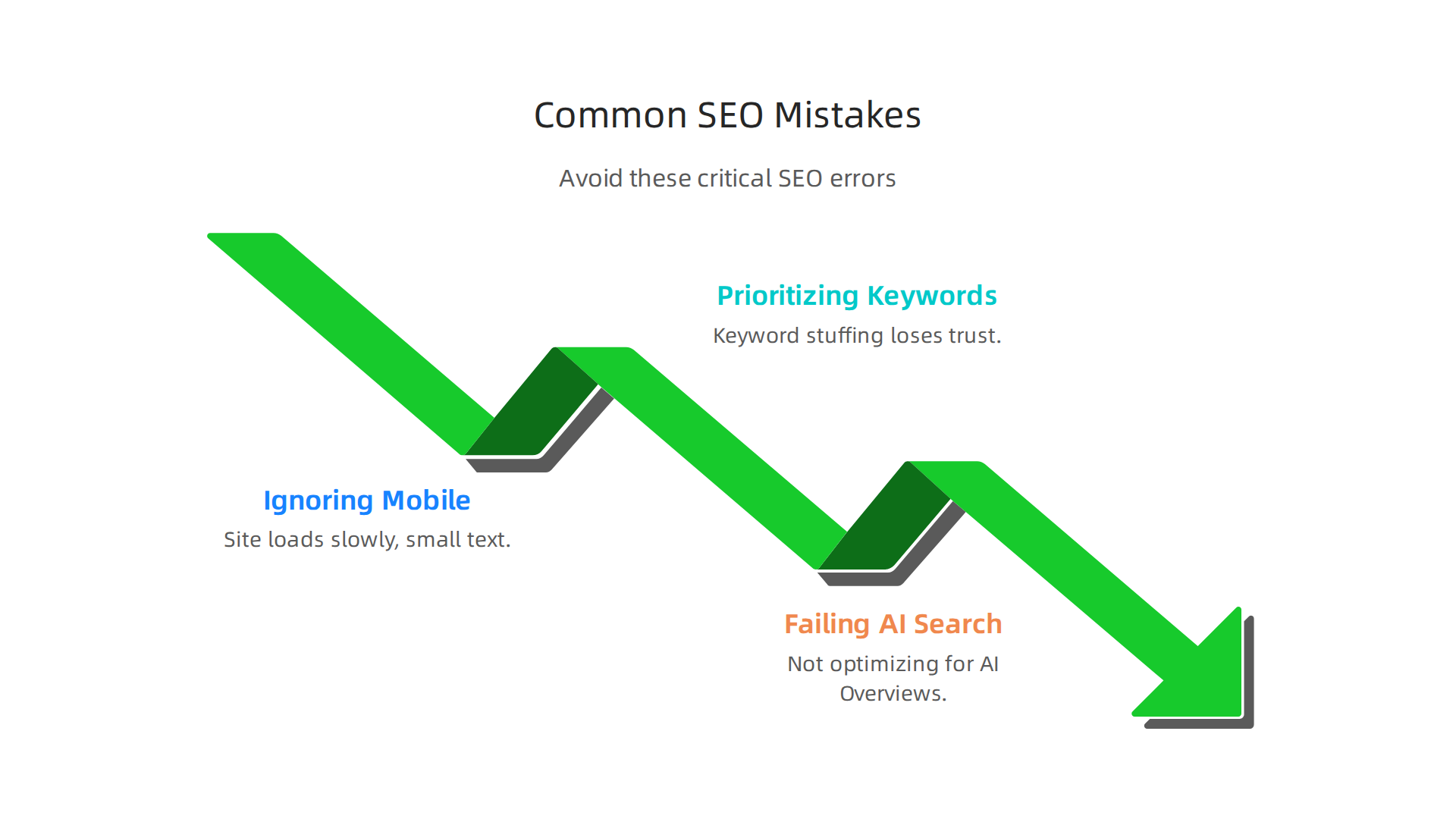
Mistake 1: Ignoring Mobile Experience and Core Web Vitals
Your audience reads on phones. If your site loads slowly, has tiny text, or uses hard to tap buttons, they leave. That hurts your rankings a lot.
Google cares about page speed and mobile friendliness. One second delay can cost you 7% of conversions. Common problems include heavy images, too many scripts, and poor hosting. You need to run regular speed checks and fix issues like Interaction to Next Paint (INP) and Largest Contentful Paint (LCP).
If you need help improving your site, check out our guide on SEO services for businesses that deliver real results.
Mistake 2: Prioritizing Keywords Over Real Value
In 2026, keyword stuffing is a fast track to losing trust. Repeating the same phrase over and over makes your content sound robotic. Google’s Helpful Content system rewards content that answers real questions in a natural way.
Focus on topic relevance instead. Write for people first. Use related terms naturally and let the flow feel like a conversation. If you stretch a simple idea into a long article just to hit a word count, readers leave and so does Google. According to the article on 7 SEO Mistakes to Avoid in 2026 That Kill Google Rankings, publishing low quality or repetitive content is one of the biggest problems right now.
Mistake 3: Failing to Adapt to AI Driven Search
This is the biggest shift. Google AI Overviews now appear in many search results. They answer users questions directly on the page. When that happens, click through rates drop. One study found that AI Overviews reduced clicks to top results by 58%.
If you are targeting informational queries, you need to optimize for AI visibility. Structure content with clear headings, answer common questions directly, and use schema markup. Being cited inside an AI Overview can still drive traffic, but only if your content is trustworthy and well organized.
The landscape is changing fast. To keep up with daily AI and search updates, you might find The AI Newsletter Worth Reading helpful. It delivers clear, practical insights to help you stay ahead.
Avoid these three mistakes and your SEO will work harder for you in 2026.
Summary
This article explains what SEO marketing means for media professionals in 2026 and shows how to turn search into sustainable audience growth. It defines SEO, lays out the three pillars—technical, on‑page, and off‑page—and explains why each is essential for visibility and trust. The guide shows how AI has changed search behavior, introduces AI Overviews and zero‑click trends, and recommends balancing AI tools with human expertise. It outlines the key metrics and tools you should track, suggests practical learning paths and certifications, and lists the most common mistakes to avoid. Read it to learn how to audit your site, optimize content for modern search, measure real audience engagement, and adapt your workflow to an AI‑driven landscape.