
CPG Marketing Strategies for Media, Advertising, and AI Innovation in 2026
Why CPG marketing matters for media, advertising and creators
Let’s talk about CPG. CPG stands for Consumer Packaged Goods. These are the everyday items you buy often, use up, and then buy again. Think about things like cereal, shampoo, soda, or cleaning supplies. They come in packages and are sold quickly at stores CPG: Meaning, Examples, and Strategies for 2026.
So, what is CPG in marketing? It’s all about how companies promote these kinds of products. The main goal of CPG marketing is to make people aware of a product, like it, and keep buying it again and again CPG Marketing: Definition, Strategies & Examples (2026). It’s really about driving sales for things people need often.
For media companies, advertising agencies, and content creators, understanding CPG marketing is super important. Why? Because the way we reach customers is changing very fast in 2026. We see new marketing channels popping up all the time. Digital media and advertising are bigger than ever. Things like retail media, where ads show up right where you shop online, are growing. Also, tools like Artificial Intelligence (AI) are changing how we plan campaigns and connect with people. This makes modern marketing for CPG products very different from how it used to be.
These rapid changes mean that planning media communications for CPG brands isn’t like marketing for other types of products. Media buyers and content creators need to be smart and quick to adapt.

They need to know how to use all the new ways to get a product in front of the right eyes. This makes CPG marketing a truly exciting and challenging field for everyone in the media industry. Learning how to build your winning media mix is crucial for success Advertising channels 2026 how to build your winning media mix.
If you want to stay ahead of these big changes, especially with AI, there’s a great way to get daily updates.
Get clear daily AI updates from The AI Newsletter Worth Reading.
To really understand CPG marketing, we need to look at how these products get from the factory to your shopping cart.
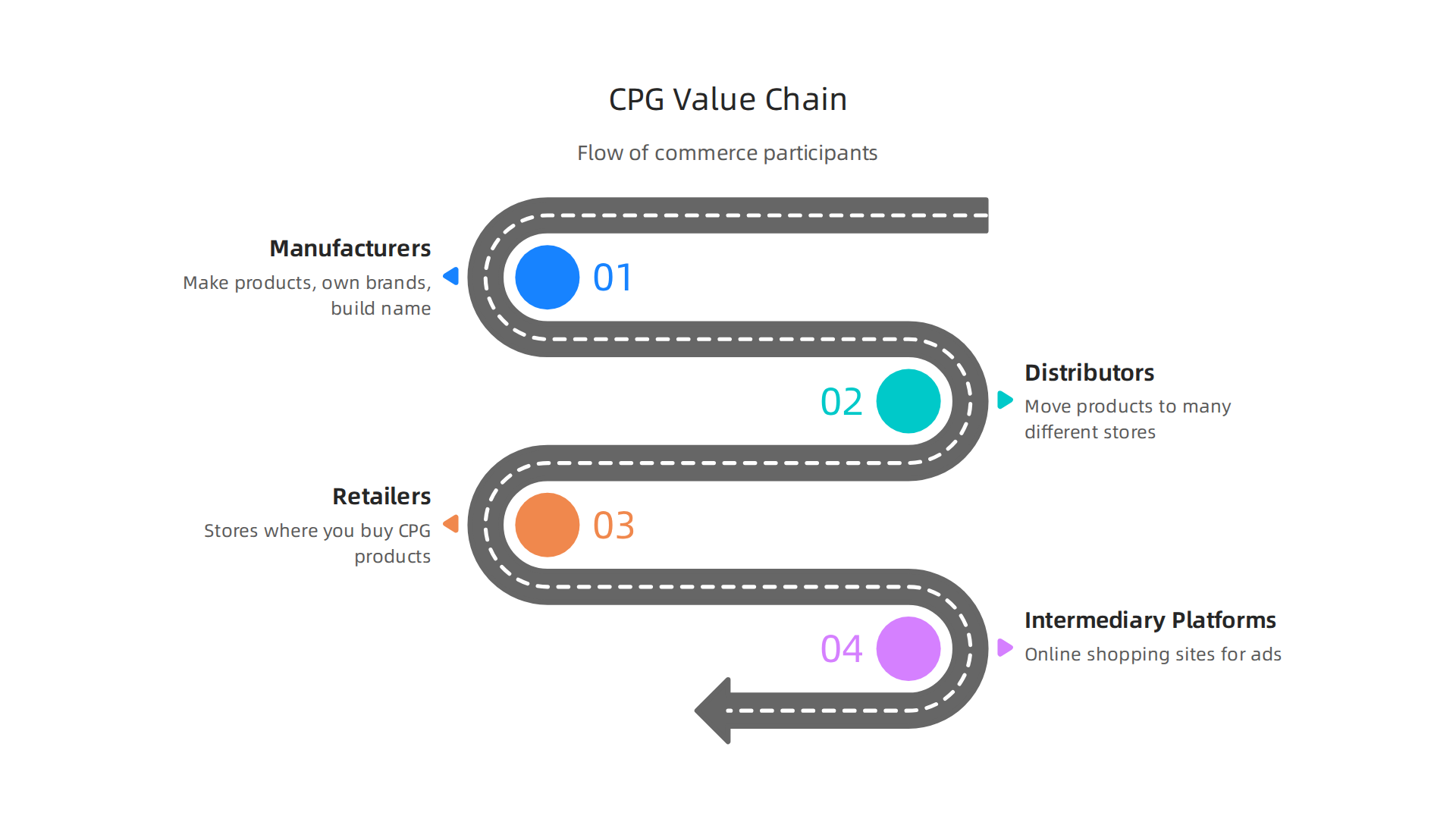
It’s not just one company doing everything. Instead, many different players work together. This whole system is called the commerce ecosystem.
At the very start, you have the manufacturers. These are the companies that actually make the products, like Kellogg’s making cereal or Procter & Gamble making shampoo. They own the brands you see on the shelves. Their main goal is to create products that people want to buy often and build a strong brand name.
Next, sometimes there are distributors. These companies help move products from the manufacturers to many different stores. Think of them as the middleman who makes sure a brand’s products reach a lot of places.
Then come the retailers. These are the stores where you buy your CPG products. This includes big supermarkets, small corner shops, online stores, and even drugstores. In 2026, many of these retailers also have their own intermediary platforms or online shopping sites, which are becoming very important new places for ads.
This setup means that CPG brands don’t just sell to you directly. Most often, they sell to retailers, and then retailers sell to you CPG Marketing Guide for Consumer Packaged Goods. This makes what is CPG in marketing a bit different.
The way these players work together strongly shapes how CPG companies choose their media communications and how they promote products. For example, the money a manufacturer makes from selling a product (its "margin") is often shared with the retailer. This means brands need to think carefully about how much they spend on advertising, and where. Their main goal is to make sure their products are easy to find and buy, and that shoppers keep choosing their brand.
Because of this, CPG brands spend a lot of time and money making sure their products are visible in stores and online. This might mean special deals, good placement on shelves, or smart digital media and advertising campaigns that appear right where you shop. Getting your products into the right stores and making sure people see them there is a huge part of modern marketing for these everyday items. To succeed, you need to navigate the new digital shopping places and understand the best tools to reach people. Exploring different digital marketing platforms in 2026 can help media professionals and creators guide brands effectively.
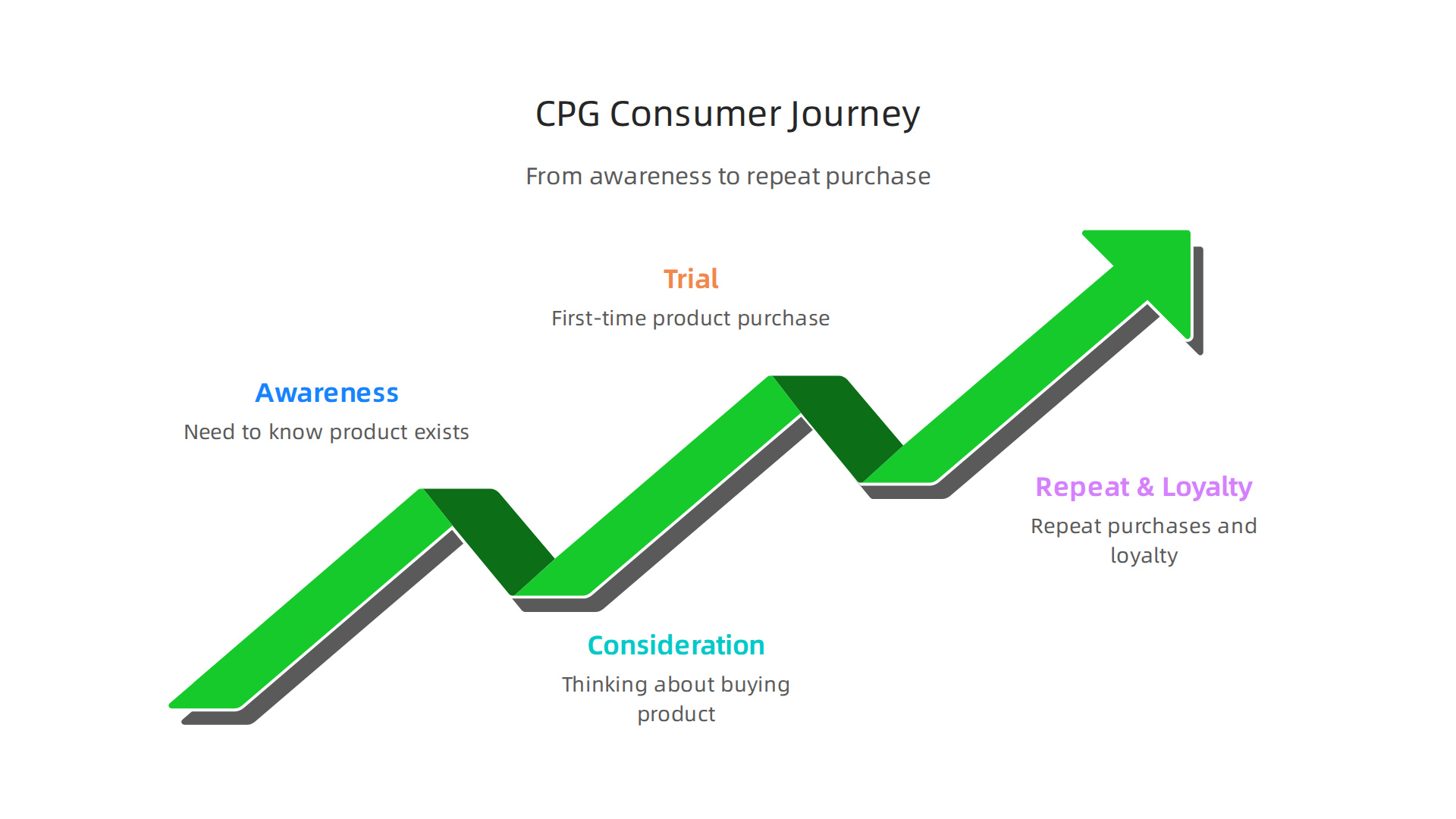
When we talk about what is CPG in marketing, we’re really talking about how people decide to buy everyday goods. It’s not just one quick decision. People usually go through a few steps, often called the consumer journey. Understanding these steps helps CPG brands plan their ads and promotions better.
This journey for CPG products typically has four main parts:
Awareness
First, people need to know your product exists. This is called "awareness." Think of ads on TV, social media, or even a friend talking about a new snack. For CPG brands, this stage is all about getting attention. They use many kinds of digital media and advertising to show their products to as many potential buyers as possible. CPG marketing starts here by creating buzz and making sure the brand name sticks in your head. As experts explain, CPG marketing includes activities and campaigns to build awareness for consumer packaged goods CPG Marketing: Definition, Strategies & Examples (2026).
Consideration
Next comes "consideration." This is when a person thinks about buying your product. Maybe they saw an ad and now they’re in the store, looking at different options. Or they might be scrolling online, reading reviews or comparing prices. This is where marketing channels like online search results, social media posts, and in-store displays become very important. Brands want to make sure their product looks like the best choice.
Trial
"Trial" means someone buys the product for the very first time. This is a big moment for CPG brands! To encourage trial, you might see special deals, coupons, or good placement on store shelves. Online, it could be easy ordering or a special first-time discount. The goal is to make it easy and appealing for a customer to pick up that shampoo or cereal and try it out. To make sure campaigns land right, brands often choose the best marketing campaign types for 2026 growth for each stage.
Repeat and Loyalty
The final and most important step for what is CPG in marketing is "repeat and loyalty." This is when customers keep buying your product again and again. Because CPG items are used up quickly, brands want you to come back regularly. If you love a brand of coffee, you’ll buy it every week. This stage is built on a good product experience and smart modern marketing that reminds you why you liked it in the first place.
Where Media Fits and How It’s Measured
Media fits into every part of this journey. For example, during awareness, brands use mass media communications like video ads to reach many people. For consideration, they might use more targeted online ads that pop up when you’re searching for groceries.
How we measure success also changes. In a physical store, it’s harder to know exactly which ad led to a purchase. But online, thanks to digital tools, brands can track clicks, website visits, and purchases much more closely. This means online digital media and advertising can be measured in real-time. Brands use analytic marketing to drive smarter campaigns and boost ROI in 2026, helping them understand what works best at each stage of the customer’s buying journey, whether in-store or online.
Media channels for CPG: linear, digital, retail media, and creator partnerships
Thinking about what is CPG in marketing means understanding all the ways brands talk to people. Media is how these messages get out. It’s not just one type of media anymore. Today, CPG brands use many different marketing channels to reach you. Let’s look at the main ones.
Linear Media
This is what we often think of as old-school media. It includes TV commercials, radio ads, and print ads in newspapers or magazines. Linear media is great for reaching lots of people at once. For example, a TV ad for a new snack can show many families the product at the same time. These media communications are still important for building wide awareness, especially for big brands.
Digital Media
Then there’s digital media and advertising. This covers everything online. Think of ads you see on social media, websites, or even when you search for something on Google. Digital media is powerful because it can be aimed at specific groups of people. If you often look at recipes, you might see ads for cooking ingredients. This kind of modern marketing lets brands talk directly to the people most likely to buy their products. To understand all the options, it helps to know about Advertising channels 2026: how to build your winning media mix.
Retail Media
One of the biggest changes in what is CPG in marketing is the rise of retail media. These are ads you see when you’re shopping online at places like Amazon, Walmart, or Target, or even on screens inside physical stores. It’s like the store itself is a media channel. Brands pay retailers to show their products more clearly, either at the top of search results or on special display banners. The U.S. retail media ad spend is expected to reach almost $69.33 billion in 2026, showing how big this is getting The State of Brand Commerce in 2026. Many brands are moving their ad money to these retail media spots because the ads are shown right when you’re ready to buy something.
Creator Partnerships
Another new and important way CPG brands connect with people is through creator partnerships. This means working with influencers or content creators on social media platforms. A creator might share a video of themselves using a new shampoo or review a new food product. This feels more real to many consumers than a traditional ad. It helps brands get their message out in a friendly, trusted way, making it a key part of how modern marketing works. Learning about What is earned media and how to build a strategy that earns real influence in 2026 can shed more light on this approach.
These different media channels mean brands have more choices than ever to talk about their CPG products. They have to carefully pick which channels will work best for their goals and their audience. Staying on top of these changes is a big job for anyone in marketing.
Want to keep up with the latest in media and technology?
The AI Newsletter Worth Reading to get clear daily AI updates from The Deep View Newsletter.
Choosing the right marketing channels for CPG products isn’t just about where to put ads. It’s also about what you want those ads to do.
CPG brands often juggle two main goals: building their brand for the long run and getting people to buy things right away. This is called balancing "brand marketing" and "performance marketing."
Brand Building: Long-Term Love
Brand building is like making a new friend. You want people to know who you are, what you stand for, and why they should like you. For CPG brands, this means creating emotional ads that tell a story or show how a product fits into a happy lifestyle. Think of big TV commercials that don’t push a sale but make you feel good about a certain soda or cereal. The goal is for you to remember the brand and feel a connection to it over time.
For brand building, success is measured by things like:
- How many people know about the brand.
- If people feel good about the brand.
- How loyal customers are over many years.
Budgets for brand building are usually set for a longer time, like a year or more. The creative messages are softer, aiming to make a lasting impression rather than an immediate click or purchase.
Performance Marketing: Quick Sales
Performance marketing is all about action. It’s like asking someone to buy something right now. These campaigns often happen online, using digital media and advertising. You’ll see ads for special deals, discounts, or "buy now" buttons. The goal is to get you to click, sign up, or buy a product in that moment. Retail media, for example, is great for performance because it reaches you right when you are shopping.
For performance marketing, success is measured by:
- How many people click on an ad.
- How many sales come directly from an ad.
- How much money was spent compared to how much money came in.
Budgets for performance campaigns can be changed quickly based on what’s working. The creative is very direct, with clear calls to action to get people to act fast. To pick the best way to get these kinds of results, it’s helpful to learn about Choose The Best Marketing Campaign Types For 2026 Growth.
Finding the Right Balance
CPG brands need both brand building and performance marketing. They need people to feel good about their products and to actually buy them. A good modern marketing strategy means spending money wisely on both. While performance marketing often shows quick results, brand building helps keep customers coming back for years. How much money CPG brands put into marketing depends on what they want to achieve and what products they are selling, and many consider their overall CPG Marketing Budget, Key Trends and Insights when deciding. It’s all about making sure their media communications reach the right people with the right message at the right time.
When marketing channels are chosen and campaigns are run, CPG brands need a way to know if their efforts are working. This is where measurement and analytics come in. It’s about figuring out which ads lead to sales and how much extra money those ads bring in.

For CPG, knowing what is CPG in marketing and how to track it is a bit different because products are often sold in many stores, not just online.
How CPG Brands Measure Success
To truly understand how well their digital media and advertising efforts are doing, CPG companies look at a few key things:
- Attribution Models: This is like giving credit where credit is due. An attribution model tries to figure out which ad or touchpoint helped a customer decide to buy a product. For example, did they see a TV ad, then a social media ad, and then finally click an online coupon before buying? These models help connect the dots.
- Incrementality Testing: This is a super important idea for CPG. It asks, "Did our ad really cause the sale, or would the customer have bought the product anyway?" To find this out, brands might run tests. They show ads to one group of people (the test group) and no ads to another similar group (the control group). If the test group buys more, then the ads had an "incremental" impact. This helps brands measure the true value of their marketing spending How to Measure the Full ROI of Experiential CPG Activations. This kind of testing can be done with special tools or by setting up controlled tests in different stores or areas Albertsons Aims To Show What In-Store Ads Actually Deliver.
- Store-Sourced Sales Data: For many years, CPG brands relied on sales data from grocery stores and other retailers. This data shows how many products were sold, but it doesn’t always show why they were sold. It’s harder to link a specific ad to a sale when the sale happens offline.
The Power of First-Party Data
Lately, modern marketing for CPG has been all about "first-party data." This is information a brand collects directly from its customers. For example, if you sign up for a loyalty program, buy something from a brand’s website, or enter a contest, that’s first-party data CPG Analytics: A Complete Guide for Consumer Brands. This data is very good because it’s accurate and comes straight from the customer.
However, first-party data also has limits for CPG brands Why CPG Brands Can’t Solely Rely on 1P Data. Most people buy CPG items in stores, not directly from the brand’s website. So, a brand might not know who most of their customers are or how often they buy CPG Brands Are the Last Category Without First-Party Data – Vela Rewards – Turn everyday choices into life upgrades. Retailers, on the other hand, have a lot of this data because they see all the purchases. This changes how CPG brands and retailers work together First-Party Data Changes Retailer and CPG Negotiations | BCG.
Household and Retail Data
CPG brands also use:
- Household-level data: This data groups purchases by families or homes. It helps brands see how certain households buy their products over time.
- Retail-level data: This is sales data from stores. It shows what’s selling well in different locations.
Putting all these different types of data together helps CPG brands get a clearer picture of what’s working in their media communications. Combining retail data, first-party customer info, and sales numbers is key to making smart choices. Understanding how to use data to drive better decisions is vital for any marketing professional. If you want to dive deeper into how data can transform your campaigns, explore the strategies for Analytic Marketing Drive Smarter Campaigns and Boost ROI in 2026.
To stay on top of how AI is helping brands collect and understand this kind of data, consider signing up for The AI Newsletter Worth Reading. You’ll get clear daily AI updates from The Deep View Newsletter.
As CPG brands get better at using data, a big change is happening in how products are sold and advertised: omnichannel commerce and retail media networks. "Omnichannel" simply means giving customers a smooth shopping experience no matter where they are.

This could be in a physical store, on a brand’s website, or through a grocery store’s app.
Omnichannel Commerce and Retail Media Networks: Opportunities and Pitfalls
A key part of this modern marketing shift is the rise of retail media networks (RMNs). These are like advertising platforms run by big retailers. Think of Amazon or Walmart showing you ads for specific products right on their websites or apps, often based on what you’ve bought before. These RMNs use the retailer’s own customer data to show very specific ads. This changes the game for what is CPG in marketing, because now brands can advertise directly where people are already shopping for groceries and other items.
This new way of advertising creates fresh opportunities for CPG brands. They can reach buyers at the exact moment they are deciding what to purchase, right inside the digital "store." Programmatic advertising, where ads are bought and sold automatically using technology, plays a big role here. It helps brands place their ads smartly within these RMNs. The goal is to make sure your product stands out in a crowded digital aisle.
However, there are challenges. One big hurdle is making sure that ads running on RMNs work well with all the other digital media and advertising efforts a brand has. It’s hard to make sure a TV ad, a social media campaign, and an RMN ad are all working together seamlessly.
Another challenge is measuring if these ads truly make a difference. We talked about incrementality testing before, where you check if an ad really caused a sale. It’s tough to do this accurately when marketing channels are so varied, and sales happen both online and in stores. Brands need to unify their data from all these different sources to get a true picture of what’s working and what’s not, especially with RMNs 2026 CPG Marketing Formula #3: Building Always-On Incrementality.
Understanding how to track the true value of your campaigns across many different platforms is key to getting a good return on your investment. If you want to learn more about how to put together a plan for ads that work well together, check out strategies for Integrated Marketing Communications Drive Unified Brand Success. This helps brands make sure all their media communications are saying the same thing and pushing towards the same goal.
Moving from the complexities of measuring cross-channel campaigns, a new force is shaping modern marketing in 2026: Artificial Intelligence (AI). AI is rapidly changing what is CPG in marketing, offering powerful tools to understand customers better and create more effective campaigns.
AI, personalization and creative: how emerging tech is reshaping CPG marketing
AI is used in many ways today to help CPG brands connect with shoppers.
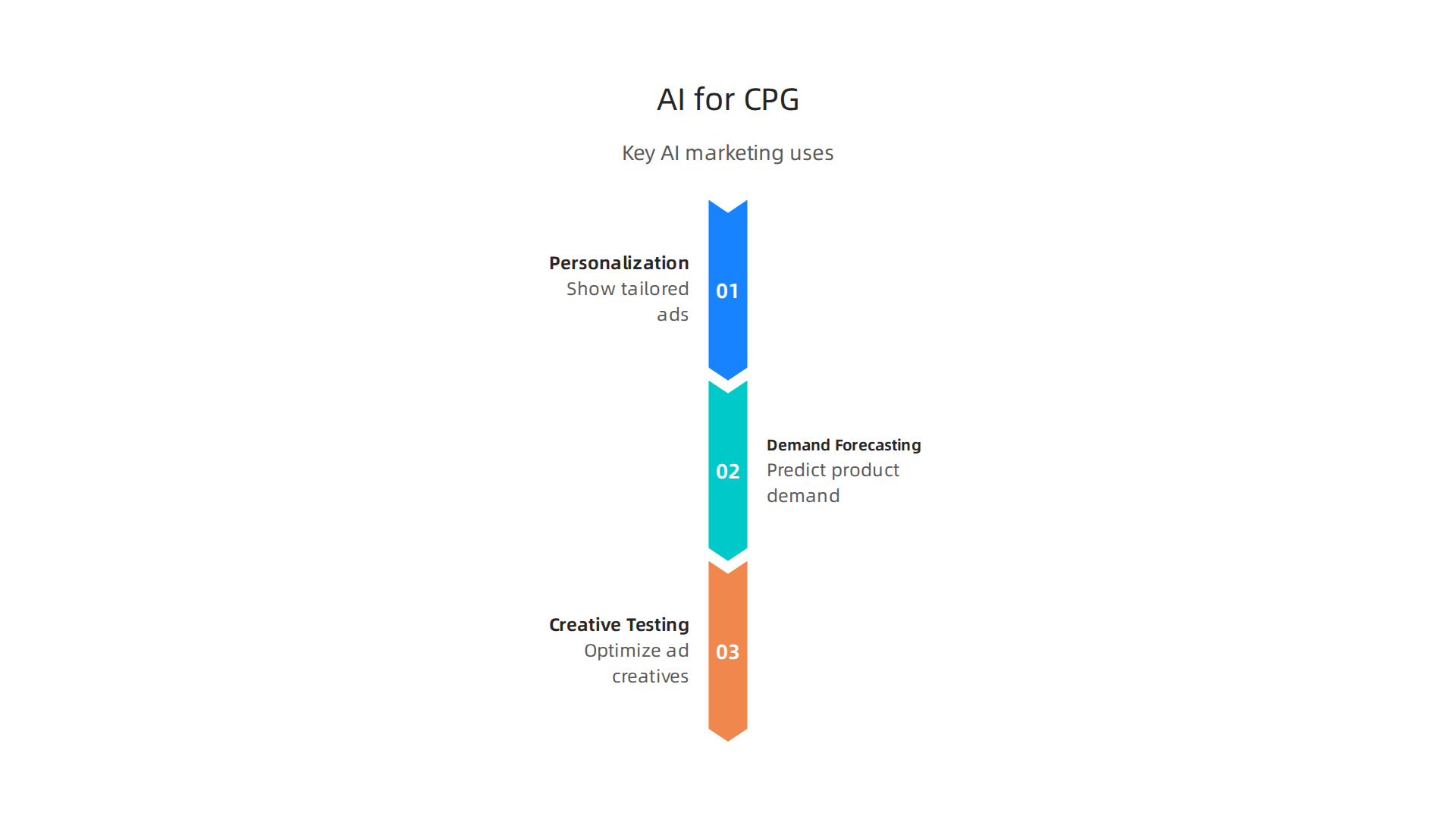
One big area is personalization. This means showing each customer ads and offers that are just right for them. By using AI, retailers can make their digital stores feel more personal, leading to more sales and happier customers State of AI in Retail & CPG 2026: NVIDIA Survey. AI helps brands understand what buyers want by looking at lots of data, which is key for digital media and advertising success AI in CPG: Complete 2026 Guide for Consumer Packaged Goods.
Another important use for AI is demand forecasting. This is like predicting what products people will want to buy and when. With machine learning, a type of AI, CPG companies can guess demand much better. This helps them manage their products and sales more smartly Machine Learning in CPG: 2026 Guide to AI Applications. AI also helps with creative testing, making sure that ads look good and catch attention. It can even help create new ad ideas fast, which saves time and money The CPG Growth Playbook for 2026: AI-First Creative and Media Strategies. If you’re looking to make your advertising more impactful, learning how to use AI for your creative can make a big difference. Discover more about Winning Social Media Advertising Design 2026 Strategies with AI.
Risks and Governance in AI-Driven Marketing
Even with all these good things, AI brings new challenges. Brands must be careful about data privacy and making sure that AI models are fair and unbiased. When AI creates ads, there is a risk that these ads might target people in ways they don’t expect or understand The need for more research on public policy issues related to the use of artificial intelligence in advertising. People might also lose trust if they don’t know that an ad was made by AI Consumer Trust in AI-Generated Marketing Content.
These new AI tools also change how we measure if ads are working. With AI creating so much, it’s hard to keep track of every piece of content and its effect. Brands need clear rules and good ways to check if their AI tools are being used ethically and effectively across all marketing channels and media communications. This means constantly checking for things like privacy risks and unfair results from AI AI-driven marketing tactics and consumer behavior.
As AI continues to grow, staying updated on the latest developments is crucial for any media professional. Get clear daily AI updates from The AI Newsletter Worth Reading.
Summary
This article explains why CPG (consumer packaged goods) marketing is essential for media companies, ad agencies, and creators in 2026, and breaks down how the modern landscape differs from other categories. It covers the commerce ecosystem—from manufacturers and distributors to retailers and intermediary platforms—and shows how that structure shapes media choices and budgets. The piece walks through the CPG consumer journey (awareness, consideration, trial, repeat) and details the main media channels used today: linear, digital, retail media, and creator partnerships. It also explains how brands balance long‑term brand building with short‑term performance marketing, and why measurement (attribution, incrementality, first‑party and retail data) is more complex for CPG. Finally, the article highlights the growing role of retail media networks, omnichannel commerce, and AI—plus the governance and privacy risks marketers must manage when using these tools.