
Build Your High-Impact E-commerce Marketing Automation Strategy
Why a strategy-first approach matters for e-commerce marketing automation
In 2026, many e-commerce businesses are eager to use cool new tools for marketing automation. They want to make things easier and faster. But here’s the thing: simply using tools without a clear plan is like driving a car without knowing where you’re going. It’s fast, but you might end up in the wrong place.
A smart e-commerce marketing strategy starts with your main business goals. We’re talking about real numbers like how much money you make (revenue), how much money you get back for every dollar you spend on ads (ROAS), and how much a customer spends with your business over their lifetime (LTV). These measurable goals should guide everything you do, not the fancy features of a new piece of marketing automation software. If you set clear goals, it helps keep your automation focused on real business results instead of just tracking activity, as some experts suggest for success in 2026 Marketing Automation Checklist: 10 Steps to Success in 2025.
To make sure your efforts pay off, media and ad leaders need a clear guide, sometimes called a playbook. This playbook helps balance creative ideas, smart use of data, and good management as you start using more and more automation. It helps you decide which channels, like email or social media, are best for getting new customers or keeping old ones. For instance, a good e-commerce marketing strategy should outline who you want to reach, what you want to tell them, where you’ll tell them, and how you’ll measure if it’s working E-commerce marketing strategies: The 2026 playbook – RedTrack.
A strong e-commerce marketing strategy means you’re building campaigns that are thoughtful and purpose-driven.

It’s about knowing why you’re doing something before you figure out how to automate it. This way, your automation helps you reach important goals, rather than just doing tasks for the sake of it. If you want to dive deeper into how to plan your marketing, you might find it helpful to Develop a strategic marketing plan for media creator growth in 2026.
Staying on top of the latest changes in AI and technology is also super important for your strategy. These tools can make your marketing much more powerful.
Want to understand how AI is changing the game for marketing and media? Get clear daily AI updates.
The AI Newsletter Worth Reading
A solid e-commerce marketing strategy always starts with figuring out your main goals. It’s like planning a trip: you first decide where you want to go before you pack your bags. For your business, this means picking clear numbers you want to improve. We are talking about things like the total money your store brings in (net revenue), how much profit you make from each sale (contribution margin), or how much money a customer spends with you over a long time versus how much it cost to get them (LTV/CAC).
When you set these goals, make sure they are clear and you can actually measure them. Think about a timeframe too, like "I want to increase net revenue by 10% in the next six months." Experts often suggest using the SMART framework to make goals specific, measurable, achievable, relevant, and time-bound Ecommerce Marketing in 2026 (Create a Winning Strategy). This helps keep your marketing focused and makes sure your team knows exactly what they are working towards.
Next, you need to look at your customer’s journey. Think about how people find out about your store (awareness), then think about your products (consideration), actually buy them (purchase), and then keep coming back (retention). Each part of this journey is different. Some parts might need a real person to talk to the customer, like helping them choose a product or solving a tough problem. Other parts can be done by computers, meaning they can be automated. For example, sending a welcome email after someone signs up is easy for marketing automation software to do. But answering a deep question about a custom order might need a human touch.
Mapping out this journey helps you see which tasks are best for people and which can be handled by automation. A good e-commerce marketing strategy will clearly show these steps. For example, a successful strategy might involve using a mix of channels, like email or social media, to reach different customers. It defines your target audience, what messages you send, and how you will know if it works E-commerce marketing strategies: The 2026 playbook – RedTrack. This way, you don’t just automate for the sake of it, but because it helps you reach those important goals, like improving your overall consumer marketing strategies for media and creator growth in 2026.
Moving from mapping your customer’s journey, let’s think about how to really make your e-commerce marketing strategy strong. It’s helpful to use "first principles." This means you break down your marketing funnel into its simplest parts. Instead of just saying "we need more sales," you ask: "What are the very basic things that make a person convert from just looking to actually buying?" You look at each step:
- Awareness: How do people first find out about you?
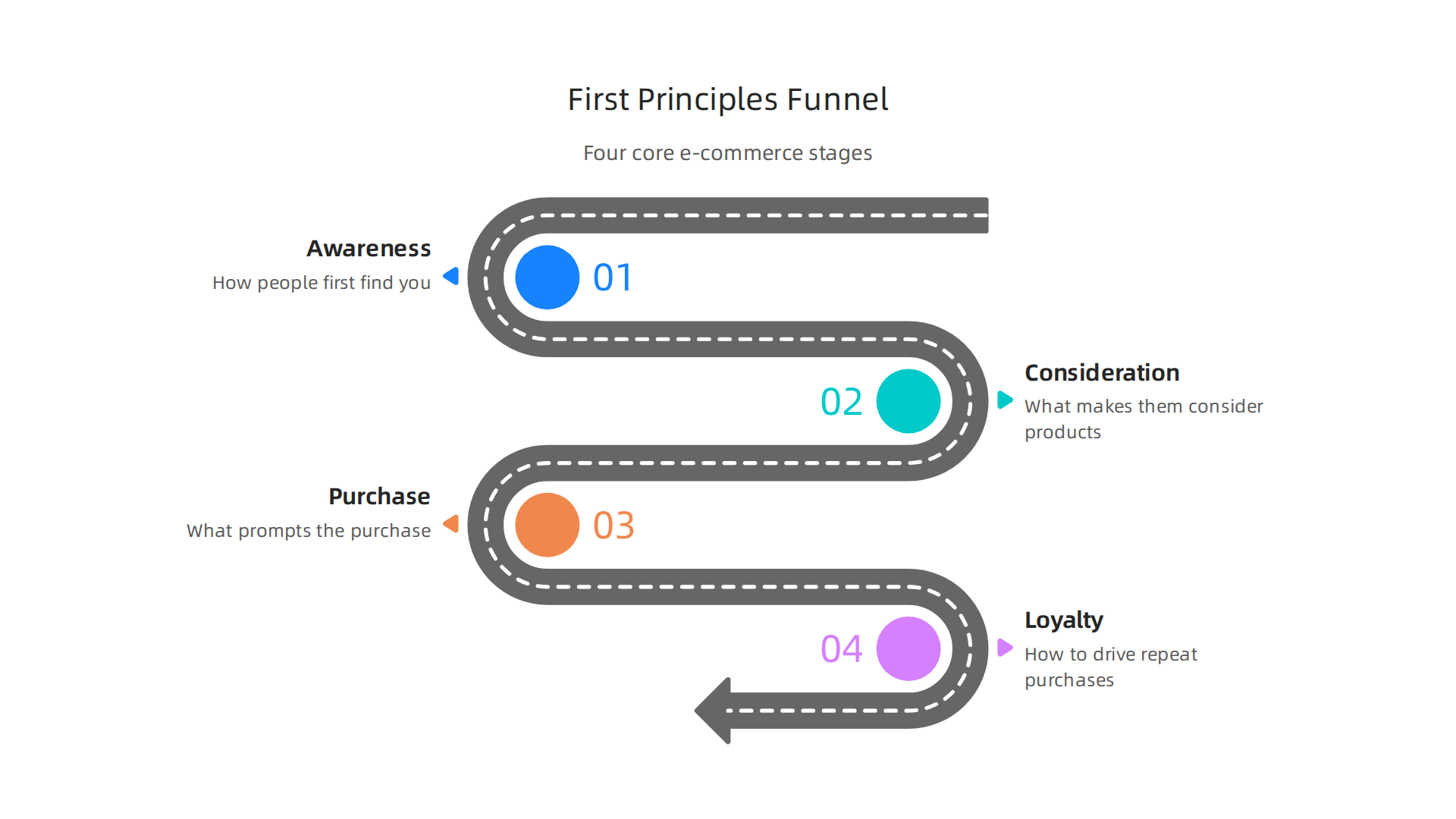
- Consideration: What makes them think about your products seriously?
- Purchase: What helps them click that "buy" button?
- Loyalty: How do you get them to come back and buy again?
For each step, identify what drives a customer forward. For example, in the "consideration" stage, clear product information, good reviews, or a fair marketing pricing strategy can be key.
A big part of this approach is paying close attention to what your customers actually do. We call these "customer intent signals" and "deterministic behavioral data." This means looking at every click, every page view, every search, and every item added to a cart. This data tells you what someone is interested in, what they’re confused about, or even what might stop them from buying. In 2026, gathering and using this first-party data is more important than ever, especially with new privacy rules CDP Trends 2026: AI, First-Party Data & Real-Time Engagement.
This detailed data then fuels your marketing automation software.

Instead of sending the same message to everyone, you can personalize messages automatically. If someone looked at sneakers but didn’t buy, your system can send them an email about new sneaker arrivals or a small discount. If they bought a camera, you could send them info on camera accessories a week later. This kind of smart automation makes your e-commerce marketing strategy much more effective.
To do this well, many businesses use a Customer Data Platform (CDP). A CDP helps bring together all the information about a customer from different places, like your website, email, and social media. This gives you one complete picture of each customer. This helps you understand their journey better and decide what actions to automate. Many businesses are consolidating their marketing tools, with CDPs playing a central role in managing customer data in 2026 The CDP Consolidation Wave Is Reshaping the Martech Stack.
Whether you’re working on a general e-commerce marketing strategy or a specialized marketing strategy b2b, breaking down the funnel and using data to guide your automation is vital. It helps you focus your efforts where they matter most for conversions. Understanding how AI is changing these platforms can give you an edge. If you want to keep up with how AI impacts marketing, you’ll find a lot of value in The AI Newsletter Worth Reading.
This detailed look at customer behavior and smart automation isn’t just about selling more. It’s about building better relationships and making your marketing efforts more efficient. You can learn more about how to develop a strategic marketing plan for media creator growth in 2026 to see how these principles apply to various parts of the digital world.
Getting your data in order is the most important step for a strong e-commerce marketing strategy. It’s like building a house; you need a solid foundation before you can add furniture and decorations. Without reliable data, your fancy marketing automation software can’t work its magic.
What Data You Need and How Automation Uses It
For automation to run smoothly, you need a few key types of data flowing correctly:
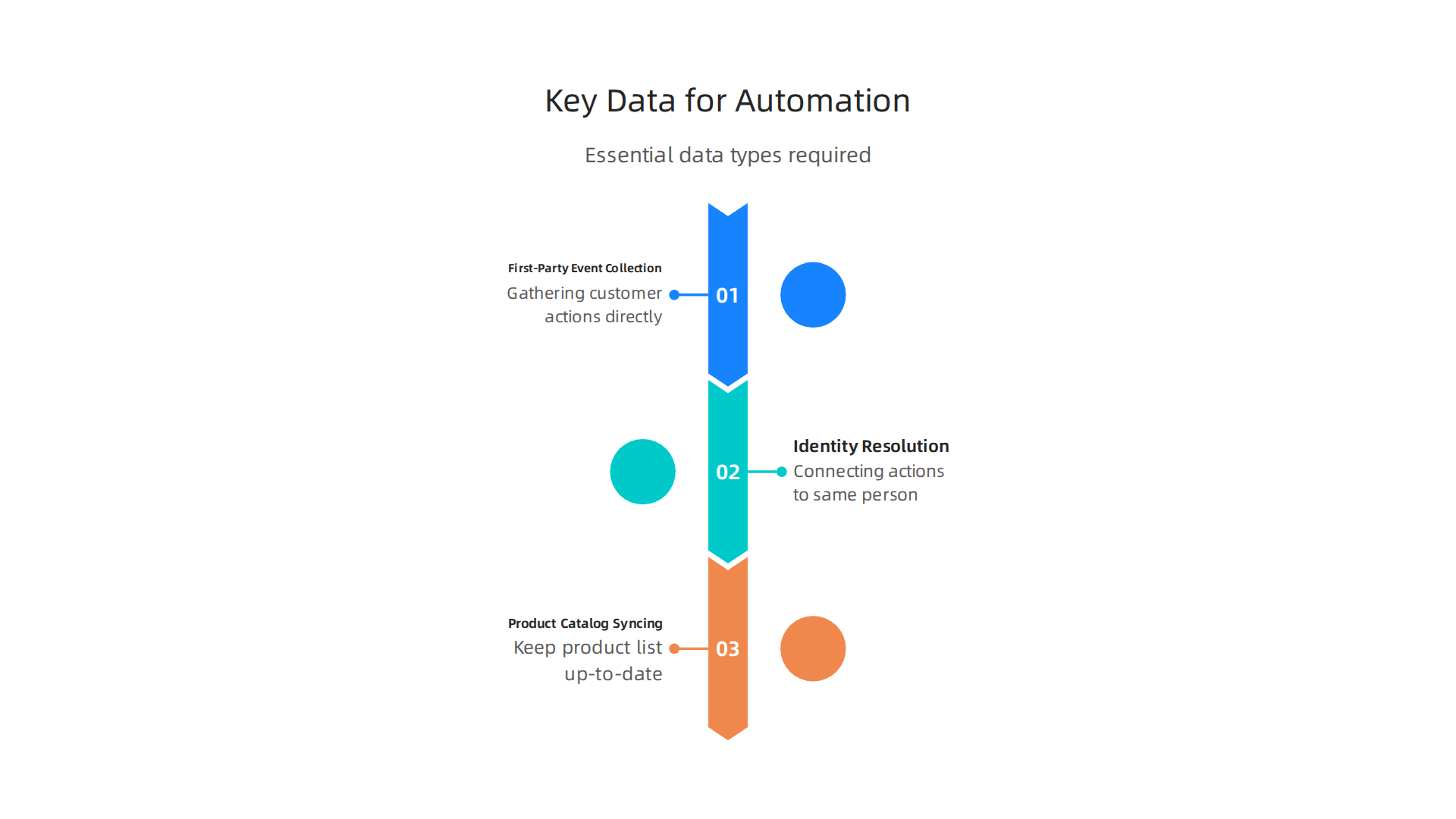
- First-Party Event Collection: This means gathering information directly from your customers’ actions. Every click on your website, every product page they view, every item they add to their cart, or even how long they stay on a page. This is called "first-party data" because you collect it yourself. This kind of data is super important in 2026, especially with new rules about online privacy CDP Trends 2026: AI, First-Party Data & Real-Time Engagement.
- Identity Resolution: Imagine a customer visits your website on their phone, then later checks their email on a computer, and then buys something. Identity resolution is about connecting all those different actions to the same person. It makes sure you know it’s one customer, not three different ones. This creates a full picture of each shopper. Many of the best CDPs in 2026 are designed to help with this identity resolution.
- Product Catalog Syncing: For an e-commerce business, your product list needs to be up-to-date everywhere. If a product goes out of stock or its price changes, your marketing automation software needs to know right away. This ensures you’re sending accurate messages, whether it’s for digital affiliate marketing campaigns or your own promotions.
Once this data is collected and organized, your marketing automation software can plug in. It uses this real-time information to trigger actions, like sending an email about a product left in a cart or suggesting related items after a purchase.
Different Ways to Set Up Your Data
Businesses use different setups to manage their customer data. Here are some common ways:
- Customer Data Platforms (CDP): As we talked about earlier, a CDP brings all your customer data into one place. This makes it easier to get a full view of each customer and feed that information to your marketing automation software. This approach is popular for many businesses, whether they focus on a general e-commerce marketing strategy or a specialized marketing strategy b2b.
- Warehouse-First Approach: Some bigger companies already have a "data warehouse." This is a large place where they store a lot of their company’s data. With a warehouse-first setup, they build their customer data tools right on top of this existing warehouse. This means their data warehouse acts as the main source of truth. Products like Databricks CustomerLake are examples of this warehouse-native approach, which entered the marketing software market in 2026 Databricks CustomerLake: Agentic CDP for Marketers. This way, all teams can use the same consistent customer information.
- Streaming ETL: This is about moving data very quickly, in a continuous stream. It’s good for actions that need to happen right away, like showing a special offer to someone who just landed on a certain page.
Each of these ways has its good points and its not-so-good points for marketers. A CDP might be easier to set up quickly, giving you a faster path to using your marketing automation software. A warehouse-first approach might offer more control and flexibility for very large companies, but it can be more complex to manage. Choosing the right one depends on your business’s size, technical skills, and specific needs for your e-commerce marketing strategy.
By having a strong data foundation, you can truly make your campaigns smarter and boost your results. To learn more about how data drives better campaigns, check out how to drive smarter campaigns and boost ROI in 2026. This careful handling of data helps ensure that your marketing pricing strategy is on point and every message reaches the right person at the right time.
Now that you know how important good data is, let’s see how marketing automation software actually puts that data to work. It’s not just about sending emails. Modern automation, especially with help from AI, can do a lot more for your e-commerce marketing strategy.
What Automation Can Do
Marketing automation helps with different parts of talking to your customers.
Think of it like a journey your customer takes with your brand. Automation can help at every step.
- Creative Production: AI tools can help make your ads and content faster. For example, they can write product descriptions, suggest ideas for social media posts, or even create different versions of banner ads to see which ones people like best. This speeds up how you build high-impact ad campaigns in 2026.
- Audience Activation: This means getting your messages to the right people at the right time. If someone visits your website but doesn’t buy anything, automation can send them a reminder email about the items they looked at. For a marketing strategy b2b, it might mean sending helpful content to a company that showed interest in your services.
- Dynamic Pricing: This is when prices can change based on different things, like how many items are in stock, what competitors are doing, or even what a specific customer has bought before. Automation can help you set up a smart marketing pricing strategy. For example, if a product isn’t selling fast, automation might create a small, temporary discount.
- Retention Orchestration: This is about keeping your customers happy and making them want to buy again. Automation can send special birthday offers, remind people when it’s time to reorder something, or ask them for reviews after a purchase. This helps build loyalty and makes sure customers don’t forget about you.
Choosing the Right Tools
With so many tools out there in 2026, picking the best marketing automation software can seem hard. But you can think about them in a few simple ways:
- Rule-Based Automation: These are like simple "if this, then that" systems. For instance, "If a customer adds an item to their cart but doesn’t buy it within an hour, send them an email reminder." These are straightforward and good for basic tasks. Many platforms offer these features, and you can compare some of the 9 best marketing automation software tools in 2026 to see examples.
- ML Model Orchestration: This is where AI and machine learning (ML) come in. Instead of just following simple rules, these tools learn from your data. They can predict what a customer might want next or find groups of customers who are most likely to buy a new product. This makes your digital affiliate marketing and other campaigns much smarter. Many companies are now looking to choose the best AI marketing agency for your business to help with these advanced strategies.
- Full-Stack Platforms: These are all-in-one solutions that try to do everything. They often include tools for email, social media, customer service, and more. While they can be powerful for a complete e-commerce marketing strategy, they can also be more complex to set up. Some of the 13 best marketing automation platforms for 2026 are full-stack options that work well for both small businesses and large companies.
In 2026, AI is a big part of these tools. It helps them go beyond simple rules and make smarter, more personal decisions for each customer. This means your marketing efforts can be much more effective. To learn more about how AI is changing the game in marketing, you might want to consider subscribing to The AI Newsletter Worth Reading. It gives you clear daily AI updates to help you stay ahead.
Using marketing automation software for your e-commerce marketing strategy is great, but how do you know if your automated campaigns are actually working well? This is where testing, measurement, and attribution come in. It’s not enough to just set things up and let them run. You need to check if they are making a real difference to your business.
Testing, measurement, and attribution for automated campaigns
To make sure your automated marketing efforts are effective, you need to test them carefully. Just like a scientist, you want to see what causes what.
Testing Your Automated Workflows
When you set up automated workflows, like a series of emails to new customers, you can test different parts of them. This is called experimental design.
- Holdout Groups: Imagine you have a new automated email series for people who just signed up. To see if it works, you don’t send it to everyone. You pick a small group of new sign-ups and "hold them out," meaning they don’t get the emails. This "holdout group" then acts as a comparison. If the people who received the emails buy more or stay customers longer than the holdout group, you know your automated series is working. This helps you understand the true impact of your marketing efforts.
- Sequential Testing for Lifecycle Automation: Your customers go through different stages with your brand, like learning about you, buying something, and hopefully buying again. This is called their lifecycle. You can test different messages or offers at each stage. For example, you might test two different welcome emails to new customers, then two different emails for customers who haven’t bought in a while. By testing things one after another, you can keep making your lifecycle marketing better over time. This continuous testing is key to a strong e-commerce marketing strategy in 2026.
Measuring What Really Matters: Attribution and Incrementality
Once your automated campaigns are running, you need to know which parts are leading to sales or other important actions. This is called attribution. It means giving credit to the marketing efforts that helped a customer make a purchase.
- Multi-Touch Attribution: In 2026, customers rarely buy something after seeing just one ad or email. They might see a social media ad, then get an email, then visit your site, and finally make a purchase. Multi-touch attribution tries to give credit to all the different "touches" or interactions along the way. Instead of just giving all the credit to the last ad they saw, it spreads the credit out. There are different ways to do this, from simple rules like giving equal credit to every step, to more complex models that use AI to figure out which steps are most important. Knowing how to measure marketing efforts helps you improve your overall marketing strategy b2b or consumer campaigns. These different ways of giving credit fundamentally change how you view your return on investment (ROI) for digital affiliate marketing and other campaigns, as shown by various studies on ad attribution models A Comparative Study of Ad Attribution Models: Evaluating the Impact on ROI Measurement – European Journal of Computer Science and Information Technology (EJCSIT).
- Incrementality Approaches: Attribution tells you where credit should go, but incrementality tells you if your marketing actually caused the sale. It answers the question, "Would this customer have bought anyway, even without my marketing?" This is a big question for any e-commerce marketing strategy. To find this out, you use special tests, often comparing a group that saw your ads to a group that didn’t. This helps you understand the true added value of your marketing automation software campaigns. These tests use experimental designs to clearly show the real impact of your marketing activities Incrementality testing: proving marketing causation through ….
By using these testing and measurement methods, you can continually refine your e-commerce marketing strategy, making sure your automated campaigns are not just running, but truly driving growth and giving you the best return for your efforts in 2026.

It’s about being smart with your data and constantly learning.
To truly get the most out of your automation and be smart with your data, you need the right people and clear rules. This is how you "operationalize" automation, meaning you put it into practice in a smooth, safe, and effective way. It’s about setting up your teams, creating guidebooks, and having clear controls for everything you do.
Operationalizing automation: teams, playbooks, governance and risk controls
Making automated campaigns work well for your e-commerce marketing strategy is a team effort.

You need to think about who does what and how they work together.
How to Organize Your Teams for Automation
When you want to use marketing automation software on a big scale, there are a few ways to set up your team:
- Centralized Marketing Operations Team: This is like having a special team whose main job is automation. They become experts in the marketing automation software, set up the campaigns, and make sure everything runs smoothly. They often help other marketing teams. This can be great for keeping things consistent and making sure best practices are followed.
- Embedded Marketing Squads: With this idea, smaller groups of marketers, sometimes called "squads," each have their own automation expert. These experts work directly with their team on specific campaigns, like for a certain product or customer group. This helps the automation be very specific to what each squad needs.
- Hybrid Approach: Many companies use a mix of both. They might have a main "ops" team for big-picture things and specific guidelines, while smaller teams handle their day-to-day automation tasks. No matter how you set it up, you’ll need roles like automation specialists, data analysts, and people who understand content and design. For big businesses, powerful marketing automation software platforms like Adobe Marketo Engage or Salesforce Marketing Cloud offer many features, but they also need a lot of upfront work to set up right Marketing Automation Software Options 2026.
Playbooks: Your Guide to Automation
Think of a playbook as a step-by-step guide for your marketing automation. It includes:
- Standard Procedures: How do you set up a new email campaign? What steps do you follow when a customer buys something?
- Best Practices: What works best based on your past tests? What kind of messages should you send?
- Templates: Ready-to-use email designs, ad copy, and workflow setups.
These playbooks help everyone on the team follow the same rules, which means fewer mistakes and better results for your e-commerce marketing strategy. They also make it easier for new team members to learn how things work.
Governance and Risk Controls for Automated Systems
Using marketing automation means you’re dealing with a lot of customer information. You need clear rules, or "governance guardrails," to keep things safe and right.
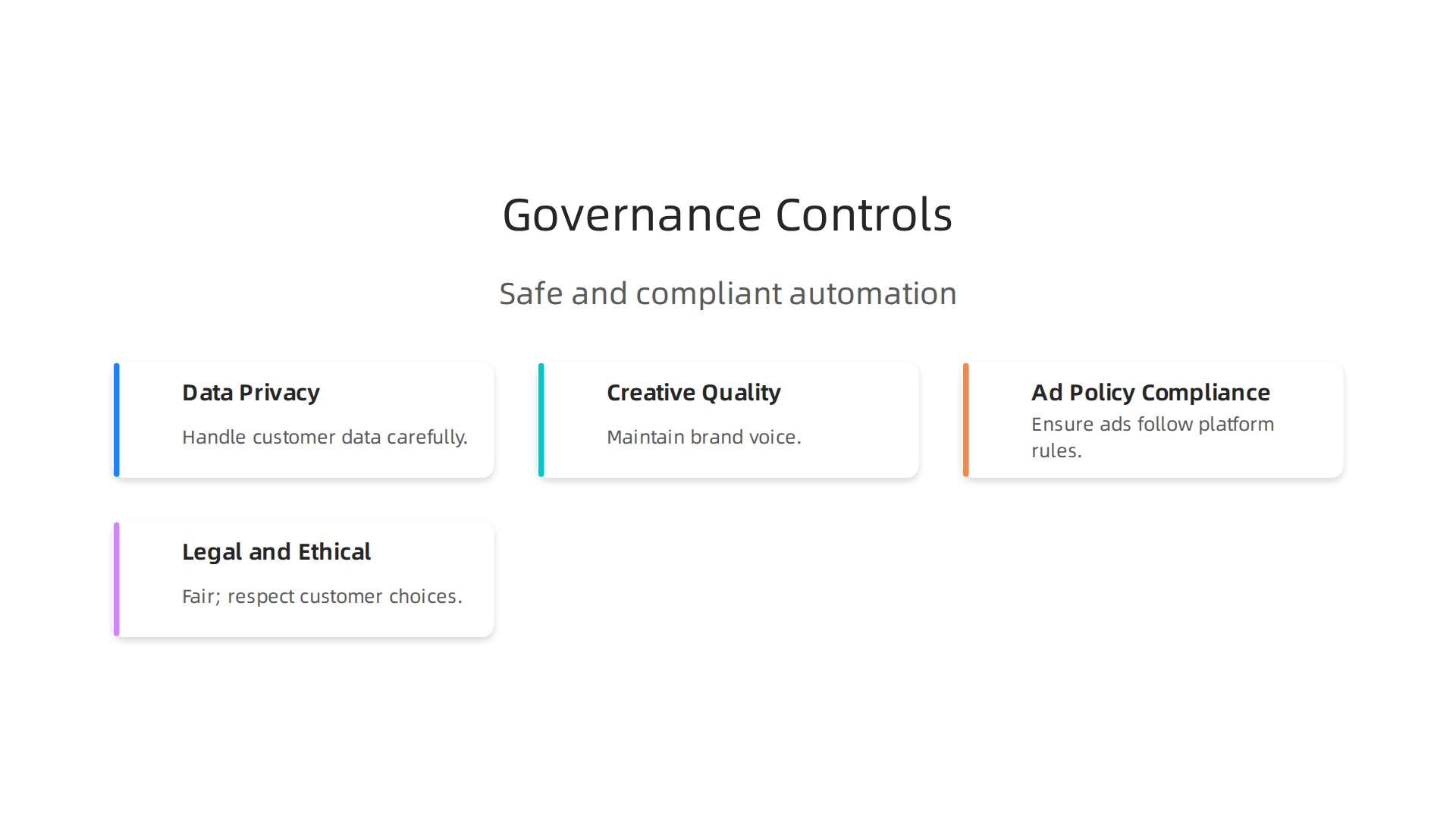
- Data Privacy: This is super important in 2026. You must make sure you’re handling customer data carefully and following laws like GDPR or CCPA. This means collecting consent, keeping data safe, and using it only for what you said you would. Marketing teams should make sure they manage data well and check privacy rules often Privacy Standards for Marketers: 2026 Guide. Understanding how to handle things like Mastering Advertising ID for 2026 Privacy and Ad Operations is a key part of this.
- Creative Quality: Automated messages still need to sound like your brand. Governance helps make sure all automated content matches your brand’s voice and quality standards.
- Ad Policy Compliance: When your automation creates or sends out ads, you need to be sure they follow all the rules of the advertising platforms you’re using. This prevents problems like ads being rejected or your accounts being put on hold.
- Legal and Ethical Checks: It’s also about being fair and not tricking customers. Automated systems must be set up to respect people’s choices and avoid bad practices.
By having these structures, playbooks, and controls in place, your business can use marketing automation software to its full potential, without taking unnecessary risks. It makes sure your powerful tools are always working for your customers and your business in the best possible way. To stay updated on how AI impacts these tools and strategies, consider checking out specific resources.
Get clear daily AI updates from The AI Newsletter Worth Reading.
Summary
This article argues that e-commerce marketing automation only pays off when it follows a clear, strategy-first plan rooted in measurable business goals like revenue, ROAS and LTV. It explains how to map the customer journey to decide which touches to automate versus handle manually, and why first‑party event data, identity resolution and synced product catalogs are essential foundations. The piece reviews common data architectures (CDP, warehouse-first, streaming ETL), outlines automation types from rule-based flows to ML orchestration, and shows how to test, attribute and prove incremental impact. Finally, it covers how to operationalize automation with teams, playbooks and governance so your tools drive real business results, not just activity.