Best Social Media Management Tools in 2026 for Smarter Workflows
Introduction
Managing social media in 2026 is a completely different game than it was just a few years ago. You are juggling more platforms, more content formats, and more data than ever before.

Algorithms change constantly. AI tools reshape how you create and schedule posts. And your audience expects you to show up everywhere, all the time.
The numbers back this up. A recent social media tools survey for 2026 found that the social media management software market is now worth over $36 billion. That is a massive industry built around one core need: helping you stay sane while managing multiple accounts.
Here is the thing. The right tool does not just save you time. It helps you cut through the noise, spot trends early, and actually understand what your audience wants. Without it, you are basically guessing. With it, you have data driving every decision.
But with hundreds of options on the market, picking the best social media management tools for your team can feel overwhelming. Do you go with an all-in-one platform or something simpler? Do you prioritize AI features or stick with basics like scheduling and analytics?
That is exactly why we put this guide together. We looked at real user feedback, market data, and adoption trends to find the tools that actually deliver results. Whether you are running a solo creator account or managing a multi-brand enterprise, this breakdown will help you navigate the new media landscape with confidence.
And since AI is reshaping everything in media right now, staying informed about those changes matters more than ever. That is why we recommend The AI Newsletter Worth Reading to get clear daily updates on how technology is transforming your industry.
Let us dive into the best tools for 2026.
The Evolving Landscape of Social Media Management in 2026
So what has really changed? A few years ago, you could get by scheduling posts to Facebook, Twitter, and LinkedIn. That is no longer enough.
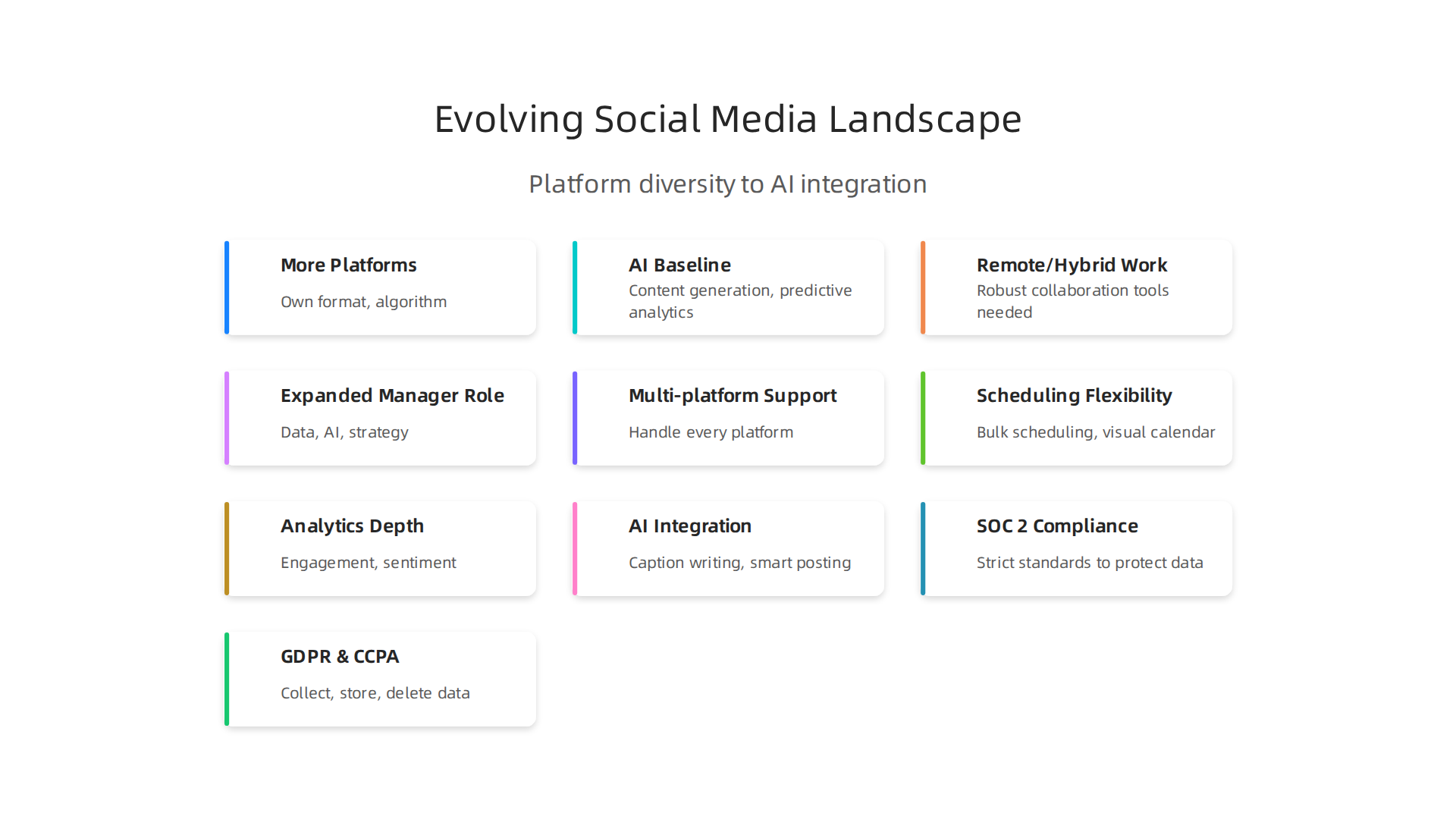
Today you need to show up on TikTok, Threads, Bluesky, Pinterest, Instagram Reels, YouTube Shorts, and a growing list of niche community apps. Each platform has its own format, its own algorithm, and its own audience expectations.
The social media management market has grown right along with that complexity. According to a Grand View Research report on the social media management market, the industry is now worth over $36 billion and is driven largely by demand for AI-powered tools. That is a clear signal: AI is no longer a fancy extra. It is the baseline.
In fact, AI features like content generation, predictive analytics, and sentiment analysis have become standard expectations. If a tool does not offer AI help with captions, image suggestions, or post timing, it probably will not make your shortlist. Marketers now expect their software to do more than just schedule. They want it to think ahead.
Remote and hybrid work models have added another layer. When your team is spread across different cities or time zones, you need robust collaboration tools.

Approval workflows, shared content calendars, and cross-platform consistency are no longer nice-to-haves. They are essential for keeping your brand voice intact.
All of this means that choosing the right tool is not just about features. It is about finding a platform that can grow with you as the landscape keeps shifting. That is why many teams now turn to a growth marketing strategy playbook to guide their decisions and adapt to new demands.
The bottom line? The job of a social media manager has expanded far beyond posting pretty pictures. It now involves data analysis, AI coordination, multi-platform strategy, and team collaboration. The tools you pick need to support all of that, or you will spend more time fighting your software than serving your audience.
Core Criteria for Evaluating Social Media Management Tools
With dozens of platforms on the market, picking the wrong tool can waste both time and money. A clear evaluation framework helps you avoid that mistake. Here are the criteria that matter most in 2026.

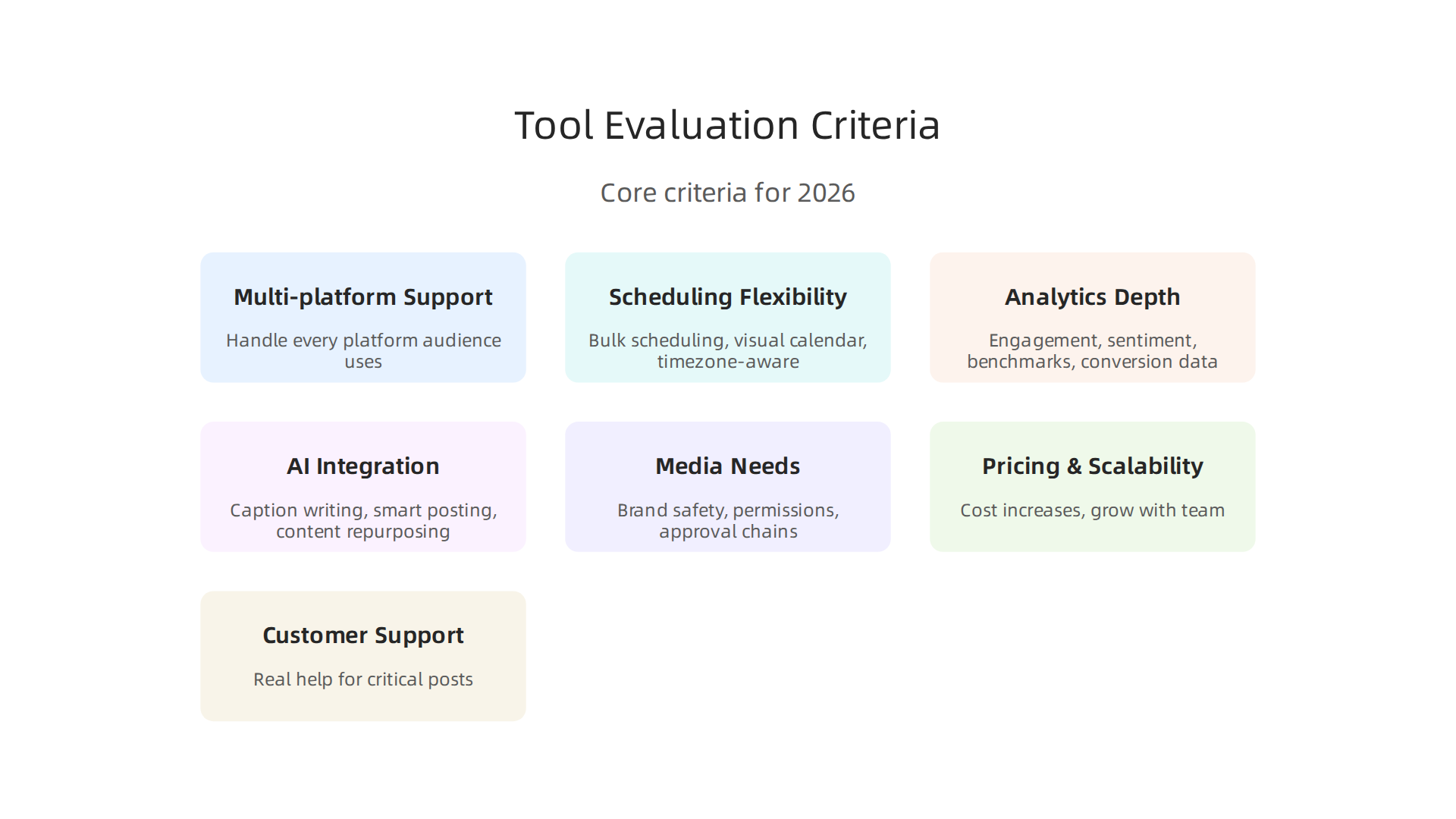
Multi-platform support comes first. Your tool must handle every platform your audience uses, from TikTok to Threads. A detailed social media management tool comparison reveals which platforms each option supports and how deeply.
Scheduling flexibility saves hours. Look for bulk scheduling, a visual calendar, and timezone-aware posting. The best tools let you plan a month of content in minutes.
Analytics depth separates good from great. You need engagement rates, audience sentiment, competitor benchmarks, and conversion data. Surface-level metrics will not cut it. For example, if you run an Instagram marketing campaign, you need to see exactly which posts drove clicks and sales.
AI integration is now a baseline requirement. The best social media management tools include AI caption writing, smart posting time recommendations, and automated content repurposing. These features turn hours of manual work into minutes.
Media organizations need extra layers. Brand safety controls, user permissions, and content approval chains protect your reputation. API access lets your team build custom integrations when needed.
Pricing matters, but so does scalability. A $10 plan may work for one person but fail a team of fifteen. Test how costs increase as you add users or accounts. The tool you choose should also fit into your broader stack of digital marketing platforms in 2026 so everything works together smoothly.
Customer support quality cannot be ignored. When a critical post fails, you need real help, not a ticket system with 48-hour response times.
As AI keeps reshaping the landscape, staying informed on the latest tool capabilities is essential. That is why many media professionals subscribe to The AI Newsletter Worth Reading for clear daily updates on AI trends that affect their tool choices.
Take the time to evaluate each criterion before you commit. The right tool will save your team time, reduce stress, and help you focus on what really matters: connecting with your audience.
AI and Automation: The New Standard
AI is no longer a bonus feature. It is now a core part of the best social media management tools. In 2026, if a tool does not have strong AI built in, it is already behind.
Generative AI powers everything from scheduling to content creation to performance optimization. The top platforms now include automated hashtag suggestions, image generation, and copywriting that matches your brand voice. They can also run A/B tests at scale, so you know which headline or image drives the most clicks. For example, many all-in-one tools let you generate a month of captions in seconds, then schedule them based on when your audience is most active. As one detailed review of the 13 Best AI Social Media Management Tools in 2026 points out, the best platforms embed AI across the entire workflow, not just in one chatbot.
But there is a catch. Ethical questions around transparency and bias in AI recommendations are becoming critical for media brands. If an AI tool suggests a post that contains biased language or picks a posting time based on flawed data, it can damage your reputation. Smart teams now demand "human in the loop" features, where AI drafts the content but a person reviews and approves it before it goes live. This mix of speed and oversight is the new standard.
As you build your toolkit, understanding how AI fits into your broader strategy matters. For a deeper look at adapting to AI and changing audience demands, check out this growth marketing strategy playbook for 2026.
The bottom line: pick a tool that uses AI wisely, not just loudly. Your audience will notice the difference.
Multi-Platform Scheduling and Publishing
Once you have chosen an AI-powered tool, the next step is making sure it handles the core job well: getting your content live across every platform you manage. For media professionals, that means scheduling and publishing across dozens of profiles on platforms that all use different content formats.
The best social media management tools in 2026 make this effortless.
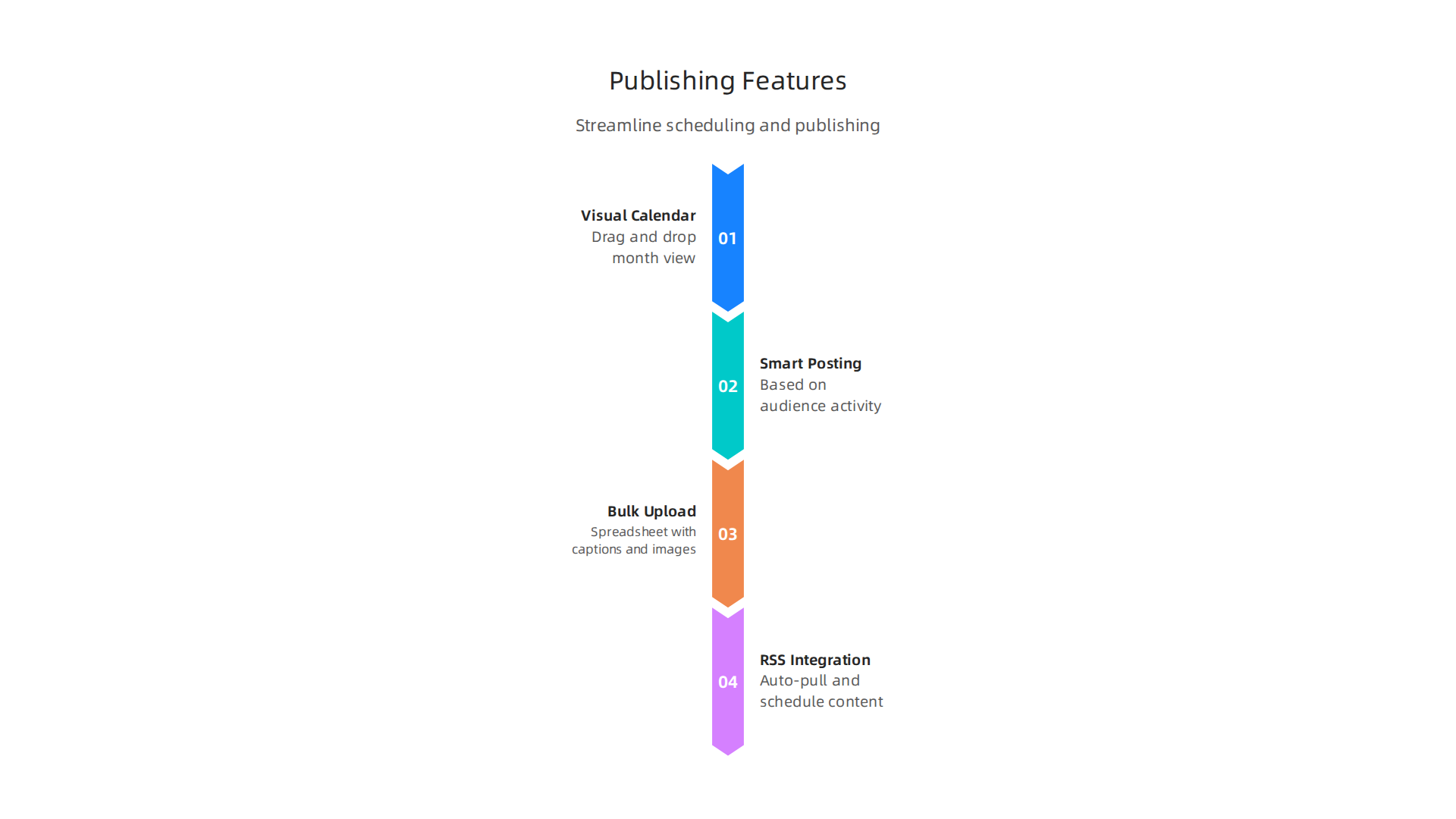
They come with a visual calendar that you can drag and drop posts into. You can see your whole month at a glance and spot gaps immediately. Most tools also suggest the best times to post based on when your audience is actually online. One detailed roundup of the 21 best social media scheduling tools for your brand in 2026 highlights how platforms like Sprout Social and Hootsuite let you preview exactly how your post will look on Instagram, Facebook, LinkedIn, and TikTok before it goes live.
Bulk upload is another huge time saver. Instead of creating each post one by one, you can upload a spreadsheet with dozens of captions, images, and links. The tool then queues them all up and publishes them on your schedule. This is especially useful if you are running an instagram marketing campaign that needs consistent daily posts across multiple brand accounts.
For publishers with busy newsrooms, RSS feed integration changes everything. Tools like Buffer and CoSchedule can pull content directly from your RSS feed and automatically schedule it for sharing. This keeps your social channels fresh without anyone having to manually copy and paste every new article. To build a full content workflow that matches your team size, check out this guide on marketing manager roles and trends for 2026.
Staying current with platform updates is part of the job. If you want daily AI and tech insights delivered to your inbox, consider subscribing to The AI Newsletter Worth Reading. It helps you keep pace with changes that affect how you publish and engage with your audience.
Advanced Analytics and Reporting
You post every day, track likes and shares, and watch your follower count grow. But do you know which posts actually drove revenue or got someone to sign up for your newsletter? That is the difference between vanity metrics and actionable analytics. The best social media management tools in 2026 go far beyond surface-level numbers.
Real analytics tell you what matters. They show you attribution: exactly which post led to a website visit, a purchase, or a new subscriber. They help you understand sentiment: are people happy, frustrated, or confused when they mention your brand? And they give you competitor benchmarks so you know how you stack up. According to a detailed comparison of the 15 Best Social Media Analytics Tools 2026, leading platforms now use AI to deliver predictive insights and real-time reporting that connect directly to your business goals.
Custom dashboards make these insights useful for everyone on your team. Your social media manager needs to see engagement rates by channel. Your editor needs to know which topics drive the most shares. Your advertiser needs ROI data on every campaign. A good tool lets you build separate reports for each stakeholder without starting from scratch every time. One comparison of the AI Social Media Management Tools 2026 notes that Sprout Social’s AI Assist provides automated reporting that turns raw data into executive-ready insights without manual work.
AI predictive analytics take things further. Instead of guessing when to post, the tool analyzes your past performance and forecasts the best times. It can even predict which types of content will get the most engagement next week. This helps you plan smarter, not harder. For example, if you are running an instagram marketing campaign, AI can tell you whether carousel posts or short videos will perform better based on your audience’s past behavior.
To build a reporting system that fits your entire workflow, check out this guide on the 2026 playbook for growth marketing strategy. It covers how to align your analytics with broader business objectives and use data to drive real decisions.
Advanced analytics turn your social media from a guessing game into a clear, data-backed strategy. And when you know exactly what works, every post becomes more valuable.
Collaboration, Workflow, and Team Features
But knowing what works is only half the battle. You also need the right systems to create, approve, and publish content as a team. Without proper collaboration tools, things get messy. Emails fly around. File versions get mixed up. Someone publishes the wrong draft. Sound familiar?
The best social media management tools in 2026 solve these problems with built-in collaboration features. They let you assign tasks, leave comments on specific posts, and track version history. For example, Planable is built for teams that need visual content collaboration and client approvals. A comparison of the 12 best social media scheduling tools for 2026 highlights Planable as the top choice for agencies managing many accounts.
Workflows are another key piece. Instead of one person doing everything, a good tool separates content creation, approval, and publishing into clear stages. This cuts down on mistakes and keeps your brand voice consistent. Larger organizations also need role-based permissions and audit trails. That way, only approved people can publish, and you always know who made changes. This kind of structure helps teams scale, which is why understanding marketing manager roles in 2026 can prepare your team for growth.
Some platforms even use AI to speed up approvals. For instance, they can automatically route a post to the right reviewer or flag potential issues before the post goes live. These small automations save hours every week.
If you want to dive deeper into how AI is transforming media workflows, consider subscribing to The AI Newsletter Worth Reading. It delivers clear daily updates on AI and tech trends that affect media teams.
Building a smooth collaboration system helps your team move faster and avoid costly errors. And when everyone stays on the same page, your social media strategy gets stronger.
Integration Capabilities and API Support
Even the smoothest collaboration system falls apart if your social media tool doesn’t talk to your other software. Imagine scheduling a great post, then having to manually copy the data into your CRM or analytics dashboard. That’s wasted time. And it leads to mistakes.
That’s why the best social media management tools in 2026 focus heavily on integrations. They connect directly with your CMS, CRM, analytics platforms, and ad networks. For example, Zoho Social offers a native integration with Zoho CRM. This lets you track which social interactions turn into leads. No manual data entry needed.
A comprehensive review of the best social media management tools in 2026 from Zapier highlights integrations as a deciding factor for many teams. The right connections save hours every week.
But pre-built connectors aren’t everything. Media companies often have unique needs. That’s where open APIs and webhooks come in. An API lets your developer team build custom workflows between your social media tool and your internal systems. Maybe you want to automatically create a support ticket when a customer complains on Twitter. Or sync post performance data into your own reporting dashboard. Open APIs make that possible.
Webhooks take it a step further. They push real-time data from one tool to another when a specific event happens. For example, when a post goes live, a webhook can instantly update your content calendar in your project management tool. This kind of automation keeps everything current without anyone lifting a finger.
Many platforms also offer integration marketplaces. These are libraries of pre-built connectors for common business tools like Salesforce, HubSpot, Google Analytics, and Shopify. Instead of hiring a developer, you can often just flip a switch. This is especially useful for smaller teams that don’t have a dedicated tech staff.
If you are still sorting out which platforms fit your stack, understanding the broader landscape of digital marketing platforms in 2026 can give you a clearer picture.
When your social media tool plays nicely with everything else, your whole workflow speeds up. Data flows automatically. Reports update on their own. And your team can focus on creating better content instead of copying and pasting between apps.
Security, Compliance, and Scalability
If you run a media organization, you handle a lot of sensitive data. User emails, login credentials, payment info, and private messages all flow through your social media management tool. A data breach could destroy your reputation overnight. That’s why security is the first thing to check when picking your best social media management tools.
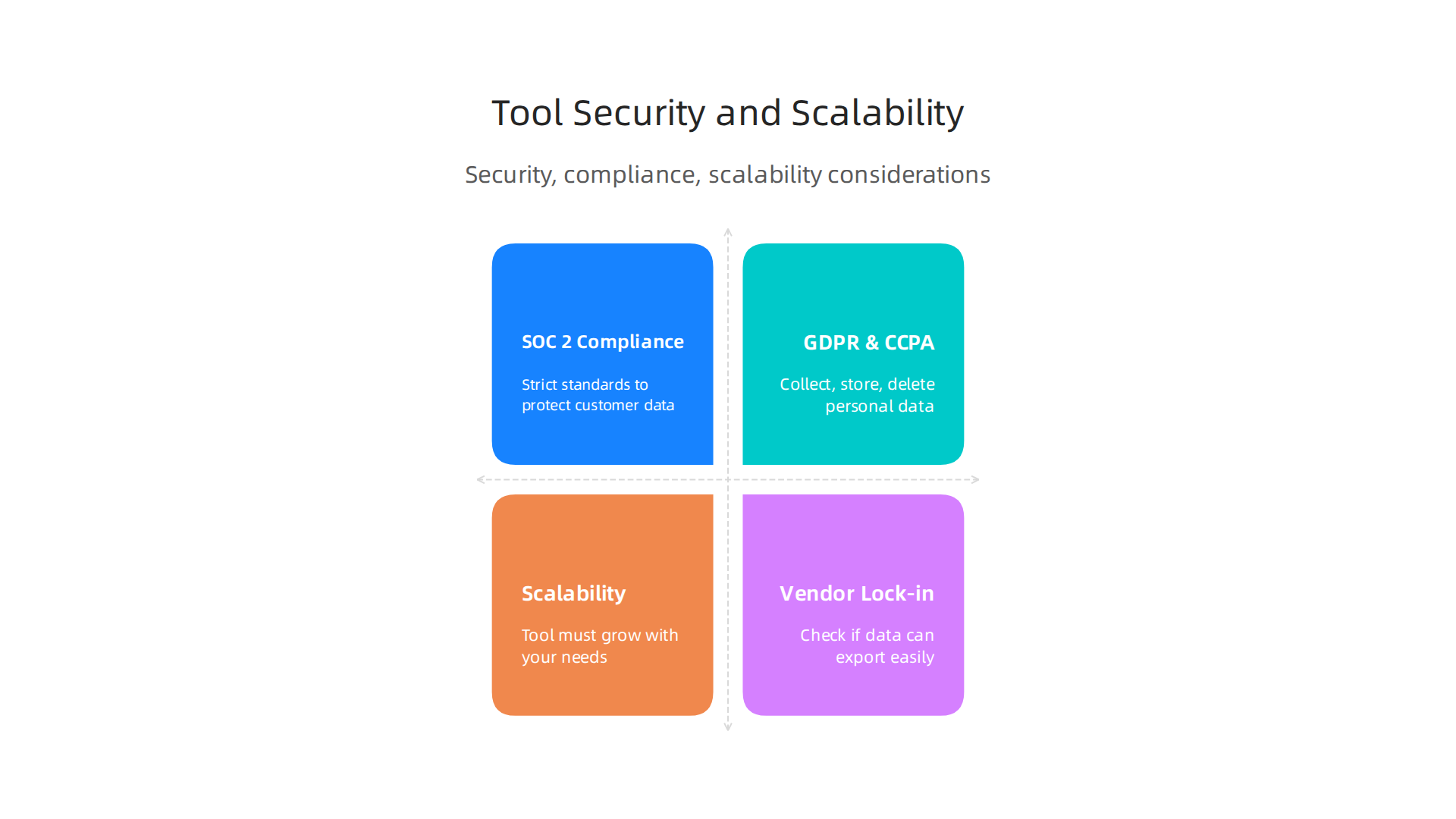
You want a platform that follows strict standards. Look for SOC 2 compliance. SOC 2 is a framework created by the American Institute of CPAs. It checks that a company has proper controls to protect customer data. The framework covers five areas: security, availability, processing integrity, confidentiality, and privacy. For a detailed breakdown of what SOC 2 requires, check out this guide on SOC 2 compliance requirements in 2026.
Beyond SOC 2, you also need to follow laws like GDPR in Europe and CCPA in California. These rules govern how you collect, store, and delete personal data. If your social media tool processes data from EU users, it must support GDPR compliance. A good platform will have features like consent management, data deletion requests, and audit logs.
Scalability is another big factor. Your social media needs will grow. You’ll add more accounts, post more often, and handle larger campaigns. The tool you choose must be able to grow with you. Ask about account limits, posting volume caps, and whether they offer enterprise-tier support. Some tools slow down when you add hundreds of accounts. Test with your expected workload.
Vendor lock-in is a quiet risk. You might fall in love with a tool today, but what if you need to switch later? Check if you can export your data easily. Look for open APIs and data portability options. That way, you are never trapped.
By choosing a secure, compliant, and scalable platform, you protect your audience and your business. And because the media world changes fast, staying informed about technology trends helps you make smarter decisions. If you want to keep up with daily AI and tech developments that affect security and compliance, check out The AI Newsletter Worth Reading. It delivers clear updates straight to your inbox.
For more on how branding and trust go hand in hand with security, read our guide on corporate branding services that build audience trust.
Emerging Trends and Future Directions
The world of social media management is changing fast. The best social media management tools in 2026 are not just about scheduling posts anymore. They are becoming smart platforms that help you handle everything from content creation to customer support.
One big trend is voice and video-first social management. People now search and scroll using voice commands and short videos. Tools are adding features that let you create and edit video content right inside the dashboard. Some even generate voiceovers using AI. This saves time and keeps your content fresh across platforms like TikTok and Instagram.
Another shift is the move toward unified dashboards. Instead of juggling separate tools for social media, customer support, and e-commerce, you can manage it all in one place. This means you can reply to comments, handle support tickets, and track sales without switching tabs. It makes your team more efficient and gives you a clearer picture of your audience. For a deeper look at how AI is reshaping workflows, check out this list of AI social media management tools in 2026.
Predictive AI is also getting smarter. Tools can now spot potential crises before they blow up. They monitor sentiment and flag negative trends so you can act early. Automated reporting is becoming proactive too. Instead of waiting for end-of-month reports, you get real-time alerts and predictions about which posts will perform best. This helps you adjust your strategy on the fly. According to the social media trends report for 2026, AI is powering faster experimentation and real-time adaptation.
And let’s not forget decentralized platforms. As new social networks pop up, tools need to support them from day one. The best platforms already offer connectors for emerging channels.
To stay on top of these changes, your marketing strategy must evolve. Our guide on growth marketing strategy for 2026 shows you how to adapt to AI and new audience demands. The future is about tools that learn, predict, and connect everything. Choose one that grows with you.

Summary
This guide breaks down how to choose the best social media management tools in 2026, when teams juggle more platforms, richer formats, and AI-driven expectations. It explains how the market has shifted from simple scheduling to platforms that must support multi‑channel publishing, deep analytics, collaboration, and integrations with your stack. You’ll learn the evaluation criteria that matter most—multi‑platform support, scheduling flexibility, analytics depth, AI features, team workflows, integrations, and security—and why each one affects outcomes and costs. The article also covers practical workflows for bulk scheduling, RSS-driven publishing, automated approvals, and how AI should be used with human oversight. It highlights how predictive analytics, open APIs, and enterprise compliance (SOC 2, GDPR) change vendor selection. Finally, it points to emerging trends like voice/video editing, unified dashboards, and crisis‑prediction tools so you can pick a platform that scales with your needs.