Unlock 2026 Google Ads Success with an Expert’s Advanced Strategies
Why organizations need a Google Ads expert approach in 2026
In 2026, running good ads on Google is more important than ever. But it’s also much harder. The digital world changes fast. Google Ads keeps adding new and complex features, often powered by smart AI tools.

This makes it tough for businesses to get the best results on their own.
Think about it: the average cost to get a click on Google Ads is about $5.42, and only about 8.18% of people who click end up doing what you want them to, like buying something or signing up Google Ads Benchmarks 2026: CPC, CTR, CVR, CPL. To beat these averages, you need a smart plan. You also need to understand all the different types of Google Ads available today.
Plus, it’s getting harder to track what works well. New privacy rules mean we can’t always see exactly how people use websites after clicking an ad. This makes it a big challenge to know if your ads are truly making a difference.
This is where a google ads expert comes in. An expert knows all the ins and outs of the platform. They can help you with a full plan to make your ads shine. They understand how to use performance marketing 2026 to get great results.
Here’s what a good Google Ads expert brings to the table:
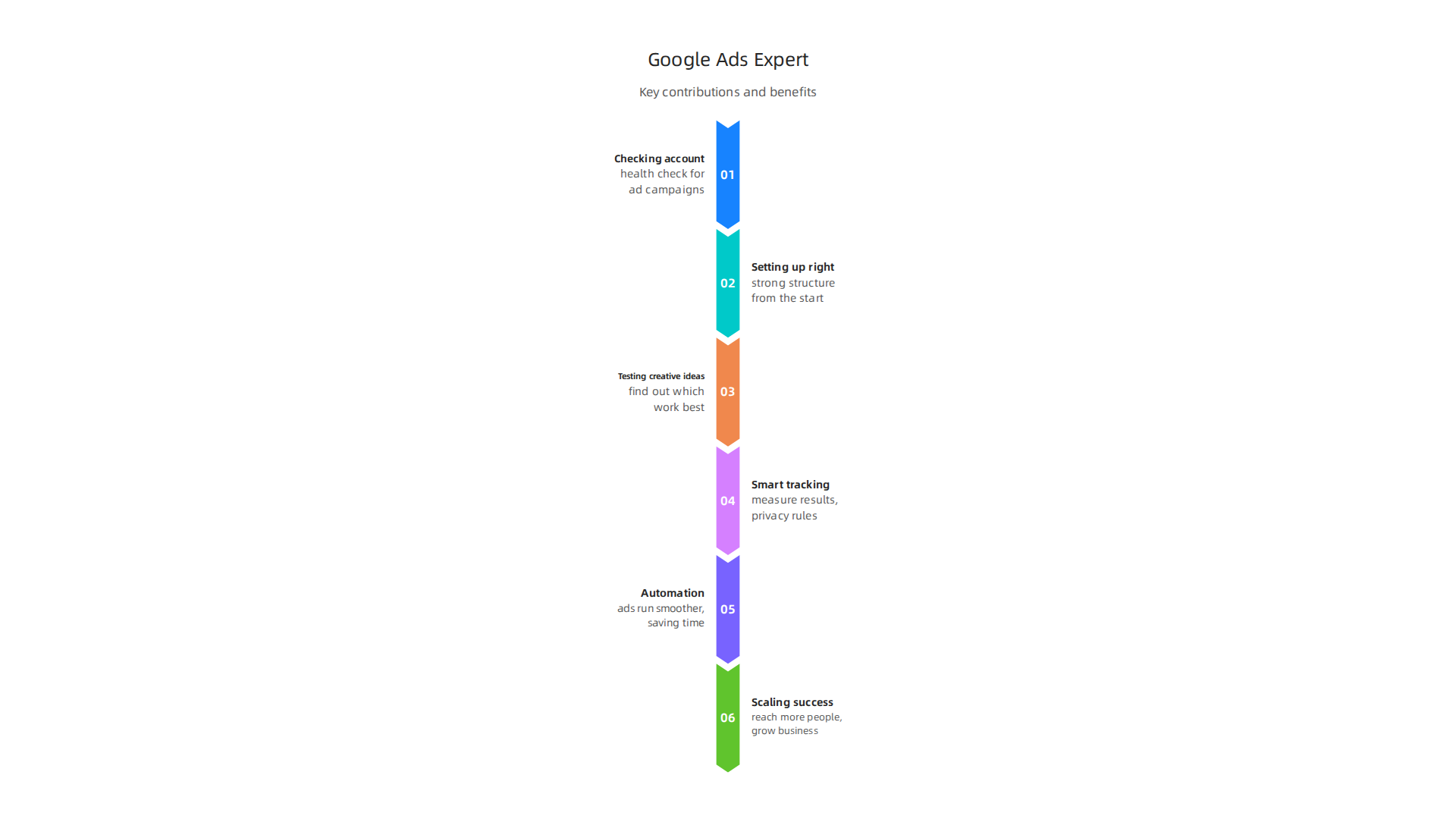
- Checking your account: They can look at your current ads to see what’s working and what’s not. This is like a health check for your ad campaigns.
- Setting things up right: They build your ad campaigns with a strong structure from the start.
- Testing creative ideas: They find out which images and words work best. This helps create winning creative ads digital campaign strategies 2026 that feel like personalized ads to your customers.
- Smart tracking: They use the best ways to measure results, even with new privacy rules.
- Automation: They set up systems to make your ads run smoother, saving time and money.
- Scaling your success: They help your ads reach more people and grow your business over time.
An expert also often understands bigger advertising pictures, like how Google Ads fits into a full media buying strategy, even when dealing with tools like Mediaocean media buying or Galeforce media buying. If you want to keep up with how AI is changing digital marketing and stay ahead, you need to be informed daily. Get clear daily AI updates from The AI Newsletter Worth Reading.
1) How to run an expert Google Ads account audit
When a Google Ads expert starts working with a new client, one of the first and most important things they do is a full account audit. This is like a doctor checking your health to find out what’s strong and what needs fixing. It helps them create a plan that truly works for your business.
First, the expert needs to understand your business goals. This means looking at what you want to achieve with your ads. Do you want more sales, more leads, or more people signing up for your newsletter? These are your key performance indicators, or KPIs. Next, they look at how you track success. This is called conversion taxonomy. It defines what actions on your website count as a "conversion" and how those are measured. They also check where your data comes from and look at all your past ad campaigns to see what has happened before.
Once they know your goals, a smart Google Ads expert follows a checklist to find problems and chances to improve. Here’s what they usually look at:
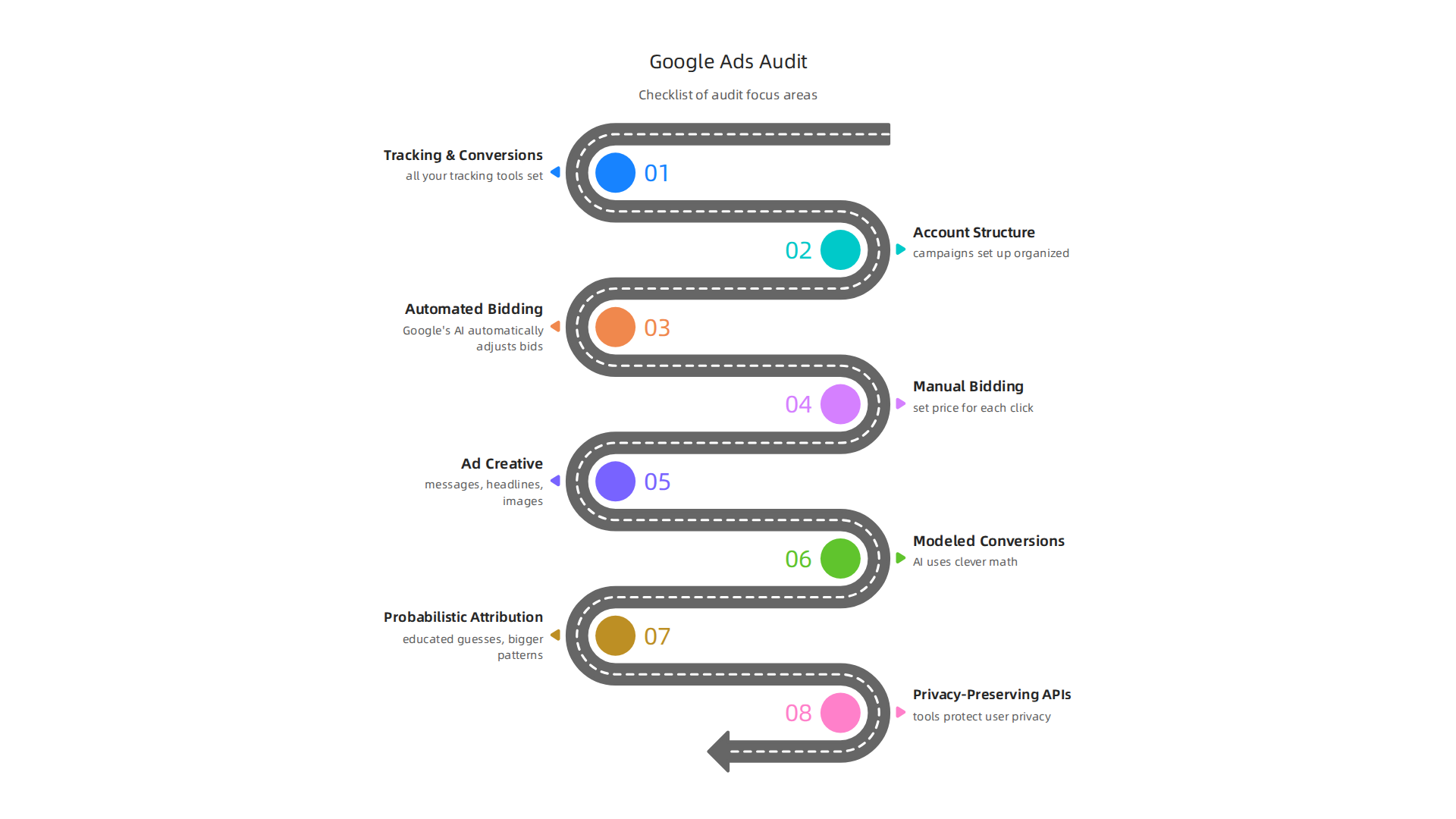
- Tracking and Conversions: This is super important. The expert checks if all your tracking tools are set up correctly. Are sales, calls, and sign-ups being counted? Sometimes, businesses miss tracking important actions, like calls or offline sales that happen after an online ad click. An expert makes sure to set up things like offline conversion tracking to connect online ads to real-world results Cloudflare Case Study | 49% more open opportunities. Fixing these basic tracking issues can make a huge difference in knowing what’s actually working.
- Campaign ROI and Wasted Spend: This part focuses on money. An expert looks at if your ads are making more money than they cost (Return on Investment, or ROI).
They also search for places where your ad money is being wasted. For example, one company saved over $52,000 in just 90 days by fixing their ad account $145K Google Ads Audit: B2B SaaS Case Study 2026. This often involves looking closely at keywords, bidding, and where your ads are showing up. A thorough audit can help drive smarter campaigns and boost ROI, ensuring your marketing efforts are truly effective Analytic marketing drive smarter campaigns and boost ROI in 2026.
- Account Structure and Settings: A messy ad account can lead to bad results. Experts look at how your campaigns are set up. They might rebuild the whole structure to make it more organized and effective, focusing on what customers are searching for and their buying intent Case Study: From Vanity Metrics to Commercial Growth. They also check important settings like automated bidding and how your ads are rotated, making sure everything works best with Google’s latest rules Google Ads: 5 Audits for 2026 Success. They ensure you use full ad extensions and set clear targets for automated bidding.
- Ad Creative and Testing: Even the best setup needs good ads. An expert looks at your ad messages, headlines, and images. They suggest ways to create high impact ad campaigns that feel like personalized ads to your audience. They also set up tests, called experiments, to see which ad versions work best. Google Ads has tools built in for these experiments, which can lead to better results at a lower cost Video experiments boost creative performance on YouTube.
This careful audit helps the google ads expert find hidden problems and big chances for growth, whether you’re handling your own campaigns or working with a media buying team that uses tools like Mediaocean media buying or Galeforce media buying. By getting this deep understanding, they can then put together a plan to make your Google Ads truly shine.
After a Google Ads expert carefully checks everything in an account, the next big step is to build a smart plan for how ads are set up and how much money is spent. This includes the "account structure" and "bidding strategies." A good structure helps your ads work together and makes it easier for Google’s smart computers (AI) to find the best results.
How to Organize Your Ad Account
Think of your ad account like a well-organized store. You wouldn’t put milk next to toys. The same is true for your ads. You want to group similar keywords and ads together. In the past, many experts used something called SKAG, which stands for Single Keyword Ad Groups. This meant having only one keyword in an ad group. The idea was to have very specific ads for each search.
However, things have changed a lot in 2026. Google’s AI has gotten much smarter. Now, a more simple setup, sometimes called SKAG-lite or a consolidated approach, often works better. This is because Google’s automated systems need enough data to learn and improve. When you have too many small groups, the system doesn’t get enough data for each one. Many businesses have found success by moving from very detailed setups to simpler ones, letting Google’s automated tools do their best work. This helps campaigns run better and reach their full potential, as a Google case study shows about moving from granular to simpler structures. A smart google ads expert knows when to simplify to help Google’s AI optimize better.
Smart Ways to Bid for Your Ads
Once your account is set up well, the next part is deciding how you’ll bid, or how much you’ll pay for each click or conversion. This is where a lot of strategy comes in.
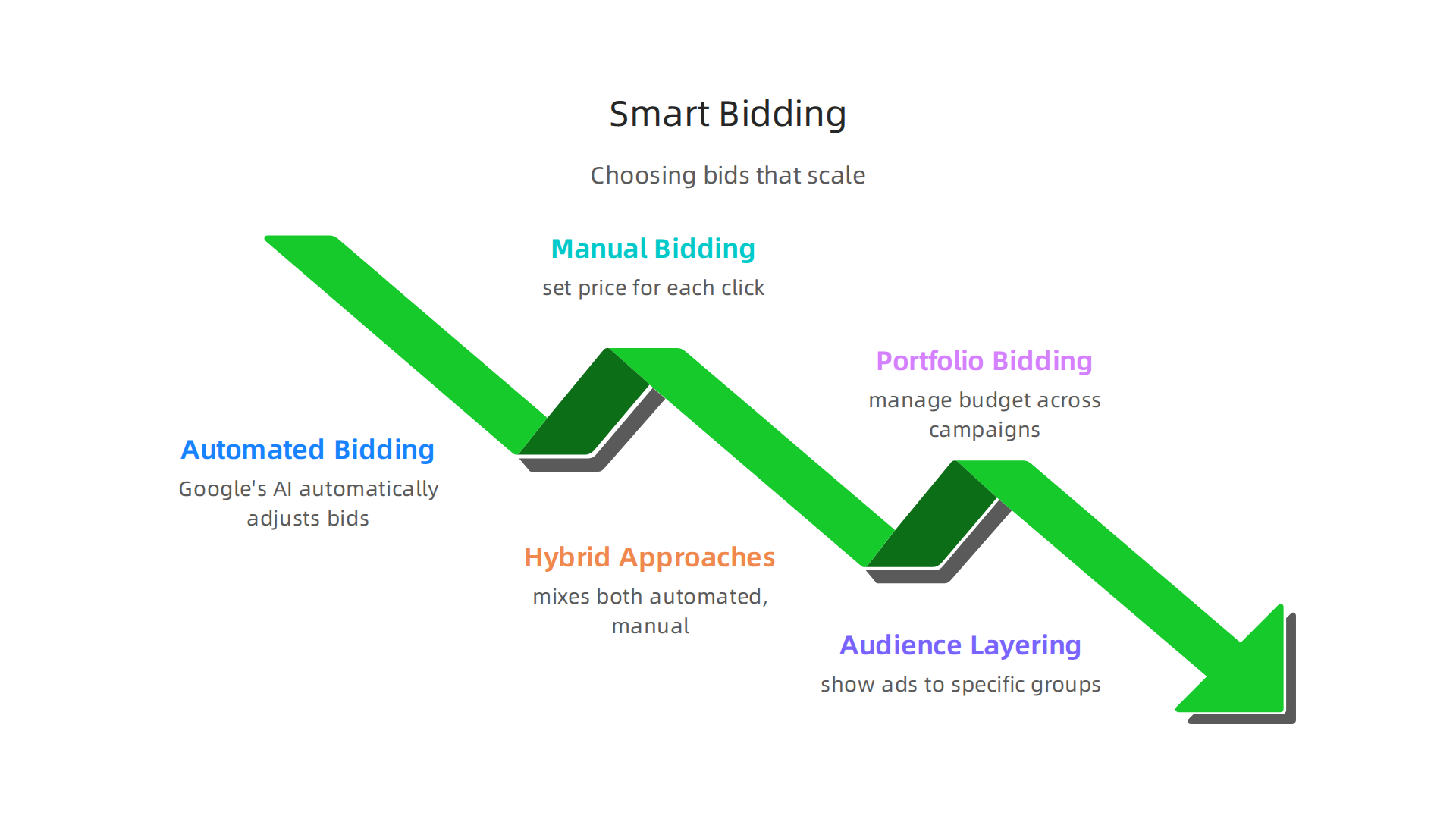
- Automated Bidding: Most Google Ads experts in 2026 prefer automated bidding. This means you tell Google what your main goal is (like getting more sales or more website visits), and Google’s AI automatically adjusts your bids. It uses tons of data to find the best time, place, and price to show your ads. It’s like having a super-smart assistant bidding for you 24/7. It’s recommended to use automated bidding with clear goals set, because it helps Google understand exactly what you want it to achieve Google Search Ads in 2026 require a different kind of audit.
- Manual Bidding: Sometimes, for very new campaigns or niche products where there isn’t much data, a google ads expert might use manual bidding. This means you set the price for each click yourself. It gives you full control, but it also takes more time and attention.
- Hybrid Approaches: A hybrid approach mixes both. You might use automated bidding for most of your campaigns but manually adjust bids for very important keywords or specific audiences.
- Portfolio Bidding: For businesses with many campaigns, "portfolio bidding" lets you manage your budget and goals across several campaigns at once. This is great for larger companies using systems like mediaocean media buying or galeforce media buying, as it helps keep their overall ad spend aligned with their main goals.
- Audience Layering: This is about showing your ads to specific groups of people who are more likely to be interested. For example, if you sell running shoes, you might show ads to people who have visited sports websites or looked at running gear before. This creates more personalized ads and helps your budget go further.
Knowing how to set up your account and choose the right bidding strategy is key to getting great results from your Google Ads campaigns.

It’s how you make sure your money is spent wisely and your ads reach the right people at the right time.
Staying on top of these advanced strategies and how AI impacts them is crucial for any media professional in 2026.
Get clear daily AI updates and understand how technology is shaping the media industry with The AI Newsletter Worth Reading.
After setting up your ad account and choosing smart ways to bid, the next big step is making sure your ads actually catch people’s eyes. This is where creative testing and strong ad copy come in. You want your ads to make people click (better CTR) and then do what you want them to do on your website, like buy something or fill out a form (better CVR).
Creative Testing Framework
Think of creative testing like trying out different flavors of ice cream to see which one sells best. You need a clear plan to know what works. Here’s how a smart google ads expert designs a test:
- Form a Hypothesis: This is your best guess. For example, "A headline that asks a question will get more clicks than a headline that just states a fact."
- Pick Key Numbers (KPIs): These are the things you will measure to see if your guess was right. The most common ones are Click-Through Rate (CTR) and Conversion Rate (CVR). CTR tells you how many people click your ad after seeing it. CVR tells you how many of those clicks turn into a valuable action.
- Think About Jobs-to-be-Done (JKD): This means understanding why your customer needs your product or service. Does your ad speak to their real problem or desire? Does it show how your product helps them get their "job" done?
- Consider the Numbers (Statistical Considerations): You need enough people to see your different ads so the test results are real. Google Ads has tools called "Experiments" that help you run fair tests and compare your different ad ideas. These tools let you test with confidence to see which creative choices boost performance Test with confidence using Google Ads Campaign Experiments.
Practical Ideas for Better Ads
Now that you have a testing plan, let’s look at how to make your ads more effective.
- Craft Strong Headlines and Descriptions: These are the first things people read. Your headlines should grab attention and tell people what you offer. Descriptions give more details and explain the benefits. Use clear, simple language.
- Mix and Match Assets: Google Ads allows you to use different things in your ads, like images, videos, and different lines of text. Testing different combinations of these "assets" helps you find what works best. For example, some businesses saw a big boost in conversions when they used custom video ads on platforms like YouTube Video experiments boost creative performance on YouTube.
- Micro-Personalization: This means making your ads feel like they are just for one person. Google’s AI can help show slightly different ads to different people based on what it knows about them, like what they searched for before or what websites they visited. This creates more
personalized adsand can lead to more clicks and sales. AI-powered tools like AI Max are being upgraded to offer even more creative customization for search campaigns in 2026, helping businesses get more conversions from their ads We’re upgrading Dynamic Search Ads to AI Max. - Embrace AI for Creative: In 2026, AI plays a huge role in creating and optimizing ads. Google’s AI can help generate different ad variations, suggest improvements, and even predict which ads will perform best. This means a
google ads expertoften works with AI to make ads better, not against it.
By regularly testing new ideas and using the insights you gain, you can continuously improve your ads to get higher CTR and CVR. This is a key part of any successful digital campaign strategy. For more strategies on creating effective campaigns, explore winning creative ads digital campaign strategies 2026. Learning how to make great ad creative is always a smart move. You can also dive deeper into ad creative build high impact campaigns in 2026.
While making your ads better is very important, in 2026, we also have to think carefully about who sees our ads and how we measure if they truly work. This is even more true with new rules about privacy and the internet changing how it tracks people. The old way of using "third-party cookies" to follow users around the web is going away. This means a google ads expert must find new ways to reach the right people and know if their ads are actually helping the business.
Audience Targeting, Privacy, and Measurement Post-Cookie
The shift to a cookieless world means advertisers need to rethink how they connect with customers. It is not about stopping personalized ads, but about doing it in a way that respects privacy. This means using a mix of your own customer information and smart tools from advertising platforms.
Using Your Own Customer Data (First-Party Data)
Your "first-party data" is all the information you collect directly from your customers or website visitors. This could be their email addresses, what they bought, or pages they visited on your site. This data is super valuable because you own it and it is privacy-friendly when used correctly. A smart plan for 2026 often starts with making sure you collect this data well. This includes using tools like a Consent Management Platform (CMP) and Google Consent Mode v2 to respect user choices about their data Privacy-First Marketing Guide: Cookieless Advertising in 2026 …. By doing this, you can still get valuable information, even if less tracking is allowed. Actually, many businesses have seen a big number of "lost conversions" because they are not set up for cookieless tracking yet Cookieless Tracking Statistics 2026: Lost Conversions.
Secure Spaces for Data (Data Clean Rooms)
Even with your own data, you might want to team up with other businesses or ad platforms to get bigger insights without sharing private details. This is where "data clean rooms" come in. Think of a data clean room as a secure online space where different companies can put their data together. No one sees the raw, personal information of the other company. Instead, the clean room helps them find bigger trends and create audiences without breaking privacy rules. This allows for better targeting and measurement. Many experts see these clean rooms as key for advertisers in 2026 to measure campaigns and target audiences Data Clean Room: What It Is & Why It Matters In A Cookieless World. Google’s own Ads Data Hub is a kind of clean room that helps advertisers look at their Google ad data in a private way Google Ads Data Hub: Privacy-First Insights & Analytics 2026.
New Ways to Measure Ad Success
In the cookieless world, knowing exactly which ad led to a sale is harder. So, we use new ways to figure it out:
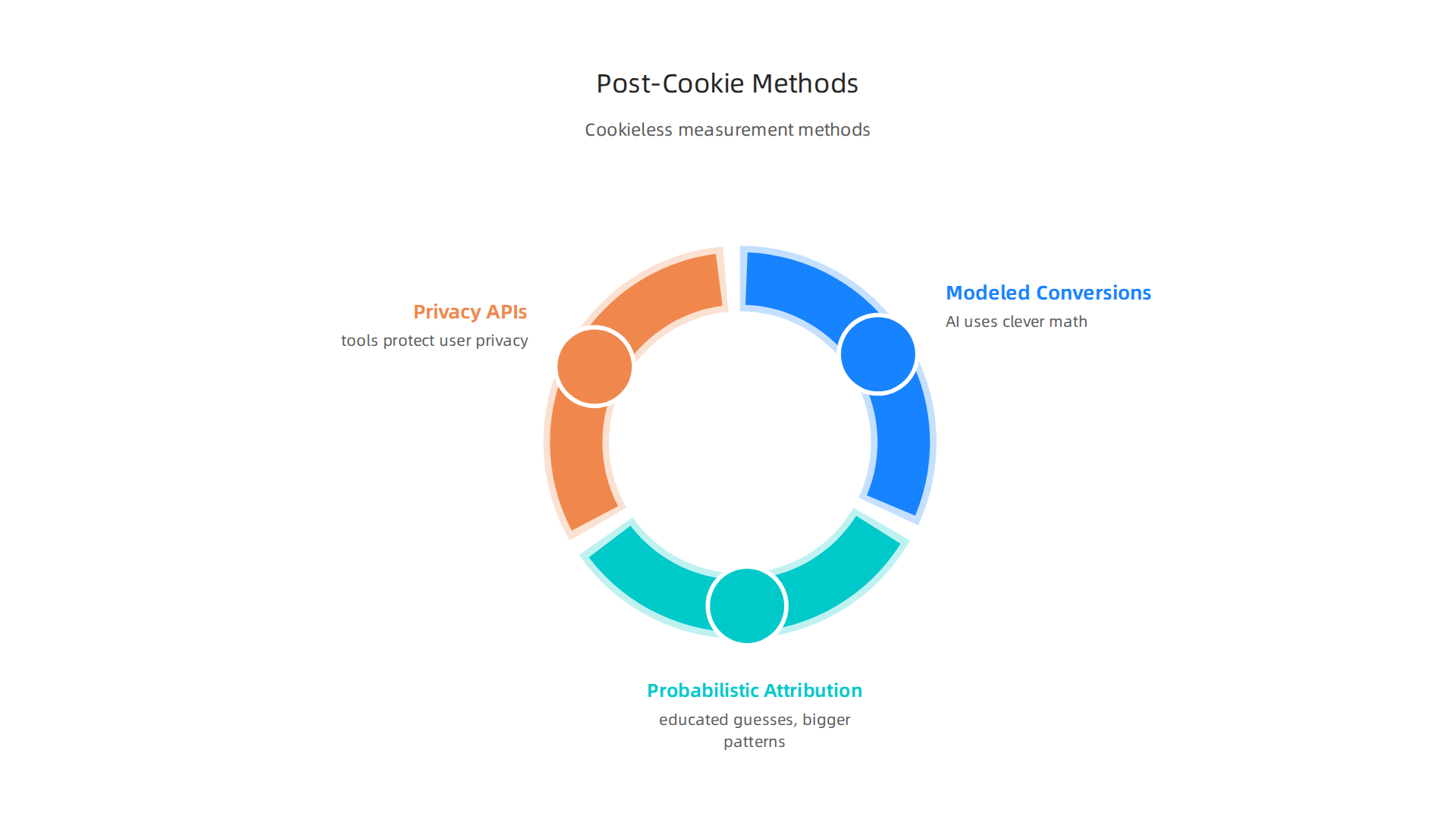
- Modeled Conversions: When some data is missing because of privacy settings, Google’s AI uses clever math to fill in the blanks. It "models" what conversions likely happened, giving you a more complete picture of your ad’s performance. This helps fill the gaps left by less direct tracking.
- Probabilistic Attribution: This is like making educated guesses based on different clues. Instead of knowing exactly what every person did, you look at bigger patterns to understand which ads probably led to certain actions. It is about understanding the journey a customer takes in a new way Marketing Attribution in 2026: What Still Works – Digital Applied.
- Privacy-Preserving APIs: These are like special tools that let ad platforms and websites talk to each other in a way that protects user privacy. They send only the necessary, non-identifying information to help measure ads.
A google ads expert today needs to use a "layered measurement stack." This means combining many types of measurement tools. It includes things like analytics that understand consent (like GA4 with Consent Mode v2), running experiments, and using broader marketing mix models Cookieless Marketing 2026: Privacy‑First Measurement. These changes mean that working with mediaocean media buying or getting meta ads support also involves understanding how their systems adapt to these new privacy-first measurement methods.
Keeping up with all these changes can feel like a lot. For more ways to analyze your campaigns and boost your return on investment, check out our guide on analytic marketing drive smarter campaigns and boost roi in 2026.
Staying on top of these complex changes in the media and advertising world, especially with AI’s fast growth, is key to success.
Get clear daily AI updates from The AI Newsletter Worth Reading.
Building on the idea of AI’s fast growth, using artificial intelligence (AI) in how we bid for ads and create them is a huge part of being successful in 2026. This is especially true for platforms like Google Ads. AI now handles a big share of all ad spending, mainly through smart bidding in campaigns like Performance Max. Some reports show that Performance Max now manages over 80% of total ad spend for many big companies AI Google Ads Bidding: PMax Automation Strategy 2026. This means a google ads expert needs to know how to work with AI, not against it.
Adopting AI Features Safely
It is exciting to use AI, but we need to do it wisely. Just letting AI run everything without checking can be risky.
Think of it like teaching a new driver: you give them the wheel, but you also have special rules and keep an eye on them. For AI in ads, this means:
- Setting Clear Rules (Guardrails): You need to tell the AI what your goals are very clearly. What is your budget? What kind of results do you want? What should it absolutely not do? Google is even adding new ways to "steer" AI Max campaigns with your own words, using tools like AI Brief Steer performance with new AI Max features.
- Watching Closely (Monitoring): Even with rules, you must check how the AI is doing every day or week. Is it spending too much? Is it reaching the right people? Are the ads looking good? A good
google ads expertalways keeps an eye on performance. - Testing First (Experiment-First Rollouts): Do not put all your money into a new AI feature right away. Try it out on a small part of your campaigns first. This helps you see what works and what does not before making big changes. This is a smart way to learn and grow.
Testing Automated Ads and Campaigns
AI helps create many parts of an ad, like the words you see and the pictures. It also helps with bidding, which is how much you pay for each click or view.
- Responsive Search Ads (RSAs): These ads let Google mix and match different headlines and descriptions to find the best combinations. An expert focused on Ad Creative Build High Impact Campaigns in 2026 understands testing which messages work best. You give Google many options, and its AI tests them to show the most effective ads.
- Performance Max and AI Max: Google’s Performance Max is a big AI-driven campaign type that shows ads across all of Google’s channels. More and more, it is seen as the main way to run ads for large businesses AI Google Ads Bidding: PMax Automation Strategy 2026. Google is also upgrading Dynamic Search Ads to "AI Max," which can lead to more conversions when using all its features We’re upgrading Dynamic Search Ads to AI Max. Testing different versions of these automated campaigns is vital.
- A/B Testing for Automation: This means running two versions of something (A and B) at the same time to see which one performs better. For example, you might run one Performance Max campaign with slightly different settings than another, or test different sets of creative assets that the AI uses. This way, you can slowly improve how your automated campaigns work. Experts believe that more control over automation will be a key trend in 2026, making AI-driven ads even better Key Google Ads Trends & Predictions for 2026.
It is true that AI can help you save time and get more conversions. Some AI Max campaigns have seen a boost in conversions at a similar cost compared to manual work Google Ads AI Max vs Manual Optimization. But a human google ads expert is still needed to set the strategy, review the results, and make smart decisions. This applies to other ad platforms too, like when managing mediaocean media buying strategies or getting meta ads support. It is all about finding the right balance between smart AI tools and expert human thinking to get the best results. To truly build trust with your audience in this AI era, your advertising should also be ethical and transparent. You can learn more about this in our guide on how to Build a Strong Advertising Ethos for Trust in the AI Era.
Now that we know how AI helps with ads, it is super important to measure if these ads are actually working. This is called measurement and attribution. It helps us understand which ads bring in the most customers and then how to spend more money wisely across different places. In 2026, measuring ads is trickier because of privacy changes, like less use of third-party cookies. This means we cannot just track everyone’s journey on the internet like before.
How We Measure Ad Success Today
To really know if an ad worked, we need to look at a few things together:
- Incrementality Testing: This is like a special experiment. You show an ad to one group of people but not to another similar group. If the group that saw the ad buys more, you know the ad made a real difference. This helps show the true extra value your ads bring in. Experts say that independent incrementality testing is the most trusted way to measure ads in 2026, even more than just looking at what the ad platform tells you Marketing Attribution in 2026: What Still Works.
- Probabilistic Attribution: Since old ways of tracking like third-party cookies are fading, we use smarter guesses. This is called probabilistic attribution. Google, for example, uses something called Data-Driven Attribution (DDA). This model looks at all the steps a person takes before buying something and gives credit to the ads that helped along the way, not just the last one. Data-driven attribution is now the usual way Google Ads gives credit for conversions About data-driven attribution. Other old models are no longer supported by Google About attribution models.
- Pooled Modeling (Media Mix Modeling): This is for a bigger picture. It helps companies see how all their marketing efforts, like TV ads, social media, and digital ads, work together. It uses math to figure out how each part adds to overall sales or growth. This helps a
google ads expertdecide where to put bigger budgets, even across different platforms like those handled bygaleforce media buyingor other agencies. The world of cookieless tracking means measurement is now multi-source, combining methods like these to get a full view Cookieless Identity in 2026: The Stack After Third-Party Cookies. - Data Clean Rooms: These are secure places where different companies can safely share information about ads without showing personal details. It helps them understand how their ads are doing while keeping customer data private. For example, Google offers Ads Data Hub, which is a clean room built on Google Cloud, letting advertisers safely look at data from Google Ads and YouTube Google Ads Data Hub: Privacy-First Insights & Analytics 2026. These are key for advertisers navigating the cookieless world Data Clean Rooms in 2026: A Marketer’s Decision Guide.
Scaling Up Your Ad Budgets
Once you know which ads are working best, the next step is to spend more money on them to get even more results. This is how you scale up your winners.
- Budget Ramp Patterns: You do not just double your budget overnight. Instead, you slowly increase it over time. This helps the AI learn and find new people without wasting money. A
google ads expertwill watch this closely to make sure the ads keep performing well as the budget grows. - Audience Expansion: If an ad works well with one group of people, you can try to show it to similar groups. This is about finding more people who might be interested in what you offer. This can involve creating more
personalized adsfor new segments of your audience. - Channel Mix Shifts: You might find that one ad platform (like Google Ads) is doing much better than another (like Facebook or Instagram). So, you might move some of your ad money from the less effective platform to the one that is giving you better results. This requires a smart
mediaocean media buyingstrategy or a keen eye on yourmeta ads supportperformance to make sure you are getting the most bang for your buck across all your advertising channels. Learning how to build your winning advertising channels is crucial.
A great google ads expert knows how to use these advanced measurement tools to make smart decisions about where and how to spend advertising money. This helps businesses grow by focusing on what truly works.
To stay on top of the latest changes in AI and how it affects the media and advertising world, you can get daily updates and deeper insights.
The AI Newsletter Worth Reading
Summary
This article explains why organisations need a Google Ads expert in 2026 and what that expert actually does to improve performance. It covers the full account audit process — from aligning KPIs and conversion taxonomy to fixing tracking gaps and cutting wasted spend — then moves into account structure, bidding strategies, creative testing and measurement in a cookieless world. You’ll learn why simpler, data-rich account structures and automated bidding usually outperform ultra-granular setups, how to run meaningful creative experiments, and which measurement methods (first‑party data, modeled conversions, clean rooms and incrementality tests) matter now. The piece also explains how to adopt AI features responsibly with guardrails, monitoring and experiment-first rollouts, and how to scale winning campaigns without degrading performance. After reading, you’ll be able to check your account for common problems, choose better bidding and testing approaches, and plan a measurement stack that works under privacy constraints.