
Choose the Best AI Marketing Agency for Your Business
Why specialized AI marketing agencies matter now
In 2026, the world of marketing and advertising is moving faster than ever. New tools powered by Artificial Intelligence (AI) are changing how businesses connect with their customers. Because of these big changes, leaders in media and advertising must make smart choices about their marketing partners.

It’s not just about doing marketing anymore; it’s about doing AI marketing the right way.
Choosing an AI partner means looking closely at how they plan to help your business. You need to make sure their strategy fits your goals. You also need to check that they follow all the rules and that you will get a good return on your money (ROI). This is a big decision for any business, whether it’s an ecommerce digital marketing agency looking to boost online sales or a hotel marketing agency aiming to attract more guests. Even B2B marketing agency and PR agencies are using AI to reach their audiences better.
Actually, current data shows just how much AI is changing things. Key AI marketing trends for 2026 include big shifts like Google’s AI Overviews changing how people search for information and the rise of smart AI agents that can run entire marketing campaigns from start to finish

7 AI Marketing Trends for 2026: Strategy & Data Insights. This means that a specialized AI marketing agency isn’t just a nice-to-have; it’s often a must-have for staying competitive. Many marketing companies are now focusing on specific areas, becoming specialists instead of generalists.
This guide will help you understand the different types of AI marketing agencies out there. We will look at what to consider when you pick one, and how to test and grow your marketing solutions with AI. The goal is to make sure your business can use AI to its fullest potential, leading to real growth and success.
To keep up with all the fast changes in AI and media, you need reliable information.
The AI Newsletter Worth Reading can give you clear daily AI updates.
After understanding why specialized AI marketing agencies are important, it’s time to look at the different kinds available. Knowing these types will help you find the best fit for your business goals in 2026.
Landscape: types of AI marketing agencies and niche specialists
The world of AI marketing is rich with different kinds of partners. You can find everything from big agencies that do it all to smaller ones that focus on just one thing. Let’s break down these types:
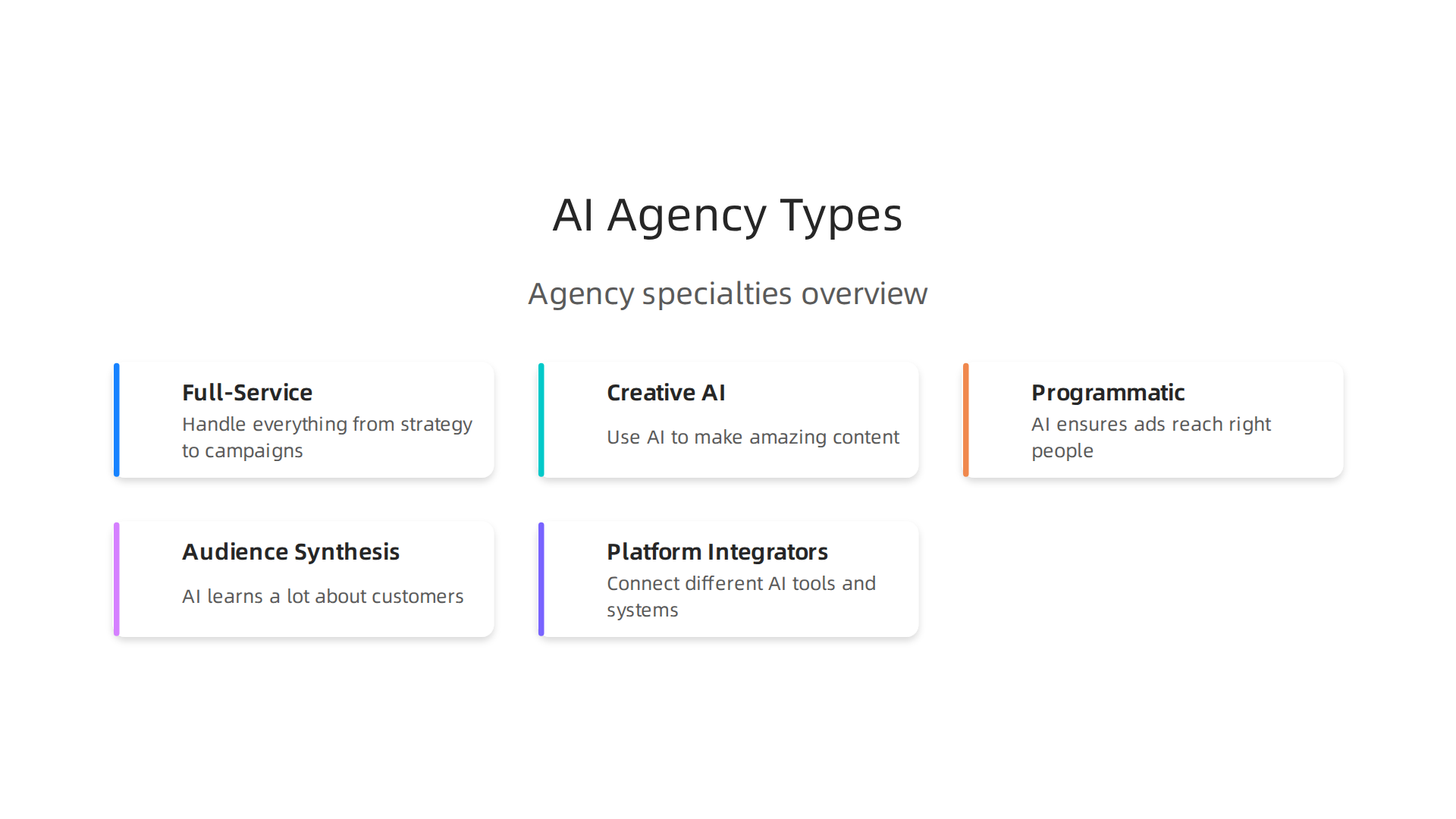
- Full-Service AI Marketing Agencies: These agencies are like a one-stop shop. They handle everything from planning your marketing strategy to running campaigns and checking results, all with the help of AI. They can manage tasks for an ecommerce digital marketing agency, a hotel marketing agency, or even large b2b marketing agency needs. They are great if you want one partner to oversee all your AI marketing efforts.
- Niche Vendors: These are specialist companies that focus on a particular area of AI marketing.
- Creative AI Agencies: These agencies use AI to make amazing content, like images, videos, or ad messages. If you need fresh and eye-catching ads, these are your go-to.
- Programmatic Optimization: This type of specialist uses AI to make sure your ads reach the right people at the right time and place. They focus on making your ad spending super efficient.
- Audience Synthesis: These agencies use AI to learn a lot about your customers. They can help you understand who your audience is, what they like, and how best to talk to them. This is very useful for pr agencies looking to connect better with their target groups.
- Platform Integrators: These partners help businesses connect different AI tools and systems together so they all work smoothly. Think of them as the glue that holds your AI tech together.
When should you pick a specialist over a full-service AI marketing agency? It depends on what you need. If you know exactly what kind of help you need, like only wanting AI-powered social media content, a niche specialist can be faster and sometimes more affordable for that specific task. They often bring deep expertise to their chosen area. Actually, many digital agencies are becoming specialists in 2026, with about 84% now focusing on specific areas instead of trying to do everything
Marketing agency statistics for 2026.
However, if your business has many different marketing needs, a full-service partner might be better. They can offer a wider view and handle more complex tasks, especially if you’re comfortable trying new AI methods. The right choice depends on how much risk you’re willing to take, how fast you need to get things done, and what skills your own team already has. For more details on finding the right fit, you can check out this Expert Guide to Digital Marketing Advertising Agency Specializations and Hiring.
Choosing the right partner is a big step, and once you know the different kinds of ai marketing agency options out there, the next part is making sure they are a good fit. This means checking their work carefully.

In 2026, it’s super important to look at their skills, how they handle your information, and if they follow good rules.
Due diligence checklist: evaluating capabilities, data, and ethics
When you are ready to pick an ai marketing agency, it’s smart to have a checklist. This helps you ask the right questions and make sure you are getting a reliable partner. Here’s what to look for:
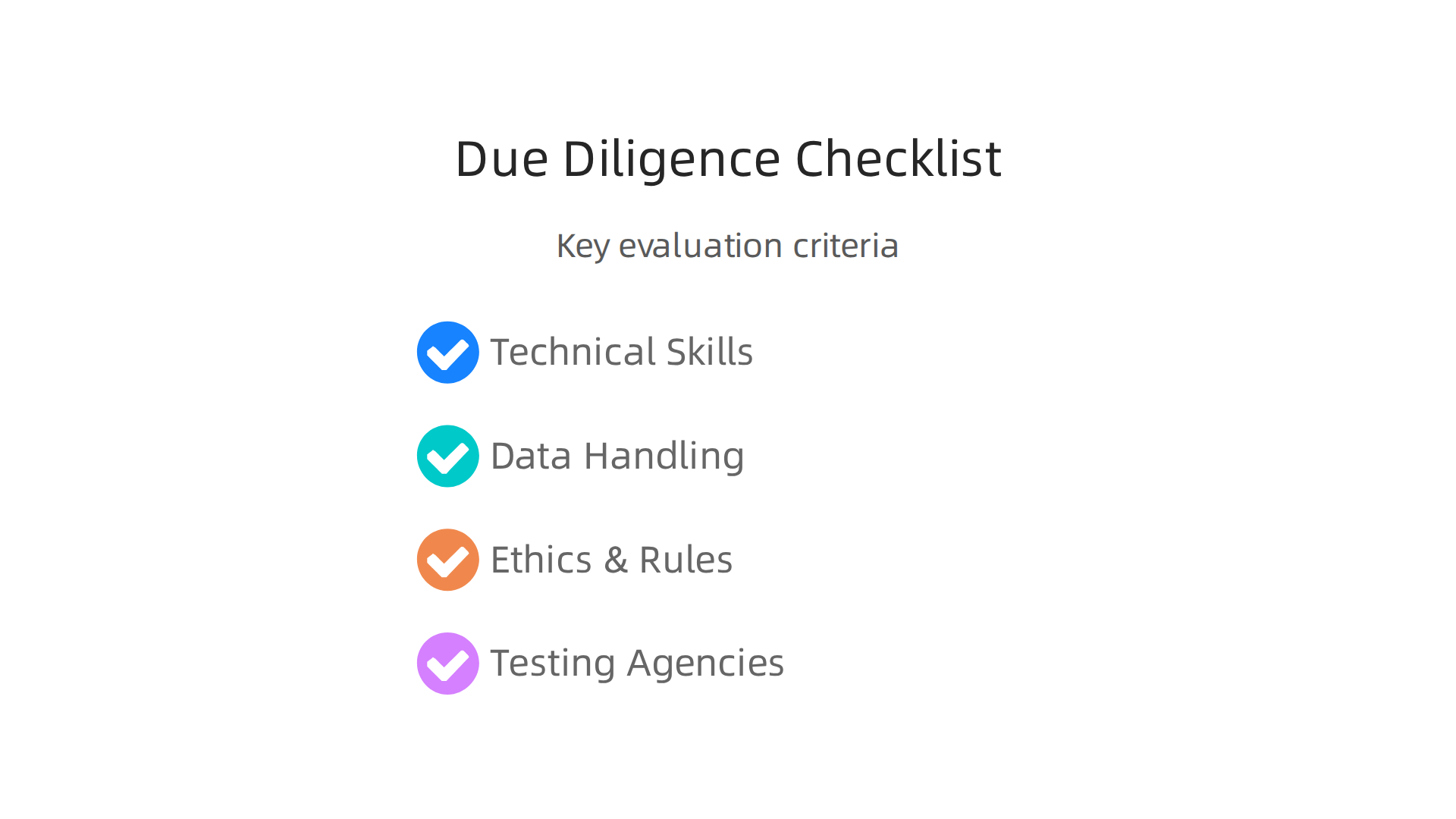
1. Their Technical Skills and What They Can Do
An agency might talk a lot about AI, but do they really know their stuff? You need to check their actual skills.
- Proof of work: Ask to see examples of how their AI has helped other businesses like yours.
- Clear methods: They should be able to explain how their AI tools work in simple terms, not just fancy words.
- Testing their AI: Good agencies will test their AI models often to make sure they are working correctly and giving good results. This helps reduce errors and ensures the AI is effective. When you are scouting for a new partner, remember to check how they prove their AI solutions work. A good resource for this is a guide on AI vendor due diligence checklist for 2026.
2. How They Handle Your Data
Your company’s information is important. You need to know how the ai marketing agency will protect it.
- Data privacy: Ask about their rules for keeping your data private. Do they have a clear agreement about how they process your data?
- Data security: Where is your data stored? Is it safe? Make sure their data storage follows all the right rules. They should also tell you how long they keep data and how they get rid of it.
- Not using your data to train others: Make sure they do not use your private company data to teach their AI models for other clients. This is a key point to protect your business’s unique insights. You should review their data governance and privacy steps.
3. Ethics and Following the Rules
AI is powerful, and it needs to be used wisely and fairly.
- Fairness in AI: Does their AI avoid unfair biases? For example, if you are an
ecommerce digital marketing agency, you would not want AI that shows your ads only to certain groups of people unfairly. - Legal compliance: They must follow all the laws about data and AI, like GDPR for data protection. Also, check for security badges like SOC 2 Type II or ISO 27001 certifications. These show they have strong security practices in place, which is important for any enterprise AI in digital marketing.
4. Testing Them Out with RFPs and Pilot Programs
To truly see an agency’s skills, you can set up a test project.
- Request for Proposal (RFP): When you ask agencies to send you their ideas and prices, be very clear about what you need. This helps you compare them fairly.
- Pilot projects: A small, short project (like 30 to 90 days) can be a great way to test an
ai marketing agency. Set clear goals for what you want to achieve, like boosting sales or getting more visitors to your website. Make sure you track specific numbers, called KPIs, to see if the pilot is a success. This helps you decide if you want to work with them for a longer time. Learning how to design an AI marketing pilot can help you decide if an agency is the right partner.
Taking the time to check these things will help you find a reliable and effective ai marketing agency that truly helps your business grow in 2026.
Staying informed about the fast changes in AI is key to making good decisions for your business. For more daily insights into the latest AI and tech trends that affect the media world, you might want to consider checking out The AI Newsletter Worth Reading. It gives clear updates that can help you stay ahead. You can also explore how to use analytic marketing drive smarter campaigns and boost roi in 2026 for better results.
After checking an ai marketing agency‘s skills and honesty, the next big talk is about money and what is written in the contract. Knowing how agencies charge for their AI services and what should be in your agreement is super important in 2026. This helps make sure you get good value and stay protected.
Common Pricing Models for AI Marketing Agencies
AI marketing agencies use a few main ways to charge for their work.
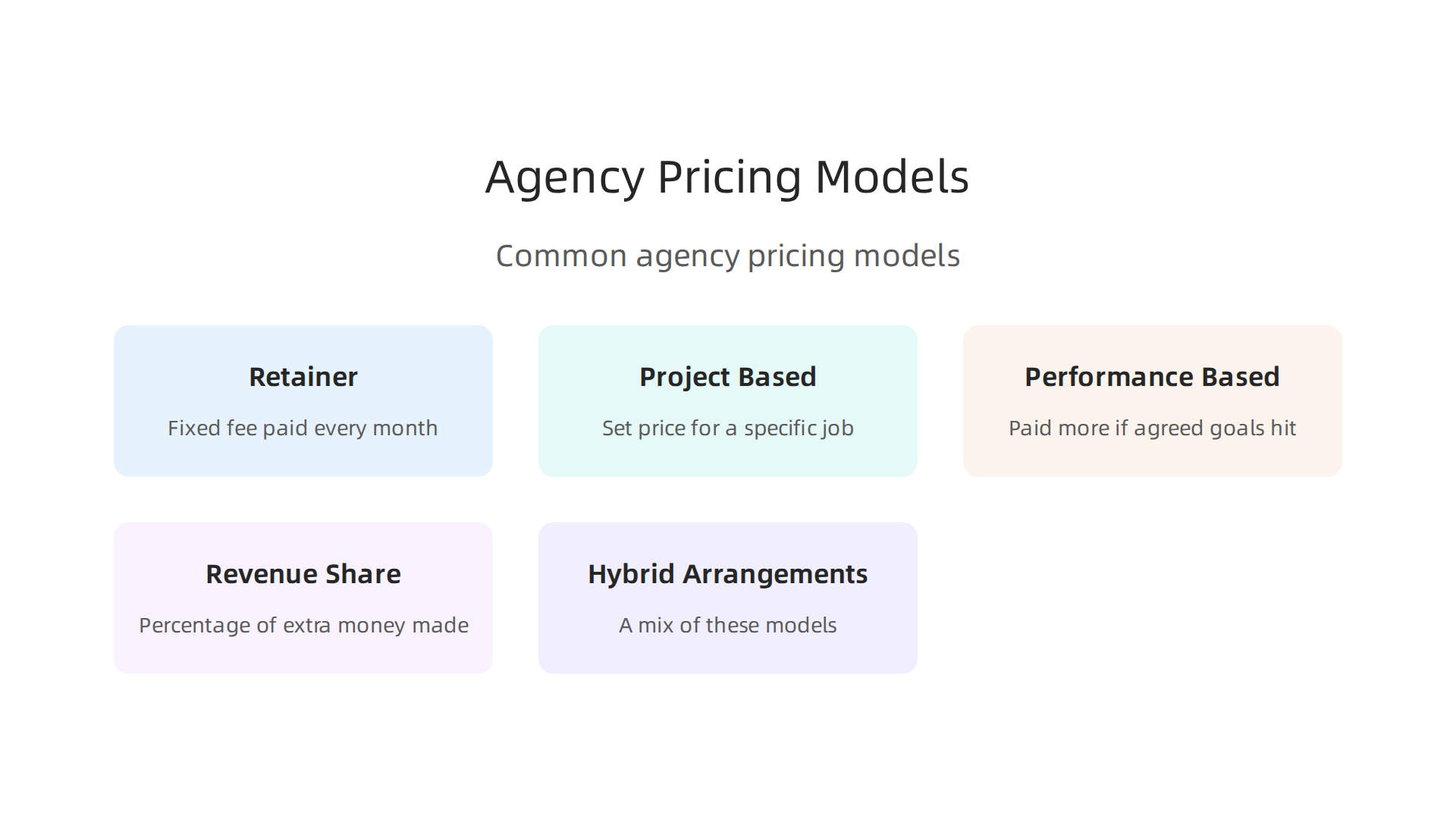
Understanding these can help you pick the best fit for your business, whether you are an ecommerce digital marketing agency or a hotel marketing agency.
-
Retainer and Project-Based Fees:
- Retainer: This is a fixed fee paid every month. It is great for ongoing tasks and continuous support. For example, a
b2b marketing agencymight use a retainer for regular content creation and AI-driven lead generation. - Project-Based: This is a set price for a specific job with a clear start and end. It is good when you have a one-time need, like setting up a new AI advertising campaign.
- Retainer: This is a fixed fee paid every month. It is great for ongoing tasks and continuous support. For example, a
-
Performance-Based Fees:
In 2026, this model is becoming very popular, especially with AI. The agency gets paid more if they hit certain goals you agree upon, like boosting your sales, getting more website visitors, or improving your ad returns. This means their success is tied directly to yours, as noted in an AI Agency Pricing Guide 2026.
-
Revenue Share:
With this model, theai marketing agencytakes a percentage of the extra money your business makes because of their efforts. This is a higher-risk, higher-reward option for both sides. -
Hybrid Arrangements:
Many agencies offer a mix of these. For example, a smaller monthly retainer might be combined with a performance bonus if they reach specific targets. Experts believe that the best way forward for AI services will often be a blend of software and service fees, as discussed in The 2026 Guide to SaaS, AI, and Agentic Pricing Models.
Key Contract Elements to Negotiate
Beyond how you pay, the contract itself holds important details. Do not rush through this part.
- Intellectual Property (IP) and Data Ownership: Who owns the AI models developed for you? Who owns the data used, and any new insights gained from it? Make sure it is clear that your company owns its data and the results of the AI work. A good Enterprise AI Procurement Checklist can guide these questions.
- Service Level Agreements (SLAs): These are promises about how well the AI tools will perform. For example, they might cover how accurate the AI’s predictions will be, or how quickly it will respond to changes.
- Audit Rights: Can you check the agency’s work and how they use your data? This helps you stay confident that they are following the rules and doing a good job.
- Exit Terms: What happens if you decide to stop working with the
ai marketing agency? The contract should clearly state how you get your data and any custom AI tools back, and what happens to any ongoing campaigns. Thinking about these commercial considerations for procuring AI upfront can save a lot of trouble later.
Choosing the right ai marketing agency involves not just looking at their skills, but also making sure their pricing matches your goals and their contract protects your business. To learn more about finding the perfect fit for your needs, check out our guide on how to choose an online marketing company for media professionals. Understanding these details will help you succeed with your AI marketing efforts in 2026. For those interested in seeing how these models play out in real-world results, learning about performance marketing in 2026 can offer deeper insights.
After you have chosen the right AI marketing agency and worked out all the important contract details, the next step is to actually put AI to work. This means making a plan for how you will try out new AI tools and then use them widely in your business. This part is like an instruction book for how to start small and then grow big with AI.
Implementation playbook: pilots, scaling, and change management
Using AI in your marketing often starts with a "pilot" program. Think of a pilot as a small test run. It helps you see if the AI tool works well for your specific needs before you use it everywhere.
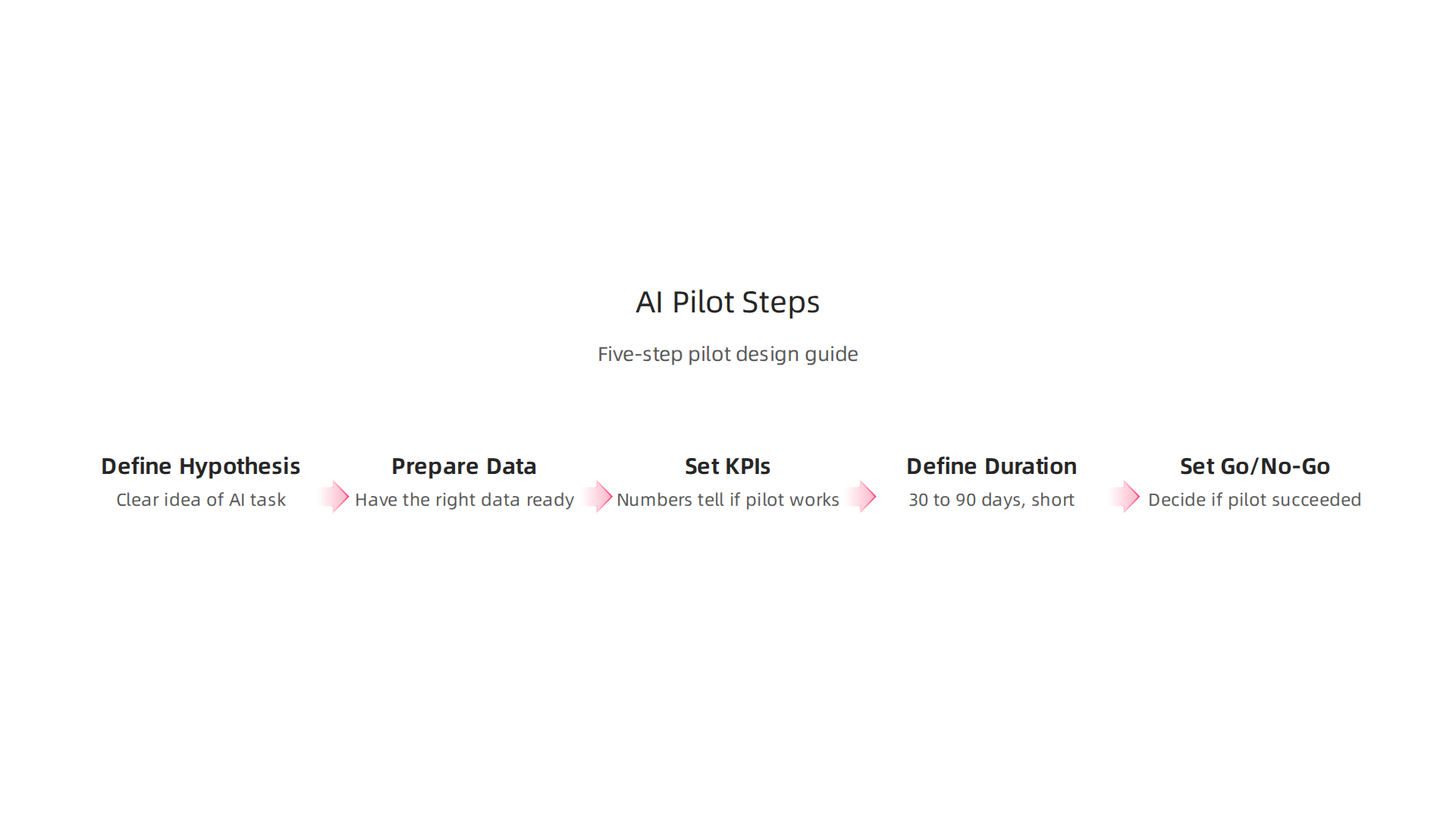
Step-by-step pilot design
A good AI pilot needs careful planning. Here’s how to set one up:
- 1. What do you want to find out?
Before you start, have a clear idea of what you want the AI to do. This is your "hypothesis." For example, an ecommerce digital marketing agency might say, "We think AI-powered ads will get us 10% more sales." - 2. What data does the AI need?
AI tools need good information to learn. Make sure you have the right data ready. For anecommerce digital marketing agency, this might mean past sales data or website visitor information. - 3. How will you measure success?
These are your Key Performance Indicators (KPIs). You need to know what numbers will tell you if the pilot is working. This could be more sales, more people visiting your website, or even saving time. Experts suggest tying at least one business goal to how the AI model performs Data Quality Kpis. You can also look at how much time is saved or the cost per result, as discussed in KPIs for Piloting Generative AI. A great way to learn how to set these up is by following a step-by-step evaluation framework. - 4. How long will the test run?
Most pilot programs are short, maybe 30 to 90 days. This gives you enough time to see results without a big, long commitment. You can even run a practical 30-day pilot to evaluate AI marketing tools, as outlined in A Practical 30‑Day Pilot Plan to Evaluate AI Marketing Tools. - 5. What makes it a "yes" or "no"?
Before you start, decide what results mean the pilot was a success (a "go") and what means it failed (a "no-go"). This helps you decide if you should keep using the AI tool or try something else. A successful AI pilot follows clear steps, from defining goals to deploying in a controlled space, as explained in AI Pilot Projects: What to Know Before You Start.
Organizational processes for scaling successful pilots
If your pilot works well, that is great news! But now you need a plan to use that AI tool across your whole business, not just in a small test. This is called "scaling."
- Clear Rules (Governance): As you use more AI, you need clear rules about who does what. This includes how data is used and how the AI tools are managed. This helps keep everything fair and safe, especially when different teams start using AI. Starting with a pilot program is a good way to test these waters before setting up AI-powered KPIs across your whole company How AI Improves KPI Design for Cross-Functional Teams.
- Better Tools (Tooling): When you scale up, you might need better ways to connect your AI tools to your existing marketing systems. In 2026, many companies use APIs (Application Programming Interfaces) to help different software talk to each other in real-time. This helps data flow smoothly between your AI and your other marketing platforms, as described in an AI for Marketing: Complete Integration Guide for 2026.
- Helping Your Team Learn (Team Skills Development): As new AI tools come into play, your team will need to learn how to use them. Offer training so everyone feels comfortable and confident.

This might mean teaching a hotel marketing agency how to use AI for customer service, or showing a b2b marketing agency how to improve lead generation with AI. For deeper insights into managing and growing with new technologies, a digital marketing strategy consultant can provide valuable guidance.
Implementing AI is a journey. By starting with smart pilots and having a clear plan for growth and change, any business, from small pr agencies to large enterprises, can use AI to succeed in 2026.
For those eager to stay ahead in the fast-paced world of AI and marketing, it’s crucial to keep learning.
The AI Newsletter Worth Reading
After learning how to use AI for marketing in small tests and then growing its use across your business, the next big step is to make sure it is actually working. This means carefully looking at the results and understanding what impact AI has had. You want to be sure your investment in an ai marketing agency or AI tools is paying off.
Measuring impact: KPIs, attribution, and reporting
To know if your AI efforts are successful, you need clear ways to measure them. These ways are often called Key Performance Indicators, or KPIs. They are like scores that tell you how well your AI is performing against your goals. An effective AI KPI plan should cover business results, what leads to those results, how well things are running, and any risks Ai Kpi Examples By Marketing….
Different types of businesses will focus on different KPIs:
- For Publishers: If you are a publisher, you might want to see more people reading your content (audience growth) or spending more time on your pages (engagement quality). You also want to check how much money your ads are making, which is called "ad yield."
- For Advertisers: If you run ads, like an
ecommerce digital marketing agency, you would look at how many people buy something or sign up for a service (conversions). Another important number is Return on Ad Spend (ROAS). This tells you how much money you get back for every dollar you spend on ads. Knowing this helps you understand the true value your AI brings to sales and leads, as explained in guidelines for measuring AI marketing ROI AI Marketing ROI Measurement Procedures for B2B. For anyb2b marketing agency, boosting conversions with AI is a major goal.
It is helpful to pick a few main KPIs that look at different parts of how your AI is doing. This includes how well the AI model works, its real business impact, how many people use it, and how smoothly it runs day-to-day Defining KPIs for an AI Pilot: 12 Metrics to Track During a.
Practical approaches to attribution and experiment design
Another important part of measuring AI’s impact is "attribution." This means figuring out which specific marketing actions caused a customer to do something, like make a purchase. With AI, this can get tricky because AI models often influence many things at once. For example, AI might choose both what an ad looks like and who sees it. This makes it harder to say exactly which part led to the success.
To understand this better, you can set up smart experiments. These experiments help you compare groups of people who see AI-driven marketing with groups who do not. This way, you can clearly see the real effect of the AI. Designing these tests helps you be sure about what is working. You can find a step-by-step guide on how to set up these evaluations, including designing comparisons, to make sure your AI marketing pilots are fair and honest How to Design an AI Marketing Pilot: A Step-by-Step Evaluation Framework. This way, whether you are a hotel marketing agency trying to improve bookings or a pr agencies using AI for outreach, you can truly measure your efforts.
After you have collected your data and run your tests, you need to report what you found. Clear reports help everyone in your company understand the value of AI. These reports should show your goals, the results you got, and what you plan to do next. This helps you keep improving your marketing with AI, ensuring your campaigns are smarter and boost ROI in 2026. For more on this, check out analytic marketing drive smarter campaigns and boost ROI in 2026.
After figuring out if your AI marketing is working well, the next step is to make sure your AI tools play nicely with your current marketing setup. This means looking at your "tech stack" and how to bring new AI parts into it. It can be a bit like making sure all the different instruments in an orchestra can play together.
Tech stack choices: integrating AI tools with existing Martech
Bringing new AI tools into your existing marketing tech, or "Martech," stack means thinking about a few important things. For any ai marketing agency, this integration is key to success.
First, you need to think about data schemas. This is like making sure all your tools speak the same language. Your customer data might look one way in your old system and another way in a new AI tool. You need to map these differences so the data can flow smoothly. The goal is to have structured data that AI agents can easily use Best B2B Data APIs for AI Agents (2026).
Next, consider real-time versus batch scoring.
- Real-time means data is updated right away. Imagine a customer clicking on an ad, and the AI instantly changes what they see next. This is great for things that need quick action, like spotting fraud or updating what is in stock What are the Data Integration Trends and Markets for 2026?.
- Batch scoring is like gathering all the data over a few hours or overnight and then processing it all at once. This is good for big tasks that do not need instant changes, such as updating customer profiles weekly. In 2026, many older systems still rely on batch updates, but newer ones use "event-driven architecture" for faster updates AI CRM Integration Guide | Authority Solutions.
Connecting AI tools often involves using APIs, which are like digital messengers that let different software programs talk to each other APIs for AI Agents: The 5 Integration Patterns (2026 Guide).
You can also use special tools called middleware to link systems without needing to write code AI for Marketing: Complete Integration Guide for 2026.
Finally, you must think about model deployment and observability. Deployment is about putting your AI model into action, making sure it works within your systems. Observability means being able to see how your AI is performing all the time, so you can fix problems quickly. This is crucial for any ecommerce digital marketing agency or b2b marketing agency relying on AI to drive sales and leads.
Choosing your AI tools
When it comes to picking AI tools, you have choices:
- Turnkey SaaS AI tools: These are ready-to-use software products that you subscribe to. They are often easy to set up and maintain, making them a good choice for smaller businesses or those without a big tech team. A
hotel marketing agency, for instance, might find these very helpful for quick improvements. - Open-source models: These are AI programs that developers can access and change for free. They offer a lot of flexibility, but they often need skilled people to set them up and keep them running.
- Custom-built systems: This means creating your own AI tools from scratch. It gives you the most control but also costs the most time and money. This is usually only for very large companies with specific needs.
Many companies find that a mix of these options works best. The right choice depends on what you need the AI to do, how much data you have, and your budget.
Staying on top of these fast changes in AI and technology can be hard.
To keep up with daily AI updates that impact the media and marketing world, you should definitely check out The AI Newsletter Worth Reading.
After thinking about the types of AI tools you can use, the next big step is to pick the right helper, or "vendor," for your specific needs. It’s not just about what a tool can do, but how well it fits your business goals. For any ai marketing agency, choosing wisely means better results and fewer headaches.
Vendor selection case studies: choosing the right niche partner
When you’re looking for an AI partner, it helps to have a clear way to compare them. This is often called an "AI vendor evaluation framework." It’s like a checklist that helps you look at different companies side by side instead of just listening to their sales pitches AI Vendor Evaluation Framework: 2026 Enterprise Selection….
First, you need to know what you want to achieve. What are your main business goals? For example, an ecommerce digital marketing agency might want to sell more products, while a hotel marketing agency might want more bookings. Once you know your goals, you can look for vendors whose strengths match them. This means checking out their past work, or "case studies," to see if they’ve helped similar businesses reach similar goals. Companies should use a clear method to check AI vendors against many important points at the same time The 2026 Procurement AI Buyer’s Decision Framework 2026. This can include looking at their AI vision, the skills of their team, and how they plan for new ideas.
How to test an AI tool before you buy
It’s smart to run a small test, also known as a "pilot" or "proof of concept," before fully committing to an AI vendor. This lets you see if the tool truly works for you beyond what their marketing materials say.
Here’s how to run a good pilot:
- Set Clear Success Rules: Before you start, decide what "success" looks like. For an
ecommerce digital marketing agency, success might be a 10% increase in website clicks. Forpr agencies, it might be getting more positive mentions in the news. Make sure these goals are measurable. Experts say to test the tool using your own real data, not just a demo, to see how it truly performs Enterprise AI Vendor Selection: The Evaluation Framework …. - Watch for Red Flags: During the pilot, keep an eye out for any problems. Does the tool crash often? Is it hard for your team to use? Does the vendor’s support team respond quickly? These are all important signs of whether the partnership will be smooth in the long run. If a vendor struggles with integration or ongoing support, it could be a bad fit for your
b2b marketing agency.
Thinking about these steps can help you pick the right AI partner, whether you’re a small business or a big ai marketing agency looking to grow. It helps to understand how to choose an online marketing company for media professionals to make these decisions.
Summary
This article explains why specialized AI marketing agencies are essential in 2026 and walks you through how to choose, test, contract with, and scale the right partner. It outlines the main types of AI agencies — from full-service firms to niche vendors focused on creative, programmatic, audience synthesis, or integrations — and gives practical guidance on when to hire each. You get a detailed due-diligence checklist covering technical skills, data handling, ethics, and pilot testing, plus common pricing models and the contract clauses you must negotiate (IP, SLAs, audit and exit terms). The guide then shows how to run short 30–90 day pilots, set business-focused KPIs, and design fair attribution experiments to measure ROI. Finally, it covers tech-stack choices, integration patterns, tool options (SaaS, open-source, custom) and a vendor-evaluation approach so you can scale successful pilots safely and get measurable growth from AI marketing.