
Top Branding Agencies 2026 How Media Companies Choose the Right Partner
Introduction: Why Branding Agencies Matter More Than Ever
The media industry is moving fast. Really fast.
New platforms emerge overnight. AI tools reshape how content gets made and marketed. Audience attention keeps shrinking. In this chaos, one thing still cuts through the noise: a strong brand.
Think about it. When you scroll past dozens of stories, what makes you stop? A name you trust. A voice you recognize. A look that feels familiar. That is the power of branding. And in 2026, it matters more than ever.
The global branding agencies market is now worth USD 59.89 billion, and it keeps growing.

Why? Because companies finally understand that branding is not just a logo or a color palette. It is the entire experience people have with your business. It tells them who you are, why you matter, and why they should care.
Here is the thing. Media leaders cannot afford to build a brand alone anymore. The tools are too complex. The competition is too fierce. The technology changes too fast. You need partners who get both creativity and tech, especially AI.
That is where the right agency comes in. Whether you are looking for a top branding agency that can handle a full rebrand, a pr agency to manage your reputation, or a creative digital marketing agency to run your campaigns, the choice matters. A good partner helps you stand out. A bad one wastes your time and budget.
This guide curates the best top branding agencies in 2026. We also give you a simple framework for choosing the right one. No fluff. No buzzwords. Just honest advice to help you pick a partner that actually delivers.
If you want to stay ahead of the rapid changes in media and tech, you might also want to check out The AI Newsletter Worth Reading.
It delivers clear daily updates on AI and technology so you never fall behind.
Let us get started.
What Defines a Top Branding Agency in 2026?
Not every firm that calls itself a top branding agency deserves the title. The gap between agencies that drive real business impact and those that just produce pretty visuals has grown wider this year.
So how do you separate the best from the rest? Let us break down the real criteria.
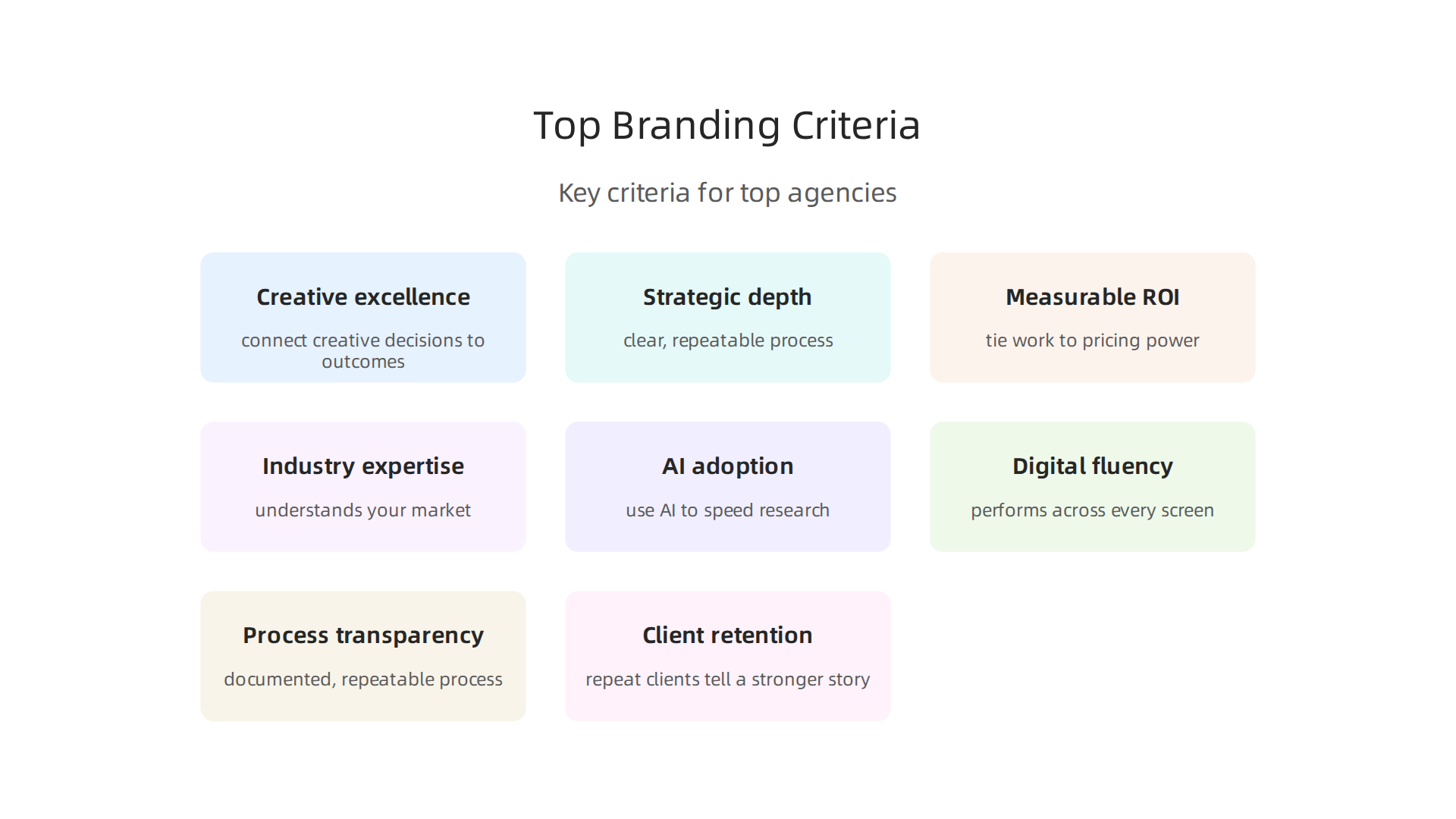
Creative excellence with strategic depth. Stunning design alone is not enough. The best agencies connect every creative decision to a business outcome. They explain why a direction works, not just what it looks like. According to the 2026 evaluation criteria for branding agencies from NoGood, strategic depth accounts for a big part of what separates great agencies from average ones.
The top firms follow a clear, repeatable process moving from research to positioning to visual identity.
Measurable ROI. In 2026, branding is not a vanity expense. It should show up in your numbers. Strong agencies tie their work to pricing power, conversion rates, and customer acquisition costs. They do not stop at delivering a logo or brand guidelines. They build brands that actually drive revenue.
Industry expertise. A generalist can produce nice work. But an agency that understands your specific market thinks faster and works smarter. For media leaders, that means finding a partner who gets content monetization, audience fragmentation, and platform shifts. Look for agencies with case studies from similar businesses. If you want to dig into how a partner can help with your specific industry challenges, read about corporate branding services that win audience trust.
AI adoption and digital fluency. This is non-negotiable in 2026. Leading agencies use AI to speed up research, test brand concepts, and optimize campaigns in real time. They also build brands that are ready for a world where AI search engines and chatbots surface your name. Digital fluency means your brand looks, feels, and performs well across every screen and platform.
Process transparency and evidence of real results. A recent analysis of the strategic methodology for branding from Ramotion emphasizes that the best agencies have a documented, repeatable process. They should be able to explain what happens at each stage before you sign a contract. Also ask how the engagement is staffed. Top agencies keep senior people involved in the actual work, not just in the pitch meeting.
Client retention as a signal. Repeat clients tell a stronger story than one-off projects. Ask for case studies that explain the strategic problem being solved, not just the visual outcome. And be honest about what you need. If your positioning is clear and you just need visual execution, an execution-focused agency might be the right fit. If you need help figuring out your positioning first, a strategy-first agency is a better starting point. A comprehensive guide on evaluating strategic versus execution emphasis from Metabrand explains how to match your needs to the right firm.
Now you know what separates the leaders. Next, we will walk through the actual top agencies in 2026 that meet these standards.
The Rise of AI-Integrated Branding Agencies
Artificial intelligence has moved from a nice-to-have to a must-have in the branding world. The top branding agencies in 2026 are not just using AI on the side. They are rebuilding their entire workflow around it.
So what does that actually look like?
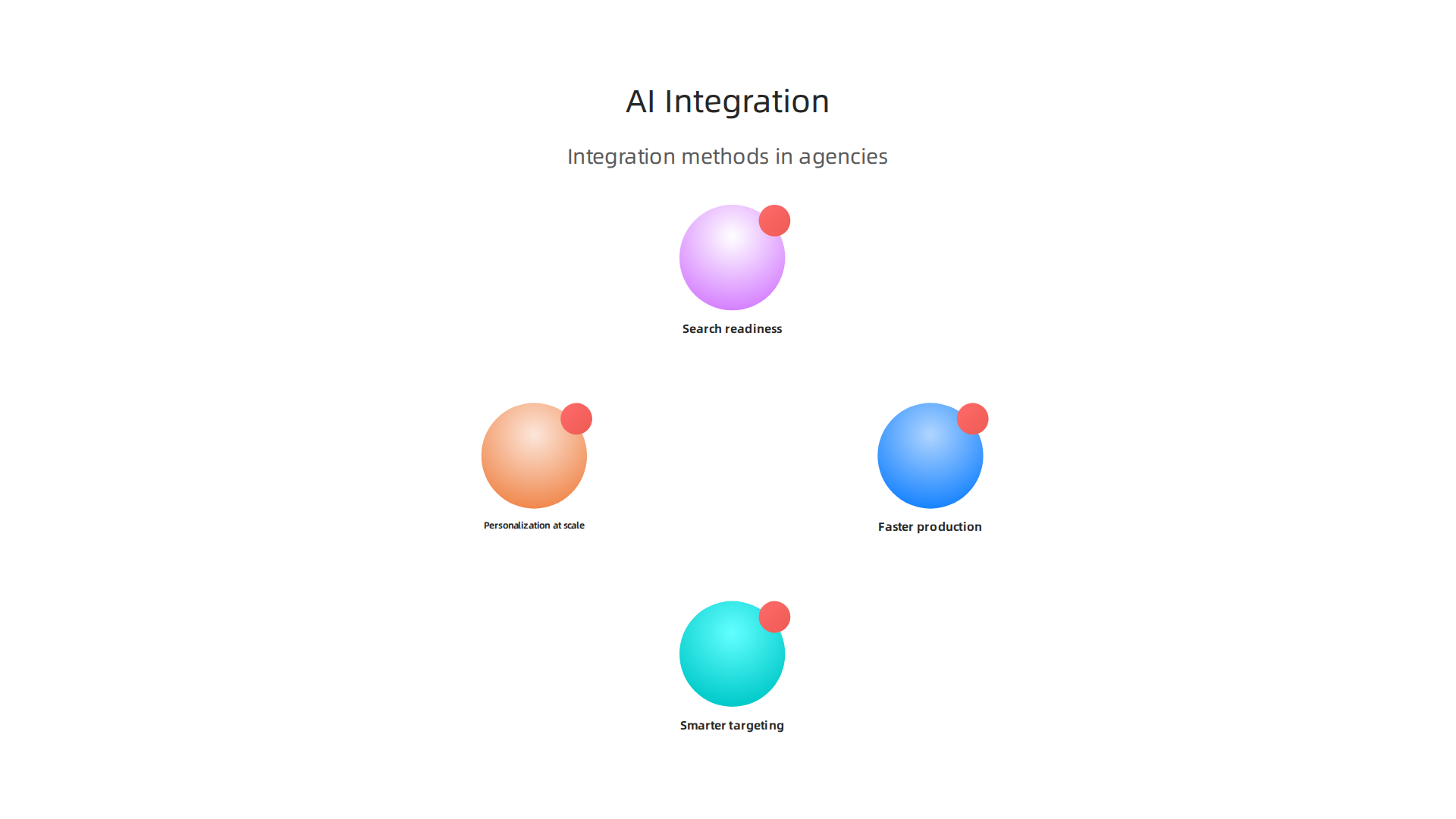
Faster creative production. AI tools now handle rough drafts, mood boards, and even video concepts. This frees up senior creatives to focus on strategy and polish. The result is more work in less time without cutting quality. According to the Top 5 AI Marketing Agencies for Growth in 2026 from NoGood, leading agencies use AI to speed up everything from research to campaign execution. That speed lets them test more ideas and find winners faster.
Smarter audience targeting. Old-school targeting relied on broad demographics and guesswork. AI-driven agencies analyze real-time behavior, search intent, and content preferences to reach the right person at the exact right moment.
They also optimize across generative AI search results, not just traditional Google rankings. This is critical for media firms competing for fragmented audiences.
Personalization at scale. A single brand message no longer works for everyone. AI lets agencies create dozens of personalized variations of a headline, image, or email without manual work. Each variation feels native to the platform and the user. The Top 16 Digital Marketing Agencies in 2026 evaluated by AI Search readiness from Onely shows that agencies with proven AI capabilities consistently outperform competitors on engagement and conversion metrics.
Why this matters for media firms. If you run a media business, your brand partner needs to understand how AI changes discovery. People now find content through chatbots, AI overviews, and voice search. A brand that looks great on a website but disappears in AI search is invisible. The best creative digital marketing agency builds brands that work across every surface where your audience lives. That includes AI platforms.
The gap is real. Agencies that invested in AI early are pulling ahead. Media leaders should prioritize partners with documented AI capabilities, not just promises. That might mean asking about their AI stack, their approach to generative engine optimization, and how they measure brand performance in AI-driven channels. To dig deeper into how AI is reshaping the marketing landscape, explore the playbook for growth marketing strategy in 2026 which covers adapting to AI and new demand.
One easy way to stay ahead is to keep learning. AI changes fast, and what worked six months ago may already be outdated. The best way to track these shifts is to get daily, clear updates straight to your inbox. That is exactly why The AI Newsletter Worth Reading exists. It delivers the latest AI breakthroughs and practical insights for media professionals who need to stay informed without the noise.
Full-Service Digital Marketing Powerhouses
Not every media company wants to juggle five different agencies. You might need one partner that handles strategy, creative, media buying, and analytics under one roof. That is where full-service digital marketing powerhouses come in.
These are the largest agencies in the game. They offer end-to-end services that cover everything from brand positioning to paid media execution to performance reporting. For media firms running complex campaigns across TV, social, search, and streaming, this single-source approach saves time and reduces friction. You do not have to worry about handoffs between a creative shop and a media buyer. One team owns the whole picture.
Full-service agencies have a major advantage in 2026. They are expanding fast through strategic acquisitions and heavy AI investments. Instead of building every capability from scratch, they buy proven technology and talent. This lets them offer cutting-edge tools for audience targeting, creative optimization, and cross-channel attribution without passing extra complexity to clients.
According to the 11 Top Full-Service Agencies for 2026 guide, the best full-service marketing firms now combine traditional disciplines with AI-driven growth tactics. They bring together brand storytelling, data science, and performance media in a way that smaller boutique shops often cannot match. For media companies, this means faster campaign launches, more consistent messaging, and better ROI across channels.
Here is what to look for in a full-service partner:
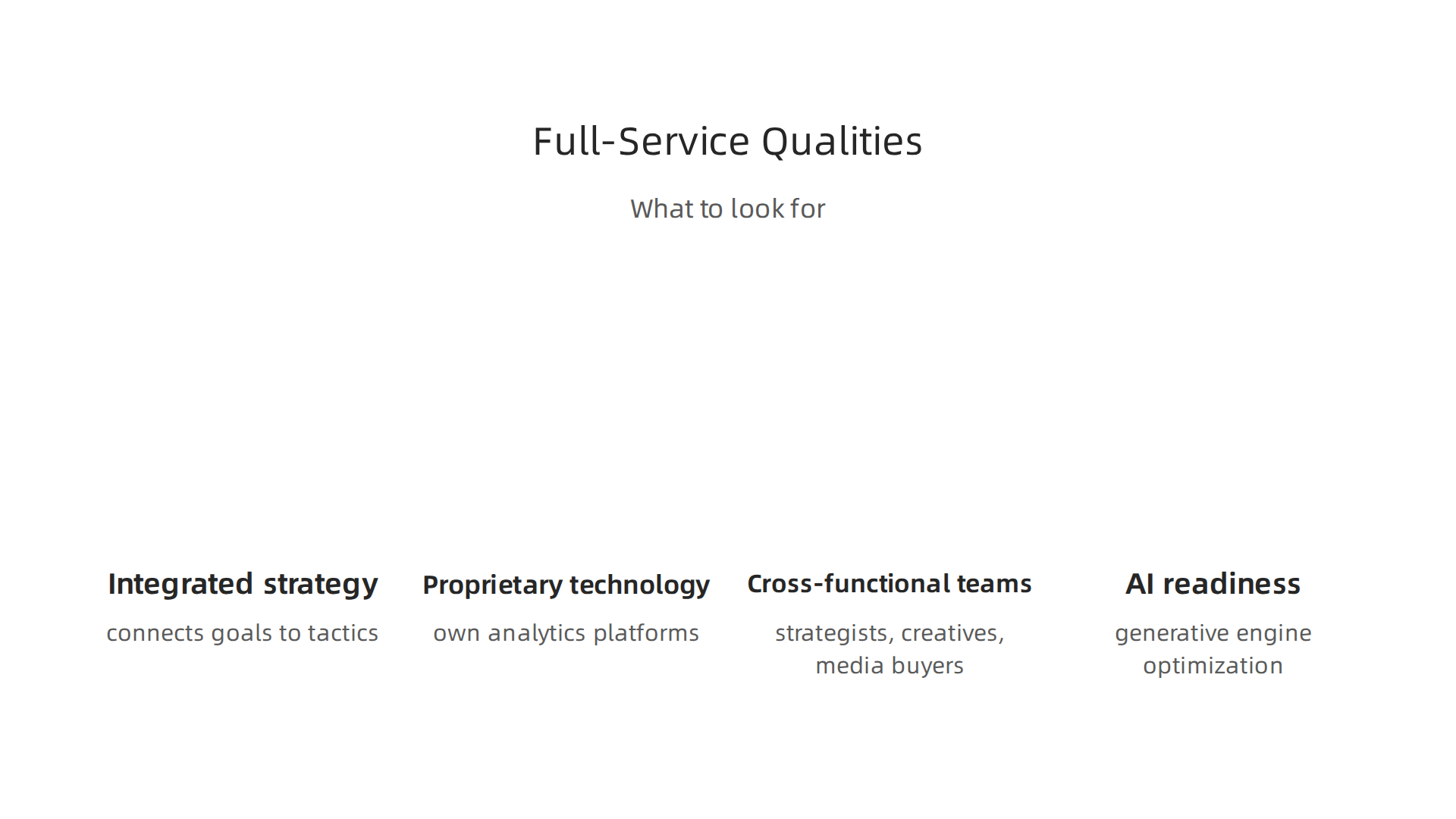
- Integrated strategy. The agency should connect your brand goals to specific channel tactics, not treat each channel as a silo.
- Proprietary technology. Many top firms now run their own analytics or attribution platforms. This gives them a clearer view of what actually drives results.
- Cross-functional teams. Look for agencies that put strategists, creatives, media buyers, and data analysts in the same room. That collaboration leads to stronger campaigns.
- AI readiness. Full-service agencies that have invested in generative engine optimization and AI-powered creative production will future-proof your media investments.
For media companies exploring how to align brand strategy with full-service execution, our guide on how brand strategy services drive media and publishing success in 2026 covers what to expect from a top-tier partner.
The bottom line is simple. If your media business runs campaigns across multiple platforms and needs a cohesive approach, a full-service powerhouse saves you from patchwork marketing. These agencies bring the resources, technology, and expertise to execute at scale. Just make sure they have real AI capabilities, not just buzzwords. That is what separates the leaders from the laggards in 2026.
Niche Specialists: Creative, Design & Content Agencies
But what if your media company already has a solid strategy and just needs a jolt of creative magic? Full-service powerhouses are great for complex, multi-channel campaigns. Yet sometimes you need a partner who obsesses over one thing: making your brand look, sound, and feel unforgettable. That is where niche specialists shine.
Boutique creative agencies, design studios, and content shops bring a different kind of energy. They live and breathe brand storytelling. They know how to make a single piece of content go viral. And because they stay small and focused, they move fast. No layers of bureaucracy. No endless internal meetings. Just sharp ideas and quick execution.
These agencies are also winning big in 2026. The best creative shops are picking up major honors. For example, the Best Award-Winning Design Agencies to Know in 2026 list highlights firms that have earned Red Dot Awards, Webby Awards, and more for their standout work.
When a design agency has that kind of track record, you know they can handle the most ambitious brand projects.
Why media firms turn to niche specialists
-
Deep focus on one area. These agencies do not try to do everything. Some specialize entirely in brand identity. Others focus on social-first video content or interactive web design. That focus means they see trends and best practices you might miss.
-
Agility and speed. A small team can turn around a campaign in days, not weeks. For media companies covering fast-moving news or cultural moments, that speed is a huge advantage.
-
AI-powered creativity. Many creative digital marketing agencies now use AI tools to brainstorm concepts, generate visual assets, and test messaging. But the smart ones keep the human touch at the center. They use AI to speed up production, not replace the creative spark. This blend of technology and artistry is what sets top branding agencies apart in 2026.
-
Specialized storytelling. Whether you need a emotional pathos ad or a bold rebrand, niche agencies understand the mechanics of narrative. They craft content that does not just inform but moves audiences to act.
If you are wondering how to structure your brand identity work, our guide on how brand strategy services drive media and publishing success in 2026 walks through the key elements that make a creative partnership work.
A quick note on AI in creative work
Because these agencies rely heavily on creative intuition, the rise of AI has changed the game. They now use generative tools to mock up concepts fast, test variations, and personalize content at scale. But the best boutique shops treat AI as an assistant, not a replacement. They still make the final calls on tone, emotion, and brand voice.
Staying ahead of these AI shifts matters. That is why many media leaders read The AI Newsletter Worth Reading to get clear daily updates on how artificial intelligence is reshaping creative industries. It delivers practical insights without the hype, helping you understand what is actually working for agencies and publishers.
So when should you pick a niche specialist over a full-service firm? Ask yourself: Do I need world-class creativity on a specific project? Do I want a partner who lives and breathes a single discipline? If yes, a boutique agency might be your best bet. They bring passion, speed, and a level of craft that can make your brand stand out in a noisy media landscape.
Data-Driven Performance Branding Agencies
But for media companies that need to prove every dollar spent on branding directly leads to new subscribers or reduced churn, there is another type of partner. Data-driven performance branding agencies blend the art of brand storytelling with the science of measurable results. They do not just make your brand look good. They prove it works.
These agencies are the top branding agencies for media leaders who care about return on investment. They treat branding as a measurable growth channel, not a creative expense. Every campaign, every creative asset, every audience segment gets tracked against real business outcomes. Subscriber acquisition cost. Retention rate. Lifetime value. If it cannot be measured, they do not run it.
How they operate differently
Traditional pr agency work can feel vague. You get coverage and awareness, but the link to revenue stays fuzzy. Performance branding agencies solve that problem. They start with a customer data platform or a clean attribution model. They know exactly which touchpoints drive a subscription sign-up and which ones just look pretty.
Here is what sets them apart from normal marketing firms:
-
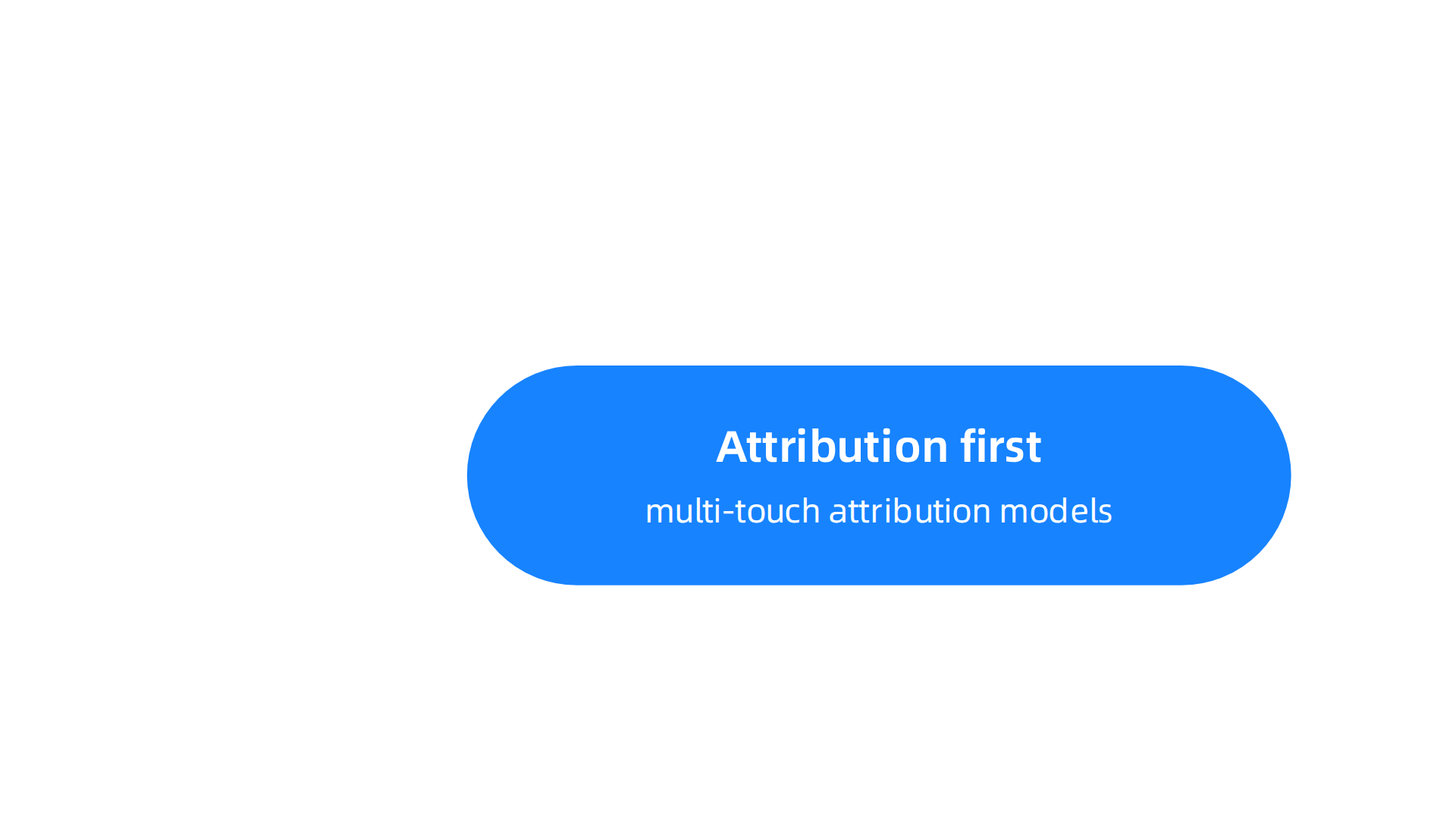
Attribution-first thinking. They build campaigns around multi-touch attribution models. They can tell you if a brand video on YouTube or a sponsored newsletter sent someone to your subscription page.
-
Advanced analytics. These agencies use tools like Google Analytics 4, Mixpanel, or even custom dashboards to track user behavior across platforms. They do not guess. They know.
-
Customer data platform integration. They plug directly into your CDP to segment audiences and personalize messaging. A subscriber who lapsed might get a different brand message than a new visitor.
-
Creative that converts. They are also a creative digital marketing agency at heart. But every design choice is tested. Headlines. Images. Calls to action. They run A/B tests on brand assets to see what actually drives sign-ups.
A strong example is Known, an agency that uses what it calls the Skeptic Operating System to merge data science with cinematic creative.
This combination is exactly what media companies need in 2026: rigorous measurement paired with work that feels premium.
Why media companies need this approach
If you run a media brand, your biggest challenge is probably subscriber acquisition and retention. You cannot afford to spend on branding that looks great but does not convert. Performance branding agencies give you the best of both worlds. They build brand equity and deliver proof.
One external source that breaks down the top full-service agencies in 2026 highlights how firms like Known and The Marketing Agency use AI and data to drive measurable growth. The same report ranks agencies by their ability to combine creative with science, which is exactly the skill set you want when choosing a partner.
Another useful resource is the 2026 playbook for growth marketing strategy, which explains how to adapt to AI and new demand signals while keeping your brand strong. It fits naturally alongside the work a performance branding agency does.
A practical way to evaluate these agencies
When you talk to a data-driven agency, ask them these three questions:
- How do you attribute conversions to brand campaigns?
- What analytics tools do you use, and can you integrate with our existing CDP?
- Show me a case study where you increased subscriber retention using brand storytelling.
If they cannot answer clearly, keep looking. The right partner will show you the numbers and the creative vision together.
In the next section, we will explore how to pick the right agency model for your specific media company size and goals. But if you are leaning toward a performance branding partner, start with their data chops. The rest will follow.
How to Choose the Right Agency for Your Media Business
By now you have a clear picture of the two main agency paths. Traditional pr agency partners build awareness. Data-driven performance agencies prove every dollar works. But how do you actually pick the right one for your media company?
The process is simpler than most people think. You just need a clear system.
Start with your goals
Before you talk to any agency, get honest about what you need. Do you want brand awareness? Audience growth? More subscribers? Higher ad revenue? Or all four?
Different agencies specialize in different outcomes. A firm that excels at brand awareness might not be the best at direct response. A creative digital marketing agency that drives viral campaigns may not have the attribution models you need for retention.
Write your top three business goals before you reach out to anyone. This simple step saves weeks of wasted conversations.
The guide on how to choose a branding agency recommends starting with business goals before looking at any portfolio. Without clear goals, you cannot evaluate which agency fits.
Evaluate compatibility and track record
Once your goals are clear, look at agencies that have worked with media clients before. They should understand your audience, your revenue model, and the speed at which your industry moves.
Here is what to check:
- Relevant case studies. Ask for examples from media, publishing, or subscription businesses. A case study from a consumer brand is less useful than one from a company like yours.
- Senior team involvement. Many agencies pitch with partners and deliver with junior staff. Ask who will work on your account every day.
- Culture fit. You will work closely with this team for months. Do you communicate well? Do they listen to your concerns? Do they push back when needed?
One guide for choosing a digital marketing agency in 2026 highlights that missing cultural fit is one of the biggest hidden costs in agency relationships. It leads to slow decision-making and poor results.
Run a pitch that tests real thinking
The pitch process should test more than creative skills. It should test how an agency thinks.
Give them a real challenge your media company faces. Ask them to walk through their approach. How would they position your brand? How would they measure success? What data would they need to start?
This is also where you test AI fluency. In 2026, a top branding agencies partner must understand how artificial intelligence changes audience targeting, content creation, and attribution. If they cannot explain their AI strategy, they are behind.
To stay current on how AI is reshaping media and marketing, you might subscribe to a resource like The AI Newsletter Worth Reading. It provides daily updates on the technology that is changing how agencies operate and how brands grow.
Ask the right questions
When you meet with finalists, ask these three questions:
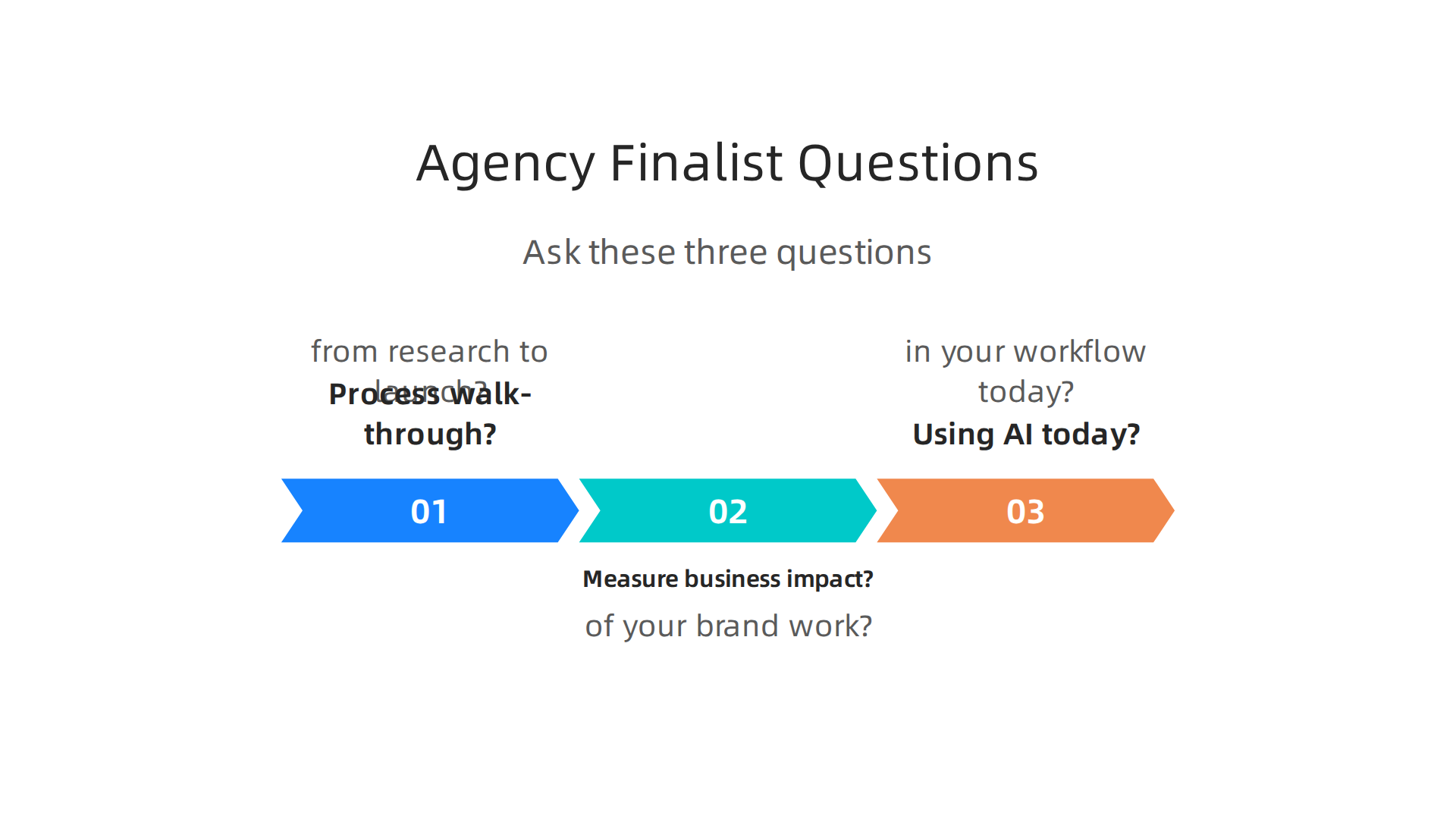
- Can you walk me through your process from research to launch?
- How do you measure the business impact of your brand work?
- How are you using AI in your workflow today?
The answers will tell you everything. If they cannot articulate a clear, repeatable process, move on. If they cannot tie their work to measurable outcomes, they are not ready for a media business. If they have no clear AI strategy, they will fall behind within months.
Choosing an agency does not have to be overwhelming. Start with your goals. Evaluate real experience. Test their thinking.
And make sure they understand the technology shaping your industry today.
Summary
This guide explains why partnering with the right branding agency is crucial for media companies in 2026 and shows how to pick one that actually drives business results. It outlines the real criteria for top agencies—strategic depth, measurable ROI, industry expertise, AI adoption, transparent processes, and client retention—then breaks down the main agency models: AI-integrated firms, full-service powerhouses, niche creative shops, and data-driven performance branding teams. You’ll learn how AI is reshaping creative production, targeting, and personalization, why full-service firms are expanding through acquisitions, and when a boutique specialist makes more sense. The article also gives a step-by-step approach to choosing an agency, what to test in a pitch, and the key questions to ask so you can match your goals to the right partner and measure impact from day one.