
Rethink Modern Brand Marketing for 2026 Digital Growth
Why modern brand marketing needs a strategic rethink
The way brands reach people is changing super fast. If you’re a leader in media or marketing, you’ve probably noticed it’s harder than ever to get your message out there.

We’re seeing huge shifts with new platforms popping up all the time, content being made differently with AI, and audiences splitting into many smaller groups. This creates big risks for any company trying to do good brand marketing.
Think about it: in 2026, the market for advertising across different devices and platforms is worth a huge amount, growing by billions each year Cross-Platform & Mobile Advertising Market Size 2026-2032. This means more places to advertise, but also more places where your audience might be scattered. It’s tough to keep up!
AI is also changing everything. It helps make content faster and target ads better, but it also means a flood of information. This makes it harder for your brand to stand out. People’s habits for finding information are changing too, making good marketing analysis more important than ever. You need to know exactly who you’re talking to and where they are.
This constant change means that old ways of doing brand marketing might not work anymore. It’s not enough to just throw money at a few big campaigns. Instead, you need a smarter plan, one that understands these new challenges and helps your brand stay strong. Many companies are trying to figure out how to best run their marketing activities in this new world.
We will explore a clear plan to help media and marketing leaders align their brand strategy with how media is now shared and how success is measured. It’s about developing a strategic marketing plan that fits today’s world. This guide will show you how to move forward with conscious marketing and even a bit of grit marketing to overcome these hurdles.
Want to stay ahead of the curve with AI’s impact on media? Get clear daily AI updates from The AI Newsletter Worth Reading.
1) Clarify brand purpose and audience in a fragmented landscape
To move forward with a smarter plan, the very first step in modern brand marketing is to clearly understand your brand’s core purpose. This means knowing why your brand exists and what special value it brings to the world. In 2026, with so much noise online, a clear purpose helps your message cut through the clutter and connect with the right people. It’s like having a compass when you’re lost.
Once you know your brand’s purpose, you need to figure out who you’re talking to.

These are your main audience groups. It’s not enough to just say "everyone." You need to pinpoint the exact people who will truly care about your brand and what it offers. These are the primary audience segments that matter most for your business goals. Getting a good handle on your audience’s details, like their age and what they buy, is super important for your marketing analysis efforts Announcing the 2024 Demographics and Buyer Behavior Survey Cohort.
Next, think about where these audience groups spend their time online. Are they on social media, watching videos, or reading news sites? People behave differently on different platforms. Mapping out these audience behaviors helps you see where your brand needs to show up. For example, a young audience might be on TikTok, while an older audience might prefer Facebook. Understanding these habits is a big part of successful marketing activities in our digital world.
It’s also key to decide when your brand’s message should stay the same (consistent) and when it needs to change a bit for a specific platform or group (customized). Your brand’s main idea should always be clear, no matter where someone sees it. But how you say it, or the pictures you use, might need to fit the style of each platform. This careful approach is part of what we call conscious marketing. It makes sure your brand feels real and reliable everywhere. There are even tools to help you understand your audience better across all these platforms Best Audience Analysis Tools 2026: Enterprise Buyer’s Guide.
By taking these steps, you build a strong foundation for your brand marketing. It helps you make a strategic marketing plan that works well in 2026’s busy media world, letting you know exactly who to reach and how. To learn more about creating a solid plan, consider how to develop a strategic marketing plan for media creator growth in 2026. This clear focus is a big part of using grit marketing to achieve your goals, even when things are tough.
Now that you know who your brand is for and what it stands for, the next big step is to make sure your efforts are actually working. This means building a smart plan to measure how well your brand marketing is doing. You want to see if your marketing activities are really helping your business make money, not just look good.
Focus on Real Money Metrics, Not Just Likes
It’s easy to get caught up in "vanity metrics" like how many likes a post gets or how many people see a video. While these numbers can feel nice, they don’t always tell you if someone bought your product or used your service. In 2026, a strong brand marketing plan looks past these surface-level numbers. Instead, it focuses on things that clearly show how your marketing helps your business grow.
This means tracking metrics that connect directly to your commercial outcomes. Think about:
- How many new customers did a campaign bring in?
- How much money did those new customers spend?
- Did your marketing make existing customers buy more often or spend more?
- What was the actual return on investment (ROI) for your marketing efforts?
When you prioritize measurement that links your brand’s actions to what customers actually buy, you get a clearer picture. This kind of deep marketing analysis helps you see which efforts are truly worth your time and money. Experts say that a modern framework for marketing measurement can improve your reporting and make your marketing much better Marketing Measurement Strategy That Improves ROI ….
Measuring Success in a Privacy-First World
Here’s a big change for 2026: how we track people online is different. We are now in a "privacy-first, cookieless environment." This means that old ways of tracking what people do across different websites, often using small files called third-party cookies, are mostly gone. Many web browsers stopped using third-party cookies in early 2026. This changes how companies measure their marketing.
So, how do you measure if your marketing is working without these old tools? You need new ways to design your experiments and see where your sales truly come from.
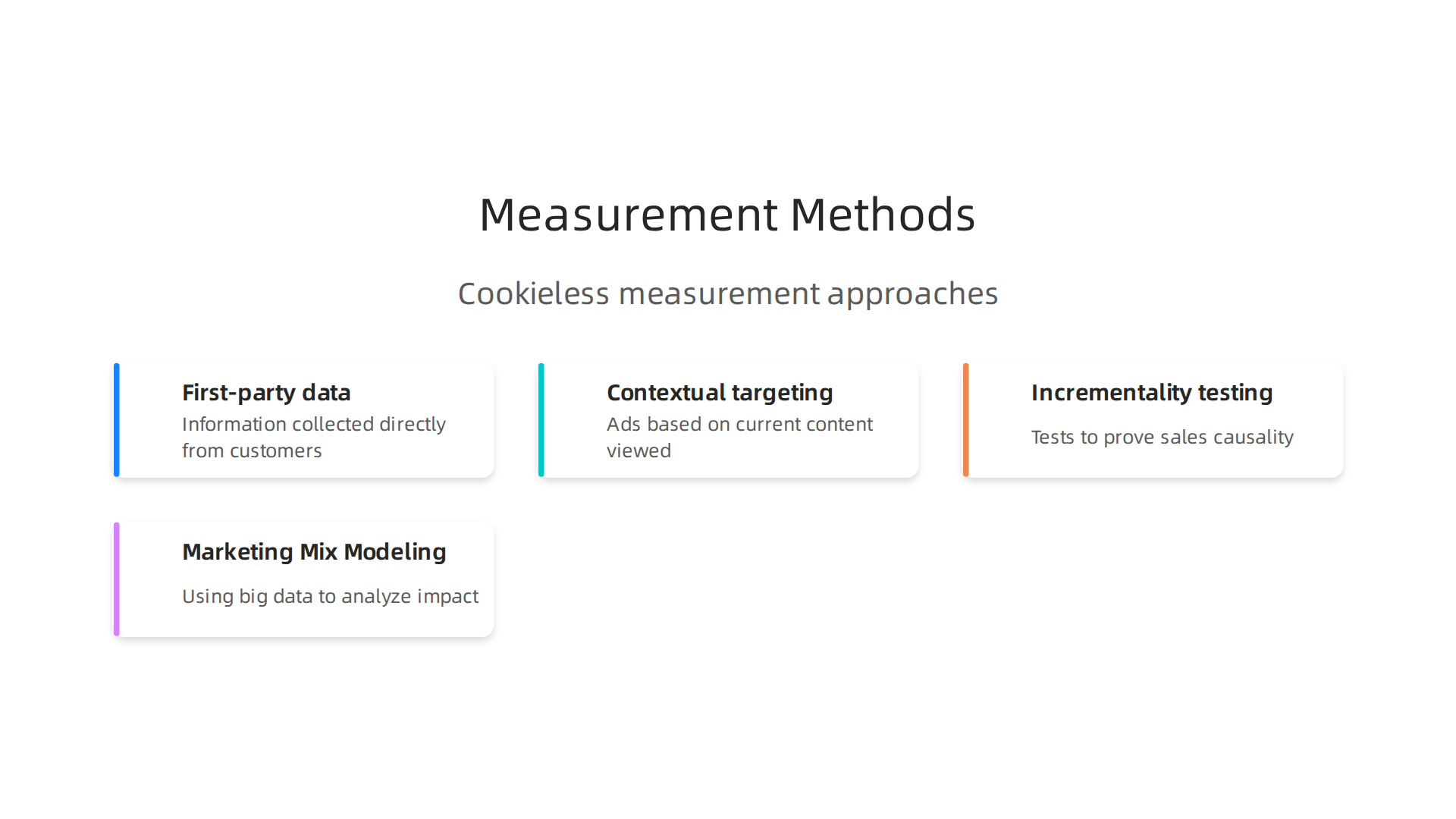
This includes:
- First-party data: This is information you collect directly from your customers, like when they sign up for your newsletter or make a purchase.
- Contextual targeting: Showing ads based on what someone is looking at right now, not on their past behavior.
- Incrementality testing: Running small tests to see if a marketing action truly causes more sales, rather than just being present when sales happen.
- Marketing Mix Modeling (MMM): This uses bigger data sets and math to figure out how different marketing efforts affect sales over time. It is a good way to build a cookieless marketing strategy Cookieless Marketing in 2026: Complete Strategy Guide.
It’s also important to use "cross-platform measurement." This means looking at how people interact with your brand across all the places they might see it: their phones, computers, apps, and even TV. The global market for cross-platform and mobile advertising is very large, showing just how important it is to track across all these places Cross-Platform & Mobile Advertising Market. By tracking across many platforms, you get a complete view of how your brand is reaching people. This makes your conscious marketing efforts more effective.
Building a measurement plan that connects your brand’s story to real income helps your business make smart choices in the busy media world of 2026. It ensures your brand marketing isn’t just a guessing game but a clear path to growth.
Want to understand how AI is changing media and marketing every day? Get simple, helpful updates.
The AI Newsletter Worth Reading
After you figure out how to track your brand marketing success, the next big step is to think about where you share your stories and information. This is called "strategic content architecture." It means making smart choices about where your content lives: on your own websites and platforms (owned channels) or on other people’s platforms (partner channels).
Owned Channels: Your Brand’s Home
Owned channels are like your brand’s special home on the internet. These include your own website, your blog, your email lists, and any apps you create. On these platforms, you have full control. You decide exactly how your content looks, how long it stays up, and how you make money from it. You also own all the information you gather about your audience. This gives you strong control over your brand message and lets you do deep marketing analysis.
The main challenge with owned channels is that you have to work harder to bring people to them. It takes consistent effort, often called "grit marketing," to build your own audience from scratch.
Partner Channels: Reaching More People
Partner channels are other popular places where you can share your content. Think about social media sites like Facebook, Instagram, YouTube, TikTok, LinkedIn, or even other news websites. These platforms are great because they already have huge audiences. By using these channels, you can quickly reach many more people through your marketing activities.
However, when you use partner channels, you give up some control. The platform sets the rules, decides who sees your content, and might take a share of any money you make. Sometimes, these platforms can even change their rules or remove your content. This is why it is important to have clear "conscious marketing" goals when you decide to use partner platforms. To understand how to best balance different media types for your goals, it can be helpful to learn about paid media vs earned media 2026 maximizing your digital reach.
Making Smart Choices for Your Content
To manage all your content effectively, you need a "content taxonomy." This is a simple system for sorting your content and deciding what goes where. You also need "decision rules." For example:
- Long, helpful articles that show your brand’s deep knowledge might always stay on your blog or website (owned channels).
- Short videos or quick tips might go on social media (partner channels) to grab new attention.
- Special guides or offers that ask people to sign up for your email list would be placed on your website (owned channels).
You also need to plan your content formats. Will your content be mostly text, videos, podcasts, or pictures? And what about your "cadence"? This means how often you release new content. You want to post enough to keep your audience interested without overwhelming them or your team.
Keeping track of all the content being created is a big job, especially with new tools like AI helping to make more content than ever before. In 2026, many companies are using AI to create content faster. But this also means they need better rules to make sure all that content stays true to their brand, no matter where it is published. This is about content quality control and Brand Governance with AI. Without good rules, your brand’s message can get mixed up or become less impactful.
By carefully planning your strategic content architecture, you make sure your brand marketing reaches the right people in the right places. This helps you keep control over your core message and boosts your chances for growth and making money. It is a key part of how you develop a strategic marketing plan for media creator growth in 2026.
When using AI in your marketing, it is super important to make sure it helps your brand, not hurts it.

AI tools, like those that create text or images, can make content much faster. But this speed also means you need clear rules to keep your brand’s message strong and true.
Practical Steps for Using AI Safely
Think of AI tools as helpful assistants. You still need to guide them closely. Here are some simple steps:
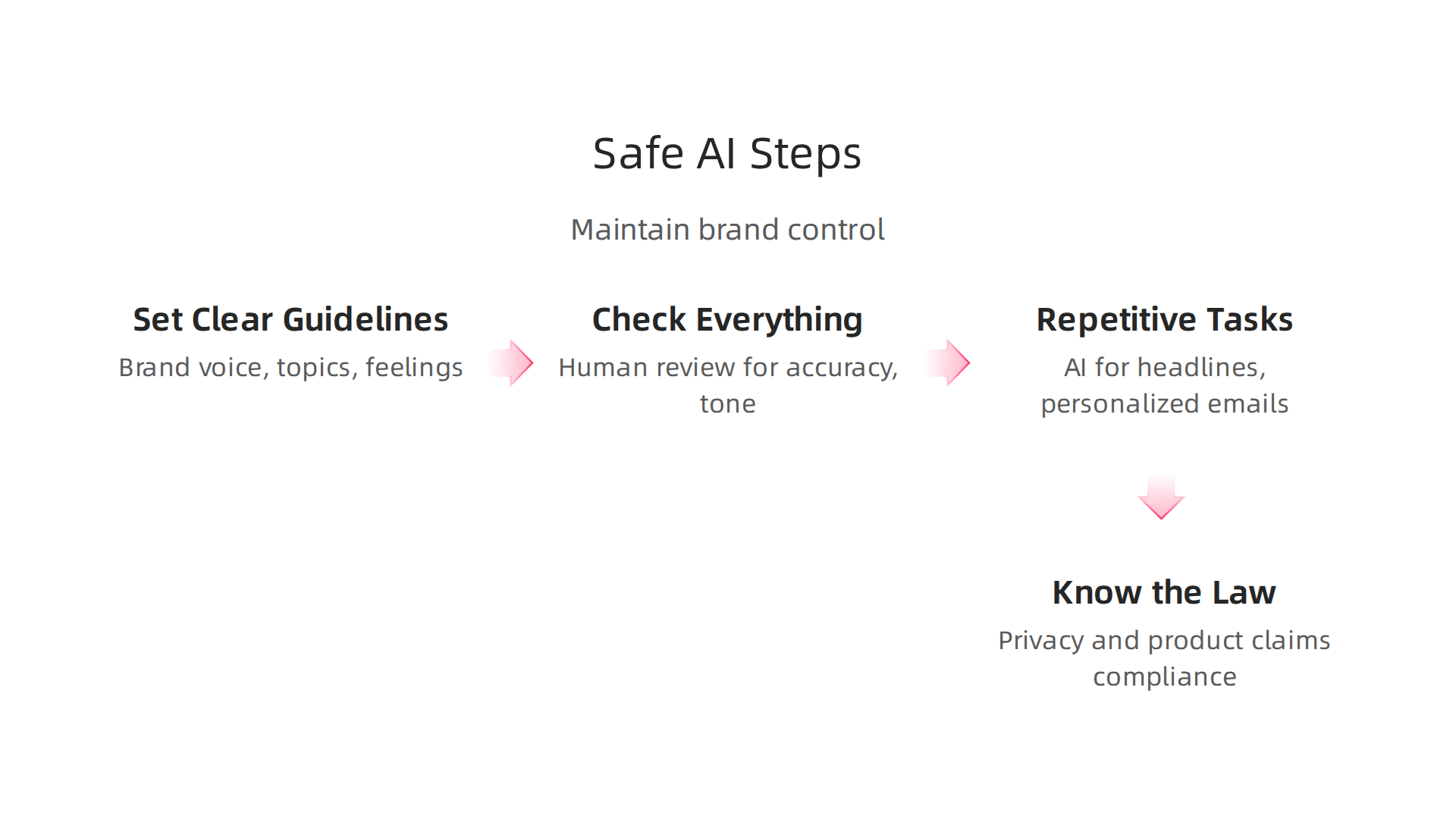
- Set Clear Guidelines: Before AI creates anything, tell it exactly what your brand sounds like. What words should it use? What feelings should it bring out? What topics are off-limits? These clear rules help the AI make content that matches your brand’s voice every time.
- Check Everything: Even if an AI creates something quickly, a human should always review it. Make sure the facts are correct, the tone is right, and it sounds like your brand. This check is very important for maintaining content quality.
- Use AI for Repetitive Tasks: AI is great at doing the same kind of work over and over. For example, it can help write many different headlines for an ad or personalize emails for different groups of people. This frees up your team to do more creative and strategic brand marketing work.
- Know the Law: As AI grows, new rules are coming out about how to use it fairly and safely. Make sure your team knows these rules, especially when it comes to privacy and what you can claim about your products. Being careful here helps you with conscious marketing and legal compliance.
Actually, many businesses are finding that even though AI helps make a lot of content, it is hard to keep good control over all of it. In 2026, it is clear that AI content growth is moving faster than brand governance for many companies, according to some reports AI Content Growth Is Outpacing Brand Governance. This is why having good systems in place is key.
Building Smart Rules for AI
To really keep your brand safe and strong with AI, you need something called an "AI governance model." This is just a fancy way of saying you need a system of rules and ways of working that help you use AI responsibly.
- Define Your AI Goals: What do you want AI to help you with? Do you want more content? Faster marketing analysis? Knowing your goals helps you decide what AI tools to use and how to manage them.
- Create Approval Steps: Just like you would approve a big marketing campaign, you need steps to approve AI-made content. Who checks it? Who gives the final "okay"? This ensures everything meets your standards.
- Train Your Team: Make sure everyone who uses AI knows how to use it correctly and follows the rules. Teach them about your brand’s guidelines and why they are important.
- Keep Learning: AI is always changing. Stay updated on new tools and best practices. Your governance model should also be able to change and grow as AI gets better and new challenges come up.
By setting up these practical guardrails and governance models, you can use AI to make your marketing activities more powerful without losing control over your brand’s voice or quality. It is about making AI a helpful friend, not letting it run wild. If you are looking to bring in outside help, it is a good idea to choose the best AI marketing agency for your business to guide you.
Staying on top of AI trends is a big part of successful brand marketing today. To get daily updates and deeper insights into AI and technology that affect the media industry, consider subscribing.
The AI Newsletter Worth Reading
To make sure your brand marketing truly shines with AI, you need the right people working together in the right ways. This means setting up your teams and plans so they can try new things fast and use AI tools well. It is like having a well-oiled machine where everyone knows their part.
Building Teams for AI Work
In 2026, AI is not just for tech experts anymore. It is a big part of how many parts of a business work, including marketing. So, your teams need to be set up in a new way.
- Cross-Functional Teams: Imagine a team with people from different jobs, like a writer, a data person, and a marketing expert, all working on the same project. These are called cross-functional teams. They are great for AI because they bring different skills to the table. This helps them quickly test new AI tools and ideas for marketing. It also helps make sure that the AI is used for good, covering different angles like
conscious marketing. Reports show that by August 2026, AI is seen as an enterprise operating model, meaning it affects how the whole company runs, not just one department AI is an enterprise operating model. - Clear Roles: Everyone on the team needs to know what they are responsible for when using AI. Who checks the AI’s work? Who makes sure it matches the brand’s voice? Having clear roles helps work move smoothly and makes sure that
brand marketingstays strong. For example, a Marketing Manager 2026 roles, skills, and trends for success will now need to understand AI workflows.
Fast Planning and Trying New Things
Using AI in marketing means you can try out ideas very quickly. Your team’s plans should let them do this.
- Agile Planning: This is a way of planning that lets teams change course quickly. Instead of long, fixed plans, agile planning uses short cycles of work. Teams plan a little, do a little, and then check what worked. This helps them learn fast and make their
marketing activitiesbetter over time. It is a great way to adapt to new AI features. This kind of flexibility is key to putting AI into action, moving from simply trying out new tools to actually using them every day AI operating model: from experimentation to execution in 2026. - Experimentation: With AI, it is easy to run small tests. For example, you can try different ad messages or ways to show content to see what people like best. Your team should be encouraged to try new things and learn from what happens, even if it does not always work out. This kind of
grit marketingapproach leads to big wins. If you want to develop a strategic marketing plan that includes these types of experiments, you can learn more here: develop a strategic marketing plan.
Smart Spending and Picking Priorities
Most businesses do not have endless money or time. So, it is important to be smart about what you focus on.
- Budgeting for AI: Decide how much money you will spend on AI tools and training. Make sure this budget supports your goals. Many companies in 2026 are finding that they are investing in AI without clear plans for how it will help them reach their goals, which can make it hard to see a return on their money AI governance without strategy is setting marketing teams up to fail.
- Prioritize Tasks: With so many things AI can do, it is easy to get lost. Focus on the
marketing activitiesthat will bring the most impact for your brand. This means deciding what is most important and putting your efforts there first. Using tools like a the 2026 playbook for growth marketing strategy can help guide these decisions.
By setting up your teams with clear roles, encouraging fast learning, and being smart about your resources, you can make the most of AI in your marketing. This helps ensure all your marketing analysis leads to real growth and keeps your brand strong in a fast-changing world. Working well together is key, and understanding Project Stakeholder Management Best Practices for 2026 can help your cross-functional teams succeed.
To truly make the most of AI in your marketing, it is not enough to just have great teams and smart plans.

You also need a clear map to follow and a set of rules to keep everyone on track. This is what we call a roadmap and governance. It is about turning your big ideas into small, easy steps and making sure everyone agrees on the path forward.
Creating Your Marketing Roadmap
Think of a marketing roadmap as a clear path for your brand to follow. It takes your big marketing goals and breaks them down into smaller, bite-sized tasks. This helps your team see what to do each week or month.
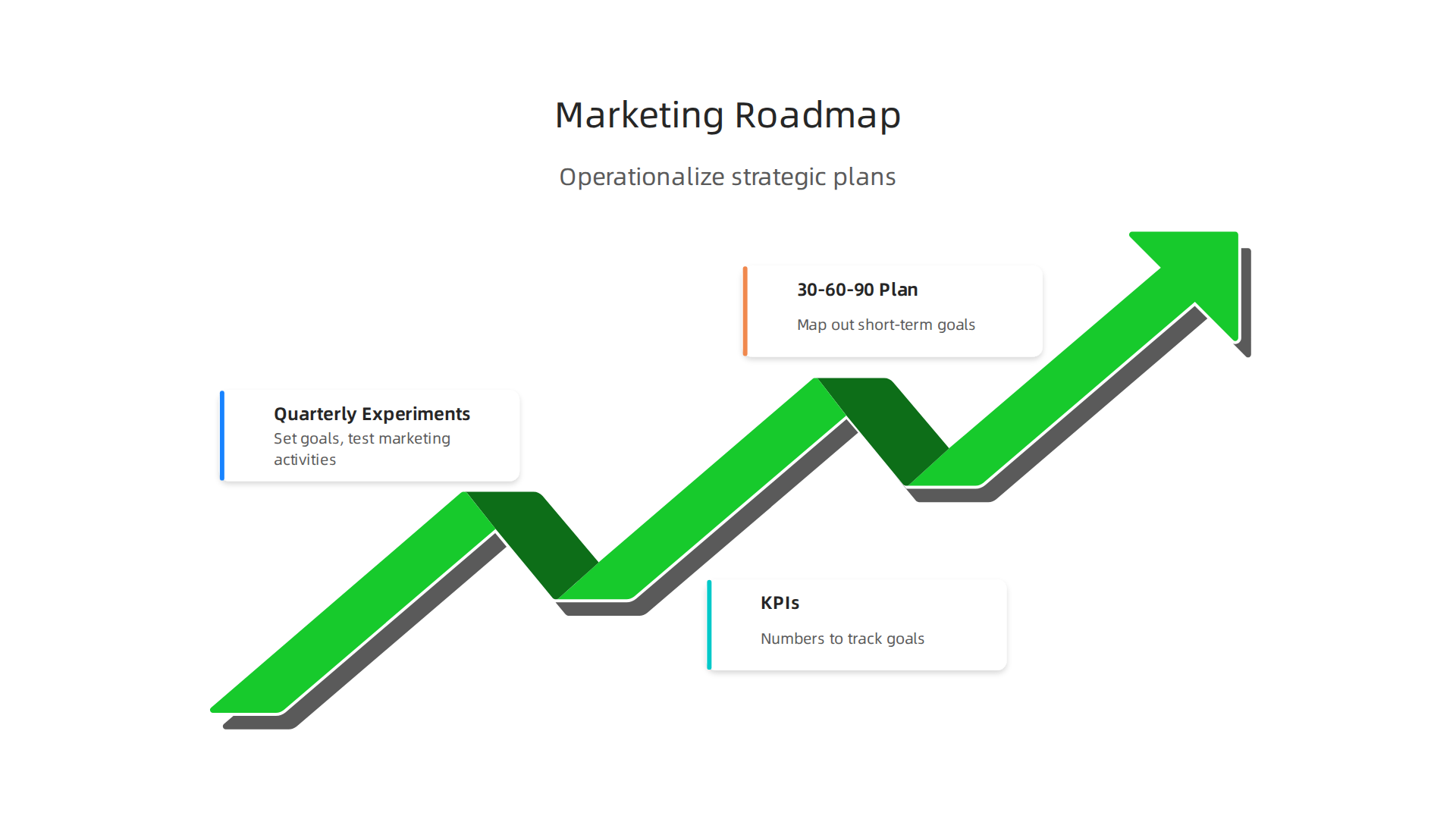
Many companies find it helpful to use a marketing roadmap template to plan their campaigns and track progress.
A great way to do this is with quarterly experiments. You set a goal for the next three months, try out different marketing activities using AI, and then see what works best. For example, you might plan to test three new AI-written ad copies. To measure if these experiments are working, you use Key Performance Indicators (KPIs). These are simple numbers that tell you if you are hitting your goals, like how many people clicked on your ad or bought your product.
A helpful tool for these short-term plans is a "30-60-90 day plan." This special plan helps you map out your goals and what you will do in the first 30, 60, and 90 days, especially when trying new things. You can even find a 30, 60, 90 day plan template to get started. This quick way of planning lets your team use a grit marketing approach, testing new AI tools and ideas fast to improve your brand marketing. It helps to take big plans and make them into clear, actionable steps for everyone.
Keeping Everyone Aligned with Governance
Governance is like the rulebook and checkpoints for your marketing strategy. It makes sure that all your marketing activities stay true to your brand’s values and goals. With AI changing things so quickly, it is important to have these checks in place. This helps with conscious marketing, ensuring your AI tools are used ethically and smartly.
A big part of good governance is keeping all important people, or "stakeholders," on the same page. These might be team leaders, other departments, or even company executives. When everyone understands the goals and how AI is being used, things run much smoother. This is called stakeholder alignment, and it helps prevent problems and keeps projects moving. Learning how to master stakeholder alignment is key for success in 2026.
Regular check-ins are vital for this. These checkpoints let you look at the results from your marketing analysis, see what is working or not, and make any needed changes. It is a chance to learn from your experiments and keep improving. By having these rules and reviews, you can make sure your brand is always growing in the right direction. For more insights into how AI is shaping the industry and what you need to know daily, you can get: The AI Newsletter Worth Reading.
This combination of a clear roadmap and smart governance helps turn your strategic plans into real success, keeping your brand marketing strong and adaptable in 2026 and beyond. If you want to dive deeper into how good brand strategy services can help your company, read more about corporate branding services that win audience trust and ad revenue in 2026.
Summary
This article explains why brand marketing needs a strategic rethink for 2026’s fragmented, AI-driven media landscape and guides media and marketing leaders through practical steps to adapt. It covers clarifying brand purpose and precise audience segmentation, choosing where to show up across owned and partner channels, and creating a content taxonomy and cadence that fits each platform. The piece emphasizes measuring real commercial outcomes over vanity metrics, using first‑party data, cross‑platform measurement, incrementality testing and modeling for a cookieless world. It details how to use AI safely—setting guidelines, approval workflows and an AI governance model—while running quarterly experiments and agile planning. The article also recommends reorganizing teams into cross‑functional units, prioritizing budgets, and building a clear 30‑60‑90 roadmap with governance checkpoints. After reading, leaders will know how to align brand strategy, measurement and operations to preserve brand trust and drive measurable growth in a rapidly changing media environment.